How Many Volts Is a Car Battery? The Simple Answer
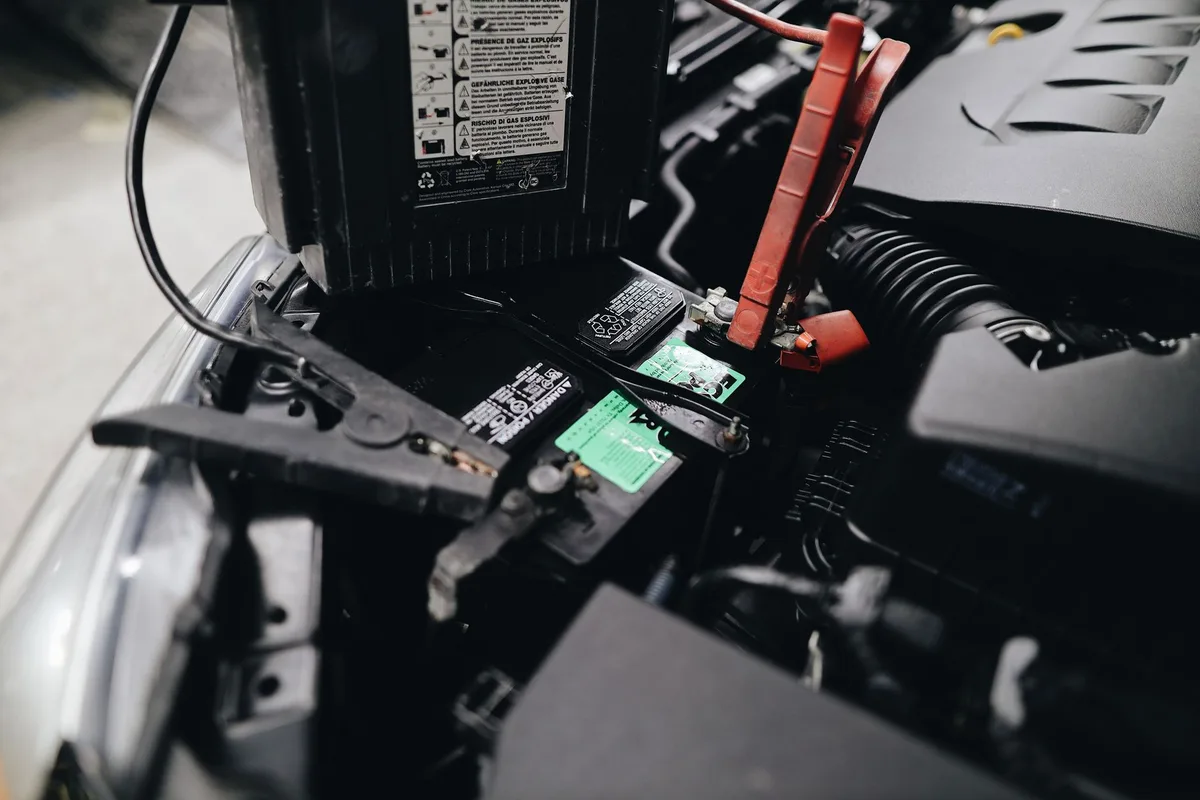
If your car cranks slow or refuses to start, the first thing worth knowing is how many volts is a car battery supposed to read. A healthy 12-volt battery isn't actually sitting at 12 volts. When it's fully charged and rested, it reads closer to 12.6 volts.
That small gap trips up a lot of people.
Battery Council International pegs a full charge at 12.6 to 12.8 volts, with each of the six internal cells holding about 2.1 volts. Drop below 12.4 volts and you're already down to roughly 75% charge. The number itself is simple.
What matters is knowing when and how you read it.
Quick Answer
A fully charged car battery reads 12.6 to 12.8 volts at rest. That's measured with the engine off and everything switched off. With the engine running, the voltage rises to 13.7 to 14.7 volts.
The extra volts come from the alternator charging the battery. Anything below 12.4 volts means the battery needs a recharge.
What "12 Volts" Really Means (and Why It's Actually 12.6V)
A "12-volt" battery is a nominal label, not a live reading. Inside the case sit six cells wired in series. Each cell holds about 2.1 volts when fully charged, and six times 2.1 lands you at 12.6 volts.
So 12.6 volts is your true full-charge target as of 2026, not a flat 12.0. A resting battery that reads exactly 12.0 volts is nearly flat. It's sitting around 25% charge, not "almost full" like the label suggests.
Here's the catch that fools people. A tired battery can still show 12 volts on the meter yet fail to turn the engine over. Voltage tells you charge level, not cranking strength.
If yours reads 12 but the starter just clicks, that gap is worth understanding, and we cover exactly why that happens in a separate guide.
Car Battery Voltage Chart: Reading Your Number at a Glance
Match your resting voltage to this chart to see roughly how charged the battery is. These figures assume the engine is off, accessories are off, and the battery has settled for a few hours at around 77°F.
| Resting Voltage | State of Charge | What It Means |
|---|---|---|
| 12.6–12.8V | 100% | Healthy, fully charged |
| 12.4V | ~75% | Slightly low, still usable |
| 12.2V | ~50% | Half charged, recharge soon |
| 12.0V | ~25% | Deeply discharged |
| 11.9V or below | ~0% | Effectively dead |
A few of these numbers sit right on important lines. If yours lands at 12.4 volts, it's borderline and worth watching. A reading of 12.2 volts means you're only half full.
And 11.9 volts tells you the battery is done for the day and needs charging before it'll do much.
One thing to keep in mind: colder temperatures pull these readings down. A battery that measures 12.5 volts in a warm garage can read lower on a freezing morning without actually being unhealthy.
The Number Changes: Engine Off vs Cranking vs Running
Your battery doesn't hold one steady voltage. It shifts depending on what the car is doing, and each state tells a different story. If you don't know which state you're testing in, the number can mislead you.
Resting Voltage (Engine Off, Settled)
This is your baseline. Turn everything off and let the car sit, ideally a few hours, then measure. A rested reading of 12.6 volts or higher means the battery is fully charged.
Test too soon after driving and you'll catch a "surface charge." That's a temporary bump that can read 12.8 or higher and make a weak battery look fine.
Cranking Voltage (The Split-Second Dip)
When you turn the key, voltage drops hard for a moment as the starter pulls a huge current. A healthy battery should stay above roughly 9.6 volts during that dip. If it plunges below that, the battery is likely weak or has a failing cell.
Some drop is normal and expected. The question is how far it falls, which is why knowing how much it should sag matters when you're diagnosing a slow crank.
Charging Voltage (Engine Running)
Once the engine's running, the alternator takes over and pushes the voltage up. You should see 13.7 to 14.7 volts at the terminals. That range confirms the charging system is feeding the battery properly.
If the running voltage sits below 13.5 or climbs past 15, something in the charging system needs attention. We'll get to that split in the alternator section.
How to Test Your Car Battery Voltage With a Multimeter
Testing takes about 30 seconds and costs nothing once you own a basic multimeter. Here's the clean, safe process.
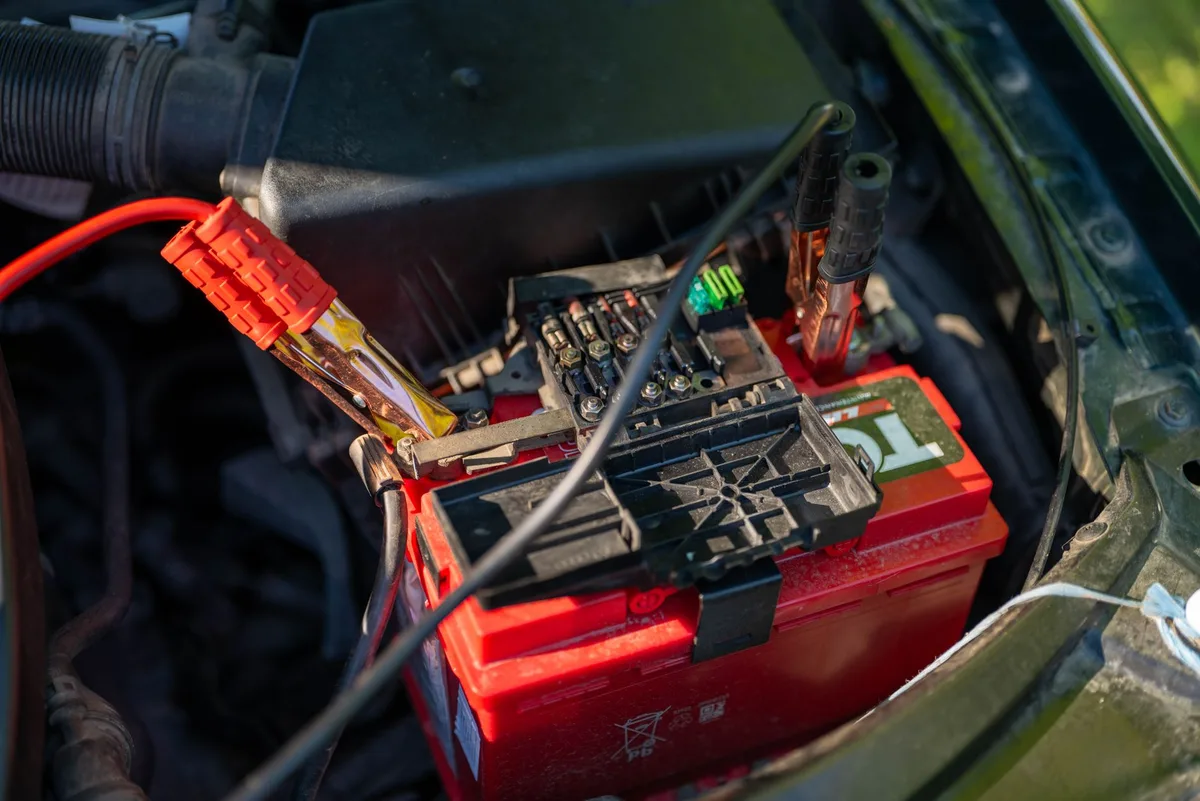
- Turn off the engine, lights, and everything else. Let the car sit if you can.
- Set the multimeter to DC volts, on the 20V DC range.
- Touch the red probe to the positive (+) terminal.
- Touch the black probe to the negative (, ) terminal.
- Read the number. That's your resting voltage.
Then start the engine and read it again. You're now checking charging voltage, which should land in the 13.7 to 14.7 range. Two readings, two very different jobs.
If you're unsure which dial position to use, the correct meter setting trips up plenty of first-timers, so it's worth a quick check. No multimeter on hand? There are a few rough workarounds using your headlights, though none are as precise.
For background on how automotive batteries behave, the U.S. Department of Energy's Alternative Fuels Data Center is a solid primary reference.
Get your polarity right. Red goes to positive, black goes to negative. Reverse them and you'll get a negative reading, which won't damage a decent meter but can confuse you into thinking something's wrong.
What Your Reading Is Telling You: A Voltage Decision Guide
Once you've got a number, here's how to act on it. Use your rested reading first, then confirm with the engine running.
If You Read 12.6V or Higher
You're in good shape. The battery is fully charged and healthy. If the car still struggles to start, the problem is probably somewhere else, like the starter, cables, or connections.
A high resting voltage rules the charge level out as the culprit.
If You Read 12.2–12.4V
Recharge it and retest. At this level the battery holds only half to three-quarters of its charge. A short drive won't fully top it up, so use a proper charger overnight.
If it drops back down within a day, the battery is likely losing its ability to hold a charge.
If You Read Below 12.0V
Charge it fully, then watch it closely. Anything under 12 volts is deeply discharged, and repeated deep drains shorten battery life fast. If it settles right back to what a dead battery reads after charging, replacement is on the horizon.
A 12.0-volt resting reading is a clear warning sign.
If It Reads Fine Off but Wrong While Running
This points at the charging system, not the battery. If the battery rests at 12.6 but the running voltage sits below 13.5 or spikes over 15, the alternator or regulator is the suspect. A battery that keeps going flat overnight often traces back here or to a parasitic drain.
Battery Fault or Alternator Fault? How Voltage Tells You Apart
Two readings settle this fast: one with the engine off, one with it running. The battery and the alternator each leave a different fingerprint on the meter.

Start with the engine off. A rested battery below 12.4 volts that won't hold a charge after charging points to a bad battery. Now start the car.
If the running voltage doesn't climb into the 13.7 to 14.7 range, the alternator isn't doing its job.
Here's the quick logic. Good resting voltage plus low running voltage equals an alternator problem. Low resting voltage plus normal running voltage equals a tired battery.
Both low often means the battery drained because the alternator quit charging it.
| Test | Reading | Likely Culprit |
|---|---|---|
| Engine off | Below 12.4V | Weak battery |
| Engine running | Below 13.5V | Alternator undercharging |
| Engine running | Above 15V | Voltage regulator fault |
If the running number looks off, our guide on the normal alternator range breaks down each figure. Readings like 13.5 volts sit on the low edge, while 14.7 volts is near the top of what's safe. For a full side-by-side check, the battery-versus-alternator method walks through both readings in order.
Voltage by Battery Type: Flooded, AGM, and Lithium
Not every battery follows the same voltage rules. The chemistry inside changes what "full" looks like on your meter.

Standard flooded lead-acid batteries read 12.6 volts at full charge. AGM batteries, the sealed type common in newer cars with stop-start systems, sit slightly higher at about 12.8 to 12.9 volts. That small difference matters when you're judging state of charge.
Lithium automotive batteries, usually LiFePO4, behave differently again. A full charge often reads around 13.3 to 13.6 volts, and they hold a flatter voltage curve as they discharge. That means voltage alone tells you less about their charge level.
| Battery Type | Full Charge (Rested) | Notes |
|---|---|---|
| Flooded lead-acid | 12.6–12.8V | The standard baseline |
| AGM | 12.8–12.9V | Sealed, higher resting voltage |
| LiFePO4 lithium | 13.3–13.6V | Flat curve, voltage less telling |
One quick warning. The high-voltage battery in a hybrid or EV is a completely separate system running at hundreds of volts. Never probe the orange cabling with a standard multimeter.
The 12-volt readings in this guide apply only to the auxiliary battery, not the traction pack.
Why Cold Weather and Surface Charge Fool Your Reading
Two things distort your reading more than anything else: temperature and surface charge. Miss either one and you'll misjudge a perfectly good battery, or trust a failing one.
Cold slows the chemical reaction inside the battery, which drags voltage down and cuts cranking power. A battery at 0°F delivers far fewer usable amps than the same battery on a mild day. That's why weak batteries so often die on the first hard freeze, a pattern we cover in our cold-weather voltage guide.
Surface charge is the opposite trap. Right after driving or charging, the battery holds a temporary voltage bump that can read 12.8 or higher. It fades within a few hours and hides a weak battery underneath.
To clear it, turn on the headlights for 30 to 60 seconds, then switch them off and wait a minute before testing. Better yet, let the car sit a few hours. A true resting reading is the only one worth trusting.
Common Mistakes That Give You a False Voltage Reading
Most bad diagnoses come down to how the reading was taken, not the battery itself. Avoid these and your numbers will actually mean something.
- Testing right after a drive. Surface charge inflates the reading. Let it settle first.
- Measuring with accessories on. Lights, radio, or the ignition draw current and pull the number down.
- Corroded or loose terminals. Bad contact gives an artificially low reading even on a good battery. Clean them first.
- Reading the battery once and calling it. A single number without the engine-running test misses charging-system faults entirely.
- Ignoring temperature. A slightly low reading on a freezing day may be normal, not a fault.
One more that catches people out. A battery can read a healthy 12.6 volts and still fail under load, because voltage measures charge, not the amps needed to crank. If yours looks fine on the meter but the starter drags, the problem is capacity.
Terminal trouble deserves a special mention. If your meter shows a wild reading or zero volts entirely, check the connections and probe contact before condemning the battery. Nine times out of ten, it's the contact, not the cells.
Safety Checks Before You Touch the Terminals
A car battery is safe to test with basic care, but a few rules keep it that way. The main risk is hydrogen gas, which lead-acid batteries vent while charging.
- No sparks or flames near the battery. Hydrogen is flammable.
- Wear eye protection. The electrolyte is sulfuric acid and it burns.
- Keep metal tools off both terminals at once. Bridging them causes a dangerous short.
- Check for damage first. A cracked case, bulging sides, or leaking fluid means stop and replace, not test.
If you spot corrosion, that white or bluish powder around the posts, clean it before testing. A mix of baking soda and water neutralizes it. Disconnect the negative terminal first, then the positive, and reverse that order when reconnecting.
One rule stands above the rest. Never touch the orange high-voltage cabling in a hybrid or EV. That system can be lethal and needs trained handling.
When Voltage Looks Fine but the Battery Still Fails
A perfect 12.6-volt reading doesn't guarantee a working battery. Voltage shows charge level, not the raw current the starter needs. That's the single most misunderstood point in battery testing.
An aging battery builds up internal resistance and sulfation on its plates. It can charge up to a healthy voltage yet collapse the moment the starter pulls current. On the meter it looks fine.
In the driveway it clicks and dies.
This is where a load test earns its keep. A load tester, or the cranking-voltage check we covered earlier, puts real demand on the battery and watches how far it sags. If voltage crashes below 9.6 volts under load, the battery is finished no matter what the resting number says.
So pair your voltage reading with a load or cranking test before you trust it. Plenty of batteries that rest at 12.6 volts still fail a proper load test. A battery's real job is amps under load, not a tidy voltage.
Expert Tips for Keeping Your Battery in the Healthy Range
Small habits keep a battery near that 12.6-volt sweet spot and stretch its life well past the average three to five years. Most premature failures come from chronic undercharging, not sudden death.
- Drive it regularly. Short trips never fully recharge the battery. A longer weekly run helps.
- Use a smart charger or maintainer if the car sits for days. It holds the charge without overfilling.
- Keep terminals clean and tight. Resistance from corrosion starves the charge.
- Kill parasitic drains. A phantom draw over about 50 milliamps flattens a battery overnight, and our guide on safe standby current shows what's normal.
- Test seasonally. Check voltage before winter, when cold exposes any weakness.
Watch the charge level, not just the voltage snapshot. A battery that keeps needing a jump is telling you something, even when the meter reads fine after a drive.
Frequently Asked Questions
Is 12.4 volts a good car battery reading?
It's borderline, not ideal. At 12.4 volts your battery sits at about 75% charge, so it'll still start most cars but isn't full. Recharge it and retest.
If it keeps dropping back to 12.4 or lower on its own, the battery is starting to lose its hold.
What voltage is too low to start a car?
Most cars struggle to start once resting voltage falls below about 12.0 volts. At that point you're near 25% charge, and cold weather makes it worse. Below 11.9 volts the battery is effectively dead and needs a full charge before it'll crank reliably again.
What should car battery voltage be when the engine is running?
With the engine running, expect 13.7 to 14.7 volts at the terminals. That range confirms the alternator is charging the battery properly. Below 13.5 suggests undercharging, while a reading above 15 points to a faulty voltage regulator overcharging the system.
Why does my battery read 12 volts but won't start the car?
Because voltage shows charge, not cranking power. A battery can read 12 volts yet lack the amps to turn the starter, usually from age, sulfation, or internal resistance. A load test or cranking-voltage check reveals the real problem that a resting reading hides.
How many volts does a car battery lose overnight?
A healthy battery loses only a tiny amount overnight, well under a tenth of a volt. A noticeable drop points to a parasitic drain or a failing battery. If you wake up to a flat battery repeatedly, test for excess standby current and check the charging system.
Is a higher resting voltage always better?
Not always. A reading above 12.8 volts right after driving is often just surface charge, a temporary bump that fades within hours. AGM batteries genuinely rest a touch higher, around 12.8 to 12.9 volts.
Let the battery settle before trusting any high number.

Similar Posts