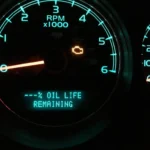
What Is an Oil Life Monitoring System and How It Works
If your dashboard flashes a "change engine oil soon" message but the car still feels fine, you're probably wondering what is an oil life monitoring system and whether you can trust it. It's the small piece of dashboard tech that has quietly replaced the old "every 3,000 miles" rule of thumb on most modern cars.
As of 2026, nearly every new vehicle sold in North America ships with some form of oil life monitor. General Motors, Honda, Ford, and BMW each use their own logic to decide when service is due. Society of Automotive Engineers research (SAE 2004-01-1974) shows these algorithms can safely extend intervals well past the old 3,000-mile habit.
Here's how the system actually works, and how to read what it's telling you.
Quick Answer
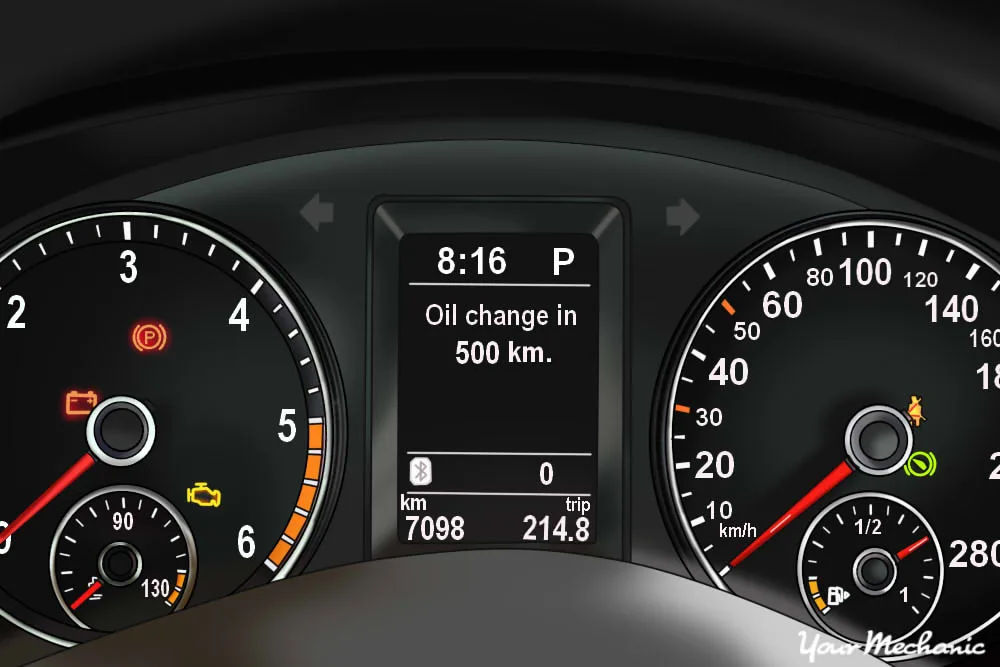
An oil life monitoring system estimates remaining useful life of your engine oil. Most systems are algorithm-based, not real oil sensors. The car tracks driving data like RPM, temperature, and trip length.
It displays remaining oil life as a percentage on your dashboard. When it reads 15% or lower, service is due soon.
What an Oil Life Monitoring System Actually Is
An oil life monitoring system, often called an OLM or oil life monitor, is software inside your car's engine control module that predicts when the oil needs changing. It doesn't dip into your oil pan or measure viscosity directly. It watches how you drive and does the math.
The system was built to replace fixed mileage intervals with something smarter. If you idle in traffic every day, your oil ages faster than if you cruise on the highway. A rigid 5,000-mile rule can't tell the difference.
An OLM can.
Most systems show oil life as a percentage, starting at 100% right after a fresh oil change and counting down to 0%. Some, like Honda's Maintenance Minder, also produce letter and number codes that cover more than just oil. The goal across brands is the same.
Change the oil when it actually needs changing, not on an arbitrary schedule.
How the System Calculates Remaining Oil Life
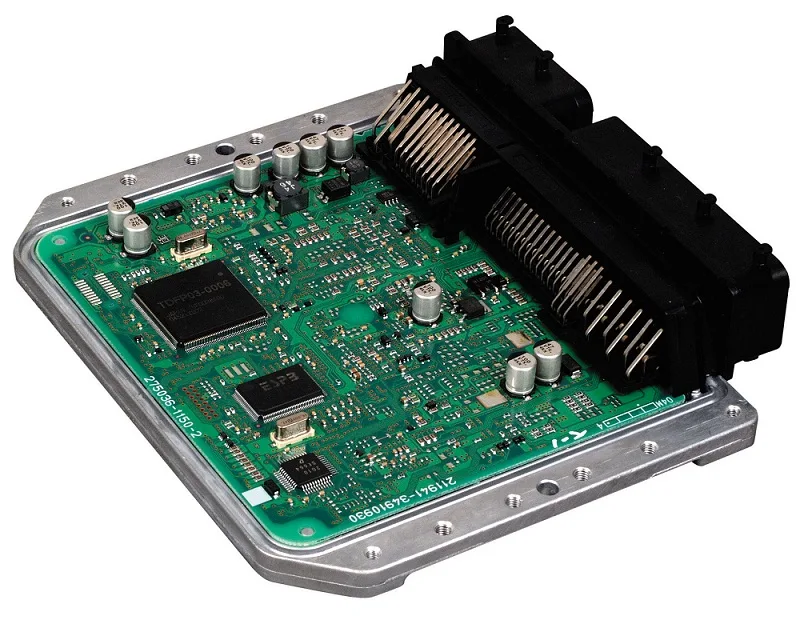
The oil life monitor pulls data from sensors already scattered around your engine. It doesn't need a dedicated oil quality sensor because the ECU already knows what the engine has been doing.
Algorithm-Based Monitors vs. Real Oil Condition Sensors
The vast majority of oil life monitors are algorithm-based, meaning they estimate oil condition from indirect signals. A small number of luxury vehicles use a true dielectric sensor that measures oil properties directly.
Algorithm-based systems are cheaper, lighter, and surprisingly accurate for the way most people drive. True sensors give real-time chemistry data but add cost and complexity. Both approaches have been validated in SAE research going back to the early 2000s.
The Driving Data It Tracks in the Background
Here's what most manufacturer algorithms watch:
- Engine RPM and load
- Coolant and oil temperature
- Cold-start events (a short trip is harder on oil than a long one)
- Total engine revolutions
- Ambient temperature
- Idle time and trip length
The ECU weighs each factor and drops the percentage faster when conditions are harsh. That's why two identical cars can hit 0% at very different mileage points.
What the Percentage Really Means on Your Dashboard
The oil life percentage isn't a fuel gauge for your oil. It's a countdown timer based on the algorithm's confidence that the oil is still doing its job. When it reads 50%, the car isn't saying your oil is half-used.
It's saying you're halfway through the safe interval for how you've been driving.
That distinction matters because drivers panic when the number drops fast. If you towed a trailer through hot weather all weekend, the algorithm might chew through 20% in three days. That's normal.
It's the system doing exactly what it was designed to do.
A few practical readings to know:
- 100% to 40%: routine, no action needed
- 40% to 20%: start planning your next oil change
- 15%: service due soon (the trigger point most owner's manuals use)
- 5% or lower: change it now, don't put it off
- 0%: overdue, and the "change engine oil" warning stays locked on
How Different Automakers Handle It

No two automakers calculate oil life the same way. The core idea is similar, but the inputs, weights, and display formats vary a lot. Knowing what your specific system looks at helps you trust it.
GM Oil Life System
General Motors pioneered the modern OLM in the late 1980s. GM's system leans heavily on engine RPM, coolant temperature, and total revolutions. It's algorithm-based, requires oil meeting the dexos1 Gen 3 spec, and typically triggers service between 5,000 and 10,000 miles for most drivers.
Honda Maintenance Minder Codes (A, B, and 1 to 6)
Honda's system covers more than oil. The main code tells you what needs doing:
- A: change engine oil
- B: change engine oil and inspect other items (brakes, fluids, driveshafts)
Sub-codes 1 through 6 add tasks like tire rotation, air filter, transmission fluid, coolant, and spark plugs. A "B1" means oil, inspection, and tire rotation. It's more of a full service minder than a pure OLM.
Ford Intelligent Oil-Life Monitor
Ford's IOLM appears on most F-150s, Explorers, and Mustangs. It weighs cold starts and towing heavily, which matters for truck owners. Ford recommends service at 15% and calls for oils meeting WSS-M2C961-A1 or WSS-M2C946-B1.
BMW Condition Based Service and Mercedes ASSYST
BMW's Condition Based Service (CBS) and Mercedes ASSYST Plus track multiple service items on separate countdown timers. Oil is one item among many. Both often stretch to 10,000-plus miles thanks to strict oil specs (BMW LL-01, Mercedes-Benz 229.5).
When the Monitor Says It's Time to Change the Oil
Most oil life monitors trigger the service warning at 15% remaining. That's not because the oil is dead. It's a buffer window that gives you time to book a service appointment before the number hits zero.
If the light comes on and you're 300 miles from home, you're fine. The safety margin in the algorithm is generous. According to the [U.S.
Department of Energy's fuel economy program](https://www.fueleconomy.gov), matching service to real driving conditions is one of the more effective ways to extend engine life and cut waste oil.
Don't drag it out, though. Once the message appears, aim to change the oil within a few hundred miles or a couple of weeks, whichever comes first. If you're comfortable turning a wrench, our step-by-step DIY walkthrough covers the whole process.
If a shop handles it, book the appointment when the reading hits 20% so you're not scrambling.
One more thing worth flagging. Zero percent doesn't mean the engine is about to seize. It means you've burned through the safety buffer, and every mile past that eats into the oil's real protection.
Driving Conditions That Burn Through Oil Life Faster
The algorithm doesn't punish you at random. It reacts to specific conditions that stress the oil. If your reading drops faster than your neighbor's on the same car, one of these is usually why.
- Short trips under 10 miles that never let the engine reach full operating temperature
- Stop-and-go city traffic with lots of idling
- Frequent cold starts in winter
- Towing or hauling heavy loads
- Extended high-RPM driving (mountain passes, long highway pulls)
- Dusty or off-road environments
- Ambient temperatures above 90°F or below 20°F
Fuel dilution is the sneaky one. Modern direct-injection and turbocharged engines wash a small amount of unburned fuel past the piston rings on cold starts. That fuel ends up in the crankcase.
Short-trip drivers can see dilution reach 3% to 5%, and most algorithms respond by shortening the interval.
If two of these describe your daily driving, you're operating under what most owner's manuals call "severe service." The OLM accounts for this to a degree, but not perfectly.
Oil Life Monitor vs. Fixed Mileage Intervals
The old 3,000-mile rule made sense when engines ran on non-detergent oil and quality varied wildly. Modern full synthetic oil, tighter engine tolerances, and smarter algorithms have moved the needle a lot.
Here's how the two approaches stack up:
| Factor | Oil Life Monitor | Fixed Mileage |
|---|---|---|
| Adapts to your driving | Yes | No |
| Typical interval | 5,000 to 10,000 miles | 3,000 to 5,000 miles |
| Risk of overservicing | Low | High |
| Waste oil produced | Lower | Higher |
| Best for | Most modern vehicles | Older cars, unusual use |
For anything built after roughly 2005 and running on manufacturer-spec synthetic oil, the OLM is usually the smarter guide. Older engines, race cars, and vehicles still running conventional oil are safer on a fixed interval.
Where Used Oil Analysis Fits In
Used oil analysis is the tiebreaker when you want to know what the oil is actually doing, not just what the algorithm thinks. Labs like Blackstone Labs and Polaris Labs test viscosity, wear metals, fuel dilution, and TBN (total base number) depletion for around $30 to $40 per sample.
It's overkill for most drivers. But if you're pushing intervals past 10,000 miles, running a turbocharged engine, or trying to validate a warranty claim, it's the only way to see reality. One sample tells you whether the OLM's estimate lines up with the oil's real condition.
Most enthusiasts run it once or twice on a new engine, confirm the algorithm is honest, then trust the OLM going forward.
Common Mistakes People Make With Oil Life Monitors
The system works well when you understand what it's doing. Most trouble comes from misreading it, not from the algorithm being wrong.
- Assuming the OLM measures actual oil quality (most don't)
- Resetting the monitor without actually changing the oil
- Ignoring severe-service conditions the algorithm might undercount
- Skipping the filter change at some services to save money
- Waiting past 0% because "there's still a buffer built in"
- Topping off with the wrong viscosity or a non-approved spec
- Trusting the reading on a used car when service history is unknown
That last one deserves attention. If you're shopping used, the previous owner may have reset the OLM without doing the actual service. A pre-purchase inspection is the only way to catch that.
Our used car walkthrough covers what to check before money changes hands.
How to Reset the Oil Life Indicator After a Service

Once the oil and filter are changed, the monitor needs a manual reset. The car has no way to know the service happened. Three methods cover almost every vehicle on the road today.
Reset Through the Steering Wheel or Infotainment Menu
Most 2010-and-newer vehicles use a menu-driven reset. Turn the key to the "on" position without starting the engine. Scroll through the driver information center to a "vehicle info" or "service" menu.
Find "oil life reset" and hold the OK button until the display confirms 100%.
Reset With the Gas Pedal Sequence (Older GM Vehicles)
Older GM cars use a gas pedal sequence. Turn the key to "on" with the engine off. Fully depress the accelerator pedal three times within five seconds.
The oil life light should flash and then go out, confirming the reset took.
Reset Using an OBD-II Scan Tool
Any decent scan tool with maintenance functions can reset the OLM. Plug into the OBD-II port under the dash, pick the vehicle, choose "oil life reset," and confirm. This method works when the menu is buried or a software update has changed the factory reset procedure.

Similar Posts