Can a Bad Alternator Kill a New Battery? Explained
If your fresh battery keeps going flat, you're probably wondering whether a bad alternator can kill a new battery. The short answer is yes, it absolutely can. A charging system that's gone haywire will wreck a brand-new battery in days, and the price tag on that battery makes no difference.
Feed it the wrong voltage and the battery pays for it.
Here's the part most people miss. A healthy charging system holds steady between roughly 13.8 and 14.8 volts. Push past 15 volts and you're overcharging.
Drop below 13 while driving and you're starving it. As of 2026, lead-acid batteries still power most cars on the road, and they're picky about the voltage they get. Let's break down exactly how this happens and how you'd know.

Yes, a Bad Alternator Can Absolutely Kill a New Battery
A bad alternator can kill a new battery. It happens three ways. Overcharging boils the battery from the inside.
Undercharging leaves it chronically drained. Bad diodes drain it overnight. A new battery gives no protection against a broken charging system.
So a new battery is not a fix on its own. If the alternator is the root cause, the replacement battery will fail too. That's why so many people swap batteries twice before anyone checks the charging system.
The battery was never the real problem. This is exactly the trap behind an alternator that charges but the battery still dies.
The 30-Second Answer: When to Worry and When Not To
The quickest way to sort this out is a simple if/then check. Grab the voltage reading with the engine running and see where it lands.
- If charging voltage sits above 15 volts: the alternator is overcharging. Worry. This cooks the battery fast.
- If charging voltage stays under 13 volts while driving: the alternator is undercharging. Worry. The battery slowly starves.
- If the battery drains overnight but daytime voltage looks fine: suspect a bad diode. Worry, and test for it.
- If charging voltage holds between 13.8 and 14.8 volts and the battery holds a charge: your alternator is fine. Look elsewhere.
That last case matters. A weak battery, a bad ground, or a hidden drain can mimic alternator trouble. If your voltage is healthy but the battery keeps dying, the cause is usually something pulling power while the car sits, not the alternator itself.
How Your Alternator and Battery Actually Work Together
The alternator and battery run as a team, and each has one job. The battery's job is short. It supplies a big burst of current to crank the engine.
Once the engine fires, the alternator takes over.
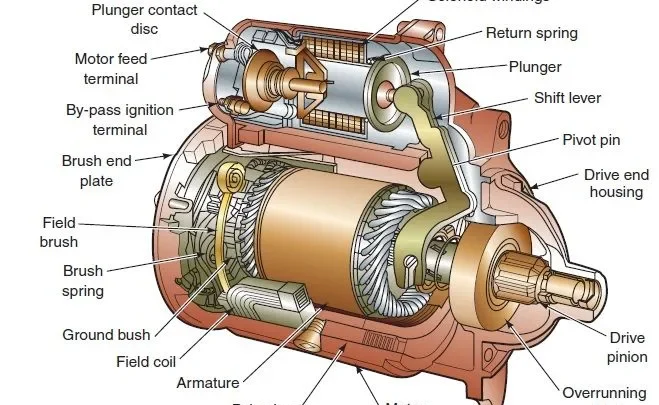
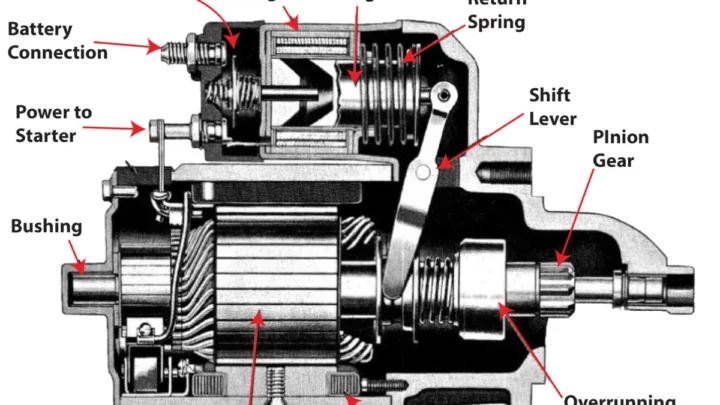
The alternator then does two things at once. It powers everything electrical while you drive, and it tops the battery back up. Inside it, spinning magnets generate alternating current.
A set of diodes, called the rectifier, converts that into the direct current your car needs. A voltage regulator keeps the output in that safe 13.8 to 14.8 volt window.
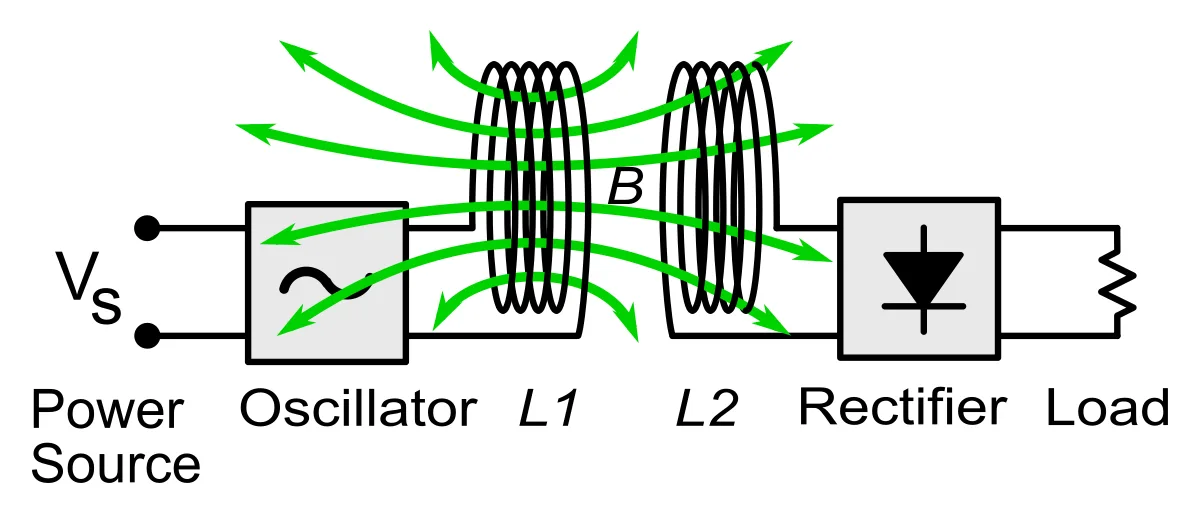
When any of those parts fail, the voltage going to the battery drifts out of range. A lead-acid battery stores energy through a chemical reaction between lead plates and sulfuric acid, and that reaction only works cleanly within a narrow voltage band, as the U.S. Department of Energy notes in its work on vehicle batteries.
Too much voltage or too little, and the chemistry breaks down. That's the whole reason a broken alternator can quietly destroy good hardware.
The Three Ways a Failing Alternator Destroys a Fresh Battery
A failing alternator doesn't kill a battery one single way. It does it through three separate faults, and each leaves a different fingerprint. Knowing which one you've got tells you what to test and what to fix.

Overcharging: When Too Much Voltage Cooks the Cells
Overcharging is the fastest killer. When the voltage regulator fails, output can climb past 15 or even 16 volts. That extra voltage forces the battery to gas heavily, boiling off the electrolyte and warping the internal plates.
You'll often spot a swollen or bulging case, like the battery in the photo above. Heat builds, the case deforms, and sometimes you'll catch a sharp sulfur smell. That rotten-egg odor is hydrogen sulfide venting out, and it's a classic sign your battery is being overcharged.
Left alone, an overcharge can ruin a new battery in a single long drive.
Undercharging: The Slow Starvation That Sulfates Plates
Undercharging is quieter but just as deadly over time. Here the alternator can't push enough voltage, so the battery never gets fully topped up. It sits partly discharged day after day.
That constant low state causes sulfation. Hard sulfate crystals build on the plates and slowly choke the battery's capacity. A worn serpentine belt, a failing regulator, or a tired alternator can all cause this.
If your new battery keeps landing in a half-dead state, this is a common reason a fresh battery won't hold a charge.
Bad Diodes: The Overnight Drain Nobody Suspects
A bad diode is the sneakiest of the three. The rectifier's diodes are meant to let current flow one way only. When one leaks, it lets the battery bleed backward into the alternator while the car is parked.
The frustrating part is that daytime charging can look perfectly normal. Then you wake up to a dead battery. This shows up as a parasitic drain, and it's a leading cause of a new battery that dies overnight.
A leaky diode also throws AC ripple into the system, which is something you can measure.
Warning Signs Your Alternator Is the Real Culprit
Before you test anything, your car usually drops hints. These are the signs that point at the alternator rather than the battery itself.
- Battery warning light on the dash. That glowing battery icon means a charging-system fault, not just a low battery.
- Dim or flickering headlights. Lights that brighten when you rev and fade at idle suggest inconsistent output.
- Electrical gremlins. A weak blower, slow power windows, or flickering dash lights often trace back to poor charging.
- Repeat battery deaths. If a second new battery dies the same way, the battery isn't the problem.
- A whining or growling belt. Worn bearings or a slipping belt cut alternator output.
- Sulfur smell or a swollen case. These point straight to overcharging.
One clue is easy to misread. A battery that reads healthy voltage but still cranks slowly can fool you into blaming the alternator when the battery has an internal fault. If you're seeing mixed signals, it helps to know the full list of symptoms that mean a battery is done so you can rule it out first.
Once the warning signs stack up toward the charging system, put a meter on it.
Bad Alternator or Bad Battery? How to Tell Them Apart
The quickest way to split the two is a voltage comparison, engine off versus engine on. A battery problem shows up at rest. An alternator problem shows up while running.
Start with the engine off. A healthy battery reads about 12.6 volts. If it reads 12.2 or lower after a full night's rest and won't hold that charge, the battery is likely tired.
Now start the engine. If voltage jumps to 13.8 to 14.8, the alternator is charging fine and the battery is your culprit.
Flip the logic for the alternator. If the resting voltage is healthy but running voltage stays flat near 12.4, the alternator isn't charging. Here's a handy split:
| Symptom | Points To |
|---|---|
| Slow crank every morning, weak at rest | Battery |
| Dies overnight, fine during the day | Alternator diode |
| Dash battery light while driving | Alternator / charging |
| Reads 12.6V but won't crank | Battery or bad ground |
| Voltage climbs past 15V running | Alternator overcharge |
One tricky case trips people up. A battery can show good voltage yet fail under load, which is why a good voltage reading with no crank doesn't clear the battery on its own. Voltage tells you charge level, not health.
Test It Yourself: A Multimeter Walkthrough
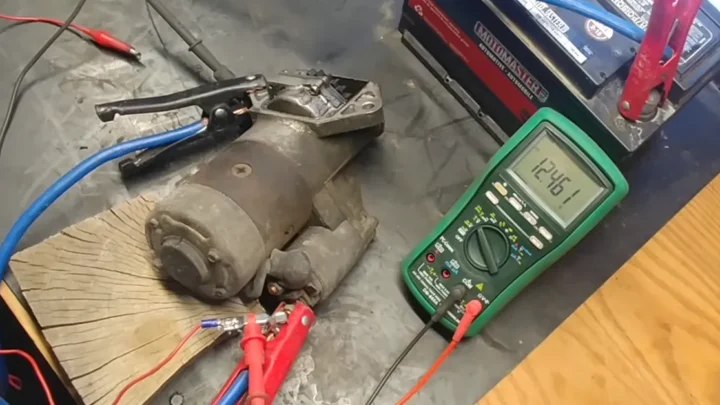
You only need a basic digital multimeter to sort this out. Set it to DC volts on the 20-volt range. The whole check takes five minutes and confirms exactly what's wrong.
A meter can even check the alternator directly without pulling anything apart.

Touch the red probe to the positive terminal and the black probe to the negative. Simple, safe, and reliable. If you're nervous about the meter itself, the good news is you won't hurt it testing 12 volts on the DC range.
Resting Voltage (Engine Off)
With the car off for a few hours, read across the terminals. You want 12.6 volts or higher. If you see 12.4 or less, the battery is undercharged and needs a top-up before any other test means much.
A reading below 12.0 signals a deeply drained or failing battery.
Charging Voltage (Engine Running)
Start the engine and read again. You should see 13.8 to 14.8 volts at idle. Rev to about 2,000 rpm and watch the number.
If it climbs past 15 volts, that's overcharging. If it barely moves above resting voltage, the alternator isn't doing its job.
AC Ripple and Diode Check
Switch the meter to AC volts with the engine running. A good rectifier gives you a tiny reading, ideally under 0.05 volts AC. Anything above roughly 0.1 volts AC points to a leaking diode.
That stray AC ripple is a dead giveaway for a failing alternator, even when DC voltage looks normal.
Parasitic Draw Test
If the battery drains while parked, hunt for a parasitic draw. Set the meter to measure amps in series with the negative cable. Under 50 milliamps (0.05A) is normal.
Anything higher means something is pulling power. Our guide on tracing a draw through the fuse box walks through isolating the exact circuit.
Voltage Numbers That Tell the Whole Story
Voltage readings are the single clearest evidence you'll get. Memorize these numbers and diagnosis gets a lot easier.
| Reading | What It Means |
|---|---|
| 12.6V+ (engine off) | Fully charged, healthy |
| 12.4V (engine off) | About 75% charged |
| 12.2V (engine off) | About 50%, needs charging |
| 13.8V to 14.8V (running) | Alternator charging correctly |
| Above 15V (running) | Overcharging, regulator fault |
| Below 13.3V (running) | Undercharging, weak alternator |
| Over 0.1V AC (running) | Bad diode / ripple |
Keep one thing in mind about charging behavior. A short drive rarely refills a low battery, and idling barely helps. If you've been relying on quick trips, know that idling does little to recharge a depleted battery.
It usually takes a solid highway run or a proper charger.
Mistakes That Fry Battery After Battery
Plenty of people replace two or three batteries before finding the real fault. These are the errors that keep the cycle going.
- Swapping the battery without testing the alternator. The most common miss. A fresh battery fails the same way if charging is broken.
- Ignoring corroded terminals or a bad ground. Corrosion adds resistance and mimics charging faults. Clean connections first.
- Trusting resting voltage alone. A battery can read 12.6 and still fail a load test.
- Overlooking a worn belt. A glazed or loose serpentine belt starves the alternator of speed.
- Letting a drain sit. A parasitic draw quietly discharges the battery every night until it sulfates.
There's another quiet killer worth naming. Repeatedly running a battery flat and jump-starting it damages the plates for good. If a battery keeps ending up dead, chase the cause instead of resetting the clock, since a pattern of overnight battery deaths almost always has a fixable root.
Safety Steps Before You Touch the Battery
Car batteries deserve respect. They hold sulfuric acid and vent hydrogen gas, and hydrogen is flammable. A few basic habits keep the job safe.

Similar Posts