What Is Low SAPS Oil? Meaning, Benefits & When to Use It
If you're pulling a bottle off the shelf and wondering what is a low SAPS oil, here's the short answer. It's an engine oil formulated with reduced sulphated ash, phosphorus, and sulphur. Those three residues are what clog modern emission-control hardware like DPFs, GPFs, and catalytic converters.
Getting the choice right matters. Modern diesels with a DPF, and petrols with a GPF or a fragile three-way catalyst, are built around the ACEA C-sequence low-SAPS limits. Those limits cap sulphated ash between 0.5% and 0.8% by mass.
Pour in the wrong oil and you shorten filter life, poison the catalyst, and risk voiding your warranty.
Quick Answer
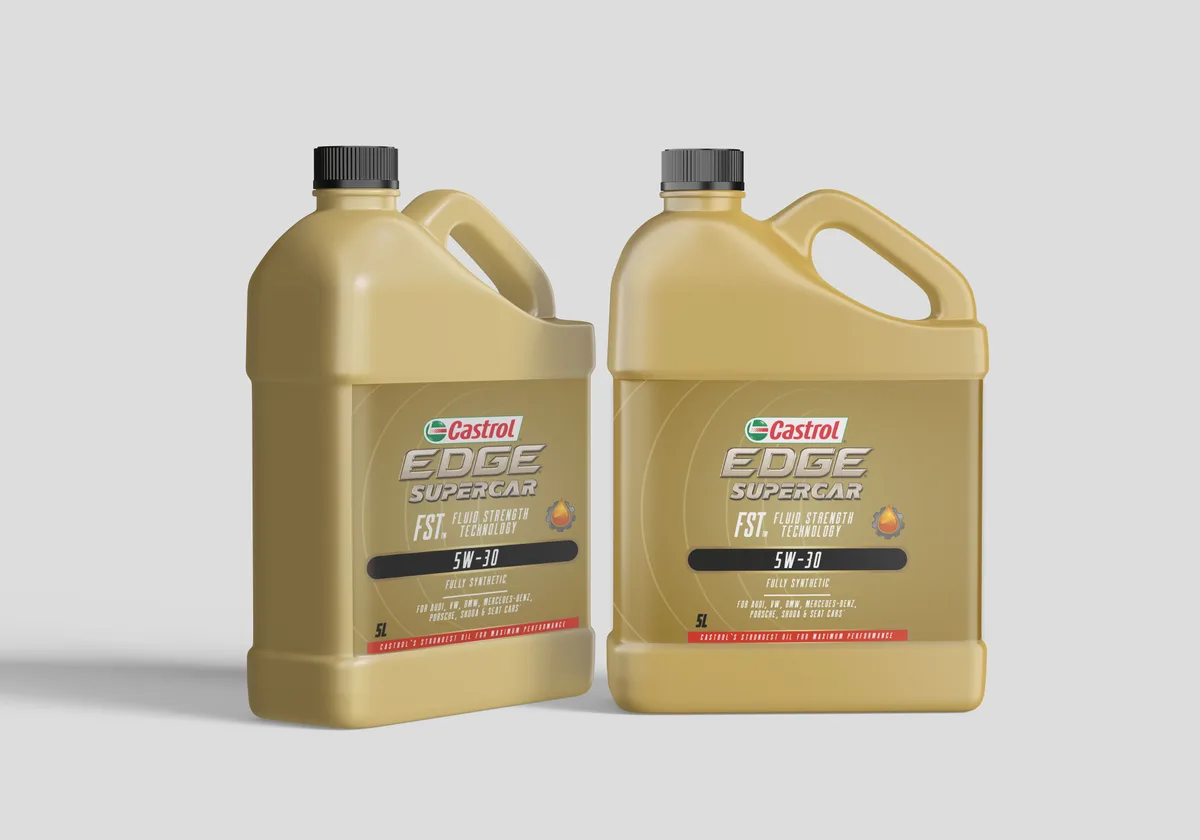
A low SAPS oil is engine oil with reduced sulphated ash, phosphorus, and sulphur. These additives damage diesel particulate filters, petrol particulate filters, and catalytic converters. Low SAPS oils carry ACEA C1, C2, C3, C4, C5, or C6 approvals.
They protect after-treatment hardware on modern petrol and diesel engines. Always match the grade and OEM approval printed in your owner's manual.
What "Low SAPS" Actually Means on an Oil Bottle
SAPS is an acronym. It stands for Sulphated Ash, Phosphorus, and Sulphur. These are the metallic and non-metallic residues left behind after an oil's additives finish their job inside a running engine.
On modern packaging, the words "low SAPS" mean the formulation stays under strict caps for all three. Less ash gets pushed into your particulate filter over time. Less phosphorus and sulphur reach the catalyst coating.
The label rarely spells the letters out. Instead you'll see an ACEA code such as C2 or C3, plus an OEM approval like MB 229.51 or VW 507.00. Those markings are the real proof.
If you only see an ACEA A3/B4 badge, that's a full SAPS oil, not a low or mid SAPS one.
Why SAPS Levels Matter for Modern Engines with DPFs, GPFs, and Catalysts
Every modern car sold in Europe since Euro 5 runs through some form of after-treatment brick. The same is true for most new North American petrol cars as of 2026. That includes the diesel particulate filter (DPF), the gasoline particulate filter (GPF), and the three-way catalytic converter.
Each of those parts is chemically fragile.
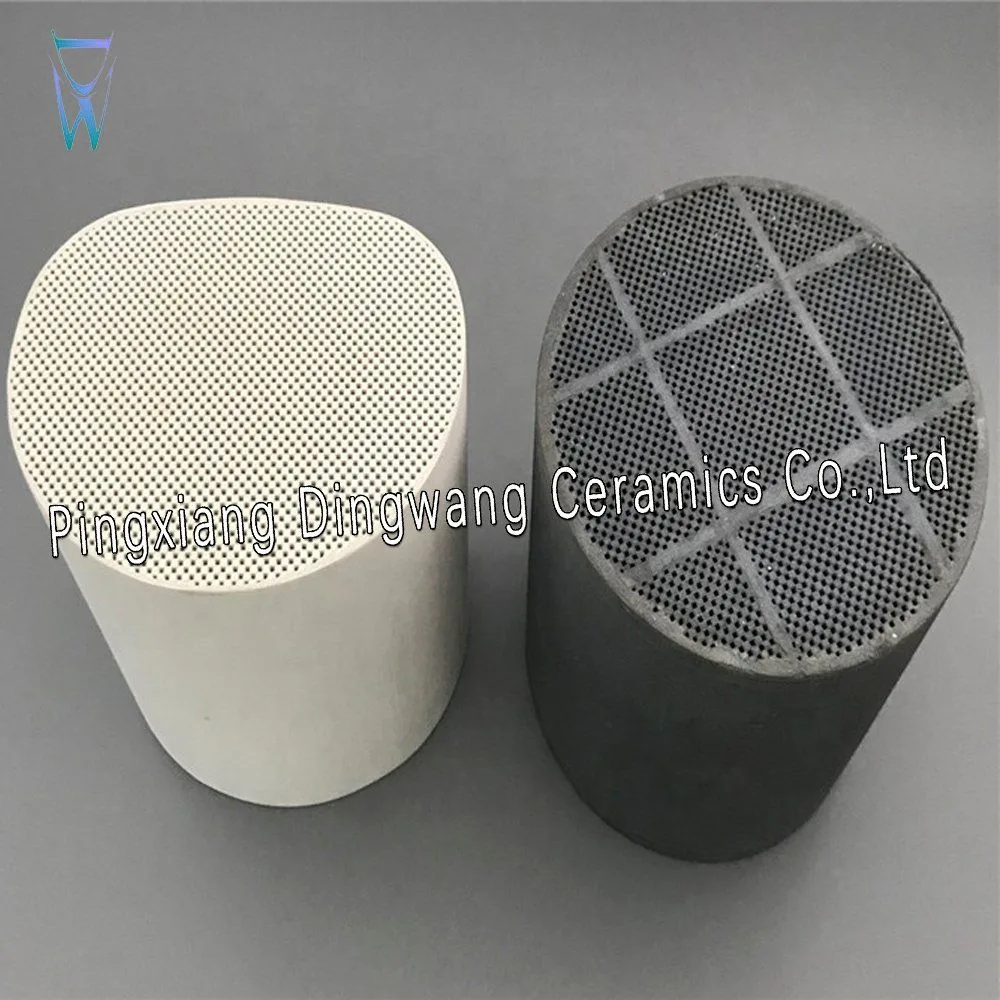
Small amounts of oil always find their way into the combustion chamber through valve stems, piston rings, and turbocharger seals. When that oil burns, the metallic detergents leave sulphated ash behind. The ash rides down the exhaust and lodges in the DPF or GPF honeycomb.
Over years it builds a hard, non-combustible layer that no regeneration cycle can burn off.
Phosphorus and sulphur cause a different failure mode. Both bond to the precious metal coating inside the catalyst and block active sites. The result is higher tailpipe emissions, MOT failures, and eventually a full aftertreatment replacement.
On a family diesel that bill can run past £2,000.
The Chemistry Behind Sulphated Ash, Phosphorus, and Sulphur
Every engine oil is a blend of base oil plus roughly 15% to 25% additive chemistry. Those additives do the heavy lifting. They clean deposits, neutralise acids, prevent wear, and hold soot in suspension.
Most of them contain metals.
- Sulphated ash comes mainly from calcium and magnesium detergents, plus zinc-based anti-wear additives.
- Phosphorus comes from ZDDP (zinc dialkyldithiophosphate), the workhorse anti-wear compound.
- Sulphur comes from ZDDP as well, plus certain detergent chemistries and the base oil itself.
Low SAPS formulations swap high-metal detergents for ashless organic ones. They also trim ZDDP down to the minimum needed to protect cam lobes, followers, and timing chains. That's a real engineering trade-off.
Less zinc means the base oil and dispersant package have to work harder. This is why low SAPS oils lean on Group III, Group IV PAO, and Group V ester base stocks rather than cheaper Group II. Keep this in mind when you tackle a routine drain and refill at home.
How Low SAPS, Mid SAPS, and Full SAPS Oils Differ
The industry uses three loose bands. Full SAPS oils are traditional formulations with no ash cap, used in older engines without particulate filters. Mid SAPS sits in the middle and suits most catalyst-only diesels and petrols.
Low SAPS carries the tightest caps and targets any vehicle with a DPF or GPF.
Sulphated Ash, Phosphorus, and Sulphur Limits Side by Side
| Tier | ACEA class | Sulphated ash (max) | Phosphorus (max) | Sulphur (max) |
|---|---|---|---|---|
| Low SAPS | C1, C4 | 0.5% | 0.09% | 0.2% |
| Mid SAPS | C2, C3, C5 | 0.8% | 0.09% | 0.3% |
| Full SAPS | A3/B4 | 1.6% | 0.12% | no cap |
These numbers come from the ACEA Oil Sequences document. Anything under 0.8% ash is safe for a DPF on a normal service interval. Anything over 1.0% will shorten filter life sharply.
Where HTHS Viscosity Fits In
HTHS (High-Temperature High-Shear) viscosity is measured at 150°C. It tells you how the oil behaves at real-world bearing temperatures under load.
Low SAPS oils split into two families here. C1, C2, and C5 use a low HTHS of 2.9 mPa·s or above for fuel economy. C3 and C4 hold a higher HTHS of 3.5 mPa·s or above for stronger high-load protection.
Getting this wrong is where most owners slip up, so treat HTHS with the same care as the ash cap.
Reading the ACEA C-Sequence (C1, C2, C3, C4, C5, C6)
The ACEA C-sequence is the European classification for catalyst-compatible low-SAPS oils. Published and periodically revised by the European Automobile Manufacturers' Association, it defines six active grades as of 2026.
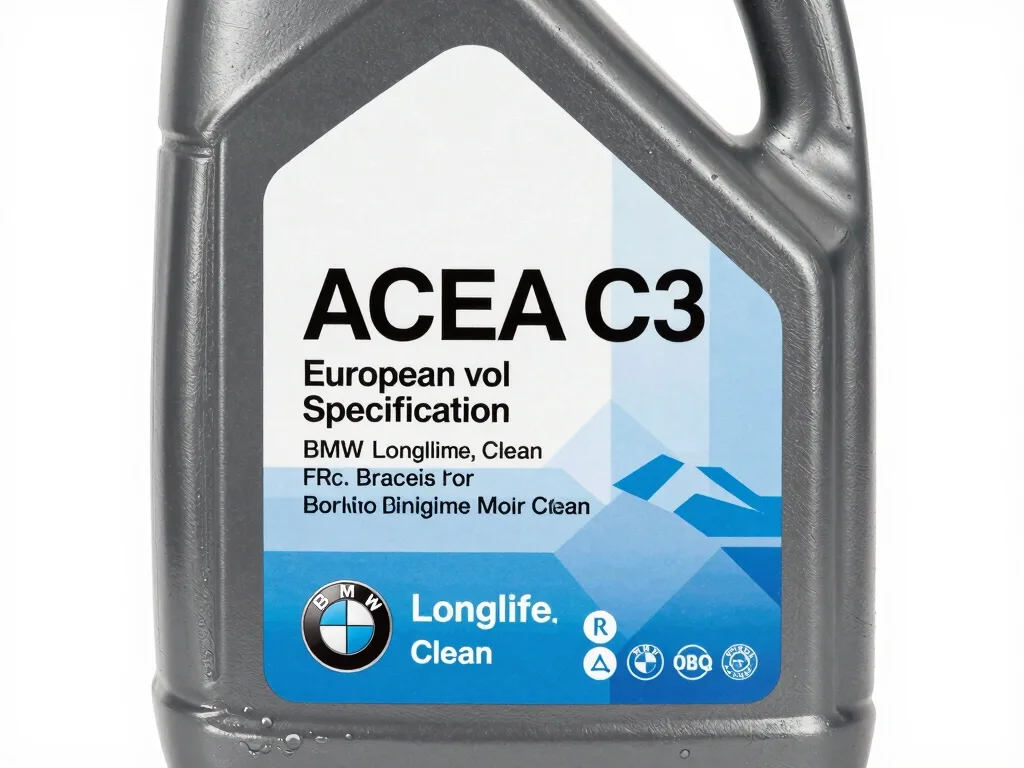
Each letter and number pair tells you two things: the ash tier and the HTHS band.
- C1: low SAPS (0.5% ash), low HTHS. Rare, mostly older Ford and Jaguar diesels.
- C2: mid SAPS (0.8% ash), low HTHS. PSA, Peugeot, Citroën, and some Toyota diesels.
- C3: mid SAPS (0.8% ash), high HTHS. The most common European spec, covering VAG, Mercedes-Benz, and BMW.
- C4: low SAPS (0.5% ash), high HTHS. Renault dCi engines with a DPF.
- C5: mid SAPS (0.8% ash), ultra-low HTHS of 2.6 mPa·s. Fuel-economy focused, newer VAG and Jaguar Land Rover.
- C6: the newest tier, low HTHS with tighter LSPI and chain-wear protection for hybrids and GPF-equipped petrols.
Never assume one C-grade substitutes for another. A C3 poured into an engine that calls for C2 will run. You may lose fuel economy and shorten the service interval, though.
A C2 in place of a required C3 is worse. The lower HTHS reduces bearing protection under load.
API, ILSAC, and OEM Approvals That Signal a Low-SAPS Oil
ACEA is not the only game in town. American and Asian carmakers lean on their own standards. Any oil worth pouring into a modern engine carries a stack of them on the back label.
API SN, SP, and the new SQ category (introduced in 2025) all limit phosphorus for catalyst protection. But API alone does not guarantee low SAPS. ILSAC GF-6 and GF-7 add tighter volatility and LSPI protection for petrol engines.
For diesel, API CJ-4, CK-4, and FA-4 are the low-SAPS heavy-duty tiers driven by EPA 2007 and 2010 emissions rules.
Mercedes-Benz, BMW, VW/Audi, and Porsche Specifications
Mercedes-Benz uses MB 229.51 and MB 229.52 for mid-SAPS long-life oils, and MB 229.71 for its newest low-HTHS grades. BMW LL-04 is the mid-SAPS spec covering most modern BMW petrol and diesel engines. Volkswagen Group runs VW 504.00 (petrol) and VW 507.00 (diesel with DPF) as its main long-life low-SAPS pair.
Porsche C30 is the go-to for its DPF-equipped four and six-cylinder cars.
GM dexos D, Ford, and Stellantis Requirements
GM dexos D is the North American low-SAPS diesel spec. GM dexos1 Gen 3 is the current petrol spec built around GPF and LSPI protection. Ford calls out WSS-M2C934-B for its European DPF diesels and WSS-M2C948-B for GPF-equipped EcoBoost petrols.
Stellantis brands (Fiat, Jeep, Peugeot, Citroën) reference their own MS-series and PSA B71 numbers, which map onto ACEA C2 or C3.
Which Engines Actually Need a Low-SAPS Oil
If your car has a DPF or GPF fitted from the factory, you need a low or mid-SAPS oil. Full stop. That covers essentially every diesel sold in Europe since 2009 and every direct-injection petrol sold in the EU since roughly 2018.
The rule extends to plenty of North American cars too. GM, Ford, and Stellantis have rolled GPFs into GDI engines from the 2019 model year onward as CARB LEV III tightened. If your owner's manual lists dexos D, dexos1 Gen 3, or an ACEA C-grade, you are in low-SAPS territory.
Older engines are a different story. A 2005 naturally-aspirated petrol with a simple three-way cat is perfectly happy on a full-SAPS ACEA A3/B4 oil. Pouring a low-SAPS C3 into it will not harm anything, but you may pay more for no measurable benefit.
Risks of Pouring the Wrong Oil into a DPF or GPF Car
The damage from a wrong-oil top-up is rarely instant. It's slow, cumulative, and expensive to reverse.
- Ash-loaded DPFs cannot be regenerated. Once the filter reaches around 100 grams of ash, the only fixes are chemical cleaning (£150 to £400) or replacement (£800 to £2,500).
- A poisoned catalyst raises NOx and CO output, which shows up as an amber engine light and an MOT failure.
- Fuel dilution rises when the DPF regenerates too often, thinning the oil and accelerating bearing wear.
- Frequent forced regenerations burn extra diesel and can trigger limp-home mode on the motorway.
- Warranty claims for turbocharger or DPF failure will be rejected if service records show a non-approved oil.
The catch is that none of this shows up on the dipstick. By the time the dashboard warns you, the ash is already there.
How to Confirm You're Buying a Genuine Low-SAPS Oil
The back label is your only reliable check. Front-of-bottle marketing means nothing without the numbers to back it up.
Look for two things printed clearly. First, an ACEA C-grade (C1 through C6) rather than just A3/B4. Second, the specific OEM approval your manual lists, printed under a heading such as "Approvals" or "Freigabe".
The word "Approved" is stronger than "Meets" or "Suitable for", which are marketing claims with no third-party audit behind them.
Cross-check the batch number on the manufacturer's oil-selector tool. Shell, Mobil, Castrol, Total, and Fuchs all publish free look-up tools that confirm which live approvals a bottle carries. Counterfeit oil is a real problem in some markets, so buy from a factor with proper trade supply rather than a lay-by cash sale.
The same care you'd take when vetting a used car before purchase applies here: verify, don't assume.
Common Mistakes When Choosing Between C2, C3, and C5
Confusing the three is the single biggest owner error. All three are mid-SAPS at 0.8% ash, so the ash cap alone doesn't tell them apart. HTHS viscosity does.
- C2 has low HTHS (≥ 2.9 mPa·s). Best for PSA and Toyota diesels tuned around fuel economy.
- C3 has high HTHS (≥ 3.5 mPa·s). Best for VAG, Mercedes-Benz, and BMW engines built for load and long drain intervals.
- C5 has ultra-low HTHS (≥ 2.6 mPa·s). Best for the newest VAG and JLR petrols where every gram of CO2 counts.
Swapping a required C3 for a C5 to chase a fuel-economy bump will strip out bearing protection. Swapping C2 for C3 in a PSA engine can push you outside the emissions calibration and cause the DPF differential-pressure sensor to log faults. Match the letter, match the number, and match the HTHS.
Everything else is guesswork.
What Low-SAPS Oil Does Not Do (Myths Worth Clearing Up)
A few claims get repeated online that just aren't true. Low SAPS oil doesn't clean an already-clogged DPF. Once ash is baked in, no oil change can lift it out.
It also doesn't add fuel economy on its own. The economy gain comes from the low-HTHS variants (C1, C2, C5), and only when the engine is calibrated for them. A high-HTHS C3 low-SAPS oil delivers the same MPG as a full-SAPS A3/B4 of the same viscosity.
Low SAPS is not the same as "low viscosity" either. A 5W-40 C3 is a low-SAPS oil, and so is a 0W-20 C5. The two are wildly different in behaviour at operating temperature.

Similar Posts