How to Test Parasitic Draw With a Multimeter
Your battery was fine last night, and this morning the car won't crank. If that keeps happening, learning how to test parasitic draw with a multimeter is the fastest way to find out what's quietly killing it while you sleep. A parasitic draw is any current your car pulls after everything's switched off and the doors are shut.
Some draw is normal. Too much is what leaves you stranded.
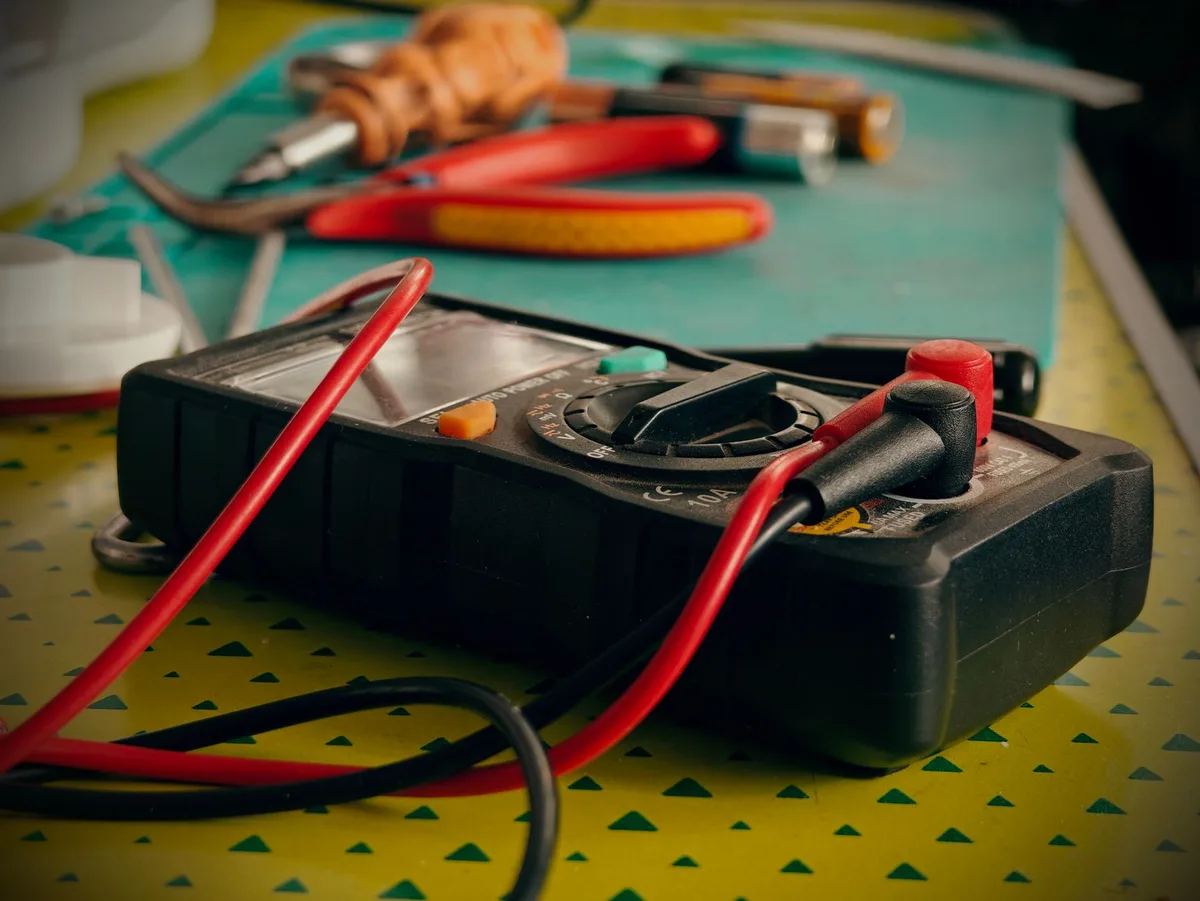
The good news is you don't need a shop or a scan tool for this. A basic digital multimeter, the kind that costs less than a single battery, will do it. As of 2026, most modern vehicles pull a normal key-off draw of roughly 20 to 50 milliamps once the electronics power down.
Anything much higher, and something's staying awake that shouldn't be. Here's how to catch it.
Quick Answer
Set your multimeter to DC amps. Plug the leads into the 10A and COM jacks. Disconnect the negative battery cable and connect the meter in series between the post and cable.
Let the car sit until the reading drops. A normal parasitic draw is 20 to 50 milliamps. Anything above 50mA points to a fault.
Why Your Car Battery Keeps Dying Overnight
If your battery drains overnight but tests fine during the day, the problem usually isn't the battery. It's something drawing power while the car sleeps.
A healthy battery holds its charge for weeks when the draw is normal. When a light, relay, or module stays powered, it slowly bleeds the battery flat. By morning, you've got too little juice to start.
Here's the quick logic:
- If the battery dies only after sitting a few days, suspect a parasitic draw.
- If it dies right after a drive, suspect the alternator or the battery itself.
- If it cranks slow even after a full charge, test the battery's health first.
That last point matters. Before you chase a draw, confirm the battery isn't just worn out. A quick way to rule that out is a simple voltage reading at the terminals.
If the battery's genuinely bad, no draw test will fix a no-start.
Common culprits behind an overnight drain include:
- Interior, trunk, or glovebox lights staying on
- Aftermarket add-ons like dash cams, alarms, and stereos
- A stuck relay holding a circuit live
- A failing alternator diode leaking current backward
What Parasitic Draw Actually Is (and Why Modern Cars Always Have Some)
Parasitic draw is the small amount of current your vehicle uses with the key off. Every modern car has some, and that's completely normal.
Think about what stays on even when parked. The clock, the radio presets, the security alarm, the keyless entry receiver, and a dozen control modules all sip tiny amounts of power. They have to, or you'd lose your settings every time you shut the door.
The catch is timing. Right after you lock up, those modules stay busy for a while before they go into a low-power sleep state. During that window the draw can read 200mA or more, which is fine.
It's only a problem if the number never settles down.
Here's what typical numbers look like:
| Vehicle type | Normal key-off draw |
|---|---|
| Older, simple vehicles | Under 25 mA |
| Modern cars (as of 2026) | 20 to 50 mA |
| Just after lock-up (modules awake) | 100 to 500 mA (temporary) |
| Faulty / worth chasing | Sustained 75 mA and up |
The takeaway: zero is not the goal. A reading of 30mA on a newer car is perfectly healthy. A reading of 300mA that never drops is your problem.
Roughly speaking, a steady 300mA draw can flatten a mid-size battery in just a few days of sitting. That's why a small number matters so much.
Tools You Need: Multimeter vs DC Clamp Meter
You've got two solid ways to measure a parasitic draw. A standard digital multimeter wired in series, or a DC clamp meter that reads current through the cable without breaking anything.
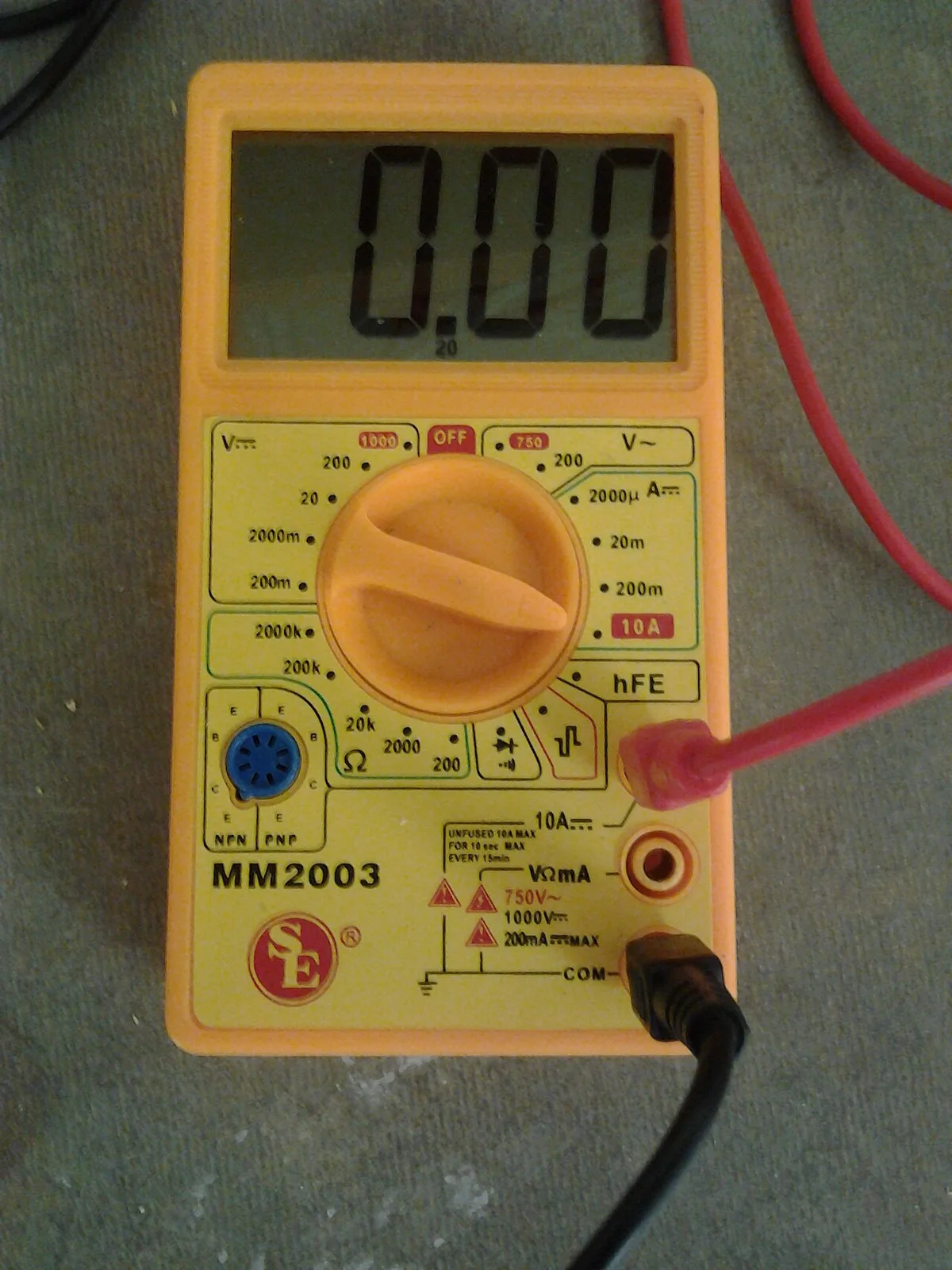
Both work. They just suit different people.
- Digital multimeter (in series): cheap and accurate down to single milliamps. You have to break the circuit to connect it, which means the modules wake up and you restart the wait.
- DC clamp meter: you just clamp it around the negative cable. Nothing gets disconnected, so the car stays asleep. The trade-off is resolution, since most affordable clamps only read down to about 10mA.
Here's a quick side-by-side:
| Feature | Digital multimeter | DC clamp meter |
|---|---|---|
| Cost | Low | Medium to high |
| Accuracy | Down to 1 mA | Around 10 mA |
| Disconnect needed | Yes | No |
| Keeps modules asleep | No | Yes |
| Best for | Precise draw testing | Fast checks, live circuits |
For most home users, a decent multimeter is best. It's affordable and precise enough to spot a bad circuit. Just make sure it can read DC amps and has a fused 10A input.
Manufacturers like Fluke publish the fuse ratings for their meters, and that fuse is what protects you if you make a wiring slip.
If you already own a multimeter and know the basics of testing a battery, you've got everything you need here. It's the same tool, a different setting.
Before You Test: Getting the Car to "Sleep"
Your reading is only as good as how patient you are. If the modules are still awake, your number will be sky-high and mean nothing.
After you shut the doors, control modules stay active for a while before they drop into sleep mode. This can take anywhere from 20 to 40 minutes, and on some vehicles longer than an hour. Rush it, and you'll condemn a perfectly good circuit.
Do this before you measure:
- Turn off every light, the climate control, and the radio.
- Remove the key or keep the fob well away from the car.
- Close the hood, doors, trunk, and fuel door.
- Roll down a window first so you can reach in without opening a door later.
The tricky part is keeping the car asleep while you work. Opening a door wakes everything back up and resets the clock. To avoid that, tape or prop the door-jamb switch (and the hood-latch switch) so the car thinks it's still shut.
Then wait. Watch the meter and give it time. When the reading stops falling and holds steady, that settled number is your true parasitic draw.
That's the figure you compare against the 20 to 50mA range.
How to Test Parasitic Draw With a Multimeter, Step by Step
Once the car's asleep, the test itself takes just a few minutes. Follow the steps in order and don't break the connection until you're done.

Setting Up the Meter (10A Jack, DC Amps)
Always start on the highest current range. Plug the red lead into the 10A (or 10-amp fused) jack, and the black lead into COM.
Turn the dial to DC amps, shown as A with a straight line, not the wavy AC symbol. Starting at 10A protects the meter's internal fuse from a surge. You can switch to the mA jack later, but only once you know the draw is small.
Connecting in Series at the Negative Terminal
The meter has to sit in the circuit, not across it. That means current flows through the meter on its way to ground.
- Loosen and remove the negative battery cable from the post.
- Touch one meter lead to the battery's negative post.
- Touch the other lead to the disconnected cable end.
- Current now runs through your meter. That's a series connection.
A quick tip: use a memory saver or a small jumper across the connection while you swap leads. It keeps radio codes and presets alive and stops the modules waking up.
Reading the Baseline and Waiting for Modules to Shut Down
Your first reading will look high. That's normal, because connecting the leads just woke everything up.
Leave the meter connected and wait. Over the next 20 to 40 minutes, the number should fall as modules power down. When it settles and holds steady, that's your real parasitic draw.
Write it down before you touch anything.
Reading Your Number: Normal, Borderline, or a Real Problem
Compare your settled reading against the healthy range. That single number tells you whether to stop or keep digging.
- Under 50 mA: normal. No parasitic problem. Reconnect and move on.
- 50 to 75 mA: borderline. Fine on most cars, worth watching if the battery still dies.
- Over 75 mA: a real draw. Something's staying awake. Move to the fuse-pull step.
- Over 300 mA: severe. This will flatten a battery in a couple of days.
If your number sits in the normal range but the battery still dies, the battery itself is the likely suspect. A weak cell can look fine on a quick check yet fail under load. In that case, a proper battery health test comes first.
If the draw is high, don't panic. You've confirmed the problem exists. Now you just have to find which circuit owns it.
Finding the Culprit: The Fuse-Pull Method
The fuse-pull method isolates the exact circuit causing the drain. You pull fuses one at a time and watch for the reading to drop.

Keep the meter connected and in series the whole time. Then work through both fuse boxes, the one inside the cabin and the one under the hood.
- Pull one fuse. Watch the meter.
- If the reading doesn't change, put the fuse back and move to the next.
- If the reading drops sharply, you've found the guilty circuit.
- Check your owner's manual to see what that fuse feeds.
Say your draw sits at 320mA. You pull the fuse labeled "AUDIO" and it falls to 40mA. That points straight at the stereo or an amp wired to it.
From there you trace the component and fix it.
One warning: pulling a fuse can wake modules and briefly bump the reading. Give it a second to resettle before you judge each fuse.
The Millivolt Drop Alternative (No Disconnecting)
If you'd rather not break the circuit at all, use the millivolt drop test. It reads the tiny voltage across each fuse while everything stays connected.
Set your meter to DC millivolts. Touch the two probes to the exposed test points on top of each fuse. A live circuit pulling current shows a small millivolt reading.
A dead one reads zero.
The upside is the car never wakes up, so you skip the long wait. The downside is it's less precise, and you'll need a reference chart to turn millivolts into amps. For most people, the fuse-pull method is easier to trust.
Common Sources of a Bad Draw
Most parasitic draws trace back to a short list of usual suspects. Knowing them saves you time at the fuse box.
- Lights that won't turn off: glovebox, trunk, vanity, and under-hood lights top the list. A stuck switch keeps them lit with the doors closed.
- Aftermarket electronics: hard-wired dash cams, alarms, amplifiers, and GPS trackers are frequent offenders. Sloppy installs often tap a constant-power wire.
- Stuck relays: a relay that won't release holds its circuit live. Cooling fans and fuel pumps are common examples.
- Failing alternator diode: a leaky diode lets current flow backward into the alternator overnight. This one often shows up as a draw that won't trace to any single fuse.
If pulling every fuse doesn't kill the draw, suspect something wired directly to the battery. That includes the alternator, the starter, and any amp with a fat power lead straight off the positive post.
Here's the pattern to remember. If the draw disappears when you pull a fuse, chase that circuit. If it doesn't, look at the big unfused connections instead.
Mistakes That Wreck Your Reading (and Blow Your Meter Fuse)
The test is simple, but a few slip-ups will ruin your results or cost you a meter fuse. Here are the ones that catch people out.
- Starting on the mA range: too much current blows the internal fuse instantly. Always begin on the 10A jack.
- Cranking the engine with the meter connected: the starter pulls hundreds of amps. That surge destroys the meter fuse in a heartbeat. Never start the car in series.
- Not waiting long enough: reading at five minutes gives a falsely high number. Give modules the full 20 to 40 minutes.
- Opening a door mid-test: this wakes everything and resets the clock. Prop the door switches instead.
- Leaving the leads in the wrong jacks: red in the voltage jack while measuring amps reads nothing useful. Double-check before you connect.
One more that trips people up: expecting zero. A modern car will never read zero milliamps, and that's fine. You're hunting for an abnormal number, not silence.
If your meter fuse does blow, don't force a reading. Replace the fuse with the exact rating printed inside, then start over on the 10A range.
Safety Checks Before You Hook Anything Up
A parasitic draw test is low-voltage work, but the battery itself demands respect. A few quick habits keep you and your meter safe.
- Wear eye protection. Lead-acid batteries vent hydrogen gas, and a stray spark near the terminals is a real risk.
- Remove rings, watches, and metal bracelets. Bridging both terminals with metal causes a nasty short.
- Never crank or start the engine with the meter wired in series. The starter surge will blow the fuse and can damage the meter.
- Use a memory saver if you can. Losing radio codes and seat presets is a hassle you can skip.
Work in a well-ventilated spot and keep open flames away. Standards bodies like the Society of Automotive Engineers set the battery-testing practices that shops follow, and safe handling is step one.
When to Stop and Call a Pro
Some draws are worth handing off. If you've pulled every fuse and the number won't budge, the problem sits in an unfused circuit, and that's tougher to trace.
Call a professional when:
- The draw traces to the alternator, starter, or a direct battery lead.
- You suspect a failing control module that won't sleep.
- The draw comes and goes, which points to an intermittent fault.
- You're not comfortable working around live terminals.
A shop has a scan tool that watches module sleep states in real time. That saves hours on a stubborn intermittent drain. There's no shame in it.
Knowing your settled draw number already gives the tech a huge head start.
Frequently Asked Questions
How long should I wait before reading the draw?
Give the car 20 to 40 minutes after connecting the meter. Control modules stay awake for a while before dropping into sleep mode. Some vehicles take over an hour.
Read the number only once it settles and holds steady, since an early reading always looks falsely high.
What is a normal parasitic draw in milliamps?
A normal parasitic draw is 20 to 50 milliamps on most modern cars. Older, simpler vehicles often sit under 25mA. Anything above 75mA that won't settle points to a fault.
Zero is not the target, because clocks, alarms, and modules always sip a little power.
Can I test parasitic draw without disconnecting the battery?
Yes. A DC clamp meter reads current through the negative cable with nothing disconnected, so the car stays asleep. You can also use the millivolt drop test across each fuse.
Both skip the wait, but they're less precise than a multimeter wired in series.
Will testing parasitic draw drain or damage my battery?
No, the test itself draws almost nothing and won't harm the battery. The one real risk is blowing your meter's internal fuse. That happens if you start the engine with the meter connected or begin on the milliamp range.
Always start on the 10A jack.
Your Parasitic Draw Decision Guide
Here's the whole process boiled down to a few if/then calls you can run in your driveway.
- If the battery dies only after sitting: test for a parasitic draw.
- If your settled reading is under 50mA: no draw problem, check the battery instead.
- If it's over 75mA: pull fuses one at a time to find the circuit.
- If a fuse drops the reading: trace that circuit to the faulty part.
- If no fuse changes it: suspect the alternator or a direct battery lead, and get a pro involved.
Keep the meter on the 10A jack, give the car time to sleep, and never break the circuit mid-test. Nail those three, and you'll pin down what's killing your battery in an afternoon.

Similar Posts