What Is ACEA Oil Rating? A Simple Guide to Engine Oils
If you've stared at a bottle of engine oil and wondered what is ACEA oil rating, you're not alone. It's the European performance standard that tells you whether an oil is safe for your specific engine, not just any engine. Think of it as the label that decides if that 5W-30 will protect your diesel particulate filter or slowly destroy it.
Getting it wrong can clog aftertreatment hardware and void your warranty.
The ACEA sequences are published by the European Automobile Manufacturers' Association and revised every few years. The active sets are ACEA 2016, 2021, and 2022 as of 2026. Every approved oil must pass fixed engine tests before it can carry the badge.
That single classification decides more about oil suitability than viscosity ever will.
Quick Answer
ACEA oil rating is a European performance classification for engine oils. It's published by the European Automobile Manufacturers' Association. The rating tells you which engine type an oil suits.
Codes fall into three families. A/B covers older engines, C covers catalyst and DPF vehicles, and E covers heavy-duty diesel. Every approved oil passes strict engine bench tests before earning the label.
What ACEA Oil Rating Actually Means (In Plain English)
ACEA stands for the European Automobile Manufacturers' Association. Its oil rating is a performance spec, not a viscosity grade. The rating tells you what kind of engine an oil was formulated to protect.
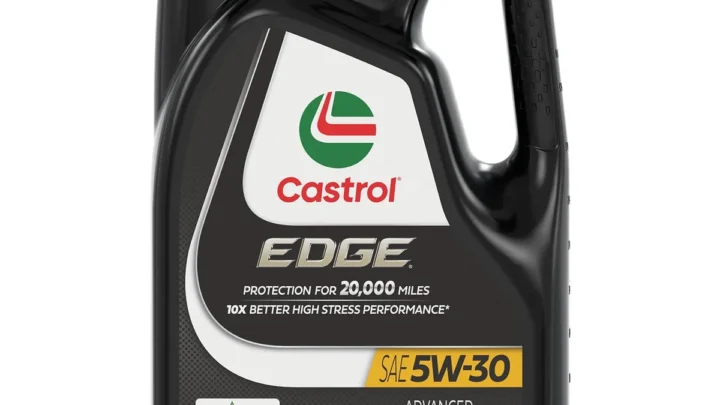
A 5W-30 with an ACEA C3 label is a very different fluid from a 5W-30 with A3/B4, even though both pour the same.
Think of viscosity as the oil's thickness and ACEA as its recipe. Two oils can share the same thickness while differing wildly in ash content, phosphorus levels, and additive chemistry. That's why matching the ACEA code to your engine matters more than picking a well-known brand.
If you're about to swap fluids yourself, our step-by-step DIY oil change walkthrough shows exactly where these specs come into play.
Who Publishes ACEA Sequences and Why They Exist
ACEA sequences are written by the European Automobile Manufacturers' Association, based in Brussels. They exist to set a common performance floor across every European carmaker. Without them, each brand would demand its own private test, and oil marketers would have no shared benchmark.
The technical heavy lifting is handled by two partner bodies. ATIEL represents the lubricant makers, and ATC represents the additive companies. Together they run the EELQMS quality system that polices every claim on a bottle.
You can find the current sequences and revision notes on the official ACEA website.
Approved oils must pass fixed engine dyno tests before any manufacturer can print the badge. That testing framework is what makes an ACEA claim meaningful, not marketing copy.
How to Read an ACEA Code on an Oil Bottle
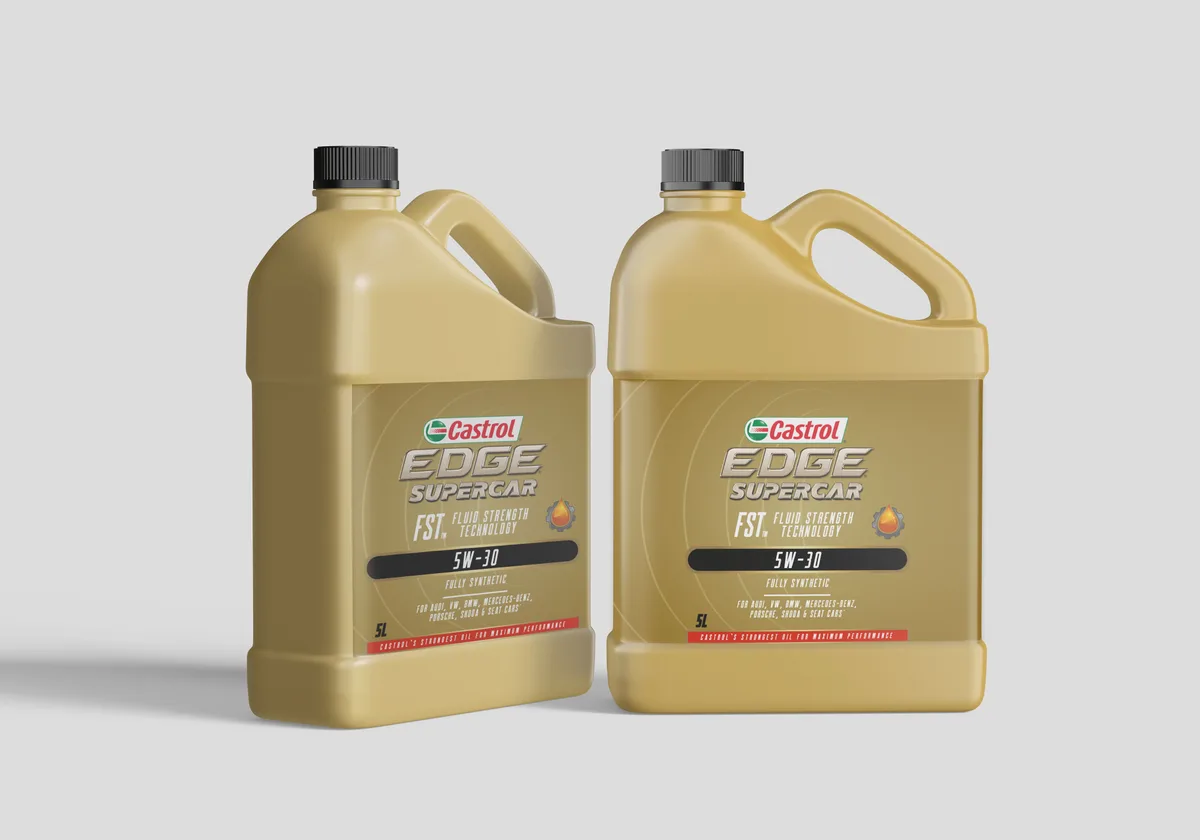
Flip any European-market oil bottle around and look for a line like "ACEA C3" or "ACEA A3/B4". That short code is the whole spec. The letter tells you the family, and the number tells you the performance tier inside that family.
Here's the quick breakdown:
- The letter (A, B, C, or E) is the engine category
- The number (1 through 9 or higher) is the performance level
- A slash between codes (A3/B4) means the oil meets both petrol and diesel sequences at once
- The year printed alongside (ACEA 2021 or ACEA 2022) tells you which revision was used
Some bottles say "meets ACEA C3" without the year. Treat that phrasing with mild suspicion. A properly approved oil states the specific sequence and often lists OEM approval numbers next to it.
The Three ACEA Families: A/B, C, and E Explained
There are three active families as of 2026. Each targets a completely different engine population. Mixing them up is the single most common ACEA mistake we see reported in workshop tickets.
| Family | Engine Type | SAPS Level |
|---|---|---|
| A/B | Older petrol and non-DPF diesel | Full SAPS |
| C | Modern engines with DPF, GPF, or catalyst systems | Mid or low SAPS |
| E | Heavy-duty diesel (trucks, buses, plant) | Varies by sequence |
ACEA A/B Sequences for Older Petrol and Diesel Engines
A/B sequences (A3/B4, A5/B5, A7/B7) suit engines built before particulate filters became standard. They carry higher zinc and phosphorus for wear protection. Use them in a modern DPF diesel and the ash will bake onto the filter walls.
ACEA C Sequences for DPF, GPF and Catalyst-Equipped Engines
C sequences (C1 through C6) are the low-SAPS oils designed for aftertreatment protection. C3 is the most common on European garage shelves. C6 is the newest addition, adding LSPI protection for turbocharged direct-injection petrol engines.
ACEA E Sequences for Heavy-Duty Diesel
E sequences (E4, E6, E7, E8, E9, E11) cover commercial vehicles. E6 and E11 suit modern Euro VI trucks with SCR systems. E7 remains popular for older EGR-based engines without particulate filters.
The One Question That Decides Your ACEA Class: Do You Have a DPF or GPF?
If your engine has a diesel particulate filter or a gasoline particulate filter, you need an ACEA C-family oil. Full stop. Everything else in the ACEA decision flow branches off that single answer.
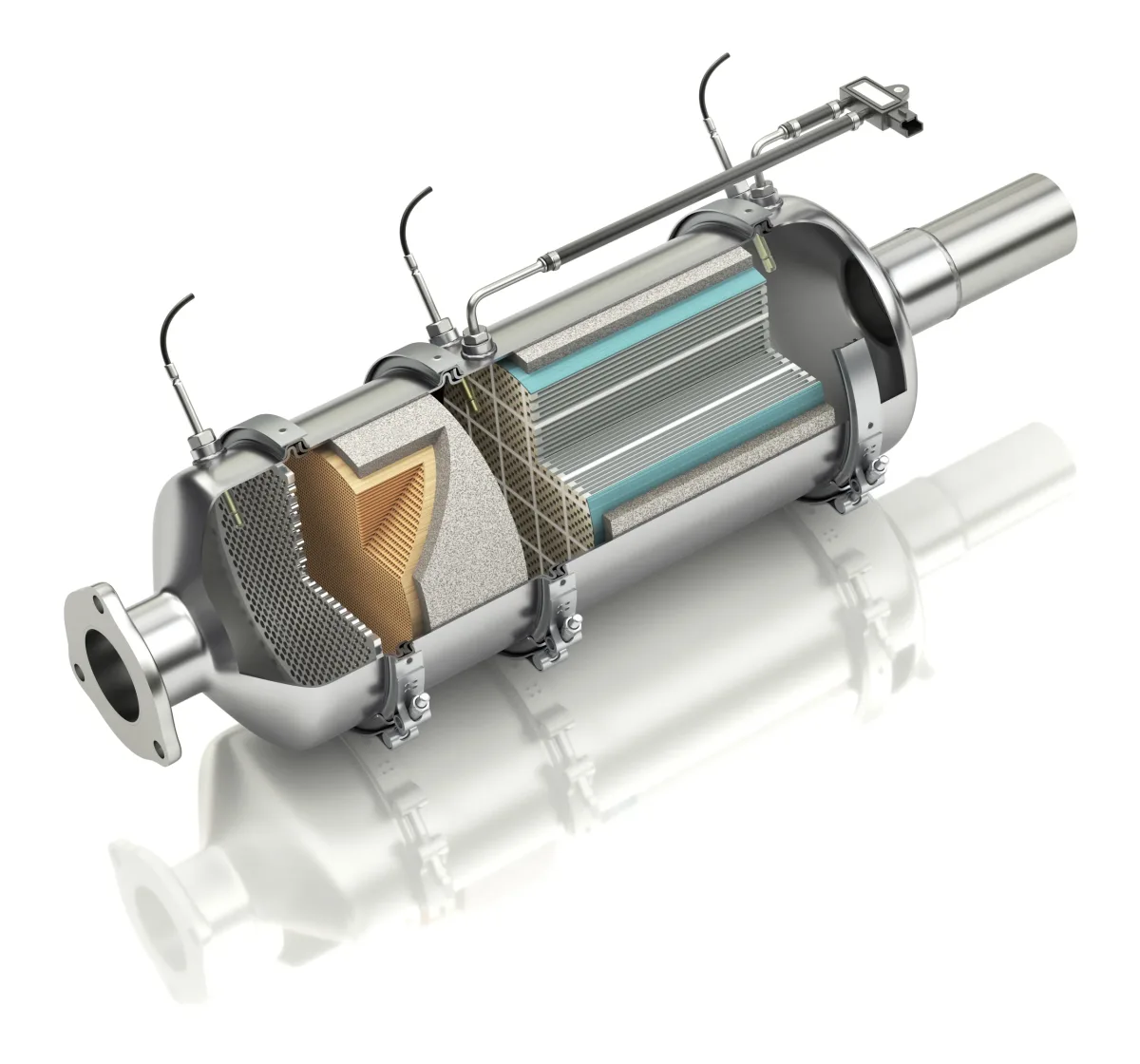
Here's why it matters so much. A DPF traps soot and burns it off during periodic regeneration cycles. Full-SAPS A/B oils leave metallic ash behind after that burn.
Ash doesn't burn away. It builds up inside the filter cells and slowly strangles exhaust flow.
The result is a clogged DPF, a limp-mode warning light, and a repair bill that often runs into four figures. Any diesel sold new in the EU since around 2009 has a DPF fitted. Petrol engines have carried GPFs since roughly 2018 across most European markets.
If you're not sure whether your car has one, the vehicle registration document or a quick under-car look during a service will confirm it.
ACEA Decision Flow: Matching the Right Sequence to Your Engine
Once you know whether your engine runs a particulate filter, the rest of the choice is quick. Work through the branches below in order and stop at the first match.
If You Drive a Modern Diesel With DPF
Go straight to ACEA C. C3 is the safe default for most Euro 5 and Euro 6 diesels. C2 or C5 applies if your manufacturer specifies a fuel-economy oil with a lower HTHS.
The owner's manual will name the exact one.
If You Drive a Modern Turbo Petrol With GPF
You still want a C-family oil, and C5 or C6 is where recent VW, BMW, and Mercedes petrol specs sit. C6 adds LSPI protection, which matters on downsized turbo direct-injection engines. Older non-GPF petrols may accept A5/B5 instead.
If You Drive a Pre-2005 Petrol or Non-DPF Diesel
A3/B4 is the workhorse here. It's a full-SAPS oil that handles older wear-protection demands well. A3/B3 is the lighter-duty cousin used in some smaller petrol engines.
If You Run a Heavy-Duty Truck or Van
Move to the E family. E6 or E11 for Euro VI trucks with SCR aftertreatment. E7 or E9 for older EGR-equipped engines.
Fleet managers should always cross-check the OEM long-drain approval alongside the ACEA code.
SAPS, HTHS, and the Numbers That Actually Matter
Two technical figures drive most of the ACEA sequences. SAPS is short for Sulphated Ash, Phosphorus, and Sulphur. HTHS is High Temperature High Shear viscosity, measured in mPa·s at 150°C.
SAPS levels are what protect (or clog) your aftertreatment. C1 and C4 cap sulphated ash at 0.5%, while C2, C3, C5, and C6 sit at 0.8%. Full-SAPS A/B oils typically run above 1.0%, which is why they're incompatible with a DPF.
HTHS decides fuel economy versus wear protection. A rating of 3.5 mPa·s or higher (A3/B4, C3, C4) gives thicker film strength. A rating between 2.9 and 3.5 (A5/B5, C2, C5) trades some film for measurable fuel savings.
C6 dips as low as 2.6 to squeeze out more efficiency while adding LSPI defence.
ACEA vs API vs ILSAC vs OEM Approvals
ACEA, API, and ILSAC are three parallel classification systems, and OEM approvals sit on top of all of them. Here's how they line up.
| System | Region | Focus |
|---|---|---|
| ACEA | Europe | Engine protection, aftertreatment compatibility |
| API | North America | Petrol (SN, SP) and diesel (CK-4, FA-4) service categories |
| ILSAC | US / Japan | Fuel economy petrol oils (GF-6A, GF-6B) |
| OEM | Manufacturer-specific | Extra tests bespoke to that carmaker |
An oil can carry ACEA C3, API SP, and MB 229.51 all at once. That stacking is normal for premium European synthetics. What matters for your car is which line the owner's manual insists on.
OEM approvals like VW 504.00/507.00, BMW LL-04, MB 229.52, Porsche C30, or Ford WSS-M2C950-A are stricter than the underlying ACEA sequence. If the handbook demands an OEM number, an ACEA match alone isn't enough.
Costly Mistakes People Make With ACEA Ratings
The most expensive mistake is pouring a full-SAPS A3/B4 into a DPF-equipped diesel. It looks fine on the dipstick, and the engine runs normally for months. Meanwhile ash quietly fills the filter until regeneration can't clear it anymore.
Other common slip-ups worth flagging:
- Assuming ACEA sequences are backwards compatible. A newer C5 does not replace a required C3 unless the OEM says so.
- Buying "meets ACEA" oils with no year or approval number printed. These often skip the paid EELQMS certification.
- Confusing ACEA with SAE viscosity. A 5W-30 is a viscosity grade, not a specification.
- Ignoring the OEM approval line entirely and picking any C3 off the shelf. Warranty terms hinge on the specific approval, not the sequence.
- Downgrading to a cheaper oil at the last service before an extended interval. The wear shows up later.
How to Cross-Check ACEA With Your Manufacturer's Approval Number
Open the owner's handbook to the lubricants page. Look for two things: the ACEA sequence and the OEM approval code beside it.
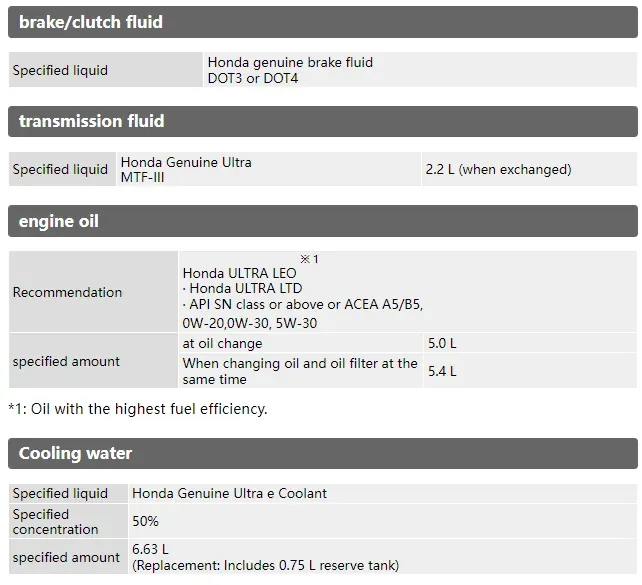
The bottle you buy should match both lines. If the manual asks for ACEA C3 with MB 229.51 approval, an oil labelled only "ACEA C3" is a partial match at best. The OEM approval means the blender submitted samples to Mercedes for extra testing and passed.
For used cars where the handbook is missing, the manufacturer's website or dealer parts desk can confirm the current spec. Buying second-hand? Pair this check with our pre-purchase inspection checklist so you catch the wrong oil before it becomes your problem.
Latest ACEA Sequences: 2016, 2021 and 2022 Updates
The active sequences on European shelves as of 2026 are ACEA 2016, ACEA 2021, and ACEA 2022. Older sets like ACEA 2012 and earlier are formally retired, though some remaining stock still bears the label.
The 2021 revision brought big changes on the petrol side. It introduced C5 and C6, added tougher tests for turbocharged direct-injection engines, and phased out A1/B1. The 2022 update focused mostly on the heavy-duty E sequences, refreshing E8 and E11 for the latest Euro VI truck engines.
Blenders are given a transition window to reformulate. That's why you'll still find ACEA 2016 stock in circulation alongside newer 2021 or 2022 oils. Both are legitimate as long as the sequence itself remains active.
Fuel Economy, LSPI Protection and Extended Drain Intervals
Modern ACEA sequences pull triple duty. They protect the engine, keep aftertreatment clean, and squeeze out efficiency gains at the same time.
Fuel Economy Oils sit at the lower HTHS end of the range. A1/B1 kicked this off years ago, and A5/B5, C2, C5, and C6 continued the trend. Manufacturer specs for these fluids can shave 1% to 3% off fuel consumption compared with a heavier A3/B4 or C3.
LSPI protection landed in C6 for a specific reason. Downsized turbo petrol engines can suffer low-speed pre-ignition, a violent knock that snaps pistons and rods. C6 formulations use calcium-magnesium detergent chemistry proven in the LSPI test to shut this down.

Similar Posts