How Long to Drive After a Jump Start to Recharge

Your car just roared back to life after a jump, and now you're stuck wondering how long you should drive after a jump start before it's safe to switch off again. The short version: at least 20 to 30 minutes of real driving, not idling in the driveway. That number moves, though, depending on why the battery died and how much life it has left.
Here's the part most drivers miss. Your alternator recharges the battery while the engine runs, but at idle it produces a fraction of its rated 80 to 150 amps. As of 2026, most alternators don't reach strong output until engine speed passes roughly 2,000 RPM.
So where and how you drive matters just as much as how long.
How Long Should You Drive After a Jump Start? The Short Answer
Drive for at least 20 to 30 minutes after a jump start. Highway driving recharges faster than stop-and-go traffic. Idling barely charges the battery, so keep the car moving.
If the battery is old or deeply drained, drive longer. A proper charger or a shop visit finishes the job.
That 20 to 30 minute window is a floor, not a magic fix. It's usually enough to put back the charge a single start pulled out. It won't fully recharge a battery that sat dead overnight.
Think of it as a quick guide:
- Lights left on, healthy battery: 20 to 30 minutes of mixed driving.
- Deeply drained or older battery: 45 to 60 minutes, ideally on the highway.
- Battery that keeps dying: driving won't save it. You need a test.
Why a Jump Start Doesn't Actually Fix Your Battery
A jump start only borrows enough power to spin the starter and fire the engine. It doesn't diagnose anything, and it doesn't refill a worn-out battery. Once running, the job of recharging shifts entirely to your alternator.
That's the trap. People assume a successful jump means the problem is solved. In reality, a jump start is a symptom fix, not a cause fix.
If a dead cell, a bad alternator, or a hidden drain caused the no-start, it's still there.
Battery care groups like the Battery Council International note that repeated deep discharges quietly shorten a lead-acid battery's life. Every time you run one flat and jump it back, you chip away at its lifespan. So the drive afterward is damage control, not a reset button.
If your battery reads low even after a good drive, that tells a story. A resting reading around 12.4 volts on the meter means it's only partly charged. Anything lower and you're looking at a battery that may not survive the next cold morning.
What Decides Your Drive Time (The Variables That Matter)
There's no single number that fits every car, and anyone who gives you one is guessing. Your ideal drive time depends on four things: why the battery died, how you're driving, how old the battery is, and how well your alternator charges. Let's break each one down.
Why the Battery Died in the First Place
The cause changes everything. If you left the headlights on for an hour, the battery is healthy and just needs a top-up. A short drive will handle it.
But if the battery died on its own overnight, something drained it. That points to a parasitic draw or a battery near the end of its life. Driving longer helps, but it won't fix the underlying pull on the system.
Highway Driving vs. Stop-and-Go City Traffic
Highway driving wins, and it's not close. Steady speeds keep engine RPM up, which keeps the alternator pushing solid amps into the battery. City traffic is the opposite.
In stop-and-go traffic, you idle at red lights, crawl along, and rarely hold high RPM. Your alternator also has to feed the headlights, wipers, heater, and radio first. Whatever's left trickles to the battery, so the same 30 minutes recharges far less.
Battery Age and Health
An older battery takes a charge poorly and loses it fast. Most lead-acid batteries last three to five years. Past that, the internal plates degrade and the battery can't hold what it used to.
Cold makes it worse. A battery that's weak in summer can leave you stranded in January, since cold weather saps cranking power. If your battery is old, give it every extra minute of driving you can, then get it tested.
Your Alternator's Real Output

The alternator is the actual charger here, and its output depends on RPM. A healthy one should push around 13.8 to 14.7 volts at the battery while you drive. That's the sweet spot for recharging.
If yours is weak or failing, no amount of driving will recharge the battery. Instead of climbing, the voltage stays flat or drops. When that happens, you're not looking at a battery problem at all, and it pays to tell the two apart with a meter before you spend money.
The 20 to 30 Minute Rule and When It Falls Short
The 20 to 30 minute rule is a solid starting point, and it works for the most common case: a healthy battery drained by a light or a door left ajar. That kind of drive replaces the shallow charge you lost and gets you home safe.
Where the rule falls apart is with a deeply discharged battery. If your battery sat flat for hours, it might be down to 30 or 40 percent. Half an hour of driving won't come close to filling it.
Here's roughly what different drives put back:
| Drive length and type | What it realistically does |
|---|---|
| 10 min idling in the driveway | Almost nothing useful |
| 20 to 30 min mixed driving | Replaces a single start, light top-up |
| 45 to 60 min highway | Meaningful recharge on a healthy battery |
| Several hours or overnight charger | Full recharge from deep discharge |
So treat 30 minutes as the minimum for a routine jump. For anything worse, plan on a longer highway run or a proper charger at home. Driving alone rarely takes a deeply drained battery back to 100 percent.
Find Your Drive Time: A Quick Decision Guide
Not sure which camp you're in? Match your situation to one of these branches and follow the action. Each one is built around the real reason your battery went flat.
If You Left the Lights On Overnight
This is the easy case. Your battery is fine, it just got drained by an accessory. Drive 20 to 30 minutes, mix in some higher-speed roads if you can, and you're set.
Then keep an eye on it for a day or two. A one-off drain shouldn't repeat. If the car starts normally the next few mornings, you're in the clear.
If the Car Sat Unused for Weeks
Batteries self-discharge when a car sits, especially in the cold. After a jump, drive at least 45 minutes to claw back the lost charge. A highway loop is ideal here.
If you park the car for long stretches often, a battery maintainer is worth it. It keeps the charge topped up so you're not jumping it every time you want to drive.
If the Battery Keeps Dying
Repeated dying means something is wrong, and driving longer won't fix it. You're likely dealing with a failing battery or a parasitic drain pulling power while the car is off. Get it jumped, drive to a shop, and have both the battery and the draw tested.
Don't keep relying on jumps as a routine. Each deep discharge shortens the battery's life and leaves you one cold morning away from being stranded.
If the Car Won't Restart After Shutting Off
If you drove your 30 minutes, switched off, and the car is dead again, stop guessing. Either the battery can no longer hold a charge or the alternator isn't charging it. A 12-volt reading that won't crank is a classic warning sign.
Leave the car connected to a jump source or a charger and get it tested before you drive anywhere important.
Why Idling Won't Recharge Your Battery
Idling barely charges your battery, and this is the mistake that strands people twice. At idle, engine RPM sits low, so the alternator spins slowly and produces weak output. Most of that trickle goes to the ignition, fuel pump, and lights before any reaches the battery.
Leave the car idling for 20 minutes and you've gained almost nothing. Compare that to 20 minutes on the highway, where the alternator runs at full tilt. The difference in recharge is night and day.
So if you can't drive right away, idling is not a substitute. It keeps the engine alive, but it won't refill the battery you just drained.
What to Do the Moment the Engine Starts
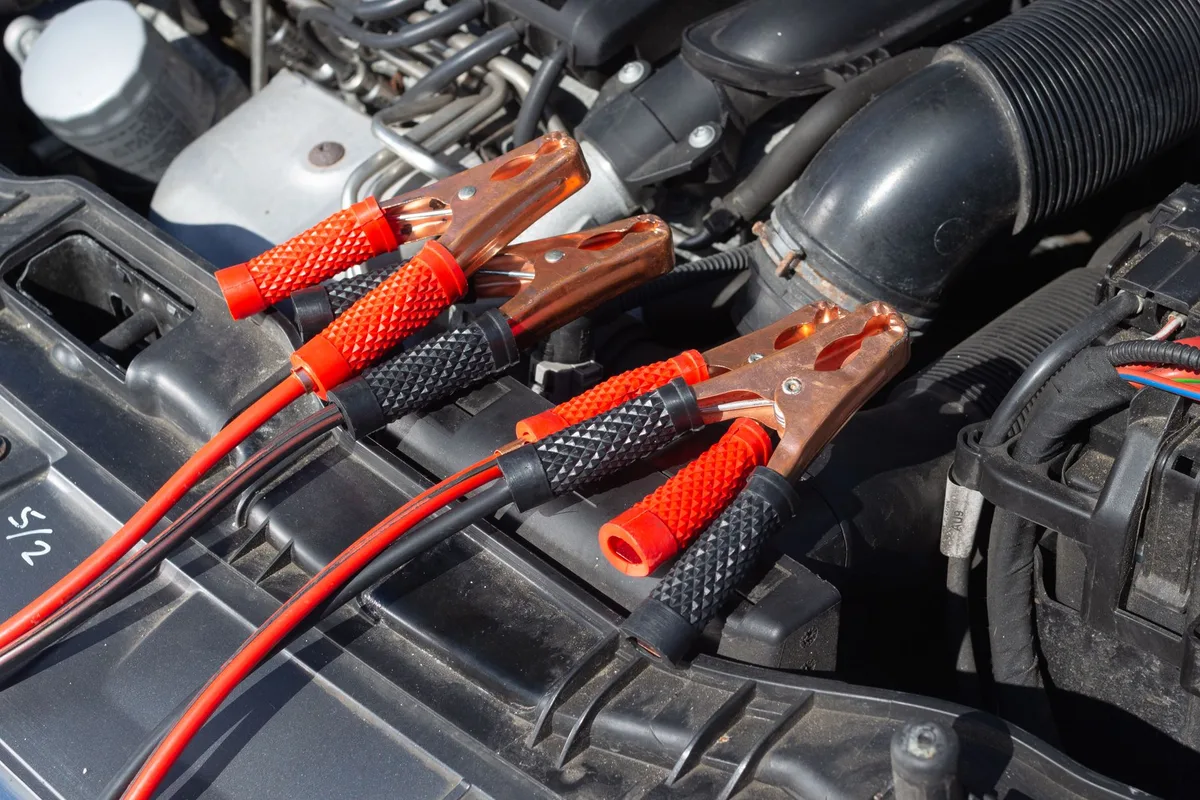
The second the engine catches, don't shut it off. Every restart pulls a big slug of power back out, and you may not get another. Keep it running and get moving.
Here's a quick sequence that works:
- Leave it running. Don't switch off to celebrate or move things around.
- Kill the extras. Turn off the AC, heated seats, and loud stereo so more charge reaches the battery.
- Drive, don't idle. Head for a road where you can hold steady speed.
- Skip short hops. A two-minute drive to the shop won't recharge anything.
If you used a portable lithium jump starter, unclip it once the engine settles and stow it. These packs are handy backups, but they don't charge your battery either. They only deliver the burst needed to crank the engine.
Battery vs. Alternator: Reading the Warning Signs
If your car keeps dying, the culprit is almost always the battery or the alternator, and the symptoms differ. Knowing which one is failing saves you from replacing the wrong part.
Point to a dying battery when:
- The car cranks slowly, then won't crank at all after sitting.
- It needs a jump every morning but runs fine once going.
- The battery is over four years old.
Point to a failing alternator when:
- The dashboard battery light glows while driving.
- Headlights dim or flicker at low RPM.
- The car dies while running, or won't restart right after a good drive.
A dead alternator can leave you stranded even with a brand-new battery. That's why a quick voltage check beats guessing. It tells you whether the charging system is doing its job or quietly starving the battery.
Voltage Numbers That Tell You the Truth
A multimeter turns guesswork into facts, and the readings are easy to interpret. Check the battery with the engine off, then again while it runs. The gap between the two tells you if the alternator is charging.
| Voltage reading | Engine state | What it means |
|---|---|---|
| 12.6V or higher | Off, resting | Fully charged |
| 12.4V | Off, resting | About 75 percent, top it up |
| 12.2V or lower | Off, resting | Significantly discharged |
| 13.8 to 14.7V | Running | Alternator charging normally |
| Below 13.0V | Running | Alternator likely undercharging |
Rest the battery for a few hours before trusting an off reading. A proper resting voltage sits at 12.6, and anything under 12.0 is essentially flat. With the engine running, you want to see that healthy charging band.
If the number barely moves when the engine starts, your alternator isn't pulling its weight.
Driving vs. a Battery Charger: The Faster Way to a Full Charge

A battery charger beats driving for a full, deep recharge, and it's gentler on the battery too. Driving is convenient, but the alternator is built to maintain a charge, not restore a flat one. A dedicated charger does the deep work.
Here's how the two stack up:
| Method | Best for | Downside |
|---|---|---|
| Driving 30+ min | Quick top-up after a light drain | Won't fully recharge a dead battery |
| Smart charger | Full, safe recharge overnight | Needs hours and a power outlet |
| Trickle maintainer | Cars parked for weeks | Slow, meant for upkeep not rescue |
If your battery was deeply drained, drive home, then put it on a smart charger overnight. You'll wake up to a full battery instead of a half-charged gamble. For a car that sits a lot, a trickle maintainer prevents the whole problem in the first place.
Bottom line: use driving to get you somewhere safe, then let a charger finish the job right.
Mistakes That Leave You Stranded Again
The biggest mistake is shutting the engine off too soon. A quick errand right after a jump drains the battery again before it recovers. Give it the full drive first.
Other traps to skip:
- Idling instead of driving. It feels productive, but it barely charges anything.
- Ignoring the warning light. A glowing battery light means the alternator, not the battery.
- Jumping the same car daily. That's a dead battery or a hidden drain begging for a test.
- Blasting the heater and stereo. Those loads steal charge the battery needs.
Jump-Start Safety You Shouldn't Skip
Batteries vent hydrogen gas, and a stray spark near one can cause a small explosion. Connect cables in the right order every time. Positive to positive first, then the negative clamp to a bare metal ground, not the dead battery's negative post.
Never jump a battery that's cracked, leaking, or frozen solid. Keep wristwatches and loose metal away from the terminals. And follow your owner's manual, since some newer cars have a dedicated jump point under the hood.
Keeping Your Battery Healthy So You're Not Back Here
A little upkeep beats getting stranded. The goal is simple: keep the battery charged and the connections clean. Most dead-battery calls trace back to neglect, not bad luck.
- Drive regularly. Short trips never fully recharge, so take a longer drive weekly.
- Use a maintainer if the car sits for weeks at a time.
- Clean the terminals when you see white or blue corrosion.
- Test twice a year, especially before winter, since the cold hits weak batteries hardest.
Replace the battery around the four to five year mark. Once it's tired, no drive time will make it reliable again.
When to Stop Driving and Call a Mechanic
Stop relying on jumps the moment the same car dies twice in a week. That pattern points to a failing part, and driving in circles won't cure it. Get the charging system tested.
Call a pro right away if the battery light stays on, you smell burning, or the car dies while driving. Those signal an alternator failure that can leave you stuck anywhere. A shop can load-test the battery and check alternator output in minutes.
FAQs About Driving After a Jump Start
Can I turn my car off right after a jump start?
No. Shut it off too soon and you risk another dead battery. Drive at least 20 to 30 minutes first so the alternator can replace the charge the start pulled out.
For a deeply drained battery, drive longer or follow up with a charger.
Does revving the engine charge the battery faster?
Yes, a bit. Higher RPM spins the alternator faster, so it pushes more amps into the battery. That's exactly why highway driving beats idling.
Steady revving in park helps some, but actually driving does the job far better.
How many miles should I drive after a jump start?
Aim for distance based on time, not miles. Roughly 15 to 20 miles of highway driving covers the usual 30-minute minimum. A deeply drained battery needs more, so plan on 30-plus miles or a proper overnight charge.
Why did my car die again after driving 30 minutes?
Because the battery can't hold a charge or the alternator isn't charging it. A healthy setup keeps the car running after a solid drive. If yours died again, get both the battery and alternator tested before driving anywhere important.
Your Drive-Time Decision, Made Simple
Match the drive to the cause. A light left on needs 20 to 30 minutes of mixed driving. A deeply drained or older battery wants 45 to 60 minutes on the highway, then a charger at home.
If the same car keeps dying, stop driving in hope and get it tested. Jumps are a rescue, not a repair. Treat the drive as breathing room to reach a charger or a mechanic, and you'll spend far fewer mornings stuck in the driveway.

Similar Posts