Should You Check Your Oil Hot or Cold? The Right Way
If you've ever popped the hood and second-guessed yourself, "should you check oil hot or cold" is one of those questions that sounds simple until you actually try to answer it. The honest truth is that it depends on what your engine's dipstick was calibrated for. Some manufacturers spec a hot reading, others cold, and a handful want warm.
Get it wrong and you'll either overfill a healthy engine or panic over a false-low.
Motor oil expands roughly 4% to 8% between a cold sump and full operating temperature, which is about 100°C or 212°F. That thermal swing can move the reading on your dipstick by a quarter-inch on the same engine, same day. As of 2026, the safest move is to follow the owner's manual first and use the general rules below only as backup.
Here's how the physics, the marks, and the manufacturer intent actually line up.
Should You Check Oil Hot or Cold? The Short Answer First
Check it the way your owner's manual specifies. If the manual is missing, use the warm method. Run the engine, shut it off, wait 5 to 10 minutes, then read the dipstick on level ground.
Toyota, Honda, and Nissan generally want a hot reading. Most Ford, GM, and Stellantis engines are calibrated cold. When in doubt, warm is the safe middle ground.
Why the Hot vs Cold Question Even Exists (Thermal Expansion Explained)
Oil is a liquid, and liquids expand when heated. That single fact is the whole reason this question exists at all.
Multigrade motor oil (0W-20, 5W-30, 10W-40) sits in the sump at ambient temperature after a long soak. Fire the engine and oil temperature climbs from roughly 20°C to around 100°C within 15 to 20 minutes of steady driving. Over that swing, the oil's volume grows by about 4% to 8%.
On a five-quart sump, that expansion pushes the level up the dipstick by roughly 1/4 to 3/8 of an inch. So the exact same amount of oil looks different depending on temperature. Dipsticks are calibrated to one condition, not both.
There's a second factor working alongside expansion. When the engine runs, oil circulates through the top end, coating cams, cylinders, and the turbo if one is fitted. Some of it hasn't drained back to the sump yet.
That's why you always shut the engine off and wait before reading. Checking with the engine idling gives you an artificially low reading that isn't real.
What Your Owner's Manual Actually Says (and Why It Beats Any Rule of Thumb)
Your owner's manual is the only source that knows what your specific engine's dipstick was calibrated for. Skip it and you're guessing.
Flip to the maintenance or engine oil section. You're looking for one of these phrases:
- "Check with the engine warm, 5 minutes after shutdown"
- "Check with engine at operating temperature"
- "Check with engine cold, before starting"
- "The vehicle is not equipped with a dipstick, refer to the driver display"
Manufacturer intent varies by brand, engine family, and even model year. A 2015 Camry and a 2024 Camry can carry different guidance. Same badge, different spec.
Lost the paper manual? Download the PDF from the manufacturer's own website, keyed to your VIN. Toyota, Ford, GM, Honda, and BMW all host free digital copies.
For deeper background on the oil standards behind those OEM specs, SAE International publishes the J300 viscosity classification behind every bottle you buy.
One warning: aftermarket dipsticks (common on modified engines) may not match the OEM calibration. If your car isn't stock, all bets are off. It's also a smart line to double-check during a used car buyer's inspection, because a mismatched stick can mask a real oil consumption issue.
The Decision Tree: Which Method Your Car Wants
If your manual is missing and you need a call right now, work through the branches below. They match what most factory service manuals actually specify.
Check Hot If You Drive a Toyota, Honda, Nissan, or Most Japanese Engines
Japanese OEMs generally calibrate the dipstick to operating temperature. Drive the car for at least 10 to 15 minutes, park on level ground, shut off, wait 5 minutes, then check. Reading cold on these engines will show LOW when the level is actually fine, and you'll end up overfilling.
Check Cold If You Drive Most Ford, GM, Stellantis, or Older Domestics
Many domestic V6 and V8 engines are calibrated cold, meaning first thing in the morning before starting. An overnight sit is ideal. If you drove recently, wait at least 30 minutes for the oil to drain fully into the pan before pulling the stick.
Check Warm (5 to 10 Minutes After Shutdown) as the Universal Middle Ground
When you genuinely don't know, warm is the safest default. Idle the engine for two or three minutes if it's been sitting cold, shut down, wait 5 to 10 minutes, then read. This lands you close to the calibration window on almost any modern engine.
It also fits neatly right after a routine oil change at home, when you need to confirm the fill level.
What to Do If Your Car Has No Dipstick (BMW, Mercedes, Newer Audi)
Many post-2010 European models replaced the physical dipstick with an electronic oil level sensor. Check the level from the iDrive, MMI, or instrument cluster menu, usually under "Vehicle Info" or "Service." The car needs to be on level ground with the engine at operating temperature, idling for a couple of minutes while the sensor takes readings. Follow the on-screen prompts, don't guess.
How to Read the Dipstick Correctly (Cold or Hot)
Timing is only half the job. The other half is reading the stick properly, and this is where most drivers slip up. Aggregate reports from working technicians point to the same handful of misreads over and over.
Parking Surface, Wipe Direction, and the Two-Pull Rule
Park on genuinely level ground first. Even a two-degree slope on a home driveway can shift oil away from the pickup and give you a false low. A flat parking lot usually beats your driveway.
Pull the dipstick and wipe it clean with a lint-free rag or paper towel. Wipe from the handle end down to the tip in one direction, not back and forth. Reinsert the stick fully, seat the handle, then pull again and read.
This two-pull method is the only way to get a clean reading. The first pull is always smeared by oil splashing inside the tube.
Reading the Crosshatch Zone, MIN/MAX, and Both Sides of the Stick
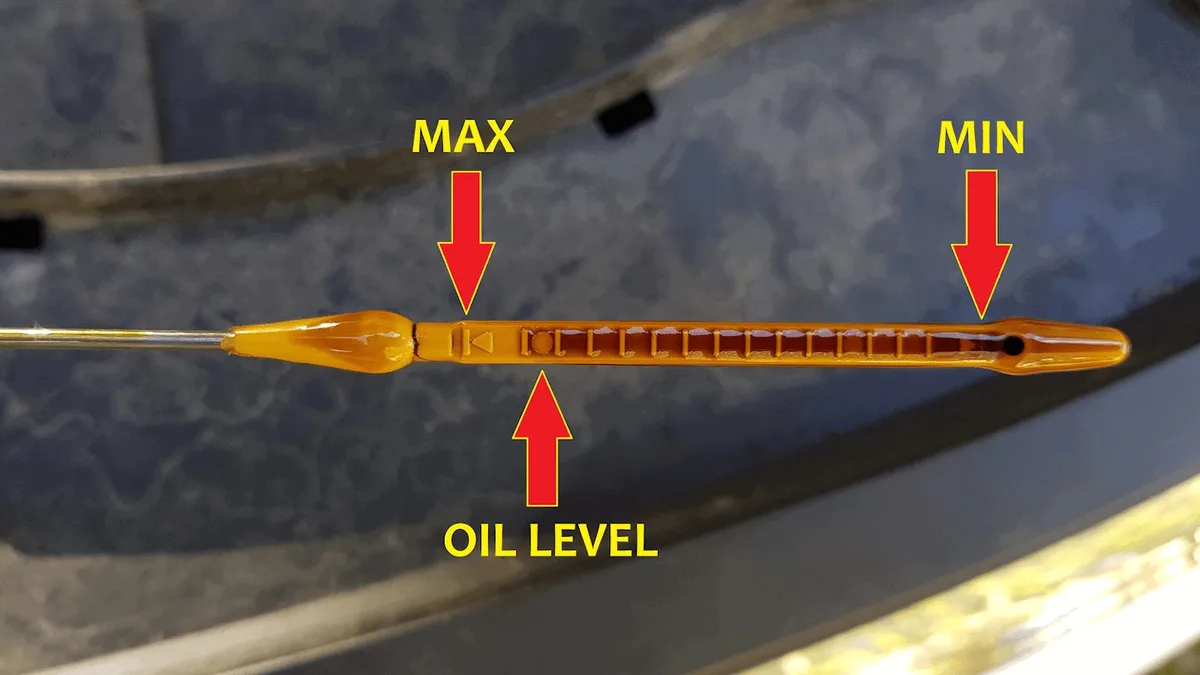
Most dipsticks show a crosshatched or hatched section between two marks. The lower mark is MIN or ADD, the upper is MAX or FULL. The gap between them typically represents one quart of oil.
Look at both flats of the stick. Oil coats them slightly differently, and the reading isn't always the same on each side. Take the lower of the two as your true level.
You want the film sitting inside the crosshatch zone, ideally closer to FULL than ADD but never above the top mark.
Cold Check Walkthrough: Step by Step
A cold check gives you the most repeatable reading because the oil has fully drained back to the sump. Best time is first thing in the morning, before you start the engine.
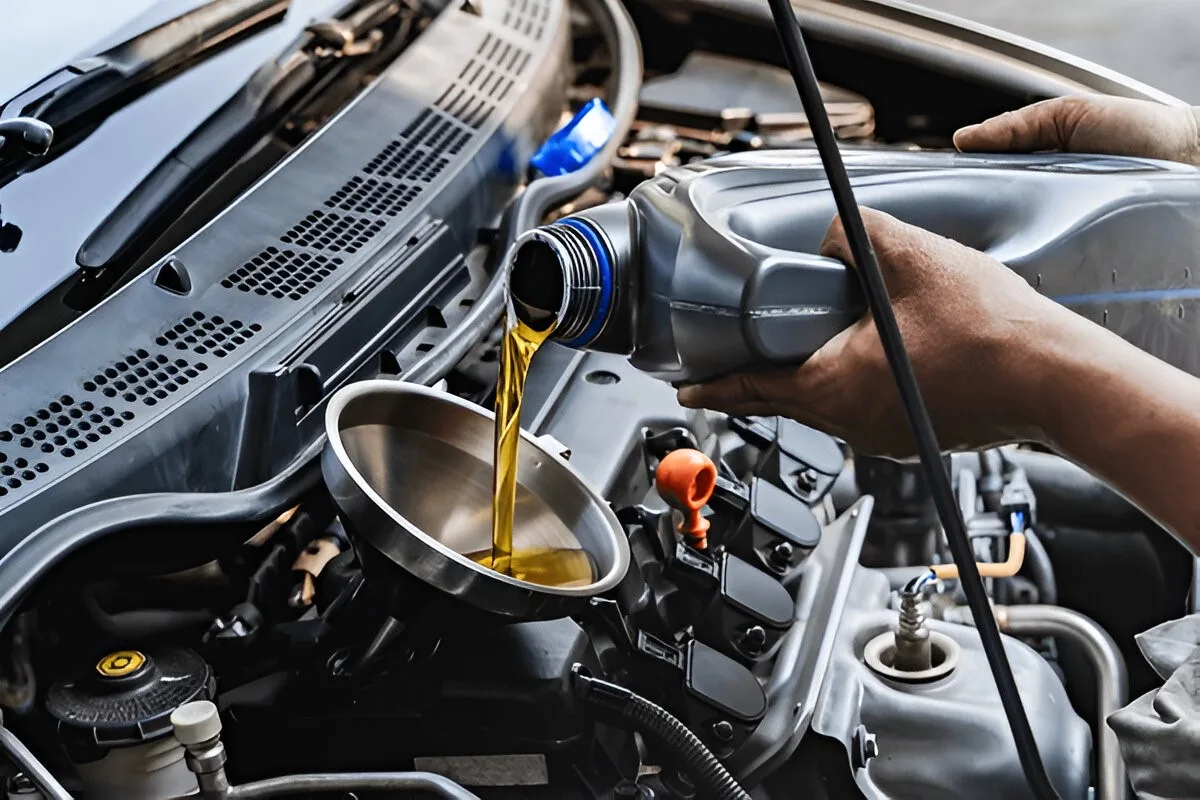
- Park on level ground the night before, ideally in a garage or flat driveway.
- Wait at least 8 hours since the last drive, or a minimum of 30 minutes if you can't wait overnight.
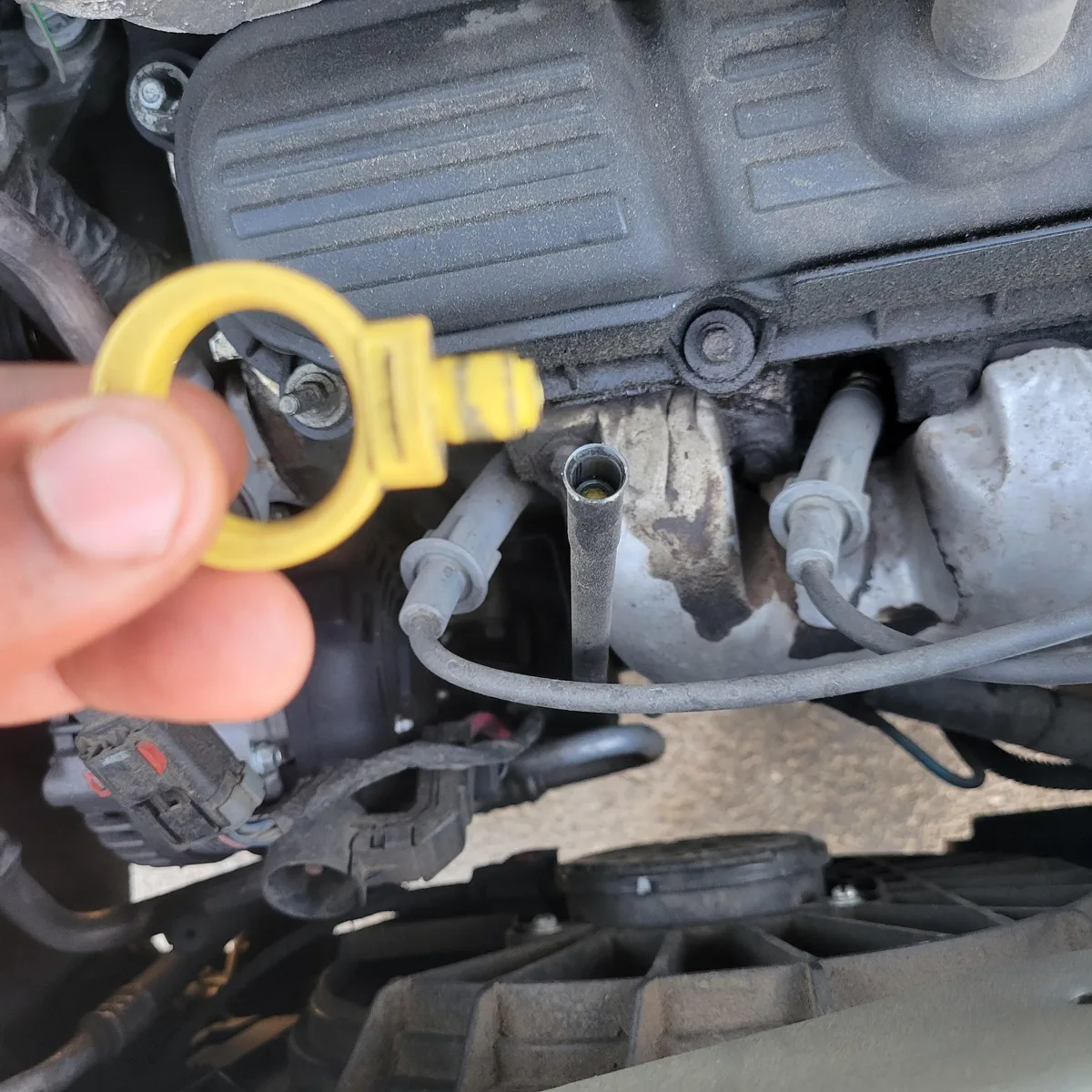
- Pop the hood and locate the yellow-loop dipstick.
- Pull it out, wipe the tip clean with a lint-free rag, one direction only.
- Reinsert fully, seat the handle down.
- Pull again and hold horizontally to read.
- Check both flats of the stick, take the lower reading.
- Compare to the crosshatch zone or MIN/MAX marks.
If the level sits at or above ADD but well below FULL, don't add oil yet. Cold readings on hot-spec engines read low on purpose. Cross-check against your manual's stated method before pouring anything in.
Hot Check Walkthrough: Step by Step
A hot check works on engines that were calibrated for it, and requires a slightly different rhythm. The oil is thin, mobile, and quick to drain, so timing matters more.
- Drive normally for 10 to 15 minutes to reach operating temperature.
- Park on level ground and shut the engine off.
- Wait exactly 5 to 10 minutes. Not less, not more.
- Open the hood carefully. Watch for hot components like the exhaust manifold.
- Pull the dipstick using a rag if the handle is hot.
- Wipe, reinsert fully, pull again.
- Read at eye level. Hot oil is thinner and can drip fast.
- Compare the film to the FULL mark, aiming for the upper half of the crosshatch.
The 5 to 10 minute window is the key. Read too early and oil is still draining from the top end, giving a false low. Wait too long and the oil starts to cool and contract, giving a false low from the other direction.
Mistakes That Give You a False Reading
Even seasoned drivers get tripped up by the same short list of errors. Any one of them can send you chasing a problem that isn't there.
- Reading on a sloped driveway or angled parking spot.
- Skipping the wipe-and-reinsert step and reading on the first pull.
- Checking with the engine idling instead of shut off.
- Waiting only 30 seconds after shutdown on a hot check.
- Waiting only 5 minutes on a cold check after a recent drive.
- Rotating the stick as you reinsert, smearing the oil.
- Misreading a foamy or aerated stick as high level.
- Mistaking condensation or fuel dilution for extra oil.
Foam on the stick almost always signals a bigger issue. Aeration means the crankshaft is whipping air into the oil, which points to overfill, a bad PCV valve, or a failing pump. Milky residue means coolant intrusion.
Both need a proper diagnosis, not a top-off.
Also watch for dipsticks that aren't fully seated. If the handle isn't pressed all the way down, your reading will be short by the exact gap. On some engines that's 3/8 of an inch of imaginary "low."
What an Overfilled Engine Actually Does to Your Car
Overfilling isn't a harmless mistake. Push the level even half an inch above FULL and you invite real mechanical problems.
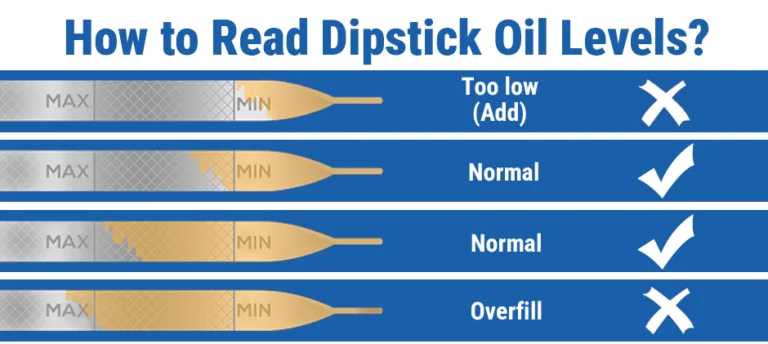
When oil rises high enough, the spinning crankshaft dips into the sump and whips air into it. That aerated oil loses its ability to protect bearings, and oil pressure drops even though the reservoir looks fine. On turbocharged engines the risk is worse, because the turbo bearings are the first to starve.
Excess oil also pushes past seals under crankcase pressure. You'll see leaks develop at the rear main seal, valve cover, or front timing cover. Once a seal blows out from overfill, it stays leaky even after you drain to the correct level.
The catalytic converter can take collateral damage too. Overfill often forces oil past the PCV system and into the intake, where it burns in the combustion chamber. Burned oil coats the catalyst and can trigger a P0420 code.
Replacing a converter costs many times more than the drain-and-refill that fixes an overfill early.
What a Low Oil Reading Really Means (and When to Top Off vs Investigate)
A low reading isn't automatically an emergency, but it's never something to ignore. The right response depends on how low, how fast, and how often.
If the level sits between ADD and FULL, you're within spec. Monitor it, don't add. If it's right at ADD, top off with a quarter to half quart of the correct viscosity, wait 10 minutes for it to settle, and recheck.
Aim for the middle of the crosshatch, not the top.
If the stick reads below ADD or shows nothing at all, stop driving. Continued operation with critically low oil can wipe bearings within minutes. Add oil immediately and drive only far enough to reach a shop if the level still won't register.
How often you're topping off is the bigger question. Most manufacturers consider up to one quart per 1,000 miles acceptable for modern engines. Anything faster points to a leak, worn valve seals, or piston-ring wear.
It's worth a proper diagnostic before it turns into a rebuild.
Reading the Oil Itself: Color, Consistency, and Warning Signs
The oil on your dipstick tells its own story beyond just level. Colour, texture, and smell all carry useful information.
Fresh oil looks amber. Normal used oil turns dark brown to nearly black within a few hundred miles, which is fine. What you don't want is:

Similar Posts