7 Warning Signs of a Failing Alternator You Shouldn’t Ignore
A dead car in the driveway usually gets blamed on the battery, but the symptoms of a failing alternator look almost identical and catch drivers off guard. The alternator is the part that keeps your battery charged and your electronics running while the engine turns. When it starts to quit, the warning signs stack up fast.
The good news? You can tell what’s going on with a few simple checks. A healthy charging system reads about 13.5 to 14.7 volts while the engine runs, and as of 2026 that range still holds true across nearly every gas vehicle on the road.
Let’s start with the signs that something’s wrong.
Quick Answer
The main symptoms of a failing alternator are dimming or flickering headlights and a battery warning light. You may hear a whining or grinding noise. The battery keeps dying, even after a jump.
Electronics like the radio and windows act sluggish. A telltale sign is a car that stalls right after you remove jumper cables.
The Warning Signs Your Alternator Is On Its Way Out
Most alternator failures don’t happen all at once. They creep in. You’ll usually notice a few of these signs before the car quits for good.
Here are the symptoms drivers report most often:
- Headlights and dash lights that dim or flicker, especially at idle
- A glowing battery or “ALT” warning light on the dash
- A whining, grinding, or growling noise from the engine area
- A dead battery that keeps coming back, even after charging
- Slow power windows, weak seats, or a stuttering radio
- A burning rubber or hot electrical smell
- The engine stalling for no clear reason
One symptom on its own might mean nothing. Two or three together point straight at the charging system. If your battery keeps going flat by morning, the alternator is a prime suspect, not just an old battery.
Battery or Alternator? How to Tell Which One’s Actually Failing
Here’s the direct answer: a bad battery struggles to start the car, while a bad alternator lets the car start but then dies as it runs. That single difference solves most cases.
Think about when the trouble shows up. A weak battery is worst first thing in the morning. It cranks slow or clicks and won’t turn over.
Once you jump it and get moving, everything feels fine. That’s a battery story.
A failing alternator flips the timeline. The car might start okay, then lose power minutes later. Lights fade the longer you drive.
If your battery is new but still won’t hold a charge, the alternator usually isn’t refilling it.
Use this quick if/then guide:
| What you notice | Likely culprit |
|---|---|
| Slow crank in the morning, fine after a jump | Battery |
| Starts fine, then stalls or lights fade while driving | Alternator |
| Repeated dead battery on a new battery | Alternator |
| Clicking, no crank, but lights work | Battery or starter |
| Dashboard battery light while driving | Alternator or belt |
Still not sure? The common signs of a worn-out battery can overlap, which is exactly why a voltage test settles the argument. We’ll get there.
What Your Alternator Does and Why Failure Snowballs Fast
The alternator is a small generator bolted to your engine. As the engine spins the drive belt, the alternator turns that motion into electricity. It powers your lights, radio, and computers, and it tops off the battery at the same time.

Inside, a spinning rotor and stator make raw AC power. A diode bridge converts it to the DC your car uses. A voltage regulator keeps the output steady, usually around 14 volts.
When any of those parts wear out, the whole system starts to wobble.
Here’s why failure snowballs. Once the alternator stops charging, your car runs purely off the battery. That reserve drains quickly under load.
According to charging system guidance from SAE International, automotive electrical systems are designed to run on alternator output, not battery reserve, so a dead alternator means a countdown has started.
Most alternators last around 80,000 to 150,000 miles or roughly seven years. Heat and short trips wear them faster. When one goes, everything electrical suffers at once, which is why the symptoms pile up so quickly.
The Jump-Start Test: The Fastest Way to Point the Finger
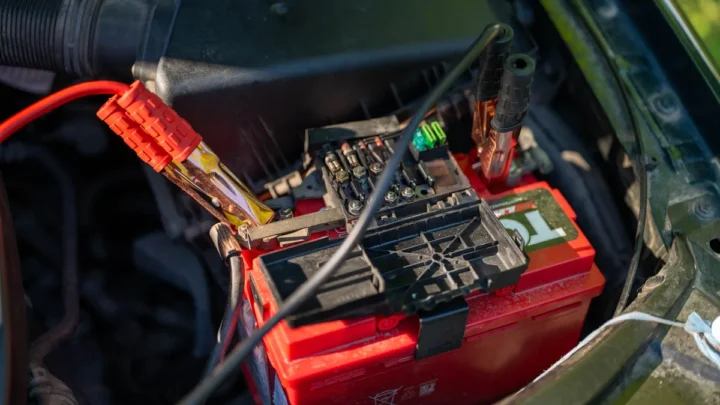
Want the single fastest check? Jump-start the car, then pull the cables off while it’s running. What happens next tells you almost everything.
Follow these steps:
- Jump-start the car the normal way.
- Let it idle for a moment once it’s running.
- Disconnect the jumper cables.
- Watch the engine.
Now read the result:
- If the engine keeps running smoothly, your battery was just weak. The alternator is doing its job.
- If the engine sputters and dies within seconds, the alternator isn’t charging. It failed.
The logic is simple. A jump only fills the battery enough to start. After that, the alternator must take over.
When it can’t, the car stalls the moment it loses the outside boost.
One caution here. If the car won’t crank at all and just clicks rapidly when you turn the key, that points more toward a dead battery or starter, not the alternator. The jump-start test works best when the car actually starts and then can’t stay alive.
Reading the Symptoms by What You See, Hear, and Smell
Your senses are diagnostic tools. A failing alternator gives itself away through your eyes, ears, and nose long before the car quits.
Dim, Flickering, or Overly Bright Headlights
Watch your headlights at a stoplight. If they dim when you idle and brighten when you rev, the alternator is struggling to keep up. Flickering or pulsing lights point the same way.
Sometimes the opposite happens. Lights that suddenly seem too bright can mean the voltage regulator is failing and overcharging the system. Both extremes are red flags.
Whining, Grinding, or Growling Noises
A healthy alternator is quiet. A dying one often isn’t. Worn internal bearings make a grinding or growling sound that rises with engine speed.
A high-pitched whine can mean the diodes are failing. If you hear it alongside dim lights, you’ve got two symptoms pointing at the same part.
Burning Rubber or Hot Electrical Smell
Trust your nose here. A burning rubber smell often means the drive belt is slipping across the alternator pulley and overheating. A sharp, hot electrical smell can mean an overworked alternator running too hot.
Either smell deserves attention fast. Overheating parts can leave you stranded and, in rare cases, cause worse damage under the hood.
Electrical Gremlins: Radio, Windows, and Gauges Acting Up
When voltage drops, your car’s electronics get weird. Power windows crawl. The radio cuts out or resets.
Dashboard gauges twitch or the dome light dims when you brake.
These glitches feel random, so people ignore them. But a cluster of electrical hiccups often means the alternator can’t feed the system steadily. If several accessories act up together, the charging system is the thing to check.
The Battery Warning Light and What It’s Really Telling You
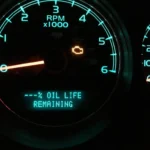
That little battery icon on your dash isn’t a battery gauge. It’s a charging system light. When it glows while the engine runs, it means the alternator voltage has dropped below what your car expects.
Don’t let the shape fool you. The light watches the alternator, not the battery itself. Some cars label it “ALT” or “GEN” instead of showing a battery symbol.
If it flickers on and off, the charging output is unstable. That often means worn brushes or a failing voltage regulator. If it stays solid, the alternator may have quit charging altogether.
Treat a steady charging light as a countdown. Your car is now running on battery reserve alone. You likely have minutes, not hours, before the electronics start shutting down.
Grabbing a Multimeter: Voltage Numbers That Reveal the Truth
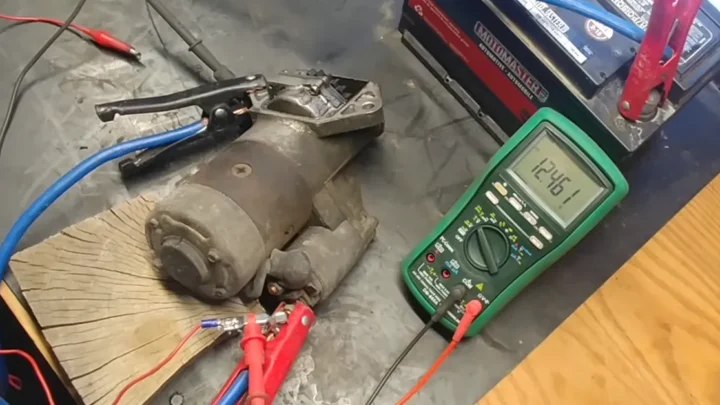
A cheap multimeter ends the guessing in about two minutes. Set it to DC volts and probe the battery terminals. The numbers tell you exactly what the charging system is doing.
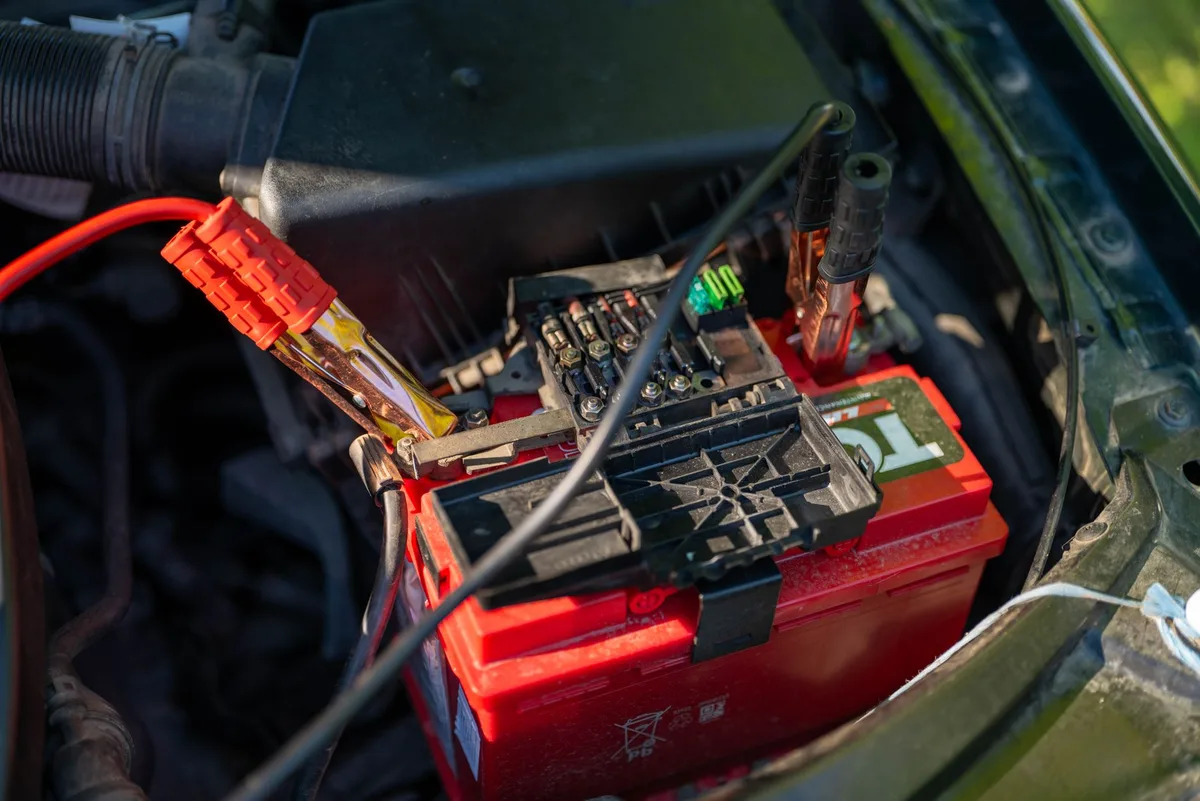
You don’t need a fancy meter for this. A basic model works fine, and inexpensive units are plenty accurate for a simple voltage read. Here’s the full walkthrough on using a meter to check the alternator if you want the deep version.
Resting Voltage (Engine Off)
With the engine off, a healthy battery reads about 12.4 to 12.7 volts. That 12.6 mark means a full charge. Anything under 12.2 means the battery is low before you even start.
Charging Voltage (Engine Running)
Start the engine and watch the number climb. A working alternator pushes it to 13.5 to 14.7 volts. If it stays stuck near 12.4, the alternator isn’t charging.
If it jumps above 15, the regulator is overcharging.
The AC Ripple Check for Bad Diodes
Switch the meter to AC volts with the engine running. A good alternator reads close to zero, just a few hundredths. A reading above about 0.1 volt AC points to failing diodes leaking raw current.
This is the check most people skip, and it catches problems a DC reading misses.
Here’s a quick reference:
| Reading | Meter setting | What it means |
|---|---|---|
| 12.4 to 12.7V | DC, engine off | Healthy battery |
| 13.5 to 14.7V | DC, engine running | Alternator charging fine |
| Below 13.2V running | DC, engine running | Undercharging |
| Above 15V running | DC, engine running | Overcharging |
| Above 0.1V AC | AC, engine running | Bad diodes |
Ruling Out the Cheap Culprits First: Belts, Grounds, and Terminals
Before you spend money on an alternator, check the cheap stuff. A loose belt or a corroded cable can fake every symptom of a dead alternator. These fixes cost pennies compared to a new unit.

Start with the serpentine belt. Look for cracks, glazing, or fraying. Press on it, and if it deflects more than about half an inch, it’s too loose to spin the alternator properly.

Similar Posts