What’s Inside a Car Battery? A Look at the Parts
Pop the top off a car battery and it looks like a sealed black box. But what is inside a car battery turns out to be pretty simple once you see how the pieces stack up. It's mostly lead, acid, and plastic, split into six neat compartments.
Each one does a small job, and together they crank your engine.
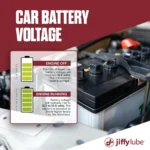
A standard 12-volt lead-acid battery holds six cells wired in series. Each cell sits at about 2.1 volts, so a healthy battery rests near 12.6 volts. Those figures come from Battery Council International (BCI) group specs the industry still leans on as of 2026.
Here's what actually lives behind that plastic case.

What's Actually Inside a Car Battery (The Short Version)
Inside a car battery you'll find lead plates and acid. The plates are lead dioxide and sponge lead. They sit in a bath of diluted sulfuric acid.
Thin plastic separators keep the plates from touching. Six cells link in series to produce about 12.6 volts.
Why a Cutaway View Beats a Parts List
A plain list of parts never really lands. You read "lead plates, acid, separators" and still can't picture how it works.
A cutaway diagram fixes that fast. You'd see flat plates hanging side by side like files in a drawer. Between every pair sits a thin separator sheet.
All of it sits submerged in liquid.
That spatial view is the whole point. Once you see the plates alternating positive, negative, positive, the rest clicks. You understand why they never touch, and why the acid has to cover them completely.
So as we walk through each part, picture that sliced-open view. Layers stacked tight inside six walled-off boxes. That mental image does more than any spec sheet.
The 6 Cells That Make 12 Volts
A car battery isn't one big tank. It's six separate cells sitting side by side in the same case. Each cell is its own little chemical engine.
Every cell produces roughly 2.1 volts on its own. Wire six of them in series and the voltages add up. That's how you land at about 12.6 volts fully charged.
It's also why a "12-volt" battery reads higher than 12 when it's healthy.
The cells connect through lead straps called intercell connectors. These link one cell's positive group to the next cell's negative. If you want a deeper feel for what a resting reading tells you, that six-cell math is the foundation.
Each cell holds its own stack of plates and its own pool of acid. Lose one cell to a dead short and you lose about 2.1 volts. That's why a battery can read around 10.5 volts and still refuse to start.
One cell has failed, and the rest can't cover for it.
The Core Components Under the Case
Strip away the plastic and every lead-acid battery uses the same handful of parts. Here's what each one does.
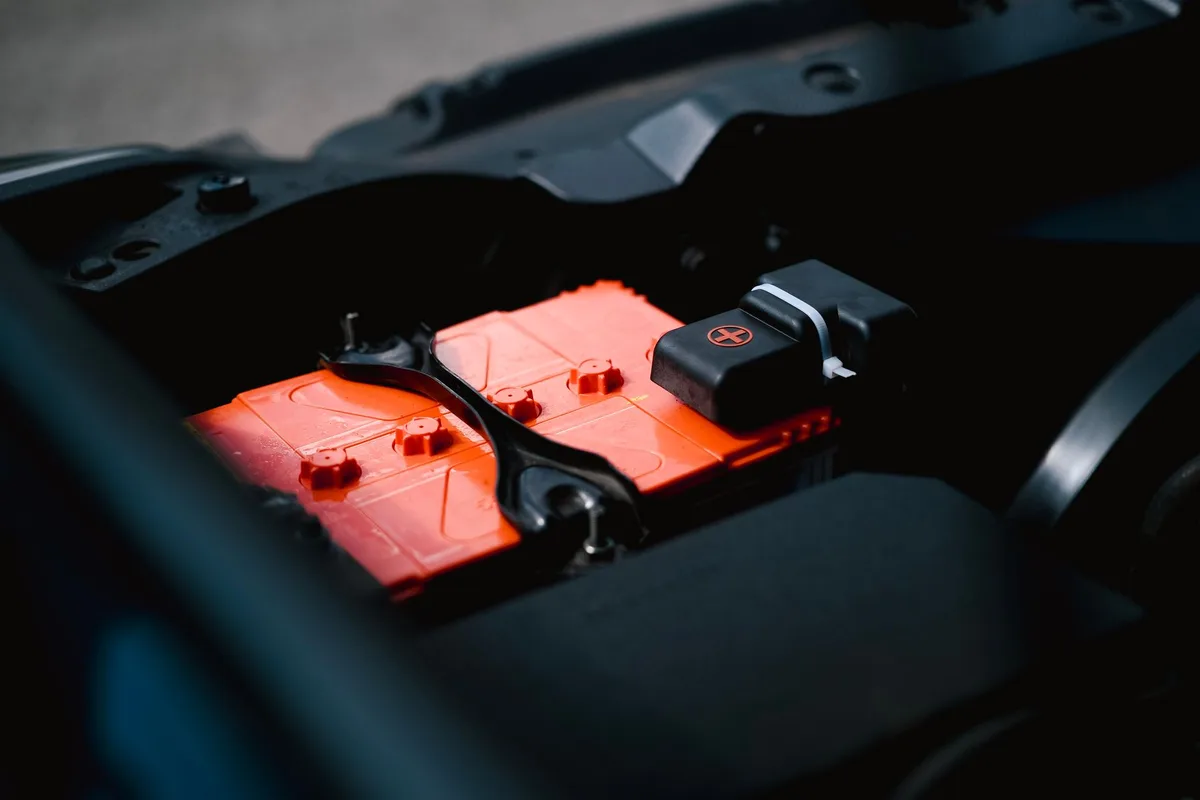
Positive and Negative Plates
The plates are where the real work happens. Positive plates are coated in lead dioxide (PbO₂), a dark chocolate-brown material. Negative plates carry sponge lead (Pb), which is soft and gray.
These plates alternate inside each cell. More plate surface means more power on demand, which ties directly into the current it can deliver when you turn the key.
The Grid That Holds the Active Material
Each plate starts as a lead grid. Think of it as a stiff lattice, like a tiny fence. Its job is to hold the paste of active material and carry current out to the terminal.
Older grids used lead-antimony alloy. Most modern batteries use lead-calcium, which loses less water and needs less upkeep.
Separators Between the Plates
Separators are thin sheets that sit between every positive and negative plate. They're microporous, so acid flows through freely while the plates stay apart. Without them, the plates would touch and short the cell instantly.
In flooded batteries these are usually polyethylene envelopes.
The Electrolyte
The electrolyte is diluted sulfuric acid (H₂SO₄). It's roughly 35% acid and 65% distilled water by weight. This liquid carries charge between the plates and stores energy in the chemistry itself.
The acid concentration drops as the battery discharges. That's why a hydrometer can read the state of charge straight from the fluid.
Terminals, Connectors, and the Case
The two terminal posts on top are your only access to all that internal power. Inside, plate straps bundle each cell's plates together, and connectors chain the cells. The whole thing sits in a polypropylene case built to resist acid and vibration.
How Those Parts Turn Chemistry Into Cranking Power
Here's the payoff. When you turn the key, the plates and acid react and shove a huge burst of current to the starter. Lead, lead dioxide, and sulfuric acid trade places at the molecular level.
That reaction releases electrons, and electrons moving is electricity.
During discharge, both plate types slowly convert to lead sulfate. The acid gets weaker and more watery. Charging reverses the whole thing.
The alternator pushes current back in, the lead sulfate breaks apart, and the acid strengthens again. The U.S. Department of Energy tracks this same lead-acid chemistry across its storage research.
This back-and-forth is why voltage moves around so much. It sags hard under load, which explains why the number dips during cranking for a second or two. Cold makes it worse, since low temperatures slow the reaction and cut available power.
That matters for how cold mornings change things.
Flooded vs AGM vs EFB vs Gel: Same Idea, Different Guts
All four use lead plates and sulfuric acid. What changes is how the acid is held and how sealed the case is. That single difference drives price, durability, and where each one fits.

In a flooded (wet cell) battery, the acid sloshes freely around the plates. It's the cheapest build and still the most common. An AGM battery soaks the acid into fine glass fiber matting pressed against the plates.
That mat holds everything in place, so AGM handles vibration and deep cycling far better.
An EFB (Enhanced Flooded Battery) sits in the middle. It's a beefed-up flooded design built for start-stop cars. A gel battery locks the acid into a silica gel, so it won't spill even if the case cracks.
| Type | Acid held in | Best for | Rough cost |
|---|---|---|---|
| Flooded | Free liquid | Everyday cars, budget builds | Lowest |
| EFB | Free liquid, tougher plates | Start-stop vehicles | Low-mid |
| AGM | Glass mat | Start-stop, heavy electrical loads | Higher |
| Gel | Silica gel | Deep-cycle, marine, off-grid | Highest |
Where Lithium (LiFePO4) 12V Batteries Break the Mold
Lithium 12V batteries throw out the lead-and-acid recipe entirely. Inside you'll find lithium iron phosphate cells and a built-in battery management system (BMS). There's no free acid, no lead plates, no sponge lead.
They weigh a fraction of a lead-acid unit and last far more cycles. The catch is price and cold-weather charging limits. For most standard cars as of 2026, lead-acid still rules the starting job.
What Goes Wrong Inside: Sulfation, Corrosion, and Shorts
Most battery deaths trace back to a few internal failures. Knowing them helps you read symptoms before you're stranded.
Sulfation is the big one. When a battery sits discharged, lead sulfate hardens into crystals on the plates. Those crystals block the chemistry and choke capacity.
A battery left dead for weeks often never fully recovers.
Plate corrosion is the slow killer. Over years, the positive grids eat away and active material flakes off. That debris drops into the sediment space below the plates.
Pile it high enough and it bridges the plates, shorting a cell.
Other common failures worth knowing:
- Water loss: Overcharging boils off water in flooded cells and exposes the plates.
- Stratification: Acid settles to the bottom, so the top of the plates starves.
- Internal short: A warped plate or failed separator kills one cell, which is often why a battery reads 12 volts but won't crank.
Key Identifiers: How to Read Your Battery's Internals From the Outside
You can't see the plates, but the outside tells you plenty. A few markers reveal what's inside and how it's aging.
Start with the label. "Maintenance-free" or "sealed" usually means calcium grids and no fill caps. Removable caps on top mean it's a serviceable flooded battery you can top up with distilled water.
The letters "AGM" or "VRLA" flag a mat or valve-regulated design.
Watch the case itself. A bulged or swollen case points to overcharging and internal gassing. White or blue crust on a terminal signals acid creeping out and corroding the post.
Some flooded batteries include a small round charge indicator. Green usually means charged, dark means low, and clear or yellow warns of low electrolyte. It only samples one cell, so treat it as a hint, not a verdict.
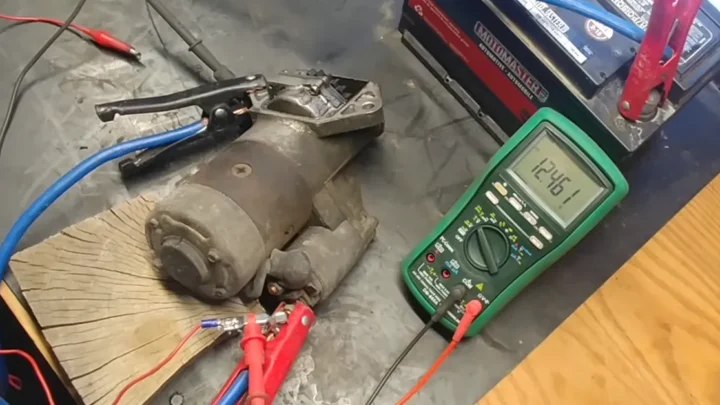
A multimeter test tells the real story.
The Numbers That Matter (Voltage, Specific Gravity, CCA)
Three numbers describe almost everything happening inside. Learn these and you can judge any battery in seconds.

Similar Posts