How Many Volts Should a Car Battery Drop When Starting?
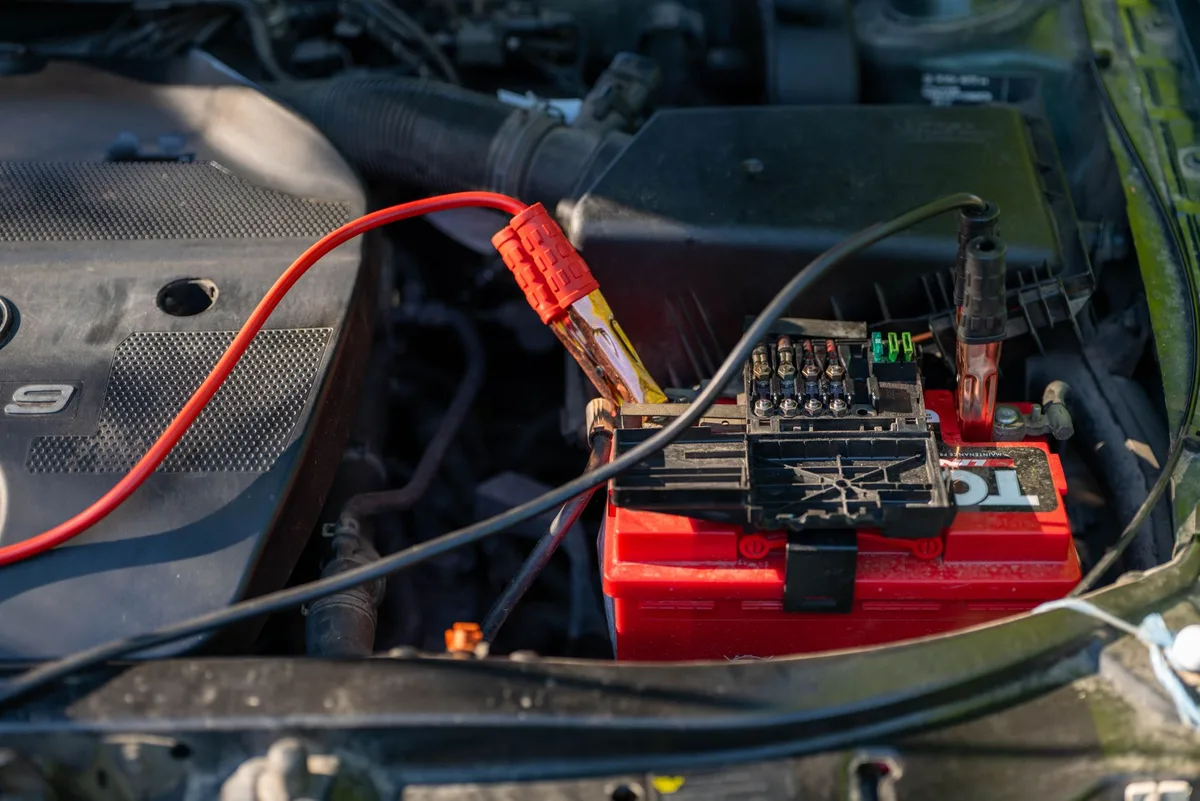
You turn the key, and for a split second your whole electrical system leans on the battery. That moment is exactly why so many drivers ask how many volts should a car battery drop when starting. The starter motor pulls a huge burst of current, the voltage dips, and how far it dips tells you almost everything about your battery's health.
A healthy 12-volt battery rests around 12.6 volts and shouldn't sag below roughly 9.6 volts while cranking, per SAE cold-cranking test conditions near 70°F. As of 2026, that 9.6-volt floor is still the number most technicians trust. Stay above it with a quick rebound, and your battery's fine.
Let's break down what those numbers really mean.
Quick Answer
A car battery should stay above 9.6 volts while cranking. A healthy battery drops from about 12.6 volts at rest to roughly 10.0 to 10.5 volts during a start. The dip lasts a second or two.
Then voltage rebounds fast. Anything sagging below 9.6 volts points to a weak or failing battery.
What Voltage Drop on Startup Actually Means
Voltage drop on startup is the gap between your battery's resting voltage and its lowest voltage while the starter spins. Think of it as a stress test. At rest, the battery just holds charge.
The second you crank, the starter demands 150 to 250 amps, sometimes more on a big engine.
That current pull yanks the voltage down. A strong battery holds its ground and only sags a little. A tired one collapses because its internal resistance has climbed with age.
So the drop isn't the problem by itself. It's how deep the drop goes and how fast voltage recovers that matters.
The Numbers That Matter: Resting, Cranking, and Recovery Voltage
Three readings tell the whole story. Miss any one of them and you're guessing.
Resting Voltage and State of Charge
Resting voltage is what the battery reads with the engine off and no load. Let the car sit a few hours first, since a fresh drive leaves a surface charge that reads high. Here's the quick reference:
| Resting Voltage | State of Charge |
|---|---|
| 12.6 to 12.8 V | 100% |
| 12.4 V | ~75% |
| 12.2 V | ~50% |
| 12.0 V | ~25% |
| Below 11.9 V | Nearly dead |
If your resting voltage is already low, the cranking test won't be fair. Charge it first, then retest. AGM packs behave a little differently from flooded batteries, so if you run one, testing an AGM the right way is worth a separate look.
The Cranking Dip and the 9.6V Floor
During cranking, watch the lowest number. A good battery holds around 10.0 to 10.5 volts. The 9.6-volt line is the pass/fail mark at normal temperatures.
Sag below it and the battery can't deliver current under load, even if it looked fine at rest. For more on what a healthy crank reads, the pattern holds across most gas engines.
How Fast It Should Bounce Back
Recovery is the tell most people skip. After the engine catches, voltage should snap back above 12 volts, then climb toward charging range as the alternator kicks in. A slow, lazy rebound means the battery is struggling to recover its charge.
Fast bounce-back is the sign of a healthy cell stack.
Watching It Happen: A Real Cranking Test, Voltage by Voltage
Picture a multimeter on the terminals during a chilly morning start. Here's the sequence a healthy battery walks through, second by second.
- Before the key turns: 12.6 V resting.
- Starter engages: voltage drops fast to about 10.2 V.
- Engine cranking (1 to 2 seconds): holds steady near 10.1 V.
- Engine fires: voltage jumps back to 12.4 V.
- Alternator online: climbs to 13.8 to 14.7 V.
Now compare a weak battery. Same car, aging battery. Resting voltage looks okay at 12.3 V.
But the moment the starter hits, it nosedives to 8.4 V and cranks slowly. That collapse below 9.6 is the smoking gun. The resting reading fooled the owner.
The load reading told the truth.
How to Test Your Own Cranking Voltage With a Multimeter
You don't need shop tools. A basic digital multimeter and five minutes get you a real answer.
Setting Up and Taking the Resting Reading
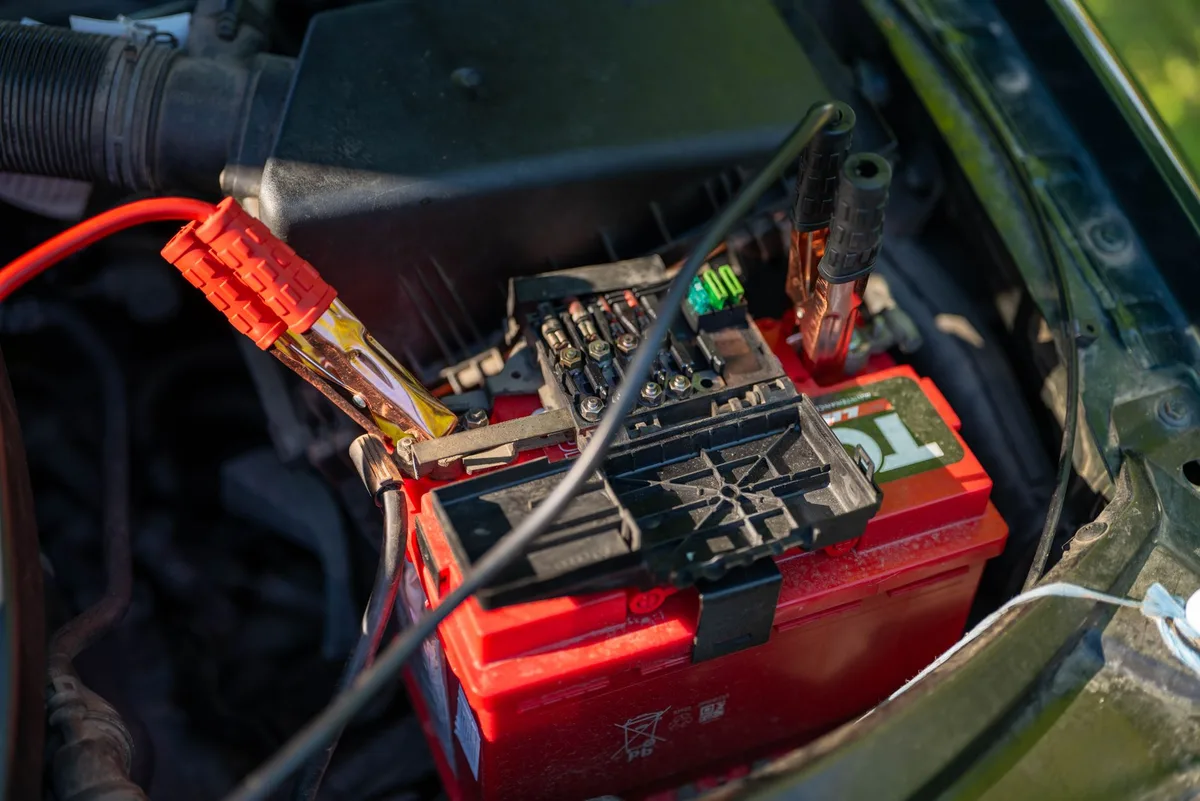
Start with the engine off and cold. Set your meter to DC volts. If your meter isn't auto-ranging, dial it to the 20-volt range so you get clean decimals.
- Touch the red probe to the positive terminal.
- Touch the black probe to the negative terminal.
- Read the resting voltage and write it down.
Reading the Drop During a Real Start
Keep the probes on the terminals. Have a helper start the engine while you watch the display. The number dips fast, so a meter with a min/max capture mode helps.
No helper? A phone camera pointed at the meter catches the low point.
The lowest reading during crank is your cranking voltage. That's the number you compare against 9.6.
Running a Load Test to Confirm
If your cranking number looks borderline, confirm it. A proper load test applies a controlled draw at about half the battery's cold-cranking amps for 10 to 15 seconds. A healthy battery holds above 9.6 V the whole time.
A failing one drops and keeps dropping.
Why Cold Weather, Big Engines, and Battery Age Change the Number
The 9.6-volt floor assumes roughly 70°F. Reality shifts it. Three factors move your expected drop, and knowing them keeps you from replacing a good battery.
- Cold weather: Chemistry slows down when it's freezing. A battery loses a big chunk of its cranking power below 32°F, so colder mornings hit harder and the dip runs deeper. That's normal, within reason.
- Big engines: A V8 or a diesel needs more torque to turn over. More torque means more current, which means a slightly deeper drop than a small four-cylinder.
- Battery age: Most batteries last 3 to 5 years. As plates sulfate and internal resistance climbs, the same crank pulls voltage lower every year.
So a 9.8-volt dip on a diesel at 10°F isn't the alarm it would be on a compact car in mild weather. Context matters.
When the Drop Isn't the Battery: Starter, Cables, and Grounds
Sometimes the battery is fine and the reading still looks ugly. The problem hides in the connections or the starter itself.
Corroded Terminals and Bad Grounds
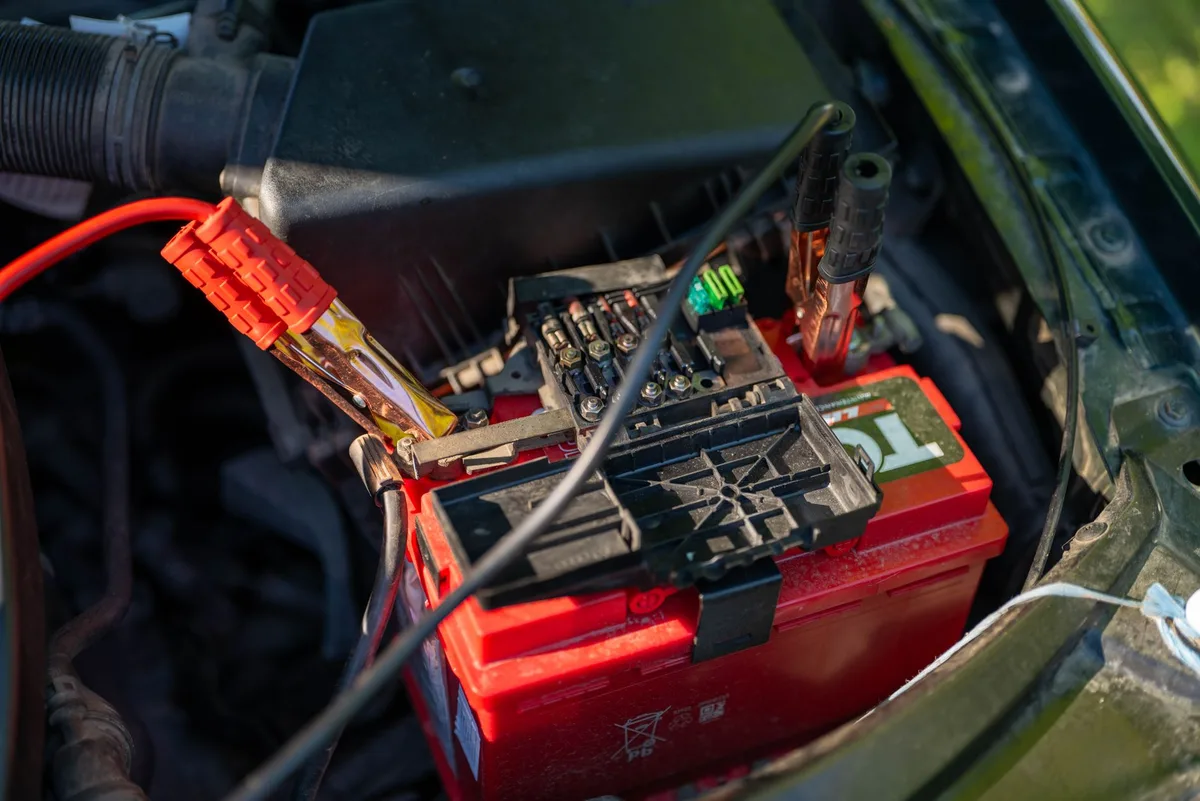
That fuzzy white or blue crust on a terminal adds resistance. Resistance eats voltage before it reaches the starter. Clean the posts and clamps first, then retest.
A weak ground path does the same damage on the return side, and it's easy to overlook.
Voltage-Drop Test Across the Cables
Here's a slick trick. Instead of reading the battery, read the cables while cranking. Put probes at both ends of a cable and watch the drop across it.
More than about 0.2 to 0.3 volts across a single cable means it's fighting you. You can run a drop test across the cables to find the exact weak link.
Telling Battery, Starter, and Alternator Faults Apart
A slow crank with good battery voltage points at the starter, not the battery. Checking the starter draw separates the two fast. And if the car starts but voltage won't climb after, the charging side is the suspect.
Confirm the charging system reads right before you blame the battery.
Common Mistakes That Fool Your Reading
Plenty of good batteries get tossed over bad testing. Dodge these traps.
- Testing right after a drive. Surface charge inflates resting voltage. Let it sit.
- Reading only resting voltage. A battery can pass at rest and fail under load. Always crank.
- Dirty or loose probes. Poor contact reads low. Get metal-to-metal.
- Ignoring temperature. A deep cold-weather dip can be normal.
- Missing the low point. The dip is quick. Use min/max capture or a camera.
- Forgetting overnight loss. If it's flat by morning, hunt for an overnight drain before condemning the battery.
Voltage Drop Test vs. Load Test vs. Conductance Test
Three tests, three jobs. Here's when each one earns its keep.
| Test | What It Does | Best For |
|---|---|---|
| Cranking voltage drop | Reads the low point during a real start | Quick DIY health check |
| Load test | Applies a set draw for 10 to 15 seconds | Confirming a borderline battery |
| Conductance test | Measures internal resistance electronically | Fast shop diagnosis, no cranking |
The cranking voltage drop is free with a multimeter you already own. The load test is more definitive. Conductance testers, the handheld units most shops use, estimate remaining cold-cranking amps in seconds.
For most drivers, the multimeter method answers the question well enough.
Cranking Voltage Cheat Sheet: What Each Reading Is Telling You
Tape this to your toolbox. These are the readings that matter at a glance, near normal temperatures.
| Cranking Voltage | What It Means | What To Do |
|---|---|---|
| 10.0 to 10.5 V | Healthy battery | Nothing, you're good |
| 9.6 to 10.0 V | Getting weak | Watch it, retest soon |
| Below 9.6 V | Failing | Load test, likely replace |
| Below 9.0 V | Dead or dying | Replace the battery |
| Good voltage, slow crank | Starter or cables | Test starter and connections |
Safe Testing Around a 12V Battery
Batteries are simple to test, but they demand respect. Flooded batteries vent hydrogen gas, which is flammable. Keep sparks and flames away.
- Wear eye protection. Battery acid is sulfuric acid.
- Remove rings and metal watches before touching terminals.
- Never let a metal tool bridge both posts. That's a dead short.
- Disconnect the negative terminal first, reconnect it last.
- Recycle old lead-acid batteries. The U.S. Environmental Protection Agency treats them as recyclable hazardous material, and most retailers take them back.
Work in a ventilated spot, and you'll be fine.
Pro Tips for Reading Cranking Voltage Like a Mechanic
A few habits separate a clean diagnosis from a guess.
- Test warm and cold. A battery that passes warm but fails on a cold morning is on its way out.
- Log the numbers. The same reading every few months shows the trend. A steady slide down is your early warning.
- Trust the rebound. Fast recovery above 12 V after start is as important as the low point.
- Check both ends. Cranking voltage plus resting voltage together beat either one alone.
- Mind the standard. The cold-cranking amp rating on your battery follows SAE International test methods, so match a replacement's CCA to your car's spec.
Frequently Asked Questions
Is 10 volts okay when starting a car?
Yes, 10 volts during cranking is healthy. A good battery typically holds between 10.0 and 10.5 volts while the starter spins. As long as it stays above 9.6 volts and rebounds quickly after the engine fires, your battery is in solid shape.
At what voltage is a car battery considered bad?
A battery is failing if it drops below 9.6 volts during cranking at normal temperatures. At rest, anything under 12.4 volts means it's undercharged, and below 12.0 volts it's nearly flat. Persistent readings below these marks usually mean the battery needs replacing.
Why does my battery drop to 8 volts when starting?
An 8-volt drop means the battery can't deliver current under load. The plates are likely sulfated or worn from age. It may still show decent resting voltage, which fools people.
Run a load test to confirm, but a drop that deep almost always means replacement.
How much voltage drop is normal on a cold start?
Cold weather deepens the dip because chemistry slows below freezing. A healthy battery might drop to around 9.8 volts on a very cold morning instead of 10.2. That's acceptable.
If it sags well under 9.6 volts even after warming up, the battery is weak.
Can a bad ground cause a voltage drop when starting?
Absolutely. A corroded or loose ground adds resistance, which eats voltage before it reaches the starter. You'll see a big drop and slow cranking even with a good battery.
A voltage-drop test across the ground cable finds it fast. Clean and tighten before condemning the battery.
What Your Number Means and What to Do Next
Come back to the one line that matters: stay above 9.6 volts while cranking, with a quick bounce back above 12. Hit that, and your battery's doing its job. Sag below it, and it's time for a load test, then likely a replacement.
If the voltage looks fine but the crank is slow, shift your attention to the starter, the cables, and the grounds. Clean connections and a healthy charging system finish the picture. Grab a multimeter, run the test cold, and you'll never be surprised by a no-start again.

Similar Posts