Is 13.5 Volts Good Alternator Output? What It Means

You popped a multimeter on the battery, saw 13.5 volts, and now you're wondering if that reading spells trouble. Whether 13.5 volts is good alternator output depends on what your engine was doing at that moment. The same number can be perfectly healthy or an early warning sign.
The difference comes down to RPM, electrical load, and temperature.
Most charging systems aim for roughly 13.8 to 14.4 volts while running, per common manufacturer service specs as of 2026. So 13.5V sits just under the sweet spot. That's fine in some situations and a red flag in others.
Let's sort out which one you're looking at.
Is 13.5 Volts Good Alternator Output? The Short Answer First
Yes, 13.5 volts can be good alternator output. It's normal at idle with a heavy electrical load. It's also fine on newer smart-charging cars that run lower on purpose.
But 13.5V at 2,000 RPM with no load is low. A healthy system usually shows 13.8 to 14.4 volts. Context decides the verdict.
What Your Charging System Is Actually Doing (12.6V vs. 13.5V vs. 14.4V)
Your alternator has one job: keep the battery topped up and power the car while the engine runs. It does this by pushing out more voltage than the battery's resting level. The battery then absorbs the difference.
Here's the quick logic behind those three numbers:
- 12.6V is a fully charged battery at rest, engine off. That's the baseline, not charging.
- 13.5V means the alternator is working, but pushing gently. Could be normal, could be lazy.
- 14.4V is a strong, confident charge. The system is clearly doing its job.
The voltage regulator controls all of this. It's a small brain, either built into the alternator or run by the car's computer. It watches battery voltage and load, then tells the alternator how hard to work.
Turn on the headlights and heater, and the regulator ramps output up. When the battery is full and demand is low, it eases off.
That's why a single reading without context can mislead you. If you're still fuzzy on baseline numbers, our walkthrough on reading resting battery voltage clears up what a healthy engine-off number looks like first.
The Numbers That Matter: A Voltage Reading Cheat Sheet
Keep this table handy. It covers the readings you'll actually see with a multimeter set to DC volts.
| Reading | Condition | What It Means |
|---|---|---|
| 12.6–12.8V | Engine off, rested | Fully charged battery |
| 12.2–12.4V | Engine off | Partially discharged (50–75%) |
| 13.8–14.4V | Engine running | Healthy charging range |
| 14.4–14.7V | Engine running, cold | Acceptable upper edge |
| 13.5V | Idle, high load | Usually normal |
| 13.5V | 2,000 RPM, no load | Borderline low, investigate |
| Below 13.0V | Running, under load | Undercharging |
| Above 15.0V | Running | Overcharging, red flag |
A couple of ground rules make these numbers reliable. Take your rested reading after the car has sat a few hours, not right after a drive. And set your meter correctly first.
If you're unsure, this quick guide on dialing in the 20V DC range saves you a false reading.
One more thing worth flagging: AC ripple. A healthy alternator should show almost 0 volts AC. Switch your meter to AC, and if you see more than about 0.05V, a diode may be failing.
Why 13.5 Volts Can Mean Two Completely Opposite Things
Same number, opposite conclusions. That's the whole puzzle with 13.5V. The reading only makes sense once you know what the engine and electronics were doing.
When 13.5V Is Perfectly Normal
If your engine's at idle and you've got a big load running, 13.5V is fine. Picture a cold morning with the headlights, heated seats, rear defrost, and blower all going. The alternator is spreading its output thin across every demand at once.
Smart-charging systems add another layer. Many cars built in the last decade deliberately hold voltage around 13.2 to 13.5V to cut fuel use and reduce load on the engine. The computer knows the battery is healthy, so it charges in short bursts instead of holding a constant high voltage.
That's engineering, not a fault.
When 13.5V Is a Warning Sign
Now flip the scenario. Engine at 2,000 RPM, no accessories on, and it still won't climb past 13.5V. That points to a charging system that can't push hard when it should.
Something's holding it back.
Common culprits include worn brushes, a tired voltage regulator, a slipping belt, or a bad ground. If your battery keeps dying or cranks slowly, chronic undercharging is the likely story. A full charging system check with a meter confirms whether the alternator is the weak link.
The Conditions That Change the Verdict (RPM, Load, Temperature, Battery Type)
Four variables decide whether your 13.5V is good or bad. Check each one before you judge the reading.
RPM. Output should rise as revs climb. At idle, some sag is normal. At 2,000 RPM, a healthy system usually settles into that 13.8 to 14.4V band.
If revving does nothing, that's a clue.
Electrical load. Every accessory pulls the number down. Test twice: once with everything off, once with headlights, AC, and blower on. Voltage should stay above roughly 13.5V under heavy load.
Drop much below that and the alternator is struggling to keep up.
Temperature. Regulators compensate for heat. In cold weather they target higher voltage, sometimes 14.4V or more. On a hot engine in summer, the same car may settle near 13.8V.
The industry standards behind this temperature compensation are set by bodies like SAE International. So don't panic if winter and summer readings differ.
Battery type. Chemistry matters. A standard flooded battery and an AGM battery have slightly different charging targets. AGM units often want a touch more voltage to fully saturate.
If you run AGM, our guide on checking an AGM battery explains the thresholds to expect.
Here's the simple rule. If 13.5V shows up at idle under load, on a warm engine, with a healthy smart-charging car, relax. If it shows up at cruising RPM with no load on a cold engine, dig deeper.
Read Your Own Voltage the Right Way With a Multimeter
A clean reading beats a lucky guess. Grab a digital multimeter, set it to DC volts on the 20V range, and work through three quick tests. Each one answers a different question.
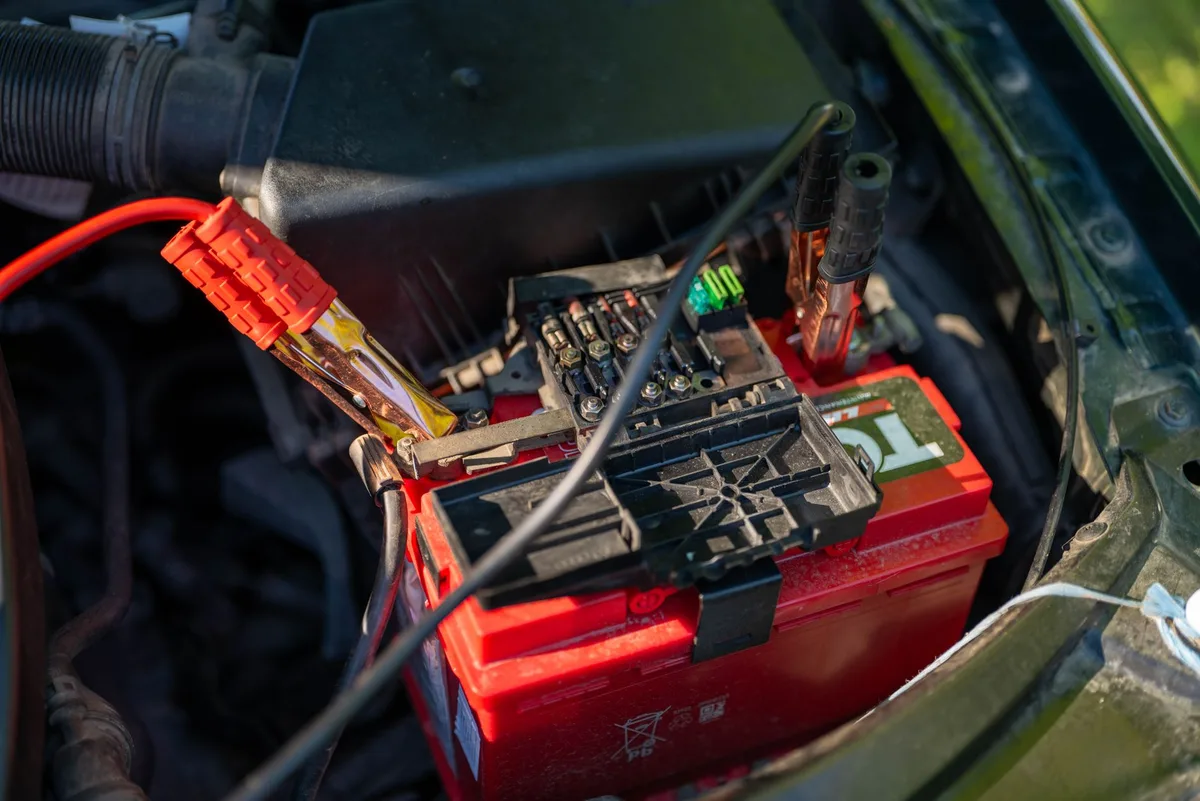
Touch the red probe to the positive terminal and black to negative. Keep your hands and probes clear of the belt and pulleys. If you'd rather see the full terminal routine first, our note on probing the battery posts safely covers the contact points.
Engine-Off Battery Test
Start with the engine off. A rested, healthy battery reads 12.6 to 12.8 volts. Anything near 12.2V means it's only half charged, so recharge before judging the alternator.
This baseline tells you what you're starting from.
Idle Test
Now start the engine and leave everything off. Read again. You want to see the number jump above 13.8V.
If it climbs only to 13.5V at idle, that's often normal, especially on a warm engine or a smart-charging car.
2,000 RPM and Loaded Test
Hold the revs at about 2,000 RPM and watch the meter. Voltage should settle into the 13.8 to 14.4V band. Then switch on the headlights, AC, and rear defrost.
A strong system holds above 13.5V under that load. If it sags well below, the alternator can't keep up.
Follow the Branches: A Diagnostic Decision Guide for 13.5V
Work through these branches in order. Each if/then step narrows down the cause fast.
- If 13.5V shows at idle with heavy load on → normal. Rev up and retest with load off to confirm.
- If it climbs to 14.0V+ at 2,000 RPM → your system's healthy. The idle number was just load-related.
- If it stays stuck at 13.5V at 2,000 RPM, no load → undercharging. Move to the next checks.
- If the battery reads below 12.4V rested → charge it fully first, then repeat the whole test.
- If voltage spikes above 15V → overcharging. Stop and get the regulator checked before it cooks the battery.
- If the number bounces erratically → suspect a failing diode or loose connection.
Still stuck at a low reading? Run a drop test across the cables next. Resistance in the wiring can eat the voltage before it ever reaches the battery.
What's Really Behind a Low 13.5V Reading
A stubborn 13.5V at RPM usually traces back to one of a handful of parts. Let's look inside the charging system to see what fails and why.

Worn Brushes, Diodes, and the Voltage Regulator
The alternator makes AC power, then converts it to DC through a diode bridge (the rectifier). If one diode fails, output drops and you'll see AC ripple on your meter. That's a classic cause of chronic undercharging.
Brushes and slip rings wear down over time. Worn brushes lose contact, so the rotor field weakens and voltage sags. A tired voltage regulator does the same thing by targeting too low a setpoint.
Confirm a bad diode with a quick diode check across the alternator before you condemn the whole unit.
Belts, Grounds, and Voltage Drop
Sometimes the alternator is fine and the problem is around it. A glazed or loose serpentine belt slips under load, so the pulley can't spin the alternator fast enough. You'll often hear a squeal when demand rises.

Bad grounds are the quiet killer. A corroded ground strap adds resistance, and that resistance shows up as lost voltage. Check the engine and battery ground path if your numbers stay low with no obvious part failure.
Clean, tight connections often reclaim the missing half-volt.
Smart Charging Systems: Why Newer Cars Sit Low on Purpose
Newer cars run low voltage by design, not by fault. Many models from roughly 2010 onward use computer-controlled charging to save fuel and cut engine drag. The ECU decides when the alternator works hard and when it coasts.
Under this setup, you might see 13.2 to 13.5V for long stretches. The system charges in bursts, often during braking, when regeneration is essentially free. Then it backs off to reduce load on the engine.
So a steady 13.5V on a modern car isn't automatically a problem. Check your owner's manual or service data for the target range. If the battery still starts strong and holds charge overnight, the low number is doing exactly what the engineers intended.
The tell is behavior, not just the reading. A smart-charging car with a healthy battery cranks fast every morning. A genuinely undercharging car gets slower and weaker over days.
Mistakes That Lead to a Wrong Diagnosis
Most bad calls come from testing sloppily, not from a bad alternator. Here are the errors that trip people up most.
- Testing at idle only. Idle sag is normal. Always retest at 2,000 RPM before judging.
- Reading a half-dead battery. A low battery skews everything. Charge it first, then test.
- Ignoring the load. 13.5V under full accessories is fine. The same number with nothing on is not.
- Skipping the AC ripple check. A failing diode hides behind a normal-looking DC number.
- Blaming the alternator too soon. Belts, grounds, and corroded terminals mimic a weak alternator.
- Disconnecting the battery while running. Never do this to "test" charging. It can spike voltage and fry electronics.
One more trap: a phantom drain. If your battery keeps dying but charging looks fine, hunt for a parasitic current draw instead. Something staying awake with the key off can drain a battery the alternator charges perfectly well.
Safety Steps Before You Poke Around the Battery
A little caution keeps this a five-minute job, not an ER trip. Batteries give off hydrogen gas, and overcharging makes more of it. That gas is flammable, so no sparks, no smoking, and no shorting the terminals.
Wear eye protection. Battery acid burns skin and eyes fast. If you get any on you, flush with water and seek help.
Watch the moving parts. With the engine running for your RPM test, keep probes, sleeves, and hair well clear of the belt and pulleys. And never disconnect the battery on a running engine to "see if it stays alive." That old trick can spike voltage and destroy sensitive electronics.
Cold Winters, Hot Summers: How Climate Shifts Your Target Voltage
Temperature moves the target, so read your number against the weather. In cold conditions, the regulator raises voltage to help a sluggish battery accept charge. Seeing 14.4V or a touch higher on a freezing morning is normal.
Heat does the opposite. On a hot engine in summer, the regulator trims output to protect the battery from cooking off electrolyte. A reading near 13.8V then is healthy, not weak.
So a 13.5V reading carries more concern in July than in January. Winter also piles on load: heater, defrost, lights, heated seats. That combined demand can pull idle voltage down temporarily, which is nothing to worry about.
What It Costs to Confirm and Fix a Weak Charging System
Confirming the problem is cheap. Fixing it depends on the part. Most auto parts stores bench-test an alternator and battery for free, and a basic multimeter runs about $15 to $40.
Here's a rough guide to typical costs as of 2026. Prices vary by vehicle and region.
| Item | Typical Cost |
|---|---|
| Digital multimeter | $15–$40 |
| Free charging test (parts store) | $0 |
| New serpentine belt | $20–$60 part |
| Voltage regulator (if separate) | $30–$120 |
| Replacement alternator | $150–$500+ |
| Shop labor to swap | $100–$250 |
Before spending on a new alternator, rule out the cheap stuff first. A belt, a ground strap, or a clean terminal often fixes a low reading for a few dollars.
Habits That Keep Your Alternator and Battery Healthy
Small routines add years to a charging system. Check your voltage a few times a year, especially before winter and long trips. Catching a drift early beats a dead battery on the roadside.
- Keep terminals clean and tight. Corrosion adds resistance and steals voltage.
- Inspect the serpentine belt for glazing, cracks, or slack. Replace it before it slips.
- Fix parasitic drains promptly so the alternator isn't fighting a hidden load.
- Let a deeply drained battery recharge fully rather than leaning on the alternator to do it all.
- Don't ignore a charging light or dimming headlights. They're early symptoms.
A healthy battery and a healthy alternator work as a team. Look after one and you protect the other.
Frequently Asked Questions
Is 13.5 volts enough to charge a car battery?
Yes, 13.5 volts will charge a battery, just slowly. It's above the battery's resting 12.6V, so current still flows in. But it's below the ideal 13.8 to 14.4V range.
On an older car at cruising RPM, expect longer charge times and possible undercharging over weeks.
Why does my alternator only put out 13.5 volts?
Usually it's load, a smart-charging strategy, or a weak component. At idle with accessories on, 13.5V is normal. At 2,000 RPM with nothing on, suspect worn brushes, a tired regulator, a slipping belt, or a bad ground.
Test again under controlled conditions to pin it down.
What voltage is too low for an alternator?
Anything holding below 13.0 volts under load at RPM is too low. That means the battery isn't getting a proper charge. Sustained undercharging leaves you with slow cranks and a battery that dies early.
Below 12.6V while running, the alternator is barely contributing at all.
Is 13.5 volts okay for a newer car?
Often yes. Many cars built since around 2010 use computer-controlled charging that deliberately runs 13.2 to 13.5V to save fuel. If the battery starts strong and holds charge overnight, that low reading is by design.
Check your owner's manual for the model's target range to be sure.
Can a bad battery cause a low alternator reading?
Yes. A failing or heavily discharged battery can drag the whole system's voltage down. Always charge the battery fully and confirm it holds 12.6V rested before blaming the alternator.
A battery with a shorted cell will never let the voltage climb where it should.
The Final Verdict: Is Your 13.5V Good or Not?
Here's the bottom line. If 13.5V shows up at idle, under load, on a warm engine, or on a modern smart-charging car, you're fine. That reading is the system working as intended.
If it shows up at 2,000 RPM with no accessories on, treat it as a warning. Check the belt, grounds, and terminals first. Then test the diodes and regulator before spending on a new alternator.
Run the three tests, follow the branches, and let context decide. The number alone never tells the whole story. Paired with RPM, load, and temperature, it tells you exactly what you need to know.

Similar Posts