Is 14.7 Volts Too High for an Alternator? What to Know

You glanced at your voltmeter, saw 14.7, and now you're wondering if your charging system is slowly cooking your battery. So is 14.7 volts too high for an alternator? For most cars, no.
That number sits right at the healthy end of normal.
A typical 12-volt system charges somewhere between 13.8 and 14.7 volts, matching common automotive charging specs as of 2026. Whether that 14.7 is perfectly fine or a red flag depends on your battery type, the temperature, and how long the reading holds. Let's break down what's actually normal before you throw money at parts you might not need.
Quick Answer: Is 14.7 Volts Too High?
No, 14.7 volts is not too high for an alternator. It sits at the top of the normal charging range. Most healthy systems read between 13.8 and 14.7 volts.
Cold weather and a low battery push the number higher. Worry only if voltage climbs past 15 volts or stays stuck there.
What a Healthy Charging System Actually Reads
A working alternator doesn't hold one fixed number. It targets a set-point voltage and adjusts based on demand. Engine running, no big loads, you'll usually see something in the low-to-mid 14s.
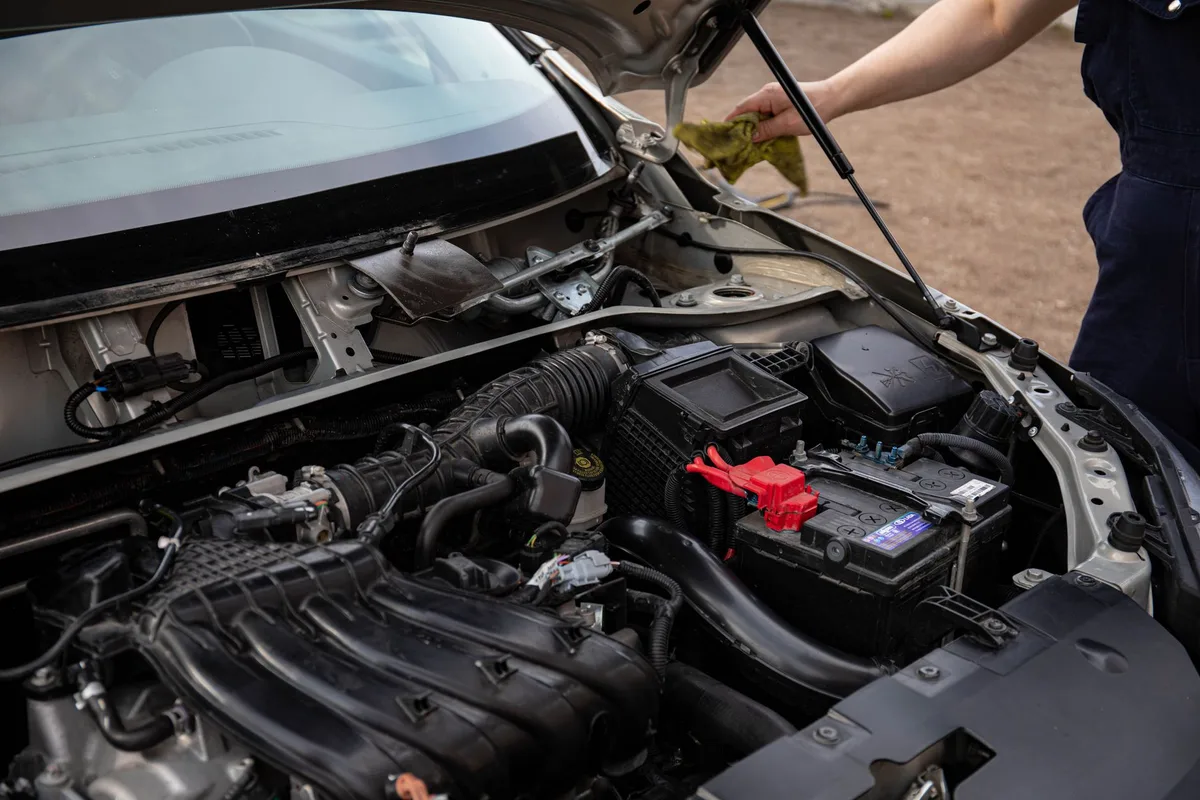
Here's the range most 12-volt systems live in. Grab a multimeter, set it to DC volts, and check at the battery terminals. If you're unsure of the dial, our walkthrough on dialing in 20V DC covers it in a minute.
| Reading (engine running) | What it means |
|---|---|
| Below 13.0V | Undercharging, alternator or belt may be weak |
| 13.8V to 14.7V | Healthy, normal charging window |
| 14.7V to 15.0V | High end, watch it, may still be fine when cold |
| 15.0V and up | Overcharge territory, investigate now |
For context, a fully charged battery at rest reads about 12.6 volts. When the alternator kicks in, it pushes voltage higher to force current back into the battery. That's the whole point.
If you want a refresher on baseline readings, here's how to read resting battery voltage properly.
Why 14.7 Volts Can Be Normal or a Warning Sign
The same 14.7 reading can be totally fine on one car and a problem on another. Two things decide which camp you're in: temperature and how charged your battery already is.
The Cold Engine and Temperature Compensation Factor
Cold batteries need a higher voltage to charge fully. Most modern regulators know this and bump the target up when it's cold outside. As a rough rule, charging voltage drops about half a volt for every 10°C rise in temperature.
So 14.7 volts on a frosty morning? Completely normal. The same 14.7 in the middle of a hot summer afternoon deserves a closer look.
Standards bodies like SAE International publish the testing methods carmakers use to tune this behavior.
Battery State of Charge and the Charging Phase You're In
A low or freshly started battery pulls hard. The alternator answers with higher voltage during that bulk charging phase. Seeing 14.7 right after startup is expected.
The key word is taper. As the battery fills up, voltage should ease back toward the mid-13s or low-14s. If it climbs to 14.7 and just sits there after 15 or 20 minutes of driving, that's when normal turns into a question mark.
The One Thing That Changes Everything: Your Battery Type
Your battery chemistry sets the ceiling for what counts as "too high." A number that's harmless for one type can slowly damage another. This is the detail generic answers almost always skip.

Flooded lead-acid batteries tolerate a bit more voltage and even benefit from occasional higher charging. AGM batteries are sealed and fussier about heat and overvoltage. Lithium (LiFePO4) packs have the tightest limits of all.
| Battery type | Typical charge ceiling | Is 14.7V okay? |
|---|---|---|
| Flooded lead-acid | 14.4V to 14.7V | Yes, right in range |
| AGM | 14.4V to 14.7V | Yes, but avoid sustained higher |
| Gel | 14.1V to 14.4V | Borderline, watch closely |
| Lithium (LiFePO4) | 14.2V to 14.6V | Fine briefly, shouldn't sit above |
If you run a sealed setup, testing takes a slightly different approach. This guide on checking a sealed AGM pack shows what healthy looks like. For flooded batteries, 14.7 is genuinely nothing to lose sleep over.
When 14.7V Crosses Into Overcharging Territory
Fourteen-point-seven becomes a problem when it won't come down. A regulator that's stuck high keeps forcing voltage into an already-full battery. That's overcharging, and it does real damage over time.

The Difference Between a Momentary Reading and a Stuck Regulator
A momentary 14.7 during charging is healthy. A stuck reading is a fault. Here's how to tell them apart:
- If your voltage rises to 14.7, then tapers down as you drive, then it's normal.
- If it holds at 14.7 or drifts higher and stays there, suspect the voltage regulator.
- If you ever see 15.0 volts or more, stop and diagnose before it boils your battery.
The voltage regulator is the brain that caps output. On most modern cars it's built into the alternator or managed by the ECU. When it fails high, voltage runs away.
Bad diodes can also throw off readings, and you can check the alternator diodes yourself to rule that out. A quick full charging-system test confirms whether the alternator is the culprit.
How to Test Your Alternator Voltage the Right Way
Testing takes two minutes and a cheap multimeter. The goal is to catch what your dashboard gauge hides, since dash voltmeters are often off by a few tenths.

Multimeter at the Battery Terminals, Step by Step
Set the meter to DC volts, 20V range. Then follow these steps:
- Engine off, touch red probe to positive, black to negative. You want around 12.6V.
- Start the engine and let it idle. The reading should jump into the 13.8V to 14.7V range.
- Keep probes clean and on bare metal, not corroded terminal covers.
If you'd rather not pop the hood every time, there are other ways to gauge battery health, though a meter is always more precise. Not sure which dial to pick? The right multimeter setting for a battery is worth a quick look first.
Reading at Idle, Under Load, and Watching It Taper
One reading isn't enough. You want to see how voltage behaves under real demand.
Turn on the headlights, blower fan, and rear defrost. Voltage may dip slightly, but a healthy system holds above 13.5V under load. Now watch it over 15 minutes of driving.
A good charging system settles down as the battery fills. If 14.7 refuses to taper, note that for later.
Signs Your Alternator Really Is Overcharging
Overcharging leaves clues you can see, smell, and measure. Voltage that stays above 15V is the clearest signal, but your battery tells the story too.
Watch for these red flags:
- A rotten-egg or sulfur smell near the battery.
- A swollen, bulging, or warm battery case.
- Low electrolyte, or you keep topping off water in a flooded battery.
- Headlights that flare bright, then flicker.
- Frequent battery replacements with no obvious cause.
Any one of these paired with a high, stuck reading points to a failing regulator. Catch it early and you save the battery. Ignore it and the heat can cook nearby electronics.
Checking for AC Ripple and Hidden Diode Problems
AC ripple is stray alternating current leaking through a failing rectifier. Your alternator makes AC, then diodes convert it to DC. When a diode fails, that clean DC gets contaminated.
To check, switch your multimeter to AC volts with the engine running. You want to see under 0.05V (50 millivolts). Anything higher hints at bad diodes, even if your DC voltage looks normal.
Ripple explains a lot of weird gremlins: dim lights, flickering gauges, radio noise. If the AC reading is high, dig into the alternator's diode pack before condemning the whole unit. A single bad diode can throw off the entire charging picture.
Common Mistakes That Lead to a False Too High Reading
Plenty of "overcharging" panics turn out to be measurement errors. Before you buy an alternator, rule these out.
| Mistake | What actually happens |
|---|---|
| Trusting the dash gauge | Dash voltmeters drift 0.2V to 0.5V off |
| Reading only at cold startup | Bulk charge always shows the highest voltage |
| Dirty or loose probe contact | Adds false resistance and skews the number |
| Bad ground connection | Fools the regulator into pushing voltage up |
| Cheap meter, low battery | Uncalibrated readings run high or jumpy |
A poor ground is the sneaky one. If the alternator can't "see" the battery properly, it overcompensates. Confirm your grounds are solid with a ground path check, and run a voltage drop test across the main cables.
Loose connections mimic overcharging more often than you'd think.
Safety Warnings: Battery Gassing, Acid, and Hydrogen Risk
Overcharged batteries vent hydrogen gas, and hydrogen is flammable. That's not a scare tactic, it's basic chemistry. A boiling flooded battery in a sealed space is a genuine fire and explosion risk.
Keep these rules in mind whenever you're poking around:
- No sparks, flames, or cigarettes near a charging battery.
- Wear eye protection. Battery acid burns skin and eyes fast.
- Work in a ventilated space so hydrogen can escape.
- Disconnect the negative terminal first before servicing.
- Never short the alternator output terminals together.
If your battery is swollen or hissing, don't drive on it hoping it settles. The U.S. Occupational Safety and Health Administration treats battery gassing as a real workplace hazard for good reason.
Sustained overcharge also ruins the battery's internal plates, so you're risking money on top of safety.
Expert Tips for Keeping Your Charging Voltage in the Sweet Spot
A little upkeep keeps your readings honest and your battery happy. Most charging problems trace back to connections, not the alternator itself.
- Clean the battery terminals twice a year. Corrosion adds resistance and skews voltage.
- Check belt tension. A slipping serpentine belt starves the alternator at idle.
- Retest after any battery swap. A new battery can shift your normal reading slightly.
- Keep an eye on voltage in extreme heat. Hot engine bays push AGM batteries harder.
- Log your typical numbers so you notice drift early.
If you run a motorcycle or a secondary bank, the same logic applies with tighter limits. Smaller batteries react faster, so a quick bike battery check is worth doing seasonally. For deep-cycle setups in RVs or boats, monitor charge behavior with a deep-cycle voltage test since overcharge damage is cumulative.
Frequently Asked Questions About 14.7V Alternator Output
Is 14.7 volts safe for an AGM battery?
Yes, 14.7 volts is safe for most AGM batteries during active charging. AGM charge ceilings typically sit between 14.4 and 14.7 volts. The concern isn't hitting 14.7 briefly.
It's the voltage staying stuck there for long stretches in high heat, which stresses the sealed cells.
At what voltage is an alternator overcharging?
An alternator is overcharging when voltage holds at 15.0 volts or higher with the engine running. Readings of 14.7 during bulk charging are normal. Sustained output above 15V forces current into a full battery, causing gassing, heat, and shortened battery life.
Why does my voltage read 14.7 when cold but lower when warm?
That's temperature compensation working correctly. Cold batteries need higher voltage to accept a full charge, so the regulator raises the target. As the engine bay warms, voltage drops toward the mid-13s or low-14s.
This automatic adjustment protects the battery in both conditions.
Can a bad ground cause a high voltage reading?
Yes. A poor or corroded ground makes the regulator misjudge the battery's true voltage. It compensates by pushing output higher than needed.
Cleaning and tightening the ground straps often drops a suspiciously high reading back into the normal range with no new parts.
Should voltage stay at 14.7 the whole drive?
No, it shouldn't sit at 14.7 the entire time. Voltage starts high while the battery recharges, then tapers to the mid-13s or low-14s once it's full. A reading frozen at 14.7 for an hour of driving suggests the regulator isn't backing off as it should.
Your Quick Decision Guide: Is 14.7V a Problem for You?
Run through this simple logic and you'll have your answer in under a minute.
- If your reading is 14.7V, tapers as you drive, and the battery is cool: you're fine. No action needed.
- If it's 14.7V on a flooded or AGM battery in cold weather: normal, keep driving.
- If it holds at 14.7V for an hour with no taper: check grounds and connections first.
- If it climbs past 15.0V or the battery smells or swells: stop and diagnose the regulator now.
- If a lithium (LiFePO4) battery sits above 14.6V: ease off, that's above its comfort zone.
For the vast majority of drivers, 14.7 volts is your charging system doing exactly what it should. The number alone rarely means trouble. Context is everything: temperature, battery type, and whether it tapers.
Confirm those three, and you can put the worry to rest without spending a dime on parts you don't need.

Similar Posts