Multimeter Reading 0 Volts on Car Battery: How to Fix
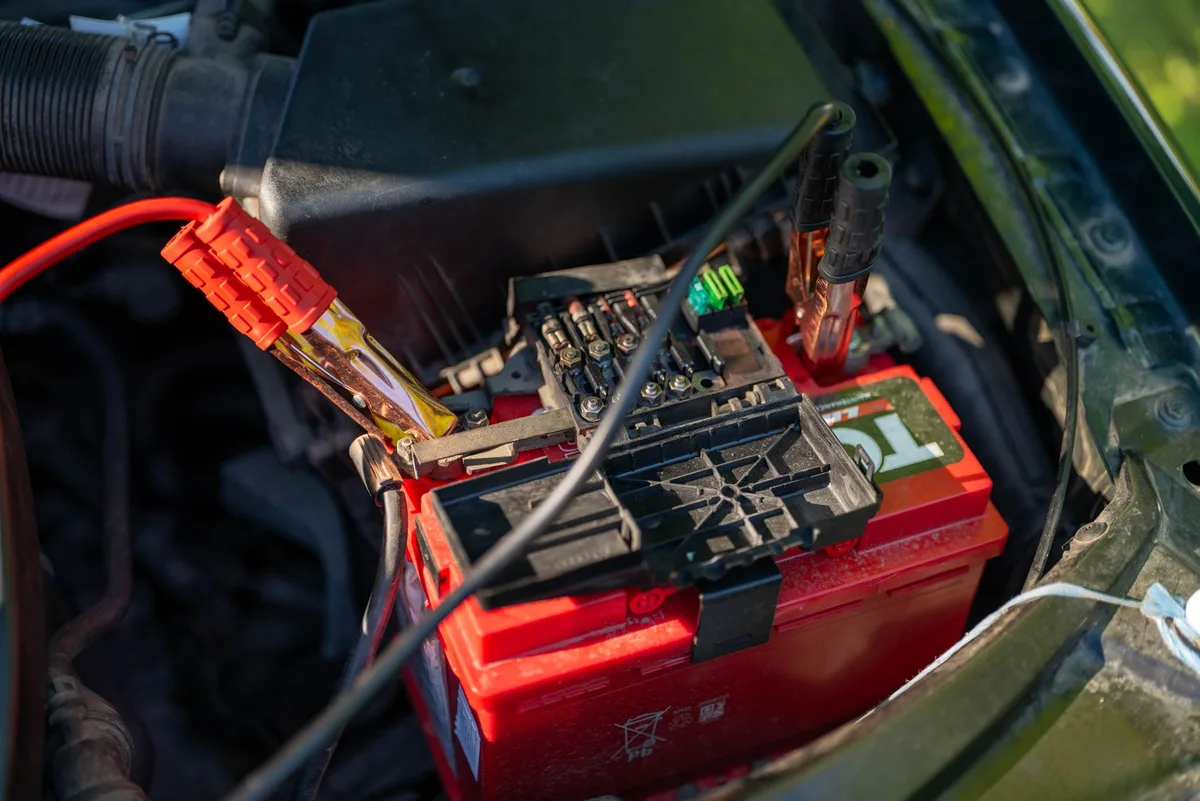
You hook up your meter, touch the probes to the posts, and the screen just sits there at 0.00. A multimeter reading 0 volts on car battery feels alarming, but it rarely means the battery is truly gone. In most cases the meter, the leads, or the contact point is the real culprit.
A stone-dead 12V battery still shows a few volts, not a flat zero.
Here's the number that matters. A healthy, fully charged battery reads about 12.6 volts at rest, per standard automotive testing. Even a badly discharged one usually sits near 11.8V.
A hard 0.00 points somewhere else, so let's find it fast.
Quick Answer
A multimeter reading 0 volts on car battery almost always means meter or contact error, not a dead battery. A truly flat battery still shows several volts. Check the dial is set to DC volts.
Confirm both leads sit in the correct jacks. Then press the probes firmly onto clean, bare metal posts.
Why Your Multimeter Shows 0 Volts When the Battery Clearly Isn't Dead
A battery is a chemical device. Even when it's too weak to crank the engine, those cells still hold a measurable charge. That's why a genuine dead battery reads something like 11.5V or 10V, not zero.
So when your meter says 0.00, it's usually telling you the circuit between the battery and the display is broken. Something in that path isn't connecting.
Think of it in three buckets:
- The meter itself is set up wrong or has a fault.
- The probes aren't making real contact with the metal.
- The battery has an internal open circuit, which is rare but real.
Most of the time the problem lives in the first two buckets. Getting the meter right is half the battle, and picking the correct mode solves more false readings than anything else. We'll rule out each bucket in order.
What a Real Battery Reading Should Look Like
Before you diagnose a bad reading, you need to know what a good one looks like. That way, 0.00 stands out as obviously wrong instead of just confusing.
Here's the resting voltage scale for a standard 12V lead-acid battery, measured with the engine off.
| Resting Voltage | State of Charge | What It Means |
|---|---|---|
| 12.6V or higher | 100% | Fully charged and healthy |
| 12.4V | ~75% | Good, slight top-up helps |
| 12.2V | ~50% | Weak, recharge soon |
| 12.0V | ~25% | Nearly flat, won't crank well |
| 11.8V or lower | Near dead | Deeply discharged, still not 0V |
Notice the bottom of that table. Even a battery on its last legs reads close to 11.8V. It never naturally falls to a clean 0.00 while still connected and intact.
One more figure worth knowing. While the engine cranks, voltage dips, but what it drops to while starting should stay above roughly 9.6V. Anything at zero during that test is a connection problem, not a battery problem.
If you want the clean baseline method, our guide on reading the voltage properly walks through it step by step.
Start Here: Is It the Meter, the Probes, or the Battery?
Work through this in order. Don't skip ahead and don't buy a battery yet. Each check takes seconds and rules out one whole bucket.
Follow the if/then logic:
- If the meter reads 0.00 on everything, even a known-good AA battery, then the fault is in the meter or leads. Fix that first.
- If the meter reads a good AA fine but shows 0 on the car battery, then suspect probe contact or the posts.
- If the probes clearly bite clean metal and the meter still shows 0, then you may have a genuine open circuit inside the battery.
That single AA test is the fastest sorting tool you have. Grab any small battery, touch the probes across it, and watch the screen. A working meter shows around 1.5V instantly.
If that number appears, your meter and leads are fine. Move on to the posts. If it stays at zero, stop and fix the meter before touching the car again.
Meter Setup Checks That Cause a False Zero
Most false zeros trace back to how the meter is set. Run these four checks before you blame anything else.

Dial on AC Volts Instead of DC
A car battery puts out direct current, shown as V with a straight line and dashes (V⎓). If your dial sits on AC volts (V with a wavy line), you'll get a wild or near-zero reading. Switch to DC volts and try again.
Manufacturer setup guides from meter makers like Fluke stress this as the number one user error.
Leads Plugged Into the Wrong Jacks
The black lead belongs in the COM jack. The red lead belongs in the voltage jack, usually marked VΩ. If red is sitting in the 10A or 20A current jack, the meter reads voltage as zero or throws odd numbers.
Two seconds to check, and it fixes a shocking number of "dead" batteries.
Wrong Manual Range or a Dead Meter Battery
If your meter isn't auto-ranging, set it to the 20V range for a 12V battery. Setting it too low can force an over-range or a blank result. Our quick walkthrough on dialing in the right range covers this exactly.
Also check the meter's own 9V battery. A weak internal cell can make the display sit dead at zero.
A Blown Internal Meter Fuse
Multimeters have a fuse that protects the current-measuring circuit. If it's blown, some functions read nothing. Open the back, pull the fuse, and test its continuity.
Swap in the correct amp-rated replacement if it's gone. A blown fuse often follows an accidental probe short, so if you recently sparked the leads, check here first.
Probe and Contact Problems That Read 0V
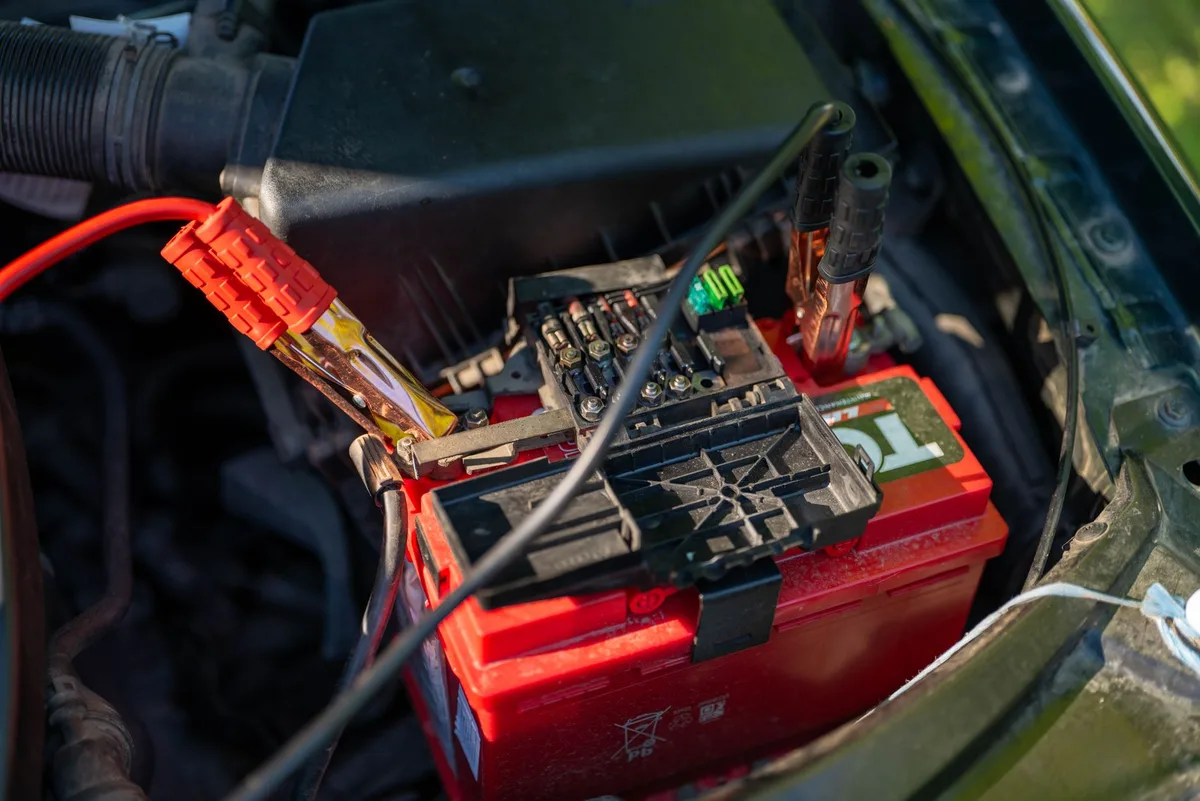
If the meter checks out but the car battery still shows zero, the fault is almost always at the probe tip. Voltage can't travel through rust, paint, or grease. Your probes have to bite clean lead.
Corrosion, Paint, or Grease Between Probe and Post
That white or bluish crust on the terminal is an insulator. Rest a probe on it and you'll read little or nothing. Scrape the post down to shiny metal with a wire brush or some sandpaper first.
Then place the probe tip directly on the bare lead, not the crust.
Probing the Clamp Instead of the Post
The cable clamp isn't always a reliable test point. If the clamp is loose or corroded where it grips the post, you're measuring past a bad joint. Touch the actual battery post first for a true reading.
Then compare it to a reading on the clamp. A big drop between the two points means a weak terminal connection is stealing your voltage.
A Broken or Intermittent Test Lead
Test leads fail more than people expect. The wire can break inside the insulation where it flexes near the plug. If wiggling the leads makes the reading jump between 0 and 12V, that's your answer.
Set the meter to continuity, touch the probe tips together, and confirm the lead reads near zero ohms. No beep means a dead lead.
When 0V Really Is the Battery: Dead Cells and Open Circuits
Rarely, a true 0.00 does come from the battery itself. This happens with an internal open circuit, usually a broken plate strap or a completely dried-out cell. The chemical path inside is physically severed, so no voltage reaches the posts.
You've earned this conclusion only after clearing the meter and probe checks. If a known-good AA reads fine and your probes bite clean metal, the battery is the last suspect standing.
A few situations make this more likely:
- The battery froze solid, cracking internal connections.
- Electrolyte ran bone dry after long neglect or overcharging.
- A physical impact or heavy vibration broke an internal weld.
One more sanity check. A battery with a shorted cell often reads low, around 10.5V, not a clean zero. A flat 0.00 with good contact points to that open circuit.
At that stage, the battery is scrap and needs proper recycling.
The Full Step-by-Step: Getting a Trustworthy Reading
Here's the clean sequence that catches almost every false zero. Run it top to bottom and you'll know the cause within a minute or two.
| Step | Action | What You Want To See |
|---|---|---|
| 1 | Set dial to DC volts | V with straight line symbol |
| 2 | Check lead jacks | Black in COM, red in VΩ |
| 3 | Test a known-good AA | ~1.5V on screen |
| 4 | Clean the battery posts | Bare, shiny metal |
| 5 | Probe post to post | Around 12.6V |
Set the Meter and Confirm the Leads
Turn the dial to DC voltage and pick the 20V range if it's manual. Seat the black lead in COM and the red lead in the voltage jack. This single step clears the most common cause of a zero reading.
If you want the full setting rundown, our multimeter setup basics covers each option.
Test on a Known-Good Source First
Touch the probes across any household AA or a spare 9V. A working meter shows voltage instantly. This proves the meter and leads before you ever reach the car.
Skip this step and you'll waste time chasing the wrong fault.
Clean the Posts and Probe Firmly
Brush both terminals until they shine. Press each probe tip hard against the bare lead post, not the clamp. Firm contact matters more than most people think.
A light touch on oxidized metal reads low or zero.
Read at the Posts, Then the Cable Clamps
Take your first reading right on the posts. Then move the probes to the cable clamps and compare. Matching numbers mean solid connections.
A drop at the clamps flags corrosion, and testing the cables end to end confirms where the loss hides.
Reading vs Reality: What 0V, 11.8V, and 12.6V Each Tell You
The exact number on screen tells a story. Learning to read it saves you from replacing good parts. Here's how the common results break down.
- 0.00V with good contact: Meter fault, bad lead, or a rare open-circuit battery. Not a normal dead battery.
- 10.5V to 11.8V: A genuinely discharged or failing battery. Charge it, then retest.
- 12.2V to 12.4V: Partly charged and usable, but top it off soon.
- 12.6V or higher: Healthy and fully charged.
- 13.5V to 14.7V with engine running: The alternator is charging. Anything outside that band is worth a closer look.
That last line matters for chasing electrical gremlins. If your resting voltage is fine but the car still dies, the charging system deserves a look. Our guide on normal charging output explains the healthy range in plain terms.
Cold weather shifts these numbers too. A battery that reads 12.4V in summer can sag lower on a freezing morning, and cold-weather strain is a common reason for a weak crank.
Multimeter vs Load Tester vs Conductance Tester
A multimeter tells you voltage, but voltage alone doesn't prove a battery is strong. It only shows the charge sitting there at rest. To know if the battery can actually deliver power, you need a load test.

Here's how the three common tools compare and who each one suits best.
| Tool | What It Measures | Best For |
|---|---|---|
| Multimeter | Resting voltage | Quick checks, spotting false zeros, DIY owners |
| Load tester | Voltage under heavy draw | Confirming a battery can crank the engine |
| Conductance tester | Internal resistance, CCA | Shops needing a fast health score without draining |
The multimeter is your first move every time. It's cheap, fast, and perfect for sorting a real problem from a setup error. A weak battery that reads 12.4V at rest can still collapse under load.
That's why voltage and load testing work together. You can even fake a basic load test with a multimeter by watching voltage while checking it during cranking. If the number crashes below 9.6V, the battery is done, whatever the resting figure said.
Mistakes That Send People Buying the Wrong Battery
The biggest mistake is trusting a zero reading at face value. A false zero has sent plenty of people to the parts counter for a battery that was perfectly fine. The meter was on AC, or a lead was in the wrong jack.
Here are the errors that cost real money:
- Replacing the battery before doing the AA meter check.
- Judging health on resting voltage alone, skipping a load test.
- Ignoring corroded terminals that mimic a dead battery.
- Blaming the battery when a poor ground path is the real fault.
Slow down and clear the meter and contact checks first. A five-minute test beats a needless purchase every time.
Safety Checks Before You Touch the Terminals
Car batteries hold sulfuric acid and vent hydrogen gas, so treat them with respect. A careless spark near the top can be dangerous.
Keep these habits every single time:
- Wear eye protection and gloves.
- Remove rings, watches, and metal bracelets first.
- Never let your two probes touch each other across the posts.
- Keep flames, cigarettes, and sparks well away.
Never test or charge a frozen or visibly cracked battery. If a battery is truly dead and scrap, recycle it properly. The EPA treats lead-acid batteries as recoverable, and most auto stores take them back.
Expert Tips for Faster, More Accurate Diagnosis
Small habits make your readings far more reliable. These come straight from how seasoned techs work through a no-start.
- Always test a known-good AA before you trust any zero. It takes five seconds.
- Keep a spare 9V for your meter in the toolbox. A weak internal cell fakes a dead reading.
- Watch for surface charge. A battery just off the charger can read 12.9V and mislead you. Let it rest an hour.
- Log two numbers: resting voltage and cranking voltage. The gap tells the real story.
If resting voltage looks fine but the car struggles, move upstream. Testing the alternator's output often reveals the true weak link.
When to Stop and Get the Charging System Tested
Stop DIY testing when your numbers point past the battery. If the battery reads a healthy 12.6V at rest but keeps going flat, the charging system is the suspect. That means the alternator, the wiring, or a parasitic drain.
Watch for these signals that it's time for deeper testing:
- The battery dies overnight despite a good resting reading.
- Charging voltage sits below 13.5V or above 14.7V with the engine running.
- Lights dim or flicker at idle.
A parasitic draw can pull the battery down while the car sits. Checking overnight current loss tracks it down. If the alternator or wiring is involved, a proper shop test is worth the visit.
Frequently Asked Questions
Can a car battery really read exactly 0 volts?
Rarely, yes, but it's almost never a normal dead battery. A discharged battery still shows around 10V to 11.8V. A true 0.00 usually means a meter fault, a bad lead, or poor probe contact.
Only after clearing those does an internal open circuit become likely.
Why does my battery show 0V but the car still starts?
That's a classic false reading, not a real zero. If the car cranks, the battery clearly holds charge. Your meter is on the wrong setting, a lead is in the wrong jack, or the probes aren't touching clean metal.
Recheck the setup and read again.
What voltage means my car battery is bad?
A resting voltage below about 12.2V means the battery is weak and needs charging. If it won't hold a charge above 12.4V after topping up, it's failing. A reading that crashes below 9.6V while cranking confirms the battery can't deliver under load.
Does a 0V reading mean I need a new battery?
Not necessarily. First confirm the meter works on a known-good AA. Then clean the posts and probe bare metal.
Most zero readings vanish once the setup is corrected. Only a confirmed internal open circuit justifies a replacement.
Can a blown multimeter fuse cause a 0V reading?
Yes, on some meters a blown internal fuse kills certain functions. Open the back, remove the fuse, and check it for continuity. Replace it with the correct amp rating if it's blown.
This often follows an accidental probe short.
Your 0-Volt Decision Guide
Work the problem in this order and you'll rarely go wrong:
- 0.00V everywhere, even on a AA? Fix the meter. Wrong mode, wrong jacks, blown fuse, or a dead internal battery.
- AA reads fine, car battery zero? Clean the posts and press hard on bare metal.
- Good contact, still zero? Suspect a rare internal open circuit. That battery is scrap.
- Reads 10 to 11.8V? A genuinely weak battery. Charge and retest.
- Reads 12.6V but the car dies? Look upstream at the charging system and parasitic drain.
The rule to remember is simple. A flat zero is almost always a setup or contact problem, not a dead battery. Clear the easy checks first, and you'll save both a wasted trip and the cost of a battery you never needed.

Similar Posts