Can a Bad Alternator Drain Your Battery? Explained

So, can a bad alternator drain a battery? Yes, and it happens more often than most drivers realize. A failing alternator can pull your battery flat overnight, or it can slowly starve it while you drive.
Either way, you end up stranded with a car that won't crank.
Here's the catch. A healthy charging system should read 13.8 to 14.7 volts with the engine running, per common manufacturer specs as of 2026. When a diode or voltage regulator fails, that number drifts, and your battery takes the hit.
Let's break down what's actually happening before you throw money at the wrong part.
Quick Answer: Yes, a Bad Alternator Can Drain a Battery
Yes. A bad alternator can drain a battery in two ways. A shorted diode leaks current and kills a parked battery overnight.
A failed voltage regulator undercharges the battery while you drive. Either fault leaves you with a dead battery and a no-start car. A quick voltage and parasitic draw test tells you which one you're facing.
The Two Ways a Failing Alternator Kills a Battery
Not all alternator failures act the same. The part that dies decides whether your battery drains parked or on the road. Knowing the difference saves you from guessing.

Draining It Parked: The Shorted Diode
Inside every alternator sits a set of diodes called the rectifier. Their job is simple. They let current flow one way, from the alternator into the battery, and block it from flowing back.
When one of those diodes shorts out, that one-way gate breaks. Now current leaks backward from your battery into the alternator while the car sits off. The result is a battery that reads fine at night and dead by morning.
This is a classic parasitic drain, and it fools a lot of people. You wake up, the car won't start, and the battery looks like the villain. If you keep waking up to a flat battery, the shorted diode is a prime suspect.
Our guide on tracking down an overnight battery killer walks through how to isolate it.
Starving It While Driving: The Bad Voltage Regulator
The second failure is the opposite problem. The voltage regulator controls how much charge the alternator sends. When it fails low, the alternator can't push enough voltage to top the battery back up.
You drive, the battery slowly runs down, and eventually the car dies mid-trip or won't restart. Everything looks normal until the lights dim and the dash warning glows. If your alternator seems to charge but the battery still dies, a weak regulator or bad connection is usually behind it.
A regulator can also fail high and overcharge. That boils the electrolyte and cooks the battery. Both extremes shorten battery life fast.
How the Charging System Is Supposed to Work
Your charging system has three main players: the battery, the alternator, and the voltage regulator. The battery starts the engine. After that, the alternator takes over and runs everything electrical while recharging the battery.
The alternator spins off the engine's serpentine belt. Inside, a rotor and stator generate alternating current, or AC. The rectifier diodes then convert that AC into the direct current, or DC, your car actually uses.
The voltage regulator keeps that output steady. It targets roughly 13.8 to 14.7 volts, enough to run your lights, radio, and ignition while still recharging the battery. Standards bodies like SAE International publish the test methods shops use to verify charging output.
When every part does its job, the battery stays near a full charge. Break any link in that chain, and the battery slowly loses the war. That's why a charging fault so often looks like a battery problem at first.
Telltale Signs You're Dealing With the Alternator, Not the Battery
A dying alternator usually leaves clues before it strands you. The trick is catching them early. Here's what tends to show up first.
- Dim or flickering headlights, especially at idle
- A battery or charging warning light on the dash
- A whining or growling noise from the alternator bearing
- Electrical gremlins like flickering gauges or a weak radio
- A burning rubber smell from a slipping belt
- Repeated jump-starts within a few days
One or two of these on their own don't confirm anything. Corroded terminals or a tired battery can mimic the same symptoms. But stack three or four together, and the charging system moves to the top of the list.
If you hear a fast clicking instead of a crank, that points a different direction. A rapid clicking sound at start-up usually means low voltage reaching the starter, which can trace back to either a weak battery or poor charging.
Is It the Alternator or Just a Dead Battery? Read Your Symptoms First
Start with when the car fails, because that alone splits the diagnosis. A battery problem usually shows up on the first start of the day. An alternator problem tends to strike after the car has been running, or it drains the battery while parked.
Use this quick symptom map to point yourself in the right direction.
| What You Notice | Likely Battery | Likely Alternator |
|---|---|---|
| Won't start after sitting overnight | Yes | Possible (shorted diode) |
| Dies while driving | No | Yes |
| Jump-starts, then runs fine all day | Yes | No |
| Jump-starts, then dies again soon | No | Yes |
| Dim lights that brighten when you rev | No | Yes |
| Slow crank on a cold morning | Yes | No |
Here's the simplest field test. Jump-start the car, then unhook the jumper cables. If the engine keeps running strong, your alternator is probably charging and the battery is the weak link.
If it dies once the cables come off, the alternator likely isn't holding its end up.
That two-minute check narrows things fast, but it isn't the final word. To be sure, you'll want real numbers from a multimeter, which is exactly where we head next. If your battery reads a healthy voltage yet still won't turn the engine over, the fault may sit in the connections rather than either main part.
Test It Yourself: The 4 Checks That Settle It
You don't need a shop to confirm a charging fault. A basic digital multimeter and four quick tests will tell you almost everything. Work through them in order.

Resting Voltage Test (Engine Off)
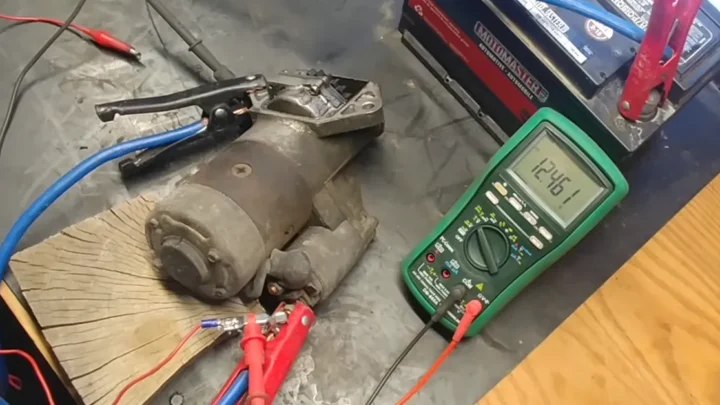
Set your multimeter to DC volts. Touch red to the positive terminal and black to the negative, with the engine off. A healthy battery reads around 12.6 volts.
Anything under 12.4 means it's low, and under 12.0 means it's badly discharged. Take this reading after the car has sat a few hours for the truest number.
Charging Voltage Test (Engine Running)
Now start the engine and check again. You should see 13.8 to 14.7 volts at idle. If it sits below 13.0, the alternator is undercharging.
If it climbs past 15, the regulator is overcharging and cooking the battery. A multimeter can confirm the alternator's output in under a minute.
AC Ripple Test for a Bad Diode
Switch the meter to AC volts with the engine running. You're looking for leaking AC, the fingerprint of a failing diode. A good rectifier shows under 0.05 volts, or 50 millivolts.
Anything higher points straight at a bad diode, the same fault that drains a parked battery overnight.
Parasitic Draw Test for Overnight Drain
This one catches the shorted-diode drain. Set the meter to measure amps, then connect it in series with the disconnected negative cable. With everything off, a normal draw sits around 25 to 85 milliamps.
A much higher reading means something is pulling current, and a step-by-step draw test using the fuse box helps you pin the source.
What the Numbers Should Read: Voltage and Draw Benchmarks
Guessing gets expensive, so lean on real targets. These are the readings our research and common manufacturer specs point to as of 2026. Keep them handy while you test.
| Test | Healthy Reading | Warning Sign |
|---|---|---|
| Resting voltage (off) | 12.6V | Below 12.4V |
| Charging voltage (running) | 13.8 to 14.7V | Below 13.0V or above 15V |
| AC ripple | Under 0.05V (50mV) | Above 0.05V |
| Parasitic draw (key off) | 25 to 85mA | Above 100mA |
Voltage maps to charge level too. Roughly 12.6V is full, 12.4V is about 75 percent, and 12.0V is near 25 percent. Read those numbers right after driving and they'll skew high, so let the battery rest first.
For a cleaner check, our notes on reading a battery once it's topped up explain the wait time.
One caution on the amp test. A cheap meter can only handle so much current, usually 10 amps. Never crank the engine or switch on big loads while it's wired in series, or you risk blowing the meter's internal fuse.
Common Mistakes That Lead to Replacing the Wrong Part
The biggest mistake is swapping the battery first and hoping. A new battery on a bad alternator just dies again in days. Aggregate repair feedback shows this is the number one wasted purchase in charging complaints.
Here are the traps worth dodging:
- Skipping the resting-voltage test and buying parts blind
- Ignoring corroded terminals that mimic charging faults
- Reading charging voltage right after a cold start, before it stabilizes
- Blaming the alternator when a bad ground is the real issue
- Forgetting the belt, which slips and cuts output when glazed
A weak or dirty ground fools a lot of people. Voltage looks low everywhere, yet the alternator is fine. Checking whether the ground path is dropping voltage rules that out fast.
Don't count on idling to fix a run-down battery either. Idle speed rarely spins the alternator hard enough to fully recharge. Our breakdown of whether idling actually charges the battery shows why a real drive works better.
Battery vs. Alternator vs. Parasitic Draw: Side-by-Side
Three different faults cause the same dead-battery symptom, so line them up before deciding. Each one behaves in its own pattern once you know what to watch. This table sorts them fast.
| Clue | Weak Battery | Bad Alternator | Parasitic Draw |
|---|---|---|---|
| When it dies | First start of day | While driving | After sitting parked |
| Charging voltage | Normal (13.8 to 14.7V) | Low or erratic | Normal |
| AC ripple | Normal | High (bad diode) | High if diode-caused |
| Jump-start result | Runs fine all day | Dies again soon | Runs, drains overnight |
| Battery age | Often 4+ years | Any age | Any age |
Read it like a decision tree. If the car dies mid-drive with low charging voltage, the alternator is your answer. If it starts fine all day after a jump, the battery is simply worn.
And if it drains only while parked, hunt for a parasitic draw, whether from a diode or an accessory that won't sleep.
Repair or Replace: Rebuilt, Remanufactured, or New Alternator
Once the alternator is confirmed bad, you've got three paths. Which one fits depends on your budget, your car's age, and how long you plan to keep it.
- New alternator: Best for newer or daily-driver cars you'll keep for years. Highest cost, longest warranty, lowest headache.
- Remanufactured: A rebuilt core with worn parts replaced and bench-tested. Solid value for most drivers, usually cheaper than new.
- Rebuilt or DIY diode swap: Cheapest if only the rectifier or regulator failed. Best for hobbyists comfortable opening the unit, and only worth it when the rest is healthy.
For most people, a quality remanufactured unit hits the sweet spot on price and reliability. Verified buyer feedback reports fewer comebacks when the reman carries a real warranty and a fresh bench test.
Whatever you fit, correct the charging fault before trusting a new battery. A car that keeps eating batteries overnight often has a lingering drain, and our guide on a fresh battery that won't survive the night helps you close the loop.
Safety Rules Before You Touch the Battery or Alternator
Car batteries mix stored electricity with flammable hydrogen gas, so a little caution goes a long way. Treat every job like the terminals are live, because they are.
- Disconnect the negative terminal first, then the positive. Reverse that order when reconnecting.
- Keep sparks, cigarettes, and flames away from the battery.
- Wear eye protection. Battery acid is sulfuric and burns skin fast.
- Never disconnect the battery with the engine running. The voltage spike can fry electronics.
- Watch polarity on chargers. Reversing the leads can cause real damage, as our look at hooking a charger up backwards explains.
A rotten-egg smell near the battery means it's venting gas. That's your cue to stop and ventilate, and our notes on a sulfur smell from the battery cover why. If you charge indoors, crack a window and keep the space airflow-friendly.

Similar Posts