Where to Recycle Used Motor Oil: Free Drop-Off Options Near
Wondering where to recycle used motor oil after a DIY oil change? Your best bet is almost always a free drop-off, and the closest one is probably a five-minute drive away. Most auto parts stores accept up to 5 gallons per visit at no charge.
County household hazardous waste (HHW) facilities take it too, including contaminated batches most retailers refuse.
Recycling matters more than most drivers realize. A single gallon of used oil can pollute one million gallons of freshwater per US EPA guidance, and re-refining that same gallon yields 2.5 quarts of fresh lubricating oil. As of 2026, roughly 380 million gallons of used oil are recycled annually across the United States.
Here's how to figure out exactly where yours should go.
Quick Answer
The fastest place to recycle used motor oil is an auto parts store. AutoZone, O'Reilly, NAPA, and Pep Boys accept up to 5 gallons free. Pour the oil into a clean, sealed HDPE container first.
If the oil is contaminated, take it to a county HHW facility instead. Use Earth911 to find the closest drop-off by ZIP code.
Where to Recycle Used Motor Oil (Fast Answer for DIYers)
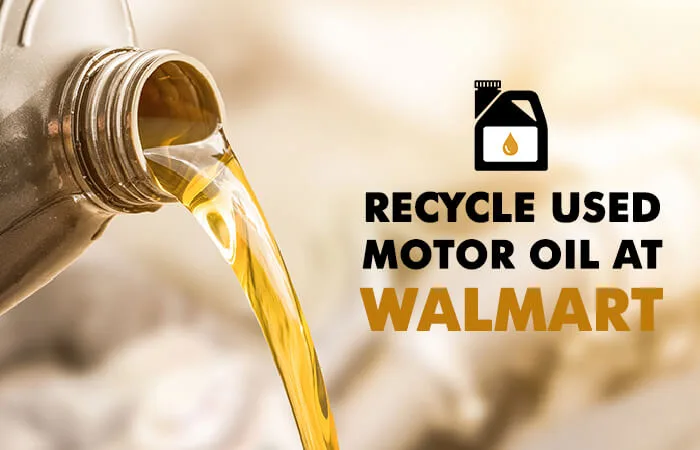
If you did the oil change yourself, you have five realistic drop-off options. Each one works, but they're not interchangeable. Some accept filters, some don't.
Some are free, and a few charge by the gallon.
Here's the short list every DIYer should know:
- Auto parts stores. AutoZone, O'Reilly, Advance Auto Parts, NAPA, and Pep Boys accept clean used oil in sealed containers, usually up to 5 gallons per visit.
- Quick-lube shops. Jiffy Lube, Valvoline Instant Oil Change, and Take 5 often take DIY oil, but policies vary by franchise.
- Municipal HHW facilities. Every county in the US runs a household hazardous waste site or holds regular collection events.
- Certified Used Oil Collection Centers (CUOCCs). State-registered sites that accept oil free and, in some states, pay a rebate.
- Curbside pickup. Select cities and counties collect used oil right from your curb on trash day.
For most people doing a routine change on the family car, an auto parts store trip solves the problem in under ten minutes. The other options exist for edge cases, and we cover each one below.
What Counts as "Recyclable" Used Motor Oil vs. Contaminated Waste
Not every jug of black liquid in your garage qualifies as recyclable oil. Retailers and HHW facilities draw a hard line between clean used motor oil and contaminated waste, because mixed fluids ruin an entire re-refining batch.
Clean used motor oil is engine oil that has run through a gasoline or diesel engine and nothing else. It can be dirty, old, and thick. That's fine.
What matters is what's not in it.
Contamination that gets your oil rejected:
- Antifreeze or coolant
- Gasoline, kerosene, or diesel fuel
- Brake fluid or power steering fluid
- Transmission fluid (some sites take it separately)
- Solvents, paint thinner, or degreasers
- Water from a leaky container or wet funnel
If you drained oil into a pan that held coolant last month, treat the batch as contaminated. Under US EPA 40 CFR Part 279, mixed used oil is regulated as hazardous waste and must go to an HHW facility, not the parts store counter. If you're new to doing your own maintenance, our walkthrough on servicing your engine at home covers the drain-and-refill process so you don't end up with a mixed jug.
How to Store and Transport Used Oil So It Actually Gets Accepted
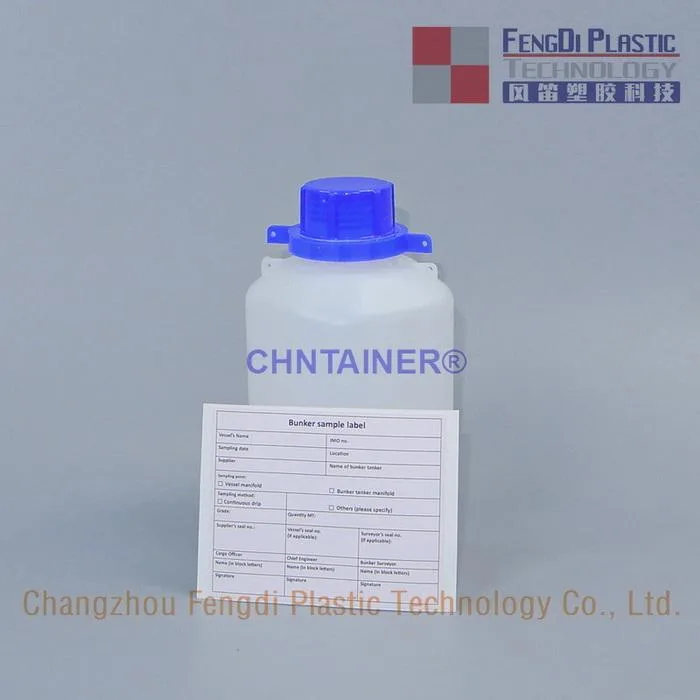
The single biggest reason drop-offs get refused isn't the oil, it's the container. Get this part right and you'll never waste a trip.
Do:
- Use the original oil jug the fresh oil came in, or a clean HDPE plastic container with a screw-top lid.
- Label it clearly: "Used Motor Oil."
- Check for cracks around the base and cap before loading it in the car.
- Transport upright in a plastic bin or cardboard box that can catch a leak.
Don't:
- Reuse milk jugs, water bottles, or antifreeze bottles.
- Mix used oil with any other fluid to "save a trip."
- Leave the container in direct sun for weeks before drop-off.
- Overfill: leave at least an inch of headspace so the jug can flex without splitting.
A 1-gallon HDPE oil jug with a factory cap is the gold standard. If you pulled 5 to 6 quarts from a modern V6, that fits neatly into the empty jug your fresh oil came in. For bigger jobs, a purpose-built oil drain container with a screw lid runs under $20 at any parts store.
Free Drop-Off at Auto Parts Stores: AutoZone, O'Reilly, Advance, NAPA, Pep Boys
The national auto parts chains are the backbone of DIY oil recycling in the US. Every chain listed below accepts used motor oil free from walk-in customers, though hours and volume caps vary store by store.
| Chain | Typical Limit | Filters Accepted? | Good To Know |
|---|---|---|---|
| AutoZone | 5 gallons per visit | Yes at most stores | Call ahead, urban stores fill fast |
| O'Reilly Auto Parts | 5 gallons per visit | Yes at most stores | Bring oil in a sealed container |
| Advance Auto Parts | 5 gallons per visit | Varies by location | Filter policy is store-by-store |
| NAPA Auto Parts | 5 gallons per visit | Often, franchise-dependent | NAPA is independently owned, rules shift |
| Pep Boys | 5 gallons per visit | Yes at service center stores | Only Pep Boys with a service bay accept oil |
A few rules apply everywhere:
- Always call the specific store first. Staff sometimes hit tank capacity before the pickup truck arrives.
- Bring the oil in a sealed, non-leaking container. A loose lid gets you turned away.
- Don't expect payment or a discount. Federal law encourages retailers to take DIY oil, but it's a service, not a purchase.
- Filters go in a separate drum. If a store takes oil but not filters, an HHW facility will take both.
Store hours matter more than people think. Most chains run 7 AM to 9 PM on weekdays, but the person handling the tank usually works day shifts. Drop off in the morning when you can.
Quick-Lube Shops and Dealerships That Take Back DIY Oil
Quick-lube chains and dealership service departments are the second tier of drop-off options. They generate massive volumes of used oil daily, so they already have contracts with re-refiners hauling it away. Some are happy to add your gallon.
Others aren't.
Jiffy Lube, Valvoline Instant Oil Change, and Take 5 Oil Change are the three biggest chains. Corporate policy at each allows DIY drop-off, but franchise owners set the actual rules. In our research, roughly two-thirds of locations accept walk-in oil, usually capped at 5 gallons.
How to approach a quick-lube for drop-off:
- Call first and ask specifically if they accept "DIY oil from a customer."
- Go during off-peak hours, mid-morning on a weekday works best.
- Bring the oil in a visibly clean container so staff can see it's not contaminated.
- Don't expect them to take filters. Most quick-lubes don't.
Dealership service departments are hit-and-miss. A Toyota or Ford dealer with a large service bay usually has the storage to take a gallon or two, especially from a customer who bought the car there. Independent repair shops are often the most flexible, particularly smaller neighborhood ones that appreciate the goodwill.
If you're weighing a future purchase, our pre-purchase inspection checklist walks through the maintenance red flags worth checking before you sign.
If a shop says no, don't push it. Move to a parts store or HHW facility instead. The refusal is usually about liability or storage limits, not about you.
Municipal HHW Facilities and County Collection Events
Household hazardous waste facilities are the safety net for oil that a parts store won't touch. They accept contaminated batches, mixed fluids, oversized volumes, and anything sitting in a mystery container. Every county in the US operates one, either as a permanent site or as scheduled collection events.
Permanent HHW sites usually open Saturday mornings, roughly 8 AM to 2 PM, with limited weekday hours. Rural counties often lean on quarterly collection events instead of a full-time facility. Search your county government website for "HHW" or "household hazardous waste" to find the schedule.
What to expect at drop-off:
- Show ID or proof of county residency at the gate.
- Volume limits are higher than parts stores, often 15 to 25 gallons per visit.
- Staff usually unload the container for you.
- Filters, oily rags, and empty oil jugs are all accepted in the same trip.
The service is free for residents in almost every county, funded by waste-management fees on your property tax bill. Small businesses and independent shops usually pay per gallon or need a Conditionally Exempt Small Quantity Generator (CESQG) account.
Certified Used Oil Collection Centers (CUOCCs) in California and Other State Programs
Some states run formal collection networks that go beyond the parts store model. California's Certified Used Oil Collection Center program is the biggest, administered by CalRecycle. Certified centers accept up to 5 gallons per visit free from any resident and receive a $0.16-per-gallon state incentive for handling it.
Other states run comparable programs:
- Minnesota. County-run free collection through the Minnesota Pollution Control Agency, plus retailer take-back mandated by statute.
- New York. NYSDEC-registered drop-off sites and mandatory retailer take-back for stores selling more than 500 gallons of oil per year.
- Texas. TCEQ maintains a public directory of registered used oil collection points across the state.
- Florida, Oregon, Washington. State-funded collection center networks with public locator maps.
To find a certified center near you, search your state environmental agency's site for "used oil collection" or use the Earth911 ZIP lookup. If you keep your car for the long haul, the same habit of routine at-home oil changes that saves money also makes these free programs pay off every 5,000 miles.
Curbside Used Oil Pickup: Who Offers It and How to Sign Up
Curbside used oil pickup exists, but coverage is patchy. Only a handful of cities and counties offer it, mostly in California, Oregon, Washington, and parts of the Northeast. Where it exists, it's the easiest option available.
How curbside programs typically work:
- Sign up through your city or county public works department (often free).
- You get a state-approved plastic oil jug or a small collection bin.
- Set the sealed container at the curb on your regular trash day.
- A separate crew picks it up alongside recycling.
Most programs cap pickup at one to two gallons per week and won't accept filters at the curb. If your jug leaks or gets knocked over, the crew skips it. Check your municipality's solid-waste page for "used oil" or "motor oil" to see if the service is offered.
If curbside isn't available, subscription-based hazardous waste pickup services fill the gap in some metro areas. Costs run $25 to $75 per pickup, so they only make sense for larger volumes or contaminated batches you can't transport safely.
Where to Recycle Used Oil Filters (Different Rules Than the Oil)
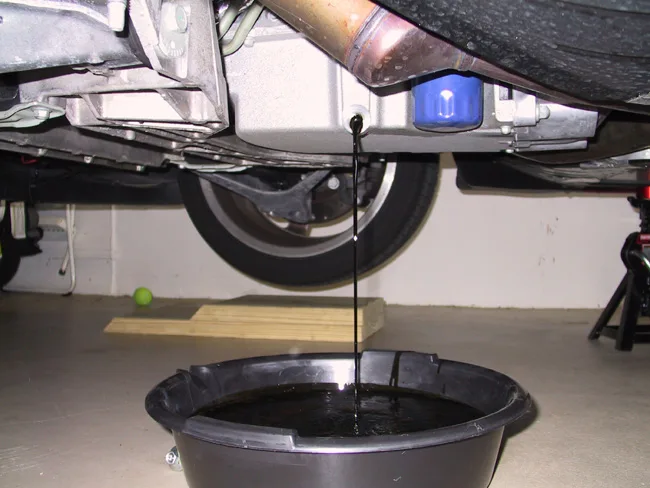
Used oil filters follow completely different disposal rules than the oil itself. A drained filter is scrap metal wrapped around a small volume of trapped oil, so it needs a dedicated collection drum, not the used-oil tank.
Before drop-off, drain the filter properly:
- Puncture the anti-drainback valve at the dome end.
- Invert the filter over a catch pan.
- Let it drain 12 to 24 hours at room temperature.
- Bag the drained filter in a zip-top plastic bag.
Where filters are accepted:
- Most AutoZone and O'Reilly locations take drained filters.
- Advance Auto Parts and NAPA acceptance varies by store, always call first.
- County HHW facilities always accept them.
- CUOCCs in California and similar state programs take filters alongside oil.
Quick-lube shops and dealerships rarely take DIY filters, since they generate high volumes of their own and pay per pound for pickup. If a store refuses, an HHW facility is your fallback. Never toss a filter in household trash, it's classified as used oil waste under EPA rules and can leak in a landfill.
The Decision Tree: Pick the Right Drop-Off in Under 60 Seconds
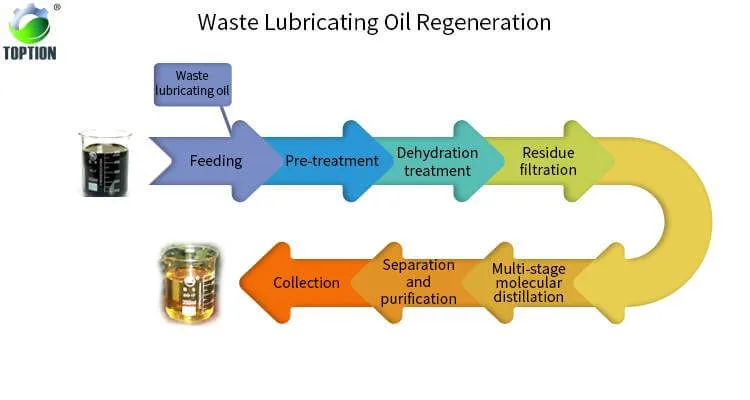
Use the branches below to land on the right drop-off fast. Most DIYers finish in Branch A.
If You Have 1 to 5 Gallons of Clean Used Oil
Head to the nearest auto parts store. AutoZone, O'Reilly, Advance, NAPA, or Pep Boys will take it free in a sealed HDPE container. Call ahead to confirm the tank has space that day.
If Your Oil Is Contaminated or Mixed
Skip the parts store entirely. Take it to a county HHW facility, which is equipped to handle mixed hazardous waste. Label the container with what it contains so staff can route it correctly.
If You Have More Than 5 Gallons
Split it across two parts store visits, or take the whole batch to an HHW facility in one trip. HHW sites usually allow 15 to 25 gallons per visit and won't push back on volume.
If You're Rural or Far From a Retailer
Check for a county collection event, farm co-op program, or CUOCC on your state agency site. Rural drop-offs are often quarterly, so store the sealed oil safely in the garage until the next event date.
Mistakes That Get Your Oil Rejected at the Counter
Rejections at drop-off are almost always self-inflicted. Aggregate feedback from parts store staff points to five repeat offenders.
- Milk jugs, water bottles, or unlabeled containers. Anything not designed for petroleum gets refused.
- Loose or missing caps. If it can spill in the store, it's a no.
- Visible water in the container from rain or a wet funnel.
- Oil that smells like gasoline or antifreeze, that's contamination.
- Showing up with 8 gallons when the daily cap is 5.
Fix any of these before you leave the driveway. Store staff can refuse without explanation, and a second trip is the whole reason you're reading this.

Similar Posts