7 Warning Signs of a Failing Starter Solenoid to Know
The symptoms of a bad starter solenoid look almost identical to a dead battery, a worn starter motor, or a tired ignition switch. That's why so many drivers replace the wrong part. If your key turns but the engine won't crank properly, the solenoid is one of the first suspects worth checking.
In our research across manufacturer service bulletins and SAE J537 cranking data, most solenoid failures show up between 80,000 and 150,000 miles as of 2026. The fix costs a fraction of a full starter swap. Get the diagnosis right and you avoid throwing $200 to $400 at the wrong part.
Here's how the pros tell them apart.
Quick Answer
A bad starter solenoid usually causes a single loud click, rapid clicking, or total silence when you turn the key. The engine may crank slowly or not at all. Dashboard lights often stay bright while cranking fails.
Intermittent no-starts that clear after a light tap on the solenoid are common. Hot-start failure after a warm drive also points to worn solenoid contacts.
Why a Bad Starter Solenoid Gets Misdiagnosed So Often
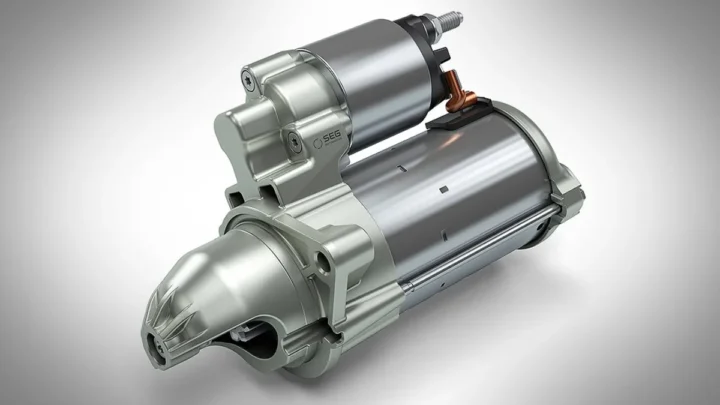
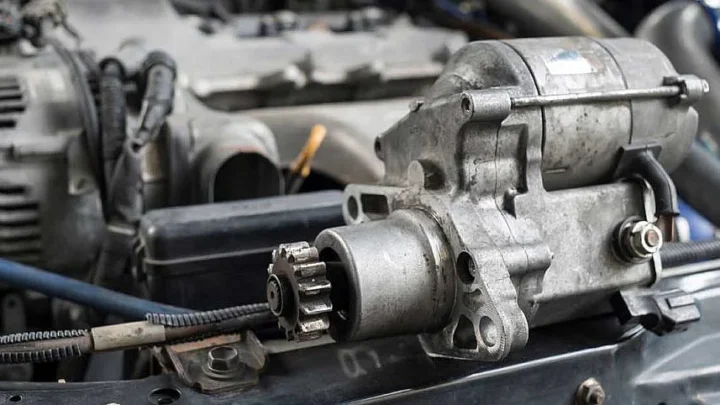
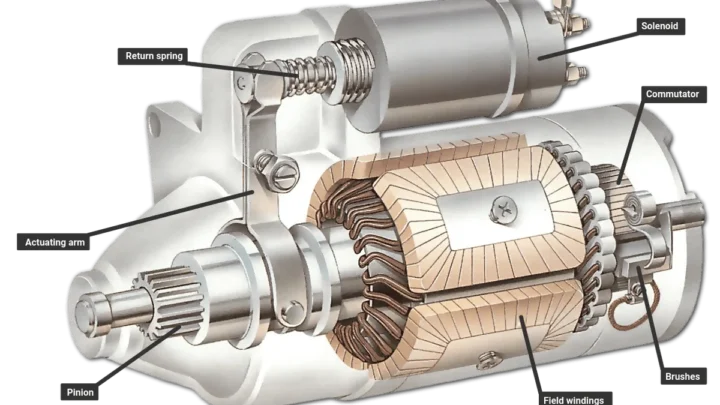
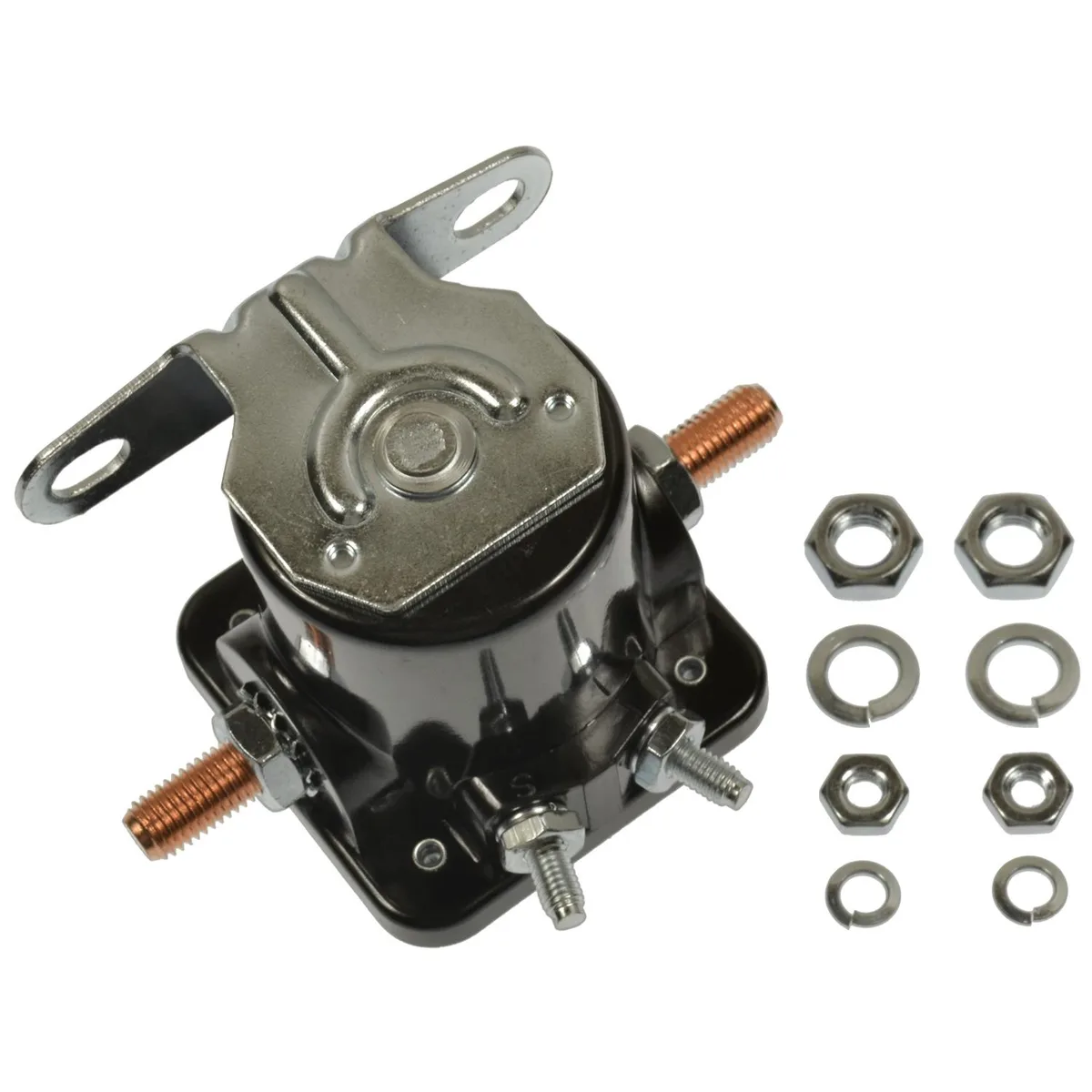
The solenoid sits on top of the starter and does two jobs at once. It pushes the pinion gear into the flywheel, and it closes a heavy contact that dumps 150 to 250 amps into the starter motor. When either job fails, the symptoms mimic a weak battery or a bad starter.
Most drivers hear a click, assume the starter is dead, and buy a full replacement unit. Aggregate shop feedback shows this misdiagnosis rate is high, especially on vehicles where the solenoid and starter are one assembly. A proper test takes ten minutes and can save you a $300 part.
Knowing the difference between a solenoid click and a starter drag click is where the real diagnosis begins. If you're still figuring out whether the charging side or the starting side is at fault, this quick guide on spotting the true culprit is a useful sanity check.
The Fastest Way to Tell If Your Solenoid Is the Real Problem
Sit in the driver's seat with the headlights on and turn the key to START. What happens in the next two seconds tells you almost everything.
- Headlights stay bright, one loud click: solenoid coil works but the contacts are worn.
- Headlights dim heavily, rapid clicking: suspect the battery or cables first.
- Headlights stay bright, no sound: the S-terminal is probably not getting signal voltage.
- Starter cranks but sounds like it's spinning freely: the solenoid isn't pushing the pinion into the flywheel.
That single test narrows the fault to one of three zones: battery and cables, solenoid trigger circuit, or the solenoid contacts themselves. Everything else is confirmation.
What a Starter Solenoid Actually Does in the Cranking Circuit

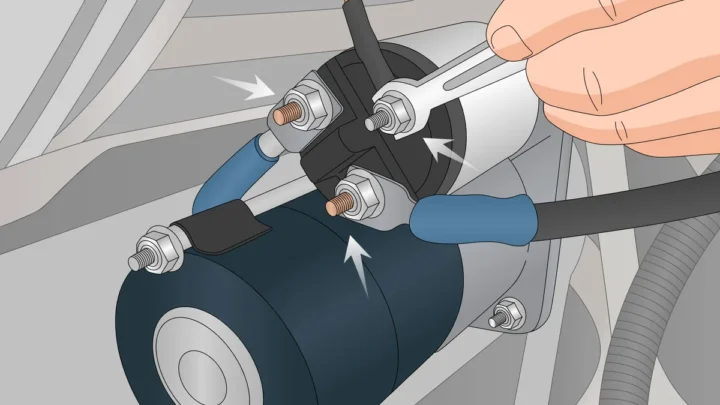
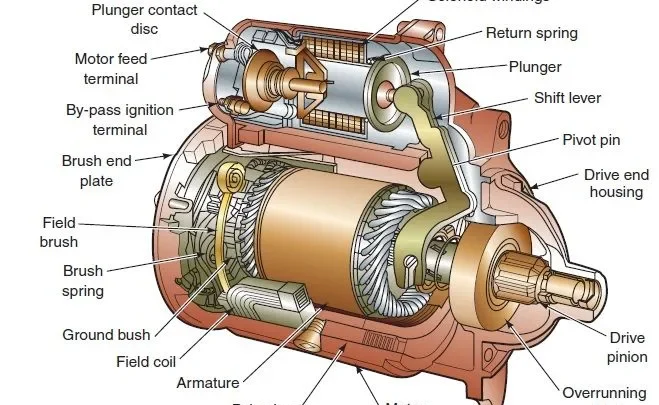
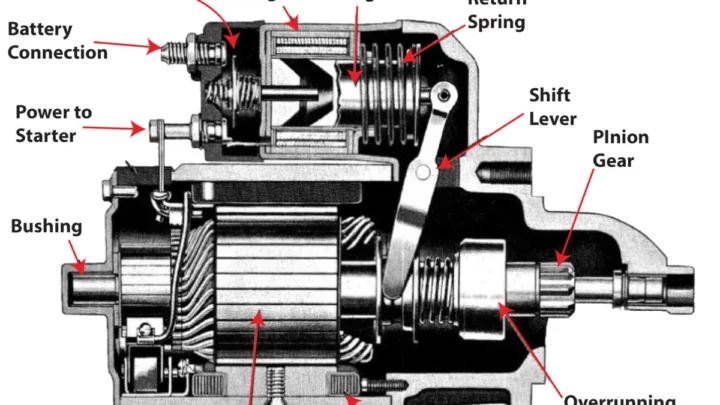
Think of the solenoid as a heavy-duty relay with a shove built in. When you turn the key, a small signal current (usually 5 to 30 amps) travels from the ignition switch, through the neutral safety switch, to the S-terminal. That energizes two internal coils: the pull-in winding and the hold-in winding.
Those coils yank a plunger inward. The plunger does two things at the same time. It pushes the pinion gear forward to mesh with the flywheel ring gear.
It also slams a copper contact disc across the B and M terminals, connecting the battery directly to the starter motor.
That heavy contact is where most solenoids die. Every crank arcs a tiny bit of copper away. After tens of thousands of cycles, the contacts pit, the disc burns, and resistance climbs.
The coil is still fine, but the high-current path can't carry enough amps to spin the motor. Per SAE International starter testing standards, voltage drop across those contacts should stay under 0.2 volts during cranking.
The 7 Symptoms That Point to a Failing Starter Solenoid
Single Loud Click With No Crank
You turn the key and hear one sharp clack from under the hood, then nothing. The plunger moved and slammed the contacts closed, but the copper is too pitted to pass real current. Battery voltage stays high because almost no amperage is flowing.
Rapid Clicking or Chattering
A fast machine-gun click usually means the hold-in coil can't keep the plunger seated. The pull-in coil grabs it, voltage sags, it drops back, and the cycle repeats. This can be a weak battery or a failing solenoid coil.
Test battery voltage first.
Complete Silence When You Turn the Key
Dead silence with bright dash lights points to the low-current side. Either the S-terminal isn't seeing signal voltage, or the solenoid coil is open. A multimeter check at the battery confirms the battery is fine before you chase the trigger circuit.
Starter Spins But Engine Won't Turn Over
You hear a high-pitched whirring, no cranking. The solenoid closed the electrical contact but the plunger didn't push the pinion gear far enough to mesh with the flywheel. That's a mechanical failure inside the solenoid, often a broken return spring or worn actuator rod.
Starter Keeps Running After You Release the Key
The engine starts, you let the key spring back, and the starter keeps grinding. The contacts have welded themselves together from arc heat. Disconnect the battery immediately or you will destroy the starter and the flywheel.
Intermittent No-Crank That Clears With a Tap
You tap the solenoid with a wrench and it suddenly works. Classic pitted-contact symptom. The tap jars the copper disc into a fresh spot.
It's a temporary fix and a clear signal the solenoid is on borrowed time.
Hot-Start Failure After the Engine Warms Up
Cold starts fine, but after a highway run it clicks and won't crank. Heat expands worn contacts and increases resistance. The car cools down for 20 minutes and starts normally.
Hot-soak failure is one of the most reliable solenoid tells.
Symptoms That Look Like a Solenoid But Aren't
Not every no-crank is a solenoid problem. Rule these out before you order parts.
| Symptom | More Likely Cause | Quick Check |
|---|---|---|
| Rapid clicking with dim lights | Weak or dead battery | Resting voltage under 12.4V |
| Slow lazy crank | Corroded terminals or bad ground | Clean and re-torque cables |
| Nothing at all, no dash lights | Blown fusible link or main battery cable | Inspect fuse block and cable |
| Cranks in Neutral, not Park | Neutral safety switch | Wiggle shifter, retry |
| Click only when hot | Heat-soaked starter motor windings | Let it cool, retest |
| No crank with a clutch car | Clutch pedal position switch | Press pedal fully to floor |
A dead cell in the battery is the single most common false-positive. Verify battery health first, because a marginal battery will fool nearly every solenoid test you run afterward.
The Decision Tree: Solenoid, Battery, Starter, or Ignition Switch?
Work through this in order and you'll land on the right part almost every time.
- Check battery resting voltage. Under 12.4V, charge or replace the battery before going further. A healthy fully charged reading sits around 12.6V.
- Try the headlight test. Bright lights during a failed crank push the fault away from the battery and cables.
- Listen at the starter. One loud click points to the solenoid contacts. Rapid clicks point to a weak coil or bad battery. Silence points to a missing S-terminal signal.
- Test S-terminal voltage while a helper cranks. Less than battery voltage minus 0.5V means the ignition switch, neutral safety switch, or wiring is starving the coil.
- Do a voltage drop across B to M. Over 0.2V during cranking confirms burned solenoid contacts.
- If S-terminal voltage is good and voltage drop is fine, the fault has moved to the starter motor itself.
Each step eliminates one branch. Skip a step and you'll guess.
How to Confirm a Bad Solenoid With a Multimeter
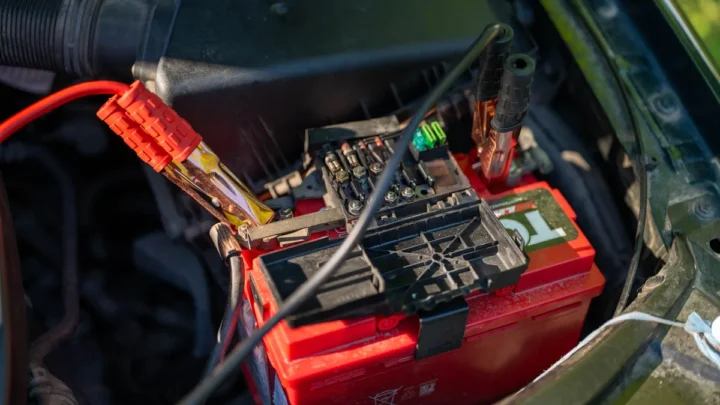
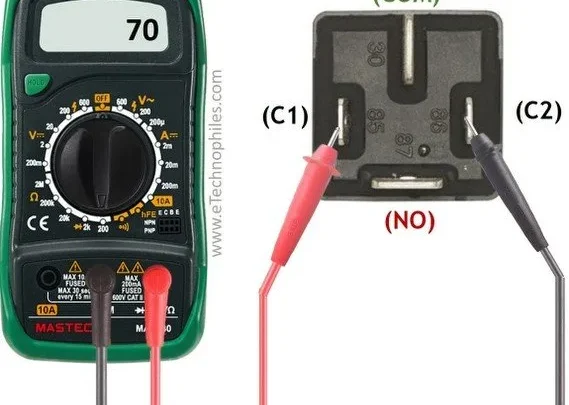
Set a digital multimeter to 20V DC. You need a helper to turn the key while you probe. Use the same voltage-check habits you'd use on a battery, just applied to the solenoid terminals.
Testing Voltage at the S-Terminal
Put the black probe on a clean chassis ground. Put the red probe on the S-terminal (the small trigger wire). Have a helper crank.
A healthy reading is within 0.5V of battery voltage.
If you see 6V or 8V instead of 12V, the ignition switch, wiring, or neutral safety switch is dropping the signal. The solenoid coil never gets enough juice to pull the plunger in fully.
Voltage Drop Across the B and M Terminals
Put the red probe on the B-terminal (fat cable from the battery). Put the black probe on the M-terminal (fat cable to the starter motor). Crank the engine.
A healthy solenoid drops under 0.2V. A reading of 0.5V or higher means the internal copper contacts are pitted or burned. That's a bad solenoid, full stop.
The Screwdriver Jumper Test
Only do this with the vehicle in Park, parking brake set, and clear of anything spinning. Touch a heavy insulated screwdriver across the B and S terminals at the same time to bypass the ignition circuit.
If the starter cranks strongly, the solenoid contacts still work and the fault is upstream. If nothing happens, the solenoid or starter motor is bad. Expect a small spark.
Wear safety glasses.
Mistakes That Cost People a New Starter They Didn't Need
The single biggest mistake is replacing the whole starter when only the solenoid is at fault. On many GM, Ford, and Toyota starters, the solenoid unbolts from the top of the starter for under $50.
Other costly errors we see repeatedly:
- Skipping the battery test. A weak battery mimics almost every solenoid symptom on the list.
- Ignoring cable corrosion. Green fuzz under the terminal boot adds resistance that starves the solenoid coil.
- Missing a bad engine ground strap. The starter needs a low-resistance ground path back to the battery.
- Assuming a click means solenoid without checking S-terminal voltage first.
- Not cleaning the mounting surface. A rusty starter flange raises ground resistance and kills the new part quickly.
- Forgetting the neutral safety switch. An auto in Park that only starts in Neutral is a switch problem, not a solenoid problem.
Any of these will burn out a fresh starter within weeks. Diagnose the root cause first.
Safety Rules Before You Touch the Starter Circuit
The starter circuit carries the highest current in the entire vehicle. Treat it with the same respect you'd give a welder.
- Disconnect the negative battery cable before removing or unbolting the starter.
- Never let a wrench bridge the B-terminal to any grounded metal. The arc flash can weld tools to the frame and rupture the battery.
- Wear ANSI Z87.1 safety glasses during any jumper or bench test.
- Confirm the transmission is in Park (auto) or Neutral (manual) with the parking brake set before any live crank test.
- Keep loose sleeves, ties, hair, and jewelry clear of the flywheel area and belts.
- Give the starter housing 20 minutes to cool after failed cranks. Burns from a hot solenoid case are common.
- Ventilate the area. A battery under heavy cranking load can vent hydrogen gas.
If any of that feels outside your comfort zone, stop and hand it to a shop.
Repair Costs: Solenoid Only vs Full Starter Replacement
Prices below reflect aggregate parts-supplier data as of 2026 for common passenger vehicles.
| Option | Part Cost | Labor Time | Typical Total |
|---|---|---|---|
| Solenoid only (bolt-on style) | $15 to $80 | 0.5 to 1.0 hr | $75 to $200 |
| Rebuilt starter with new solenoid | $90 to $220 | 1.0 to 2.0 hr | $200 to $450 |
| New OEM starter assembly | $180 to $400 | 1.0 to 2.0 hr | $300 to $650 |
| Fender-mounted solenoid (Ford-style) | $15 to $40 | 0.3 to 0.5 hr | $50 to $120 |
The solenoid-only route makes sense when the starter motor itself still spins strongly during a jumper test and has fewer than 100,000 miles on it. Go with a full replacement when the starter is high-mileage, showing brush wear, or already sounds tired.
On Ford trucks with a fender-mounted solenoid, replacement is a 15-minute job with two wrenches. On GM and Japanese starters where the solenoid sits on top of the motor, plan on removing the starter to swap it cleanly.
When to Fix It Yourself and When to Hand It to a Mechanic
DIY makes sense if you can safely disconnect the battery, read a multimeter, and reach the starter without dropping the exhaust or subframe. Fender-mounted solenoids and top-mount GM starters are beginner-friendly. Transverse-engine cars where the starter sits behind the intake manifold are not.
Hand it to a shop if any of the following apply:
- The starter is buried and needs subframe drops, intake removal, or engine mount work.
- You've replaced the battery and cables and the no-crank still happens randomly.
- The starter keeps running after the key is released (welded contacts, immediate fire risk).
- You smell burning insulation or see smoke from the wiring harness.
A shop diagnosis typically runs $80 to $150 and includes a full charging and cranking check. That's cheap insurance against buying the wrong part twice.
Frequently Asked Questions
Can a bad starter solenoid drain your battery?
A stuck-closed solenoid will drain a battery fast because it keeps the starter motor engaged. Failed coils and pitted contacts on their own don't cause parasitic drain. If you're seeing overnight battery drain with normal cranking, the fault is more likely in the charging system, an interior light, or a stuck relay elsewhere in the vehicle.
Will a bad solenoid cause a clicking sound?
Yes, and it's the most common symptom by far. A single loud click means the solenoid plunger engaged but the contacts couldn't pass enough current. Rapid clicking usually means the coil couldn't hold the plunger seated, often from low battery voltage.
Silence with a good battery points to a missing S-terminal signal instead of the solenoid itself.

Similar Posts