How to Tell If It’s Your Starter or Battery: 7 Clear Signs
You turn the key and get nothing but a sad click. Figuring out how to tell if it's the starter or the battery matters because one fix costs around $150 and the other can push past $600. Get it wrong and you replace a perfectly good part while your car still won't start.
Both parts sit inches from each other under the hood and share the same electrical loop.
Here's the honest truth as of 2026. Most no-start problems trace back to the battery, roughly 3 out of 4 cases according to AAA roadside data. The starter is the second suspect, and the alternator quietly makes both look guilty.
The good news is you can sort them out in about five minutes with your ears, your dashboard, and a $15 multimeter.

The Real Reason You Can't Tell If It's the Starter or the Battery
The battery, starter, and alternator share the same electrical loop, so when one fails the other two look guilty. A weak battery can't spin the starter fast enough, and people blame the starter. A tired starter yanks so much current that battery voltage collapses, and people blame the battery.
A failing alternator drains a healthy battery overnight and mimics both faults at once.
That overlap is why guessing costs money. Shops see a steady stream of returned "bad" starters that turned out to be a $120 battery all along. The fix is a short diagnostic sequence that eliminates parts in the right order.
The 30-Second Answer Most People Need
Telling the starter from the battery takes about five quick checks. Battery signs: dim dashboard, slow crank, or rapid clicking. Starter signs: bright dashboard, one loud clunk, and no crank at all.
A jump-start that works and holds power points to the battery. Resting voltage under 12.4V confirms a weak battery that needs charging or replacement.
What Actually Happens When You Turn the Key
Every start follows the same five-step chain. Each step depends on the one before it.
- You turn the key or press the button. A signal wire sends 12V to the starter solenoid.
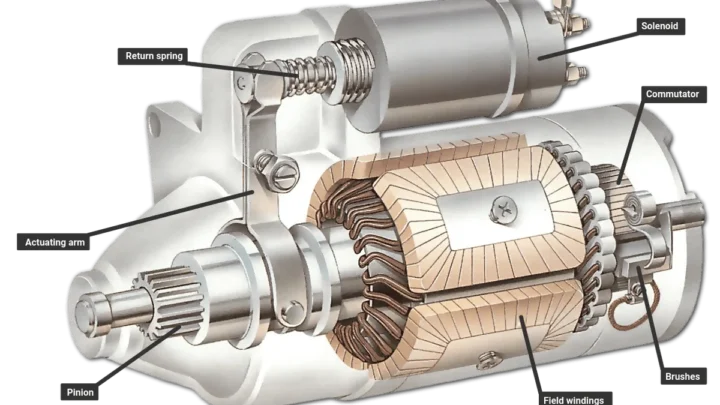
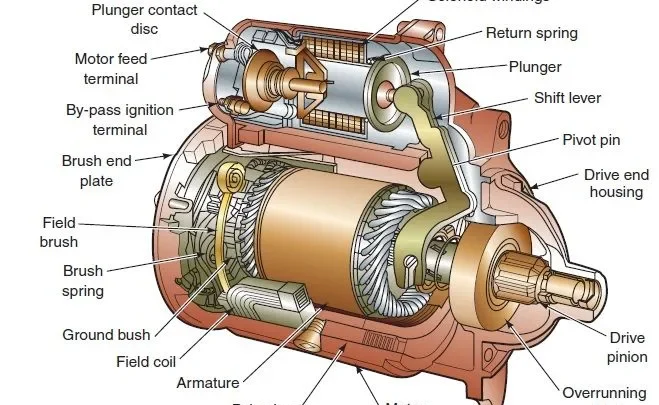
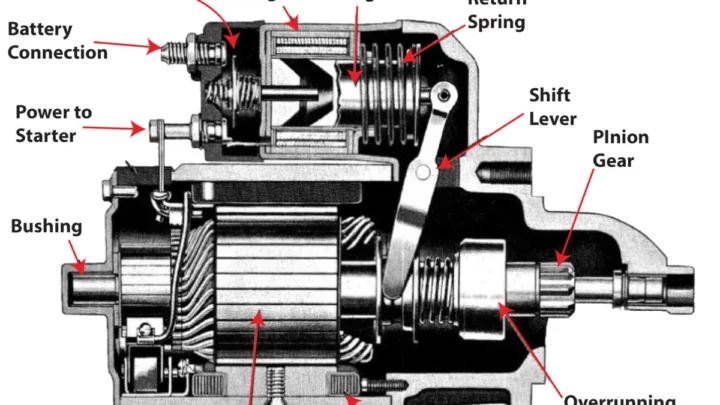
- The solenoid closes a heavy-duty switch and pushes the pinion gear into the flywheel ring gear.
- Battery current, often 150 to 250 amps, flows through thick cables into the starter motor.
- The starter spins the engine until compression, spark, and fuel light off combustion.
- The alternator takes over, powers the electronics, and recharges the battery.
If step 3 has no current, the battery or a cable is at fault. If step 3 has current but the starter won't spin, the starter is at fault. If the engine starts and then dies within minutes, the charging system is at fault.
Industry standards from the Battery Council International set the CCA rating that decides if your battery can complete step 3 in the cold.
Battery vs Starter vs Alternator: The Symptom Overlap Nobody Talks About
Same no-start, three different parts. This table sorts the classic symptoms so you can spot which one you're actually dealing with.
| Symptom at the key-turn | Battery | Starter | Alternator |
|---|---|---|---|
| Dashboard dims when cranking | Very likely | Possible | Possible |
| Rapid click-click-click | Yes | Rare | Rare |
| One loud clunk, no crank | Sometimes | Yes | No |
| Total silence, dead dash | Yes | No | Sometimes |
| Cranks slow then quits | Yes | Rare | Yes (undercharged) |
| Jump-starts and drives fine | Yes | No | Rare |
| Starts, then dies in minutes | No | No | Yes |
| Battery warning light on | Sometimes | No | Yes |
| Grinding or whirring during crank | No | Yes | No |
Two clues do most of the work. If the dashboard dims or dies when you turn the key, current is collapsing, and that's a battery story. If the dashboard stays fully lit but nothing turns over, current is arriving fine, and the starter is the odd one out.
For the third suspect, red flags to watch for tend to appear while the car is running rather than at startup.
The Sound Test: What Clicks, Clunks, and Silence Really Mean
Your ears are the fastest diagnostic tool you own. The exact sound at the moment you turn the key narrows the suspect list before you've even opened the hood.
Rapid clicking (click-click-click)
Fast, machine-gun clicking is the classic weak-battery signature, not a bad starter. The solenoid keeps trying to close, the voltage sags below the level needed to hold it, it snaps open, and the cycle repeats several times per second. Charge the battery or jump-start the car.
If it fires up and holds, the battery is the problem.
One loud clunk
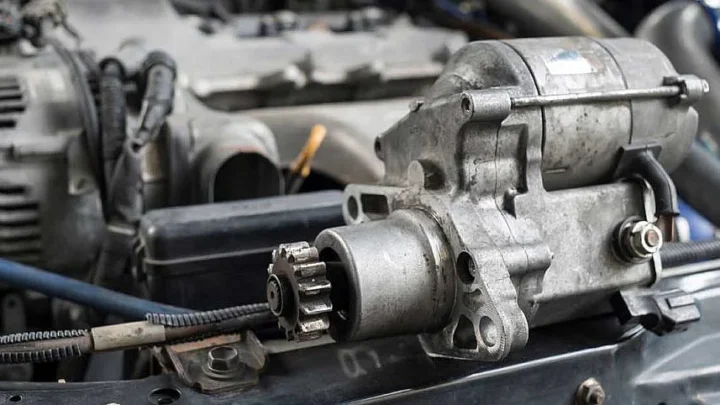
A single deep clunk with no crank almost always points to the starter or solenoid, assuming the battery voltage checks out healthy. The solenoid closes but the motor won't spin, or the pinion won't engage the flywheel. Verify battery voltage first.
If the battery is fine, plan on a starter replacement.
Complete silence
Silence with dead dash lights signals a fully drained or disconnected battery. Silence with bright dash lights points somewhere else entirely, usually the ignition switch, the neutral safety switch on automatics, or the clutch pedal switch on manuals. It rarely means a bad starter on its own.
Cranks slowly then dies
A slow, labored crank that tapers into a click is a battery losing its punch under load. Voltage falls below the 9.6V threshold the starter needs, and cranking collapses. The same symptom shows up when temperatures drop below freezing and cold-cranking amps fall 30 to 50% below their rated value.
The Dashboard and Headlight Test You Can Do in 10 Seconds
Before touching any tools, turn the key to accessory (not start). Watch the dashboard and the headlights. If both are dim or completely dead, your battery is low or disconnected.
If they're bright and steady, current is reaching the electronics, so the battery is at least partially healthy.
Now turn the key to start while watching those same lights. If the dash collapses to darkness the second you crank, the battery is dumping voltage under load. If the dash stays bright but the engine won't spin, current is available and the starter isn't using it.
That's the fastest split between the two suspects, and it costs nothing.
For a more precise version, park facing a wall at night with the headlights on. Have someone try to start the car. Bright, steady headlights during a failed crank point to the starter.
Headlights that dim or die point to the battery.
Voltage Checks with a Multimeter (Numbers That Actually Matter)
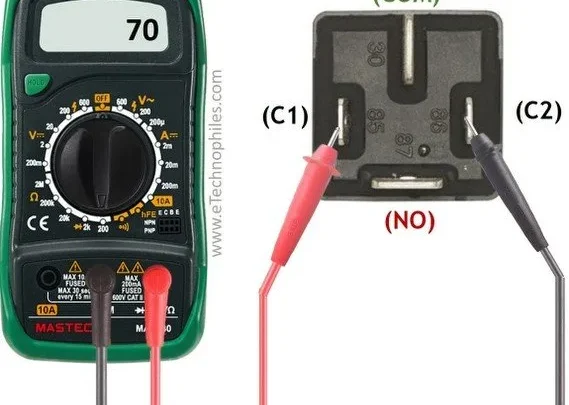
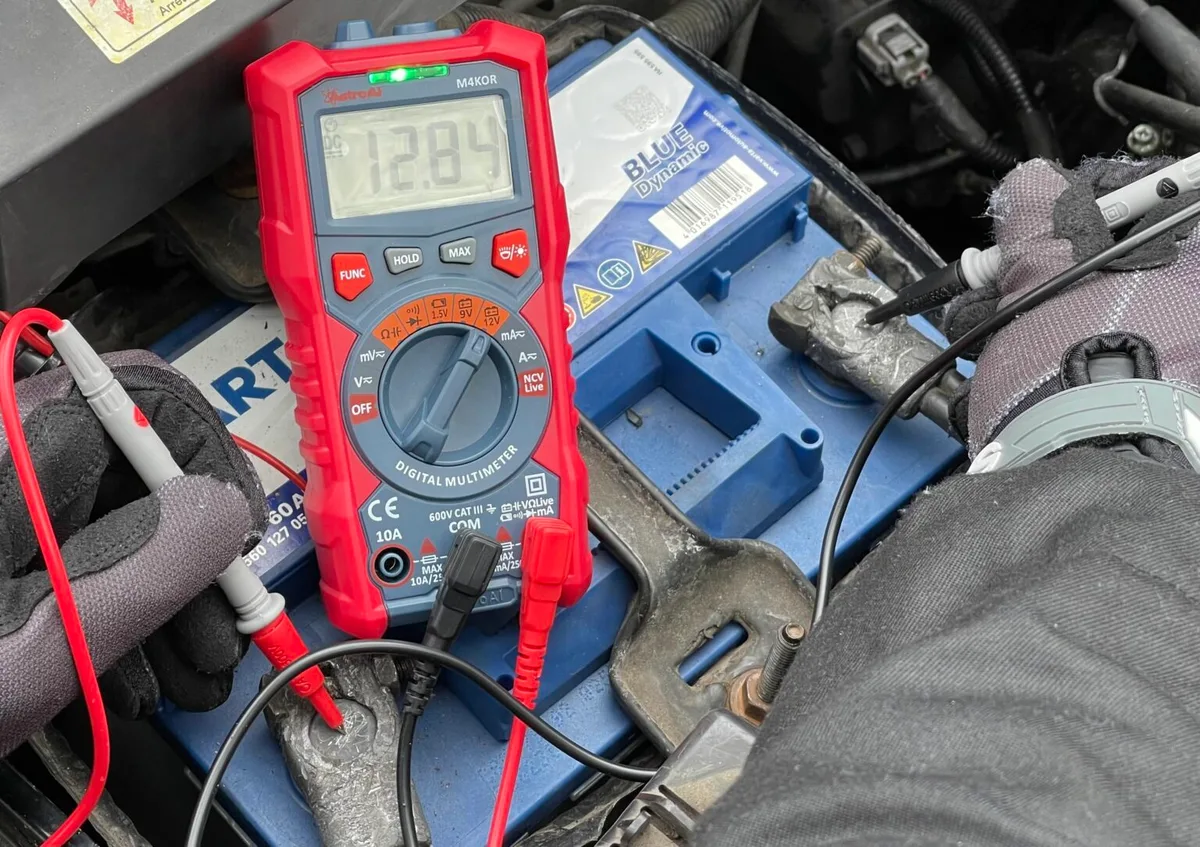
A digital multimeter turns guesswork into hard numbers. Set it to DC volts on the 20V range. Touch the red probe to the positive battery post and the black probe to the negative post.
Three readings tell the whole story.
Resting voltage
Take this reading with the engine off for at least 30 minutes. A healthy 12V battery reads 12.6 to 12.8V at rest. 12.4V means around 75% charged. 12.2V is about 50% and hard-start territory. Anything under 12.0V is deeply discharged and often unable to spin a starter.
For probe placement and dial setup, our multimeter walkthrough covers each step.
Cranking voltage
Have a helper turn the key to start while you watch the meter. Voltage should stay above 9.6V during the crank. If it plunges to 7 or 8V, the battery can't deliver current under load, and that's a clear replacement signal.
A healthy battery paired with a bad starter shows the opposite pattern. Voltage stays strong near 12V because the starter isn't drawing current at all.
Alternator output
Start the engine (jump-start if needed) and read the terminals again. A working alternator should push 13.8 to 14.7V at idle. Under 13.5V or over 15V flags a charging fault, and normal alternator voltage ranges explain what each number really means.
This step matters because a bad alternator can drain a brand-new battery inside a day or two.
The Jump-Start Test and What Its Result Tells You
A jump-start is a live diagnostic, not just a rescue. How the car reacts tells you which part is at fault.
- Cranks and starts within seconds, then runs fine after cables come off: battery. Charge or replace it.
- Starts, but dies again minutes after the cables are removed: alternator. The battery has no way to stay charged.
- Still won't crank at all: starter or a broken cable. The donor car just proved current is available.
- Starts but the starter grinds, whines, or squeals: starter (pinion or Bendix failing).
Follow the safe order every time. Connect positive to positive first, then negative to a bare metal ground on the dead car, not the negative post. That avoids sparking near the battery, which vents hydrogen gas.
Reverse the order to disconnect. If the jumped car dies again quickly, don't drive it far from home. You're running purely off battery reserve.
The "Tap the Starter" Trick and When It Works

This trick works because starter motors fail in a predictable way. The brushes wear down or the armature develops a dead spot, and the motor sticks in one position. A firm tap can jar it free for one more start.
It's a diagnostic tool, not a fix.
Have someone hold the key in the start position. Use a hammer, wrench, or piece of wood to strike the body of the starter motor firmly. Aim for the motor housing, never the solenoid or a wire terminal.
If the engine cranks after the tap, the starter is on borrowed time. Order a replacement that week.
Skip this trick if the starter is buried and you'd need to jack the car up to reach it. Aggregate mechanic feedback suggests trying it once as confirmation, then scheduling replacement. A starter that needs a tap today will fail completely within days.
Corroded Terminals and Loose Grounds: The Fake Failures
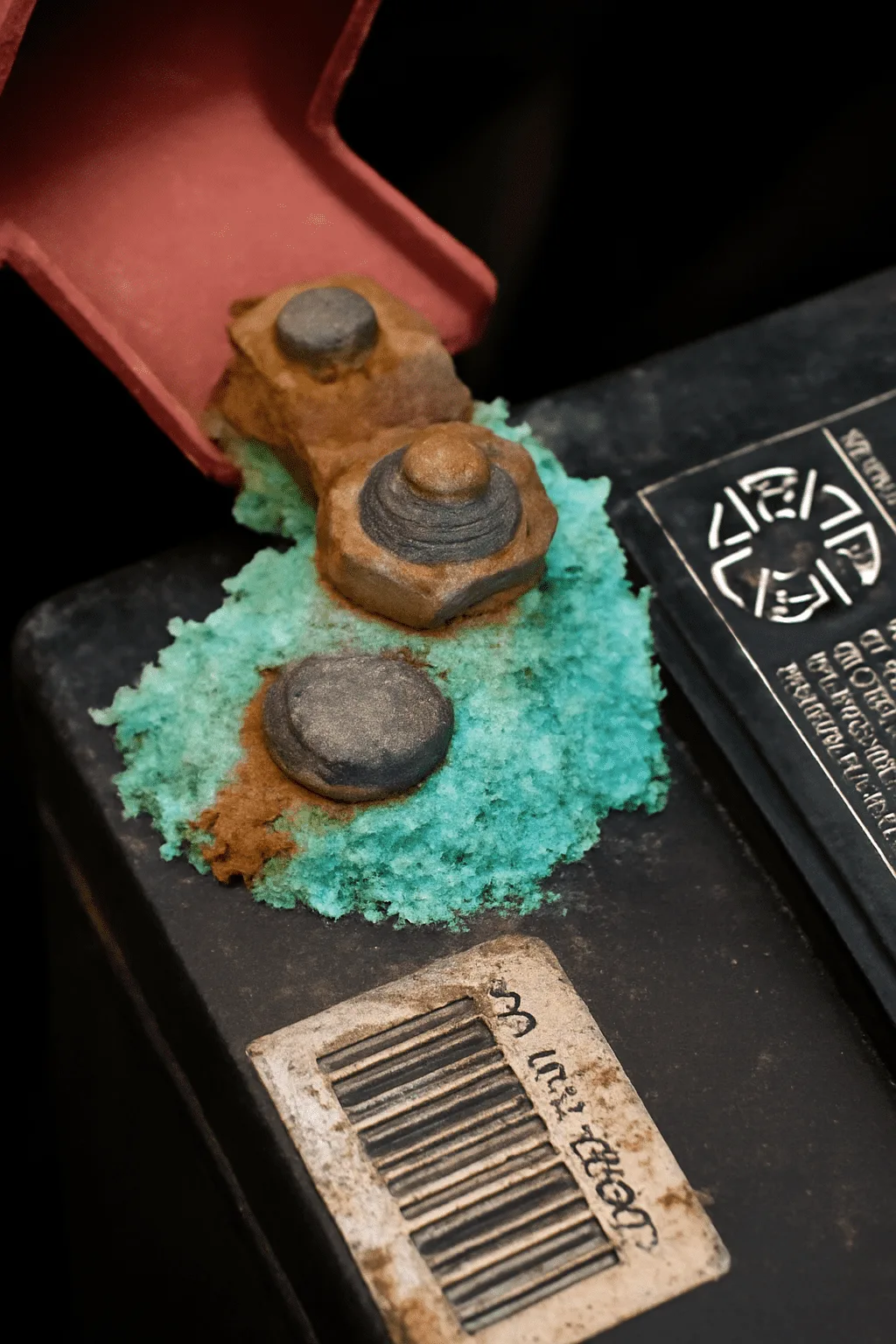
Before you condemn any part, inspect the connections. A layer of white, blue, or green powder around a battery post can drop enough voltage to mimic a completely dead battery. The battery may test fine on a bench, yet not enough current reaches the starter because the corrosion acts like a resistor.
Check three cheap culprits before spending money on parts:
- Corroded battery posts or clamps (white, blue, or green crust)
- Loose battery clamp bolts (wiggle the clamp with the key off, it shouldn't budge)
- Loose or corroded engine ground strap where it bolts to the block or chassis
Cleaning is simple. Disconnect the negative cable first, then the positive. Scrub the posts and clamp interiors with a wire brush and a baking soda and water paste.
Rinse, dry, reconnect (positive first, then negative), and coat with dielectric grease to slow future buildup. In our research, this five-minute cleanup restores full function in many cars flagged as "needs a new battery."
Decision Flow: Battery, Starter, or Something Else
Use this if/then flow after the sound and voltage checks confirm each other.
- Resting voltage under 12.4V AND slow crank or clicking: battery is the fault. Charge and retest, or replace if it won't hold a charge.
- Resting voltage 12.6V AND one loud clunk with no crank: starter is the fault. Confirm with the tap test.
- Voltage collapses under 9.6V during cranking: battery can't handle load. Replace it.
- Voltage stays strong during a failed crank: current isn't the issue. Suspect the starter, solenoid, or a broken cable.
- Car starts after a jump, then dies within minutes: charging system. Test alternator output.
- Dead silence with dead dash lights AND 12.6V at the battery: check the main cables and ground strap first.
- Total silence with bright dash lights: ignition switch, neutral safety switch (auto), or clutch switch (manual).
If two branches point to different parts, trust the multimeter over the sound. Numbers don't guess.
Mistakes That Cost People Hundreds
These are the errors that turn a $150 fix into a $600 mistake.

Similar Posts