Car Battery Smells Like Rotten Eggs? Causes & Fixes
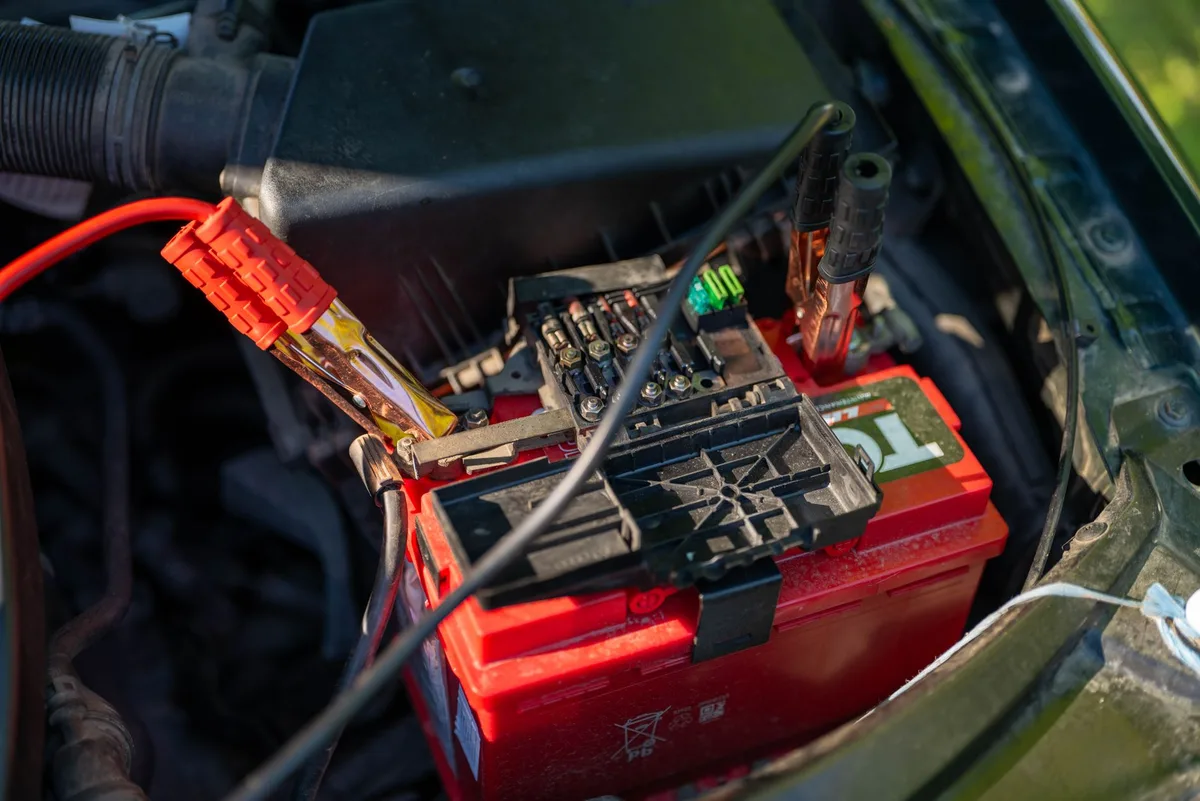
If your car battery smells like rotten eggs, that sharp sulfur stink is a warning sign, not a quirk. It usually means the battery is venting hydrogen sulfide gas because it's being overcharged, is failing internally, or is simply worn out. The smell is your first clue that something in the electrical system needs attention.
The good news is you can trace the cause with a few simple checks. A healthy 12V lead-acid battery rests around 12.4 to 12.7 volts and charges at 13.8 to 14.7 volts, per common manufacturer specs as of 2026. Push past that range and the battery starts gassing.
Let's break down what the smell means and what to do about it.
Quick Answer
A rotten-egg smell from a car battery means it's releasing hydrogen sulfide gas. This happens when a lead-acid battery overcharges, overheats, or fails internally. The most common cause is an overcharging alternator or a bad voltage regulator.
A worn-out or shorted battery can also gas. Stop driving, ventilate the area, and test your charging voltage before replacing anything.
What the Sulfur Smell Actually Means
That rotten-egg odor is hydrogen sulfide gas. It forms when the sulfuric acid electrolyte inside a lead-acid battery gets too hot or overcharged. The acid breaks down, and the gas escapes through the vents.
In plain terms, the battery is "boiling." When charging voltage climbs too high, the electrolyte can't take the load. It off-gasses hydrogen and hydrogen sulfide, and you get that eggy stench near the hood.
Three things usually trigger it:
- Overcharging from a faulty alternator or voltage regulator
- An internal short in one of the battery cells
- An old, sulfated battery near the end of its life
The smell itself doesn't tell you which one. That's why the next few checks matter. Treating the smell without finding the source often means a new battery cooks just as fast as the old one.
If your reading habits point to a weak cell, our guide on why a battery keeps going flat walks through the multimeter test.
First, Rule Out the Catalytic Converter and Other Sulfur Sources
Before you blame the battery, confirm the smell is actually coming from it. A rotten-egg smell in a car has more than one source. The catalytic converter is the biggest impostor.
A failing catalytic converter produces the same sulfur smell, but it comes from the exhaust, not under the hood. If you notice the odor mostly from the tailpipe or while accelerating, the converter is a strong suspect.
Quick way to tell them apart:
- Battery smell: strongest at the battery, near the hood or cabin vents, often with visible corrosion
- Exhaust smell: strongest at the tailpipe, worse under load or acceleration
- Fuel-system fault: a rich-running engine can overload the converter and cause sulfur odor
Open the hood and sniff directly at the battery. If the smell is sharp right there, and you see white or bluish crust on the terminals, you're dealing with a battery or charging issue. If the battery looks clean and the odor trails from the back of the car, look at the exhaust instead.
The Conditions That Change Your Next Move
Here's where a rotten-egg smell splits into different paths. The right fix depends on the battery's age, its condition, and when the smell shows up. Work through these before you spend a cent.
Battery Age and Type (Flooded vs. AGM)
A battery's age and type shape how it reacts to trouble. Most lead-acid batteries last 3 to 5 years. Past that, gassing and sulfur smells often mean it's just worn out.
- Flooded (wet-cell) batteries have removable or vented caps and gas more openly.
- AGM (Absorbent Glass Mat) batteries are sealed and far more sensitive to overcharging.
If an AGM battery smells like sulfur, take it seriously. AGM units don't vent easily, so a strong smell often means real overcharging or internal failure.
Heat, Hissing, or a Swollen Case
Stop and pay attention if the battery is hot, hissing, or bulging. These are the danger signs that turn a diagnosis into a safety issue.
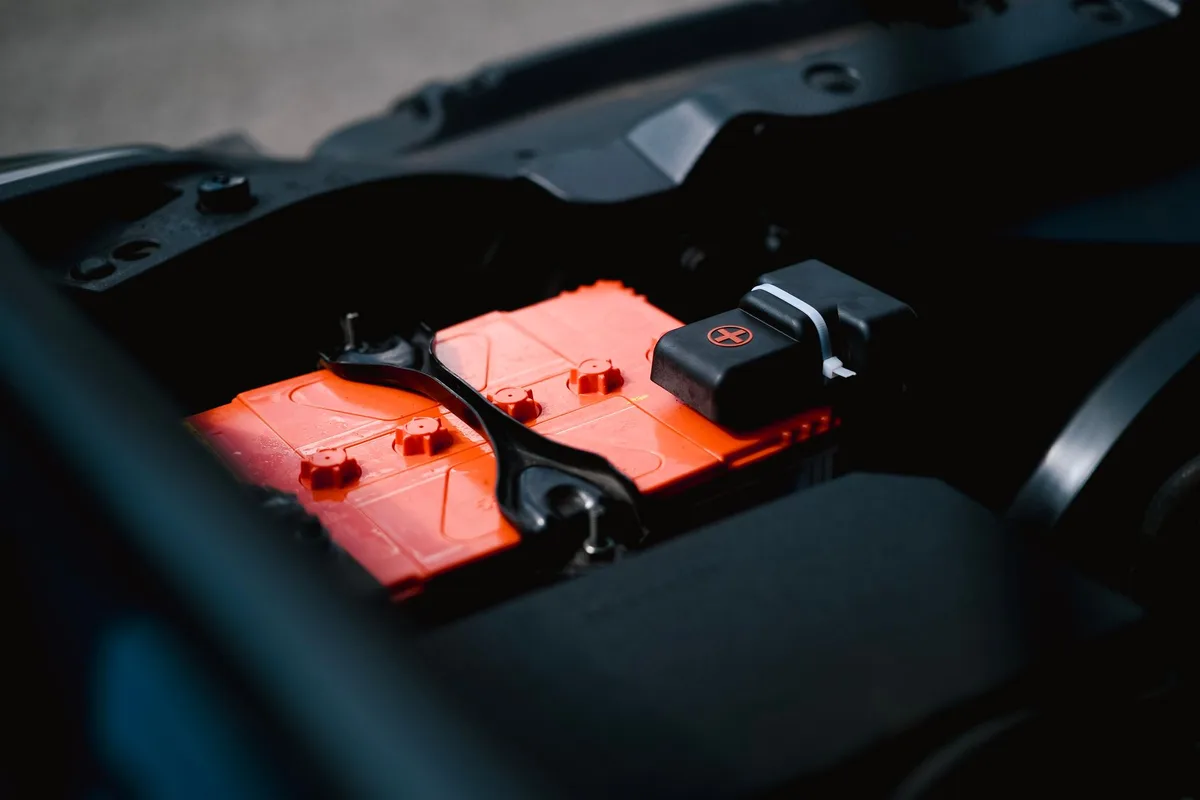
A swollen or warped case means heat has built up inside, usually from severe overcharging. If you see this, don't keep driving. A hot, gassing battery can leak acid or, in rare cases, ignite the hydrogen it's releasing.
- Warm to the touch after a short drive: worth watching
- Too hot to hold, hissing, or bulging: shut it down and ventilate
When the Smell Shows Up (Idling, Driving, or After Charging)
Timing points you toward the cause. Note exactly when you smell it.
- Right after charging or a long highway run: points to overcharging
- After the car sits, with a weak start: points to a tired or shorted battery
- Constant, with corroded terminals: points to a leaking, failing battery
A weak start alongside the smell is worth a voltage check. If your resting numbers look low, this breakdown of what a 12.2-volt reading tells you helps you read the result.
Is It the Battery or the Charging System? How to Tell
This is the most important branch. A rotten-egg smell is often the alternator's fault, not the battery's. An overcharging alternator will cook a brand-new battery the same way it cooked the old one.
A multimeter settles it in five minutes.
If you're unsure which is at fault, our full walkthrough on sorting a battery problem from a charging fault covers both tests side by side. Set your meter to 20V DC first. If you're new to the dial, here's how to pick the right setting.
Testing Resting Voltage With a Multimeter
Start with the engine off. This tells you the battery's baseline health before the alternator gets involved.
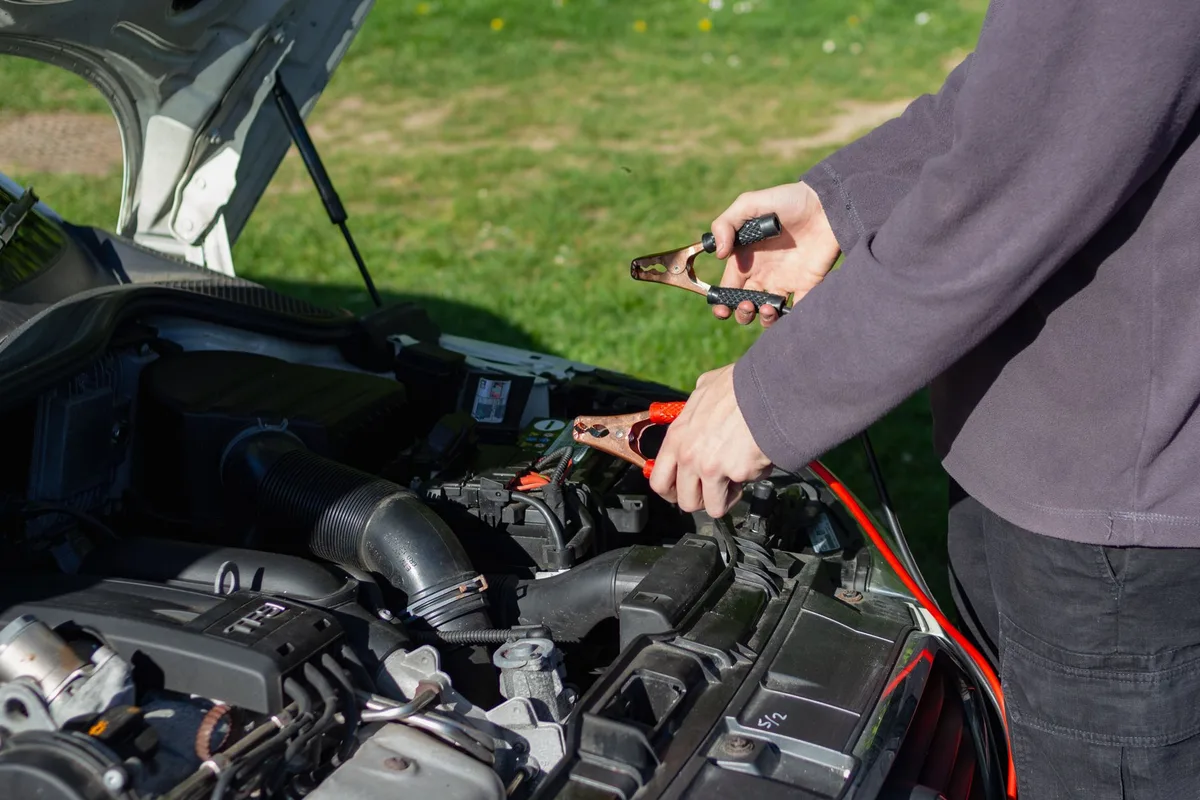
Touch the red probe to the positive terminal and the black to the negative. Read the number.
| Resting voltage | What it means |
|---|---|
| 12.6 to 12.7V | Fully charged, healthy |
| 12.4V | Good, slightly down |
| 12.2V | Weak, partly discharged |
| Below 12.0V | Deeply discharged or failing |
A reading of 12.4 volts sits in the healthy zone, so a smell with a solid resting number usually points upstream to the charging system.
Checking Charging Voltage for an Overcharging Alternator
Now start the engine and watch the voltage climb. This is the test that catches the real culprit behind most sulfur smells.

With the engine running, the reading should sit between 13.8 and 14.7 volts. That's the normal charging range for most vehicles.
- 13.8 to 14.7V: charging system is healthy
- Steady 15V or higher: overcharging, the likely source of your smell
A sustained reading above 14.7 volts means the alternator or voltage regulator is pushing too hard, and that overvoltage is worth understanding. This is what boils the electrolyte and creates hydrogen sulfide. Fix the charging system, or the next battery smells just the same.
Sulfuric acid and its fumes are hazardous, so follow basic handling guidance from OSHA when working near a gassing battery.
Decision Branches: What to Do for Each Situation
Match your findings to the right action. Here's the whole decision tree in one place.
| What you found | Most likely cause | What to do |
|---|---|---|
| Charging voltage 15V+ | Overcharging alternator or regulator | Repair charging system before replacing battery |
| Resting voltage below 12.0V, battery 4+ years old | Worn-out or sulfated battery | Replace the battery, then confirm charging voltage |
| Swollen, hot, or hissing case | Severe overcharge or internal short | Stop driving, ventilate, replace and recycle safely |
| Smell from tailpipe, clean battery | Catalytic converter or rich fuel mix | Have the exhaust and fuel system checked |
| Normal voltages, faint smell, corroded terminals | Minor venting or leak | Clean terminals, monitor, retest |
The pattern is simple. If voltage is high, chase the alternator. If the battery is old and weak, replace it and still verify the charging system.
If the battery looks clean and the smell trails from the back, look at the exhaust instead.
Step-by-Step: Safely Diagnosing the Smell at Home
Here's the full flow from first sniff to answer. Work through it in order and you'll land on the cause without guessing.
- Park and ventilate. Open the hood and let any gas clear before you lean in.
- Sniff at the source. Confirm the smell is at the battery, not the tailpipe.
- Inspect the case. Look for bulging, cracks, leaks, or crusty corrosion.
- Feel for heat, carefully. A too-hot battery means you stop here and let it cool.
- Test resting voltage. Engine off, meter on 20V DC, probes on the terminals.
- Test charging voltage. Start the engine and read again.
- Match your numbers to the decision table above.
If you don't own a meter, you can still gather clues. Watch for dim headlights, slow cranking, or a dashboard battery light. Our rundown on checking a battery without test gear covers those tells.
Still, a meter is the only way to catch an overcharging alternator with confidence.
Safety Warnings You Can't Skip
Treat a gassing battery as a real hazard. The fumes and acid can hurt you, and the gas can ignite. A few simple rules keep the job safe.
- Hydrogen gas is flammable. No smoking, no sparks, no open flame near the battery.
- Hydrogen sulfide is toxic in enclosed spaces. Work outdoors or in a ventilated area.
- Sulfuric acid burns skin and eyes. Wear gloves and eye protection.
- Never lean directly over a hissing or swollen battery.
If acid spills, neutralize it with a paste of baking soda and water, then rinse. Keep that on hand before you start.
One more rule worth repeating: if the case is swollen or hot, don't jump-start or keep charging it. Disconnect if it's safe to reach, let it cool, and plan to replace and recycle it. A stressed battery under more current is exactly when things go wrong.
Mistakes That Cost People Money
The biggest mistake is replacing the battery first. If an overcharging alternator caused the smell, a fresh battery cooks within days. Test the charging voltage before you buy anything.
A few more errors we see often:
- Ignoring the smell because the car still starts. Gassing gets worse, not better.
- Cleaning terminals but skipping the voltage test. You treat the symptom, miss the cause.
- Assuming any sulfur smell is the battery. The catalytic converter fools plenty of people.
- Reusing an old battery that's been overcharged and swollen. Internal damage is already done.
Another quiet money-waster is trusting a single reading. Voltage shifts with temperature and load. If a number looks off, retest after the car sits, and cross-check with the signs of a fully dead battery before you act.
Voltage Numbers, Battery Lifespan, and Repair Costs to Expect
Numbers make the diagnosis simple, so keep these handy. They tell you what's normal, what's failing, and roughly what a fix runs.
| Metric | Normal / expected value |
|---|---|
| Resting voltage (engine off) | 12.4 to 12.7V |
| Charging voltage (engine running) | 13.8 to 14.7V |
| Overcharge red flag | Sustained 15V or higher |
| Typical battery lifespan | 3 to 5 years |
| Specific gravity, full charge | ~1.265 |
On cost, a replacement lead-acid battery generally falls in a mid-range band, with AGM units priced higher. An alternator or voltage regulator repair runs more, depending on the vehicle. Prices vary by region and model as of 2026, so treat these as ballparks, not quotes.
Climate shifts these numbers too. Heat speeds up electrolyte evaporation and gassing. Cold raises charging demand and sulfation risk, which is why voltage behaves differently in winter.
If your alternator reads on the high side year-round, compare it against the normal output range before deciding it's faulty.
When to Stop and Call a Mechanic
Some situations are past a driveway fix. Call a professional when safety or specialized testing is on the line.
Get help right away if you see any of these:
- A swollen, hot, or hissing battery that won't cool down
- Charging voltage stuck above 15V after retesting
- Acid leaking onto wiring or the tray
- The smell returns fast after a new battery goes in
That last one almost always means the charging system, not the battery. A shop can load-test the battery, check the alternator's output under load, and inspect the voltage regulator. If your readings look strange or you get an odd 0-volt result, a pro can confirm whether it's the battery, a connection, or the alternator before you spend on parts.
Keeping It From Happening Again
Most sulfur smells trace back to charging problems or an aging battery. Stay ahead of both and you'll rarely smell eggs under the hood again.
- Check charging voltage every few months with a meter. Keep it in the 13.8 to 14.7V band.
- Clean the terminals when you see white or blue crust. Corrosion raises resistance and heat.
- Replace the battery near the 4 to 5 year mark, before it starts gassing.
- Keep it charged. Short trips leave a battery undercharged, which invites sulfation.
If your car sits for long stretches, a smart maintainer keeps voltage stable and prevents deep discharge. And if the battery keeps draining while parked, look at what a normal parasitic draw should be. A hidden drain forces the alternator to overwork, and that heat feeds the gassing cycle.
Frequently Asked Questions
Is it safe to drive with a car battery that smells like rotten eggs?
Short trips to a shop are usually okay if the battery is cool and not swollen. Stop driving if it's hot, hissing, or bulging. Gassing gets worse under charge, and a stressed battery can leak acid or ignite the hydrogen it releases.
Can a bad alternator make my battery smell like sulfur?
Yes, and it's one of the most common causes. An overcharging alternator or failed voltage regulator pushes voltage above 14.7V. That boils the electrolyte and produces hydrogen sulfide.
Always test charging voltage before replacing the battery, or the new one gasses too.
Why does my car smell like rotten eggs but the battery looks fine?
The smell is probably from the catalytic converter, not the battery. A failing converter or a rich-running engine gives off the same sulfur odor through the exhaust. If the battery is clean and the smell trails from the tailpipe, have the exhaust checked.
Should I replace the battery if it smells like rotten eggs?
Not until you test the charging system. If voltage is normal and the battery is old or weak, replace it. If voltage runs above 15V, fix the alternator or regulator first.
Otherwise the fresh battery overheats and smells within days.
Is a swollen car battery dangerous?
Yes. A swollen case means heat has built up inside, usually from overcharging. It can leak acid, vent toxic gas, or fail suddenly.
Don't jump-start or charge it. Let it cool, disconnect if safe, then replace and recycle it properly.
Your Quick Decision Guide
Run it in this order and you'll rarely go wrong. Confirm the source, check the numbers, then act.
- Smell at the tailpipe, clean battery: look at the catalytic converter.
- Smell at the battery, charging voltage 15V+: fix the alternator or regulator first.
- Old, weak battery under 12.0V at rest: replace it, then verify charging voltage.
- Swollen, hot, or hissing: stop, ventilate, replace and recycle safely.
The rule that saves the most money is simple. Never swap the battery before you test the charging voltage. Find the source first, fix that, and the rotten-egg smell goes with it.

Similar Posts