Starter Stays Engaged After Car Starts: Causes & Fixes
When your starter stays engaged after the car starts, you'll hear a piercing whine or metallic grinding that doesn't stop when you release the key. That's the starter pinion still spinning against the flywheel at engine speed. It's a mechanical emergency, not a nuisance.
Every second you let it run shears teeth off the ring gear and cooks the starter windings.
The reaction window is measured in seconds, not minutes. A typical automotive starter draws 150 to 250 amps while cranking a gasoline engine, and can spike well past 400 amps under a stuck load. As of 2026, most manufacturer service bulletins still classify this as a "shut down immediately" fault.
Here's what's happening under the hood and exactly what to do next.
Quick Answer
If the starter stays engaged after the car starts, shut the engine off immediately. Disconnect the negative battery cable to kill power to the starter. The cause is almost always a welded solenoid contact, a stuck ignition switch, a shorted start wire, or a broken Bendix drive.
Do not restart. Do not drive it. Continued running destroys the flywheel ring gear and starter within minutes.
Why a Starter That Won't Disengage Is a Genuine Emergency
The starter isn't built to spin with a running engine. It's a short-duty motor rated for a few seconds of cranking, then a long rest. Once the engine fires and RPMs climb past idle, the pinion must snap out of mesh instantly.
When it doesn't, the running engine drives the starter armature backward through the pinion. Armature RPMs rocket from 3,000 up past 15,000. Brushes glaze.
Internal bushings smoke. Field winding insulation breaks down within a minute or two.
Heat is only half the problem. The solenoid contacts arc under stall-level current and fuse copper to copper. That single failure often chains into ring gear damage that requires pulling the transmission.
If you're troubleshooting cranking or charging faults, our guide on telling a battery from an alternator issue helps rule out related causes first.

What "Starter Stays Engaged" Actually Sounds and Feels Like
The classic sign is a high-pitched mechanical scream the instant the engine catches. It sounds like a dentist's drill mixed with a siren. That noise is the pinion being spun by the flywheel far beyond its rated speed.
You may also notice:
- A grinding or ratcheting under the hood right after startup
- A strong burning smell, often like hot electronics or scorched varnish
- Visible smoke from the starter area within 30 to 60 seconds
- Dashboard voltage sagging while the engine idles
- A dead or discharged battery after only a short run
If your key already returned to the RUN position and the noise keeps going, the ignition switch isn't the intermittent cause. The fault is downstream in the solenoid, relay, or wiring.
How the Starter, Solenoid, and Bendix Drive Are Supposed to Disengage
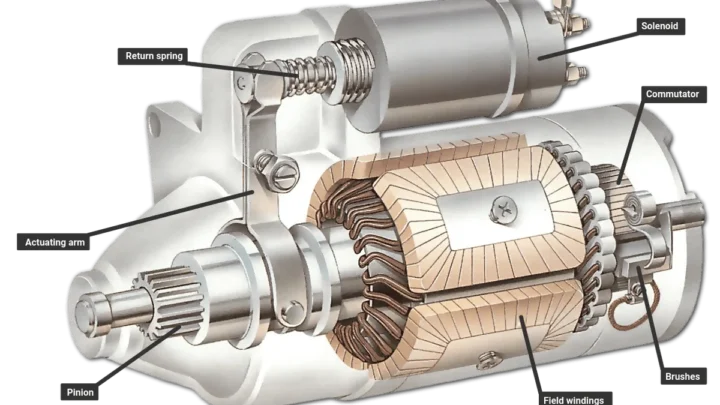
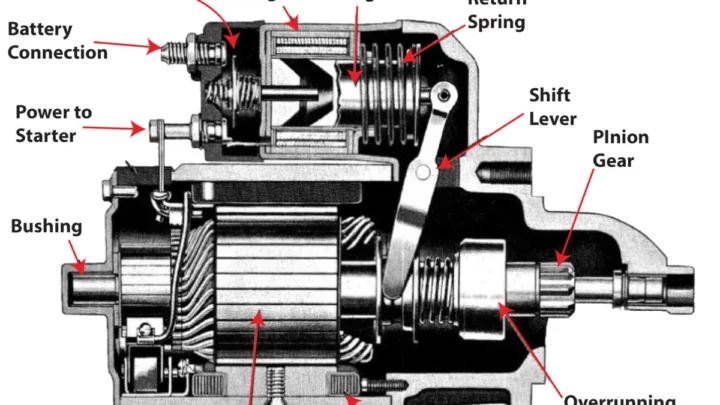
Normal disengagement happens in three fast steps. First, you release the key from START. The ignition switch returns to RUN under its internal spring, which cuts 12V from the small S-terminal on the solenoid.
Second, the solenoid's hold-in winding loses power. Its return spring snaps the plunger back, breaking the high-current contact between the battery cable and the starter motor. Third, the Bendix drive senses the flywheel spinning faster than the pinion and retracts the pinion out of mesh.
All three actions happen within roughly 100 to 300 milliseconds. If any single link in that chain fails, the pinion stays meshed, the motor keeps getting power, or both.
The Real Causes: Solenoid, Ignition Switch, Relay, and Bendix Failures
Four failures cause the vast majority of "stuck engaged" complaints. Each has a clear signature and calls for a different fix. Aggregate warranty data from remanufacturers points to solenoid contact welding as the single most common root cause.

Welded or Stuck Solenoid Contacts
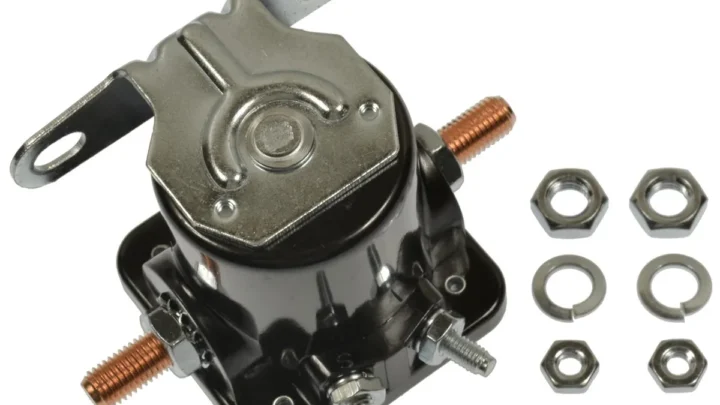
Every crank sends hundreds of amps through two copper discs inside the solenoid. Over years, those discs pit and arc. Eventually they weld together on one cycle and refuse to open, feeding the starter constant battery voltage.
Ignition Switch That Won't Return from START to RUN
The switch has a return spring that pulls the key barrel back the moment you let go. If the spring weakens or the internal contacts stick, the START circuit stays powered. Older GM, Ford, and Chrysler platforms have well-documented recalls and technical service bulletins for exactly this.
Stuck Starter Relay or Shorted START Wire
Many modern vehicles route the start signal through a small relay in the fuse box. If its contacts fuse, or if the wire to the solenoid chafes and shorts to a hot lead, the solenoid gets constant 12V. Both faults look identical from the driver's seat.
Broken Bendix Drive or Seized Overrunning Clutch
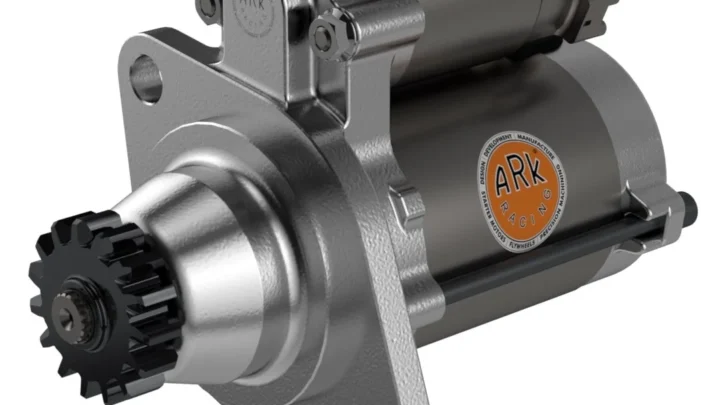
If the solenoid drops out but the pinion refuses to retract, the Bendix is the culprit. A broken drive spring, a seized one-way clutch, or a bent shaft can leave the pinion locked in the ring gear.
What to Do in the First 60 Seconds (Shut It Down Safely)
Speed matters. Follow these steps in order the moment you hear the whine.
- Turn the ignition key to OFF. If the noise stops instantly, the fault is upstream in the switch or relay.
- If the noise continues with the key off, pop the hood immediately.
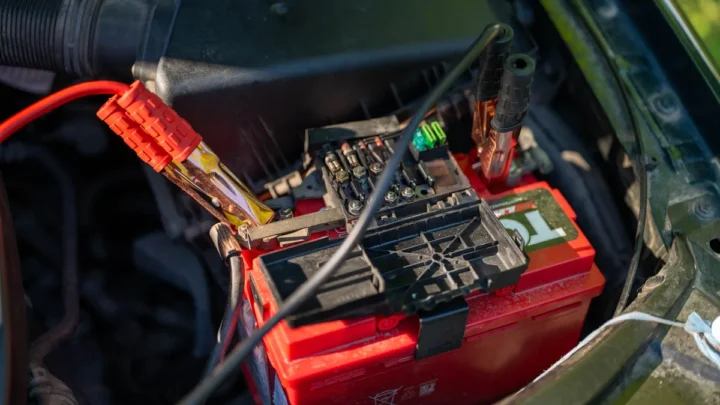
- Disconnect the negative battery terminal with a 10mm wrench. This kills all power to the starter.
- Do not attempt to restart. Do not drive it, not even a few blocks.
- Note whether the starter housing is hot and whether you smelled burning. Both are useful clues.
- Let the starter cool for at least 30 minutes before removal if you're doing the job yourself.
A quick voltage check at the battery once things cool confirms you haven't drained it flat. Our short walkthrough on reading battery voltage on a multimeter covers the exact settings and probe placement.
Diagnostic Workflow: Isolating the Faulty Component
Start at the ignition switch, work outward to the relay, then the solenoid, then the starter itself. Skipping steps is how techs replace a perfectly good starter and still have the fault.
Testing the S-Terminal for Phantom Voltage
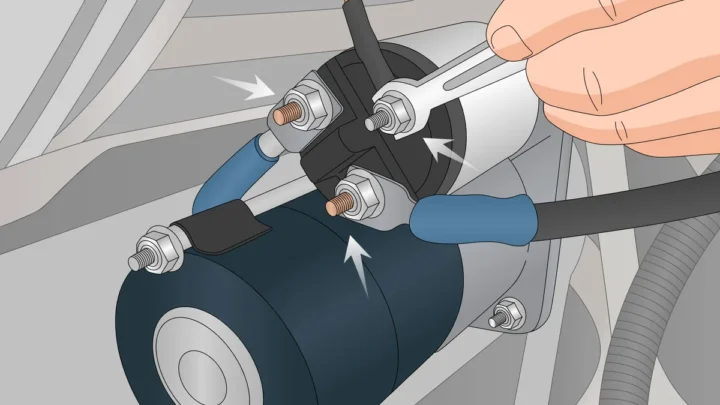
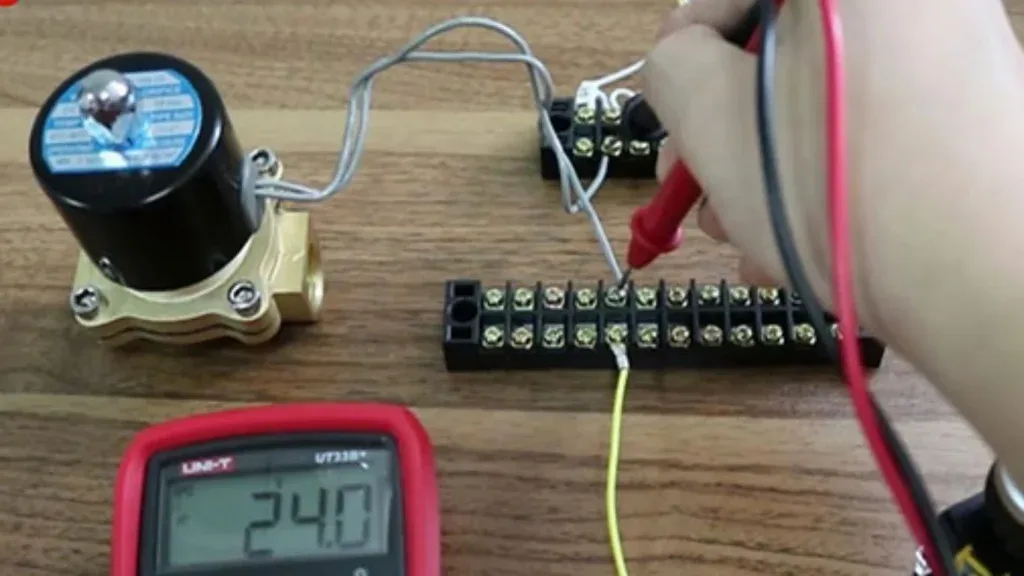
With the key OFF, back-probe the small S-terminal on the solenoid with a multimeter set to DC volts. You should read 0V. Any voltage present means power is leaking through the switch, relay, or a chafed wire.
If you're new to the meter, our primer on setting a multimeter for 12V testing covers the exact dial position.
Bench Testing the Starter and Solenoid
Pull the starter and clamp it in a vise. Jump the battery post to the S-terminal with a heavy jumper. The pinion should snap out, spin, and retract instantly when you break the jump.
If the pinion stays out or the motor keeps spinning, the solenoid or Bendix is bad.
Checking Ignition Switch Continuity
Disconnect the switch harness. With a meter on continuity, cycle the key through OFF, RUN, and START. The START pin should show continuity only while held.
If it stays closed after release, the switch needs replacement.
Damage a Stuck Starter Causes if You Keep Driving
Damage climbs fast, and the bills climb with it. A $60 solenoid can turn into a $1,500 flywheel job in under five minutes of runtime.
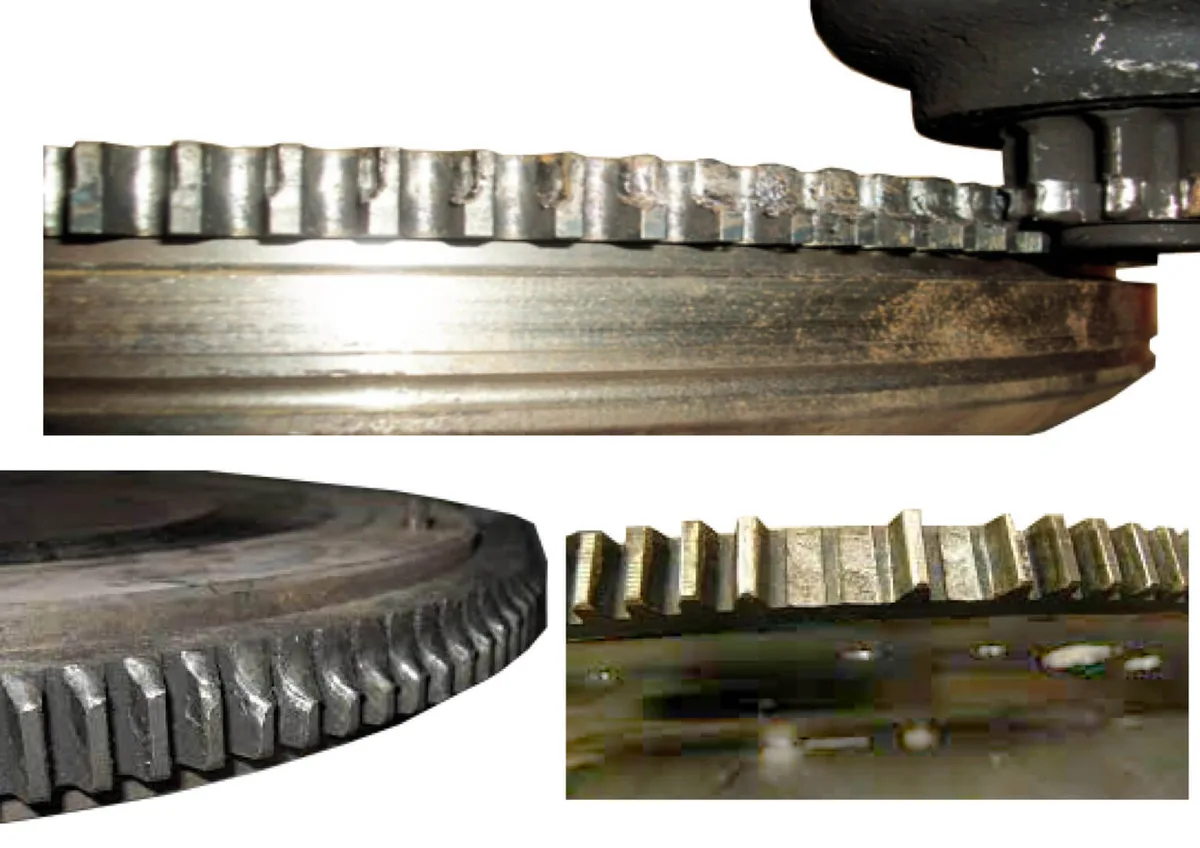
The ring gear (or flexplate on automatics) is the first casualty. Teeth strip, chip, or flatten from the constant grinding. Once damaged, the starter can't reliably engage on the next cold start either.
The starter motor is next. Brushes overheat and disintegrate. The armature warps.
The solenoid coil boils its own insulation. On an automatic, a warped flexplate can crack the torque converter mounting pads, adding a transmission drop to the invoice.
Repair vs. Replace: Solenoid, Starter, Ignition Switch, or Ring Gear
The right call depends on which component actually failed and how many miles the starter has on it.
| Component | Repair or Replace | Typical Parts Cost (USD) |
|---|---|---|
| Solenoid only | Repair if starter is under 60k miles | $25 to $80 |
| Full starter | Reman or new is standard | $120 to $400 |
| Ignition switch | Always replace | $30 to $150 |
| Starter relay | Cheap swap | $8 to $25 |
| Flywheel ring gear | Weld/replace ring on manuals, full flexplate on autos | $60 to $350, plus 4 to 8 labor hours |
If the starter has over 100,000 miles, replace the whole unit rather than just the solenoid. Brushes, bushings, and Bendix are all near end of life anyway. Reman units from Bosch, Denso, or Delco Remy ship pre-tested with a 1 to 3 year warranty.
A stuck starter can also fry other electrical parts under sustained load. If your charging system has been acting up in parallel, our checklist of common alternator failure signs is worth a look.
Cranking Current, Voltage Drop, and Clearance Specs Worth Knowing
A few numbers separate a proper diagnosis from a guess.
| Measurement | Normal Range | Red Flag |
|---|---|---|
| Cranking current (gas) | 80 to 200 A | Over 250 A sustained |
| Cranking current (diesel) | 300 to 500 A | Over 700 A sustained |
| Inrush current spike | 150 to 400 A (gas) | Over 500 A on gas |
| Battery voltage while cranking | 9.6 V minimum | Under 9.0 V |
| Voltage drop per cable/connection | Under 0.5 V | Over 0.5 V |
| Pinion to ring gear clearance | 0.020" to 0.060" | Contact or over 0.080" |
| Starter mounting bolt torque | 30 to 50 ft-lb | Check service manual |
A clamp-on DC ammeter around the positive battery cable gives you the reading in seconds. High cranking current with normal RPM points to a dragging starter or wiring resistance. Low RPM with normal current points to a weak battery.
If the battery is suspect, walk through our 12V battery test with a multimeter first.
Cold Weather, Heat Soak, and Other Conditions That Trigger This Fault
Environment doesn't cause a stuck starter on its own, but it accelerates the parts that fail. Cold cranking pushes solenoid contact current toward the top of the range. That extra arcing welds copper discs together over a few winters.
Heat soak is the mirror image. After a hard highway run, the starter sits inches from an exhaust manifold that can hit 900°F. Solder joints inside the solenoid soften.
Return springs lose tension.
Watch for these condition-driven triggers:
- Sub-freezing mornings after a battery has drifted below 12.4 V
- Repeated short trips that never let the starter rest
- Coastal or salted-road corrosion on the S-terminal wire
- Off-road use where dust packs the Bendix
- Aftermarket long-tube headers or exhaust wraps that raise underhood temps
If you drive in any of these conditions, a preventive solenoid or starter swap at the 100,000 mile mark is cheaper than a flywheel job later.
Safety Warnings Before You Touch the Starter Circuit
The starter sits at the bottom of a live 12V circuit that can push over 400 amps. Always disconnect the negative battery terminal before removing any starter wire or bolt.
Wear safety glasses. Battery posts can spark and release hydrogen gas when disconnected under load. A stuck starter housing can stay hot enough to cause skin burns for 20 to 30 minutes after shutdown.
Never bench test a starter on a bare floor without clamping it in a vise. The torque reaction can throw a 15-pound motor across a garage. Keep loose sleeves, jewelry, and cables clear of the pinion.
Common Mistakes That Turn a Small Fault into a Big Bill
Most catastrophic outcomes trace back to a handful of avoidable errors.
- Driving to the shop instead of towing (turns a $60 solenoid into a $1,500 flywheel job)
- Replacing the starter without inspecting the ring gear
- Skipping the shim check on Ford-style starters
- Reusing corroded battery cables
- Ignoring the S-terminal wire when a chafed wire is the actual cause
- Assuming a good battery voltage means healthy cables
A single missed shim can cost you a starter within 500 miles. Take the extra ten minutes.

Similar Posts