How to Bypass a Starter Solenoid: Step-by-Step Guide
A dead click when you turn the key almost always points to one part, and knowing how to bypass a starter solenoid tells you fast whether that part is really the culprit. It's a five-minute test that can save you a tow bill or a wrongly bought starter. But it also involves live 12V current, a heavy motor, and enough amperage to weld metal.
That last point matters. Starter motors on gas engines pull 150 to 250 amps at crank, and diesels can hit 500 amps or more, per SAE J541 performance data. Get the technique wrong and you can arc-weld a screwdriver to your solenoid, launch the vehicle if it's in gear, or cook the starter windings.
Here's how to do it safely in 2026, step by step.

Quick Answer
To bypass a starter solenoid, put the transmission in Park and chock the wheels. Identify the B (battery) and S (signal) terminals on the solenoid. Use an insulated remote starter switch to jump B to S.
That sends 12V straight to the coil. If the engine cranks, the solenoid signal path is faulty.
Why Bypassing a Starter Solenoid Is Riskier Than Most Guides Admit
The typical forum answer is "just touch a screwdriver across the terminals." That advice skips the parts that hurt people. Bypassing the solenoid puts you inches from a 12V bus bar carrying hundreds of amps.
Two things can happen in a bad bypass. The tool welds itself to the posts and holds the starter cranking. Or the vehicle lurches forward because someone left it in gear.
Both are documented failure modes in NHTSA rollaway advisories.
There's also a quieter risk. Repeated cranking heats the starter windings past their duty cycle, typically 10 to 15 seconds on, then 1 to 2 minutes off. Ignore that and you'll cook the starter you were trying to save.
If you already suspect broader charging trouble, our guide on spotting a failing alternator is worth a quick read first.
What a Starter Solenoid Actually Does in the Cranking Circuit
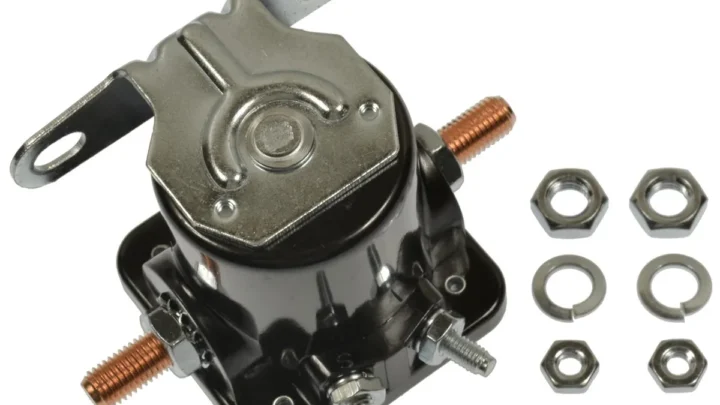
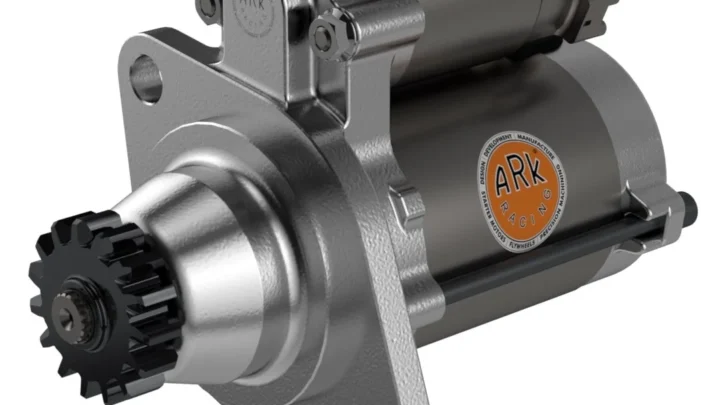
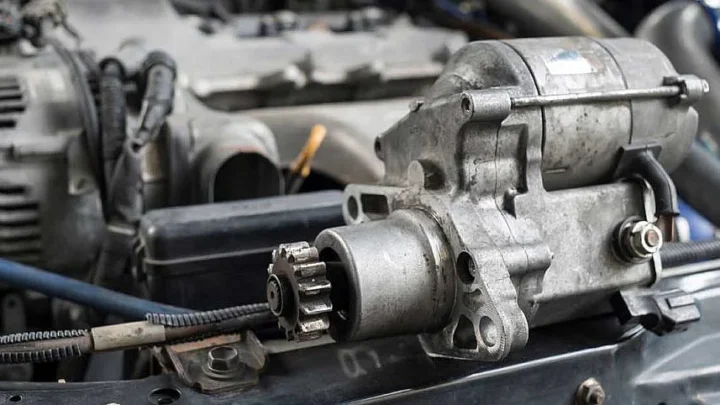
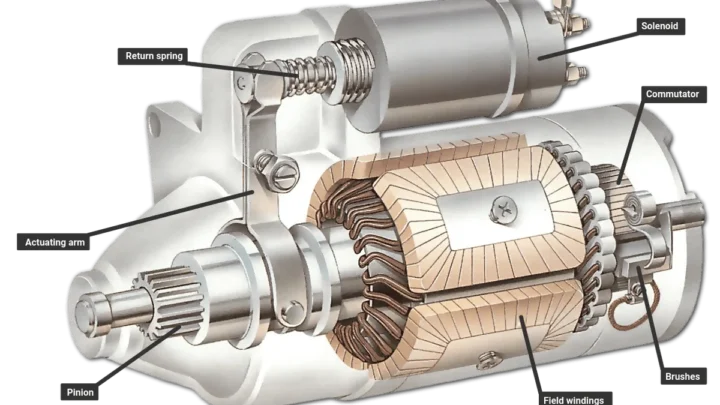
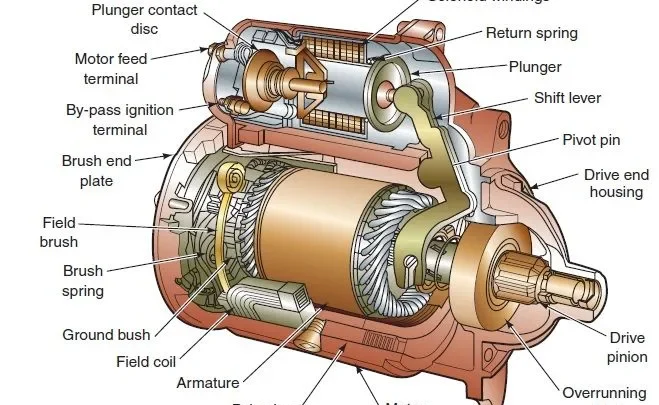
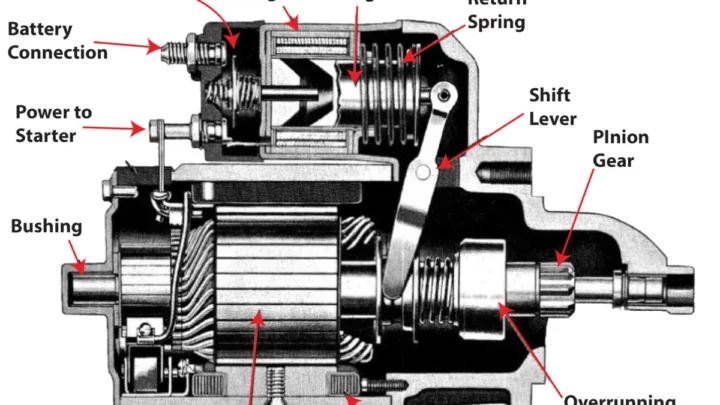
The solenoid is a heavy-duty relay bolted to the starter, or to the fender on older Fords. It does two jobs at once. First, it pushes the pinion gear into the flywheel ring gear.
Second, it closes a high-current switch that sends battery power to the starter motor.
The key sends a small 12V signal (a few amps) to the S terminal. That energizes the pull-in and hold-in coils. The coils yank a plunger forward, and a copper disc bridges the B and M contacts.
Now hundreds of amps flow straight from the battery to the motor.
If you understand that split, the bypass makes sense. You can trigger the coil manually to test the solenoid. Or you can bridge B to M and skip the coil entirely to test the motor.
Different bypass, different information.
The Three Terminals You Must Identify Before Touching Anything (B, S, and M)

Get the terminals wrong and the bypass either does nothing or does damage. Here's the short version.
- B terminal (battery): the fat post with the thick red cable running from the positive battery terminal. Always hot.
- S terminal (signal or start): the small spade or stud with a thin wire from the ignition switch or starter relay.
- M terminal (motor): the fat post connected by a short strap to the starter motor itself. Present on starter-mounted units.
On a Ford fender-mounted solenoid you'll see four posts. Two large (battery and starter) plus two small (S for start, I for ignition bypass). On most GM and Chrysler starter-mounted units, the M terminal is hidden under the cap or joined by an internal strap.
Always confirm your layout against the factory service manual before you probe anything.
Signs Your Solenoid Is the Real Problem (and Not the Battery, Cables, or Ignition Switch)
A bypass only tells you something if you've ruled out the easier failures first. Otherwise you'll swap a good solenoid and still have a no-start.
Classic solenoid symptoms include:
- One loud click when you turn the key, no crank
- Cranks fine when you jump the S terminal, dead on the ignition switch
- Visible pitting or a burnt smell around the solenoid cap
- Voltage drop across the solenoid over 0.2V during crank
- Solenoid stuck engaged after the engine starts
Trouble is, these look similar to a weak battery or corroded cable. Test battery voltage first. A healthy 12V system reads 12.6V rested and stays above 9.6V during crank.
If you're not sure whether the battery or something else is the weak link, figuring out which one is really failing takes about five minutes with a multimeter.
Also check the S-terminal signal itself. Key to START should deliver 10V or more at the solenoid signal wire. If it doesn't, the ignition switch, neutral safety switch, or wiring is the real culprit, not the solenoid.
Safety Gear and Vehicle Prep Before Any Bypass Attempt
This is the part people skip and later regret. A starter can crank the engine as soon as the solenoid closes. That engine can then move the vehicle.
Prep the car first, gear yourself second.
Wheel Chocks, Parking Brake, and Transmission Position
Automatic: shift into Park. Manual: neutral with the clutch fully released, then chock the front and rear of at least one drive wheel. Set the parking brake firmly.
Turn the ignition key to the RUN position (not START). This wakes the fuel pump and ignition system so the engine can actually fire if it cranks. Skip this step and you'll get a spinning starter but no start, then wrongly blame the solenoid.
Eye Protection, Insulated Tools, and Clothing
Wear ANSI Z87.1-rated safety glasses at minimum, plus insulated mechanic's gloves. Remove watches, rings, and any metal necklaces. A dropped wrench across the battery post can weld to your ring finger.
That's not a theoretical risk. The OSHA guidance on control of hazardous electrical energy is written around exactly this kind of incident.
Use an insulated screwdriver or, better, a purpose-built remote starter switch. Stand to the side of the starter, never in front of the vehicle. Keep a fire extinguisher within reach if you're anywhere near a fuel line.
Method 1: Bypassing the Solenoid Signal with a Remote Starter Switch
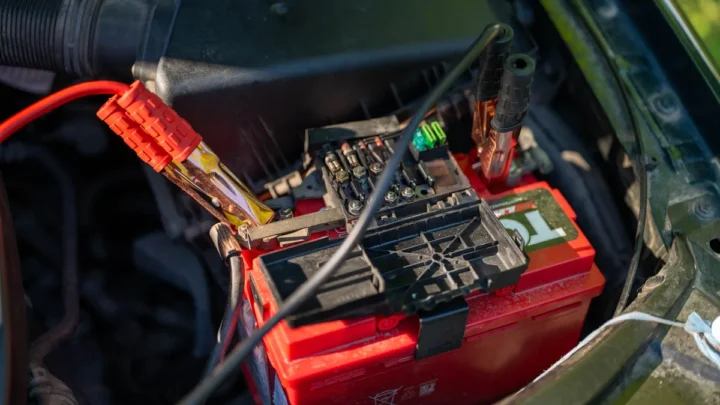
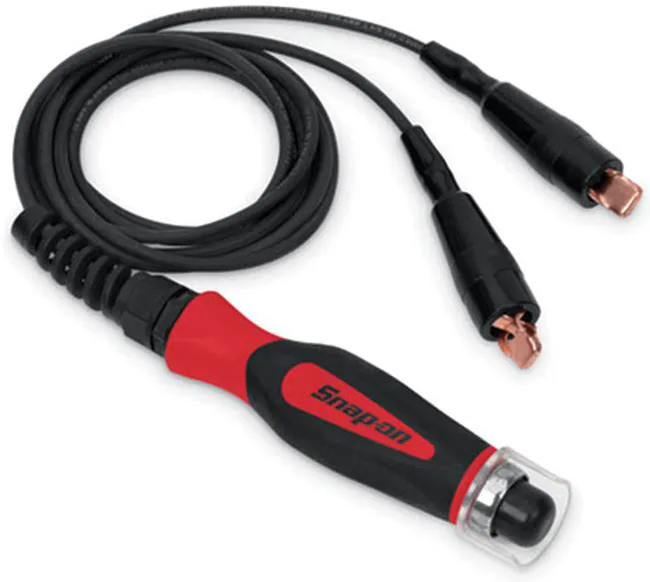
This is the safest bypass by a wide margin. A remote starter switch is a cheap handheld tool with two alligator clips and a push-button. One clip goes on the S terminal, the other on the positive battery terminal or the B post on the solenoid.
Press the button and 12V flows through the coil.
Steps:
- Confirm the vehicle is in Park or Neutral, chocks in place, key ON in RUN.
- Clip one lead to the S terminal on the solenoid.
- Clip the other lead to the battery positive post or the B terminal.
- Stand to the side, press the button, and listen for the crank.
- Release the button the moment the engine catches.
If the engine cranks and starts, the solenoid itself is fine. The problem lives upstream. That means the ignition switch, neutral safety switch, starter relay, or the wire between them.
If nothing happens or you get one dead click, the solenoid contacts, coil, or the M-to-motor connection is the failure.
Method 2: Jumping S to B with an Insulated Screwdriver
If you don't own a remote starter switch, you can bridge the S and B terminals directly. It works, but the tolerance for error is much smaller. The screwdriver blade is now the conductor between a 12V hot post and the coil.
Use a heavy insulated-handle screwdriver, not a stubby one. Lay the shaft flat across both terminals in one deliberate motion. You'll hear a click and the starter should crank.
Lift the tool away immediately when the engine catches.
Two rules that keep this test safe:
- Never let the blade touch a ground surface (the starter body, engine block, or bracket) at the same time as the B post. That's how you weld the tool.
- Never do this with the transmission in gear. On a manual, chock the wheels even if you're in neutral.
Method 3: Direct-Wiring B to M to Bypass the Solenoid Completely
Bridging B to M skips the solenoid altogether and sends full battery current straight to the starter motor. Use this only to confirm whether the starter motor itself still spins. It has a real catch: the pinion won't engage the flywheel because the solenoid plunger never moves.
That means on most starter-mounted units, the motor spins freely inside the housing. You won't crank the engine. You're only proving that the motor and cables are alive.
If the motor spins when you jump B to M but does nothing when you jump B to S, the solenoid is dead. Replace it, or replace the whole starter if it's an integrated unit. If nothing spins on B to M either, the starter motor, ground path, or main battery cable is the problem.
Voltage-drop testing the cables is the next logical step, similar to how you'd check readings across a car battery with a multimeter.
Fender-Mounted vs. Starter-Mounted Solenoids: How the Bypass Differs
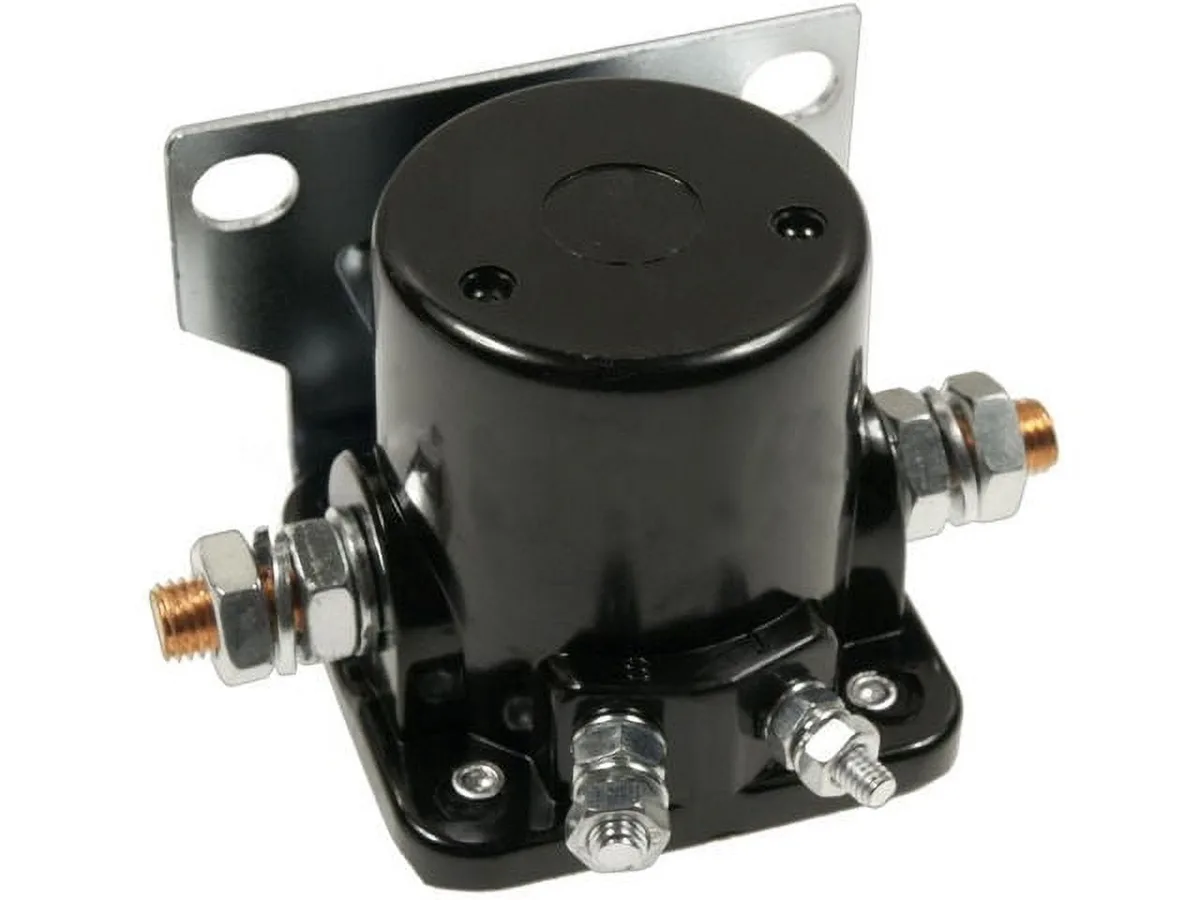
Ford's fender-mounted solenoid is a separate box on the inner fender, wired to the starter through a heavy cable. Because it's out in the open, the bypass is easier and safer to reach. Jumping across the two large posts triggers the starter directly.
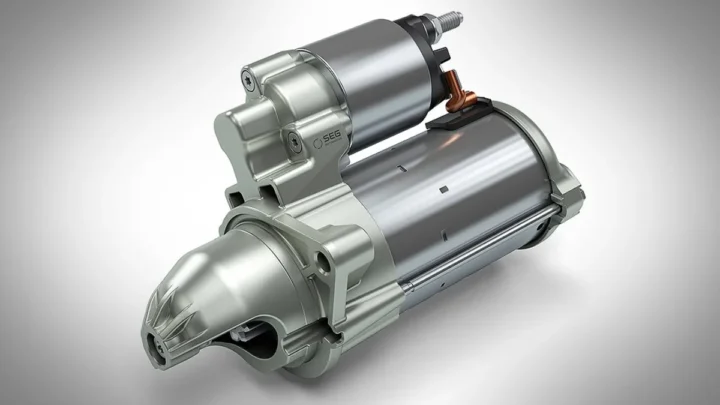
Starter-mounted solenoids (most GM, Chrysler, Toyota, and modern Ford units) sit on top of the starter itself, tucked under the intake or exhaust manifold. Access is tight and hot exhaust runs inches away. That's where a remote starter switch really earns its keep, because you're not fumbling with a screwdriver near a hot manifold.
| Feature | Fender-Mounted (Ford-style) | Starter-Mounted (GM/Chrysler/Toyota) |
|---|---|---|
| Location | Inner fender, easy access | Bolted to starter, tight access |
| Posts visible | 4 (2 big, 2 small) | 2 big plus 1 small S |
| Best bypass method | Screwdriver or remote switch | Remote starter switch |
| Risk near hot manifold | Low | High |
| Field-replaceable alone | Yes | Sometimes (integrated units, no) |
If you have a truck or classic with a fender solenoid, add an "I" terminal check to your test. The I post feeds the ignition coil during crank on some Ford applications. A bad I circuit produces a starter that cranks but won't fire.
Voltage, Amperage, and Resistance Readings That Confirm a Bad Solenoid
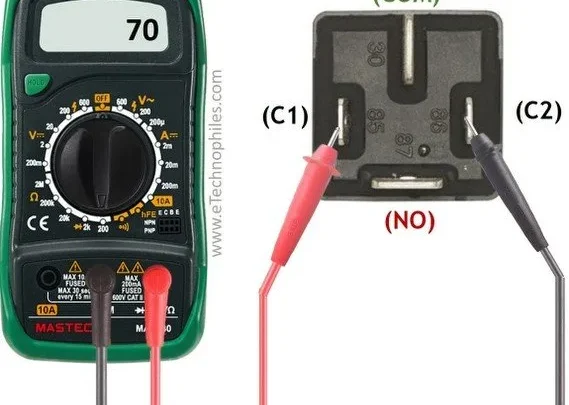
Numbers turn a guess into a diagnosis. A digital multimeter and, ideally, a low-amp clamp meter will tell you exactly where the circuit is failing.
Key measurements to take:
| Test point | Healthy reading | Bad reading |
|---|---|---|
| Battery at rest | 12.6V or higher | Below 12.4V |
| Battery during crank | Above 9.6V | Below 9.6V |
| Voltage drop across B and M posts (cranking) | Under 0.2V | Over 0.5V |
| S-terminal signal (key to START) | 10V or higher | Under 8V |
| Solenoid coil resistance (unpowered) | About 0.4 to 1.0 ohms | Open circuit or dead short |
A high voltage drop across the solenoid means the internal contacts are pitted or burned. That's the classic "cranks slow when hot" complaint. If the S-terminal signal reads low but battery voltage is fine, the problem is in the ignition switch, neutral safety switch, or the wire between them.
If you're new to reading these values, our walkthrough on picking the right multimeter dial for a starting-system test shows exactly which position and probe placement to use.

Similar Posts