How to Tap a Starter to Start a Car: Quick Fix Guide
Turn the key and hear only a click or silence with a good battery? Learning how to tap a starter to start a car can get you rolling and to a mechanic. It's an old trick that works because a worn starter usually fails at one specific dead spot.
A firm tap jars the internals just enough for one more crank.
As of 2026, aggregate technician reports still put average starter lifespan at 80,000 to 150,000 miles, with cranking current pulling 150 to 250 amps every start. That's real stress on brushes, contacts, and a small commutator. When one part wears past its limit, tapping can buy you a handful of starts.
Here's when it works, and how to do it without hurting yourself or the car.

Quick Answer
Tapping a starter to start a car is a limp-home trick, not a fix. Locate the starter low on the engine block. Have a helper hold the ignition key in Start.
Strike the starter body, not the solenoid, with a wrench. Use 3 to 5 firm taps. Drive straight to a mechanic afterward.
Why Tapping a Starter Actually Works (The Real Mechanical Reason)
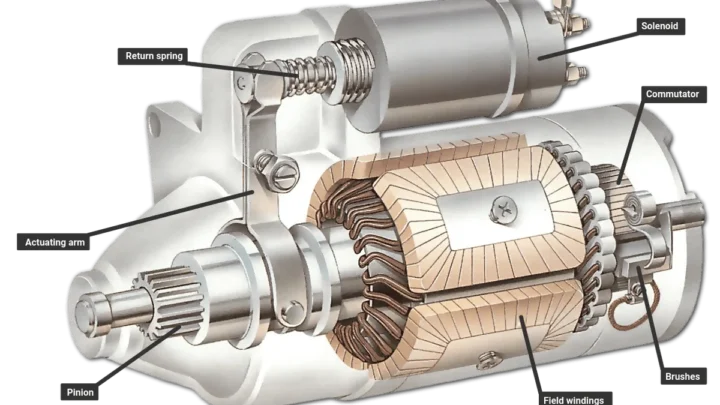
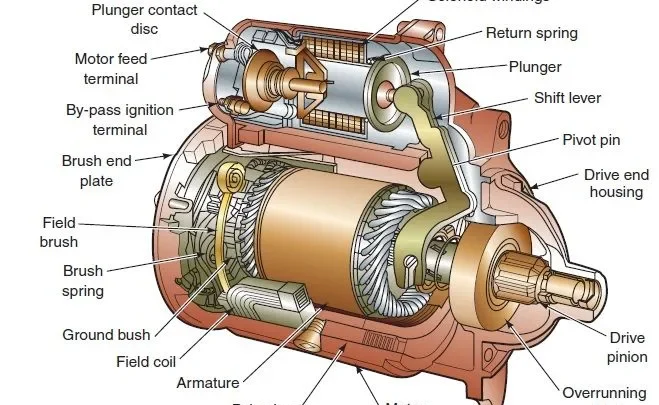
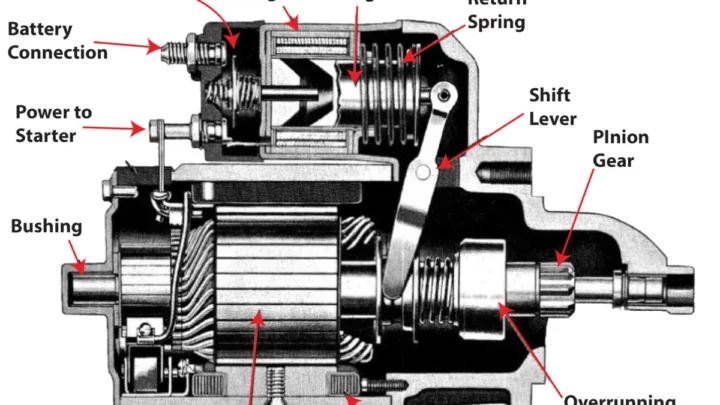
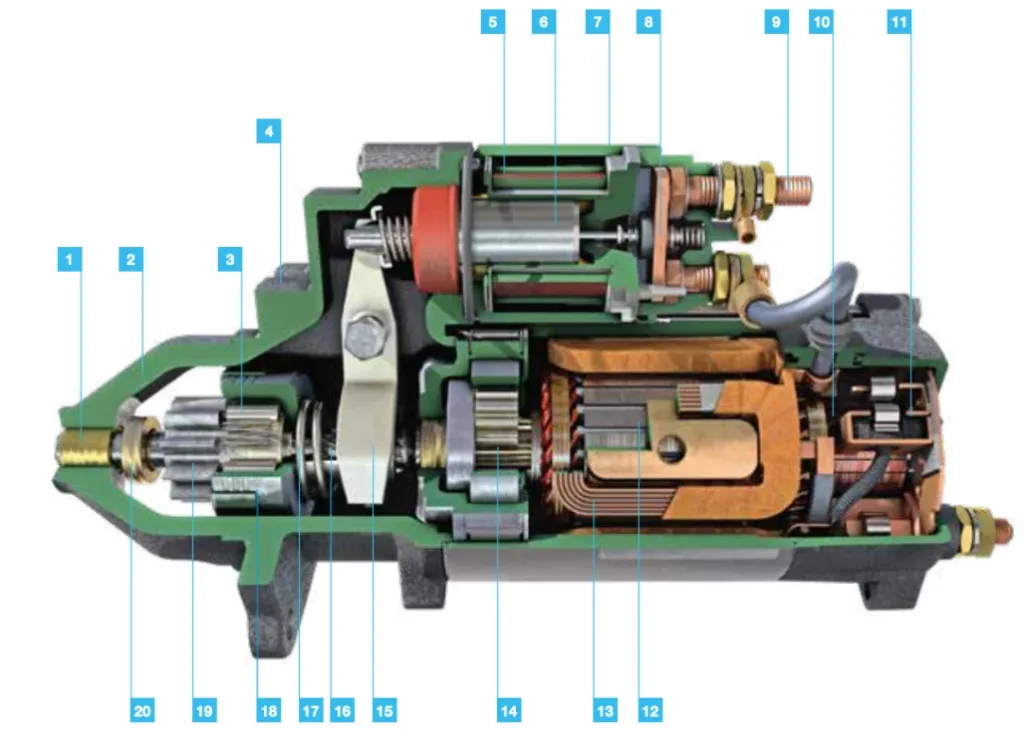
A starter motor is a small electric motor packed with rotating parts. Inside sit the armature, the copper commutator, and spring-loaded carbon brushes that press against it. Over years and thousands of starts, those brushes wear down, the commutator develops dead spots, and the solenoid contacts corrode.
When the ignition key sends 12 volts to the solenoid, current is supposed to flow through the brushes into the armature. If a brush lands on a worn low spot, or a contact sits on a corroded patch, the motor gets no juice. That's the "click and nothing" moment most drivers know.
A sharp tap does two things. It physically shifts the brushes off the dead spot, and it jars the solenoid plunger past a stuck contact. Either can restore the circuit for one more crank.
It's mechanical, not magical.
And it only works because the internal wear pattern is uneven. Once wear becomes uniform, tapping stops working. That's why it's always a temporary fix.
Is It Really the Starter? Quick Symptom Check Before You Swing
Yes, before you hit anything, confirm the starter is actually the culprit. Plenty of no-crank problems look identical from the driver's seat. But they come from a dead battery, corroded terminals, a bad ignition switch, or a failing alternator that never charged the battery overnight.
Run through this fast checklist:
- Turn on the headlights. Bright and steady means the battery has voltage. Dim or flickering points to a battery or charging issue.
- Try the horn and dome light. Weak response usually means low charge, not a bad starter.
- Wiggle the shifter through Park and Neutral. A bad neutral safety switch mimics a dead starter perfectly.
- Listen to the sound. A single loud clunk suggests the solenoid engaged but the motor didn't spin. Rapid clicking is almost always low battery voltage.
- Check the terminals. White or green corrosion under the clamps kills current before it reaches the starter.
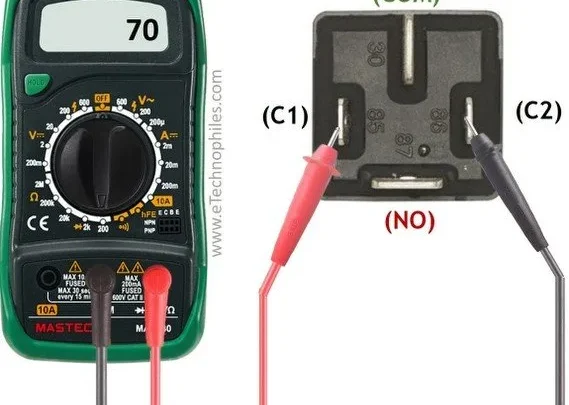
If you have a multimeter, reading resting voltage at the posts takes 30 seconds. Anything under 12.4V and the battery is your first suspect, not the starter. It's also worth narrowing down the charging side if the car sat overnight and refused to crank cold.
Skip these checks and you may spend an hour under the hood beating on a healthy starter. The click that sounds "just like a starter" is often a battery with only enough juice to pull the solenoid in and no more.
What You Need Before You Tap: Tools, Setup, and Safety Prep
You don't need much, but what you bring matters. A wrong tool can crack the starter housing or slip and cut a hand. A missed safety step can put the car on top of you.
Here's the short list.
| Item | Purpose | Notes |
|---|---|---|
| Long-handled wrench or small hammer | The tapping tool | A rubber-grip mallet is safest. Avoid heavy sledges. |
| Wheel chocks | Prevent rollaway | Bricks or solid wood blocks work fine. |
| Work gloves | Grip and heat protection | Exhaust stays hot 20+ minutes after driving. |
| Safety glasses | Eye protection | Metal-on-metal impact throws chips. |
| Flashlight or headlamp | Locating the starter | Most starters sit low and shadowed. |
| A helper | Turns the ignition key | Solo tapping is possible but less effective. |
Before you crawl anywhere near the vehicle, run this setup:
- Park on level pavement. No inclines, no gravel.
- Set the parking brake firmly.
- Shift automatics to Park. On a manual, your helper depresses the clutch fully with the transmission in Neutral.
- Chock at least one wheel.
- If you have to get under the car, use rated jack stands. Never trust a jack alone.
Skip any of these and a "quick fix" turns into an ER visit. That's not dramatic. That's how techs get hurt.
How to Locate the Starter on Your Vehicle
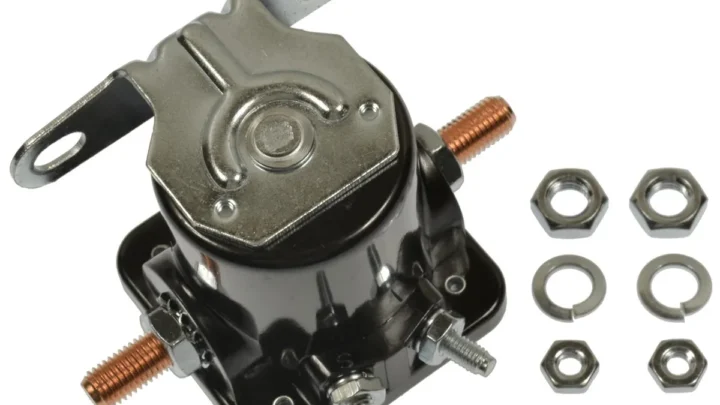
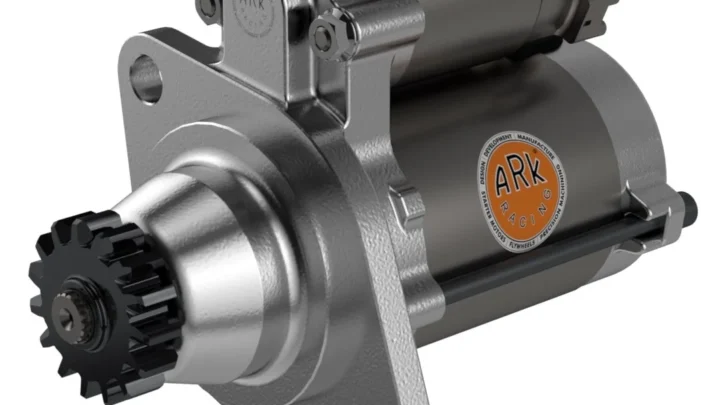
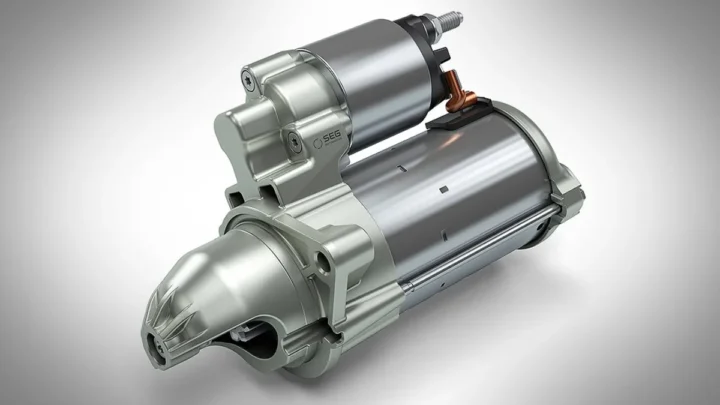
The starter sits low on the engine, bolted where the engine block meets the transmission bell housing. It's usually a cylindrical unit about the size of a large soda can. A smaller cylinder, the solenoid, sits on top or beside it.
Two thick cables run into it.
Following the Positive Battery Cable
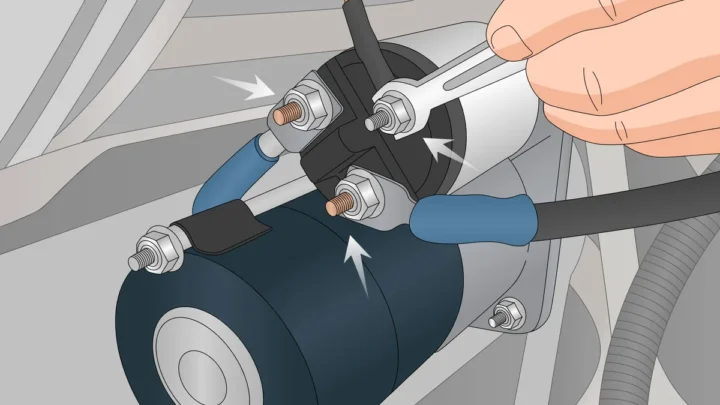
The fastest way to find any starter is to follow the fat red cable from the positive battery terminal. It runs to one of two places: the starter solenoid directly, or a nearby junction that feeds it. In most modern cars the cable terminates at the solenoid's B+ stud.
Trace the cable and you've found the starter.
Access from Above vs. Underneath
Layout varies a lot by model:
- Front-wheel-drive four-cylinders often expose the starter from above, tucked behind the intake or under the airbox.
- Rear-wheel-drive V6 and V8 engines usually require reaching from underneath, near the oil pan.
- Trucks and SUVs almost always demand under-vehicle access.
- Some transverse engines block the starter behind the exhaust manifold. Tapping there becomes nearly impossible without a lift.
If you can't see the starter from either angle without lifting the car, that's your sign to stop and call a tow. Getting under an unsupported vehicle to swing metal is exactly how people get killed in driveways.
Starter Body vs. Solenoid: Where to Hit and Where to Never Hit
This is the part most guides get wrong. You tap the starter body, not the solenoid. Hit the wrong component and you break the fix, or worse.
The starter body is the larger cylindrical housing. That's where the armature, brushes, and commutator live, and that's what benefits from a jarring impact. The solenoid is the smaller cylinder attached to it, usually piggybacked on top or bolted to the side.
It holds the plunger and copper contacts.
Here's why the distinction matters:
- Tapping the body shifts brushes off worn commutator spots. Safe. Effective.
- Tapping the solenoid can bend the plunger, crack the housing, or short a live terminal against ground. That's a sparks-and-smoke moment.
- Solenoid terminals carry battery voltage all the time, even with the key off. Metal-on-metal contact there can weld a wrench to the frame.
Bosch and Denso both publish exploded-view diagrams of their starters, and manufacturer pages like Bosch Mobility show the same layout. Look for the two thick cables. They enter the solenoid.
The plain-cased cylinder behind or beside it is the starter body. That's your target.
Aim your taps at the middle of the body, not at the mounting bolts or the wire connections. A firm strike on the meat of the housing is what does the work. Sharp raps beat heavy blows every time.
Step-by-Step: How to Tap a Starter to Start a Car
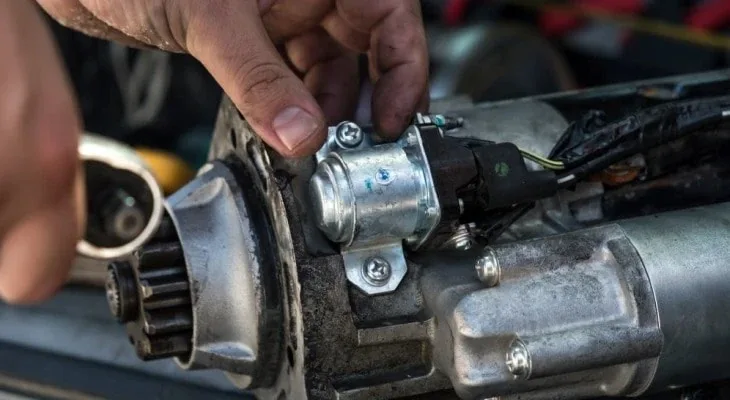
Once you've located the starter and confirmed the battery has voltage, the process moves fast. Two people make it work best. One taps.
One turns the key on cue.
Positioning the Car and Yourself
Get low enough to reach the starter body squarely. If you can do it standing beside the wheel well, great. If you must slide under the car, jack stands are non-negotiable.
Set the shift lever to Park or Neutral, parking brake locked, wheels chocked. Then position your wrench or hammer within a comfortable swing of the starter body.
The Helper-and-Key Method
Your helper sits in the driver's seat with the foot off the accelerator. On your signal, they turn the key to Start and hold it while you tap. If the engine fires, they release the key immediately.
If nothing happens after 5 seconds, they release, wait 10 seconds, and retry.
Keep communication clear. "Ready" from you, "cranking" from them. Silence gets fingers pinched.
The Correct Tapping Technique (Force, Angle, Count)
Tap the middle of the starter body with firm, quick strikes. Think knocking on a heavy door, not smashing a nail. Three to five raps is the sweet spot.
Strike perpendicular to the housing, straight into the body. Angled hits waste force and skitter the wrench off. If it hasn't fired after two full attempts, the tap trick isn't going to save this starter today.
What to Use: Hammer, Wrench, Tire Iron, or Wood Block
Any solid tool that fits between the frame and the starter will work. The choice comes down to control and access.
- Long-handled wrench (14 to 18 inches). Best control, easiest to swing in tight spaces, unlikely to slip. This is what most techs reach for.
- Small hammer or rubber mallet. Good if you have clear access. A ball-peen head focuses the force on a small point.
- Tire iron. Only if nothing else is on hand. Long, awkward, easy to overswing.
- Wood block plus hammer. Rest the block on the starter and strike the block. Softens the blow and spreads the force, useful on aluminum-nosed starters that crack easily.
Skip the sledge. Anything over 2 pounds is asking for a broken housing. Skip screwdrivers too.
Metal shafts can slip and bridge a live terminal to the frame.
Safety Warnings You Can't Skip
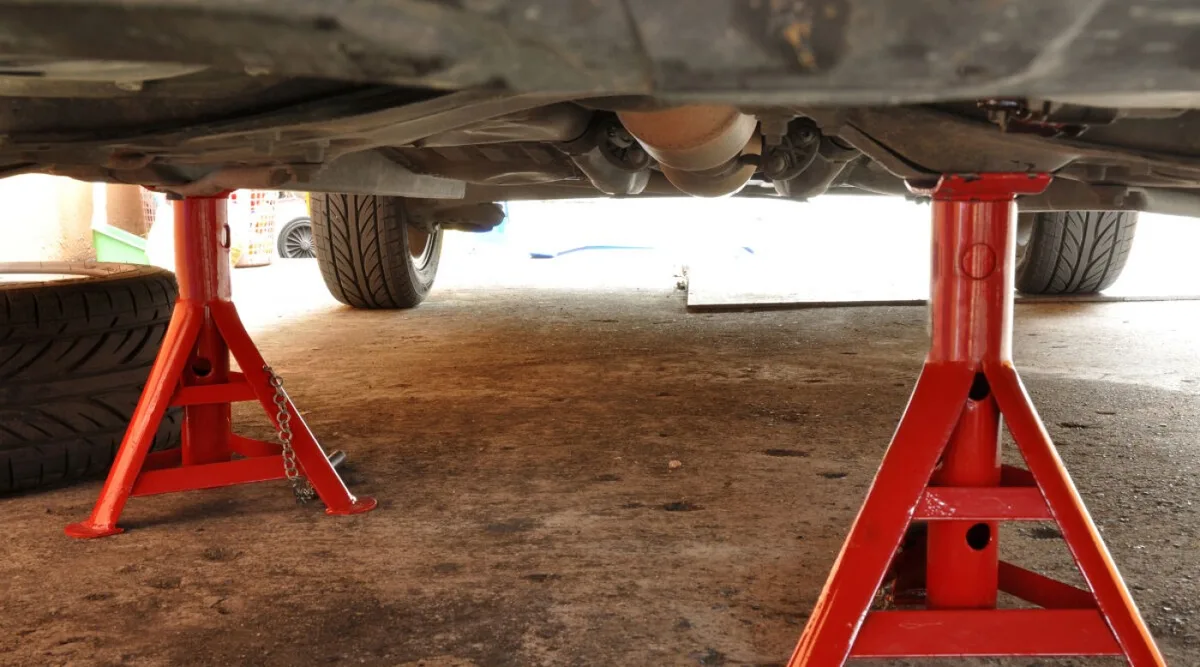
Tapping a starter puts your hands next to hot exhaust, live 12-volt cabling, and a car that's about to shake with cranking torque. Rushing this step is where injuries happen.
- Never lie under a car held up only by a jack. Use rated jack stands or drive-on ramps.
- Don't tap with the transmission in gear. On a manual, keep the clutch fully depressed.
- Keep hands clear of drive belts, fans, and pulleys once the engine catches.
- Wear eye protection. Rusted metal chips fly on the first strike.
- Skip flip-flops and loose sleeves. Belts grab both.
- Assume the exhaust manifold is 300°F if the car ran within the last 30 minutes.
If any doubt creeps in about setup, stop. A tow is cheaper than a burn or a crush injury.
Common Mistakes That Damage the Starter or Hurt You
Most failures with this trick come from a few repeat errors:
- Hitting the solenoid instead of the body. Bends the plunger and can strand you completely.
- Tapping too hard. Cracks the aluminum nose cone. Now you need a new starter and an alignment.
- Tapping the wrong car. Aggregate technician reports show many "starter" no-cranks are actually a corroded battery post or a charging system that quit days ago.
- Trying past 3 or 4 rounds. If two rounds of taps failed, the wear is too far gone.
- Cranking too long between taps. Holding Start for more than 10 seconds cooks the starter windings.
- Leaving the car in Drive. The one that hurts people. Autos roll forward on the first crank.
None of these are rare. All are avoidable with a slow, deliberate approach.
When Tapping Won't Work (and What It's Really Telling You)
If the starter refuses to spin after a fair attempt, the failure has moved past what a tap can fix. That's useful information, not a dead end.
- Total silence, no click. The circuit's broken upstream. Bad ignition switch, blown fusible link, or dead battery.
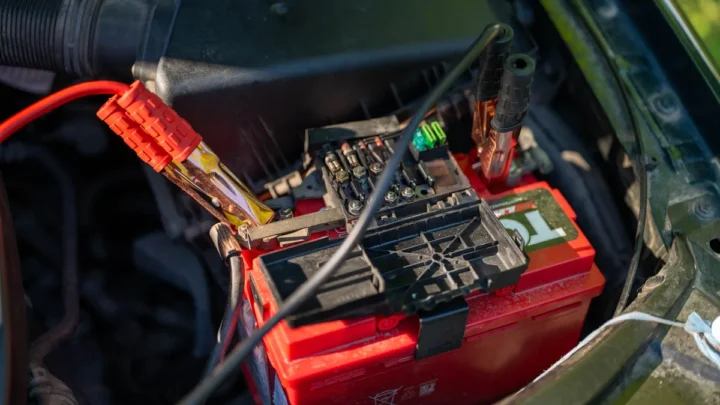
- Rapid clicking. Battery voltage is too low to hold the solenoid in. Charge or jump the battery first.
- Grinding without engagement. The bendix drive is worn. No amount of tapping puts it back.
- Starter spins but engine doesn't turn. The pinion isn't grabbing the flywheel ring gear. Physical damage, not electrical.
- One tap works, next doesn't, repeat. The brushes are on their last legs. Replacement is due within days.
Repeated taps buying fewer starts is the clearest sign the starter is finished. Aggregate ASE technician guidance treats three consecutive tapping incidents as the point of no return.
What to Do the Moment the Car Starts
The clock is now running. A tap-started car may only crank once more.

Similar Posts