Why Your Starter Is Grinding and How to Fix It Fast
A starter grinding noise almost never means what people think it means. Most folks hear that metal-on-metal howl and reach straight for a new starter. In our research, the real fault is often a weak battery, a loose mounting bolt, chewed-up ring gear teeth, or a driver holding the key a second too long.
Fix the wrong thing and the grinding comes right back.
This guide is a diagnostic tree, not a parts sales pitch. Per SAE International cranking-system testing, a healthy starter draws 150 to 250 amps and spins the engine at 200 to 300 RPM. As of 2026, replacement starters run $150 to $450 in parts alone, so narrowing the cause pays off.
Start by understanding what the sound actually tells you.

Quick Answer
A starter grinding noise means the pinion and ring gear teeth are skipping. Common causes include a worn Bendix, chipped teeth, or a stuck solenoid. Low cranking voltage does it too.
Timing tells you which cause. Check battery and grounds first.
What a Grinding Starter Actually Means (and Why It's Not Always the Starter)
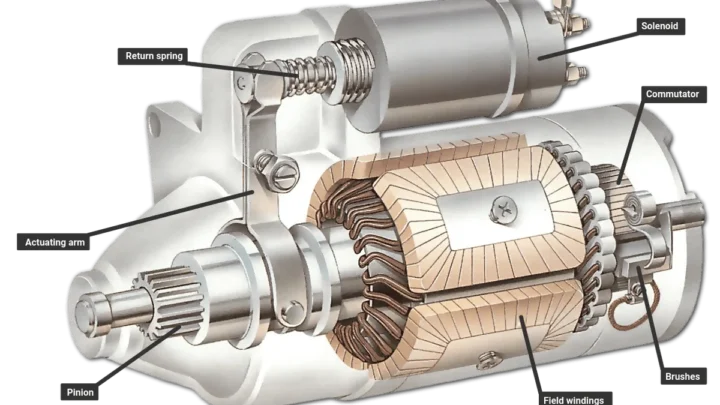
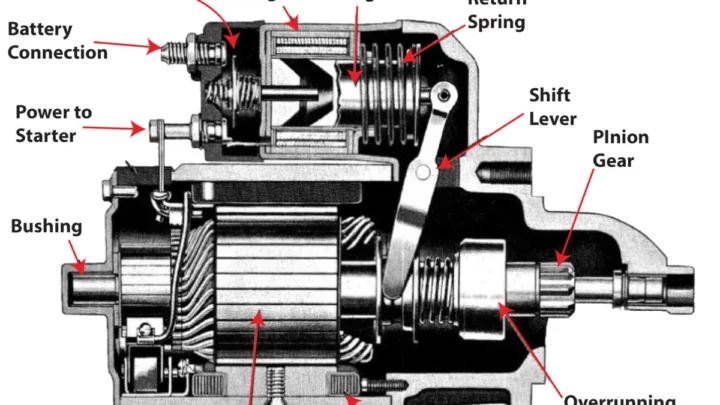
The grinding sound is metal teeth skipping instead of meshing. Inside the starter, a small pinion gear pops out and locks into the large ring gear bolted to the flywheel or flexplate. When they mesh cleanly, you get a smooth crank.
When they don't, you get that harsh grinding.
The fault can sit anywhere along that chain. A weak battery makes the pinion crawl out too slowly. Corroded ground straps drop voltage below the healthy cranking numbers the solenoid needs to pull in fully.
Loose mounting bolts throw the starter off its axis. Even a driver holding the key a beat too long can chew fresh teeth off the ring gear.
That's why swapping the starter first fixes only about half of these cases. The other half comes right back to the shop with the same complaint.
The 4 Sounds People Call "Grinding" and How to Tell Them Apart
Not every metallic complaint from under the hood is grinding. Get the sound right and you cut diagnostic time in half.
| Sound | What it usually is | Where to look first |
|---|---|---|
| Harsh grinding on crank | Pinion and ring gear teeth skipping | Bendix, ring gear, alignment |
| Rapid clicking, no crank | Solenoid chattering from low voltage | Battery, cables, grounds |
| High-pitched whir, no crank | Pinion spinning but not engaging | Failed Bendix or overrunning clutch |
| Metallic squeal after start | Pinion staying engaged | Ignition switch, solenoid return spring |
If it clicks fast without a crank attempt, you're now sorting out which system is failing, not fixing a starter. If it whirs without turning the engine, the pinion is spinning free of the ring gear. Real grinding sounds like a heavy metal drawer dragging across concrete.
Once you know which of the four you're hearing, everything downstream gets easier.
Step 1: Pinpoint Exactly When the Grinding Happens
The most useful diagnostic step is timing. Exactly when does the sound show up? Each moment points to a different fault.
Film a start on your phone and play it back with the volume up if you're not sure.
Grinding Before the Engine Cranks
Grinding the instant you turn the key, before the engine spins, means the pinion is smashing into stationary ring gear teeth. It's not sliding into place. Common causes are a weak solenoid return spring, damaged pinion teeth, or a ring gear that stopped in a spot with missing teeth.
This is often the loudest of the four scenarios.
Grinding During Cranking
Grinding through the entire cranking motion points to alignment or wear. Loose starter bolts, a missing shim, or chewed teeth around most of the flywheel will all do this. Voltage matters here too.
A dragging starter from a weak battery can skip teeth even when both gears are healthy.
Grinding After the Engine Has Started
This one gets the starter blamed most often, and it's almost never the starter's fault. If you hear grinding after the engine catches, the pinion isn't retracting. Usual causes are a stuck ignition switch, a weak solenoid return spring, or a driver holding the key too long after fire-up.
Replacing the starter will not fix a sticky key barrel.
Grinding Only on Cold Mornings
Cold-only grinding is almost always electrical. Battery Council International testing shows cranking capacity drops sharply below freezing, and thicker cold oil raises the load. The solenoid pulls in weakly, the pinion barely engages, and the teeth skip.
If the grinding vanishes once the temperature climbs, run a battery test before touching the starter.
Step 2: Rule Out the Cheap Fixes Before Blaming the Starter
Before spending a cent on a starter, check the basics. Roughly half of grinding complaints trace back to a $10 to $30 fix that never needed a new part.
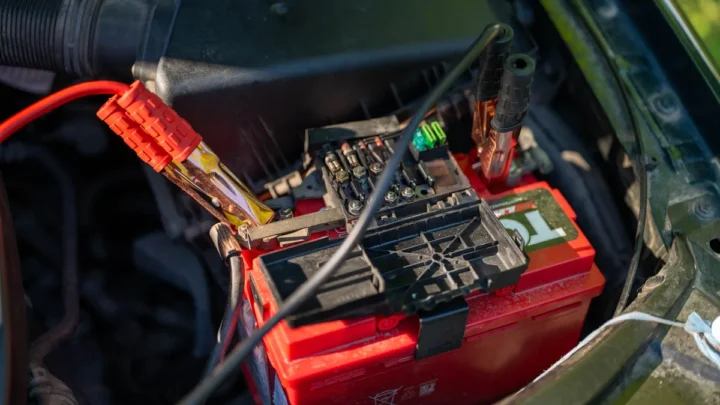
- Clean and tighten the battery terminals. Corrosion under a green crust drops voltage under load.
- Torque the starter mounting bolts to the OEM spec, usually 30 to 45 ft-lb. Loose bolts let the pinion wander off center.
- Inspect the main engine ground strap for corrosion or a broken conductor. A bad ground makes the starter drag no matter how fresh the battery is.
- Run a proper load check on the battery. It should hold at least 9.6 volts under crank for 15 seconds.
- Confirm the key returns fully from the START position. Sticky switches keep the solenoid energized after the engine fires.
If any of these fail, fix them first. Then try starting again and listen. A surprising number of "bad starters" turn out to be a $4 ground bolt or a corroded terminal.
Decision Branch: Matching the Sound to the Real Cause
Once you know the exact sound and when it happens, matching it to a likely cause takes about a minute.
| What you hear | Most likely cause | Next test |
|---|---|---|
| Grind before crank, cold morning | Weak battery, dragging solenoid | Battery load test first |
| Grind through the whole crank | Loose mounting, worn ring gear teeth | Check bolt torque, inspect ring gear |
| Grind after engine fires | Pinion not retracting | Ignition switch, solenoid return spring |
| Grind at one engine-stop spot | Localized ring gear damage | Rotate engine by hand, look at that spot |
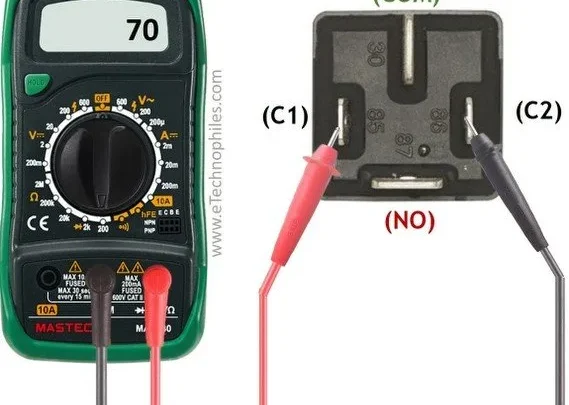
| Single clunk then grind | Weak solenoid pull-in | Measuring voltage drop with a multimeter on the starter cable |
If two rows fit, do the cheapest test first. Battery and ground checks cost nothing and rule out most false starter callouts, especially when you get the right probe placement on the terminals. A confirmed ring gear or flywheel fault is where the bill jumps hard.
You want certainty before opening the bell housing.
How the Starter, Bendix, and Ring Gear Work Together
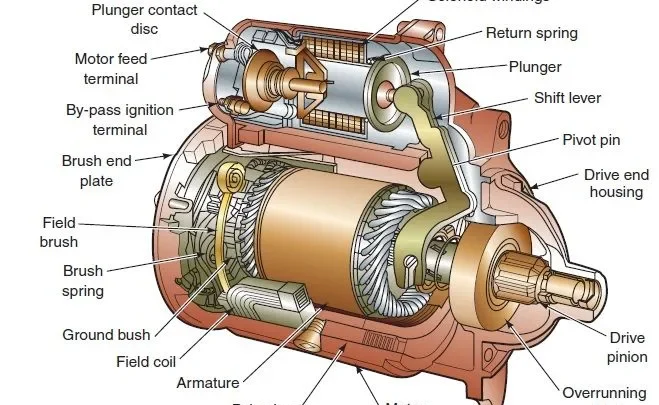
Turn the key and three things happen in about 300 milliseconds. The solenoid pulls in and shoves the pinion gear forward. The pinion meshes with the ring gear teeth on the flywheel.
The starter motor spins the whole assembly, turning the crankshaft until the engine fires.
The Bendix drive is the clever bit. It's a one-way clutch that lets the starter turn the engine but disconnects the moment the engine spins faster than the starter can. That protects the starter from being back-driven at 3,000 RPM.
When the Bendix wears out, the pinion either fails to lock in cleanly or refuses to release. Grinding is the first symptom either way.
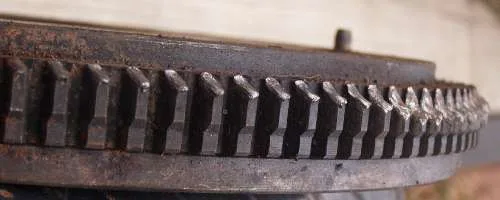
Ring gear teeth take real abuse. On a typical passenger car with 129 to 168 teeth, only three or four teeth carry every start. That's why localized wear at one engine-stop position is so common past 100,000 miles.
Diagnostic Tests You Can Run in Your Driveway
You don't need a shop lift for any of these. A multimeter, a socket set, and a flashlight cover most of them. Do them in order, cheapest first.
Battery Load and Voltage-Drop Checks
Start with the battery, because it's the most common culprit and the fastest to check. A healthy resting battery reads 12.6 volts. Under crank, it must hold at least 9.6 volts for a full 15 seconds.
Anything below that and the starter can't pull full current.

Next, run a voltage-drop test. Measure between the battery positive post and the starter B+ stud during a crank attempt. You should see less than 0.5 volts of drop.
Do the same on the ground path between the battery negative and the engine block. Look for under 0.2 volts. Bigger numbers mean a corroded cable or bad connection choking the starter, and the right meter setting makes those readings reliable.
Visual Inspection of the Ring Gear
Pull the starter and shine a flashlight through the mounting hole at the ring gear. Rotate the engine slowly by hand with a socket on the crank bolt. Look for missing chunks, rounded-off tooth tips, or one patch of teeth that looks noticeably worse than the rest.
Localized damage almost always sits at the engine's natural stop position.
Solenoid and Ignition Switch Tests
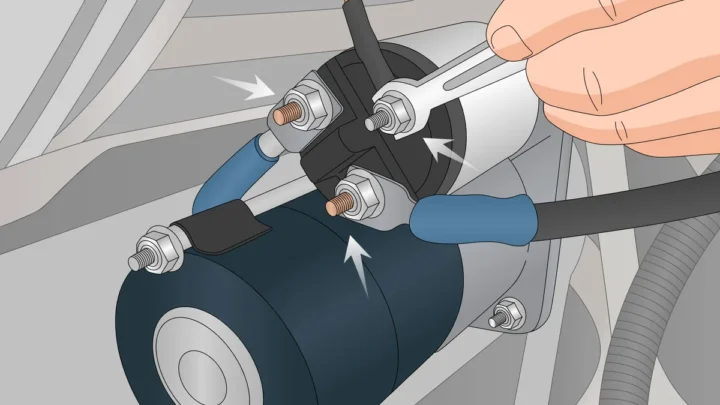
Jump the small solenoid terminal to battery positive with the transmission in Park. If the starter engages and cranks strongly, the solenoid and starter are fine. The fault is upstream in the ignition switch, relay, or neutral safety switch.
If the solenoid clicks but the starter doesn't spin, the pull-in coil or contacts are worn out.
When the Problem Is the Flywheel or Flexplate, Not the Starter
A brand-new starter grinding on day one usually means the ring gear is worn, not the starter. Look for these tells: grinding at one specific engine-stop position, teeth visibly rounded when you rotate the engine by hand, or a starter that grinds only after the engine has been shut off in a certain gear.
On manual transmissions, the ring gear is bolted or shrunk onto the flywheel and is often replaceable on its own. On automatics, the ring gear is welded to the flexplate, which almost always means a full flexplate swap.
Labor is the killer. Flywheel or flexplate replacement runs 4 to 8 hours on most front-wheel-drive cars because the transmission has to come out. Aggregate shop-quote data puts the total between $600 and $1,800 depending on the vehicle.
Starter Replacement: Shimming, Torque, and Alignment That Prevent a Repeat
If the starter itself is the problem, the swap is straightforward. Getting the alignment right is what stops the new one from grinding within a week.

Shims sit between the starter's mounting flange and the engine block. Each shim is about 0.015 inches thick and moves the pinion closer to or further from the ring gear. Correct clearance is roughly 0.020 to 0.060 inches, measured with a feeler gauge between the pinion and the nearest ring gear tooth.
Two rules from OEM service data. If the starter whines with a high pitch after installation, it's too far from the ring gear and needs a shim removed. If it grinds on crank, it's too close and needs a shim added.
Torque the mounting bolts to spec, typically 30 to 45 ft-lb, and don't reuse stretched bolts on a late-model aluminum block.
Buy a starter with a warranty. Reman units from major suppliers usually carry a warranty of 12 to 24 months. A warranty claim beats a second labor bill.

Similar Posts