Car Battery Voltage When Cranking: What’s Normal?
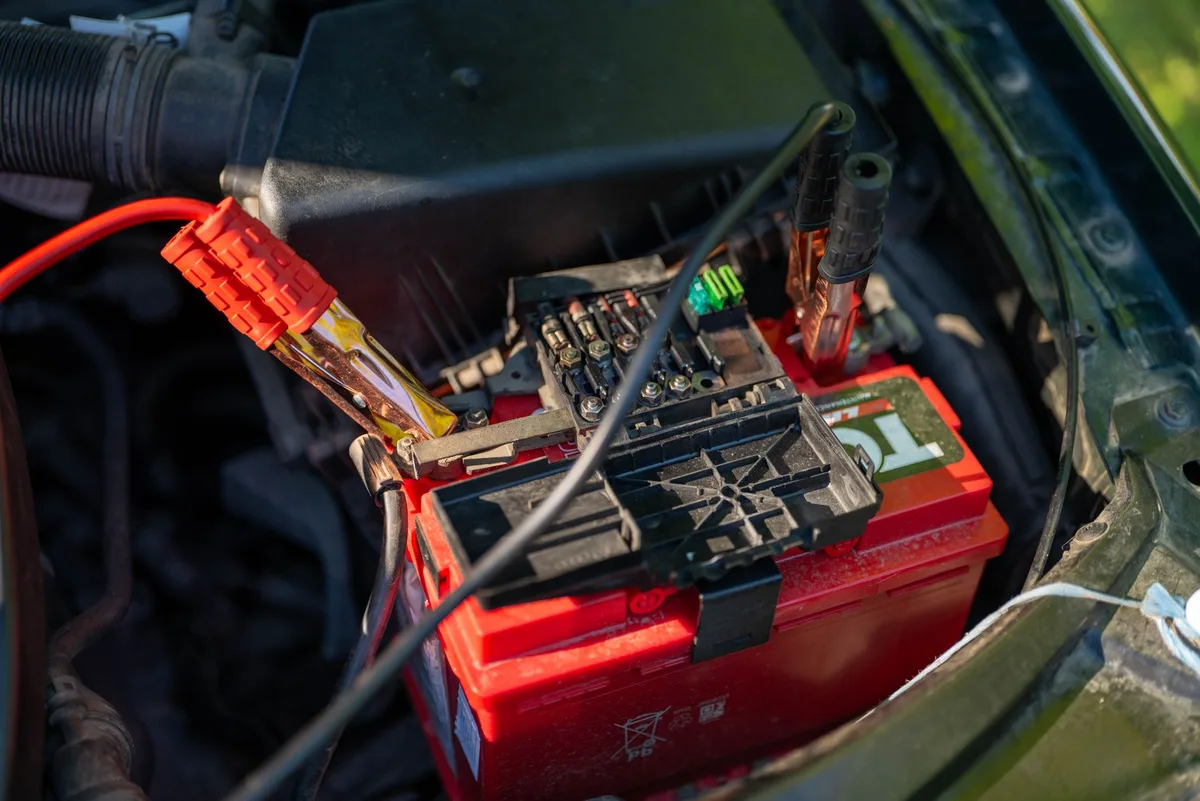
Your battery can show a healthy 12.6 volts sitting still and still leave you stranded, which is exactly why so many people ask what should car battery voltage be when cranking. Cranking is the real test. That two-second load of the starter motor tells you far more than any resting number ever will.
Here's the short version. A healthy 12-volt battery should stay above 9.6 volts while the engine cranks, and most good batteries hold around 10 to 10.5 volts. Per SAE cold-cranking standards, 9.6 volts at 0°F is the pass/fail line the industry uses as of 2026.
Anything that dips below that under load points to a weak or failing battery.
Quick Answer
Car battery voltage should stay above 9.6 volts while cranking. A healthy battery usually holds 10 to 10.5 volts during the crank. A brief dip is normal as the starter pulls current.
If voltage falls below 9.6 volts, the battery is likely weak or failing. Test at rest first, then watch the reading during a 2 to 3 second crank.
What Cranking Voltage Actually Tells You About Your Battery
Cranking voltage is the reading you get while the starter motor is spinning the engine. That's the moment your battery faces its biggest demand. A starter can pull 150 to 250 amps in the first second, and a tired battery simply can't hold voltage under that kind of load.
Resting voltage hides weakness. A sulfated or aged battery can rest at 12.5 volts and look fine. Then you turn the key and it collapses to 8 volts because its internal resistance has climbed too high.
That's the whole point of testing under crank. You're measuring the battery's ability to deliver current, not just store a charge. If you want the resting baseline first, our walkthrough on reading voltage at rest covers that step in detail.
The Numbers: How Low Your Voltage Should Drop While Cranking
Above 9.6 volts is your target. Drop below it and the battery becomes the prime suspect. Here's how the numbers break down during a crank.
| Cranking voltage | What it means |
|---|---|
| 10.5V or higher | Strong, healthy battery |
| 9.6V to 10.5V | Good, still within spec |
| 9.0V to 9.6V | Marginal, test again soon |
| Below 9.0V | Weak or failing battery |
| Below 6V (with dim lights) | Dead cell or bad connection |
One caveat. These figures assume a warm-ish start. A very cold morning naturally pulls the number lower, which we'll get to shortly.
A proper load test confirms what the crank reading suggests.
Cranking Voltage vs Resting Voltage vs Charging Voltage
These are three separate tests, and mixing them up is the most common mistake we see. Each one checks a different part of the system.
- Resting voltage: engine off, tells you state of charge. 12.6V means fully charged.
- Cranking voltage: engine turning over, tests the battery under load. Stay above 9.6V.
- Charging voltage: engine running, tests the alternator. Expect 13.8V to 14.7V.
Here's how they line up side by side.
| Test | Engine state | Healthy reading |
|---|---|---|
| Resting | Off, settled | 12.4V to 12.7V |
| Cranking | Starter spinning | 9.6V to 10.5V |
| Charging | Running | 13.8V to 14.7V |
If your resting and cranking numbers look fine but the car still acts up, shift your attention to the alternator. Checking the charging output while it runs tells you whether the system is topping the battery back up.
Real Multimeter Readings: Healthy, Weak, and Dead Batteries Side by Side
Numbers on a chart are one thing. Seeing how they play out on a real meter makes the pattern click. Below are three representative cases drawn from aggregate technician reports.
12.6V Rest, 10.2V Crank: What a Good Battery Looks Like
This is textbook. The battery rests at full charge, then holds 10.2 volts as the starter spins. The dip is quick and shallow, and the engine fires without hesitation.
A battery like this has healthy internal resistance and plenty of cold-cranking amps left.
12.4V Rest, 8.9V Crank: The Battery That Fooled the Rest Test
At rest, 12.4 volts reads as roughly 75% charged. Nothing alarming. Then the crank drops it to 8.9 volts, well under the 9.6 line.
That gap between a decent resting number and a poor cranking number is the classic sign of a failing battery. Charge it fully and retest. If it still sags below 9.6, replacement time has arrived.
The Cold-Morning No-Start at 7.5V
Here the battery reads 12.1 volts at rest, already low. On a freezing morning the crank collapses to 7.5 volts, the dash lights dim, and the starter barely turns. Cold thickens the electrolyte and raises resistance, so a marginal battery that limped along in summer finally gives up.
This one won't recover with a charge.
How Temperature Changes the Numbers You Should Expect
Cold is brutal on batteries. At 0°F, a typical lead-acid battery delivers only about 65% of its rated cranking power, according to Battery Council International. Meanwhile the engine oil thickens, so the starter works harder just as the battery weakens.
That combination is why winter exposes tired batteries. A pack that cranked at 10 volts in July might read 9 volts on a January morning and still be fine, because the load is higher and the chemistry is slower.
Heat plays a different game. High temperatures speed up the chemical wear inside the battery, shortening its life even while cranking performance stays strong. The damage is quiet, then one cold snap finishes the job.
So read your numbers in context. Test in freezing weather and land just above 9.6 volts, that's acceptable. See the same figure in mild conditions, and the battery is closer to the edge than it looks.
How to Test Your Own Cranking Voltage With a Multimeter
You need a digital multimeter and about five minutes. The test is simple, but the order matters. Set the meter to DC volts on the 20V range so you capture the full reading cleanly.

Here's the step-by-step:
- Turn off the engine and all accessories. Let the car sit if it was just driven.
- Set the meter to 20V DC. Our guide to that dial position walks through it if you're unsure.
- Touch the red probe to the positive terminal, black to negative. Note the resting voltage.
- Keep the probes on the terminals. Have a helper crank the engine for 2 to 3 seconds.
- Watch the lowest number the meter hits during the crank. That's your cranking voltage.
If you'd rather not disconnect the fuel or ignition, just start the car normally and catch the dip. The lowest point still tells the story. For the broader routine, the full battery test procedure covers each reading in sequence.
One tip: probe the battery posts directly, not the clamps. A reading taken on the clamp can hide a bad connection between clamp and post.
State of Charge Chart: Reading Voltage Before You Ever Crank
Always check resting voltage first. It sets your baseline and tells you whether a low crank reading is the battery or just a flat charge. Let the battery sit for a few hours after driving for the truest number.
| Resting voltage | State of charge |
|---|---|
| 12.6V to 12.7V | 100% |
| 12.4V | 75% |
| 12.2V | 50% |
| 12.0V | 25% |
| 11.9V or below | Effectively dead |
If your battery rests at 12.2 volts, charge it before you judge the crank test. A half-charged battery sags under load no matter how healthy it is. Testing a drained battery just gives you a false fail.
Once it's fully charged and rested, a weak cranking number means something. That's when a low reading points to a real fault instead of a flat charge.
When It's Not the Battery: Starter, Cables, and Ground Faults
A good battery can still crank poorly if something between it and the starter is fighting you. Corroded terminals, loose clamps, and bad grounds all steal voltage before it reaches the motor. This is why a "bad battery" sometimes turns out to be a five-dollar cable fix.
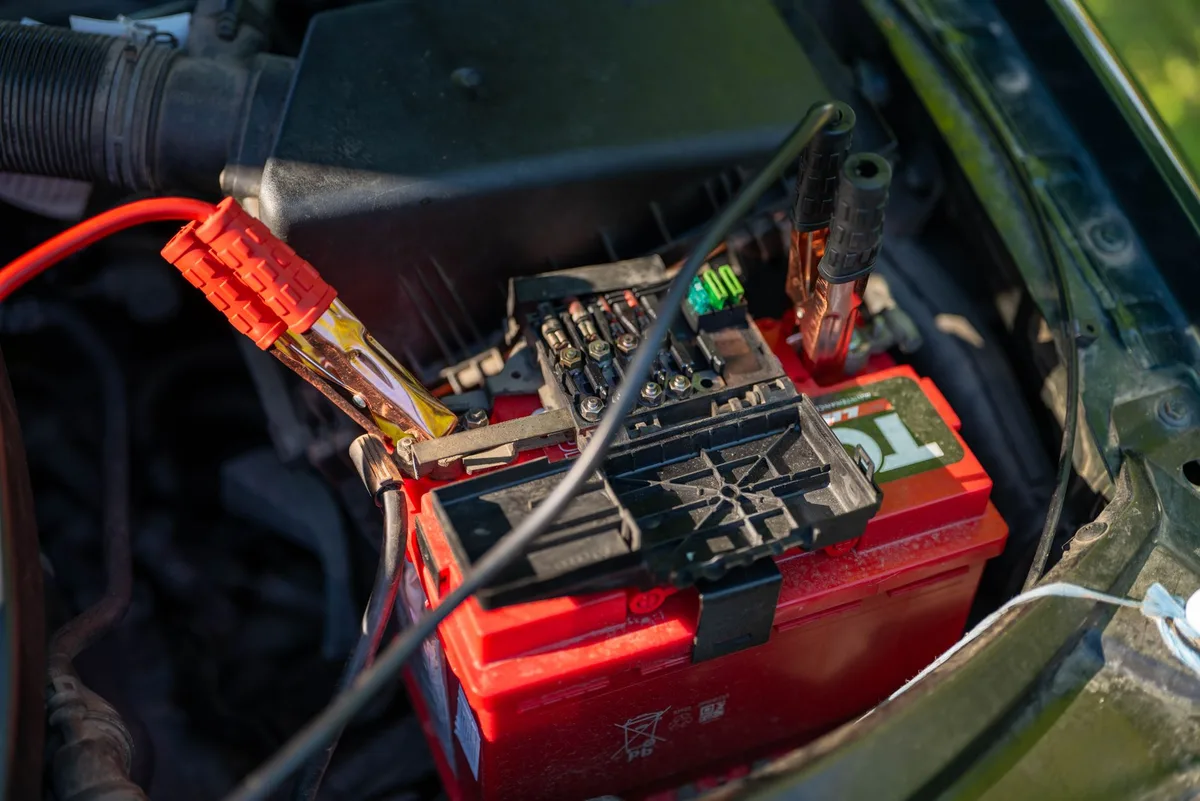
Start with the obvious. White or green crust on the terminals adds resistance and blocks current. Clean the posts, re-torque the clamps, and retest before condemning anything.
If the battery tests strong but the engine still cranks slowly, suspect the starter itself. A dragging starter pulls excess current and drops voltage hard. Checking the starter's performance directly rules it in or out.
Running a Voltage-Drop Test on Your Cables
A voltage-drop test finds hidden resistance that a normal voltage reading misses. You measure across a cable while the engine cranks, and anything over 0.2 volts on a single cable signals trouble.
Put your meter probes on each end of the same cable. Crank the engine and read the drop. High numbers mean corrosion or a failing connection inside that run.
Test both the positive cable and the ground path. A weak ground connection causes the same slow-crank symptoms as a dead battery. The step-by-step drop test shows the exact probe placement, and checking the cable runs themselves confirms which one is the culprit.
Common Mistakes That Give You a False Reading
Most bad diagnoses come from testing wrong, not from a broken meter. These are the errors we see most often, and each one skews your cranking number.
- Testing a low battery: A half-charged pack always sags. Charge first.
- Probing the clamps: You read the connection, not the battery. Touch the posts.
- Skipping the resting reading: Without a baseline, the crank number means little.
- Testing right after driving: Surface charge inflates resting voltage. Wait a few hours.
- Ignoring temperature: A cold-morning dip isn't always a fault.
- Loose probe contact: A wobbly probe drops the reading and fakes a failure.
One more trap: assuming voltage tells the whole story. Voltage confirms a weak battery, but cranking amps confirm capacity. If your numbers are borderline, a current draw check or a dedicated load test settles it.
AGM, EFB, and Lithium: How the Thresholds Shift by Battery Type
Not every battery plays by the same rules. AGM and EFB batteries behave a little differently under load, and lithium changes the game entirely. Knowing your type keeps you from misreading a healthy battery.
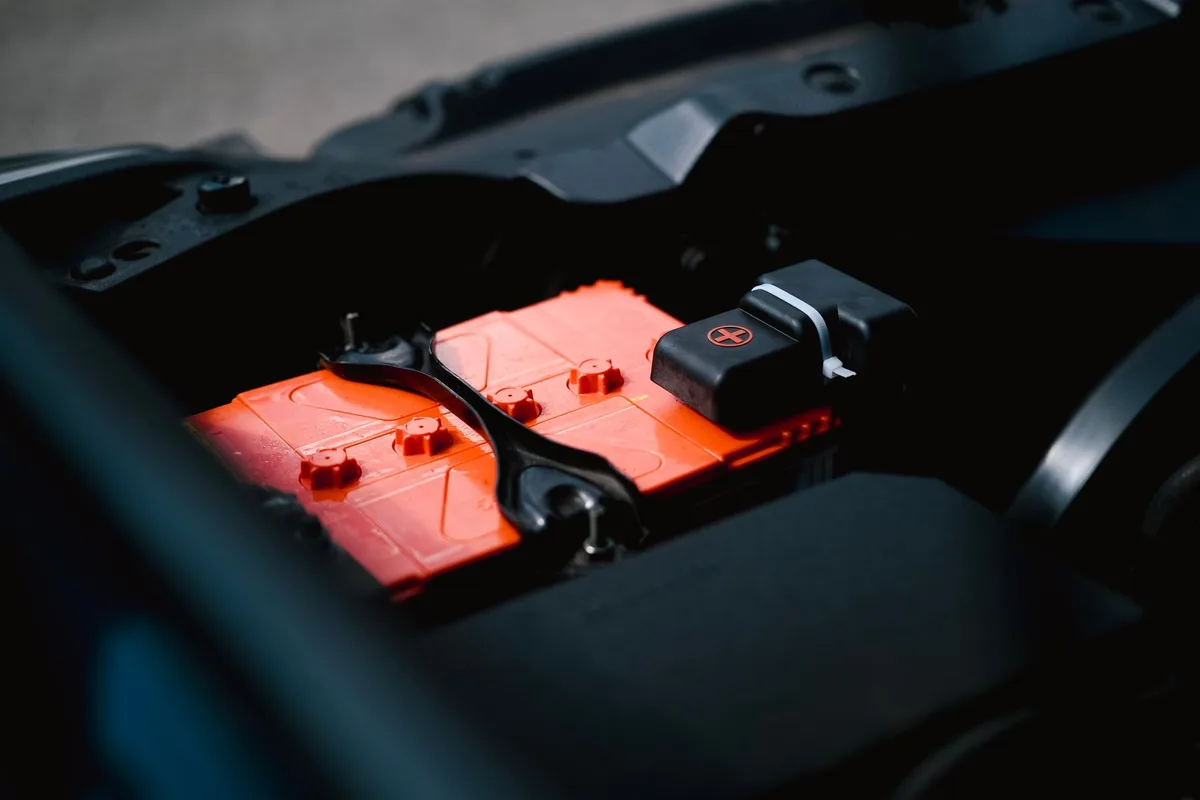
AGM (Absorbent Glass Mat) batteries have lower internal resistance, so they often hold voltage better during a crank. A healthy AGM may stay above 10.5 volts easily. They also rest slightly higher, around 12.8 to 12.9 volts when full.
| Battery type | Full rest voltage | Healthy crank |
|---|---|---|
| Flooded lead-acid | 12.6V | 9.6V and up |
| AGM | 12.8V to 12.9V | 10.0V and up |
| EFB | 12.6V to 12.7V | 9.6V and up |
| Lithium (LiFePO4) | 13.2V to 13.4V | Stays very flat |
Lithium starter batteries barely dip. Their flat discharge curve means voltage holds steady until they suddenly drop, so the 9.6-volt rule doesn't apply the same way. For AGM packs, the right way to test that chemistry accounts for those higher baselines.
One warning: start-stop vehicles need AGM or EFB, never a plain flooded battery. Fitting the wrong type shortens life fast and can trigger charging faults.
Safety Steps Before You Touch the Terminals
Batteries vent hydrogen gas, and hydrogen ignites from a single spark. Take a few precautions before your probes ever touch metal. These steps take seconds and prevent burns, blown batteries, and ruined electronics.
- Wear eye protection. Battery acid and a surprise spark both go for your eyes first.
- Remove rings, watches, and bracelets. Metal jewelry across terminals can weld itself and burn you.
- Keep flames and cigarettes away. No sparks near the vents.
- Work in a ventilated spot. An open garage or driveway beats a closed space.
- Check for cracks or leaks first. A bulging or leaking case means stop and replace, not test.
If you spot corrosion, don't wipe it with a bare hand. The white powder is caustic and irritates skin. A baking-soda-and-water paste neutralizes it safely.
One more rule for jump-starts. Connect positive first, then ground the last clamp to bare engine metal, not the dead battery's negative post. That keeps the spark away from the gas.
Pro Tips for Catching a Weak Battery Before Winter
Test in the fall, not on the first freezing morning. A battery that's fading gives clues months before it quits, and cold weather just speeds up the failure. Catching it early means you replace on your schedule, not stranded in a parking lot.
Here's what our research points to for spotting trouble early:
- Track the trend. A crank reading that drops from 10.4V last year to 9.8V this year is aging, even if it still passes.
- Note slow starts. A half-second longer crank is your first warning sign.
- Check battery age. Most flooded batteries last 3 to 5 years. Past four, test twice a year.
- Watch for parasitic drain. A car that dies after sitting a few days may have a hidden current draw, not a bad battery.
- Keep terminals clean. Corrosion builds slowly and quietly kills cranking power.
If your battery is over four years old and cranks under 9.8 volts on a mild day, replace it before winter. The cold will finish it, usually at the worst moment.
FAQs on Car Battery Cranking Voltage
Is 10 volts while cranking okay?
Yes, 10 volts during cranking is fine. A healthy battery typically holds 10 to 10.5 volts under the starter load. The pass line is 9.6 volts, so 10 volts sits comfortably in the safe zone.
Just make sure the battery was fully charged before you tested.
Why does my battery drop below 9 volts when cranking?
A drop below 9 volts usually means a weak, aged, or discharged battery. Its internal resistance has climbed too high to hold voltage under load. First, fully charge it and retest.
If it still sags below 9.6 volts, the battery is failing and needs replacing.
Can a battery show 12.6 volts and still be bad?
Yes, absolutely. Resting voltage only shows state of charge, not the battery's ability to deliver current. A worn battery can rest at 12.6 volts and then collapse to 8 volts under the starter load.
That's exactly why the cranking test matters more than the resting reading.
What voltage is too low to start a car?
Below 9.6 volts during cranking is the warning zone for a standard battery. Many cars still fire at that point, but the battery is weak. Once cranking voltage falls under 8 volts, most engines struggle or won't start.
Dim dash lights during cranking confirm the problem.
Does cold weather really lower cranking voltage?
Yes, cold weather lowers cranking voltage noticeably. Freezing temperatures slow the battery's chemistry and thicken engine oil, so the starter draws more power. A battery that cranks at 10 volts in summer may read 9 volts in winter and still be healthy.
Judge the number against the temperature.
Your Reading-by-Reading Decision Guide
Match your numbers to the right next move. This is the fast path from a reading to a decision, no guesswork.
| Your reading | What to do |
|---|---|
| Rest 12.6V, crank 10V+ | Battery is healthy. No action needed. |
| Rest 12.6V, crank 9.6V to 10V | Fine, but recheck before winter. |
| Rest 12.6V, crank below 9.6V | Charge fully and retest. Likely failing. |
| Rest below 12.4V | Charge first, then test the crank. |
| Crank drops, lights dim, slow turn | Check terminals, cables, and ground. |
| Strong battery, slow crank | Test the starter. |
Work it in order. Charge first, clean the connections, then judge the battery. Skipping those steps is how good batteries get thrown out early.
If the battery is fully charged, the connections are clean, and cranking still falls below 9.6 volts, trust the number. That battery has given what it had, and replacement is the honest fix.

Similar Posts