What Is a V6 Engine? Simple Guide to Power & Efficiency
If you’re asking what is a V6 engine, the short answer is that it’s a six-cylinder internal combustion engine where the cylinders are arranged in two separate banks. These banks meet at an angle, forming the letter “V” when viewed from the front. This design allows manufacturers to create compact yet powerful engines for everything from family sedans to heavy-duty trucks.

The geometry defines the experience. Most modern V6s use a 60-degree or 90-degree bank angle. This spacing impacts how smoothly the engine runs and how easily it fits under the hood.
As of 2026, understanding this layout helps explain why some vehicles feel refined while others rattle. Let’s look at why seeing the shape matters more than just reading the specs.
Why You Can’t Understand a V6 Without Seeing the Geometry
Text descriptions often fail here. Imagine trying to picture a split-pin crankshaft without a diagram. It gets confusing fast.
The physical arrangement dictates performance characteristics that numbers alone don’t reveal. A flat plane looks different from a cross-plane, and both behave uniquely during rotation.
Visualizing the cylinder banks shows why packaging efficiency improves. An inline-six stretches long down the centerline. A V6 folds those same cylinders into a shorter footprint.
This saves crucial space in transverse engine bays. You gain room for suspension components or crash structures.
Consider the firing intervals. In a perfect 60-degree V6, pulses occur every 120 degrees of crank rotation. This creates even power delivery.
But if the angle shifts slightly, the rhythm changes. Only a visual timeline of piston movement clarifies these nuances. That’s why diagrams beat paragraphs for this topic.
The Anatomy of the “V”: Breaking Down Banks, Angles, and Cranks
A V6 consists of two cylinder banks joined at a specific angle. Common angles include 60°, 90°, and sometimes narrow 15° designs like Volkswagen’s VR6. The angle determines balance requirements and structural rigidity.
| Component | Function | Visual Trait |
|---|---|---|
| Cylinder Banks | House pistons and valves | Two distinct rows angled inward |
| Crankshaft | Converts linear motion to rotation | Offset journals for even firing |
| Intake Manifold | Distributes air/fuel mix | Often sits in the "valley" between banks |
| Exhaust Manifolds | Expel gases | Located on outer sides of each bank |
The crankshaft deserves special attention. On a 90-degree V6, standard pins cause uneven firing. Engineers offset the pin centers to fix this.
This creates a "split-pin" design. Look closely at any cutaway model. You’ll see the asymmetry required for smooth operation.
Valve covers sit atop each head. They usually mirror each other but face outward. This symmetry confirms the V-layout instantly.
Unlike an inline-four with one long cover, the V6 splits duties across two heads. Maintenance access differs significantly because of this separation.
Visual Identification: Spotting a V6 in Any Engine Bay
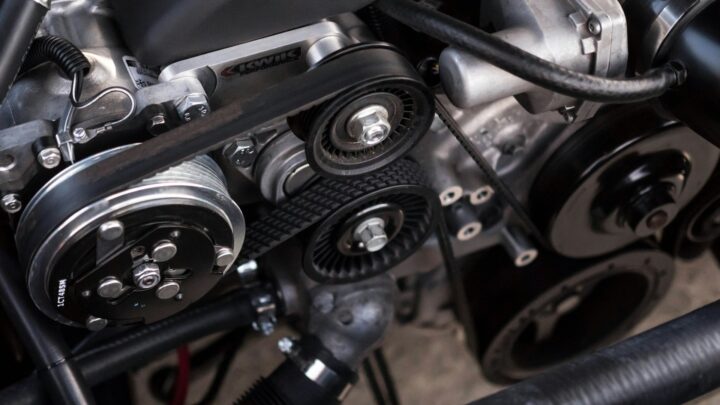
How do you identify one without opening the manual? Look for three key signs. First, count the ignition coils.
Most modern V6s have one coil per cylinder. Three on the left, three on the right. Simple math confirms the configuration.
Second, check the valve covers. They form a clear "V" shape pointing toward the firewall or radiator. If they run parallel, it’s likely an inline-six or straight-eight.
If there’s only one small cover, suspect a four-cylinder. The dual-head setup is unmistakable visually.
Third, inspect the intake system. Many V6s route air through a central plenum sitting in the valley between banks. This lowers the profile.
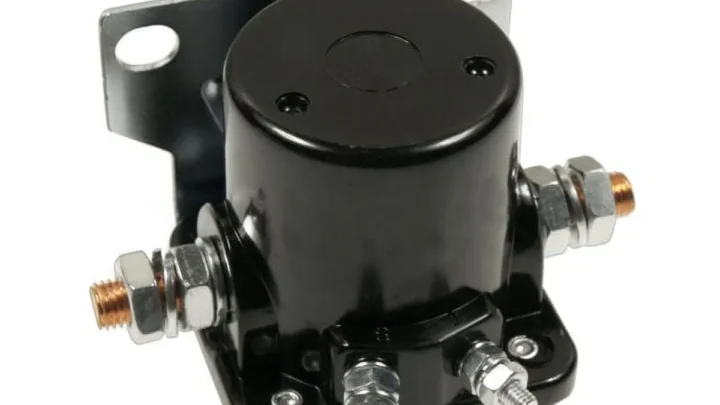
Some turbocharged variants place intercoolers or turbos in this gap too. Knowing how to test a starter involves checking electrical connections near these components, so identifying the layout first prevents accidental damage during diagnostics.
Don’t confuse a V6 with a VR6. The latter has a very narrow 15-degree angle. It looks almost like an inline-six from above but shares a single cylinder head.
True V6s always have two distinct heads separated by a wider gap.
The Packaging Advantage: Why Transverse Layouts Love the V-Shape
Front-wheel-drive cars need compact engines. Length equals weight distribution issues. An inline-six pushes the nose forward excessively.
A V6 cuts that length nearly in half. This shift moves mass closer to the vehicle’s center.
Handling benefits directly from this placement. Lower polar moment of inertia means quicker direction changes. Drivers notice sharper turn-in response.
The engine also sits lower relative to the floor pan. This drops the center of gravity further. Stability improves at highway speeds.
Manufacturers exploit this space saving aggressively. With less length consumed, designers can extend the passenger cabin. Or they add larger radiators for cooling efficiency.
Both options enhance comfort and reliability. It’s a win-win scenario enabled purely by geometry.
For mechanics, this density presents challenges. Spark plugs on the rear bank often hide beneath the intake manifold. Removing parts becomes tedious.
Understanding symptoms of a bad starter solenoid requires accessing wiring tucked deep within this crowded bay. Tight spaces increase labor time and cost. Yet, consumers accept this trade-off for better handling dynamics.
Trade-offs: Smoothness, Complexity, and the Cost of Two Heads
Two cylinder heads mean double the potential failure points. Gaskets, seals, and bolts all exist twice as often. Repairs become more expensive simply due to part quantity.
Labor rates rise because technicians must work around tighter corners.
However, refinement offers significant rewards. Well-designed V6s eliminate secondary vibrations found in smaller engines. Power delivery feels linear and predictable.
Acceleration lacks the jerky hesitation typical of struggling four-cylinders. This smoothness sells luxury vehicles effectively.
Fuel economy suffers compared to downsized turbo fours. More metal mass rotates heavier flywheels. Friction losses accumulate across additional bearings and seals.
EPA data consistently shows V6s consuming more fuel than equivalent horsepower I4s. Buyers pay at the pump for perceived quality.
Maintenance schedules reflect this complexity. Oil capacity increases substantially. Changing filters takes longer due to restricted access.
Ignoring routine upkeep accelerates wear on camshafts and lifters. Checking what causes a starter to go bad reveals that electrical strain from dense packaging contributes to premature component fatigue. Owners must stay vigilant about service intervals to preserve longevity despite inherent mechanical disadvantages.
Modern Evolution: Turbocharging and the Shift Away from Pure V6s
Turbochargers changed the game. Manufacturers realized they could extract V8-level power from smaller displacements. This downsizing trend accelerated rapidly in the last decade.
The naturally aspirated V6 is becoming a rare sight on new showroom floors.
Take Ford’s 3.5L EcoBoost as a prime example. It produces up to 400 horsepower and 500 lb-ft of torque. That output rivals older, larger V8s.
Yet it weighs less and fits into tighter spaces. The visual cue here is the intercooler piping snaking through the engine bay.
Heat management becomes critical with forced induction. Turbos generate immense thermal energy. You’ll often see heat shields wrapped around exhaust manifolds.
Coolant lines run directly to the turbo housings for lubrication and cooling. Ignoring these details leads to premature failure.
The industry is pivoting again. Hybrid systems now replace traditional V6s in many segments. Toyota dropped the V6 from the Camry after 2023.
They paired a four-cylinder with electric motors instead. This achieves similar power with better fuel economy.
Regulatory pressure drives this shift. EPA Tier 3 standards demand lower emissions. CAFE rules penalize poor fuel efficiency figures.
A pure gasoline V6 struggles to meet these targets without complex after-treatment. Hybrids offer an easier compliance path.
For buyers, this means choice paralysis. Do you want the raw sound of a NA V6? Or the instant torque of a turbo-hybrid?
Understanding the mechanical differences helps clarify the trade-offs. The era of the simple, atmospheric V6 is fading fast.
Frequently Asked Questions
Is a V6 always smoother than a four-cylinder?
Not necessarily. A well-balanced inline-four can be quite refined. However, V6s inherently cancel out primary vibrations better due to their geometry.
Most drivers perceive V6s as smoother at idle and low RPMs. High-quality turbo fours have narrowed this gap significantly in recent years.
Why are V6 engines disappearing from new cars?
Strict emissions regulations and fuel economy standards are the main culprits. Automakers are replacing them with turbocharged four-cylinders or hybrid systems. These alternatives deliver comparable performance with lower operating costs.
The complexity and weight of a V6 make it harder to justify under current laws.
Can I still tow heavy loads with a modern V6?
Yes, absolutely. Many pickup trucks rely on twin-turbo V6s for serious towing capacity. The Ford F-150’s 3.5L EcoBoost handles over 13,000 pounds easily.
Torque delivery is broad and consistent. Just ensure your specific model has the appropriate factory tow package installed.
How does a VR6 differ from a standard V6?
A VR6 uses a very narrow 15-degree bank angle. This allows both cylinder banks to share a single cylinder head. Standard V6s have two separate heads.
The VR6 is more compact but requires different maintenance procedures. It bridges the gap between inline and V configurations visually and mechanically.
What is the most common V6 engine problem?
Oil consumption and timing chain issues plague several popular models. Early GM 3.6L engines suffered from stretched chains. Some Nissan VQ variants burn oil excessively as they age.
Regular maintenance and using correct synthetic oils mitigate these risks. Always check service history when buying used vehicles with known trouble spots.

Similar Posts