How to Check Car Battery Voltage With a Multimeter

Your car cranks slow, the dash lights flicker, and you're stuck guessing. Learning how to check car battery voltage with a multimeter takes that guesswork off the table in about two minutes. All you need is a cheap meter and two clean terminals.
The number it shows tells you whether your battery is healthy, half-dead, or ready for the recycling bin.
A healthy 12-volt battery reads around 12.6 volts at rest, per Battery Council International reference figures. Drop to 12.2 volts and you're already down to roughly half charge. As of 2026, a basic digital multimeter costs $10 to $25, far less than a wasted trip to the shop.
Let's start with why the meter beats guessing.
Quick Answer
Set your multimeter to DC volts. Use the 20V range. Touch the red probe to the positive terminal.
Touch the black probe to the negative terminal. A healthy resting battery reads 12.6 to 12.8 volts. Anything at or below 12.4 volts means the battery is partly discharged and needs a charge or a closer look.
Why a Multimeter Beats Guessing When Your Car Won't Start
A slow crank could mean a dying battery. It could also mean a bad alternator, loose cables, or a parasitic drain. Guessing wastes money.
A voltage reading points you straight at the problem.
Here's the thing. A battery can look fine and still be shot. The only way to know is a real number.
A multimeter gives you that number for the price of a fast-food meal.
Compared to the alternatives, it's the easiest first move you've got:
- Cheaper than a dedicated load tester
- Faster than driving to an auto parts store
- Works on cars, trucks, RVs, boats, and lawn tractors
- Tells battery problems apart from alternator problems
If you like to handle things yourself, this pairs well with other basic checks like when you look over a vehicle before buying it. A quick voltage test is one of the fastest ways to spot a tired battery on a used car.
What a Healthy 12-Volt Reading Actually Looks Like
A fully charged car battery reads 12.6 to 12.8 volts when it's been resting. That's your baseline. People call it a "12-volt" battery by its nominal name, but a good one sits a bit above 12.
Voltage and charge move together. As the battery drains, the number drops in a predictable way. Learn the chart once and you'll read any battery in seconds.
| Resting Voltage | Approx. State of Charge | What It Means |
|---|---|---|
| 12.6 to 12.8V+ | 100% | Fully charged, healthy |
| 12.4 to 12.5V | ~75% | Slightly low, still fine |
| 12.2V | ~50% | Recharge soon |
| 12.0V | ~25% | Weak, likely struggling |
| 11.9V or less | Discharged | Charge and retest, suspect |
One catch. These numbers assume a resting battery at around 77°F (25°C). Cold weather pulls readings down.
Test right after driving and you'll see a false high, which we'll fix in a minute.
The Tools You Need (and How to Set the Dial Right)
You need almost nothing. A multimeter, two hands, and a few minutes. Safety glasses are smart too, since batteries vent flammable hydrogen gas.
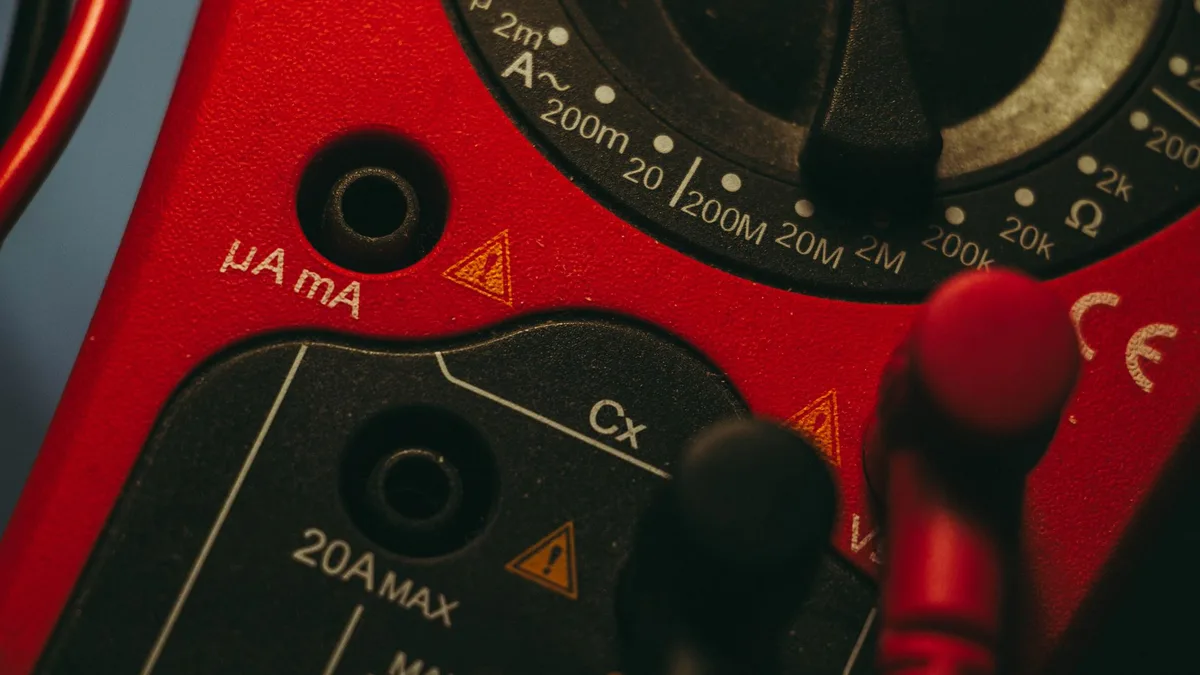
Here's the short kit list:
- A digital multimeter (auto-ranging or manual)
- The meter's red and black probes
- Safety glasses
- A rag to wipe dirty terminals
Digital vs Analog: Which Multimeter to Grab
Grab a digital multimeter if you have the choice. It shows a clear number like 12.61, so there's no needle to squint at. Analog meters work, but reading a swinging needle to two decimals is a pain for this job.
An auto-ranging model picks the range for you. A manual one makes you choose it. Both are fine here.
For beginners, auto-ranging removes one step and one chance to slip up.
Setting DC Volts and the 20V Range
Car batteries put out direct current, so set the dial to DC volts. On most meters that's a V with a straight line and three dashes above it (the "⎓" symbol). Don't use the AC setting, marked with a wavy line.
That's the single most common setup mistake.
If your meter is manual, turn the dial to the 20V range. That covers a 12-volt battery with room to spare. Manufacturer specifications, like those in most Fluke meter manuals, back this basic DC voltage setup.
You can read the general measurement guidance straight from Fluke's official site. Auto-ranging meters skip this step entirely.
Where the Probes Go: Red to Positive, Black to Negative
Red goes to positive, black goes to negative. That's the whole rule. The red probe touches the terminal marked with a plus sign (+), and the black probe touches the one marked with a minus sign (, ).
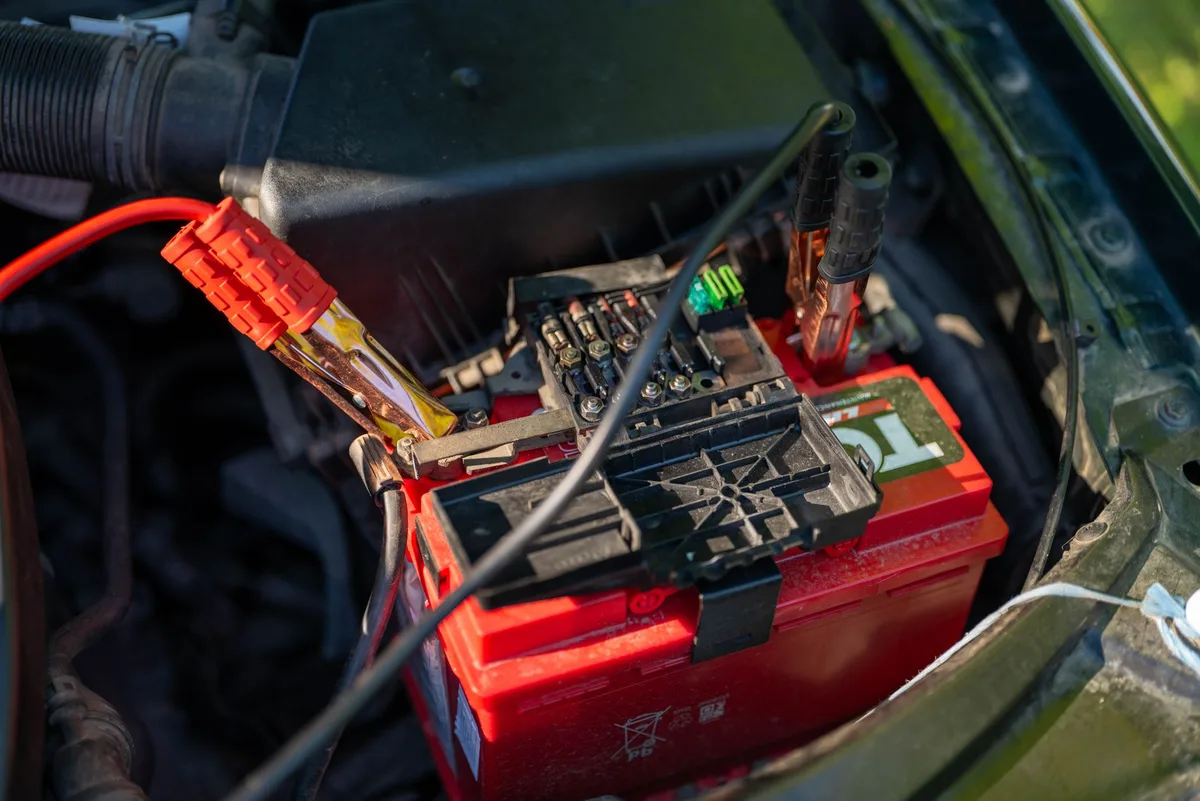
Look closely at the battery top. You'll see a "+" stamped near one post and a ", " near the other. The positive post is often a touch larger and may wear a red cover.
The negative usually has a black cover.
A few quick pointers for a clean contact:
- Press the metal probe tip onto bare metal, not paint or grime
- Wiggle gently until the reading settles
- If numbers jump around, your contact is poor
- Wipe corrosion off the terminal first
Swap the probes by accident and nothing breaks. The meter just shows a minus sign in front of the number, like -12.6. Same value, reversed.
Still, build the habit of red-to-positive so your readings are easy to trust. If you do your own routine engine servicing, this same probe discipline carries over to plenty of other electrical checks.
Step-by-Step: Testing Resting Voltage the Right Way
Resting voltage is the reading you get when the battery has been sitting, engine off, for a while. It's the truest measure of state of charge. The trick is clearing the "surface charge" first, or your number lies to you.
Follow these steps in order:
- Turn the engine off. Kill the headlights, radio, and climate fan.
- Let the car rest. Ideally 4 to 12 hours, or overnight, so surface charge fades.
- Open the hood and find the battery terminals.
- Set the meter to DC volts, 20V range.
- Touch red to positive (+), black to negative (, ).
- Hold steady and read the number to two decimals.
- Write it down and compare it to the chart above.
Why the rest matters. Right after driving or charging, the surface holds extra voltage that fades within hours. Test too soon and a half-dead battery can read 12.7 and fool you.
Wait it out for the honest number.
Can't wait overnight? Turn the headlights on for 15 to 30 seconds, then switch them off and wait a couple of minutes. That burns off most of the surface charge.
It's not as clean as an overnight rest, but it beats a rushed, inflated reading.
Beyond the Resting Test: Cranking and Charging Voltage
Resting voltage tells you the charge level. It doesn't tell you if the battery can do its actual job. For that, you need to see how it behaves under load and while charging.

The Cranking Test (Battery Under Load)
The cranking test shows whether the battery holds voltage while the starter pulls hard. Keep your probes on the terminals, then have a helper start the engine while you watch the display.
Read the lowest number during that crank. A healthy battery stays above 9.6 volts. Drop below that, say 8 or 7 volts, and the battery is weak even if it rested at 12.5.
That sag is the classic sign of a battery losing capacity.
The Charging Test (Is the Alternator Doing Its Job?)
The charging test checks the alternator, not the battery. Leave the meter connected and start the engine. With it running, you should see 13.7 to 14.7 volts at the terminals.
Rev to about 2,000 RPM and the number should hold steady in that band. See below 13.5 and the alternator may be undercharging. See a sustained reading above 15 and it's overcharging, which cooks batteries fast.
Dead Battery or Bad Alternator? How to Tell the Difference
Use the three readings together and the answer is obvious. A battery problem and an alternator problem leave different fingerprints. Here's the if/then logic that sorts them out.
- If resting voltage is low but the car charges at 14V running, the battery is weak or was just drained.
- If resting voltage is fine but voltage drops below 13V running, the alternator isn't charging.
- If the battery reads 12.6 at rest but sags below 9.6 while cranking, the battery can't hold load and is failing.
- If everything reads normal but the car dies overnight, you likely have a parasitic drain.
A quick real-world example. Say your battery rests at 12.4 volts and cranks fine, but running voltage sits at 12.8. The battery is okay.
The alternator is the culprit, since it's not pushing charge back in. That one test just saved you from buying the wrong part. Sorting these signals is a core skill for anyone learning how car engines work.
Common Mistakes That Give You a False Reading
Most bad readings come from a handful of avoidable slips. Fix these and your numbers get trustworthy.
- Meter set to AC instead of DC. Always use the DC volts setting.
- Testing right after driving. Surface charge inflates the number. Rest the battery first.
- Corroded or greasy terminals. Poor contact gives jumpy, low readings. Wipe them clean.
- Probes on the terminal clamp, not the post. Touch the lead post itself for accuracy.
- Reading resting voltage and calling it "good." Resting voltage skips the load test.
- Loose battery cables. A loose clamp mimics a dead battery. Check tightness first.
One more trap. Cold weather drags voltage down. A battery reading 12.4 at 20°F may be healthier than the number suggests.
Retest in a warmer spot before you condemn it.
Safety Checks Before You Touch the Terminals
Batteries are simple to test, but they deserve respect. They hold acid and vent hydrogen gas, which is flammable. A few habits keep the job safe.
- Wear safety glasses. Acid and eyes don't mix.
- Take off rings, watches, and metal bracelets. Metal across both posts causes a dangerous short.
- No sparks, flames, or smoking near the battery.
- Keep the probe tips from bridging both terminals at once.
- Work in a ventilated spot, not a sealed closet.
If you spot a cracked case, bulging sides, or leaking fluid, stop. Don't test a damaged battery. For handling and disposal, the [U.S.
EPA](https://www.epa.gov) has clear guidance on recycling lead-acid batteries, which should never hit the trash. Cleaning corrosion? Wear gloves and rinse any skin contact with water right away.
Multimeter vs Load Tester vs Free Store Test
A multimeter is the best all-around starting tool, but it isn't the only option. Each method fits a different need. Here's how they stack up.
| Method | Best For | Cost | Limitation |
|---|---|---|---|
| Digital multimeter | DIY voltage and charging checks | $10 to $25 | Basic load test needs a helper cranking |
| Dedicated load tester | True capacity under heavy load | $30 to $100+ | Extra tool to buy and store |
| Free auto-store test | A fast second opinion | Free | You leave home and wait |
| OBD-II battery monitor | Ongoing tracking | $20 to $60 | Reads system voltage, less precise at the post |
Who's each one for? The multimeter suits almost everyone doing routine checks at home. A load tester makes sense if you service several vehicles or want a hard capacity verdict.
The free store test is handy when you'd rather have a pro confirm your reading before spending money. For most owners who already handle their own basic car upkeep, the multimeter earns its keep on the first use.
Pro Tips for More Accurate Readings
Small habits make your numbers sharper. These are the details that separate a rough guess from a reading you can act on.
- Test at the posts, not the cable clamps. Contact resistance skews the number.
- Let the battery rest at room temperature when you can. Cold drags readings down.
- Check both terminals for corrosion first. A white, crusty buildup ruins contact.
- Take a resting, cranking, and charging reading together for the full picture.
- Retest after charging to confirm the battery actually holds the voltage.
One overlooked trick: a voltage drop test. Touch one probe to the battery post and the other to the cable clamp while cranking. More than 0.2 volts across that joint means a bad connection, not a bad battery.
When to Stop Testing and Replace the Battery
Some numbers mean the battery is simply done. If a fully rested battery won't climb past 12.4 volts after a full charge, its capacity is fading. That's a strong replace signal.
Watch for these red flags:
- Cranking voltage sags below 9.6 volts on every start
- Resting voltage sits at 12.0 or lower and won't recover after charging
- The battery drops charge again within a day or two
- Visible swelling, cracks, or leaking acid
Age matters too. Most starting batteries last three to five years. If yours is past four and testing weak, replacing it beats getting stranded.
Recycle the old one at any auto parts store, since lead-acid batteries are fully recyclable.
Frequently Asked Questions
What voltage is too low for a car battery?
Below 12.0 volts at rest is too low. That's roughly 25 percent charge or less. At 11.9 volts or under, the battery is discharged and may be damaged.
Charge it fully, then retest. If it won't hold above 12.4 volts, it likely needs replacing.
Should I check battery voltage with the engine on or off?
Both, for different reasons. Engine off gives you resting voltage, the true state of charge. Engine on should read 13.7 to 14.7 volts, which confirms the alternator is charging.
Testing in both states tells you whether a battery or charging fault is to blame.
Can I damage my multimeter testing a car battery?
No, not if it's set correctly. A 12-volt battery is well within any multimeter's DC voltage range. Just use DC volts, not AC, and the 20V range on manual meters.
Reversed probes won't hurt anything either. You'll only see a minus sign on the display.
Why does my battery read 12.6V but the car still won't start?
Because resting voltage doesn't measure capacity under load. A battery can show 12.6 volts yet collapse the moment the starter pulls current. Run a cranking test and watch for a big sag below 9.6 volts.
That drop reveals a battery that's lost its cranking power.
How long should I wait before testing resting voltage?
Ideally 4 to 12 hours after the engine runs, or simply overnight. That lets the surface charge fade so you get a true reading. In a hurry, switch the headlights on for 15 to 30 seconds, turn them off, wait two minutes, then test.
Do I need a special multimeter for car batteries?
No. Any basic digital multimeter with a DC voltage setting works fine. A model that reads to two decimals, like 12.61, is ideal for spotting small charge differences.
Auto-ranging meters are easiest for beginners, but a manual meter on the 20V range works just as well.

Similar Posts