How Long Should a Car Sit Before Testing Battery?

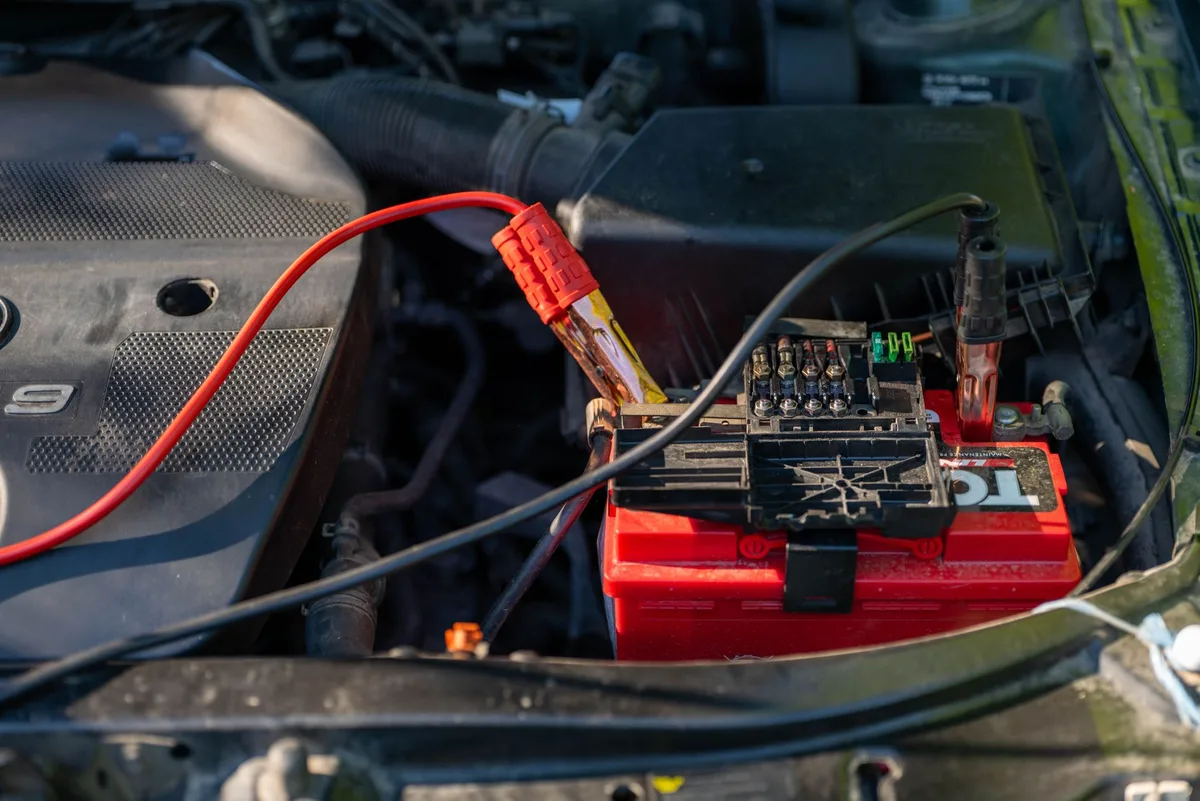
If your car won’t crank and you’re reaching for a multimeter, the first thing to sort out is how long should a car sit before testing battery voltage. Test too soon and you’ll read the alternator’s leftover boost, not the battery’s real health. That false-high number sends plenty of people chasing the wrong fix.
The answer comes down to patience. A battery needs at least 4 hours of rest, and ideally a full night, before its voltage settles near the 12.6V mark that signals a full charge. As of 2026, that guidance holds for both flooded and AGM batteries.
Here’s exactly how long to wait, and why it matters.
Quick Answer
Let a car sit at least 4 hours before testing battery voltage. Overnight, roughly 8 to 12 hours, gives the most accurate reading. The rest lets surface charge fade after driving.
A settled battery near 12.6V is fully charged. Always test with the engine off and all accessories switched off.
How Long Should a Car Sit Before Testing Battery Voltage? The Short Answer
Aim for a minimum of 4 hours, and overnight if you want a number you can trust. The longer the battery sits with no load and no charging, the closer your reading gets to true resting voltage.
If you’re in a hurry, a rough check is possible sooner. Just know the reading will run a little high until that surface charge burns off. Here’s a simple rest-time guide.
| How long the car has sat | Reading quality | What to do |
|---|---|---|
| Under 30 minutes | Inflated, unreliable | Wait longer or bleed off the charge |
| 30 min to 1 hour | Rough ballpark | Fine for a quick sanity check |
| 4 hours | Good | Reliable state-of-charge read |
| 8 to 12 hours (overnight) | Best | Use this for real diagnosis |
For a full breakdown of what each number means once you get there, our guide on normal battery readings walks through the healthy ranges.
Why “Resting Voltage” Only Works After the Surface Charge Is Gone
Resting voltage is the battery’s open-circuit voltage, the reading with nothing charging it and nothing drawing from it. It’s the honest snapshot of state of charge. But right after you drive, that snapshot is skewed.
While the engine runs, the alternator pushes 13.7V to 14.7V into the battery. That leaves a temporary surface charge clinging to the plates. Test right away and you might see 13.0V or higher, which looks great but tells you nothing real.
Surface charge is just voltage sitting on the surface of the plates. It hasn’t settled into the battery’s chemistry yet. Give it time and the reading drops to its true level.
That’s why a battery can read 13.2V in the driveway and 12.5V four hours later. Both are correct, but only one reflects the real charge.
The Waiting Time Changes Based on Your Situation
Here’s where the “just wait 4 hours” rule needs some nuance. What the car was doing before you test changes how long the surface charge sticks around. Match your wait to your situation.
Just Finished a Long Highway Drive
A long drive means a fully worked alternator and a heavy surface charge. Wait the full window here. Give it at least 4 hours, and overnight is better.
Test sooner and the number will read stubbornly high.
Only Ran a Quick Errand or City Trip
Short trips barely top up the battery, so the surface charge is lighter. A 1-hour rest usually gets you a decent read. But lots of short trips can leave a battery chronically undercharged.
If your commute is all stop-and-go, a low reading may be real, not a fluke.
Right After a Jump Start
Don’t test right after a jump. The battery is depleted, and the boost’s surface charge masks how weak it actually is. Drive to recharge, then let it rest overnight before testing.
If you jumped it and want the steps done safely, review connecting the cables correctly so the next start goes smoothly.
Car’s Been Parked or Stored for Days
A car that’s sat for days needs no wait at all. It’s already fully rested. But watch for the opposite problem: a slow drain pulling the battery down while parked.
If it reads low after sitting, a parasitic drain could be the culprit, not a bad battery.
Cold Weather, Hot Weather, and How Temperature Shifts Your Reading
Temperature moves the numbers, and cold moves them the most. A battery reads lower when it’s cold, even when its actual charge is fine. Roughly, voltage shifts about 0.01V per degree Celsius.
So a battery sitting at 12.6V in a warm garage might show closer to 12.4V on a freezing morning. That’s not a failing battery. That’s chemistry slowing down in the cold.
Standards bodies like SAE International build these temperature corrections into how cold cranking amps are rated.
Heat swings the other way. Warm batteries read slightly higher, but heat also speeds up internal wear and self-discharge. A quick rule of thumb:
- Cold snap: expect readings 0.1V to 0.2V lower than the true charge.
- Hot climate: readings look fine, but the battery ages faster underneath.
- For a fair test: let the battery reach a stable temperature first.
If a battery seems strong by day but weak at dawn, our look at overnight voltage loss covers what’s really going on.
The Fast Shortcut: Bleeding Off Surface Charge in Minutes
Short on time? You can shed surface charge fast instead of waiting hours. Turn the headlights on high beam for about 1 to 2 minutes with the engine off.
That small load pulls the surface charge off the plates.
Switch the lights off, wait another minute or two, then test. You’ll get a reading much closer to true resting voltage without the overnight wait. It’s not as precise as a full rest, but it’s plenty for a quick gut check.
- Engine off, no charging happening.
- Headlights on high for 1 to 2 minutes.
- Lights off, wait 2 minutes.
- Test with your multimeter across the terminals.
One caution: don’t use this trick on an already weak battery you suspect is nearly dead. Draining it further won’t help. When in doubt, the overnight rest is the safer read.
How to Actually Test the Voltage With a Multimeter
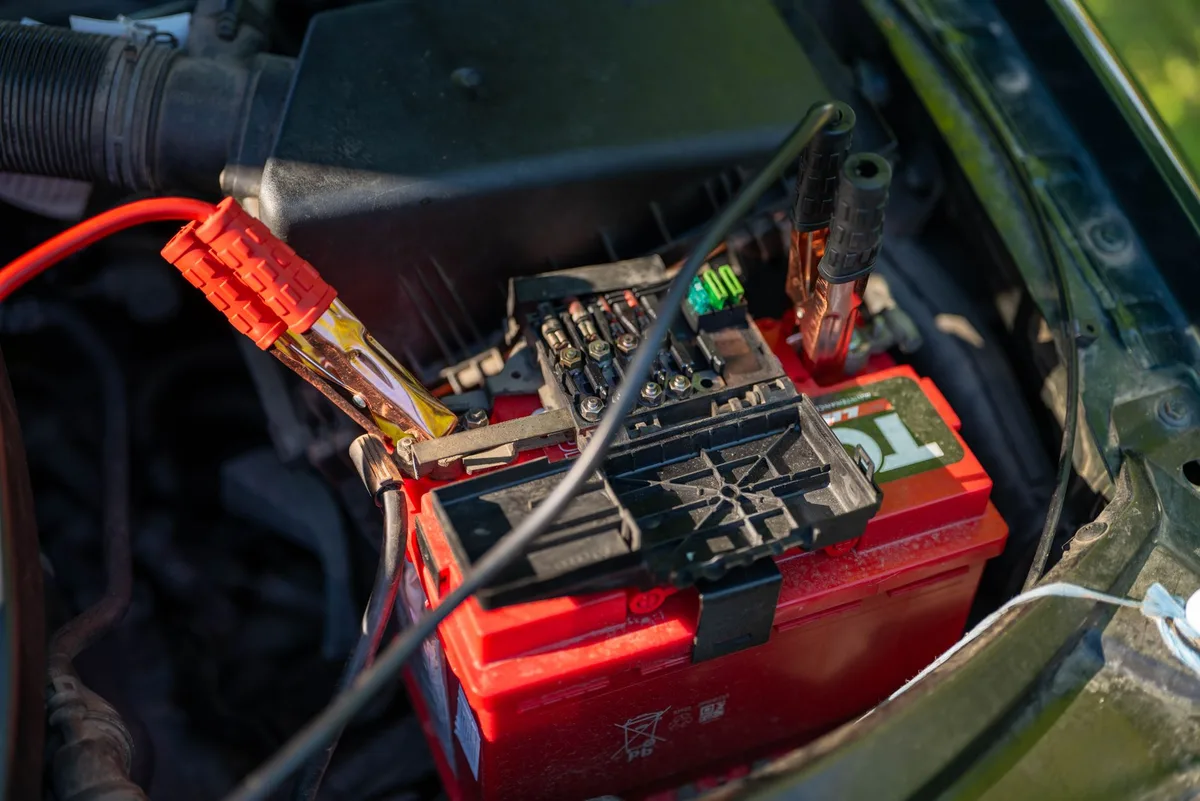
Once the battery’s rested, the test takes under a minute. Grab a digital multimeter and set it to 20V DC. That range covers a 12V battery with room to spare.
Here’s the sequence:
- Turn off the engine, headlights, radio, and climate fan.
- Pop the hood and find the battery terminals.
- Touch the red probe to the positive post (+).
- Touch the black probe to the negative post (, ).
- Read the number once it settles.
Getting the polarity backward won’t hurt you, but the display shows a minus sign. Just swap the probes. If you want the full walkthrough with troubleshooting, our guide on checking a battery with a meter covers the details.
Make solid contact with clean metal, not the plastic cap or a corroded clamp. A poor connection gives a jumpy or low reading that fools you. Press firmly until the number holds steady.
What Your Numbers Mean: The 12.6V State-of-Charge Chart

Once you’ve got a stable resting number, this chart tells you where the battery stands. These figures assume the battery has rested and sits at a normal temperature.
| Resting voltage | State of charge | What it means |
|---|---|---|
| 12.6V to 12.8V | 100% | Fully charged, healthy |
| 12.4V | ~75% | Slightly down, usually fine |
| 12.2V | ~50% | Needs a charge soon |
| 12.0V | ~25% | Deeply discharged |
| Below 12.0V | Near empty | At risk, recharge now |
A reading of 12.4 volts still starts most cars, but it’s a nudge to charge. Drop to 12.2 volts and the battery is only half full. That’s when starting gets unreliable in the cold.
Anything under 12.0V means the battery is nearly flat. Sitting at 12.0 volts or lower for long can shorten its life through sulfation. Recharge it promptly and figure out why it drained.
Resting Voltage Test vs. Load Test vs. Cranking Test
A resting voltage test tells you the charge level, not the battery’s real strength. That’s the catch. Three different tests answer three different questions, and each has its place.
| Test | What it measures | Best for |
|---|---|---|
| Resting voltage | State of charge at rest | Quick health snapshot |
| Cranking test | Voltage while starting | Spotting a weak battery under start load |
| Load test | Voltage under a sustained draw | Confirming true capacity |
For the cranking test, keep the meter connected and have someone start the engine. Healthy batteries stay above 9.6V during the crank. If it plunges below that, the battery is likely tired.
Our breakdown of voltage sag at startup explains those numbers.
A full load test uses a dedicated tester or a conductance tool to mimic real demand. It’s the most reliable way to catch a battery that reads fine at rest but folds under pressure. Most auto parts stores run this test free.
Mistakes That Give You a False Reading
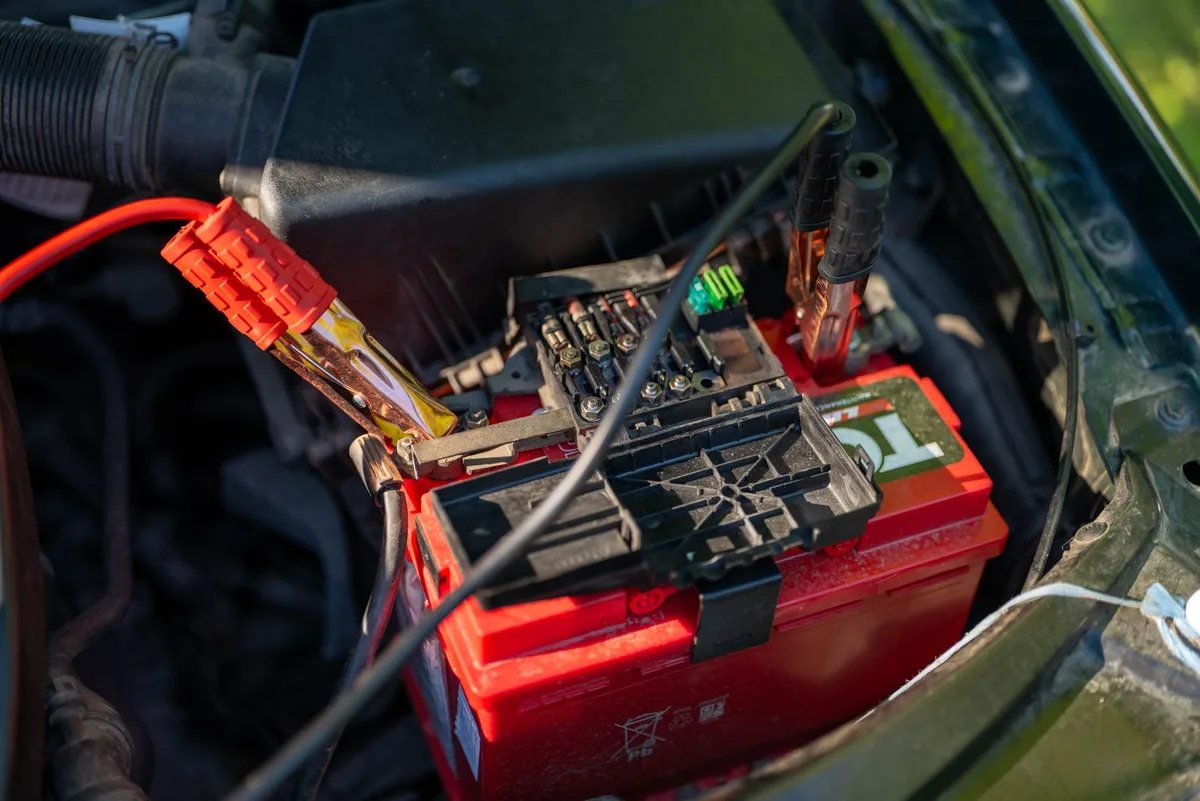
The most common error is testing too soon, but it’s far from the only one. A few small slip-ups can turn a good reading into a misleading one.
Watch out for these:
- Testing right after driving, so surface charge inflates the number.
- Leaving lights or accessories on, which drags the reading down.
- Probing corroded or greasy terminals for a false low.
- Confusing the alternator’s 14V charging output with resting voltage.
- Testing a stone-cold battery without allowing for the temperature drop.
Corrosion deserves special attention. That white or bluish crust on the posts adds resistance and skews everything. Clean it off with a baking soda and water paste before you test, and check that the clamps are snug.
Another sneaky one: a battery that reads a perfect 12.6V but still won’t crank. If that’s you, the 12.6V-but-no-start puzzle usually points to a connection or starter issue, not the charge itself.
When a Good Voltage Reading Still Hides a Bad Battery
Yes, a battery can show 12.6V and still be junk. Voltage measures charge, not capacity. An old battery with worn plates can hold a full-charge voltage yet fail the moment you ask it for real current.
Think of it like a water tank with a crack. The gauge reads full, but it can’t sustain flow. A resting reading alone never gives the full picture on an aging battery.
Watch for these warning signs even when voltage looks fine:
- Slow, lazy cranking on cold mornings.
- Dim headlights at idle that brighten when you rev.
- The battery is over 4 or 5 years old.
- It needs a jump every few days despite good rest readings.
When the number looks healthy but the car still struggles, the battery may be the wrong suspect. Our guide on a strong reading with a no-start walks through the other causes. A proper load test settles it for good.
Battery, Alternator, or Parasitic Drain? Sorting Out the Real Fault
A dead battery is often a symptom, not the disease. Once you have a rested reading, use it to point at the true culprit. Here’s the if/then logic.
If the battery reads below 12.4V after an overnight rest but recovers after a full charge, the battery is fine. Something is draining it. If it won’t hold a charge at all, the battery itself is failing.
To check the charging side, start the engine and measure again. A healthy alternator pushes 13.7V to 14.7V at idle. See less than 13.5V and the alternator may be undercharging.
Our guide on telling the two apart shows what to look for.
If the charging voltage is good but the battery keeps dying overnight, suspect a parasitic draw. That’s a circuit pulling current with the key off. A repeated no-start with a healthy battery, like the lights-work-but-no-crank situation, often traces back to a drain or a bad connection.
Safety Steps Before You Touch the Terminals
Car batteries vent hydrogen gas, which is flammable. A stray spark near the posts is a real risk, so a few precautions matter before you probe.
Keep this short checklist in mind:
- Wear safety glasses. Battery acid and corrosion can splash.
- Remove rings, watches, and metal bracelets to avoid shorting a terminal.
- Keep flames, cigarettes, and sparks well away.
- Wear gloves if the posts show heavy corrosion.
- Never let a wrench bridge both terminals at once.
If you spot a battery that looks puffed up or bulging on the sides, stop. A swollen case means internal damage or overcharging. Don’t test it.
Let it cool, and replace it safely rather than risk a rupture.
Frequently Asked Questions
How long should a car sit before testing battery voltage overnight?
Overnight means 8 to 12 hours of rest, and that’s the gold standard. The battery has fully shed its surface charge by morning. Test before you start the car and before switching on any accessory.
That reading gives you the truest state of charge you can get at home.
Can I test the battery right after driving?
You can, but the number reads high. Fresh off a drive, surface charge and alternator output push the reading past its true resting level. For a rough check it’s fine.
For a real diagnosis, wait at least 4 hours or bleed off the charge with the headlights first.
What voltage means my battery is bad?
A rested battery below 12.4V is undercharged, and under 12.0V is deeply discharged. But voltage alone doesn’t confirm a bad battery. An old unit can read 12.6V and still fail under load.
A cranking or load test is the only way to confirm real capacity.
Does cold weather change how long I should wait?
The wait time stays the same, but cold lowers the reading itself. A battery loses roughly 0.01V per degree Celsius as it cools. So 12.6V in a warm garage may show 12.4V on a frosty morning.
Let the battery reach a stable temperature for a fair comparison.
Should I disconnect the battery before testing voltage?
No, you don’t need to. Testing in the vehicle with the engine and accessories off gives an accurate resting reading. Disconnecting only helps if you’re isolating the battery from a suspected parasitic drain.
For a standard voltage check, leave everything connected.
Your Quick Decision Guide for Testing Battery Voltage
Here’s the whole thing boiled down to a fast reference you can run through in seconds.
- Just drove? Wait 4 hours, or overnight for the best read.
- Short errand only? An hour is usually enough.
- After a jump start? Drive, then rest it overnight.
- Been parked for days? Test now, but watch for a drain.
- In a rush? Headlights on 2 minutes, then test.
Set the meter to 20V DC, touch red to positive and black to negative, and read the settled number. Near 12.6V means fully charged. Below 12.4V means charge it soon.
Below 12.0V means recharge now and find the cause.
And remember the golden rule: a good voltage reading proves the charge, not the health. When a rested battery looks fine but the car still fights you, run a load test. That’s the difference between guessing and knowing.

Similar Posts