Can You Test a Car Battery With a Multimeter
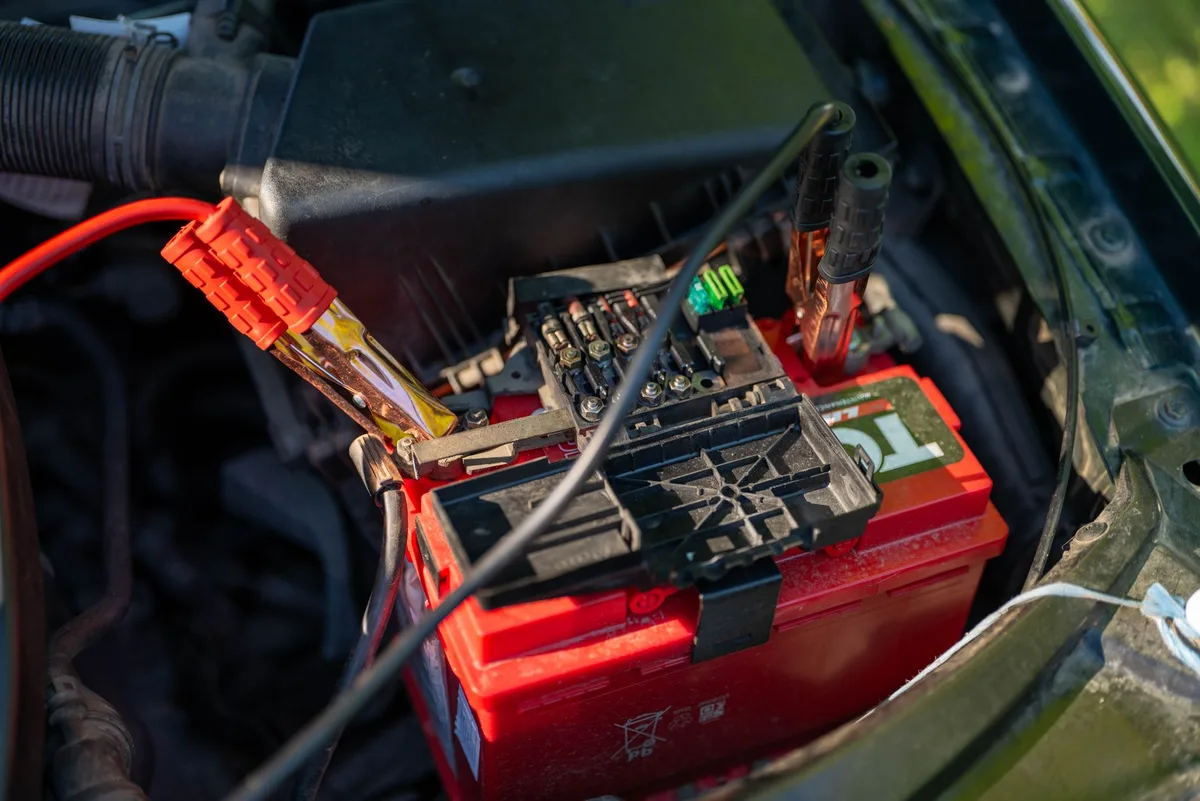
Yes, you can test a car battery with a multimeter, and it takes about two minutes once you know where the probes go. A basic digital multimeter reads the battery's voltage, which tells you how much charge is sitting inside. That one number can save you a tow-truck call or an unnecessary new battery.
A healthy 12-volt car battery reads around 12.6 volts at rest, based on Battery Council International reference figures. Slip below 12.4 volts and you're already down to roughly 75% charge. As of 2026, most parts stores still run a free battery test, but doing it yourself is faster.
Here's how the tool works before you ever touch a terminal.
Quick Answer
Yes, a multimeter tests a car battery quickly and accurately. Set the dial to DC volts. Touch the red probe to positive and the black probe to negative.
A rested, healthy battery reads about 12.6 volts. Anything under 12.4 volts means it needs a charge.
What a Multimeter Actually Measures on Your Battery
A multimeter measures voltage, which is the electrical pressure between the two battery posts. It does not measure "health" directly. What you're really reading is the battery's state of charge at that moment.
Think of voltage like the pressure gauge on a water tank. A high reading means the tank is full. A low reading means it's running dry.
A resting 12.6 volts points to a full charge, while a reading around 12.4 volts tells you it's slipped to about three-quarters.
Here's the catch. Voltage alone won't reveal a weak or dying cell. A battery can show a solid number and still collapse the second you crank the engine.
That's why voltage is your starting point, not the whole story. Later tests, like watching the dip while the starter turns over, fill in the rest.
Gear You Need and How to Set the Dial to DC Volts
You don't need fancy equipment. A cheap digital multimeter does the job just as well as a pro-grade one for a simple voltage check.

Here's the short kit list.
| Tool | Why you need it |
|---|---|
| Digital multimeter | Reads the battery voltage |
| Safety glasses | Guards against acid and sparks |
| Gloves | Protects hands from corrosion |
| Clean rag | Wipes grime off the terminals |
Now the setting. Turn the dial to DC volts, marked with a solid line above a dashed line (⎓) or the letters VDC. Never use AC volts, shown with a wavy line, because a car battery runs on direct current.
If your meter is manual-ranging, choose the 20-volt range. That covers a 12-volt battery with room to spare. Auto-ranging meters pick the range for you, so you just select DC volts.
If you're unsure which symbol is which, our guide on picking the correct mode clears it up fast. For the technical side of DC measurement, meter makers like Fluke publish plain-language basics worth a look.
Where the Red and Black Probes Go on the Terminals
The red probe goes on the positive terminal and the black probe goes on the negative terminal. Get this backwards and your display simply shows a minus sign in front of the number. It won't hurt the meter, but it can confuse a first-timer.
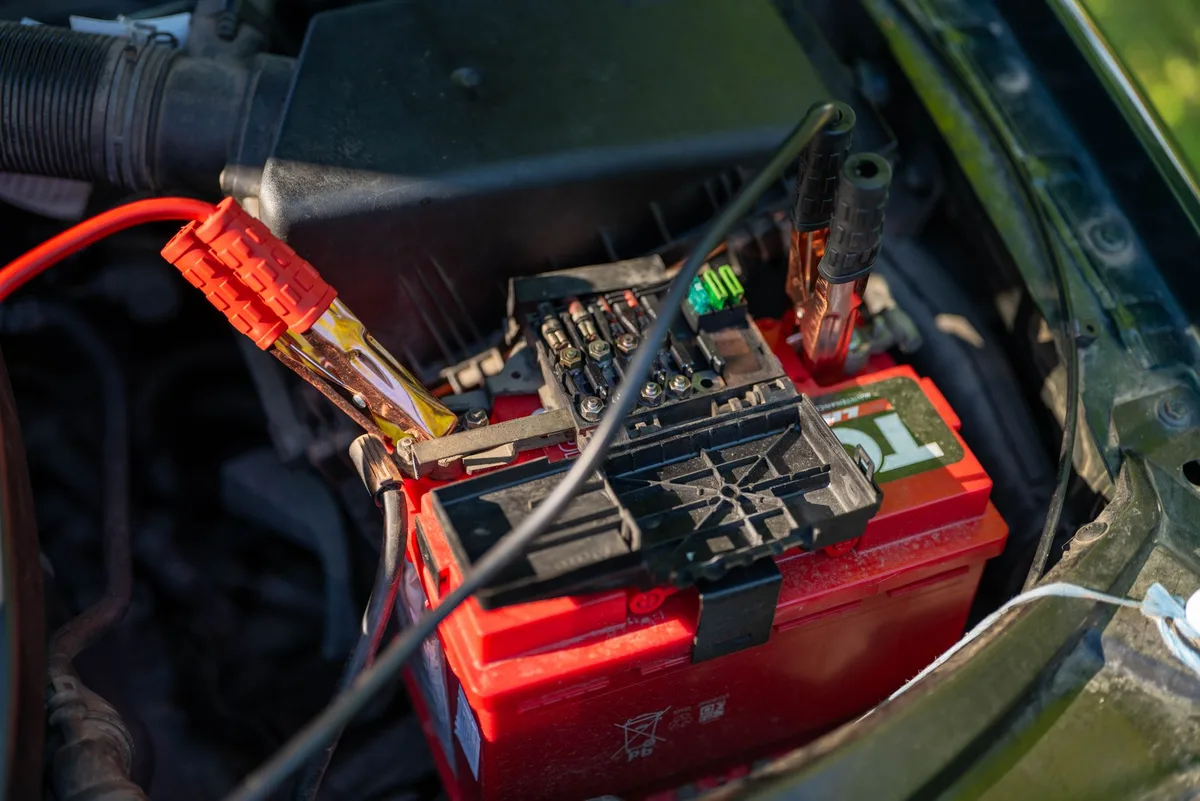
Before you probe anything, plug the leads into the meter correctly. The black lead goes into the COM port. The red lead goes into the port marked V or VΩ.
Reading the Positive and Negative Posts Correctly
The positive post is marked with a plus sign (+) and often wears a red cover. It's usually the slightly fatter post. The negative post carries a minus sign (, ) and a black cover.
Press each metal probe tip firmly onto the bare metal of its matching post. If the terminals are caked in white or blue corrosion, wipe them clean first. Crusty buildup blocks a good connection and drags your reading down for no real reason.
What the Numbers on the Display Mean
A steady number in the 12s is what you want to see. A reading of 12.6 to 12.8 means the battery is full. A figure in the 11s signals a deep discharge, and something like 11.9 volts is a red flag worth acting on.
If the screen jumps around, hold the probes still and make sure both tips touch clean metal. A number that reads zero usually points to a dead cell or a broken connection, not always a dead battery.
Step-by-Step: Testing Resting Battery Voltage
Resting voltage is the reading after the car has sat untouched. This is the most honest number you'll get, because a battery fresh off a drive holds a surface charge that inflates the result.
Follow these steps in order.
- Turn off the engine, headlights, radio, and everything else.
- Let the car sit at least a few hours, or overnight for the cleanest reading.
- Pop the hood and locate the battery and its two posts.
- Set the multimeter to DC volts, 20-volt range.
- Touch red to positive (+), black to negative (, ).
- Read the number and hold the probes steady for a second or two.
- Compare your reading against a state-of-charge chart.
That's the whole process. If you can't wait for the battery to rest, run the car for a minute, shut it off, and give it 15 minutes before testing. It won't be perfect, but it beats reading a hot surface charge.
When you're ready to match your number to a percentage, the chart in the next section breaks it down.
Car Battery Voltage Chart (What Each Reading Tells You)
Match your reading to this chart to see exactly where your battery stands. These figures assume a rested 12-volt battery at roughly room temperature.

| Resting voltage | State of charge | What to do |
|---|---|---|
| 12.6–12.8V | 100% | You're good |
| 12.4V | 75% | Fine, maybe top up |
| 12.2V | 50% | Charge soon |
| 12.0V | 25% | Charge now |
| 11.9V or lower | Near dead | Charge and retest |
The gaps between these numbers are small, and that trips people up. A tenth of a volt is a big swing in charge terms. That's why 12.2 volts leans toward trouble while 12.6 is healthy.
Once a battery drops to 12.0 volts, it's basically flat. It may still crank a warm engine, but it's living on borrowed time. Charge it, let it rest, then test again to see if it holds.
The Cranking Test: Watching Voltage While the Engine Starts
The cranking test shows how the battery behaves under real load. A rested reading can lie, but the starter motor tells the truth. Keep your probes on the terminals and have a helper turn the key.
Watch the display as the engine cranks. A strong battery dips but stays above 9.6 volts. If the number crashes into the 8s or 7s, the battery is weak even if its resting voltage looked fine.
This is the classic case of a battery reading 12 volts that won't crank. The surface number looks okay, then it folds under load. A healthy voltage drop during starting is normal, but a nosedive means a failing cell.
Checking the Alternator With the Same Multimeter
The same meter tells you if the alternator is charging. Leave it set to DC volts and start the engine. With the car running, a healthy charging system reads between 13.7 and 14.7 volts.
Below 13.5 volts, the alternator may be undercharging, and the battery slowly drains as you drive. Above 14.8 volts, it could be overcharging, which cooks the battery over time. Both extremes matter, so know the normal charging range before you judge the result.
Rev the engine to about 2,000 rpm and watch the number climb slightly. That small rise is a good sign. If the voltage barely moves off the resting figure, the alternator or belt deserves a closer look.
A reading of 13.5 volts sits at the low edge of acceptable.
Common Testing Mistakes That Give False Readings
Most bad readings come from user error, not a broken meter. A few small slips can send you shopping for a battery you don't need. Here are the ones we see most.
Why Surface Charge Fools You
Surface charge is the temporary voltage left on the plates right after driving or charging. It can push a reading half a volt higher than the true resting number. That's why a battery can show 12.8 volts fresh off a drive, then settle at 12.3 an hour later.
Let the car rest before you trust the number. A few hours is fine, and overnight is best. If you're in a hurry, turn on the headlights for 30 seconds to bleed off the surface charge, then test.
AC vs DC and Reversed Probes
Reading AC volts instead of DC is the most common dial mistake. A car battery is direct current, so an AC setting gives a garbage number or a flat zero. Double-check the dial sits on the ⎓ symbol, not the wavy line.
Reversed probes just flip the sign to negative. It's harmless, so swap the leads and read again. If you ever see a true zero on the display, suspect a broken lead, a blown fuse in the meter, or a dead cell before you condemn the battery.
Multimeter vs Load Tester vs CCA Tester: When You Need More
A multimeter checks charge, but it can't grade a battery's true strength. For that, a load tester or a conductance tester digs deeper. Here's who each tool suits.
| Tool | What it shows | Best for |
|---|---|---|
| Multimeter | Voltage and state of charge | Quick DIY checks |
| Load tester | How voltage holds under a heavy draw | Spotting weak cells |
| CCA/conductance tester | Cold cranking amps vs the rating | Judging real capacity |
A multimeter is perfect for everyday use. It's cheap, fast, and safe for anyone. If the voltage looks fine but the car still cranks slowly, that's your cue to borrow a load tester.
Conductance testers are what most parts stores use for their free checks. They read cold cranking amps against the battery's printed rating. If you want a full picture without buying gear, that free store test pairs well with your own voltage check at home.
Safety Steps Before You Touch the Terminals
A car battery holds acid and vents hydrogen gas, so a stray spark is a real hazard. A few habits keep the job safe. None of them slow you down.
- Wear safety glasses and gloves before you start.
- Remove rings, watches, and metal bracelets that could short the posts.
- Keep flames, cigarettes, and sparks well away from the battery.
- Never let the two probe tips touch each other across the terminals.
- Check for cracks, bulging, or leaking acid, and stop if you see any.
Corrosion around the posts is more than cosmetic. That crust can irritate skin and throw off your reading. Wipe it with a rag and a little baking soda paste, then dry it before testing.
Workplace guidance from OSHA treats lead-acid batteries as a genuine spark and acid risk, so the same caution applies in your driveway.
Dead Battery or Bad Alternator? How to Tell the Difference
Voltage before and after starting tells you which part is failing. Test the battery at rest, then test again with the engine running. The two numbers point straight to the culprit.
If the resting voltage is low but the running voltage jumps to 13.7 to 14.7, the alternator is fine and the battery is weak. If the resting voltage looks healthy but the running voltage stays flat or drops, suspect the alternator. Our full walkthrough on sorting battery faults from charging faults covers the edge cases.
One quick tell: a car that dies overnight but jumps fine usually has a tired battery or a parasitic drain. A car that dies while driving usually has a charging fault. If the battery keeps going flat, a parasitic draw test finds the hidden power leak.
Pro Tips for Accurate Battery Readings Every Time
Small habits separate a reliable reading from a misleading one. These are the ones worth building in.
- Test cold. A rested battery at ambient temperature gives the truest number.
- Account for weather. Voltage reads lower in the cold, so don't panic over a small winter dip.
- Test at the posts, not the clamps. Clamp corrosion can hide the real figure.
- Retest after charging. Let it rest, then confirm it holds the number.
- Log your readings. A slow month-to-month drop signals a battery on the way out.
Temperature matters more than people expect. A battery that reads 12.5 volts in a warm garage may read lower on a freezing morning. Our notes on cold-weather voltage behavior explain why that dip is often normal, not a fault.
When to Stop Testing and Replace the Battery
Replace the battery when it won't hold a charge or fails the cranking test. Charging a healthy battery brings it back to 12.6 volts and keeps it there. A failing one slides back down within hours.
Watch for these clear signals:
- It charges fully but drops below 12.4 volts after a short rest.
- Cranking voltage falls under 9.6 volts every time.
- A cell reads dead while the others look fine.
- The case is swollen, cracked, or leaking.
Age is the other factor. Most lead-acid batteries last three to five years. If yours is past that and testing weak, a replacement beats a roadside surprise.
When the voltage keeps hitting dead territory after every charge, the battery has told you what it needs.
Frequently Asked Questions
What setting should I use on a multimeter for a car battery?
Use DC volts, shown by a solid line over a dashed line or the letters VDC. On a manual-ranging meter, pick the 20-volt range. That comfortably covers a 12-volt battery.
Auto-ranging meters only need you to select DC volts.
Should I test the battery with the engine on or off?
Test both ways for the full picture. Engine off gives you the resting state of charge, ideally after the car has sat a few hours. Engine on shows the alternator's charging voltage, which should sit between 13.7 and 14.7 volts.
Why does my battery read 12.6 volts but still won't start the car?
A resting voltage measures charge, not strength. A battery with a weak or dead cell can show 12.6 volts at rest, then collapse under the starter's load. Run a cranking test and watch for a drop below 9.6 volts to confirm.
Can a multimeter tell me the cold cranking amps?
No, a standard multimeter only reads voltage. Cold cranking amps come from a dedicated load tester or a conductance tester. Many parts stores run that test free, which pairs nicely with your own voltage check at home.
How often should I test my car battery?
Test it a few times a year and before long trips. A check at the start of winter is smart, since cold weather strains a weak battery. Logging the readings helps you catch a slow decline before it strands you.
Is it safe to test a battery in the rain?
Skip it if you can. Water and corroded terminals make for poor connections and unreliable readings. Wet conditions also raise the slip-and-short risk around live posts.
Wait for dry weather or test under cover.

Similar Posts