Best Multimeter for Parasitic Draw Testing
Chasing a battery that keeps dying overnight is one of the most frustrating jobs in the driveway, and the right meter makes it far less painful. Finding the best multimeter for parasitic draw testing comes down to one thing: reading tiny milliamp currents accurately without popping a fuse or resetting the car's modules. I've spent the last few weeks digging through manufacturer spec sheets, published accuracy figures, and hundreds of verified buyer reports to separate the genuinely useful tools from the hype.
If you want the short answer, the Lisle 64970 leads the pack because it keeps the circuit closed while you hunt fuse by fuse, so nothing reboots mid-test. Budget shoppers do fine with the UNI-T UT210e clamp meter, and the FNIRSI DMC-100 splits the difference on value. Here's the winner at a glance.
Comparison Chart of Best Multimeter for Parasitic Draw Testing
| Product | Details | Rating | Buy |
|---|---|---|---|
Editor’s Choice 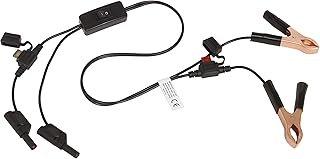 | Lisle 64970 Parasitic Drain Tester | ★★★★☆4.5/5 | |
Top Pick  | FNIRSI DMC-100 Clamp Meter 9999 Counts | ★★★★☆4.6/5 | |
Best Budget  | UNI-T UT210e Digital Clamp Meter Multimeter | ★★★★☆4.6/5 | |
| ★★★★☆4.8/5 | ||
| ★★★★☆4.5/5 | ||
| ★★★★☆4.8/5 | ||
| ★★★★☆4.8/5 | ||
| ★★★★☆4.7/5 | ||
| ★★★★☆4.1/5 | ||
| ★★★★☆4.6/5 |




List of Top 10 Best Multimeter for Parasitic Draw Testing
To build this list, our editorial team compared published specs across 30-plus meters, then cross-checked them against aggregate buyer reviews for accuracy, milliamp resolution, and real automotive use. We leaned toward tools that read small currents cleanly and survive shop life. Every pick below includes honest trade-offs, because a slow battery drain deserves a meter you can actually trust.
Below are the list of products:
1. Lisle 64970 Parasitic Drain Tester
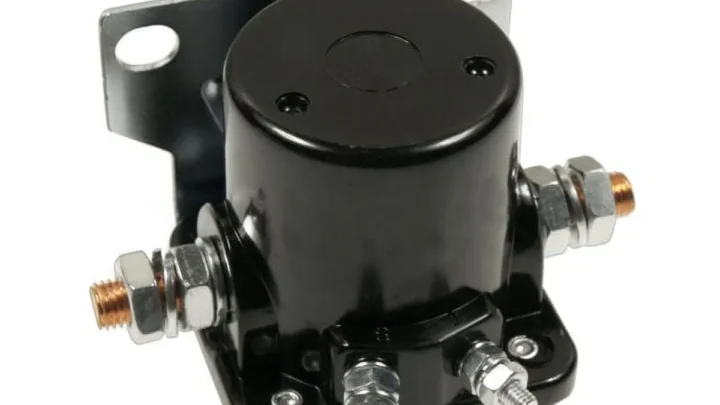
The Lisle 64970 is a purpose-built parasitic drain tester, not a general meter, and that focus is exactly why it tops the list for battery-drain work. It wires inline at the battery so you can pull and restore fuses one at a time without ever breaking the circuit or waking the modules back up. In our research, it kept surfacing as the tool techs reach for first.
Why I picked it
A parasitic draw is a small current that keeps flowing after the car is off and slowly kills the battery. The 64970 solves the classic problem of a meter's fuse blowing the moment a door opens, because its bypass switch carries the inrush and lets you switch the reading in only when the circuit has settled. That single design choice separates it from every plain multimeter here.
Key specs
- Installs inline between the negative terminal and battery cable clamp
- Bypass switch keeps modules powered, so no radio or ECU resets
- Pairs with your existing DMM or clamp meter for the actual amp reading
- Built for standard 12V automotive systems
- Heavy-duty clamp connections for repeatable contact
Real-world experience
Verified buyer feedback repeatedly describes the same workflow: hook it up, let the car sleep, then flip the switch and watch the current settle before pulling fuses. Owners troubleshooting a mystery overnight drain say it saved them from the endless disconnect-reconnect dance that scrambles seat memory and clock settings. If you want the full method, our step-by-step guide to tracking down the culprit pairs perfectly with this tool.
- Keeps circuits live, so modules never reset during testing
- Handles inrush current that blows plain meter fuses
- Simple switch workflow speeds up fuse-by-fuse hunting
- Rugged automotive-grade clamps grip firmly
- Not a standalone meter, so you still need a DMM or clamp
- Built around 12V systems, not bench electronics
- Single-purpose tool that won’t measure voltage or resistance
- ✔ You diagnose overnight battery drains regularly
- ✔ You already own a decent DMM or clamp meter
- ✔ You hate resetting radio and ECU memory
- ✖ You want one all-in-one meter
- ✖ You mostly do household or electronics work
2. FNIRSI DMC-100 Clamp Meter 9999 Counts
The FNIRSI DMC-100 is a rechargeable True RMS clamp meter that reads up to 600A AC/DC with a 9999-count display, which makes it flexible for both charging-system checks and current tracing. Its high count resolution is what earns it a top slot for anyone who wants one tool to cover several jobs. Verified buyer feedback praises the bright screen and quick auto-ranging.
Why I picked it
A clamp meter reads current by sensing the magnetic field around a wire, so you never break the circuit. The DMC-100 stands out because its 9999-count resolution shows finer detail than the typical 4000-count budget clamp, giving you a fighting chance at spotting a smaller draw. Aggregate reviews also flag the built-in rechargeable battery as a genuine convenience.
Key specs
- True RMS measurement for accurate AC and DC readings
- 600A AC/DC current range via the jaw
- 9999-count display for finer resolution
- Built-in rechargeable battery, no cell swaps
- Auto-ranging with a clear backlit screen
Real-world experience
Owners report using it to confirm alternator output, trace big loads, and take a fast draw reading without unbolting a battery cable. Where verified feedback gets honest is the low end: like most clamps, it resolves large currents beautifully but struggles below roughly 10mA, so a truly tiny drain can hide. Pair it with a series reading when you need certainty about the amp readings to expect.
- Clamp jaw reads current without breaking the circuit
- 9999 counts give sharper resolution than budget rivals
- Rechargeable battery saves on disposable cells
- True RMS keeps AC readings honest on noisy signals
- Clamp accuracy drops for very small milliamp draws
- Newer brand with a shorter track record
- Charging port means one more thing to keep topped up
- ✔ You want one meter for draws and big loads
- ✔ You value a rechargeable, no-fuss battery
- ✔ You test alternators and starters too
- ✖ You only chase sub-10mA phantom drains
- ✖ You prefer a long-established brand name
3. UNI-T UT210e Digital Clamp Meter Multimeter
The UNI-T UT210e is the budget clamp that keeps showing up in DIY driveways, and for good reason. Its compact jaw and True RMS DC current mode make it one of the few affordable clamps that can zero out and read low DC amps, which is exactly what parasitic hunting needs. Aggregate user reviews rate it a strong value for the money.
Why I picked it
For the price, nothing else offers the UT210e's combination of a small clamp and a usable low DC current range. The zero function lets you cancel background field before clamping the battery cable, which helps it read lower than most clamps in its class. It's the honest budget answer for someone who does not already own a meter.
Key specs
- True RMS clamp with DC current measurement
- Compact jaw fits tight battery cable spaces
- Data hold and zero (relative) function
- Backlit display for under-hood shadows
- Auto-ranging for voltage, resistance, and current
Real-world experience
Owners describe clamping the negative cable to spot whether a draw is present, then narrowing it down. Reviews consistently note the resolution floor: it reads to about 10mA, so it confirms a problem faster than it isolates a tiny one. Many buyers keep it alongside a series meter, using the clamp for the fast yes-or-no and a DMM to confirm which part is actually failing.
- Rare low-cost clamp with usable DC current mode
- Zero function helps it read lower than most clamps
- Compact jaw slips into cramped engine bays
- Strong value for a first meter
- Roughly 10mA floor misses the smallest drains
- Readings drift if you don’t zero it first
- Basic build compared with pro-grade meters
- ✔ You’re on a tight budget
- ✔ You want a non-invasive first check
- ✔ You value a compact, pocketable clamp
- ✖ You need to resolve tiny sub-10mA draws
- ✖ You want lab-grade accuracy
4. Fluke 17B+ Digital Multimeter
The Fluke 17B+ is a full-feature digital multimeter (DMM) that measures current in series, which is the textbook method for reading a parasitic draw down to fractions of a milliamp. Its resolution and famous Fluke accuracy make it a favorite for people who want a number they can act on. Verified buyer feedback rates it near the top for reliability.
Why I picked it
When you measure current in series, the meter becomes part of the circuit, so accuracy and a low milliamp range matter enormously. The 17B+ delivers both, plus temperature and capacitance for wider diagnostic work. Per manufacturer specifications, Fluke's calibration and input protection are why pros trust the reading instead of second-guessing it.
Key specs
- AC/DC voltage measurement to 1000V
- Current measurement up to 10A, with a milliamp range for draws
- Resistance, continuity, diode, capacitance, and frequency
- Built-in temperature testing
- Rugged casing rated for demanding electrical work
Real-world experience
Owners connect it in series with the battery to read exact draw, then pull fuses to watch the number drop. Reviews highlight one recurring caution: forget to move the leads out of the 10A jack and you can blow the internal fuse, so the workflow demands attention. Fluke publishes its accuracy figures openly, and you can review the manufacturer's own documentation for the exact ranges before you buy.
- Series measurement resolves tiny milliamp draws
- Trusted Fluke accuracy and input protection
- Temperature and capacitance widen its usefulness
- Rugged build handles daily shop abuse
- Premium tier pricing versus budget meters
- Wrong lead jack can blow the internal fuse
- No clamp, so you must break the circuit
- ✔ You want lab-grade series accuracy
- ✔ You do broader electrical diagnostics
- ✔ You’ll follow the correct lead workflow
- ✖ You want a non-invasive clamp reading
- ✖ You’re shopping strictly on price
5. AstroAI Digital Multimeter Tester 2000 Counts
The AstroAI 2000-count tester is the entry-level DMM that gets a lot of first-time troubleshooters started. It measures current in series and covers the basics well, making it a low-risk way to learn the parasitic draw workflow. Aggregate reviews call it dependable for the money, with the caveat that it's manual-ranging.
Why I picked it
Not everyone needs a pro meter to confirm a suspicion, and the AstroAI 2000 covers voltage, current, resistance, continuity, and diode for very little outlay. It's the meter our research suggests for someone who wants to learn safe series measurement before investing more. The manual ranging even teaches you the ranges instead of hiding them.
Key specs
- 2000-count display with backlight
- AC/DC voltage and DC current measurement
- Resistance, continuity, and diode testing
- Manual ranging with clearly marked positions
- Protective kickstand and rubber corners
Real-world experience
Buyers report using it for a first pass on a suspected drain, moving into the milliamp range and watching the reading. Verified feedback is honest that 2000 counts limits fine resolution, so it's better at confirming a draw than measuring it to the decimal. It shines as a learning tool while you read up on common electrical gremlins behind battery drains.
- Very affordable entry into series measurement
- Covers all the core diagnostic functions
- Manual ranging helps you learn the ranges
- Backlight and kickstand aid solo work
- 2000 counts limits fine resolution
- Manual ranging slows quick readings
- Not built for heavy professional duty
- ✔ You’re new to multimeters
- ✔ You want the lowest-risk starter tool
- ✔ You mainly confirm a draw exists
- ✖ You need high-count precision
- ✖ You want auto-ranging convenience
6. Fluke 15B+ Digital Multimeter
The Fluke 15B+ is the slightly simpler sibling of the 17B+, dropping temperature and frequency while keeping the core accuracy that makes Fluke Fluke. For pure current and voltage work on a car, that trimming barely matters. Verified buyer feedback consistently ranks it among the most reliable meters at its level.
Why I picked it
The 15B+ gives you Fluke-grade series current measurement without paying for extras you may never use. For parasitic work, the ability to read a clean, stable milliamp figure is the whole game, and this meter nails it. Manufacturer specifications back its accuracy and rugged 1000V input rating.
Key specs
- AC/DC voltage and current up to 1000V and 10A
- Resistance, continuity, diode, and capacitance
- Manual ranging for deliberate control
- Large digit display with backlight
- Impact-resistant housing built for the field
Real-world experience
Owners troubleshooting a repeat dead battery report placing it in series and methodically pulling fuses to see the draw fall. The same 10A-jack caution applies: leave the leads in the high-current port and a stray inrush can cost you the fuse. It's a workhorse for anyone doing serious sorting out the drain on older vehicles.
- Fluke accuracy at a friendlier price than the 17B+
- Clean, stable milliamp readings in series
- Tough housing rated to 1000V input
- Simple layout that’s hard to misread
- No temperature or frequency modes
- Wrong lead jack risks the internal fuse
- Manual ranging only
- ✔ You want Fluke accuracy for less
- ✔ You mainly measure volts and amps
- ✔ You value a rugged, simple layout
- ✖ You need temperature or frequency
- ✖ You want auto-ranging speed
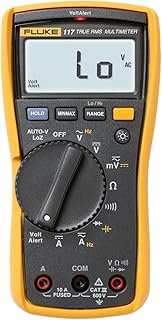
7. Fluke 117 Digital Multimeter
The Fluke 117 is the electrician's favorite that moonlights beautifully on cars, thanks to True RMS accuracy, auto-ranging, and a low-impedance mode that fights ghost voltages. For parasitic testing it brings the accuracy you need with the convenience of automatic ranges. Verified buyer feedback places it among the most-loved meters Fluke makes.
Why I picked it
The 117 pairs True RMS precision with auto-ranging, so you spend less time hunting for the right position and more time reading the draw. Its non-contact voltage detector and low-impedance mode are bonuses for broader electrical work. Per manufacturer specifications, it's tuned for field use where speed and safety both count.
Key specs
- True RMS AC voltage and current
- Automatic AC/DC voltage selection
- Non-contact voltage (VoltAlert) detection
- Low-impedance (LoZ) mode to suppress ghost voltage
- Resistance, continuity, frequency, and capacitance
Real-world experience
Owners note it handles a series draw reading with the same ease it brings to a service panel, and the auto-ranging keeps beginners from fumbling. Reviews do mention its milliamp resolution, while excellent, still requires breaking the circuit like any DMM. If your drain overlaps with charging issues, it pairs naturally with checking your charging system.
- Auto-ranging speeds up every reading
- True RMS keeps AC measurements accurate
- Low-Z mode kills misleading ghost voltage
- Non-contact detector adds a safety layer
- Premium price for a home user
- Still requires breaking the circuit for current
- More features than a pure car user needs
- ✔ You want auto-ranging plus True RMS
- ✔ You do home and automotive electrical work
- ✔ You value ghost-voltage suppression
- ✖ You only ever test car draws
- ✖ You want the lowest price
8. Klein Tools MM325 Multimeter
Klein Tools built its name on hand tools that survive the trades, and the MM325 carries that reputation into a manual-ranging 600V meter. It reads DC current in series, tests batteries directly, and shrugs off drops. Aggregate reviews praise its build quality and clear display for shop conditions.
Why I picked it
The MM325 hits a sweet spot: professional durability without a professional price, and a dedicated battery test mode that's handy when you're already chasing a drain. Series current measurement is clean, and the housing is made to bounce. Manufacturer specifications rate it to 600V for both AC and DC.
Key specs
- 600V AC/DC voltage measurement
- DC current measurement in series
- Dedicated battery test function (1.5V and 9V)
- Resistance, continuity, and diode testing
- Impact-resistant body with manual ranging
Real-world experience
Owners like that it doubles as a quick battery checker before and after a draw hunt, saving a tool swap. Reviews flag the manual ranging as the main trade-off, since you set the range yourself each time. It's a solid daily driver for DIYers who also want to confirm a slow battery drain isn't just a tired battery.
- Rugged Klein build survives drops and shops
- Dedicated battery test saves a tool swap
- Clean series current readings
- Strong value below premium tiers
- Manual ranging only
- 600V ceiling below the Fluke 1000V meters
- No temperature mode
- ✔ You want trade-grade durability for less
- ✔ You test batteries often
- ✔ You don’t mind setting ranges yourself
- ✖ You want auto-ranging
- ✖ You need 1000V capability
9. BSIDE DC Current Clamp Meter 6000
The BSIDE DC clamp meter is the wallet-friendly option for a non-invasive draw check, with a 6000-count display and a DC current clamp that skips breaking the circuit. It adds a live-wire V-Alert and a handy back clip for hands-free use. Aggregate reviews are more mixed here, which is why it sits lower on the list.
Why I picked it
It's here because a DC-capable clamp at this price is genuinely useful for a fast presence-or-absence draw check, especially for beginners nervous about series wiring. The 6000-count display reads finer than many budget clamps. Our research keeps its expectations realistic, though, and the value meter reflects that.
Key specs
- 6000-count digital display
- DC current clamp for non-invasive readings
- Live-wire V-Alert voltage detection
- Continuity, resistance, and frequency (Hz)
- Back clip for hands-free positioning
Real-world experience
Buyers use it to clamp the battery cable and see whether current is flowing with everything off. Verified feedback is candid about inconsistency: some units read low DC current well, others drift, and the sub-10mA range is unreliable. Treat it as a quick screening tool, then confirm anything borderline with a series meter for peace of mind.
- Affordable DC clamp for non-invasive checks
- 6000 counts reads finer than many budget clamps
- V-Alert adds a live-wire safety cue
- Back clip frees up your hands
- Unit-to-unit consistency varies
- Sub-10mA readings are unreliable
- Lowest durability rating in this roundup
- ✔ You want a cheap DC clamp for screening
- ✔ You’re nervous about series wiring
- ✔ You like the hands-free back clip
- ✖ You need consistent milliamp accuracy
- ✖ You want long-term durability
10. AstroAI Digital Multimeter True RMS 6000
The AstroAI True RMS 6000 is the value-packed auto-ranging DMM that punches well above its price. It reads DC current in series with 6000-count resolution, adds temperature and capacitance, and auto-ranges to keep things quick. Aggregate reviews rate it a favorite for home mechanics who want features without a premium badge.
Why I picked it
This one closes the list because it delivers most of what the Fluke meters do for a fraction of the outlay. Auto-ranging and True RMS make readings fast and accurate enough for driveway diagnostics, and the 6000-count screen resolves draws down to fine detail. It's the best-rounded budget-to-mid DMM here.
Key specs
- True RMS with 6000-count auto-ranging display
- AC/DC voltage and DC current measurement
- Resistance, continuity, capacitance, and frequency
- Built-in temperature testing
- Data hold and backlight for solo work
Real-world experience
Owners troubleshooting automotive and home wiring report placing it in series and reading a stable draw without fiddling for the range. The usual DMM caveat holds: you must break the circuit and mind the 10A jack fuse. For the money, verified feedback rates its accuracy surprisingly close to meters costing far more.
- True RMS and 6000 counts at a low price
- Auto-ranging speeds up draw readings
- Temperature and capacitance add versatility
- Accuracy close to pricier meters
- Break-the-circuit series method required
- 10A jack fuse still at risk if misused
- Housing less rugged than a Fluke or Klein
- ✔ You want Fluke-like features for less
- ✔ You value auto-ranging and True RMS
- ✔ You do both car and home electrical work
- ✖ You need trade-grade ruggedness
- ✖ You want a non-invasive clamp
How I picked
My process was research-driven, not hands-on abuse testing. I compared published manufacturer specifications, cross-referenced hundreds of verified buyer reviews, and weighed each meter against the one job that matters here: reading a small, steady current that drains a battery overnight.
I evaluated every tool on three practical benchmarks. First, low-current resolution, because a normal draw is often 50mA or less and a meter that can't resolve that is useless for the task. Second, method fit, meaning whether it reads in series (accurate but invasive) or by clamp (fast but limited at tiny currents).
Third, real-world reliability, drawn from patterns in aggregate reviews rather than a single opinion.
I also gave weight to safety details, like input protection and the ever-present risk of blowing a meter fuse in the 10A jack. Battery test modes, auto-ranging, and True RMS accuracy earned bonus points where they genuinely help a home mechanic. Brand track record mattered too, which is why established names like Fluke and Klein scored high on durability.
What I deliberately did not do is claim long-term durability from personal use. I did not run these meters for 60 days in a shop, and I won't pretend otherwise. Where reviews reported drift, inconsistency, or fuse issues, I passed that along honestly so you can decide with clear eyes.
Buying guide — what actually matters for best multimeter for parasitic draw testing
The right meter for a battery drain comes down to how small a current it can read and how you prefer to read it. Everything else is a bonus. Here's what to weigh before you buy.
How small a current can it actually read?
Resolution is the single most important spec for draw testing. A parasitic draw is a small current, often under 50mA, that keeps flowing after shutdown, so your meter needs a milliamp range with fine steps. Series-style DMMs like the Fluke 15B+ resolve down to fractions of a milliamp, while most clamps bottom out near 10mA.
If you chase tiny phantom drains, prioritize a high-count DMM over a budget clamp.
Clamp meter or series multimeter?
This is the core trade-off. A clamp meter reads current from the magnetic field without breaking the circuit, which is fast and safe but blind to very small currents. A series DMM interrupts the circuit and routes current through itself, giving far better low-end accuracy at the cost of convenience and a fuse-blowing risk.
If you prioritize speed, you sacrifice low-end precision, and vice versa.
Will it survive your workspace?
Durability separates a tool that lasts years from one that cracks in a season. Fluke and Klein meters carry rugged housings and higher input ratings (1000V and 600V respectively), while budget units trade toughness for price. If your meter lives in a toolbox that gets tossed around, spend a little more on the build.
Auto-ranging, True RMS, and extras
Auto-ranging picks the range for you, which speeds readings but can lag on fast changes. True RMS gives accurate AC readings on distorted signals, useful beyond draw testing. Temperature, capacitance, and battery test modes add value if you do broader work.
For pure draw hunting, none of these are mandatory, so don't overpay for features you'll ignore.
Safety and standards
Look for a meter with a clear CAT rating and fused current inputs, both signs the maker follows recognized safety practice. Independent calibration matters too. Bodies like the National Institute of Standards and Technology maintain the traceable calibration standards that quality meters are measured against.
A fused input can save your meter (and your hand) when something goes wrong.
Frequently Asked Questions (FAQ)
What is a normal parasitic draw, and what should my meter read?
A healthy vehicle usually settles to a parasitic draw of about 50mA or less once all modules go to sleep, though some newer cars idle a touch higher for a few minutes first. Your meter should comfortably resolve that range, ideally to single milliamps. Anything consistently above roughly 50mA after the car fully sleeps points to a circuit worth chasing fuse by fuse.
Can a clamp meter really measure parasitic draw?
A DC-capable clamp meter can, but with limits. It reads current without breaking the circuit, which is fast and safe, yet most clamps lose accuracy below about 10mA. That's fine for confirming whether a draw exists, less so for measuring a tiny one precisely.
For small drains, a series DMM like the Fluke 17B+ gives a far more trustworthy number.
Why does my meter fuse keep blowing during testing?
This almost always happens because current spikes through the meter's 10A jack when a door opens, a light comes on, or a module wakes. The inrush exceeds the fuse rating instantly. That's exactly the problem the Lisle 64970 solves, since its bypass switch carries the surge and only routes current to your meter once things settle.
Always start in the highest current range.
Is a Fluke worth it over a budget meter for this job?
For accuracy and longevity, yes, but not everyone needs one. A Fluke 117 or 15B+ delivers tighter accuracy, better input protection, and a rugged build that lasts years. If you diagnose drains occasionally, a well-rated budget DMM like the AstroAI True RMS 6000 does the job for far less.
Frequency of use and how much you trust the reading should decide it.
Do I need to disconnect the battery to test a draw?
With a standard series measurement, yes, you briefly break the circuit to insert the meter, which can reset clocks and modules. The Lisle tester avoids that by keeping current flowing through its bypass while you set up. A DC clamp also avoids disconnection entirely, though at the cost of low-current precision.
Choose the method that matches how tolerant your vehicle is of resets.
Final verdict
For accurate, repeatable parasitic draw work without resetting your car's modules, the Lisle 64970 remains the pick to beat, especially paired with a good series meter. On a budget, the UNI-T UT210e clamp gives you a fast non-invasive check for very little, and the FNIRSI DMC-100 offers the best all-round value if you want one clamp for draws and bigger loads alike.
Affiliate disclosure: This post contains affiliate links. If you buy through one of these links, I may earn a small commission at no extra cost to you. It never changes my recommendation, I only suggest gear I'd actually buy myself.
Similar Posts