How Many Amps of Parasitic Draw Is Too Much?
If your battery keeps dying overnight, you're probably asking how many amps of parasitic draw is too much before it turns into a real headache. Here's the short version. Most modern cars pull somewhere between 20 and 85 milliamps once everything powers down.
Anything sitting well above that range is worth chasing down.
As of 2026, common technician guidance and manufacturer specs point to roughly 50 milliamps as the classic ceiling for older vehicles. Newer connected cars run higher because of always-on modules. A steady draw of 100 milliamps or more usually means a stuck relay, a failing diode, or a wiring fault.
Let's start with what that number actually tells you.
Quick Answer
For most vehicles, parasitic draw above 85 milliamps is too much. A healthy key-off draw sits between 20 and 50 milliamps. Older cars should stay near 50 milliamps or less.
Modern connected cars may reach 85 milliamps normally. A sustained reading of 100 milliamps or higher points to a fault.
How Much Parasitic Draw Is Actually Too Much?
Anything that steadily exceeds about 85 milliamps after your car has fully gone to sleep is too much. That's the practical line for most vehicles on the road today.
Parasitic draw is the small amount of current your car keeps using after you shut it off and walk away. It's normal. Your clock, alarm, keyless entry receiver, and memory settings all sip a little power around the clock.
The problem starts when something refuses to shut down. A glovebox light stuck on, a faulty module, or a bad aftermarket install can push that draw far past normal. If your battery is flat after two or three days of sitting, an oversized draw is a prime suspect.
Here's the simple rule of thumb:
- Under 50 milliamps: normal for most cars.
- 50 to 85 milliamps: acceptable on newer, tech-heavy vehicles.
- Over 85 milliamps: worth investigating.
- Over 100 milliamps and rising: almost always a fault.
The Real Threshold: Normal vs. Problem Draw (mA Ranges)
There isn't one magic number, but there is a reliable range. What counts as normal depends heavily on how old your car is and how much tech it carries.
Older vehicles from the 1990s and early 2000s ran lean electrical systems. They should idle at a very low draw. Newer cars with telematics, keyless entry, and multiple control modules naturally draw more, even when parked correctly.
| Vehicle type | Normal key-off draw | Flag for investigation |
|---|---|---|
| Classic / pre-2000 | 10 to 30 mA | Over 50 mA |
| Typical 2000s car | 20 to 50 mA | Over 75 mA |
| Modern connected car (2015+) | 30 to 85 mA | Over 100 mA |
| RV / boat house system | Varies by load | Over 100 mA at rest |
When you check your own numbers, set your meter up properly first. Our walkthrough on dialing in the right meter range helps you avoid a false reading before you even start. Quality meters from established makers like Fluke also handle low milliamp readings more accurately than budget units.
If your draw lands inside the normal column, your battery trouble likely lives elsewhere. That could be a tired battery or a weak charging system rather than a drain.
Why "Too Much" Depends on Your Car, Not a Single Number
The same 80 milliamp reading can be perfectly fine on one car and a red flag on another. Three factors decide where your line sits.
Battery Size and Reserve Capacity
A bigger battery tolerates more draw before it dies. Reserve capacity is how long a battery can supply current before it drops too low to start the engine.
A large truck battery with high reserve capacity shrugs off a small drain for days. A compact car battery with less capacity gives up much sooner under the same load. So "too much" scales with the battery behind it.
How Long the Car Sits Between Drives
If you drive daily, a modest draw never gets the chance to flatten your battery. Your alternator tops things back up on every trip.
Park the car for two weeks and the math changes fast. A draw that's harmless for a daily driver can leave a weekend car completely dead. The longer it sits, the lower your acceptable draw becomes.
Always-On Modules That Draw Current Legitimately
Modern cars keep several systems partly awake. Telematics units, security systems, tire pressure monitors, and body control modules all pull current on purpose.
These loads are normal, and they're the main reason newer cars read higher than older ones. Automakers call this key-off load or dark current, and they design the battery to handle it for a set number of days. Cold weather makes it worse, which is why batteries struggle more in winter even with a healthy draw.
The Math: Will This Draw Actually Kill Your Battery?
The honest test isn't the raw milliamp number. It's whether that draw pulls your battery below starting voltage before you drive again.
You can work this out with simple arithmetic. Take the current in amps, multiply by hours, and compare it against your battery's usable capacity.
Draw × Days vs. Usable Amp-Hours
Most lead-acid batteries only give you about half their rated capacity before starting gets shaky. So a 60 Ah battery has roughly 30 usable amp-hours before trouble.
Here's a quick example. A 50 milliamp draw is 0.05 amps. Over 24 hours that's 1.2 amp-hours a day.
Across 30 days that's 36 amp-hours, which already exceeds our 30 Ah usable buffer.
So even a normal 50 milliamp draw can flatten a battery left parked for a month. A 300 milliamp fault would do it in under a week. That's the whole point of checking.
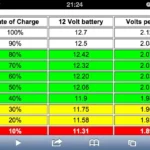
State-of-Charge Voltage Reference Chart
Before and after you test, confirm the battery is actually charged. A resting voltage reading tells you where you stand. If you're rusty on the process, this refresher on reading battery voltage covers it in a couple of minutes.
| Resting voltage | Approx. state of charge |
|---|---|
| 12.6V or higher | 100% |
| 12.4V | 75% |
| 12.2V | 50% |
| 12.0V | 25% |
| Below 11.9V | Nearly dead |
Take this reading after the car has sat for a few hours, not right after a drive. A surface charge can fool you into thinking the battery is stronger than it is.
What Pulls Current While Your Car Sleeps
Two kinds of loads share your battery overnight. Some are supposed to be there. Some are not.
Knowing which is which saves you from chasing a problem that's really just your car working as designed.
Factory Loads (Telematics, Alarm, Keyless Entry)
These are the built-in systems that stay partly awake by design. They're the reason a healthy modern car still reads 30 to 85 milliamps at rest.
- Telematics and connected-car modules
- Factory alarm and security system
- Keyless entry receiver listening for your fob
- Body control module and memory seats
- Clock and radio presets
None of these should be pulling large current. If one sticks awake instead of timing out, though, it can become the culprit.
Aftermarket Culprits (Dash Cams, Amps, Trackers)
Add-on electronics are the number one cause of oversized draw. Many get wired to a constant power source and never fully switch off.
- Dash cams in parking or sentry mode
- Poorly wired amplifiers or remote-start kits
- GPS trackers and OBD dongles
- Cheap USB chargers left plugged in
- Trailer brake controllers
A bad ground or lazy install turns any of these into a slow battery killer. If your drain problems started right after adding a gadget, start there. Isolating the exact circuit is the next move, and pinpointing it with a proper drain test narrows things down quickly.
A failing alternator diode can also feed current backward, so checking the diodes is worth ruling out too.
How to Measure Parasitic Draw Correctly
You've got three solid ways to measure key-off draw. The right one depends on the tools you own and how much you want to disturb the circuit.

Multimeter In-Series Method
This is the classic approach and the most accurate for small draws. You break the circuit and route all the current through your meter.
- Fully charge the battery and let it rest.
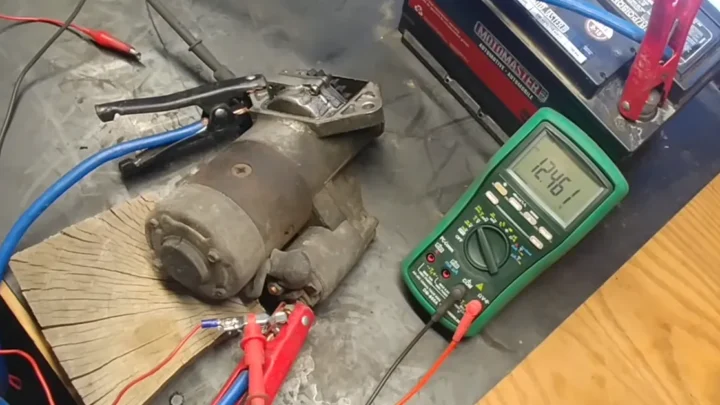
- Set your multimeter to DC amps, using the 10A jack.
- Disconnect the negative battery cable.
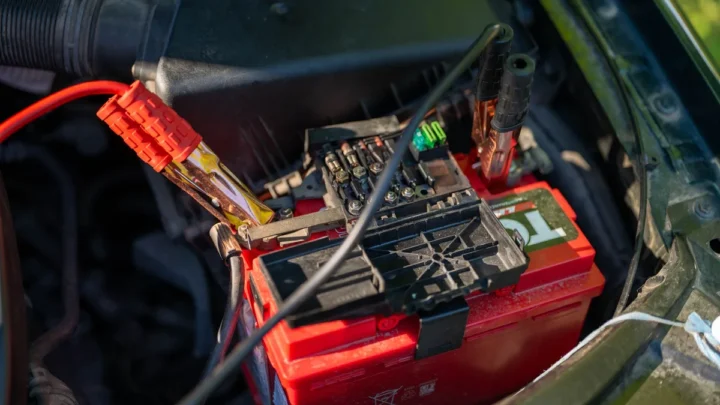
- Connect the meter between the negative post and the cable.
- Wait for the car to sleep, then read the draw.
The catch is that disconnecting the cable wakes the modules back up. You'll need to wait out the timeout again before the reading settles. Our step-by-step on running a battery drain check walks through the hookup in detail.
Low-Current Clamp Meter Method
A low-current DC clamp meter is the easiest and safest option. You never break the circuit, so nothing wakes up.
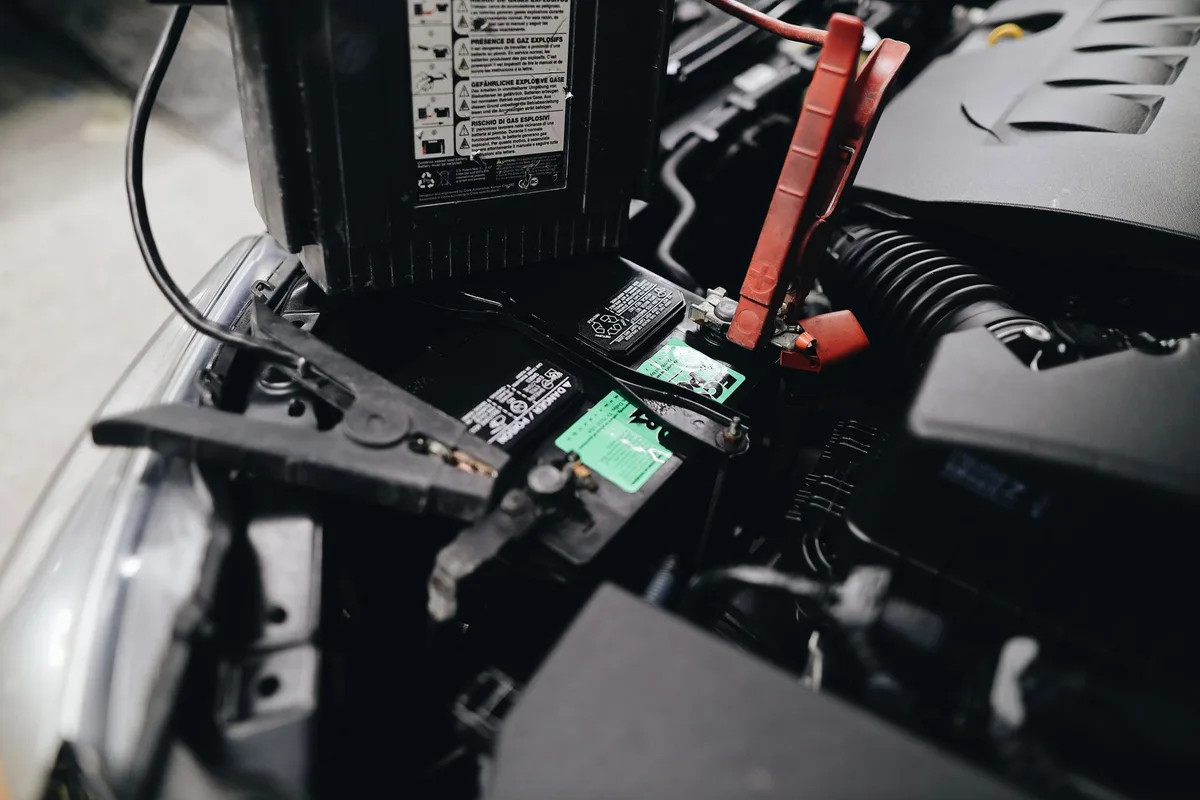
You simply clamp the jaws around the negative battery cable and read the current. Because the car stays asleep, your number is honest from the start. The one requirement is a meter that resolves milliamps, not just full amps.
Cheap clamp meters often can't read that low.
Voltage-Drop-Across-a-Fuse Method
This method finds the guilty circuit without unplugging anything. You measure the tiny voltage drop across each fuse while the car sits.
Set your meter to millivolts and probe both test points on a fuse. A fuse passing current shows a small drop. A fuse showing zero is carrying no load.
It's slower than a clamp, but it needs no special tools beyond a multimeter set to read voltage.
The Sleep-Time Trap: Why Testing Too Early Gives False Readings
The single biggest mistake is measuring before the car has gone to sleep. Modules stay awake for a while after you shut the door, and they pull heavy current the whole time.
Right after lockup, you might see 300 to 600 milliamps or more. That's not a fault. That's the body control module, radio, and telematics finishing their shutdown routine.
Most vehicles take 20 to 60 minutes to fully time out. Some take longer. If you read the draw at minute five and panic, you'll chase a problem that doesn't exist.
Here's the fix: leave the meter connected and watch the number fall. When it drops and holds steady, that's your true parasitic draw. Patience here saves hours of pointless fuse-pulling.
Finding the Offending Circuit: Pulling Fuses Step by Step
Once your draw reads high and steady, the fuse box tells you where it's hiding. Pull fuses one at a time and watch for the draw to drop.
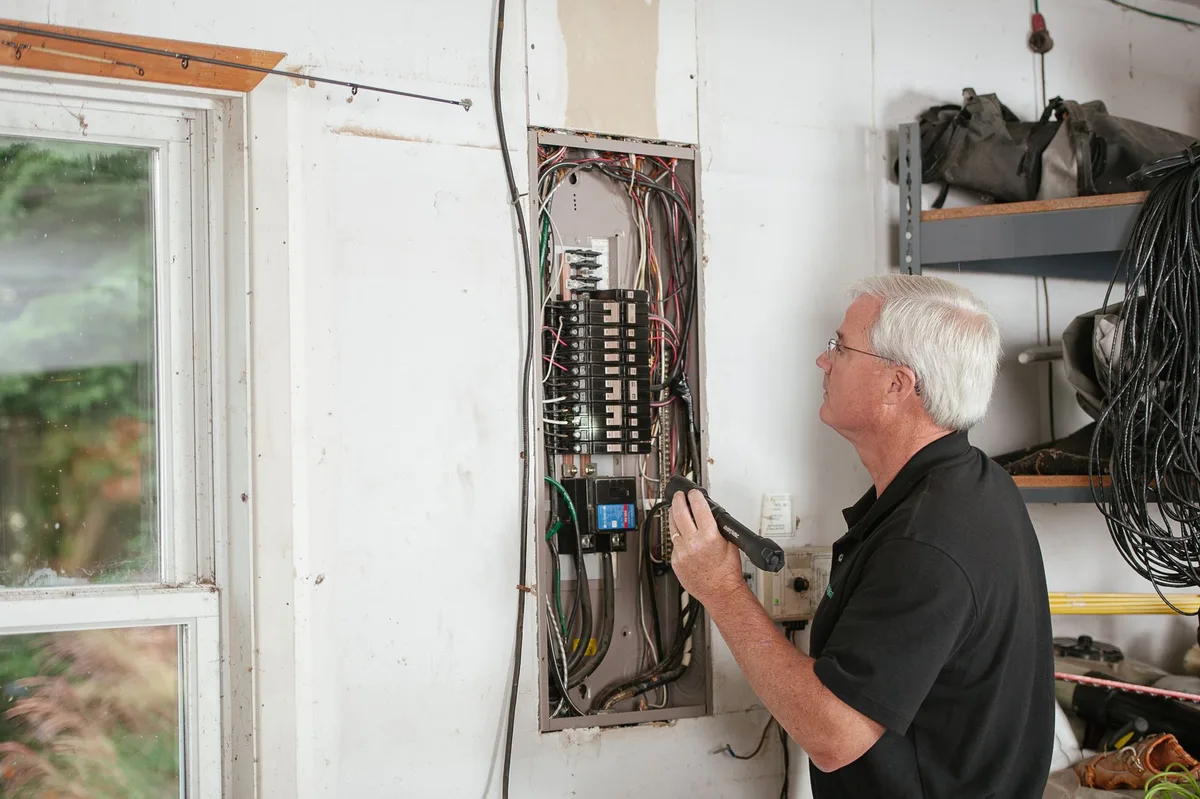
Keep your meter connected and the car asleep while you work. Here's the flow:
- Note your baseline draw with everything intact.
- Pull one fuse and check the meter.
- If the draw drops sharply, you found the circuit.
- If nothing changes, reinsert that fuse and move on.
- Repeat until the current falls into normal range.
When a fuse makes the number plummet, that circuit holds your drain. Check the wiring diagram to see what it feeds. From there you trace the specific component, a stuck relay, a lamp, or an aftermarket device.
One tip: pulling a fuse can also wake a module and briefly spike the reading. Give each pull a few seconds to settle before you judge it. If the culprit turns out to be charging-related, testing the alternator itself rules out a backfeeding diode.
Mistakes That Wreck Your Test (and Your Meter)
A few simple slips can blow your meter's fuse or send you down the wrong path. Avoid these and your test stays clean.
- Cranking the engine with the meter wired in series. The starter draws hundreds of amps and will instantly blow the 10A fuse. Never start the car in series.
- Opening a door mid-test. The dome light and body module wake up and ruin the reading.
- Testing with a half-charged battery. Weak voltage skews everything. Confirm resting voltage first.
- Using a meter that can't read milliamps. You'll miss small but meaningful drains.
- Rushing the sleep timer. Early readings always look alarming.
If your meter suddenly reads zero after a test, check its internal fuse. That's the usual sign it took a hit from too much current.
When the Draw Is In-Spec but the Battery Still Dies
Sometimes the draw checks out fine and the battery still goes flat. That means the drain isn't your problem. The fault lives in the battery or the charging system instead.
An aging battery loses capacity and self-discharges faster. A battery that reads 12.6V but dies overnight may have a bad cell or high internal resistance. A proper load test under demand exposes that weakness a resting voltage check hides.
The charging system is the other suspect. If your alternator isn't fully recharging the battery on each drive, it slowly falls behind. Short trips make this worse because the battery never catches up.
If the numbers point that way, verify healthy charging output before replacing anything. A weak alternator and a good battery can mimic a parasitic drain perfectly. Rule out both before you spend money on parts.
Fix It or Manage It: Repair vs. Battery Maintainer
Once you know the cause, you've got two paths. Fix the fault at the source, or manage the symptom with a maintainer.
Fixing is always the better long-term move. A stuck relay, a bad diode, or a shorted accessory won't heal itself. Repair the actual component and your draw drops back to normal for good.
A battery maintainer is the right call in a few cases. If the draw is normal and the car just sits a lot, a trickle charger keeps it topped up. It's also a smart stopgap for seasonal vehicles and classics.
| Situation | Best choice |
|---|---|
| Draw over 100 mA from a fault | Repair the circuit |
| Normal draw, car parked for weeks | Battery maintainer |
| Aftermarket device draining battery | Rewire or add a switch |
| Old battery losing charge | Replace the battery |
A battery disconnect switch is another cheap fix for a car in storage. It cuts the drain entirely when you flip it.
Safety Rules Before You Touch the Terminals
Batteries deserve respect. They store serious energy and vent flammable gas, so a few rules keep you safe.
- Never crank the engine with a meter in series. Hundreds of amps will blow the fuse instantly.
- Work in a ventilated space. Lead-acid batteries release hydrogen, which is flammable.
- Wear eye protection and remove rings and watches. A dropped wrench across the terminals can weld itself and burn you.
- Disconnect the negative cable first, and reconnect it last.
If your car needs radio or security relearn codes after a disconnect, have them ready. Some vehicles lock the radio until you re-enter the code.
Parasitic Draw Questions People Ask Most
Is 30 milliamps of parasitic draw normal?
Yes, 30 milliamps is normal for most vehicles. It sits comfortably in the healthy 20 to 50 milliamp range. Older cars may read even lower.
If your battery still dies at this level, the drain isn't your problem. Look at the battery's age and your charging system instead.
How long can a car sit with a normal parasitic draw?
A healthy battery with a 50 milliamp draw can typically sit two to four weeks before starting gets weak. Bigger batteries last longer. Cold weather and an older battery shorten that window fast.
For longer storage, use a maintainer or a disconnect switch to be safe.
Can a parasitic draw drain a battery overnight?
Yes, a large draw can flatten a battery overnight. A fault pulling 1 to 2 amps will kill most batteries in a single night. Normal draw won't do that.
If your car dies after just a few hours parked, you're dealing with a serious drain that needs tracing.
What is the most common cause of parasitic draw?
Aftermarket electronics are the most common culprit. Dash cams, amplifiers, trackers, and remote-start kits often stay powered when they shouldn't. A stuck relay or a glovebox light that never shuts off comes next.
Start your search with anything added after the car left the factory.
Your Quick Decision Guide: Is Your Draw Too High?
Run your reading through this simple logic and you'll know where you stand.
- If your draw is under 50 mA: you're fine. Look elsewhere for battery trouble.
- If it's 50 to 85 mA on a modern car: that's normal. No action needed.
- If it's over 85 mA and steady: start pulling fuses to find the circuit.
- If it's over 100 mA and climbing: you've got a real fault. Trace and repair it.
- If the draw is normal but the battery still dies: test the battery and alternator.
Charge the battery, wait for the car to sleep, then measure. That one habit answers most no-start mysteries before they cost you a tow.
- Wait for Full Vehicle Sleep: Modern vehicles take 20 to 45 minutes for all body control modules to shut down after locking doors.
- Measure Baseline Milliamps: A healthy system registers between 20mA and 50mA (0.02A – 0.05A). Readings over 85mA will kill batteries.
- Pull Fuses One by One: Remove individual fuses while monitoring the meter until the excessive current draw suddenly drops.
- Trace the Culprit Circuit: Once the draw drops, inspect the specific accessories, modules, or relays mapped to that fuse circuit.
Systematic fuse-pulling while tracking milliamps is the industry-standard method to isolate parasitic drains without guessing.

Similar Posts