How to Jump Start a Car With Jumper Cables Safely

A dead battery in the driveway doesn't have to wreck your whole morning. Knowing how to jump start a car with jumper cables gets you rolling again in about ten minutes flat. The trick is doing it in the right order, so you don't hurt yourself or cook the car's electronics.
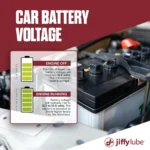
Here's the part most people miss. A car battery runs a 12-volt system, and a healthy one reads around 12.6 volts at rest. Drop below roughly 12.2 volts and it's too weak to spin the starter.
Clamp one cable on the wrong post and you can pop fuses or damage the onboard computer. Let's start with why those small details carry so much weight.
Quick Answer
Park a running donor car close to yours. Turn both off. Clamp red to the dead battery's positive post.
Clamp the other red to the donor's positive. Clamp black to the donor's negative. Clamp the last black to bare metal on the dead car.
Start the donor, then start yours.
Why Getting a Jump-Start Right Actually Matters
Jump-starting looks simple, and it usually is. But a car battery is basically a box of acid and gas, and that changes the stakes.
Lead-acid batteries give off hydrogen while they sit and charge. Hydrogen is flammable. A stray spark right at the terminal can ignite it, and in rare cases that cracks the case and sprays sulfuric acid.
That's the whole reason the connection order isn't just a suggestion.
Reversed polarity is the other big one. Put red on negative and you send current backward through the electrical system. Modern cars are packed with control modules, and a jolt like that can fry them in a second.
Repairs can run into the hundreds or thousands.
So the payoff for doing it right is real:
- You avoid burns, blown fuses, and a damaged ECU.
- You skip a tow bill and get moving fast.
- You don't turn a $120 battery problem into a $1,200 wiring job.
If your battery keeps going flat even after a good jump, the issue usually isn't the battery at all. A quick multimeter check for drain often points to a parasitic draw or a failing alternator instead.
What's Really Happening When You Jump a Dead Battery
A jump-start doesn't recharge your battery. It borrows just enough power to crank the engine once.
When you connect the cables, the donor car's battery and alternator feed current into your dead one. That gives your starter motor the big burst of amps it needs to turn the engine over. Once the engine fires, your own alternator takes over and starts charging again.
That's the key thing to understand. The donor supplies the starting punch, but your alternator does the real recovery work afterward. A resting battery at 12.6 volts is full.
As it drains toward the 12.4-volt range, it's still workable but slipping. By about 12.2 volts, the starter often just clicks.
Sometimes a battery shows 12 volts on a meter but still won't crank. That points to a battery that can't deliver amperage under load, even though the voltage reading looks okay. It's a classic sign the battery is near the end of its life.
First, Make Sure It's Safe to Jump This Battery
Never connect cables to a damaged battery. That's the one rule that trumps everything else. Take ten seconds to look before you touch anything.
Warning Signs You Should Never Ignore
Walk away and call for help if you spot any of these:
- A cracked or split case
- A bulging or swollen battery
- Liquid or crust leaking from the seams
- A rotten-egg smell (that's sulfur, meaning acid is venting)
- A hissing sound near the caps
Any of these means the battery is compromised. Connecting cables can turn a dead battery into a real hazard.
Frozen, Swollen, or Leaking: When to Walk Away
A frozen battery is the sneaky danger, especially in winter. When electrolyte freezes, it expands and can turn into a slushy mess inside the case. Jump a frozen battery and it can rupture or even burst.
If the car sat out in deep cold and the battery looks like it has ice inside, or the case feels oddly firm and misshapen, stop. Let it thaw indoors first, or replace it. Cold weather also just drains capacity, so a battery that reads fine in summer can sag badly in the cold without being damaged at all.
According to OSHA guidance on battery handling, lead-acid batteries release hydrogen gas and should be kept away from sparks and open flames. Eye protection is a smart call whenever you're working this close to the terminals.
What You Need Before You Start
You don't need much, and that's the beauty of it. The right cables and a working donor car cover almost every situation.

Here's the short list of what to have on hand:
| Item | What to look for |
|---|---|
| Jumper cables | 4 to 6 gauge for cars, 1 to 2 gauge for trucks and SUVs |
| Cable length | 12 to 20 feet, so cars don't have to touch |
| Donor vehicle | A running car with a charged 12-volt battery |
| Gloves and eye protection | Basic protection against acid and sparks |
| Owner's manual | Confirms where to connect on your specific car |
Choosing the Right Jumper Cables (Gauge and Length)
Cable gauge is the number that matters most. Lower gauge means thicker wire, and thicker wire carries more current. For a typical sedan, 4 to 6 gauge is plenty.
For a big V8 truck or SUV, step up to 1 or 2 gauge so the cables can handle the load.
Copper conductors beat copper-clad aluminum for carrying amps, though they cost a bit more. As of 2026, a solid set of consumer cables runs roughly $20 to $40. Longer cables give you flexibility, but cheap thin ones can get hot and struggle to deliver a strong jump.
Where to Find Your Battery or Remote Jump Posts
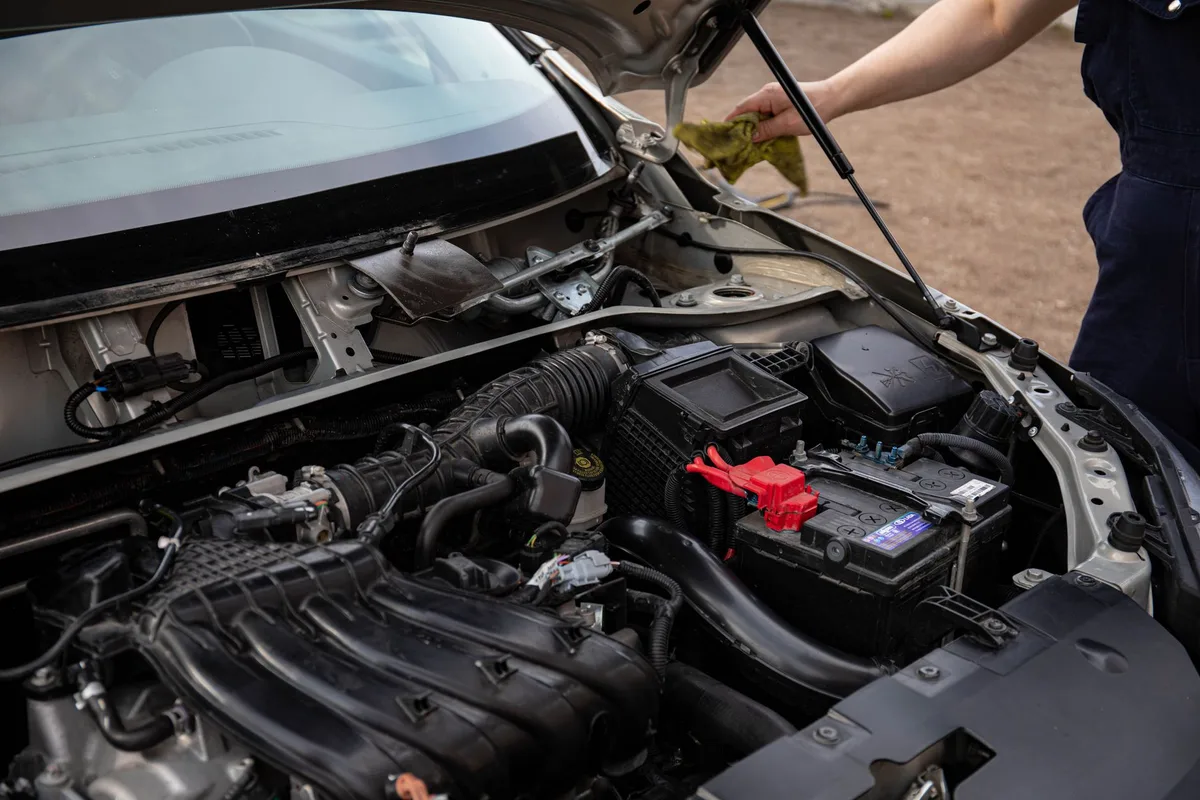
Not every battery sits where you'd expect. Plenty of modern cars tuck the battery in the trunk or under a seat, and give you remote jump posts under the hood instead.
Look for a red plastic cap marked with a plus sign, usually near the fuse box. That's your positive post. The negative connection is often a labeled metal stud or bracket nearby.
Your owner's manual shows the exact spots, and using them is safer than digging for a buried battery. If you're unsure whether the battery is even the problem, it helps to know what a truly dead reading looks like before you hook anything up.
How to Jump-Start a Car With Jumper Cables, Step by Step
Follow the order exactly. The sequence is what keeps sparks away from the battery and current flowing the right way.

Before you clamp anything, get both cars set up. Park them close but not touching. Put both in park or neutral, set the parking brakes, and switch off both ignitions.
Kill the headlights, radio, and climate control on the dead car too.
The Exact Order to Connect the Clamps
Connect in this order, one clamp at a time:
- Red clamp to the positive (+) post on the dead battery.
- Other red clamp to the positive (+) post on the donor battery.
- Black clamp to the negative (, ) post on the donor battery.
- Final black clamp to bare, unpainted metal on the dead car, away from the battery.
Keep the loose clamps from touching each other or any metal while the other ends are live. That fourth connection is the one people get wrong, and we'll explain why the grounding spot matters in the next section.
Starting the Cars and What to Do If It Won't Turn Over
Start the donor car first. Let it idle for two to five minutes so it can feed some charge into the dead battery. Then try starting the dead car.
If it cranks and runs, great. If you get nothing but a click, check that all four clamps are tight and biting clean metal. Wiggle them, wait another few minutes, and try again.
If it still won't crank after a couple of tries, the battery may be too far gone, or the trouble lies elsewhere, like the starter. A battery that shows voltage but won't crank usually needs testing, not more cranking.
The Right Way to Disconnect (Reverse Order)
Once the dead car is running, remove the cables in reverse order. This keeps the last live clamp away from the battery as you finish.
- Black clamp from the bare metal ground.
- Black clamp from the donor battery.
- Red clamp from the donor battery.
- Red clamp from the revived car.
Don't shut the revived car off right away. Let it run so the alternator can start rebuilding the charge. We'll cover exactly how long that takes a little further down.
The Hidden Reason for Grounding the Last Clamp to Bare Metal
That final black clamp goes on bare engine metal, not the dead battery's negative post, for one reason: sparks. When you make that last connection, it often throws a small spark as current jumps the gap.
You want that spark as far from the battery as possible. The battery vents hydrogen gas right at the caps, and hydrogen ignites easily. Grounding to a clean bolt or bracket on the engine block keeps the spark away from those fumes.
A good ground spot is shiny, unpainted, and solid. Think of an engine lifting hook, a bolt head, or a bracket. Skip anything painted, greasy, or near moving parts like the belt and fan.
Mistakes That Fry Your Electronics or Hurt You
Most jump-start damage comes from a handful of avoidable errors. Here are the ones our research sees most often:
- Reversing the clamps. Red on negative sends current backward and can wreck control modules.
- Letting the clamps touch while live. That's a dead short, with sparks and heat.
- Grounding to the dead battery post. This puts the spark right in the danger zone.
- Jumping a frozen or cracked battery. The rupture risk isn't worth it.
- Cranking for more than a few seconds at a time. Long cranks overheat the starter.
One more trap catches people off guard. If your battery reads near zero volts, a jump might not stick because the battery can't hold anything. A multimeter reading of 0 volts usually points to a dead cell or a broken connection, not a simple flat charge.
When the same battery keeps dying overnight, the culprit is often a drain you can't see. Even a small current draw above the safe range will empty a battery while the car sits.
Jumper Cables vs. Portable Jump Starters vs. a Tow
Cables are cheapest, but they need a second car. That's the core tradeoff. Here's how the three main options stack up.

| Option | Best for | Downside |
|---|---|---|
| Jumper cables | Cheap, always in the trunk | Needs a willing donor car |
| Portable jump starter | Solo drivers, no donor needed | Must stay charged, costs more |
| Roadside assistance | No tools, no confidence | Wait time, possible fee |
Jumper cables suit anyone who usually has another car nearby. A portable lithium jump starter is the pick if you park in remote spots or drive alone a lot. As of 2026, a decent lithium jump pack runs about $60 to $120 and can crank most four-cylinder and six-cylinder engines several times per charge.
A tow makes sense when the battery is clearly damaged, or when repeated jumps do nothing. If the car won't hold a charge at all, you're not looking at a battery problem you can jump your way out of.
After the Jump: Recharging and Finding the Real Culprit
Keep the engine running for at least 20 to 30 minutes after a jump. A short trip won't cut it. The alternator needs sustained run time to rebuild the charge you borrowed.
Better yet, take a highway drive. Idling charges slowly because engine speed is low. Higher revs let the alternator push more current back into the battery.
A healthy charging system reads about 13.5 to 14.7 volts at the battery while the engine runs. If it stays near 13.5 volts or higher, the alternator is doing its job. Readings that sag below 13 volts point to a charging problem.
Battery, Alternator, or Parasitic Drain?
If your car needs a jump again soon, one of three things is usually wrong. A quick multimeter test sorts it out fast.
- Battery: Won't hold a charge, reads low at rest, often several years old.
- Alternator: Car dies while driving, dim lights, low running voltage.
- Parasitic drain: Battery dies overnight while the car sits.
A simple way to tell the first two apart is to check voltage with the engine off, then running. The battery-versus-alternator multimeter test shows which part is failing in under five minutes. For overnight deaths, measure the parasitic draw at rest to catch a circuit that never fully shuts off.
What It Costs and the Numbers Worth Knowing
Jump-starting is one of the cheapest fixes in car ownership. The whole thing costs almost nothing if you own cables.
Here are the numbers worth keeping in mind:
| Item or spec | Typical value (2026) |
|---|---|
| Jumper cables | $20 to $40 |
| Portable jump starter | $60 to $120 |
| Resting voltage, full battery | 12.6 volts |
| Too weak to crank | Below 12.2 volts |
| Charging voltage, engine on | 13.5 to 14.7 volts |
| Recharge drive time | 20 to 30 minutes minimum |
Keep an eye on that 14.7-volt ceiling. Anything creeping above 14.7 volts can mean an overcharging regulator, which cooks a battery over time. Knowing these few numbers turns a stressful roadside moment into a five-minute job you can handle yourself.
When to Stop and Call a Professional
Some no-starts aren't a battery job at all. Knowing when to stop saves you from wasted effort and real risk.
Call for help if any of these are true:
- The battery is cracked, swollen, leaking, or frozen.
- You smell rotten eggs or see corrosion crusting the posts.
- Two good jump attempts do nothing.
- The engine cranks but never catches.
- The car dies again within minutes of driving.
That last one usually means the alternator isn't charging. No amount of jumping fixes a dead alternator, since the battery just drains right back down. A mechanic or auto parts store can bench-test both the battery and the charging system, often for free.
Trust your nose and eyes here. If something looks or smells wrong at the battery, don't force a connection. A $150 tow beats an acid burn or a fried computer every time.
Frequently Asked Questions
How long should I let the car run after a jump-start?
Run it at least 20 to 30 minutes, ideally on the highway. Idling charges slowly because engine speed stays low. A short trip around the block won't rebuild the charge you borrowed, so the car may not restart later.
Can I jump-start a car alone without another vehicle?
Yes, with a portable jump starter. These self-contained lithium packs crank the engine without a donor car. Keep one charged in the trunk and you can revive a dead battery in any parking lot, no second driver needed.
Which cable do I connect first, red or black?
Connect red first, to the positive post on the dead battery. Then red to the donor's positive, black to the donor's negative, and the final black to bare metal on the dead car. Reverse that exact order when you remove the cables.
Why won't my car start even after a jump?
The battery may be too far gone to hold a charge, or the problem lies elsewhere. A bad starter, a blown fuse, or corroded terminals can all block a start. If jumping does nothing after two tries, have the battery and charging system tested.
Is it safe to jump-start a modern car with sensitive electronics?
Yes, as long as you follow the correct clamp order and never reverse polarity. Red on negative is what damages control modules. Many newer cars have designated jump posts under the hood, so check your owner's manual for the exact connection points.
How often can I jump-start the same battery?
A jump or two is fine, but repeated jumps signal a deeper problem. A healthy battery shouldn't need boosting again and again. If yours keeps dying, test the battery, alternator, and parasitic draw before it strands you somewhere worse.

Similar Posts