Car Won’t Start But Lights Work? Causes & Fixes
A car won't start but the lights work is one of the most misleading no-start situations you'll run into. Your headlights glow, the dash lights up, maybe the radio plays. Yet turn the key and you get a click, a whir, or nothing at all.
That mix of working lights and a silent engine sends most people straight to the wrong conclusion.
Here's the catch. Dash and dome lights sip only a fraction of an amp, while your starter motor pulls 100 to 200 amps to turn the engine over. A battery can easily light the cabin and still be far too weak to crank.
As of 2026, a weak or poorly connected battery is still the single most common cause of this exact problem, per aggregate roadside-assistance data. Let's start by untangling why the two systems behave so differently.
Why Your Car's Lights Work but the Engine Won't Start
Your car runs two very different electrical demands off the same battery. One is tiny. One is huge.
Lights, radio, and the dashboard are low-draw loads. They need only a small, steady current. The starter motor is the opposite.
It's the single biggest electrical draw in the whole car.
So when you see lights but get no start, you're watching a battery that can handle the easy job and fail the hard one. That gap is the clue. It usually points to one of a handful of causes:
- A weak or partly discharged battery
- Corroded or loose battery terminals
- A failing starter motor or stuck solenoid
- A bad ignition switch
- An immobilizer that won't recognize your key
- A safety switch blocking the crank (Park/Neutral or clutch)
The good news? You can narrow it down in a few minutes with your eyes and ears. No shop visit required to spot the likely culprit.
The 30-Second Answer
If your car won't start but the lights work, the battery is usually too weak to crank. Lights need almost no power. The starter needs a massive burst.
A battery can light the cabin and still fail under that load. Rapid clicking points to low charge or bad connections. Total silence points to the starter, ignition switch, or a safety switch.
That's the short version. The sound your car makes when you turn the key tells you which branch to follow next.
Why Working Lights Don't Prove Your Battery Is Good
Working lights prove your battery has voltage. They don't prove it has cranking power. Those are two different things.
Think of voltage as pressure and cranking amps as muscle. A tired battery can still hold enough pressure to light a bulb. Ask it to shove 150 amps into the starter, though, and it collapses.
That's why a battery reading a healthy-looking number at rest can still leave you stranded.
The real test is voltage under load. A good battery holds above roughly 9.6 volts while cranking. A weak one nosedives the moment the starter engages, which is exactly what happens when the load spikes.
Even a resting reading like 12.4 volts can hide a battery that's on its way out.
Battery capacity is rated in cold cranking amps, a standard defined by SAE International. As a battery ages, its real cranking output drops well below the number on the label. That's why a three-year-old battery can light your dash and still refuse to turn the engine.
Listen First: What the Sound Tells You
Before you touch anything, turn the key and just listen. The sound is your fastest diagnostic tool. Each one points down a different branch.
Rapid Clicking When You Turn the Key
Fast clicking, like a machine gun, almost always means low voltage. The starter solenoid tries to engage, drops out, and retries dozens of times a second.
If you hear this, the odds are heavy on a weak battery or a bad connection. Move to the terminal check and jump-start steps first.
One Loud Single Clunk
A single solid clunk, then nothing, usually points to the starter motor or solenoid. The solenoid engages once but the motor doesn't spin.
Sometimes a worn starter hangs on a dead spot. The classic old-school trick is tapping the starter, which we'll cover below.
Total Silence, No Click at All
Dead silence when you turn to start often means the signal isn't reaching the starter. Suspect the ignition switch, a safety switch, a blown fusible link, or a totally flat connection.
If nothing happens at all, try shifting to Neutral and cranking again. That simple move rules the safety switch in or out.
It Cranks but Won't Fire Up
If the engine spins normally but never catches, your starting system is fine. Now you're looking at fuel, spark, or the immobilizer instead.
This is a different problem than a no-crank. A cranking engine that won't start points to the fuel pump, ignition components, or a key the car doesn't recognize.
The Headlight Load Test You Can Do in 60 Seconds
This is the quickest way to size up your battery without any tools. It takes under a minute.
Here's how to run it:
- Turn on your headlights and leave the engine off.
- Watch how bright they are. Note it.
- Try to start the car while watching the lights.
- Read the result.
Now match what you saw:
| What the lights do | Most likely cause | Next move |
|---|---|---|
| Go very dim or die during crank | Weak battery or bad connection | Clean terminals, then jump-start |
| Stay bright, one clunk | Starter motor or solenoid | Tap test, then test the starter |
| Stay bright, dead silence | Ignition or safety switch | Try Neutral, check fuses |
| Bright, engine spins fast | Fuel, spark, or immobilizer | Move off the battery branch |
Big dimming under load is the tell. It means the battery can't hold voltage when the starter pulls hard, and a proper multimeter check on a battery that keeps quitting will usually confirm it. If the lights barely flinch but the engine won't turn, stop blaming the battery.
Look at the starter, ignition, or, when it's truly a battery-or-alternator question, the charging side.
Follow the Branch: Matching Symptoms to the Real Cause
Now let's turn those sounds into a diagnosis. Each symptom points to a specific part. Here's how to read the branch you're on.
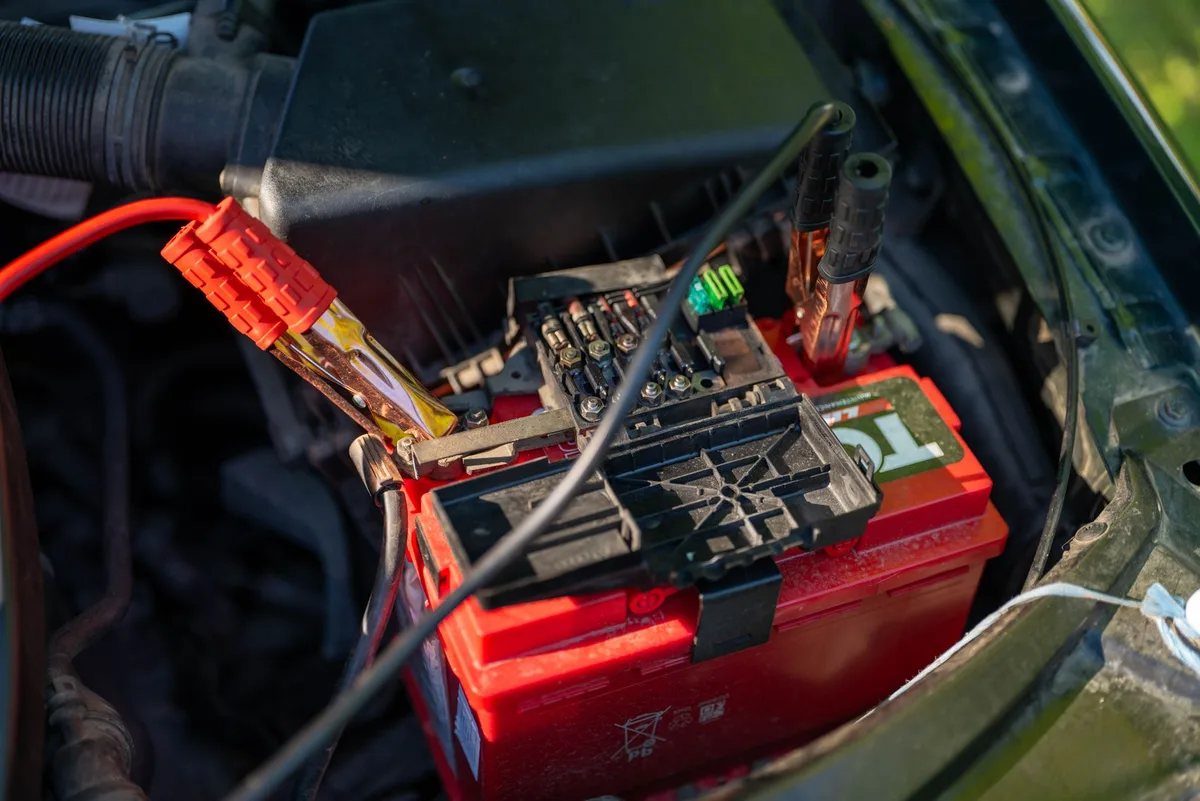
Weak or Dead Battery
If the lights dimmed hard and you heard rapid clicking, start here. A discharged battery is the top suspect, especially after the car sat for days or through a cold night.
Batteries lose 30% to 60% of their punch below freezing. A short daily commute rarely recharges them fully either. If your battery is over three years old, its cranking power has likely faded, and a reading near 12.2 volts signals a battery that's nearly flat.
Corroded or Loose Battery Terminals
White or greenish crust on the terminals blocks current. Even a perfect battery can't crank through a corroded connection.
Grab the cable clamps and try to wiggle them. If they move, they're loose. A loose or dirty terminal mimics a dead battery, and it's a five-minute fix.
Failed Starter Motor or Stuck Solenoid
If the lights stayed bright but you got one clunk or nothing, look at the starter. The battery is delivering power, but the motor isn't converting it to motion.
Starters wear out on high-mileage cars. A stuck solenoid or dead spot on the armature is common past 100,000 miles.
Bad Ignition Switch
A worn ignition switch may not send the start signal at all. You'll often get dead silence with healthy lights.
One tell: accessories work in the "on" position, but turning to "start" does nothing. That gap between running the radio and cranking points at the switch.
Immobilizer or Key Fob Problem
If the engine cranks fine but won't fire, the anti-theft immobilizer may be blocking it. Modern cars won't run if they can't read the key's transponder chip.
A dying fob battery is a frequent cause. Try your spare key, or hold the fob against the start button if your car supports it.
Safety Switch (Park/Neutral or Clutch)
Automatics won't crank unless the shifter is fully in Park or Neutral. Manuals need the clutch pressed to the floor.
If you get silence, shift firmly into Neutral and try again. A misadjusted neutral safety switch often hides here.
Roadside Fixes You Can Try Right Now
Some causes you can clear in minutes with basic tools. Work through these before calling for a tow.
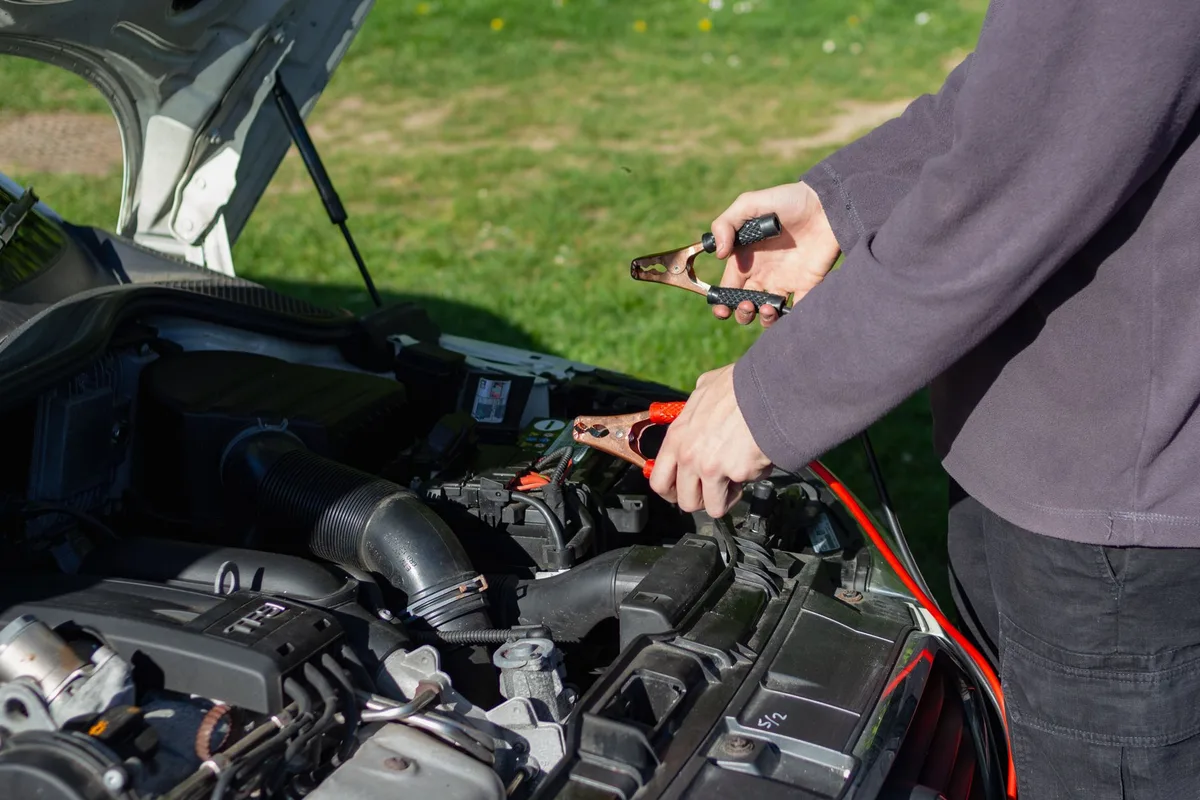
Cleaning and Tightening the Terminals
Kill the engine and remove the key first. Loosen the negative clamp, then the positive. Scrub the posts and clamps with a wire brush until the metal shines.
Refit the positive first, then the negative, and snug them down tight. If corrosion was your problem, the car may fire right up.
Jump-Starting the Right Way
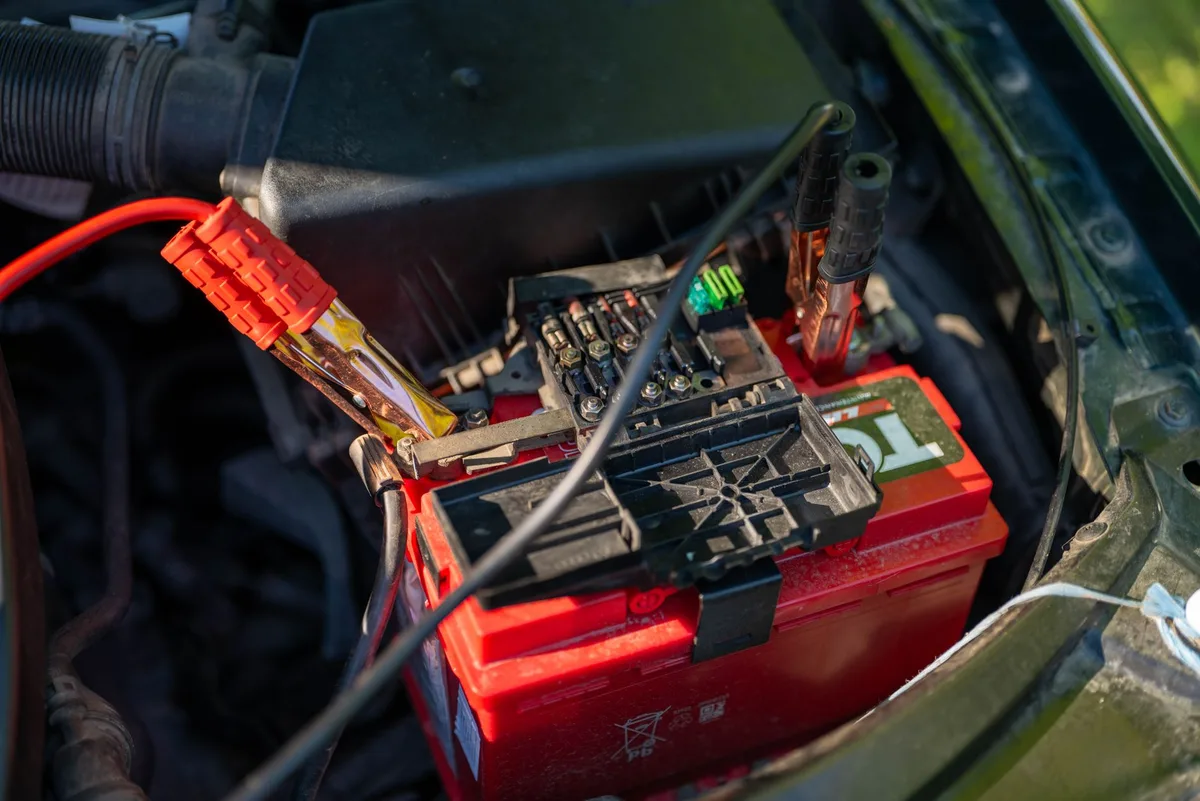
Connect in the correct order to stay safe. Positive to the dead battery, positive to the donor, negative to the donor, then the final negative clamp to bare metal on the dead car, away from the battery.
Let it sit two or three minutes, then start. If it fires but dies once you disconnect, the charging system may not be holding voltage.
The Starter Tap Trick
For a single-clunk no-start, try tapping the starter. Have someone crank the key while you tap the starter body gently with a wrench or hammer handle.
This can jolt a stuck solenoid or worn brushes back to life. It's a temporary fix, not a repair. If it works, drive straight to get the starter replaced.
Shifting to Neutral to Bypass the Safety Switch
Move the shifter to Neutral and turn the key. If the car cranks in Neutral but not Park, your neutral safety switch is the problem.
On a manual, pump the clutch fully and hold it down. A failed clutch switch blocks the start circuit entirely.
Testing Voltage the Right Way With a Multimeter
A multimeter turns guesswork into numbers. Set it to DC volts and you can confirm a weak battery in seconds.
Turn the dial to the 20V DC range so you get a clean reading. Touch red to the positive post and black to the negative. If you're unsure which dial position to pick, the right meter setting is straightforward once you know it.
No meter handy? You can still judge a battery by its behavior.
Resting Voltage vs Cranking Voltage
Resting voltage is the reading with everything off. Cranking voltage is the reading while the starter turns. They tell different stories.
- 12.6V or more: fully charged
- 12.4V: about 75% charged
- 12.2V: roughly half charged
- 12.0V or below: essentially dead
Now crank the engine and watch the number. It should stay above 9.6 volts. If it dives far below that during cranking, the battery can't hold up under load.
Running a Quick Voltage-Drop Test
A voltage-drop test finds hidden resistance in cables and grounds. Set the meter to DC volts. Probe from the battery post to the cable clamp while a helper cranks.
You want to see less than 0.2 volts. A higher reading means the connection is eating power that should reach the starter. It's how you catch a bad ground that looks fine to the eye.
Dead Battery vs Bad Starter vs Bad Alternator: Telling Them Apart
These three get blamed for each other constantly. Here's the clean way to sort them.
| Part | Classic symptom | Quick check |
|---|---|---|
| Battery | Rapid clicking, dim lights | Resting voltage below 12.4V |
| Starter | Bright lights, single clunk | Cranks after a tap test |
| Alternator | Ran, then died; keeps draining | Charging voltage below 13.5V running |
A dead battery fails to crank from the start. A bad starter gets power but won't spin. A bad alternator lets you drive, then leaves you stranded because it never recharged the battery.
The alternator only shows up while running. With the engine on, a healthy charging output sits in the 13.5 to 14.7 volt range. If 13.5 volts feels low to you, it's actually the bottom of normal.
A battery that keeps dying overnight can also point to an abnormal parasitic drain pulling power while the car sleeps.
Mistakes That Send People Buying the Wrong Part
The costliest error is swapping parts without testing. Plenty of good starters and batteries get thrown away on a hunch. Test first, buy second.
Watch out for these common traps:
- Trusting a resting voltage reading alone. It hides weak cranking power.
- Assuming bright lights mean a healthy battery. They don't, as we covered earlier.
- Replacing the starter when the real fault is a corroded ground.
- Ignoring the key fob battery on a crank-but-no-start.
- Cranking for 20 seconds straight. Limit it to 10 seconds, then rest, or you'll overheat the starter.
One more: don't skip the connections. A loose clamp or dirty terminal mimics nearly every expensive failure on this list. Rule out the cheap stuff before you spend a dime on parts.
What It Costs to Fix Each Cause
Prices swing by car and shop, but here's a realistic range as of 2026. It helps you judge whether a quote sounds fair.
| Fix | Typical cost | DIY-friendly? |
|---|---|---|
| Clean or tighten terminals | $0 to $15 | Yes |
| New battery | $120 to $300 | Yes |
| Starter motor | $300 to $700 | Moderate |
| Ignition switch | $150 to $400 | Moderate |
| Alternator | $400 to $900 | Moderate |
The lesson is simple. A $10 wire brush can save you a $600 misdiagnosis. Always clear the cheap causes before you approve a big repair.
Safety Rules Before You Touch the Battery
Car batteries hold enough current to burn you and vent hydrogen gas. A few rules keep the job safe.
- No sparks, flames, or cigarettes near the battery.
- Wear eye protection and gloves. Battery acid is corrosive.
- Disconnect the negative terminal first, reconnect it last.
- Keep hands and tools clear of the belt and fan.
- Never lay a metal tool across both terminals.
If you smell rotten eggs or see a cracked, swollen case, stop. A leaking battery needs professional handling, not a jump-start.
When to Stop and Call a Pro
Call for help when the fix is beyond basic tools or the diagnosis stays murky. There's no shame in it.
Reach out to a mechanic or roadside service if:
- The car still won't start after a clean jump and tight terminals.
- You smell fuel, smoke, or burning plastic.
- The starter test and voltage checks all look normal, yet nothing cranks.
- The dashboard shows an immobilizer or security warning you can't clear.
A no-crank with good voltage and clean connections usually means a starter, wiring, or switch fault. Those often need a shop to pin down safely.
Frequently Asked Questions
Why does my car click rapidly but the lights still work?
Rapid clicking with working lights almost always means low battery voltage. The solenoid tries to engage but can't hold. Your lights glow because they need barely any current.
Charge or jump the battery, then test it under load to confirm.
Can a bad starter still let the lights work?
Yes. A failed starter has no effect on your lights or radio. Those run on a separate low-draw circuit.
You'll often see bright dash lights and hear a single clunk or silence when the starter itself is dead.
Is it the battery or the alternator if my car won't start?
If the car won't crank at all, suspect the battery first. If it started fine, then died and keeps dying, look at the alternator. Check charging voltage with the engine running.
Below 13.5 volts points to a weak alternator.
How long should I crank before stopping?
Crank in bursts of no more than 10 seconds. Then rest 30 seconds before trying again. Longer cranking overheats the starter and drains the battery further.
If three short attempts fail, move on to testing.
Can cold weather cause this even with working lights?
Absolutely. Freezing temperatures cut a battery's cranking power by 30% to 60%. The lights still glow on the reduced charge, but the starter can't pull enough amps.
A marginal battery often fails on the first hard cold morning.
Your Quick Decision Guide for a No-Start With Working Lights
Run this order the next time it happens. It moves from cheapest to costliest.
- Turn the key and listen. Clicking, clunk, or silence?
- Watch the headlights while cranking. Big dimming means a weak battery.
- Check the terminals for corrosion or looseness. Clean and tighten.
- Try a jump-start. Fires up? The battery was the issue.
- Silence with bright lights? Shift to Neutral, then suspect the starter or ignition switch.
- Cranks but won't fire? Look at fuel, spark, or the key fob.
- Still stuck? Test voltage, then call a pro.
Start with your ears and eyes. Nine times out of ten, a no-start with working lights traces back to the battery or a bad connection. Rule those out first, and you'll save yourself a tow and a guessing game.

Similar Posts