Can You Overcharge a Car Battery? What to Know
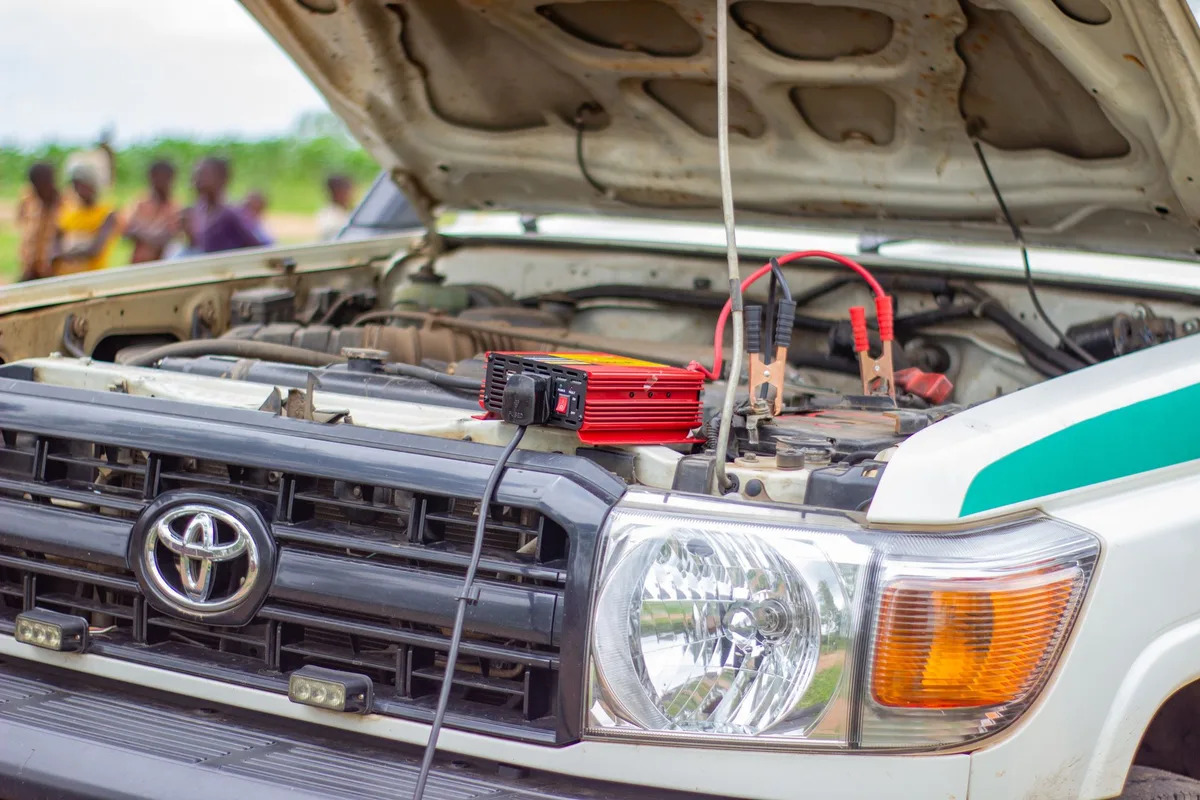
Can you overcharge a car battery? Short version: yes, you can, and doing it can ruin the battery or create a real safety hazard. But whether it actually happens comes down to one thing.
What's doing the charging? A modern smart charger won't overcharge. A cheap manual charger or a faulty alternator absolutely can.
Here's the number that matters. A healthy 12-volt battery rests at about 12.6 volts when it's full. Push it past roughly 14.7 volts for hours on end, and you've crossed into overcharge territory.
That's when the damage starts. Let's break down what's really going on, and how to keep it from happening to you.
Quick Answer
Yes, you can overcharge a car battery. It happens when the charging voltage stays too high for too long. A modern smart charger prevents this by switching to a float mode.
Manual chargers and faulty alternators are the usual culprits. Overcharging boils off the electrolyte, overheats the battery, and can cause swelling or venting.
What "Overcharging" Actually Means (And Why the Voltage Matters)
Overcharging isn't about time. It's about voltage. A battery is "full" once it reaches a certain state of charge.
Keep forcing current in after that, and the extra energy has nowhere useful to go.
That leftover energy splits the water in the electrolyte into hydrogen and oxygen gas. Chemists call it electrolysis. In plain terms, your battery starts gassing and heating up instead of storing charge.
The safe charging window is fairly narrow. Here's what those voltages mean at a glance.
| Voltage (12V battery) | What it tells you |
|---|---|
| 12.6V rested | Fully charged, sitting idle |
| 13.8V to 14.4V | Normal, healthy charging |
| 14.7V and up (sustained) | Overcharge risk begins |
| 15V+ while running | Regulator or charger fault |
If you're unsure what a resting battery should read, our guide to normal resting voltage walks through the full range. The takeaway is simple. A little over 14 volts during charging is fine.
Parked up around 15 volts for hours is not.
The Real Answer Depends on What's Charging It
Whether you can overcharge really comes down to the equipment. Three things charge a car battery, and they behave very differently.
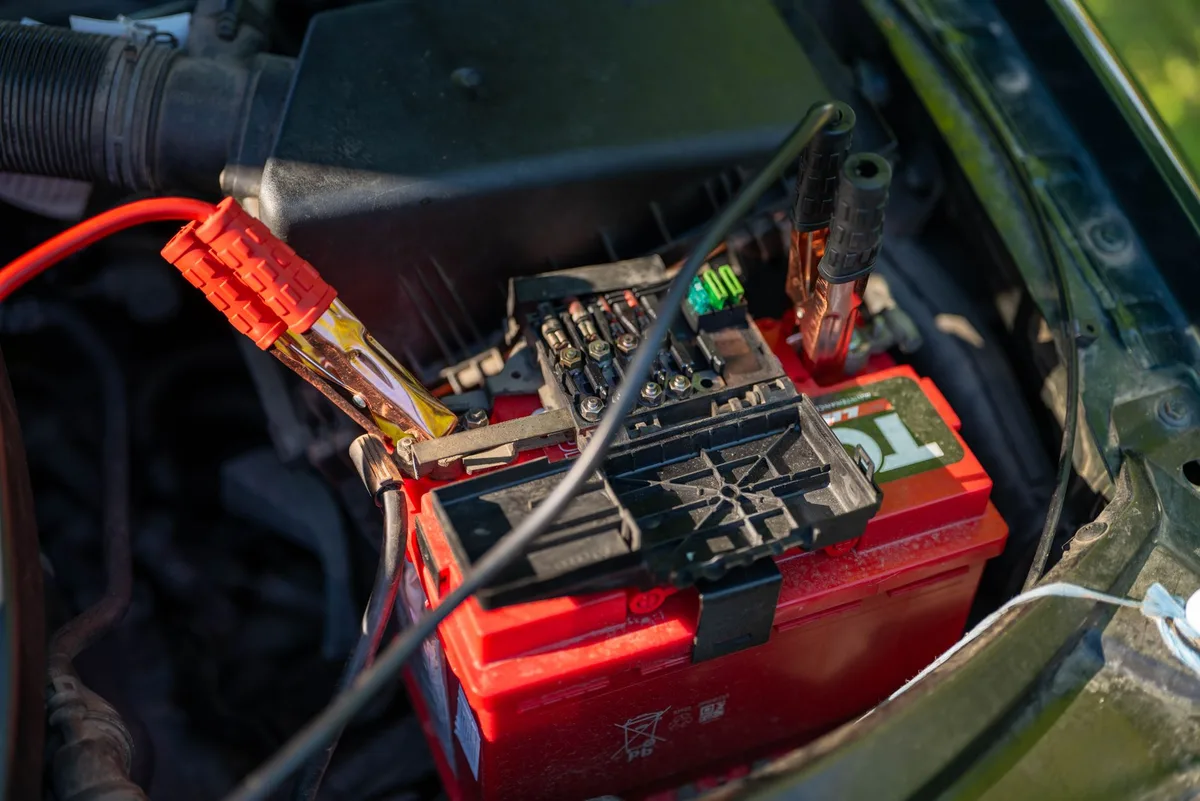
Smart Chargers and Battery Maintainers
A smart charger is the safe option. These units are microprocessor-controlled and charge in stages. Once the battery hits full, they drop to a float voltage of around 13.2 to 13.8 volts.
That float mode just tops off natural self-discharge. It won't keep cramming current into a full battery. So if you're leaving a car parked all winter, a quality maintainer can stay connected for weeks without harm.
Old-School Manual and Trickle Chargers
This is where people get burned. A basic manual charger has no brain. It pushes current at a set rate until you unplug it, full battery or not.
Leave one connected overnight on a small battery, and you can easily overcharge it. If you only own a manual charger, set a timer and check the voltage. Don't just walk away and forget it.
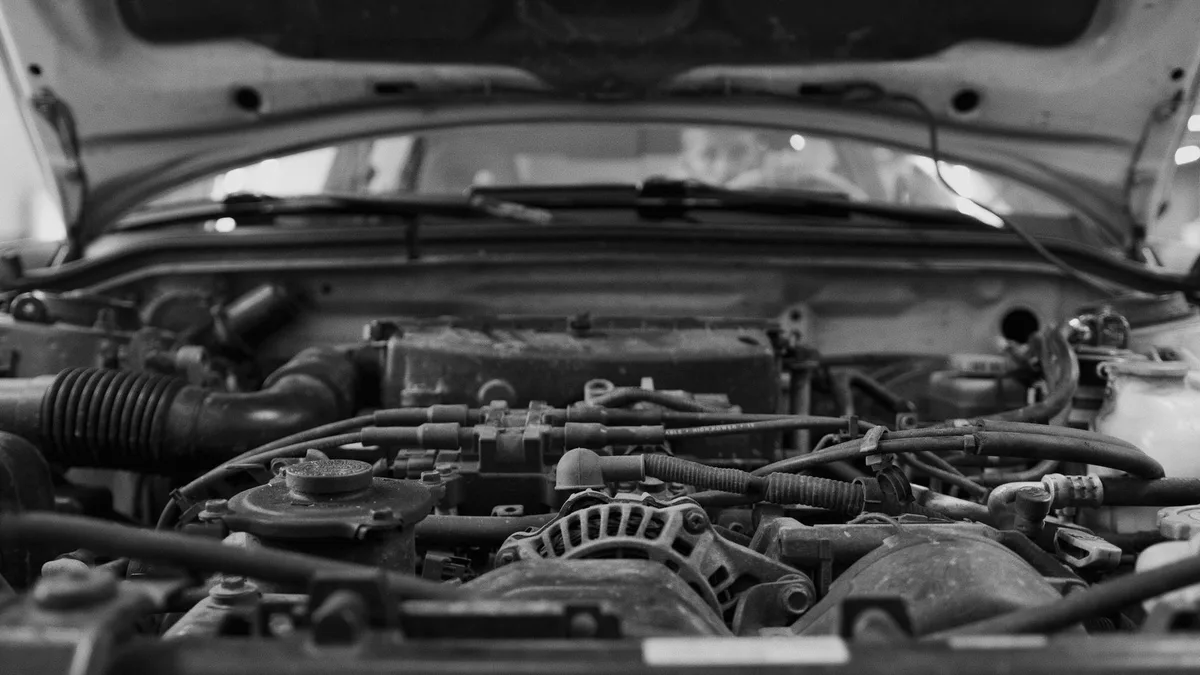
Your Car's Alternator and Voltage Regulator
Your alternator charges the battery while you drive. A voltage regulator keeps its output capped around 14.4 volts. When that regulator fails, the alternator can pump out 15, 16, even 17 volts.
That's a slow-motion overcharge every time you drive. If your battery keeps needing water or runs hot, test the charging system. Our walkthrough on checking its output shows how to catch a runaway alternator, and this related read on an alternator that charges but the battery still dies covers the other side of the problem.
What Overcharging Does Inside the Battery
Overcharging attacks a battery from two directions at once. Both shorten its life, and one is a genuine safety risk.
First, the gassing. All that electrolysis vents hydrogen and oxygen. In a flooded battery, that means losing water and drying out the cells.
Run it dry and the plates sulfate, killing capacity for good.
Second, the heat. Extra current the battery can't absorb turns into heat instead. In sealed AGM or lithium batteries, that heat can spiral into thermal runaway.
The case swells, the battery vents, and in the worst case it ruptures.
Hydrogen gas is flammable in concentrations as low as about 4 percent in air. A single spark near a gassing battery can ignite it. Federal workplace safety guidance from OSHA calls for good ventilation around charging batteries for exactly this reason.
If you ever notice a sulfur smell near the battery, that rotten-egg odor is a red flag to stop and investigate.
Warning Signs Your Battery Is Being Overcharged
Overcharging rarely stays hidden. The battery gives you clues if you know what to look for. Watch for these signs:
- A hot battery case, warm to the touch after charging or a short drive
- A bulging or swollen case, often on the sides
- A rotten-egg or sulfur smell around the engine bay
- Fluid loss in a serviceable battery, with plates showing through the caps
- Corrosion or white residue building fast around the terminals
- Acid weeping or leaking from the case or vents
- Dash voltage reading steadily above 15 volts while driving
One or two of these together usually means something is overcharging. Catch it early and you might save the battery. Ignore it, and you'll be shopping for a new one soon.
Flooded vs. AGM vs. Lithium: Which Handles Overcharge Worst
Not all batteries react the same way to too much voltage. The chemistry inside decides how forgiving they are. Here's how the three common types compare.
| Battery type | Overcharge tolerance | What goes wrong first |
|---|---|---|
| Flooded (wet cell) | Moderate | Boils off water, plates dry out |
| AGM / Gel (sealed) | Low | Vents through relief valve, can't refill |
| Lithium (LiFePO4) | Very low | BMS cuts off, risk of thermal runaway |
Flooded batteries are the most forgiving, but only because you can add distilled water. A serviceable one lets you top up cells after mild overcharging. That safety net doesn't exist with sealed types.
AGM and gel batteries are sealed for life. Once they vent gas, that electrolyte is gone for good. Overcharge an AGM battery and you permanently cut its capacity.
Lithium batteries are the fussiest. They rely on a built-in battery management system to stop charging at the limit. Push past it and you risk real heat trouble.
Always use a charger with a dedicated lithium mode for these.
Safe Charging Voltages and Numbers to Know
Knowing the target voltages takes the guesswork out of charging. A multimeter across the terminals tells you everything in seconds.
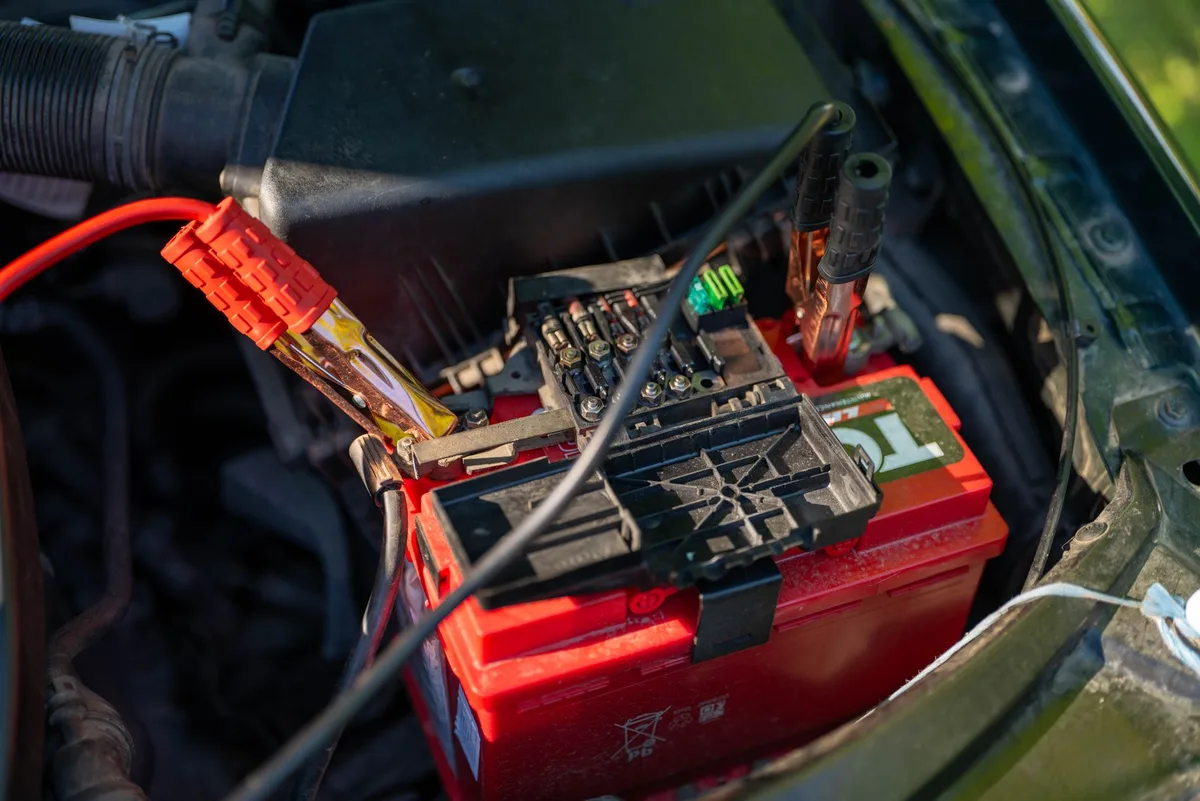
Here's what your meter should read. A rested, full battery sits at 12.6 to 12.7 volts. During charging, 13.8 to 14.4 volts is the sweet spot.
With the engine running, anything up to about 14.4 volts is normal alternator output.
Start worrying at a sustained 14.8 volts or higher. A reading of 15 volts or more while driving points straight at a bad regulator. If you're new to metering, our guide on reading a battery after a top-up covers the exact steps, and this note on avoiding meter damage keeps your tool safe.
One tip. Let the battery rest an hour after charging before you test. A fresh surface charge inflates the reading.
You can also bleed off that surface charge for a true number.
How to Charge a Car Battery Without Overcharging It
The safest route is simple. Match the charger to the battery, then let it do its job. Follow these steps and overcharging almost never happens.
- Pick the right charger. Use a smart charger or maintainer with an auto shut-off.
- Set the correct mode. Match it to your battery type, flooded, AGM, or lithium.
- Choose a modest amp rate. A 2 to 10 amp charge is gentler than a high-amp blast.
- Connect in order. Positive first, then negative to a clean ground point.
- Charge in a ventilated space. Keep sparks and flames well away.
- Check voltage as it finishes. A full battery should settle near 12.6 volts rested.
- Unplug promptly with a manual charger. Never leave a dumb charger running overnight.
If you're relying on the alternator instead, just drive normally. A healthy charging system won't overcharge on its own. The danger only shows up when the regulator fails.
Mistakes That Cook Batteries (And How to Dodge Them)
Most overcharging cases trace back to a handful of avoidable errors. Here are the ones our research sees most often, and the fix for each.
- Leaving a manual charger on for days. Set a timer or upgrade to a smart charger.
- Using the wrong battery mode. AGM on a flooded setting overcharges fast.
- Ignoring a bad regulator. If the battery keeps dying even with a good alternator, test charging voltage.
- Skipping the water check. Flooded batteries need distilled water topped up after heavy charging.
- Charging a frozen or damaged battery. Cracks and swelling mean stop, not charge.
- Trusting a cheap charger's "auto" claim. Verify with a multimeter anyway.
A quick habit fixes most of this. Read the voltage before you walk away. Thirty seconds with a meter beats a dead battery and a ruined weekend.
Also keep an eye on the battery's age. Most last three to five years. An older battery that suddenly runs hot or won't hold a charge may be failing, not just overcharged.
Safety Rules Around Hydrogen Gas and Battery Acid
Charging a battery releases hydrogen, and hydrogen burns easily. Treat every charge like a small fire risk, because it is. A few simple rules keep you safe.
- Charge in an open, ventilated area, never a sealed closet.
- No sparks, cigarettes, or flames near a charging battery.
- Connect the ground clamp away from the battery to keep sparks distant.
- Wear eye protection. Sulfuric acid electrolyte burns skin and eyes.
- If a battery gets hot or hisses, stop charging and step back.
Acid handling matters too. If you spot a battery weeping acid, wear gloves and neutralize spills with baking soda and water. Never touch leaked electrolyte bare-handed.
Disposal is the last piece. A swollen or vented battery is scrap, not a project. Take it to any auto parts store for proper recycling.
Lead-acid batteries are hazardous waste and shouldn't go in the trash.
When to Stop and Call a Mechanic
Some overcharging problems you can fix at home. Others need a pro. Here's where to draw the line.
Handle it yourself when the cause is obvious. A manual charger left on too long, a wrong mode setting, or a battery that just needs distilled water topped up. Those are simple fixes.
Call a mechanic when the charging system is the culprit. If your multimeter shows a healthy reading but the car won't crank, or the alternator pushes past 15 volts, that's a regulator or wiring job. Chasing a bad regulator without the right tools wastes time.
Stop immediately and get help if you see real danger signs:
- A battery that's hot enough you can't hold your hand on it
- A visibly swollen, cracked, or leaking case
- A strong sulfur smell that won't clear
- Smoke or bubbling sounds during charging
Those point to a battery near failure. Don't try to keep using it. Replace it, and have the charging system checked so the new one doesn't cook too.
Frequently Asked Questions About Overcharging a Car Battery
Can a trickle charger overcharge a car battery?
A basic trickle charger can overcharge a battery if left connected too long. It keeps pushing current with no auto shut-off. A smart battery maintainer is different.
It switches to float mode at full and can stay on for weeks safely.
How long can you leave a battery on charge?
With a smart charger, you can leave a battery connected indefinitely thanks to float mode. With a manual charger, unplug it once the battery hits full, usually within a few hours. Always check voltage rather than guessing, since a full 12-volt battery rests near 12.6 volts.
Can an alternator overcharge a battery?
Yes, an alternator can overcharge a battery when its voltage regulator fails. A healthy alternator caps output around 14.4 volts. A faulty one may push 15 to 17 volts and slowly cook the battery.
If a good alternator still leaves the battery flat, test the charging voltage directly.
What are the signs of an overcharged car battery?
The clearest signs are a hot battery case, a swollen shape, and a rotten-egg sulfur smell. You may also notice fast terminal corrosion, fluid loss, or acid leaking. A charging voltage above 15 volts while driving confirms it.
Catching these early can save the battery.
Does overcharging ruin a car battery permanently?
Overcharging often causes permanent damage, especially in sealed AGM or lithium batteries. Once they vent gas, that lost electrolyte can't be replaced. A flooded battery may survive mild overcharging if you refill it with distilled water quickly.
Severe overcharging warps plates and kills capacity for good.
Can you overcharge a battery by jump-starting?
No, jump-starting won't overcharge a battery. It only delivers a short burst to crank the engine. If the jump-start process is new to you, the risk is bad connections, not overcharging.
The real recharge happens afterward through the alternator as you drive.
The Bottom Line on Overcharging Your Car Battery
So the honest answer is yes, overcharging is a real thing, but it's easy to avoid. As of 2026, a good smart charger removes almost all the risk. It fills the battery, drops to float, and leaves it alone.
The trouble comes from two directions. A dumb manual charger you forget about, or a failing voltage regulator on your alternator. Both push voltage too high for too long, and that's what boils electrolyte and swells cases.
Keep it simple. Match the charger to your battery type. Watch for heat, swelling, and that sulfur smell.
Keep a multimeter handy and know your numbers, 12.6 volts rested and 13.8 to 14.4 while charging.
Do that, and overcharging stays a problem you read about, not one you pay for. If a battery ever shows the classic failing symptoms, swap it out and check the charging system before the next one goes the same way.

Similar Posts