How to Remove Surface Charge From a Car Battery
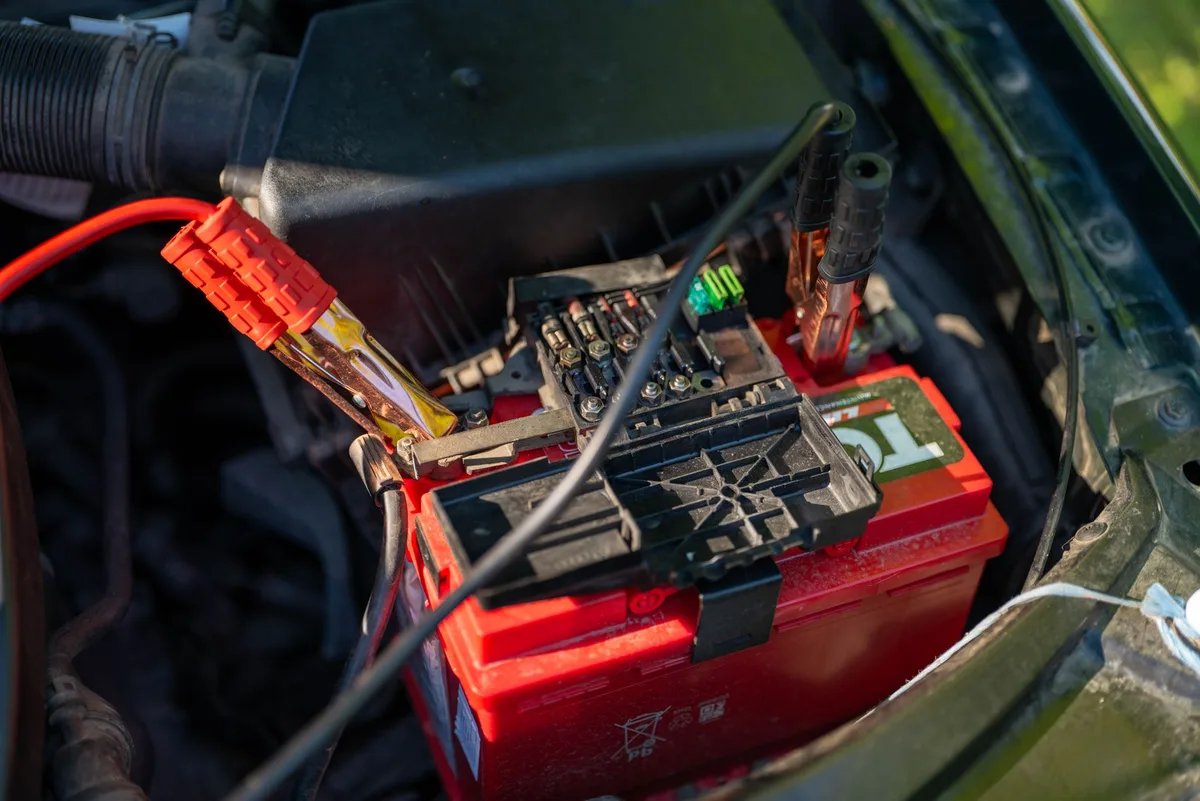
You charge the battery, grab your meter, and it reads 13.2 volts. Looks healthy, right? Not so fast.
Knowing how to remove surface charge from a car battery is the difference between a true reading and a number that fools you into keeping a weak battery.
Surface charge is a thin voltage "skin" left on the plates right after charging or driving. It can inflate a resting reading by 0.1 to 0.8 volts, enough to hide a battery sitting at 50% state of charge. As of 2026, most parts-store testers still bleed this off before they trust a result, and you can do the same at home in a couple of minutes.
Here's how it works.
Quick Answer
To remove surface charge from a car battery, apply a moderate load or let it rest. Turn on the high-beam headlights for one to two minutes with the engine off. Then switch them off and wait about five minutes.
The reading settles to the true open-circuit voltage. No hurry? Just let the battery rest four to twelve hours instead.
Why That High Battery Reading Might Be Lying to You
A freshly charged battery almost always reads higher than its real state of charge. That extra voltage isn't stored energy you can use. It's surface charge, and it burns off the moment you put any real demand on the battery.
Picture this. You put a charger on overnight, disconnect it, and measure 13.1 volts. You think the battery's perfect.
But crank the engine and it barely turns over. The surface charge gave you a false green light.
This matters because a good voltage check is the cheapest diagnosis in your toolkit. If you're comparing your number against a 12-volt state-of-charge chart, an inflated reading throws the whole thing off. You could read 12.7 volts and believe you're at 100% when you're really closer to 70%.
The fix is simple. You bleed off that surface layer first, then measure. Everything downstream, load tests included, depends on getting this one step right.
What Surface Charge Actually Is (and Where It Comes From)
Surface charge is temporary voltage that clings to the outer layer of the lead plates. It builds up during charging and sits there until a load pulls it away. Think of it like static on a freshly rubbed balloon.
Real, but shallow.
Two things create it:
- Charging: A battery charger or maintainer pushes voltage into the plates. The outer surface saturates first, so the reading spikes right after you unplug.
- Driving: Your alternator does the same job on the road. That's why a battery reads high for a while after a long drive, often 13 volts or more.
The chemistry sits on the surface of the active material, not deep in the plates where lasting capacity lives. According to battery guidance from the U.S. Department of Energy, lead-acid state of charge is best judged at rest, once the cell stabilizes.
Surface charge is exactly what stops that from happening quickly.
Don't confuse surface charge with sulfation. Surface charge is a short-lived high reading that clears in minutes. Sulfation is hardened crystal buildup that permanently drops capacity.
One washes off. The other doesn't.
Do You Even Need to Remove It? A Quick Decision Guide
Not every situation calls for it. If you just want a rough "is it dead or alive" check, surface charge won't ruin your day. But if you want an accurate state of charge, or you're about to load test, you need it gone.
Match your situation below.
If You Just Charged the Battery
Yes, remove it. This is the classic case. The reading will be inflated for a while after the charger comes off.
Bleed it with the headlights or wait it out. Then measure. Skip this and you'll log a number that's 0.2 to 0.5 volts too high nearly every time.
That's the gap between "charge it" and "you're fine."
If You Just Drove the Car
Yes, give it time. The alternator leaves the same skin of charge on the plates. A battery can read 12.9 to 13.2 volts right after a drive and settle to 12.6 once it relaxes.
Let it sit at least 30 minutes for a rough check. For a reading you'd stake a diagnosis on, wait longer. This matters most when you're checking whether your alternator's output sits in the normal range versus the battery itself.
If You Just Want a Fast Health Check
Then relax. If a battery has been parked overnight and reads 12.6 volts, there's no meaningful surface charge left to remove. It already dissipated on its own.
Only bother bleeding charge when the battery is fresh off a charger or a drive. A rested battery is already telling you the truth.
Method 1: Drain It Fast With Your Headlights
The fastest way to clear surface charge is to put a moderate load on the battery. Your high-beam headlights are perfect for this. They pull enough current to strip the surface layer without draining a healthy battery in any real way.

Here's the step-by-step:
- Turn the engine off. Leave the key in the accessory position if needed to run the lights.
- Switch on the high-beams. Low-beams work too, but high-beams pull a touch more.
- Wait one to two minutes. That's plenty of time to bleed the surface layer.
- Turn the lights off. Let the battery settle for about five minutes.
- Measure the voltage with your meter set to DC volts. If you're unsure of the dial, our guide on picking the right meter setting walks through it.
High-beam headlights draw roughly 8 to 10 amps as a pair. That's a moderate load, right in the sweet spot for this job. Parking lights barely pull an amp, so skip them.
Don't overdo it either. Running a load far longer than two minutes just wastes charge you'll have to put back. One to two minutes is the number, and it holds for most flooded and AGM batteries alike.
Method 2: Just Let It Rest
If you're not in a rush, doing nothing is the most accurate method of all. Surface charge fades on its own once no current flows in or out. Leave the battery alone and it settles to its true open-circuit voltage.
The catch is time. A quick rest of 30 minutes clears most of the surface layer and gets you close. For a lab-grade reading, the standard rest is longer.
- 30 minutes: good enough for a rough state-of-charge check
- 4 to 12 hours: the true resting voltage most manufacturers reference
- Overnight: the gold standard, especially after a heavy charge
This method wins when accuracy matters more than speed. Testing a battery that's been parked since yesterday? You're already done.
It's rested, and the number on your meter is honest.
One tip. If the car has a parasitic draw pulling current while it sits, resting voltage keeps creeping down. A slow drain can mimic a weak battery, so it's worth ruling out a phantom current drain before you blame the battery.
Headlights vs. Resting: Which One Fits Your Situation
Both methods land at the same true voltage. The difference is speed versus zero effort. Here's the side-by-side.
| Factor | Headlight Load | Just Resting |
|---|---|---|
| Time needed | 1 to 2 min, plus 5 min settle | 30 min to 12 hrs |
| Accuracy | Good for most checks | Best possible |
| Effort | Turn lights on and off | Do nothing |
| Best for | Quick diagnosis, pre-load-test prep | Overnight-parked cars, precise readings |
| Risk | Slight drain on a weak battery | None |
Go with headlights when you're standing at the car and want an answer now. It's the practical pick before a load test or a warranty check.
Choose resting when the battery's already been sitting, or when you want the most trustworthy number possible. If you're chasing a stubborn charging fault and comparing against what a healthy 13.5-volt output means, the rested reading gives you a cleaner baseline.
Reading the Voltage Right After You Bleed the Charge
Once the surface charge is gone, set your meter to DC volts and measure across the terminals. Red probe to positive, black to negative. If your dial has ranges, the 20V DC setting is the one you want for a 12-volt battery.

Wait for the number to stop climbing or dropping. A stable reading is your real open-circuit voltage. Now you can compare it against a state-of-charge chart with confidence.
12V State-of-Charge Chart
Here's where a rested, honest reading pays off. These figures are for a flooded 12-volt battery at around 70°F.
| Resting Voltage | State of Charge |
|---|---|
| 12.6 to 12.8 V | 100% |
| 12.4 V | 75% |
| 12.2 V | 50% |
| 12.0 V | 25% |
| 11.9 V or below | Effectively dead |
AGM batteries read a touch higher, often 12.8 to 13.0 volts at full charge. Temperature shifts things too. Cold drops the reading, so a battery checked in winter can look weaker than it is.
Our notes on cold-weather voltage behavior explain how much to adjust.
If your number lands below 12.4 volts after bleeding surface charge, the battery needs charging. If it won't hold a charge, that points to a deeper problem than a low state of charge.
Why This Matters Before a Load Test
A load test through surface charge gives you a false pass. The extra surface voltage props up the battery for the first few seconds, hiding weak cells that would otherwise show up. That's the whole reason pro testers strip it off first.

A carbon-pile load tester pulls a heavy, sustained current, usually half the battery's cold cranking amps for 15 seconds. During that pull, a healthy battery holds above 9.6 volts. A weak one sags fast.
But if surface charge is still sitting on the plates, the battery starts the test artificially high. It might scrape past when it should fail. Bleed the charge first, and the test tells the truth.
The same logic applies whether you're using a dedicated tester or checking voltage sag under load with a multimeter. Garbage in, garbage out. Clear the surface charge, then load test, then trust the result.
Mistakes That Ruin Your Reading
Most bad battery diagnoses trace back to a handful of easy slip-ups. Dodge these and your numbers get a lot more reliable.
- Measuring right off the charger: The most common error. That inflated reading is surface charge, not capacity. Bleed it first.
- Using parking lights to bleed: They draw under an amp. Too little to clear the surface layer in any reasonable time. Use high-beams.
- Not waiting after the load: Kill the lights, then measure five minutes later. Reading the instant you switch off catches a voltage still on the move.
- Confusing surface charge with a good battery: A high number fresh off a charge means nothing until it settles. Don't celebrate 13 volts.
- Load testing too soon: Test through surface charge and a dying battery can fake a pass. Prep first, always.
One more that trips people up. A reading of 13 volts or higher on a parked battery usually isn't stored charge at all. It's leftover surface charge from the alternator, and it'll drop within the hour.
If it's still that high after a long rest, you're likely seeing a meter or connection issue, not a super-battery.
Safety Checks Before You Touch the Terminals
A lead-acid battery vents hydrogen gas, and hydrogen is explosive. That's the risk that catches people off guard. A single spark near the terminals can ignite it, so a few basic habits keep this job safe.
- Work in a ventilated spot. An open garage or driveway beats a closed space.
- No sparks or flames nearby. That means no smoking and no metal tools bridging the posts.
- Wear eye protection and gloves. The electrolyte inside is sulfuric acid.
- Don't short the terminals. Keep wrenches and jewelry away from both posts at once.
When you're clipping meter probes on, place them carefully so they don't slip and arc. If you disconnect the battery for other work, pull the negative terminal first. That habit lowers the chance of a short against the car's body.
These aren't scare tactics. Battery safety guidance from groups like the Occupational Safety and Health Administration treats hydrogen venting and acid exposure as real hazards. Two minutes of care beats a burn or a cracked case.
Pro Tips for a Trustworthy Battery Diagnosis
Getting a clean reading is half technique, half patience. These small moves separate a guess from a real diagnosis.
- Clean the terminals first. Corrosion adds resistance and skews your voltage. Wipe the posts before you probe.
- Check at the posts, not the clamps. Reading on corroded clamps can cost you a tenth of a volt or more.
- Log the temperature. Cold pulls readings down. A battery at 30°F reads lower than the same battery at 70°F.
- Retest after charging and resting. One reading is a snapshot. Two tell you if the battery holds a charge.
If your rested number looks fine but the car still cranks slowly, widen the search. The issue might be the voltage the battery holds while cranking, a tired starter, or a bad ground. Surface charge is just the first thing to rule out.
And when a battery keeps reading low no matter how long it charges, stop chasing the surface layer. That's a capacity problem. Age and sulfation, not surface charge, are the usual culprits for a battery that won't hold above 12.4 volts.
Frequently Asked Questions
How long does it take to remove surface charge?
With the headlight method, one to two minutes of load plus a five-minute settle does it. If you'd rather let the battery rest, give it at least 30 minutes for a rough check. For a truly accurate reading, four to twelve hours of rest is the standard.
Will removing surface charge hurt my battery?
No. Bleeding surface charge draws only a tiny fraction of the battery's capacity. A one-to-two-minute headlight load pulls a few amp-minutes at most.
A healthy battery won't notice it, and resting the battery costs nothing at all.
What voltage should a car battery read after bleeding surface charge?
A fully charged flooded battery settles around 12.6 to 12.8 volts. AGM batteries read a bit higher, near 12.8 to 13.0 volts. Anything below 12.4 volts after resting means the battery needs a charge, not just surface-charge removal.
Why does my battery read over 13 volts when parked?
That high reading is almost always leftover surface charge from the alternator or a charger. It's not usable stored energy. Give the battery time to rest and the number will drop to its true open-circuit voltage, usually 12.6 to 12.8 volts.
Can I remove surface charge without headlights?
Yes. Any moderate load works, like the blower fan on high or the rear defroster. You can also skip the load entirely and just let the battery rest.
Resting takes longer but needs no effort and gives the most accurate result.
Does surface charge affect a load test?
Absolutely. Surface charge props up the battery for the first seconds of a load test and can hide weak cells. A dying battery may fake a pass.
Always bleed the surface charge before load testing so the result reflects real capacity.
Your Surface-Charge Game Plan
It comes down to one habit: never trust a reading straight off a charger or a drive. That number is inflated, and acting on it is how good batteries get replaced and bad ones get kept.
Pick your method by situation. In a hurry or standing at the car? Run the high-beams for a minute or two, wait five, then measure.
Battery already parked overnight? It's rested, so just read it.
Then match the settled voltage to the state-of-charge chart. Below 12.4 volts means charge it. If it still won't hold, the problem runs deeper than surface charge, and it's time to load test or check the charging system.
Do this every time and your battery diagnoses get sharper. You'll stop guessing, catch weak batteries before they strand you, and know exactly when the battery is fine and something else is to blame.

Similar Posts