New Car Battery Won’t Hold a Charge? Causes & Fixes

A new car battery won't hold a charge far more often than you'd expect, and here's the kicker: the battery itself is usually fine. Most fresh batteries that keep dying are being drained by something else in the car. Think a hidden electrical draw, a weak alternator, or a bad ground.
The battery just takes the blame for it.
Manufacturer specs point to a healthy resting voltage of 12.6V and a normal parasitic draw under roughly 50mA. When either number drifts, even a brand-new battery goes flat fast. As of 2026, load and conductance testing are still the quickest way to prove whether a battery is genuinely defective.
Let's sort out what's actually going on.
Quick Answer
A new car battery that won't hold a charge is usually being drained, not defective. The most common causes are a parasitic draw over 50mA, a failing alternator, or a loose ground. A resting voltage under 12.4V after a full charge signals a problem.
Test the charging system and parasitic draw before replacing the battery.
Why a Brand-New Car Battery Won't Hold a Charge (And Why It's Usually Not the Battery)
Batteries don't die in a vacuum. A new one arrives fully built and, in most cases, near full charge. So when it goes flat within days, the fault almost always lives somewhere in the car's electrical system.
Here's the logic every good tech follows. A battery is a storage tank. If the tank keeps emptying, either something is draining it or nothing is refilling it.
That points you to three suspects: a parasitic drain, a weak charging system, or a bad connection choking the current.
There's a fourth, quieter cause. Some batteries sit on a shelf for months and slowly self-discharge before you ever buy them. A battery installed at 60% charge, then fed only short trips, may never climb back to full.
That looks like failure but it's really chronic undercharging.
Genuine factory defects do happen, just not as often as people assume. A dead or shorted cell will drop a battery's voltage and kill its ability to crank. We'll test for that too.
The point is simple: don't condemn the battery until the car has been cleared.
Start Here: Is It Draining Overnight or Dying Under Load?
Answer one question first, because it splits the whole diagnosis in two. Does the battery go dead while the car sits, or does it read fine until you try to start the engine?
- If it drains overnight while parked, you're chasing a parasitic draw or a charging fault. The tank is leaking or never refilling.
- If it holds voltage but the car cranks slowly or clicks, you're likely looking at a bad cell or a connection that can't pass current under load.
This fork matters because the tests are different. A battery can show a healthy 12.6V at rest and still collapse the instant it's asked for amps. That's the classic signature of a weak cell, and it's why a voltage reading alone can fool you.
If your numbers look fine but the car still won't turn over, this breakdown of a battery that reads 12V yet won't crank walks through the mismatch.
Nail down the symptom before you touch a tool. It saves you from testing the wrong thing.
The Fast Voltage Check: What 12.6V, 12.2V, and 12.0V Actually Tell You
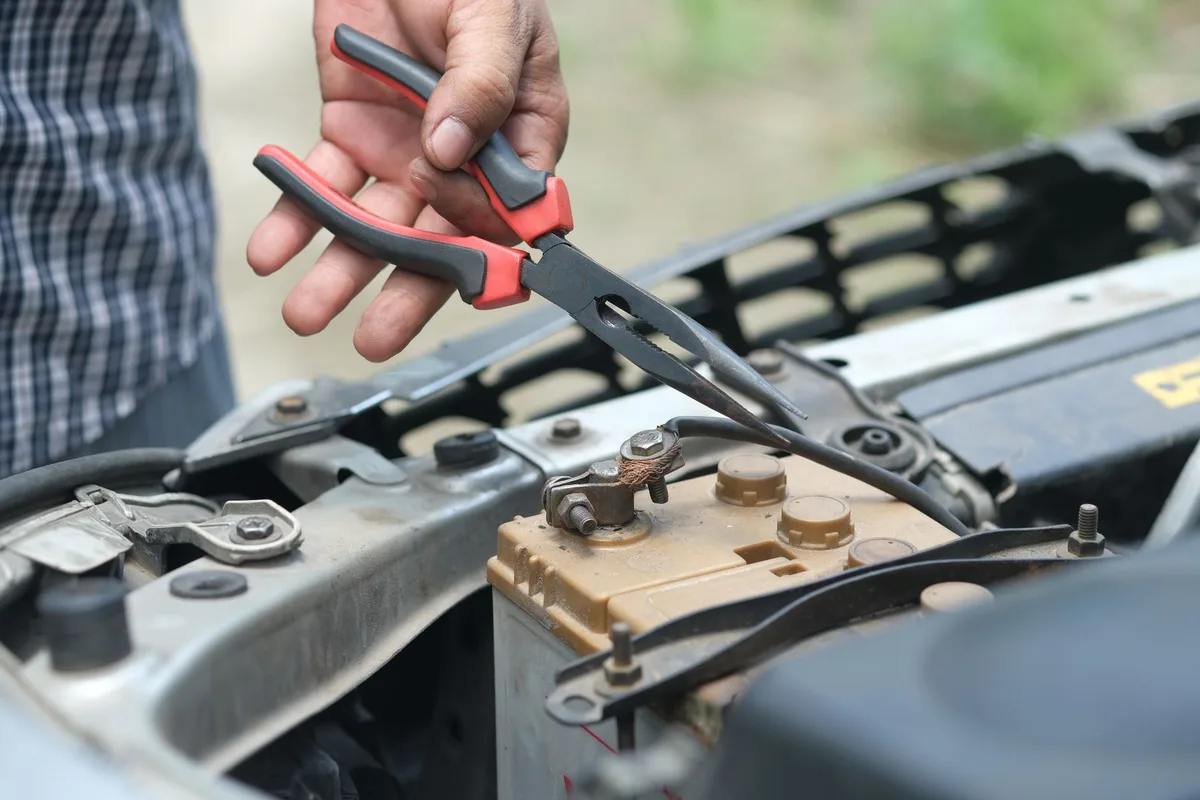
Start with a resting voltage test, because it's the fastest read on the battery's state of charge. Let the car sit untouched for a few hours, set your multimeter to 20V DC, then touch the probes to the terminals.
Here's how the numbers translate to charge level.
| Resting Voltage | State of Charge | What It Means |
|---|---|---|
| 12.6V to 12.8V | 100% | Fully charged and healthy |
| 12.4V to 12.5V | ~75% | Slightly low, worth watching |
| 12.2V | ~50% | Undercharged, needs attention |
| 12.0V | ~25% | Nearly flat |
| 10.5V or below | Dead / possible bad cell | Won't crank reliably |
A reading of 12.6V is the target. If you're sitting around 12.4 volts, that's borderline and worth watching. Drop to half charge at 12.2V and the battery has little room left before the car won't start.
Anything near 12.0V means the battery is almost empty. Our research shows that a fresh battery resting this low points to either a heavy drain or a battery that was never properly charged. If your meter shows a full charge but performance is still poor, the next step is a load test, not a new battery.
The Five Real Culprits Behind a New Battery That Keeps Dying
Five things cause the vast majority of new-battery charge problems. Work through them in order of likelihood and you'll rarely miss.
Parasitic Drain Pulling Power While the Car Is Off
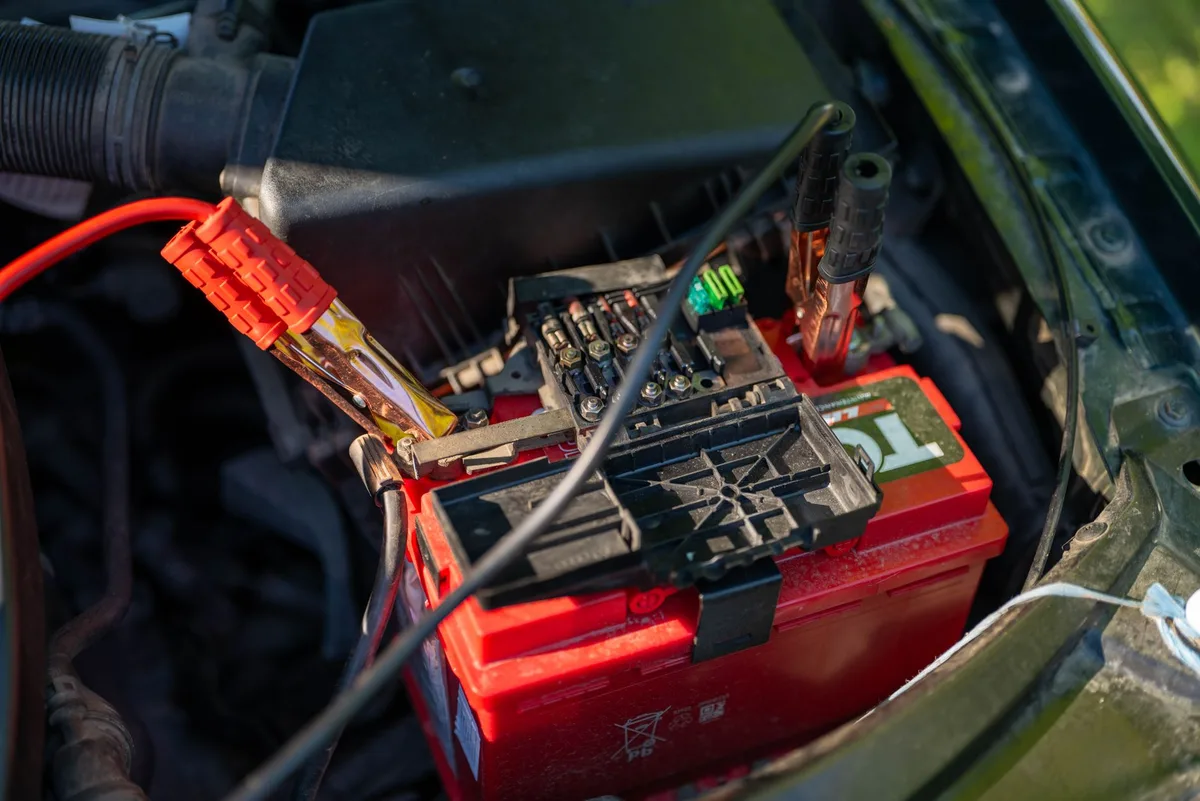
A parasitic draw is current the car uses after everything's shut down. A little is normal, usually 20mA to 50mA for clocks and memory. Push past that and the battery bleeds out overnight.
Common offenders include aftermarket dashcams, alarms, faulty relays, or a glovebox light that never turns off. This guide to what counts as a safe 50mA draw sets the baseline.
A Failing Alternator or Charging System
If the alternator can't refill the battery, no battery survives long. With the engine running, you should see roughly 13.5V to 14.7V at the terminals. Read low and the battery slowly starves.
The quickest way to split the two is to compare voltage at rest and running, and this method for telling the battery from the alternator does exactly that.
Loose, Corroded, or Poorly Grounded Connections
White or blue crust on a terminal isn't cosmetic. Corrosion and loose clamps add resistance, which blocks both charging and cranking current. A weak ground strap does the same.
Clean the posts, tighten the clamps to spec, and check that the negative cable bolts solidly to the chassis.
The Battery Was Never Fully Charged Before Install
Batteries self-discharge on the shelf at roughly 5% to 15% a month. A unit that sat for half a year can arrive well under full. Short commutes then never top it back up.
A proper bench charge often "fixes" a battery that was only ever undercharged.
A Defective Battery With a Dead Cell
Sometimes the battery really is bad. A shorted cell drops total voltage by about 2V and tanks cranking power. If it reads near 10.5V straight off a full charge, or fails a load test, that's your answer.
At that point, it's a warranty claim, not a repair.
Follow the Workflow: A Step-by-Step Diagnostic Path
Run these steps in order. Each one rules out a suspect, so by the end you'll know whether the problem is drain, charging, or the battery itself. Trade groups like Battery Council International back this same charge-then-test sequence.
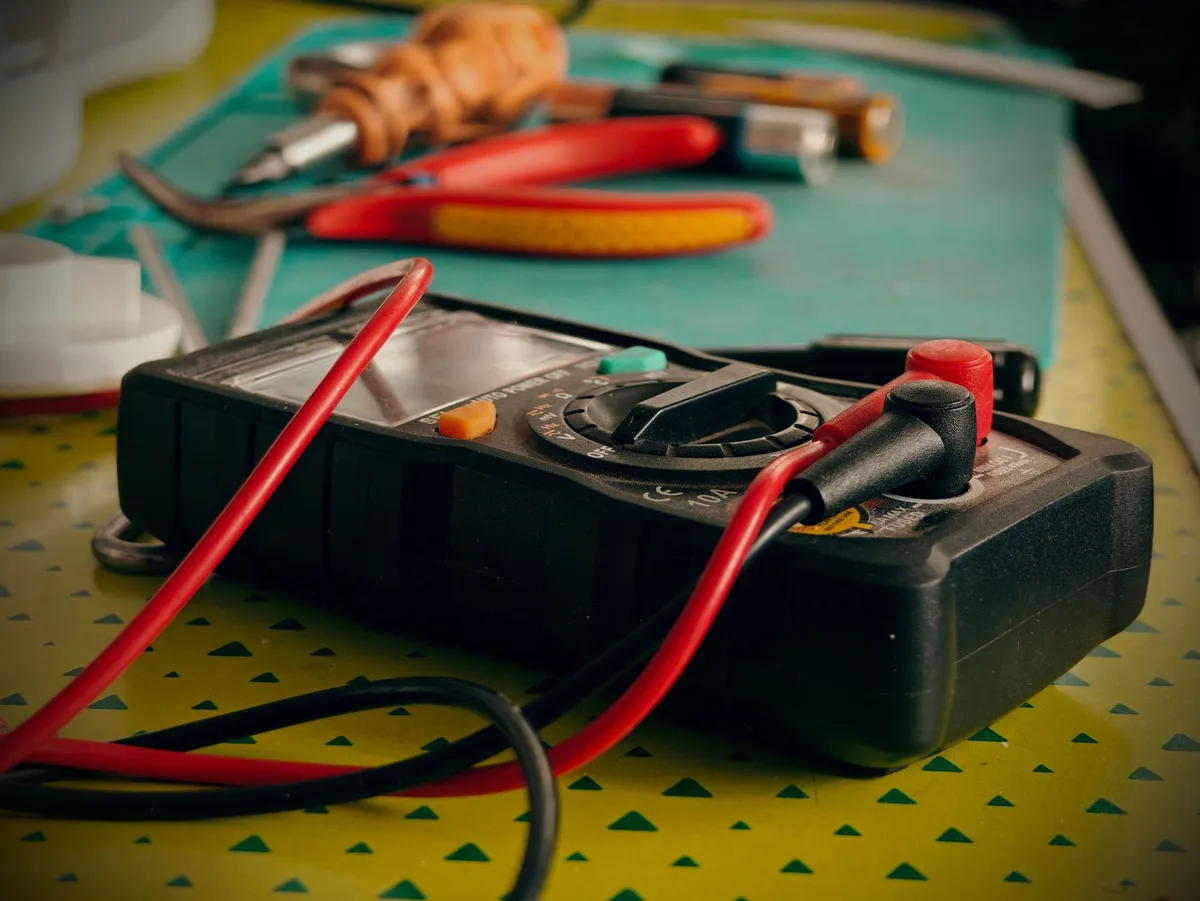
Step 1 – Rest and Read the Resting Voltage
Let the car sit a few hours, then read the terminals. Log the number. Below 12.4V means the battery is undercharged before you go further, and this breakdown of a low resting reading shows why that matters.
Step 2 – Full Smart Charge, Then Retest
Put the battery on a smart charger until it's full. Disconnect, wait an hour, then read again. If it holds 12.6V, the battery accepts and keeps a charge.
If it sags overnight, something is draining it.
Step 3 – Load or Conductance Test for a Bad Cell
Now stress it. A load tester or conductance tester checks state of health, not just charge. Voltage should stay above about 9.6V under load.
A steep drop exposes a weak cell, and it's the test that catches batteries a plain voltage check misses.
Step 4 – Check Charging Voltage at Idle
Start the engine and read the terminals. You want roughly 13.5V to 14.7V. Too low and the alternator isn't refilling the battery, while a reading near or above 14.7V hints at overcharging.
Step 5 – Run a Parasitic Draw Test
Turn everything off, pull the key, and connect your multimeter in series with the negative terminal. After the car's modules sleep, the draw should settle under 50mA. A higher number confirms a drain, and tracking down a repeat killer with a multimeter starts right here.
Step 6 – Fuse-Pull Method to Find the Guilty Circuit
With the meter still reading current, pull fuses one at a time. When the number drops, you've found the circuit. Match the fuse to its component and you've located the drain.
That's your culprit, ready to fix or disconnect.
Parasitic Drain vs. Charging Fault vs. Defective Battery: Telling Them Apart
These three feel identical from the driver's seat. The car won't start. But the fixes are completely different, so here's how the symptoms separate.
| Clue | Parasitic Drain | Charging Fault | Defective Battery |
|---|---|---|---|
| When it dies | Overnight, while parked | Slowly over days of driving | Right after a full charge |
| Resting voltage | Fine, then drops | Fine, never tops up | Low even when charged |
| Charging voltage | 13.5V to 14.7V (normal) | Below 13.5V | Normal |
| Load test | Passes | Passes | Fails |
If the battery drains only when parked, chase the drain. If it slips lower the more you drive, suspect the alternator. And if a fully charged battery still reads low or flunks a load test, the battery itself is the problem.
A quick check of what healthy amperage looks like helps confirm which camp you're in.
Voltage, Amps, and CCA: The Numbers That Decide Your Diagnosis
Three numbers do most of the diagnostic heavy lifting. Learn what each one should read and the guesswork disappears.
- Voltage tells you state of charge. 12.6V rested, 13.5V to 14.7V running.
- Amps (parasitic draw) tells you what's leaking. Under 50mA with the car asleep.
- Cold Cranking Amps (CCA) tells you the battery's muscle. Most passenger cars need 550 to 850 CCA.
CCA is the rating people forget. It measures how many amps the battery delivers for 30 seconds at 0°F while staying above 7.2V. Fit a battery with too little CCA for your engine and it'll struggle every cold morning, even when healthy.
Always match the group size and CCA on the sticker to your owner's manual. If you're unsure what the running figure should be, this rundown of normal alternator output sets the range.
Mistakes That Kill a New Battery Fast
A few habits will drain or damage a fresh battery quickly, and most are avoidable.
- Installing without a full charge. Short trips never recover the deficit, and undercharging causes sulfation.
- Repeated deep discharges. Draining a starting battery flat, again and again, shortens its life sharply.
- Loose or greasy terminals. Poor contact blocks charging current and mimics a dead battery.
- Ignoring an aftermarket accessory. A hardwired dashcam or amp left live is a classic overnight killer.
- Skipping the charging-system check. Replacing the battery without testing the alternator just kills the next one too.
One more trap: assuming a jump start fixed things. A jump gets you moving, but if the root cause is a drain, you'll be stranded again. A jump is a symptom-hider, not a repair.
Safety Rules Before You Touch the Battery
Lead-acid batteries carry real hazards, so respect a few rules before you start. They vent hydrogen gas, which is flammable, and they hold sulfuric acid that burns skin and eyes.
- Wear safety glasses and gloves. Acid splashes don't announce themselves.
- Keep sparks and flames away. Hydrogen ignites easily near a charging battery.
- Disconnect the negative terminal first, reconnect it last. This cuts the risk of shorting a wrench against the chassis.
- Never lean over a battery while connecting a charger. Vented gas collects right above the caps.
If you spot a cracked case, a bulging side, or leaking fluid, stop. That battery needs safe disposal, not a charge. The [U.S.
Environmental Protection Agency](https://www.epa.gov) classes lead-acid batteries as recyclable hazardous waste, so return the core to any auto parts store rather than binning it.
When Cold, Heat, and Short Trips Are the Real Problem
Sometimes the battery and the car are both fine. The weather and your driving pattern are doing the damage.
Cold slashes a battery's available power. At 0°F, a fully charged battery delivers only about 60% of its rated CCA, while the engine demands more to crank thick oil. That squeeze is why weak batteries fail first on frosty mornings, and this look at cold-weather voltage explains the drop.
Heat is sneakier. High temperatures speed up fluid loss and grid corrosion inside the case, aging the battery faster even though starting still feels strong. A battery baked through a hot summer often fails the following winter.
Short trips are the quiet killer. A five-minute commute can't replace the charge used to start the car. Do that daily and the battery slides into chronic undercharge.
If that's your pattern, a smart maintainer plugged in overnight keeps it topped off and adds years of life.
Start-Stop and European Cars: Why Battery Registration Matters
If your car has a start-stop system, a new battery often needs to be registered before it'll charge correctly. Modern vehicles run a Battery Management System that tracks the old battery's age and tailors charging to it. Swap the battery without telling the BMS, and the car keeps charging as if the old one is still fitted.
The result looks exactly like a battery that won't hold a charge. It stays undercharged, or gets cooked by too much voltage. Most European makes, think BMW, Audi, Mercedes, and VW, require this step with a scan tool.
Start-stop cars also need the right battery type. Fit a standard flooded battery where an AGM or EFB belongs and it'll fail early. Match the battery to the spec, then register it.
Skip either and no amount of testing fixes the charge problem.
When to Claim the Warranty vs. Keep Diagnosing
Claim the warranty when the battery itself fails a test, not when the car is draining it. A dead cell, a failed load test, or a resting voltage stuck low after a full charge all point to a defective unit. That's a free replacement, so don't waste time trying to revive it.
Keep diagnosing when the battery passes but still goes flat. A passing load test plus an overnight death means the fault is a drain or the charging system, not the battery. Swapping it under warranty just resets the clock on the same problem.
Most auto parts stores test batteries free and check the date code. Bring it in charged, since a simply flat battery can fail a test and get wrongly condemned. Charge first, then test, then decide.
Frequently Asked Questions
Can a new car battery be bad straight out of the box?
Yes, though it's uncommon. A factory defect like a shorted cell, or months sitting on a shelf self-discharging, can leave a new battery weak. If it reads near 10.5V after a full charge or fails a load test, it's defective and covered under warranty.
Why does my new battery die overnight but start fine during the day?
That's the classic signature of a parasitic drain. Something stays powered while the car sleeps, pulling the battery down over several hours. Normal draw sits under 50mA.
A dashcam, alarm, faulty relay, or stuck light is usually the culprit behind an overnight death.
Will driving more recharge a battery that won't hold a charge?
Only if the charging system and battery are healthy. Longer drives help a battery that was simply undercharged by short trips. But if there's a parasitic drain or a weak alternator, more driving won't fix it.
Test the draw and charging voltage first.
Does a new battery need to be fully charged before installing?
Ideally, yes. Batteries lose 5% to 15% of charge per month on the shelf, so a new one may arrive below full. Installing it undercharged, then driving short trips, leaves it chronically low.
A full bench charge before fitting prevents that.
Your Decision Guide: Match the Symptom to the Fix
Run your symptom through this quick map and you'll know your next move.
- Dies overnight, fine by day: parasitic drain. Run the draw test, then pull fuses to find the circuit.
- Slowly weakens over days of driving: charging fault. Check for 13.5V to 14.7V at idle.
- Low voltage even after a full charge: defective battery. Load test it, then claim the warranty.
- Cranks slow only when cold: undersized CCA or a tired battery. Match the sticker to your manual.
- Fine after a jump, dead again later: an unfixed drain. The jump hid the real cause.
Work the tests in order, charge before you judge, and clear the car before you blame the battery. Do that and you'll fix the actual problem the first time, not just buy another battery that dies the same way.

Similar Posts