7 Signs Your Car Battery Is Bad (and How to Check)
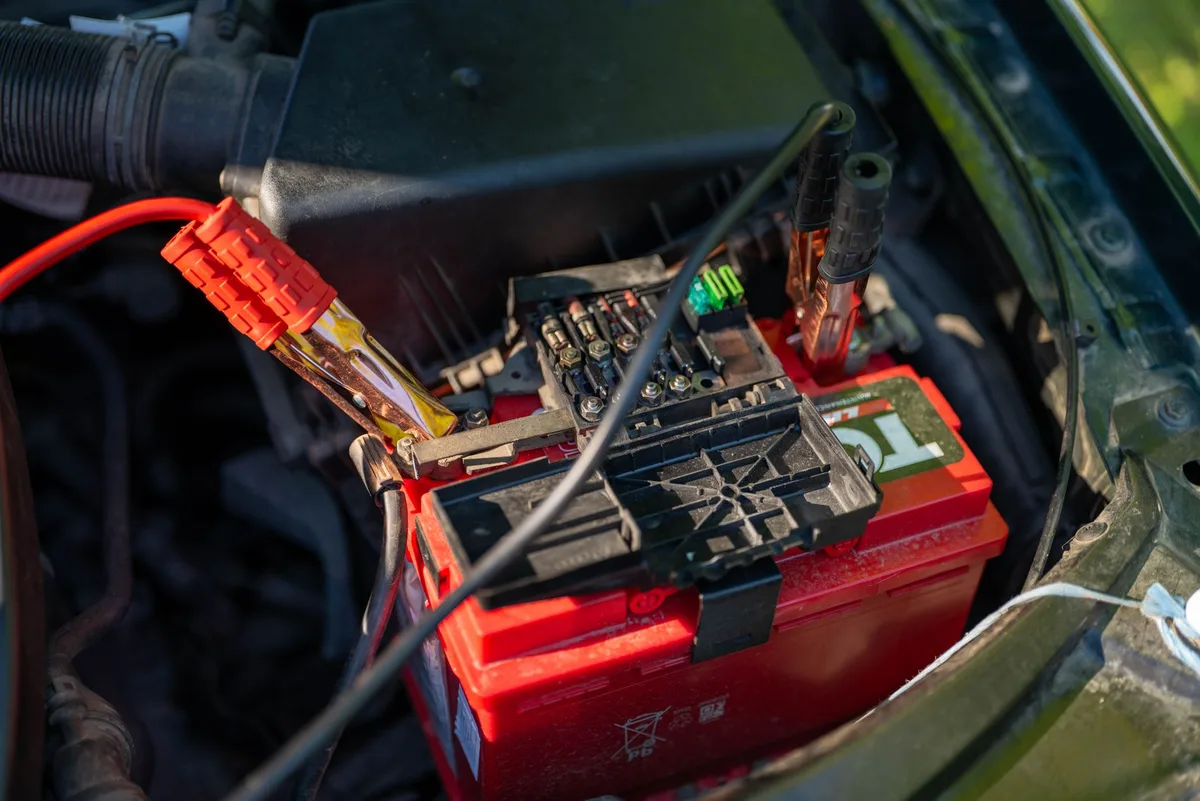
Figuring out how to tell if a car battery is bad usually starts with one annoying moment: you turn the key and the engine drags, clicks, or does nothing. The tricky part is that a slow start doesn't always mean the battery is toast. Sometimes it's a loose cable, a tired alternator, or a battery that's just flat, not dead.
The good news is you can sort this out at home in a few minutes. A healthy battery rests at about 12.6 volts, and once it slips toward 12.0 volts it's running near empty. As of 2026, most parts stores will also test it free if you'd rather not DIY.
Let's start with the warning signs that show up first.
Quick Answer
A bad car battery shows clear signs. The engine cranks slowly or clicks without starting. Headlights dim at idle, and the dash battery light comes on.
Resting voltage sits below 12.4 volts even after charging. A load or conductance test reads under the rated cold cranking amps. Batteries over 3 to 5 years old fail most often.
The Telltale Signs Your Car Battery Is on Its Way Out
Most dying batteries warn you before they strand you. You just have to know what to watch for.
Here are the signs that show up most often:
- Slow, lazy cranking when you start the car
- A single click or rapid clicking with no start
- Headlights and dash lights that dim at idle, then brighten when you rev
- The battery warning light glowing on the dashboard
- Needing a jump start more than once in a week
- A swollen or bloated battery case
- White or blue-green corrosion crusted on the terminals
- A faint rotten-egg (sulfur) smell near the battery
One symptom alone isn't proof. But stack two or three together, especially on a battery that's a few years old, and the odds point straight at the battery. If you've noticed the engine dragging harder each cold morning, that slow decline is classic wear.
Battery Problem or Something Else? The 30-Second Gut Check
Before you blame the battery, run a fast mental check. It saves you from replacing a good part.
Ask yourself three quick questions:
- Did the car sit unused for days, or did you leave a light on? That points to a flat battery, not a bad one.
- Does it crank fine sometimes and not others? That hints at a loose or corroded connection.
- Do the dash lights and radio work, but the engine won't turn over? That leans toward the starter, not the battery.
If the battery is genuinely bad, the weakness is consistent. It struggles cold, warm, morning, and night. A battery that reads healthy but still won't turn the engine over is often a connection or starter issue in disguise.
Check that before you spend money.
How a Car Battery Actually Fails (Age, Heat, and Sulfation)
Car batteries don't die randomly. They wear out in predictable ways, and knowing the cause helps you read the symptoms.
Most starting batteries are flooded lead-acid or AGM (Absorbent Glass Mat) types. Both store charge through a chemical reaction between lead plates and acid. Over time, that reaction breaks down.
Three things speed it up.
- Age: Typical lifespan runs 3 to 5 years. After that, capacity drops fast.
- Heat: Hot climates cook off the internal fluid and corrode the plates. Summer damages batteries even though they fail in winter.
- Sulfation: When a battery sits discharged, lead sulfate hardens on the plates. That buildup blocks the reaction and steals cranking power.
Short trips make it worse. Your alternator never gets time to fully recharge, so the battery lives half-charged. That chronic undercharge is a top cause of early failure.
The cold cranking amps rating (CCA), defined under SAE International testing standards, tells you how much starting punch a fresh battery had, and a worn one can't hit that number anymore.
Start Here: What's Your Car Actually Doing?
Your exact symptom points to a different problem. Match what you're hearing and seeing to the branches below, then follow the lead.
Slow, Labored Cranking
If the engine turns over slowly like it's pushing through mud, the battery is likely weak or low on charge. This is the most common bad-battery sign. Check resting voltage first.
If it reads below 12.4 volts after sitting, the battery is undercharged or failing. A reading like 12.4 volts sits on the edge of healthy, so anything lower is a red flag.
Rapid Clicking With No Start
Fast clicking usually means there's not enough current to spin the starter. The solenoid clicks but the motor won't turn. That's a deeply discharged or dead battery most of the time.
It can also be a loose ground cable, so wiggle-test your connections before condemning the battery.
Dead Silence, Nothing at All
No click, no dash lights, no crank often means zero usable voltage or a broken connection. Check the terminals for corrosion and looseness. If your meter shows 0 volts across the posts, you may have a fully dead cell or a broken internal link.
Dim Lights, Warning Light, or Electrical Weirdness
Flickering lights, resetting radio presets, and a glowing battery icon suggest a charging problem more than a dead battery. The battery may be fine while the alternator fails to keep it topped up. Test both before deciding.
Dies Overnight but Jumps Fine in the Morning
If the car starts after a jump but goes dead again by morning, you've got one of two problems. Either the battery can't hold a charge anymore, or something is draining it while parked. That second issue is a parasitic draw, and it flattens even a brand-new battery overnight.
Bad Battery vs. Bad Alternator vs. Bad Starter
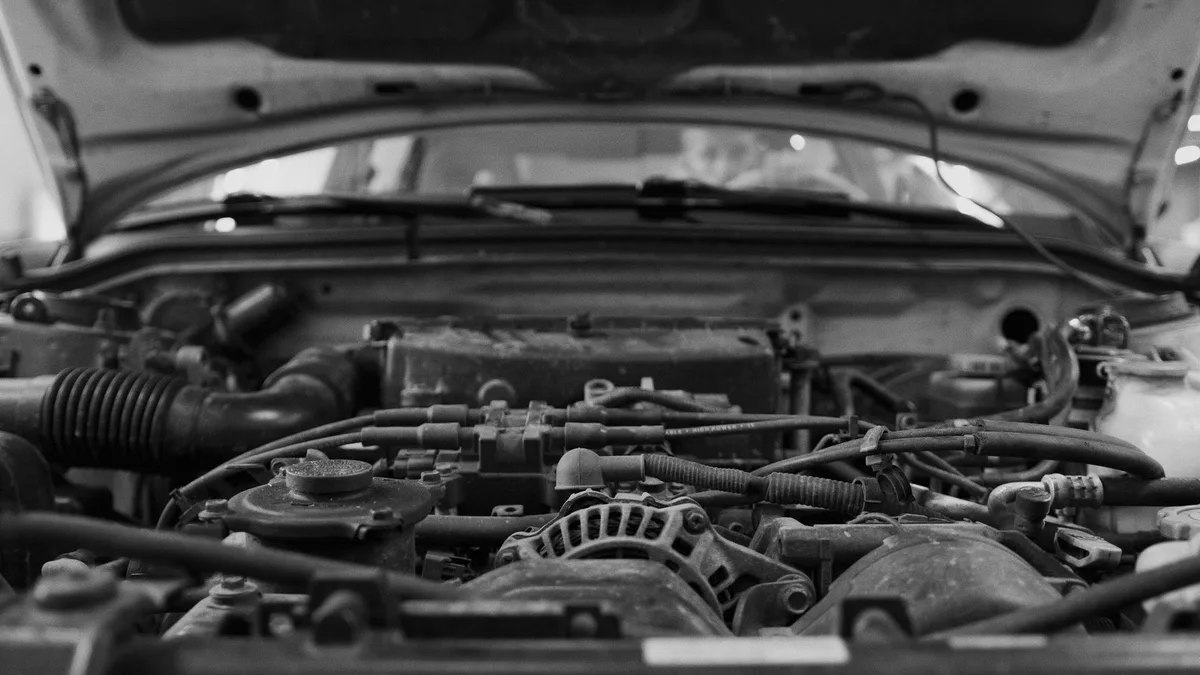
These three parts cause similar symptoms, so people swap the wrong one all the time. Here's how to tell them apart fast.
| Part | Telltale Symptom | Quick Test |
|---|---|---|
| Battery | Slow crank, needs jumps, dies when parked | Resting voltage below 12.4V, fails load test |
| Alternator | Lights dim at idle, dies while driving, battery light on | Charging voltage below 13.5V while running |
| Starter | Dash lights work but engine won't turn, single loud click | Battery is good but no crank |
The logic is simple. If the car starts with a jump but dies soon after driving, suspect the alternator. If it starts fine after a jump and runs all day, the battery just couldn't hold charge.
If everything electrical works but the engine won't budge, look at the starter.
A running engine should push roughly 13.7 to 14.7 volts at the battery. Anything well under 13.5 volts while idling points at a weak alternator, not the battery. When you're stuck between the two, a quick multimeter check settles the battery-or-alternator question in about two minutes.
Nail down the real culprit before you spend a dime.
Testing Your Battery With a Multimeter (Voltage Test)
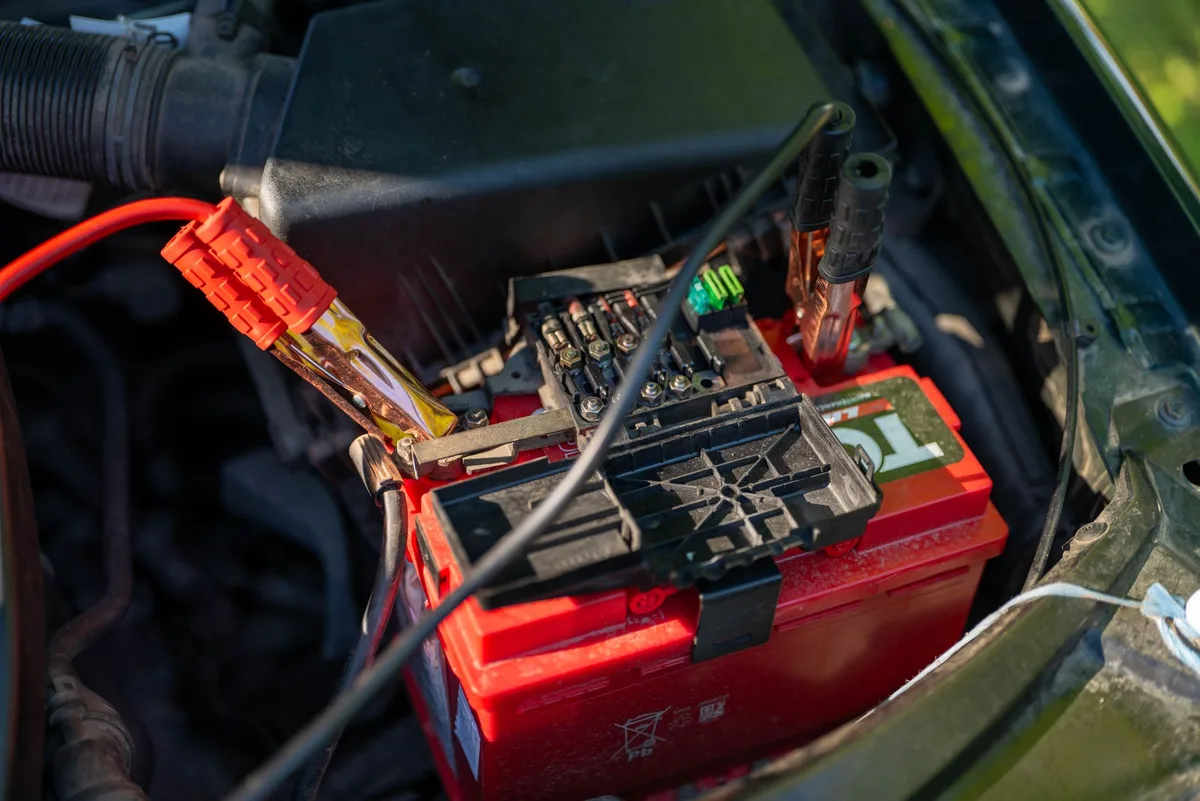
A digital multimeter is the fastest way to confirm a weak battery. It costs little and takes about two minutes. Set the dial to DC volts, then touch red to the positive post and black to the negative.
If your meter isn't auto-ranging, pick the 20V DC setting so you get a clean reading. Test with the engine off, ideally after the car has sat a few hours. A reading right after driving shows surface charge, which fakes a higher number.
The Resting Voltage Numbers That Matter
Resting voltage tells you the state of charge. Higher is better, and the drop-off is steep near the bottom.
- 12.6V or more: fully charged, healthy
- 12.4V: about 75%, still okay
- 12.2V: about 50%, undercharged
- 12.0V: about 25%, nearly flat
- 11.9V or less: deeply discharged
A battery stuck at 12.2 volts after a full charge has a real problem. If it won't climb past 12.0 volts, it's on its last legs. Charge it fully, then retest.
A good battery holds the charge, a bad one slides back down.
Voltage Chart: State of Charge at a Glance
Keep these numbers handy. They turn a single reading into a clear verdict.
| Resting Voltage | State of Charge | What It Means |
|---|---|---|
| 12.6V to 12.8V | 100% | Healthy, ready to go |
| 12.4V | 75% | Fine, slightly low |
| 12.2V | 50% | Charge and retest |
| 12.0V | 25% | Weak, likely failing |
| Below 11.9V | Near 0% | Dead or dying |
Voltage alone doesn't tell the whole story, though. A battery can read 12.5V and still fail under the strain of starting. That's why the next test matters.
Load Test and Conductance Test: Confirming It's Really Dead
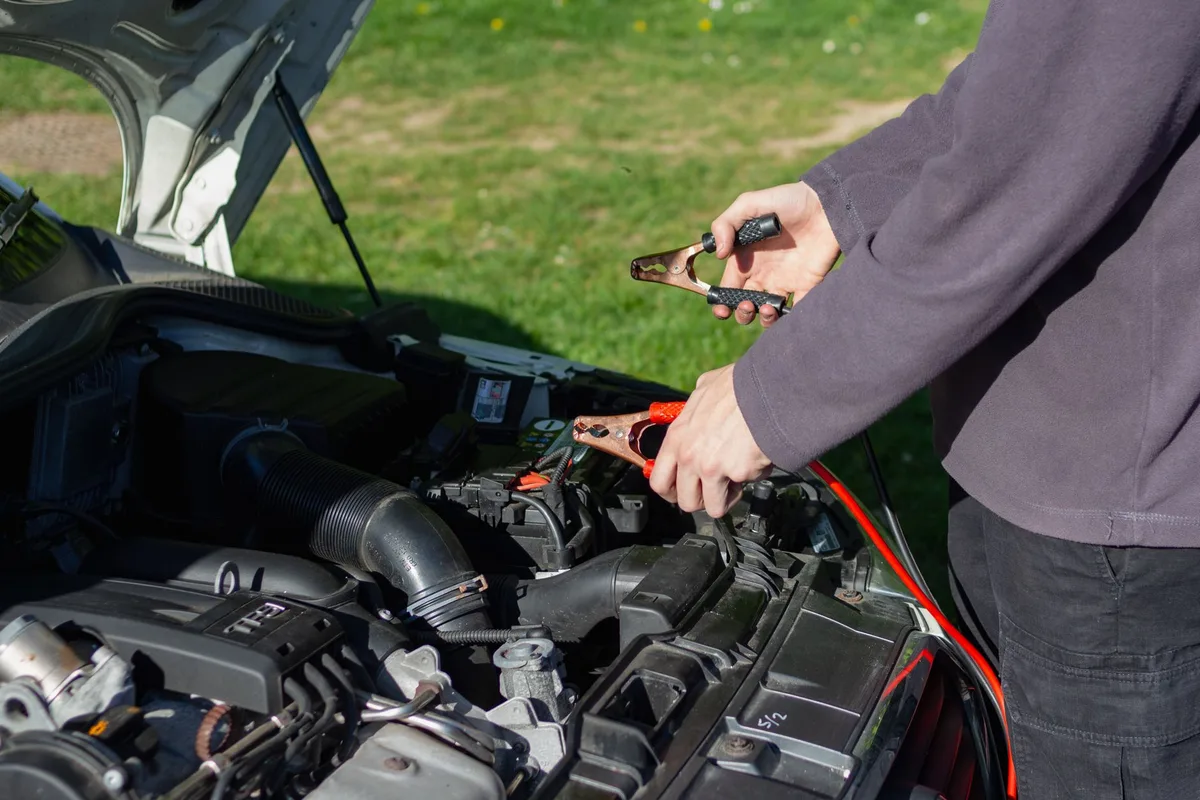
A load test checks whether the battery holds voltage while doing real work. This is the test that separates a tired battery from a healthy one. Voltage can look fine at rest and collapse the second you crank.
You can watch this happen with just your multimeter. Keep it on the terminals and have someone start the engine. A healthy battery stays above 9.6 volts during cranking.
If it nosedives well below that, the battery can't deliver current anymore.
For a firm answer, use a dedicated tool:
- Carbon pile load tester: applies a heavy draw and shows if voltage sags
- Conductance tester: measures internal resistance and estimates cold cranking amps in seconds
- Free store test: most parts stores run a conductance test at no charge
If the tester reads well under the battery's rated CCA, replace it. A battery rated at 600 CCA that tests at 300 is done, no matter how good the resting voltage looks.
Checking the Charging System and Hunting Parasitic Drain
If your battery keeps dying, the battery might be innocent. Two culprits hide here: a weak alternator or a parasitic drain.
Start with the alternator. Run the engine and put your meter on the battery. You want to see roughly 13.7 to 14.7 volts while running.
Below 13.5V, the alternator isn't charging enough. Above 15V, it's overcharging and cooking the battery.
Now the parasitic drain. This is current the car pulls while parked and switched off. A dome light, a bad relay, or a glitchy module can bleed a battery overnight.
To check it, set your multimeter to measure amps in series with the negative cable, doors closed and modules asleep. Most healthy cars sit under 50 milliamps. Anything above that 50mA line points to a circuit that won't shut off.
Pull fuses one at a time to find the guilty one.
Recharge or Replace? Making the Call
Here's the simple rule: if a full charge holds, keep it; if it slides back down, replace it. A battery that recovers to 12.6V and passes a load test is fine. One that drops to 12.2V again within a day has failed.
Use this quick guide:
- Reads low but charges up and holds: it was just flat, keep driving
- Charges up but fails a load test: replace it
- Won't hold charge past a day: replace it
- Older than 5 years and cranking slow: replace it soon
- Swollen case, leaking, or rotten-egg smell: replace it now, don't charge it
Age tips the scales. A two-year-old battery that went flat from a left-on light deserves a recharge. A five-year-old battery showing the same symptom is telling you it's finished.
When the numbers are borderline, knowing what counts as truly dead voltage makes the choice obvious.
Mistakes That Lead People to Swap a Good Battery
Plenty of perfectly good batteries get tossed for no reason. Avoid these common traps and save yourself the cash.
- Testing right after driving: surface charge inflates the reading. Let it rest first.
- Ignoring corroded terminals: a crusty connection mimics a dead battery. Clean it before testing.
- Skipping the load test: resting voltage lies. A battery can read 12.5V and still fail under load.
- Blaming the battery for an alternator fault: if it dies while driving, the alternator is the suspect.
- Overlooking a parasitic drain: a fresh battery that dies overnight means something's draining it.
- Loose ground strap: a bad ground causes hard starts that feel exactly like a weak battery.
The pattern is clear. Confirm the connections, rest the battery, then load-test before you spend. If you don't own a meter, there are a few no-tool checks that still catch the obvious failures.
Rule out the cheap fixes first, always.
Safety Rules Before You Touch That Battery
A car battery holds enough current to burn you and vents explosive gas. Treat it with respect and these checks stay simple.
- Wear safety glasses and gloves. The electrolyte is sulfuric acid and it burns skin and eyes.
- No sparks or flames nearby. Charging batteries release hydrogen gas, which can ignite.
- Disconnect the negative terminal first, then the positive. Reconnect in reverse order.
- Never jump-start a frozen, cracked, or leaking battery. It can rupture.
If you spot a swollen case or smell rotten eggs, stop. That sulfur smell means the battery is venting gas. Ventilate the area and skip the charger.
Lead-acid batteries are hazardous waste, so don't bin a dead one. Most parts stores take the old core for recycling, often for a small credit.
Squeezing More Life Out of the Battery You've Got
A few habits stretch a battery past its average 3 to 5 year lifespan. Most failures come from chronic undercharging, not sudden death.
- Drive longer trips now and then. Short hops never fully recharge the battery.
- Keep terminals clean. Scrub corrosion with baking soda and water, then dry them.
- Tighten loose clamps. A poor connection strains the whole system.
- Use a smart maintainer if the car sits for weeks. It holds the charge without overcharging.
Turn off lights and accessories before you park. A trickle charger over winter storage prevents the deep discharges that cause sulfation. Those hardened deposits are what kill cranking power for good.
How Cold Snaps and Heat Waves Change the Picture
Temperature swings both hide and cause battery failure. Cold reveals a weak battery, heat is what wore it out.
In freezing weather, a battery loses cranking power fast. At 0°F, capacity can drop by roughly half while the engine needs more juice to turn thick oil. That's why a marginal battery struggles most on cold mornings.
Heat is the quieter killer. Summer temperatures evaporate electrolyte and corrode the internal plates. The damage shows up months later when the first cold snap exposes it.
Test before winter, not during it.
Frequently Asked Questions
How long does a car battery usually last?
Most car batteries last 3 to 5 years. Hot climates and lots of short trips shorten that. Cold climates and steady highway driving stretch it.
Once a battery passes the four-year mark and cranks slowly, watch it closely and plan a replacement.
Can a bad battery still show 12 volts?
Yes, and it fools people constantly. A battery can read 12 volts at rest and still fail under the load of starting. Resting voltage only shows the charge level, not the battery's health.
Always confirm with a load test or conductance test before trusting the number.
Will a bad battery damage my alternator?
It can. A weak battery forces the alternator to work harder to keep the system charged. Over time that extra strain wears the alternator out early.
A healthy charging output near 14 volts depends on a battery that can actually hold a charge.
Is it the battery or just a bad connection?
Check the terminals first. Corrosion or a loose clamp causes hard starts that mimic a dying battery exactly. Clean the posts, tighten the connections, then retest.
If the car starts fine afterward, the battery was never the problem.
Your Battery Diagnosis Decision Guide
Run through this quick logic and you'll land on the right answer nearly every time.
- Slow crank plus resting voltage below 12.4V: charge it, then load-test. Fails? Replace.
- Starts on a jump, dies while driving: suspect the alternator, not the battery.
- Starts on a jump, runs all day: the battery can't hold charge, replace it.
- Dies overnight while parked: hunt a parasitic drain over 50mA.
- Dash lights work, engine won't turn: look at the starter.
- Over 5 years old, swollen, or smells like sulfur: replace it now.
Confirm the connections, rest the battery, then test under load. That order catches the cheap fixes before you spend on a new battery. Nail the diagnosis first, and you'll never throw money at the wrong part again.

Similar Posts