Car Dies Right After a Jump Start? Causes & Fixes

If your car dies right after a jump start, the jump did its job but something else is failing. The engine fired, ran for a beat, then quit on you. That pattern isn't random.
The timing of the stall points to one specific cause, and once you know the timing, you're halfway to the fix.
Here's the short version. A healthy battery rests near 12.6 volts, and a working charging system pushes 13.8 to 14.5 volts once the engine runs. If the car won't stay alive after a jump, either the alternator isn't charging or the battery can't hold what it's fed.
As of 2026, those two culprits still account for most no-restart calls. Let's sort out which one is yours.
The 30-Second Answer: Battery or Alternator?
A car that dies right after a jump start almost always has a charging or battery fault. If it dies the instant you unhook the cables, suspect the alternator. If it runs a few minutes then quits, the battery probably won't hold a charge.
A dead cell or loose terminal can do the same thing. Test the voltage to confirm which one before you buy any parts.
What "Dying After a Jump" Is Really Telling You
Your car runs on a simple handoff. The battery gives the big burst of power to crank the engine. Once it's running, the alternator takes over and powers everything while topping the battery back up.
A jump start borrows a good battery to win that first burst. When your car dies right after, the handoff broke somewhere. Either nothing is recharging the system, or the battery is too far gone to stay in the game.
That's the whole diagnosis in a nutshell. You're looking for the weak link in a loop that's supposed to feed itself. The alternator and its voltage regulator follow well-defined automotive electrical standards, and when output drops below spec, the engine simply runs the battery dry and stalls.
Here's what each failure feels like from the driver's seat:
- No charging output: the engine dies almost immediately once the donor power is gone.
- Weak battery: it runs on alternator power a while, then stalls when demand spikes.
- Bad connection: it cuts out unpredictably, sometimes the moment you touch a cable.
- Parasitic drain: it starts and runs fine now, but goes flat again after sitting.
The First Thing to Notice: How Long Did It Run Before Dying?
The single most useful clue is how many seconds or minutes passed before the stall. Pay attention to that gap. It routes you straight to the likely cause.
It Died the Instant You Removed the Cables
If the engine quit the second you pulled the jumper clamps, your alternator probably isn't charging. The car was running purely on borrowed power. Take that away, and there's nothing keeping the ignition and fuel systems alive.
This is the classic charging-system failure. A worn alternator, a snapped serpentine belt, or a failed voltage regulator all show this exact behavior. A quick way to confirm later is checking whether output sits in the normal alternator range once the engine runs.
It Ran a Few Minutes, Then Quit
If the car idled for a bit and then died, the alternator may be charging, but the battery can't hold it. A battery with a dead cell or heavy sulfation takes a surface charge, runs briefly, then collapses under load.
This is common with a battery over five years old. It also shows up after the car sat through a hard freeze. If yours keeps repeating this pattern, our guide on chasing down a battery that keeps going flat walks through the tests.
It Won't Even Crank Again
If the engine won't turn over at all after dying, you've likely got a fully dead battery or a bad connection. Sometimes the battery reads roughly 12 volts but still won't spin the starter. That specific quirk has its own explanation in why a battery can show 12V yet refuse to crank.
Read the Dashboard: What the Battery Light Is Saying
Your dashboard is doing free diagnostics if you know what to watch. The battery-shaped warning light isn't a "low battery" icon. It means the charging system voltage is out of range.
- Battery light stays ON while running: the alternator likely isn't charging. This lines up with an instant stall after unhooking cables.
- Battery light flickers: suspect a loose belt, a failing alternator, or a poor ground.
- Battery light OFF but car still dies: the charging side may be fine. Point the finger at the battery or a drain.
- Dimming headlights and a sluggish dash: voltage is sagging, another charging-system red flag.
If the light glowed the whole time your car ran before it stalled, treat that as strong evidence the alternator is the problem. A properly charging system should push the voltage up once the engine's running and switch that light off.
The Two-Minute Roadside Checks (No Tools Needed)
Before you call a tow or a parts store, do a quick hands-on look. You can catch a lot with just your eyes and hands. These checks cost nothing and take about two minutes.
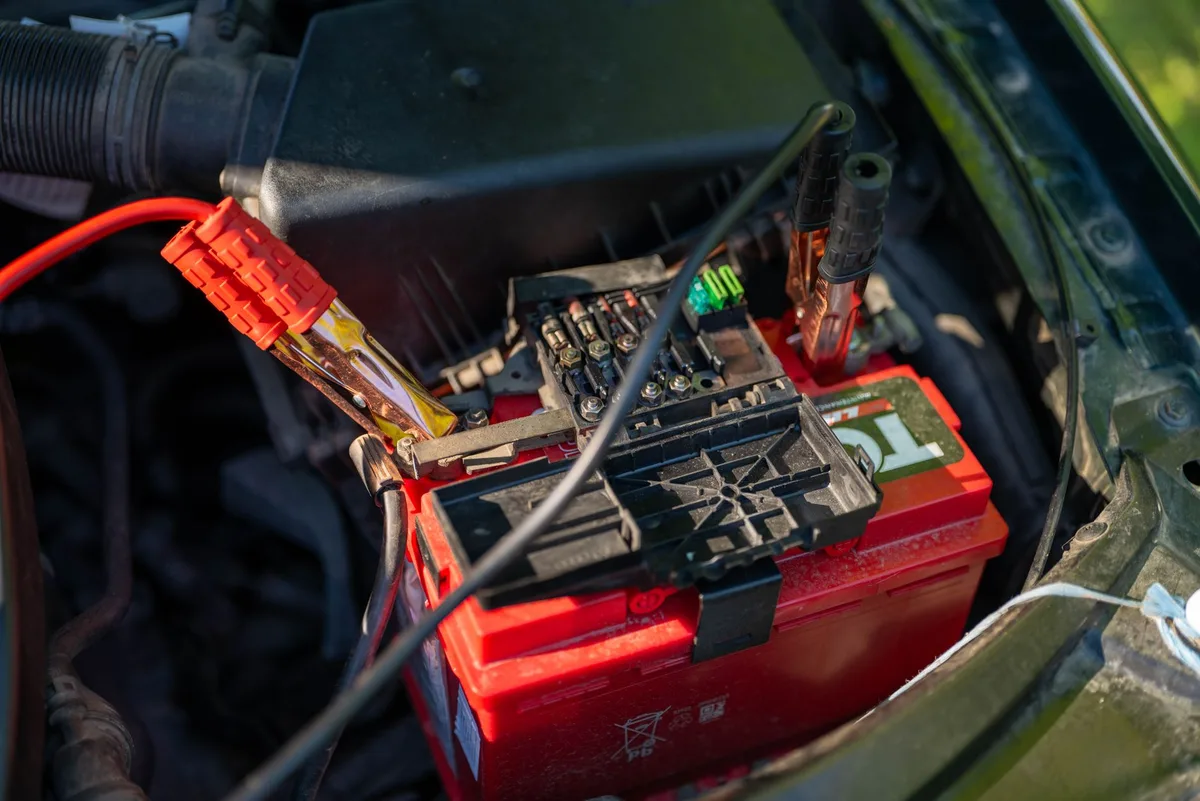
Work through these in order:
- Wiggle the terminals. Grab each battery cable clamp and try to twist it. If it moves, that loose connection alone can kill the charge. Snug it down.
- Check for corrosion. White, blue, or green crust on the posts blocks current. Heavy buildup can mimic a dead battery entirely. You can even gauge battery health without a meter using clues like this.
- Eyeball the serpentine belt. If it's cracked, glazed, or hanging loose, the alternator isn't spinning. No spin means no charge.
- Look for the ground strap. Follow the negative cable to where it bolts to the body or engine. A rusty or loose ground point starves the whole system.
- Listen and smell. A rotten-egg smell near the battery means it may be boiling or shorted internally. That battery is done.
If you find a loose or crusty terminal, clean and tighten it, then try starting again. Plenty of "dead" cars come back to life right here. If everything looks clean and snug and the car still won't stay running, it's time to grab a multimeter and read the actual numbers.
Testing With a Multimeter: The Numbers That Diagnose It
A cheap multimeter settles the argument in about five minutes. Set it to 20V DC and you can read exactly what your battery and alternator are doing. If you're unsure of the dial, our note on picking the right meter setting covers it fast.

Resting Voltage (Engine Off)
Test the battery with the engine off and everything shut down. Touch red to positive, black to negative, and read the number.
- 12.6V or higher: battery is fully charged.
- 12.4V: about 75% charged, still usable.
- 12.2V: roughly half charged and getting weak.
- 12.0V or below: nearly dead and likely the problem.
A reading near 12.4 volts sits on the healthy side, but anything under 12.2 after a full charge points to a tired battery.
Charging Voltage (Idle vs. 2,000 RPM)
Now start the engine and read again. A working alternator should push the number up, not leave it flat.
- 13.8V to 14.5V at idle: charging system is healthy.
- Rev to 2,000 RPM and it climbs or holds steady: alternator is doing its job.
- Below 13.5V while running: the alternator is undercharging.
- Above 15V: the voltage regulator may be overcharging.
If the reading barely moves off the resting number, the alternator isn't charging. That matches a car that dies the moment you unhook the cables.
The Parasitic Drain Test
If the battery keeps going flat overnight, test for a parasitic draw. Set the meter to milliamps and connect it in series between the negative post and cable, with everything off.
A normal draw sits around 25 to 50 milliamps. Anything over about 75mA points to something staying awake and draining the battery. A stuck relay, a glovebox light, or a bad module can all pull too much.
Our breakdown of what counts as a safe draw helps you judge the number.
The Decision Branches: Matching Your Symptoms to the Cause
Now line up your symptoms with the likely fix. Each pattern below points to one main cause and one first move.

Failed Alternator or Charging System
If it dies instantly and the charging voltage stays under 13.5V, the alternator is the prime suspect. The battery light usually glows the whole time too. A snapped serpentine belt or a dead voltage regulator produces the same result.
Replace or repair the charging component, then retest.
Dead or Sulfated Battery
If the car runs a few minutes then quits, and resting voltage won't climb past 12.2V even after a charge, the battery is shot. Sulfation and dead cells stop it holding a charge. A battery past five years old is a strong candidate.
Swap it and the problem usually clears.
Loose, Corroded, or Bad Connection
If the stall is random or tied to touching a cable, you've got a connection fault. Corroded posts and loose clamps interrupt current without warning. This is the cheapest fix on the list.
Clean the terminals, tighten the clamps, and check the ground strap.
Overnight Parasitic Drain
If the car runs fine now but dies after sitting, a drain is emptying the battery. Your charging system and battery may both be healthy. The fault is something pulling power while parked.
Run the milliamp test above to hunt it down.
Battery vs. Alternator: A Side-by-Side Breakdown
The two big causes are easy to tell apart once you know the tells. Here's the quick comparison.
| Clue | Points to Battery | Points to Alternator |
|---|---|---|
| When it dies | Runs minutes, then quits | Dies instantly off the cables |
| Battery light | Often off | Usually stays on |
| Resting voltage | Below 12.2V, won't climb | Normal, near 12.6V |
| Voltage while running | 13.8V+ (charging fine) | Below 13.5V (not charging) |
| Age factor | Battery over 5 years old | Belt, bearings, or regulator worn |
| Typical fix | New battery | Alternator or belt repair |
If you want the full walk-through, our guide on sorting the two with a meter covers every reading. When output holds around 13.5V, check whether that counts as acceptable alternator output for your setup.
What It Costs to Fix Each Cause
Costs swing a lot depending on the part and your car. Here's a realistic range to plan around, based on aggregate repair-pricing data.
| Cause | Typical Fix | Rough Cost (Installed) |
|---|---|---|
| Loose or corroded terminal | Clean and tighten | $0 to $20 (DIY) |
| Weak or dead battery | New battery | $120 to $300 |
| Broken serpentine belt | Belt replacement | $100 to $250 |
| Failed alternator | New or reman alternator | $400 to $700+ |
| Parasitic drain | Diagnosis and repair | $75 to $200+ |
The cheapest wins are connections and belts. The battery is the middle tier. The alternator is the priciest, which is exactly why you don't want to guess.
A free charging-system test at most auto parts stores can confirm the alternator before you spend a dime.
Mistakes That Lead People to Replace the Wrong Part
The most expensive mistake is buying an alternator when the battery was the problem. A weak battery can drag down a healthy alternator's readings and fake a charging fault. Always fully charge and test the battery first.
Here are the traps we see most often:
- Replacing the alternator without testing charging voltage.
- Tossing a good battery when a loose terminal was the real fault.
- Ignoring the serpentine belt, which stops the alternator cold.
- Skipping the parasitic draw test on a car that only dies after sitting.
- Trusting a battery that reads 12V but can't crank, covered in why 12 volts still won't turn the engine.
Test before you buy. Ten minutes with a meter saves you from throwing parts at the wrong problem.
Jump-Starting the Right Way (and the Safety Stuff That Matters)
A sloppy jump can damage electronics or spark near battery gas. Order matters, so follow it every time.
- Connect red to the dead battery's positive post.
- Connect the other red to the donor's positive post.
- Connect black to the donor's negative post.
- Connect the last black to bare metal on the dead car's engine, not the battery.
- Start the donor, then the dead car. Remove the clamps in reverse order.
Never let the clamps touch each other. Batteries vent hydrogen gas, which can ignite from a spark. Wear eye protection and keep the terminals clean to avoid an acid-splash risk.
How Long to Drive After a Jump to Recharge
Plan on at least 30 minutes of driving to put a meaningful charge back in. Idling in the driveway won't cut it. Highway speeds spin the alternator faster and charge harder than stop-and-go traffic.
Even then, a deeply drained battery may not reach full. A wall charger does a better, gentler job over several hours. Short daily trips are a big reason batteries never fully recover, especially in cold weather where low temperatures sap capacity.
When to Stop Testing and Get It Towed
Call a tow once you've confirmed a charging fault or the car won't stay running at all. Driving with a dead alternator is a gamble. The car runs only until the battery drains, then it stalls, maybe in traffic.
Stop and get help if any of these show up:
- The engine dies again within a mile or two.
- The battery light stays on the whole drive.
- You smell rotten eggs or see the battery swelling.
- The car won't crank even after cleaning connections.
A stall at speed can kill your power steering and brake assist. When in doubt, tow it rather than risk getting stranded somewhere worse.
FAQs: Quick Answers to the Questions People Ask Most
Why does my car die the second I remove the jumper cables?
Because the alternator isn't charging. The engine was running purely on borrowed power from the donor battery. Once you disconnect, nothing feeds the ignition and fuel systems, so it stalls.
Test charging voltage. Below 13.5V while running confirms a charging-system failure.
Can a bad battery cause a car to die after a jump?
Yes. A battery with a dead cell or heavy sulfation takes a light surface charge, runs a few minutes, then collapses. Resting voltage stuck below 12.2V after charging is the tell.
Even a reading of 12.2 volts signals a weak battery that may need replacing.
How do I know if it's the alternator or the battery?
Read voltage with a multimeter. A resting battery near 12.6V that drops below 13.5V while running points to the alternator. A battery that won't climb past 12.2V even after charging is the failing part.
The charging number while running is the deciding clue.
Is it safe to drive with the battery light on?
No, treat it as a warning to get home or to a shop quickly. The light means the charging system is out of range. You're running on battery reserve alone, which can empty in as little as 20 to 30 minutes.
A stall can disable your steering and brake assist.
Why does my battery keep dying overnight after a jump?
A parasitic drain is likely pulling power while the car sits. Normal draw is 25 to 50 milliamps. Anything over about 75mA points to a stuck relay, light, or module staying awake.
A milliamp test between the negative post and cable will find it.
Your Fast Decision Guide: What to Do Next
Run through this quick logic and you'll land on the right fix.
- Dies instantly off the cables, battery light on: charging fault. Check the belt and alternator output.
- Runs a few minutes then quits, voltage won't climb: replace the battery.
- Random stalls tied to touching cables: clean and tighten the connections.
- Fine now, dead after sitting: hunt the parasitic drain.
Charge and test the battery before buying anything. A reading below what signals a truly dead battery tells you the battery is done, while a healthy resting number with low running voltage points straight at the alternator. Test first, then fix the part your numbers actually name.

Similar Posts