What Is CCA on a Car Battery? A Simple Guide
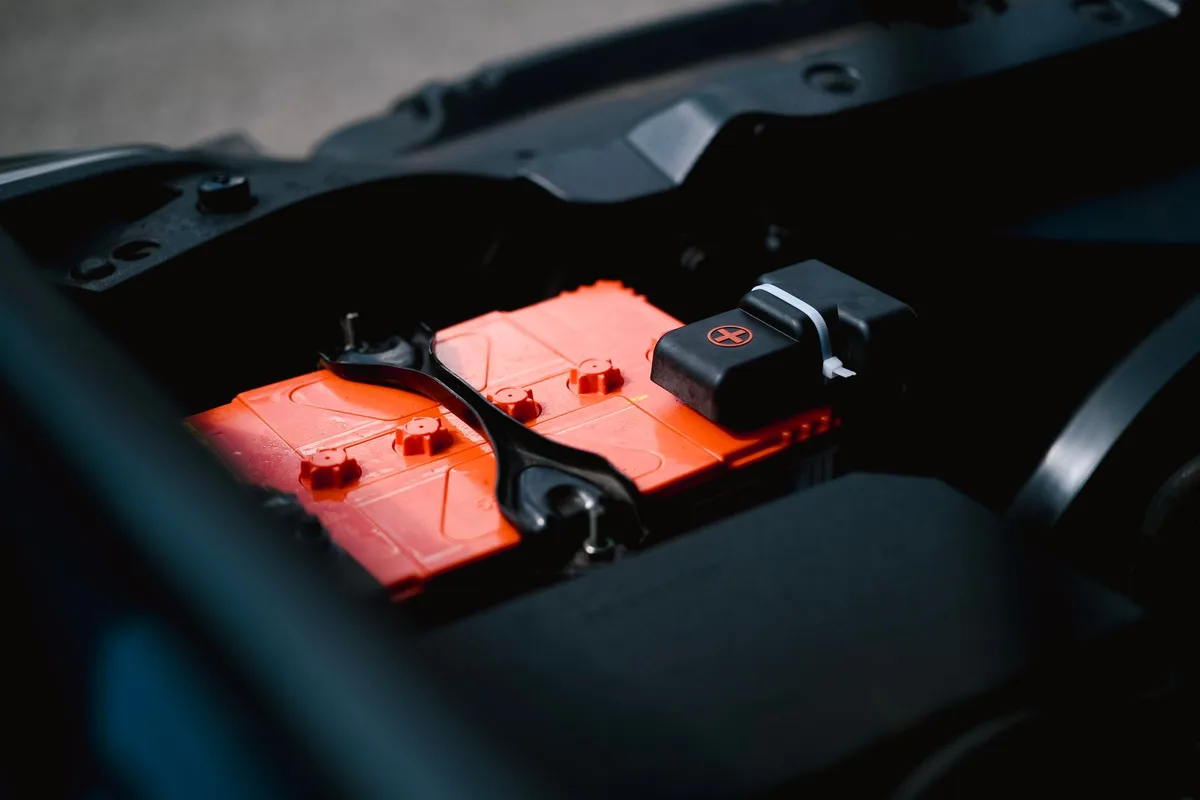
Ever stared at your car battery and wondered what is CCA on a car battery, and why that number gets so much attention? CCA stands for Cold Cranking Amps, and it tells you how hard your battery can push to start the engine when it's freezing outside. Pick a battery with too little of it, and one cold morning your engine just clicks instead of turning over.
That single number matters more than most drivers realize. Per SAE J537 testing, CCA measures the current a fully charged 12-volt battery delivers at 0°F (-18°C) for 30 seconds while staying above 7.2 volts. Get it wrong and you're stuck.
Let's break down exactly what that means and how to use it.
Quick Answer
CCA on a car battery means Cold Cranking Amps. It measures how much starting current a battery delivers in cold weather. The test runs at 0°F for 30 seconds.
The battery must stay above 7.2 volts to pass. A higher CCA rating means stronger cold-weather starting power.
What CCA Actually Means on Your Car Battery
CCA is a rating, not a feature you switch on. It's the peak current your battery can supply to the starter motor in the cold. Think of it as raw muscle for that first turn of the key.
Here's the plain version. When you start a cold engine, the oil is thick and the starter needs a big burst of amps. Cold Cranking Amps tells you how big that burst can be at 0°F.
A battery rated 650 CCA can push 650 amps for 30 seconds in those conditions and still hold above 7.2 volts.
Why the cold focus? Because cold is when batteries struggle most. Chemical reactions slow down as temperature drops.
A battery that starts your car easily in July can crawl in January.
One thing to keep straight from the start. CCA measures starting power, not how long the battery runs your radio or lights. Those are different jobs handled by different ratings, and we'll get to those shortly.
Why Getting the CCA Number Right Matters More Than You'd Think
Get the CCA wrong and you feel it on the coldest day of the year. This is the part of battery shopping people skip, and it's the part that leaves them stranded in a parking lot.
Too little CCA and your starter can't spin the engine fast enough to fire. You'll hear slow cranking or a rapid clicking. If you've ever wondered why the dash lights dim and the engine barely turns, weak cranking current is often the culprit, and that ties into why voltage sags during a start.
Going the other way has a smaller downside. A wildly oversized CCA rating won't hurt your starter, but you may pay more for capacity you don't need. The smart move is matching your engine's requirement with a sensible margin, not chasing the biggest number on the shelf.
There's also the aging factor. A battery loses cranking power over its life. A unit that reads 600 CCA when new might test at 400 CCA after a few winters.
Start with the right rating and that decline still leaves you enough to turn the engine.
If your starts feel sluggish lately, it's worth checking whether the battery or the charging system is at fault. CCA is a safety and reliability number, not a bragging number.
How Cold Cranking Amps Are Measured
Cold Cranking Amps come from a strict lab test, not a rough guess. The standard is SAE J537, published by SAE International, the body that sets automotive engineering standards. Every reputable brand rates to the same method, which is what makes the numbers comparable.
Here's what the test checks:
- The battery starts fully charged.
- It's chilled to 0°F (-18°C).
- It discharges at its rated current for 30 seconds.
- Terminal voltage must stay at or above 7.2 volts the whole time.
If a battery holds 650 amps for those 30 seconds without dropping below 7.2 volts at 0°F, it earns a 650 CCA label. Fail any part and the rating drops.
Why 7.2 volts? A 12-volt starting battery has six cells, and 1.2 volts per cell is the accepted floor for usable cranking. Below that, the starter loses the punch it needs.
Why Brands Sometimes Print the Bigger, Better-Looking Number
Some labels lead with a larger figure that isn't CCA at all. Cranking Amps (CA) and Marine Cranking Amps (MCA) are tested at 32°F (0°C), not 0°F. Warmer test, bigger number, same battery.
That's not always dishonest, but it can mislead. Always confirm you're reading the CCA line, printed as "CCA," before you compare two batteries. Matching a CA figure against a true CCA figure is comparing apples to oranges.
CCA vs CA, MCA, HCA, Reserve Capacity, and Amp-Hours
CCA is only one of several ratings on a battery, and mixing them up leads to bad buys. Each one answers a different question. Here's how they stack up.
| Rating | What it measures | Test temperature | Best for judging |
|---|---|---|---|
| CCA (Cold Cranking Amps) | Starting current in the cold | 0°F (-18°C) | Cold-weather starts |
| CA / MCA (Cranking Amps) | Starting current, milder cold | 32°F (0°C) | Warm-climate starts |
| HCA (Hot Cranking Amps) | Starting current in heat | 80°F (27°C) | Hot-climate cranking |
| Reserve Capacity (RC) | Minutes of run time under load | 80°F (27°C) | Running with a dead alternator |
| Amp-hours (Ah) | Total stored energy over time | Varies | Accessory and deep-draw use |
The quick way to keep them straight:
- CCA, CA, MCA, and HCA all measure a short, powerful burst for starting. Only the test temperature changes.
- Reserve Capacity measures how long the battery keeps your car running if the alternator quits. It's a time value in minutes, not amps.
- Amp-hours measure total energy storage. This matters more for deep-cycle and accessory use than for cranking.
Here's the trap. A battery can have huge Amp-hours yet weak CCA, or strong CCA yet modest reserve. A deep-cycle battery is built for slow, steady draw.
A starting battery is built for that quick jolt.
If you're diagnosing a battery that seems fine on a meter but won't start the car, these differences help. A resting reading like what a 12.4-volt result really tells you shows state of charge, not cranking strength. The two don't always agree.
How Many CCA Your Car Actually Needs
Start with your car's factory requirement, then match or slightly exceed it. That's the whole rule. You don't guess, and you don't max it out for fun.
Your owner's manual or the original battery label lists the recommended CCA. That figure was chosen by the manufacturer for your engine, your starter, and your climate. It's the number to beat, not to double.
Matching the OEM Spec vs Chasing a Higher Number
Follow this simple logic:
- If your OEM spec is 600 CCA, buy a battery rated 600 CCA or a bit higher.
- If you live somewhere cold, aim for the upper end of that range for a safety margin.
- Don't drop below the OEM figure to save money. That margin disappears as the battery ages.
- Going well above spec is fine mechanically, but you're often paying for headroom you won't use.
A modest bump above spec is smart because CCA fades over time. Buying at exactly the minimum means you're borderline after the first cold season.
Petrol, Diesel, and High-Compression Engine Demands
Engine type changes the demand a lot. Diesels and big high-compression engines need far more cranking current than a small gas engine.
| Engine type | Typical CCA range |
|---|---|
| Small petrol (4-cylinder) | 400 to 600 CCA |
| Mid-size petrol (V6) | 500 to 700 CCA |
| Large petrol (V8) | 650 to 850 CCA |
| Diesel | 700 to 1000+ CCA |
Diesels compress air far harder to ignite fuel, so the starter fights more resistance. That's why a diesel truck battery carries such a heavy CCA rating. As of 2026, most passenger cars land in the 400 to 850 CCA band, with diesels sitting well above that.
If your car cranks slowly even with a battery that meets spec, the battery may be fading, or the charging system may be undercharging it. A quick check of normal cold-weather battery behavior tells you whether the cold alone explains the sluggish start.
What Temperature and Age Do to Your Real CCA
Your battery almost never delivers its label CCA in real life. Temperature and age both eat into it. The label reflects a fresh battery under lab conditions.
Why the Label Number Isn't What You Get in Winter
Cold slashes available cranking power fast. At 0°F, a battery delivers only about 60 to 65 percent of the cranking current it can push at 80°F. So the exact moment you need the most muscle, the battery has the least to give.
That's the cruel math of winter starting. Your engine is harder to turn because the oil is thick, and your battery is weaker because it's cold. This is why cold-climate drivers should buy toward the top of their CCA range.
How Sulfation and Capacity Fade Drain Cranking Power
Age is the second thief. Every charge and discharge cycle slowly builds sulfate crystals on the plates, which lowers how much current the battery can dump on demand. This is sulfation, and it's normal wear.
A battery might leave the factory at 600 CCA and test at 420 CCA after four years. Heat speeds this up, so hot climates often kill batteries faster than cold ones. Most starting batteries lose meaningful cranking power by year three or four.
Reading the CCA Rating and Group Size on the Label
Two numbers on the label matter most: the CCA rating and the group size. The CCA figure tells you starting power. The group size tells you whether the battery physically fits your car.
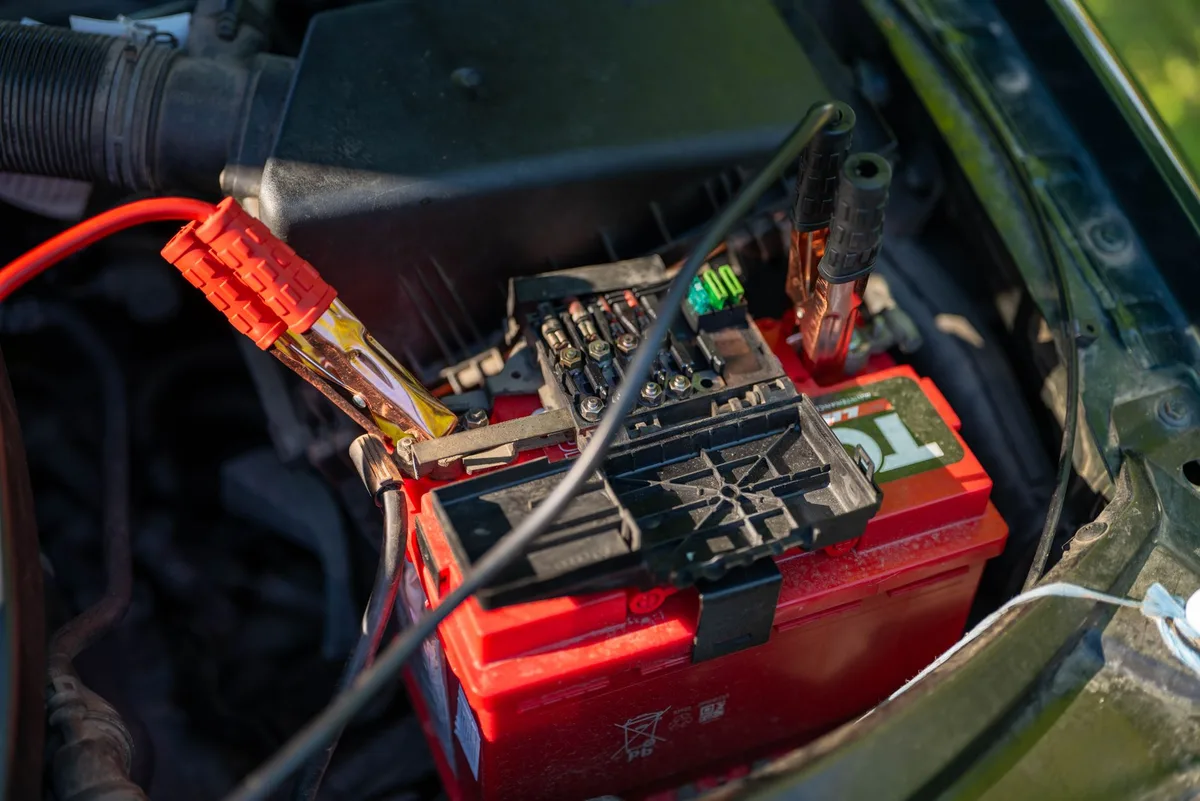
Group size follows the Battery Council International (BCI) standard. Common ones include Group 24, 35, 48/H6, and 65. Each defines the case dimensions, terminal position, and hold-down style.
Here's the quick label check:
- Find the line marked "CCA" and confirm it's not CA or MCA.
- Match the group size to your car's requirement.
- Check terminal placement so the cables reach correctly.
Get the group size wrong and the battery won't seat, or the terminals face the wrong way. That's a common return at the parts counter.
How to Test Your Battery's Real CCA
You can't read real CCA off the label once a battery has some age on it. You have to test it. A tester compares measured cranking power against the rated figure printed on the case.
Conductance Testers vs Carbon-Pile Load Tests
Two tools dominate. A conductance tester sends a small signal through the battery and estimates CCA in seconds. Most auto parts stores use these because they're fast, safe, and work even on a partly discharged battery.
A carbon-pile load tester is the old-school method. It applies a real heavy load and watches the voltage hold. It's accurate but generates heat and needs a fully charged battery to be fair.
Reading Measured vs Rated CCA and When to Replace
The result you want is measured CCA close to the rated number. A healthy battery tests near its label figure. As it ages, measured CCA drifts down.
Use this rough guide:
- Measured CCA at 80 percent or more of rated: healthy.
- Measured CCA between 50 and 70 percent: aging, plan a replacement.
- Below 50 percent, or fails a load test: replace now.
If a test shows strong voltage but weak cranking, the battery can fool a basic voltmeter. A resting figure like what a 12.2-volt reading signals doesn't prove cranking health on its own. Pair a voltage check with a proper load or conductance test.
Common CCA Mistakes That Cost People a Battery
Most CCA errors come down to comparing the wrong numbers or ignoring aging. Here are the ones that catch people out.
- Buying below OEM spec to save money, then losing the margin as the battery ages.
- Comparing a CA or MCA figure against a true CCA figure. Different test temperatures, so it's not a fair match.
- Assuming a high Amp-hour battery cranks harder. Storage and cranking are different jobs.
- Skipping a load test and trusting a voltmeter alone. A charged battery can still have weak CCA.
- Ignoring a slow crank until it becomes a no-start. Early testing saves a tow.
One more subtle trap. A weak battery can look like a charging fault, and a charging fault can look like a weak battery. If your car keeps going flat, a structured check like tracking down a repeat drain separates the two before you spend on the wrong part.
Safe Handling: Acid, Hydrogen Gas, and Terminal Order
Car batteries are safe to handle when you respect two hazards: sulfuric acid and hydrogen gas. Both can hurt you if you rush.
Flooded lead-acid batteries contain sulfuric acid, which burns skin and eyes. Wear safety glasses and gloves. If acid contacts skin, flush with water right away.
Charging and heavy loads can release hydrogen gas, which is flammable. Keep sparks and flames away, and work in a ventilated space. Never lay a metal tool across both terminals, since a dead short throws sparks and can crack the case.
Follow the correct terminal order every time:
- Disconnecting: remove the negative (-) cable first, then the positive (+).
- Connecting: attach positive (+) first, then negative (-) last.
Removing negative first breaks the ground path and cuts the short-circuit risk while you work. When you're done, recycle the old battery at a proper collection point. Lead-acid units are almost fully recyclable, and most retailers take them back.
AGM, EFB, Flooded, and Lithium: How CCA Behaves by Chemistry
Battery chemistry changes how CCA holds up, not just how high it starts. AGM and EFB batteries keep their cranking power more steadily than standard flooded units.

Absorbent Glass Mat (AGM) batteries pack denser plates, so they deliver strong CCA and resist vibration. Enhanced Flooded Batteries (EFB) sit between flooded and AGM. Both are common on start-stop vehicles, which cycle the battery constantly.
Lithium (LiFePO4) starting batteries crank hard for their weight, but their rated cranking figure often uses different test methods. Match a lithium unit to your car's electrical setup before swapping. Don't assume a lead-acid CCA number and a lithium spec mean the same thing.
Regional Rating Standards: SAE CCA vs EN, DIN, and IEC
CCA isn't the only cranking standard, so a battery sold overseas may use a different label. The number changes with the test method even for the same battery.
| Standard | Region | Notes |
|---|---|---|
| SAE CCA | North America | 0°F, 30 seconds, 7.2V |
| EN (EN 50342) | Europe | Different discharge profile |
| DIN | Germany | Stricter, lower numbers |
| IEC 60095 | International | Separate test values |
An EN figure usually reads higher than the DIN figure for the same battery. When comparing, match standard to standard. Never line up a DIN number against an SAE CCA number and call it equal.
Expert Tips for Squeezing Reliable Starts Out of Your Battery
Keeping CCA usable is mostly about charge and care. A battery that stays fully charged delivers closer to its rated cranking power.
- Keep the battery fully charged. Low charge drops measured CCA fast.
- Clean corrosion off terminals, since poor contact wastes cranking current.
- Park in a garage during cold snaps when you can.
- Load-test before winter, not after a no-start.
- Replace once measured CCA drops near 50 percent of rated.
Short trips rarely fully recharge a battery, so a monthly top-up charge helps a lot. That single habit extends usable cranking power through more winters.
Frequently Asked Questions
Is higher CCA always better for my car?
Higher CCA won't harm your starter, but it isn't automatically better. Match your car's OEM spec, then add a small margin for cold and aging. Paying for far more CCA than your engine needs mostly wastes money without improving reliable starting.
Can I replace a battery with a higher CCA rating?
Yes, a higher CCA battery is safe as long as the group size and terminals fit. The starter only draws the current it needs. Just confirm the case dimensions match your tray and the cables reach the terminals correctly.
Does CCA drop as a battery gets old?
Yes, CCA falls steadily over a battery's life. Sulfation and plate wear reduce how much current it can deliver. A unit rated 600 CCA when new may test near 400 CCA after a few years, especially in hot climates.
What CCA do I need for a diesel engine?
Diesels typically need 700 to 1000 or more CCA. High compression means the starter fights harder to turn the engine over. Always check the diesel's OEM requirement and buy at or slightly above that figure for cold mornings.
Picking the Right CCA With Confidence
CCA comes down to one clear habit: match your car's OEM figure, add a small margin, and test before winter. That covers cold starts, aging, and engine demand in one move.
Read the label carefully, compare like standards, and don't judge cranking power by Amp-hours. Do that, and your engine turns over on the coldest morning without a second thought.

Similar Posts