What Amp Should I Charge a Car Battery At? Full Guide
If you're asking what amp should I charge a car battery at, the short version is simple. Charge at about 10% of the battery's amp-hour rating for a healthy, safe recharge. A typical 60Ah car battery likes roughly 6 amps.
Push much higher and you trade battery life for speed.
The catch is that the "right" number shifts with your battery type and how flat it is. A flooded battery, an AGM, and a lithium pack don't all want the same current. As of 2026, most smart chargers handle this for you, but knowing the logic keeps you from cooking a good battery.
Let's start with the one rule that ties it all together.
Quick Answer
Charge a car battery at roughly 10% of its amp-hour (Ah) rating. A 50Ah battery wants about 5 amps. A 60Ah battery wants about 6 amps.
For the gentlest charge, drop to C/20, or half that current. Only use high rates like 15 to 20 amps for a quick, monitored top-up.
The One Rule That Answers It: Charge Rate vs. Amp-Hour Rating
Here's the rule that answers almost every version of this question. Match your charge amps to the battery's capacity, not to a fixed number you heard once.
Battery capacity is measured in amp-hours (Ah). It tells you how much energy the battery holds. Charge rate is often written as a fraction of that capacity, called the C-rate.
So "C/10" just means capacity divided by ten.
- C/10 (10% of Ah): the standard, healthy charge for flooded batteries
- C/20 (5% of Ah): a slower, gentler charge that's easy on the plates
- C/5 (20% of Ah): a faster charge you should watch closely
Run the math on your own battery. A 45Ah small-car battery wants around 4 to 5 amps. A 75Ah battery in a larger vehicle is happy near 7 amps.
Higher current pushes more heat into the plates, and heat is what shortens battery life.
This is why "just use 10 amps" is only half-right. Ten amps is fine for a big battery. On a small motorcycle battery, it's far too much.
Find Your Numbers First: Ah Rating, Chemistry, and State of Charge
Before you touch the charger, get three facts. You need the amp-hour rating, the battery chemistry, and the current state of charge. Each one changes your target amps.
Where to Read Your Battery's Ah Rating
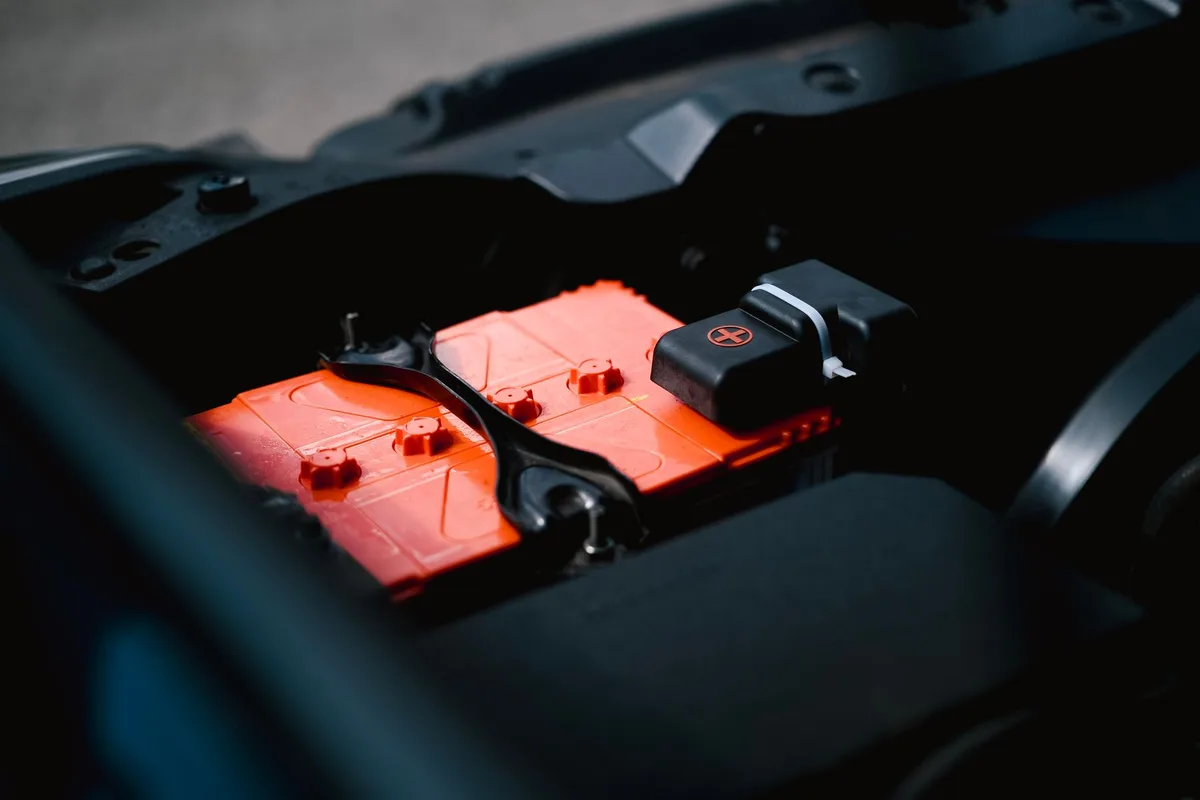
Look at the top label or the side of the case first. Most batteries print the Ah capacity right there, often near the CCA (Cold Cranking Amps) figure. Don't confuse the two.
CCA measures starting punch, not capacity, so it never sets your charge rate.
If the label only lists CCA, check the maker's spec sheet by model number. As a rough guide, many standard car batteries land between 40Ah and 80Ah. When in doubt, assume the lower end and charge gently.
Flooded, AGM, Gel, or Lithium: Why Chemistry Changes the Answer
Chemistry decides how much current and voltage the battery can safely take. Here's the quick breakdown.
| Battery type | Safe charge rate | Notes |
|---|---|---|
| Flooded (standard) | C/10, up to C/5 | Vents gas, tolerates a basic charger |
| EFB | C/10 | Handles more cycling than standard flooded |
| AGM | C/10, needs correct voltage | Sealed, sensitive to overvoltage |
| Gel | C/20 to C/10 | Prefers slow, low current |
| Lithium (LiFePO4) | Per maker spec only | Requires a lithium-profile charger |
The big warning is lithium. Never charge a LiFePO4 pack on a plain lead-acid charger. The voltage and cutoff logic differ, and mismatched charging can damage the pack.
Battery makers such as Optima's own charging guidance publish the exact voltage windows for their models, and it's worth a two-minute check.
Checking State of Charge With a Voltmeter
A resting voltage reading tells you how flat the battery really is. Let the car sit unused for a few hours first, then probe the terminals with a multimeter.
Use this rough 12V scale:
- 12.6 to 12.8V: fully charged
- 12.4V: around 75%
- 12.0V: roughly 50%, time to charge
- Below 11.8V: deeply discharged, charge with care
A steady meter reading is all you need here, and even a budget unit can nail this. If you're unsure whether your tester is safe on a car battery, our take on whether probing a battery can harm the meter clears it up. For the full method after a charge, this walkthrough on confirming a battery is truly topped up covers the resting-voltage trick in detail.
The Charging Amp Decision Tree
Now put the numbers to work. Your ideal amps depend on how fast you need the battery and what shape it's in. Follow the branch that matches your situation.
If You Want the Healthiest Charge (Overnight, No Rush)
Go with C/10 or slower. This is the sweet spot for battery life. Set the charger to around 10% of your Ah rating, or drop to C/20 if you have all night.
Low and slow keeps heat down and lets the plates absorb the charge evenly. Most smart chargers default to this range for a reason.
If You Need It Back Faster (Time-Limited)
Step up to C/5, meaning about 20% of the Ah rating. A 60Ah battery could take 12 to 15 amps for a quicker recovery. Watch it closely and feel the case now and then.
If the battery gets hot to the touch, back the current off. Fast charging is a tool, not a habit. Regular high-rate charging wears a battery out sooner.
If the Battery Is Deeply Discharged or "Dead"
Start low, then build up. A very flat battery, below 11.8V, needs a gentle initial current so it can wake up safely. Begin near C/20 and let the voltage recover before raising the rate.
Many smart chargers have a recovery or desulfation mode that does this automatically. If a battery repeatedly drains flat, the charge rate isn't the real problem. Our guide on why a fresh battery loses charge overnight points to the usual culprits.
If It's an AGM, Gel, or Lithium Battery
Match the charger mode to the chemistry. AGM needs a slightly higher absorption voltage, around 14.6 to 14.8V, so use the AGM setting. Gel prefers a slow C/20 charge.
Lithium demands its own profile, full stop.
Using the wrong mode is one of the fastest ways to shorten a sealed battery's life. When the charger has a chemistry switch, use it.
2 Amp vs 10 Amp vs 20 Amp: What Each Rate Really Does
These three settings show up on most chargers, so here's what each one is actually for. The right pick depends on battery size and your timeline.
| Charge rate | Best for | Trade-off |
|---|---|---|
| 2 amps | Small batteries, maintenance, overnight | Slow on a flat car battery |
| 10 amps | Standard car batteries, everyday recharge | Balanced speed and safety |
| 15 to 20 amps | Fast, monitored top-ups on big batteries | More heat, needs watching |
The 2-amp setting is a trickle. It's ideal for topping up a healthy battery or maintaining one in storage. On a fully flat 60Ah battery, though, it could take more than a day.
Ten amps is the everyday workhorse for a standard car battery. It recharges a half-flat battery in a few hours without stressing the plates. For most drivers, this is the default.
Twenty amps is for when you're in a hurry and the battery is large enough to take it. Keep an eye on temperature and stop if the case warms up. High current on a small or aging battery is asking for trouble.
How Long It Takes at Each Amp Setting
Charging time comes down to simple math with a small fudge factor. Take the amp-hours you need to replace, divide by your charge amps, then add about 20% to 50% for inefficiency.
A rough formula: charge time ≈ (Ah needed ÷ charge amps) × 1.3.
Here's how that plays out for a 60Ah battery at 50% charge, so about 30Ah to replace:
| Charge amps | Approx. time to full |
|---|---|
| 2 amps | 18 to 20+ hours |
| 6 amps (C/10) | 6 to 8 hours |
| 10 amps | 4 to 5 hours |
| 20 amps | 2 to 3 hours |
Two things stretch these times. A deeply flat battery charges slower at the start, and every charger tapers its current as the battery fills. That final push from 80% to 100% always takes longer than the numbers suggest.
Don't chase the clock by cranking the amps. A steady overnight charge at C/10 gives you a fuller, healthier battery than a rushed high-rate blast. If a battery still won't hold after a proper charge, the fault is likely a bad cell or a hidden drain, and our rundown on spotting a battery on its way out helps you tell the difference.
Charging Voltage Windows You Shouldn't Ignore
Amps set the speed, but voltage sets the safety ceiling. A charger that pushes too many volts will overcharge even at a modest amp setting.
Here are the target voltages for a 12V lead-acid battery:
- Bulk/absorption (flooded): about 14.4V
- Absorption (AGM): about 14.6 to 14.8V
- Float/maintain: about 13.2 to 13.8V
If your charger holds above 14.8V for hours, that's a red flag. Sustained high voltage boils off electrolyte and warps plates. A quality smart charger drops to float automatically once the battery is full.
Watch resting voltage after charging too. A healthy battery settles near 12.6 to 12.8V. If it sags fast, the charge rate wasn't the problem.
Our breakdown of what a normal reading looks like gives you the full scale.
Step-by-Step: Setting the Right Amps and Charging Safely
Follow these steps in order. They keep the charge safe and the battery healthy.
- Find your Ah rating and set amps to about 10% of it.
- Pick the correct chemistry mode (flooded, AGM, or lithium).
- Turn the charger off before connecting anything.
- Clamp positive to the positive terminal first.
- Clamp negative to a clean ground point, not the battery post if you can help it.
- Switch the charger on and confirm the amp reading.
- Let it run until the current tapers and float kicks in.
- Turn the charger off, then remove negative first, positive last.
Charge in a ventilated space, never a sealed room. If the battery is still in the car, a solid ground point reduces spark risk near the terminals.
Mistakes That Cook Batteries and How to Dodge Them
Most battery damage comes from a handful of avoidable errors. Here's what to steer clear of.
- Guessing amps instead of using the Ah rating
- Fast-charging a small or aging battery
- Leaving a dumb charger on for days
- Using a lead-acid profile on a lithium pack
- Ignoring a hot case during charging
Overcharging is the quiet killer. A basic manual charger with no auto shut-off keeps pushing current long after the battery is full. That's how you get a battery that swells at the sides, a sign of internal gas buildup.
Undercharging hurts too. Repeatedly stopping short leaves sulfate on the plates and slowly kills capacity. If a battery drains between charges, the real fault may be a hidden draw, and our guide on tracking down a hidden current drain helps you find it.
Safety Warnings: Gassing, Frozen Batteries, and PPE
Charging a lead-acid battery produces hydrogen gas, which is flammable. Keep sparks, flames, and cigarettes well away from the battery while it charges.
A few non-negotiable rules:
- Wear eye protection and gloves around battery acid
- Never charge a frozen battery, it can rupture
- Never charge a cracked or leaking case
- Ventilate the area to clear hydrogen
If you smell a sharp, rotten-egg odor during charging, stop. That sulfur smell often means overcharging or a failing cell, and our piece on that rotten-egg smell explains what's happening. A leaking battery is a hazard too, covered in our guide to handling acid leaks safely.
The U.S. Occupational Safety and Health Administration publishes battery-charging safety guidance worth a look for ventilation and PPE basics.
Cold vs Hot Climates: When to Adjust Your Charge Rate
Temperature changes how a battery accepts a charge. In the cold, batteries charge slower and self-discharge faster.
In winter, a flat battery may need a bit more patience at the same amp setting. Cold also makes starting harder, so a fully charged battery matters more. If your car struggles on frosty mornings, our fixes for hard cold-weather starts are worth bookmarking.
Heat is the opposite problem. High temperatures speed up water loss and make overcharging more likely. In hot weather, lean toward lower amps and a charger with temperature compensation.
Never charge a battery that's already hot from a long drive, let it cool first.
Keeping Stored Batteries Healthy With Maintainers and Trickle Charge
For a car in storage, a maintainer beats a plain charger. It holds the battery at float voltage without overcharging.
A trickle charger pushes a low, steady current, usually 1 to 2 amps. A maintainer (battery tender) is smarter. It tops up only when voltage drops, then idles.
That's the right tool for a classic car, motorcycle, or boat sitting for months.
If a battery keeps going flat in storage, suspect a parasitic drain, not the charger. Our guide on what counts as too much idle draw sets the threshold.
Pro Tips From the Bench
A few habits separate a battery that lasts five years from one that dies in two.
- Default to C/10 unless you have a real reason to rush.
- Buy a smart charger with an AGM and lithium mode.
- Recheck resting voltage a few hours after charging.
- Feel the case during a fast charge, warm is fine, hot is not.
- Charge a flat battery the same day, don't let it sit.
Sulfation sets in fast on a discharged battery. The longer it sits below 12.4V, the more capacity you lose. When alternator and battery both check out but the battery still dies, our fixes for a good alternator that still drains the battery point you to the real cause.
Frequently Asked Questions
Is it better to charge a car battery at 2 amps or 10 amps?
Ten amps suits a standard car battery for an everyday recharge. Two amps is better for small batteries, maintenance, or overnight top-ups. For battery longevity, slower is gentler.
If you're not in a hurry, the lower rate wins.
Can you charge a car battery too fast?
Yes. Charging above roughly 20% of the Ah rating builds heat that warps plates and boils off electrolyte. A small or aging battery is most at risk.
Keep fast charging short and watch the case temperature.
How many amps to charge a 12V car battery?
Aim for about 10% of its amp-hour rating. A 50Ah battery wants around 5 amps, a 70Ah battery around 7 amps. Voltage should stay near 14.4V for flooded and 14.6 to 14.8V for AGM.
Will a higher amp charger damage my battery?
Not if you set a safe rate. A 20-amp charger can charge at 5 amps just fine. The danger is running high current on a small or weak battery.
Match the amps to capacity, not to the charger's maximum.
Your Quick Decision Guide: Pick Your Amps in 10 Seconds
Here's the whole decision boiled down. Find your Ah rating, then choose your branch.
- Healthy overnight charge: set 10% of Ah (C/10)
- Gentlest possible charge: set 5% of Ah (C/20)
- Need it fast, big battery: set up to 20% of Ah, and watch it
- Deeply flat battery: start low, build up slowly
- AGM, gel, or lithium: use the matching charger mode
When in doubt, go lower. A slower charge costs you a few hours and buys you months of battery life.

Similar Posts