What Happens If You Connect Jumper Cables Wrong

Hook up a set of jumper cables backwards and the mistake shows up fast. What happens if you connect jumper cables wrong ranges from a harmless spark to a fried computer, and in rare cases a cracked battery. The red clamp belongs on positive.
The black clamp belongs on negative and a metal ground. Swap them, and current flows the wrong way through your car's electronics.
A standard car runs a 12-volt system, and a healthy battery rests around 12.6 volts. Reverse that flow and the first parts to give out are usually the cheap ones: fuses and fusible links. But modern cars, as of 2026, pack sensitive control modules that don't shrug off reverse polarity.
Here's exactly what happens, in the order it's most likely to hit you.
Quick Answer
Connecting jumper cables wrong sends current backwards through your car's electrical system. The most common result is blown fuses and fusible links. Reverse polarity can also fry the ECU, alternator diodes, and control modules.
Sparks at the terminal may ignite battery gas in rare cases. A stressed battery can overheat, vent acid, or crack.
How a Wrong Connection Damages Your Car's Electrical System
A wrong connection means the current runs against the design. Electricity that should flow positive to negative now pushes the opposite way. Your car's protective parts take the hit first, then the expensive electronics behind them.

Carmakers build in sacrificial parts for exactly this. The catch is that those parts don't always catch everything. On older cars, damage often stops at a fuse.
On newer cars packed with computers, it can go deeper.
Blown Fuses and Fusible Links (the First Thing to Go)
Fuses and fusible links are the first line of defense. A fuse is a thin metal strip designed to melt when too much current passes. A fusible link is a heavier version wired into the main power feed.
When you reverse polarity, these parts often blow on purpose. That's their job. You'll usually notice dead accessories, no dash lights, or a car that won't crank even after you fix the cables.
- Check the under-hood fuse box first
- Look for a scorched or melted main fuse or fusible link
- Replace only with the same amp rating printed on the fuse
If a cheap fuse took the hit, you got lucky. Replacing one costs a few dollars. It's worth knowing how to check it with a multimeter so you can confirm the battery itself survived before you move on.
Fried ECU, Alternator Diodes, and Control Modules
When the fuses don't catch it fast enough, the current reaches the expensive stuff. The engine control unit (ECU) is the car's main computer. Reverse voltage can corrupt it or kill it outright.
The alternator is another common casualty. Its diodes only allow current to flow one direction. Push current backwards and those diodes can short, which leaves you with a dead charging system even after a restart.
| Part damaged | Typical symptom | Rough repair cost |
|---|---|---|
| Main fuse / fusible link | Dead electronics, no crank | $2 to $50 |
| Alternator diodes | No charging, warning light | $150 to $500 |
| ECU / control module | No start, limp mode, dash errors | $500 to $1,500+ |
If your car cranks but the battery light stays on afterward, the alternator is a prime suspect. A quick way to sort out which part failed is a voltage test at the battery with the engine running. A reading below the normal charging range points straight at a damaged alternator.
Sparks, Overheating, and the Risk of a Battery Explosion
The scariest outcome isn't electrical, it's physical. A reversed connection creates a dead short between the two batteries. That short can throw sparks, heat the cables, and in rare cases ignite gas around the battery.
You might see the clamps glow, smell something hot, or watch the cable insulation start to melt. If that happens, don't stand there. Disconnect and step back.
Why Hydrogen Gas and Battery Acid Make This Dangerous
Lead-acid batteries give off hydrogen gas, and hydrogen is flammable. A charging or shorted battery vents more of it. A spark right at the terminal is all it takes to ignite that gas in the wrong conditions.
The result can be a ruptured case that sprays sulfuric acid. Battery electrolyte is roughly 30 to 50 percent sulfuric acid, strong enough to burn skin and eyes in seconds. Federal workplace guidance from OSHA treats battery servicing as a real hazard for exactly this reason.
- Never make the final connection at the dead battery's negative post
- Keep flames, cigarettes, and sparks away from the battery
- Wear eye protection and gloves before you touch a terminal
- Work in a ventilated spot, not a closed garage
A weak battery in freezing weather vents and stresses more easily, which is one reason winter starts strain a tired battery so hard. Cold plus a wrong connection is a bad combination.
What to Do Immediately After Hooking Them Up Backwards
Act fast, but stay calm. The longer reversed current flows, the more it can damage. Your first job is to break the circuit safely.
Follow these steps the moment you realize the cables are backwards:
- Do not crank the engine or turn the key
- Disconnect the clamps in reverse order, black first, then red
- Pull them off one at a time so the metal jaws never touch each other
- Step back and check for heat, smoke, or a hot chemical smell
- Inspect both batteries for swelling, leaks, or a cracked case
If a clamp welded itself to the terminal or the cable is melted, don't yank it hard. Let things cool for a minute. A battery that's hot, hissing, or bulging should be left alone until it settles.
Once everything is disconnected and cool, you can reconnect the cables the correct way. But if you smelled acid or saw the battery swell, stop there. A cracked case won't be fixed by a second attempt.
How to Check for Damage: Fuses, Battery, and Warning Lights
Start simple and work outward. Most reverse-polarity damage leaves a clear trail if you know where to look. Fuses first, battery second, electronics last.
Here's a quick check order that saves time:
- Fuses: pull the under-hood and cabin fuse boxes, look for melted strips
- Battery: check voltage, a healthy one rests near 12.6 volts
- Dash: turn the key to accessory, note any new warning lights
- Charging: start the car if it runs, watch for a battery light
A resting reading tells you a lot. If the pack sits well under 12.6, something drained or damaged it, and what a resting reading means helps you judge whether the battery survived. A reading near zero usually means a blown main fuse or a dead cell.
If the fuses look fine but the car still won't start, the damage likely reached a module. That's when a scan tool or a trip to a mechanic earns its keep. Catching a fried ECU early beats chasing random gremlins for weeks.
The Correct Connection Order That Prevents All of This
Doing it right takes ten seconds and saves you a repair bill. The trick is following the same order every time, red first, black last. Match positive to positive and negative to a ground.
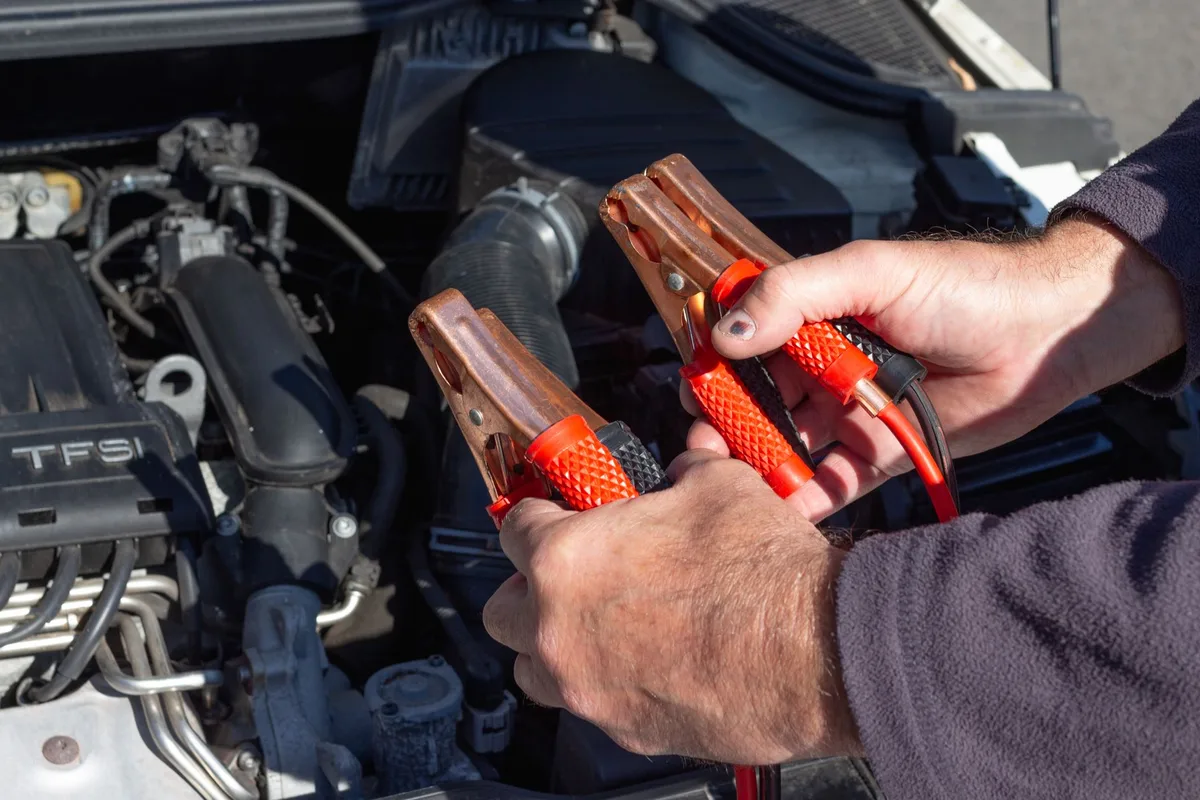
Here's the sequence that keeps current flowing the right way:
- Red clamp to the dead battery's positive (+) terminal
- Red clamp to the good battery's positive (+) terminal
- Black clamp to the good battery's negative (−) terminal
- Black clamp to bare metal on the dead car's engine block
Turn off both engines and all accessories before you start. Keep the clamps from touching each other while any one of them is attached. To disconnect, just reverse the order.
Where the Final Black Clamp Really Goes (Not the Battery Post)
The last black clamp goes on unpainted engine metal, not the dead battery's negative post. This matters because the final connection can spark. You don't want that spark next to a battery venting hydrogen gas.
A clean bolt head or a bracket on the engine block works well. Grounding there sends any spark away from the battery. It's a small habit that quietly prevents the explosion risk covered earlier.
Common Jump-Start Mistakes That Cause Real Damage
Reversed clamps aren't the only way to cause harm. Plenty of well-meaning jumps go sideways from small errors. Here are the ones our research sees most often.
- Letting the two clamps touch while connected, which creates a dead short
- Clamping the last black lead onto the dead battery post instead of ground
- Jumping a frozen or visibly damaged battery, which can rupture
- Cranking for 20 seconds straight instead of short 5-second tries
- Mixing up 12V and 24V systems, like jumping a car off a big truck
Loose clamps cause trouble too. A clamp that slips mid-crank arcs and pits the terminal. Give each one a firm wiggle before you turn the key.
One more: don't assume a jump fixes the underlying problem. If the car dies again overnight, you may have a parasitic drain or a bad cell. A 12-volt reading that still won't crank usually points to a deeper fault, not just a flat charge.
Bare Jumper Cables vs a Reverse-Polarity-Protected Jump Starter
If you're worried about wiring it wrong, a portable lithium jump starter takes most of that risk off the table. These self-contained packs include reverse-polarity protection and won't push current if the clamps are backwards. Bare cables have no such safety net.

Both have a place. Here's how they stack up for a typical driver.
| Factor | Bare jumper cables | Lithium jump starter |
|---|---|---|
| Needs a second car | Yes | No |
| Reverse-polarity protection | None | Built in |
| Beeps or blocks on wrong hookup | No | Usually yes |
| Rough price | $15 to $40 | $60 to $150 |
| Best for | Two-car boosts, budget | Solo drivers, safety |
Cables are cheap and never run out of charge, but they rely entirely on you connecting them correctly. A jump starter costs more and needs recharging, yet its safety circuit is a real advantage for anyone who isn't confident under the hood. For a weak-but-not-dead pack, knowing how many cranking amps you actually need helps you buy a starter that'll turn your engine over.
Safety Gear and Precautions Before You Touch the Terminals
Two minutes of prep prevents the worst outcomes. Batteries hold enough energy to burn you and enough acid to blind you. Treat every jump like the hazard it is.
- Wear safety glasses and gloves before handling clamps
- No smoking, no open flames, no sparks near the battery
- Pop the hood and let hydrogen gas disperse in the open air
- Remove rings and metal watches that could short a terminal
- Check the battery isn't cracked, leaking, or frozen first
Read the owner's manual before you clamp anything. Many newer cars route jump points to a remote positive post and a designated ground stud, not the battery itself. Some hybrids and start-stop models have specific rules, and ignoring them can damage sensitive electronics.
If acid touches skin, flush with water right away. If it reaches your eyes, rinse for at least 15 minutes and get medical help. A cheap pair of glasses is a lot cheaper than an ER visit.
When to Stop and Call a Mechanic or Roadside Assistance
Some situations are past a DIY fix. If you smell burning, see smoke, or the battery is swollen, stop and get help. Pushing forward risks injury and more damage.
Call a professional when you notice any of these:
- The battery case is cracked, bulging, or leaking fluid
- Clamps or cables melted during the attempt
- The car still won't start after fuses check out fine
- Warning lights stay on or the engine runs in limp mode
- You suspect ECU or module damage from reversed polarity
A no-start with good fuses often means the damage reached a control module. That needs a scan tool most drivers don't own. Roadside assistance can jump it safely or tow it in.
Trust your nose and eyes here. A battery reading that drops to near zero volts after a wrong hookup usually signals a blown main fuse or a killed cell. That's a fair point to hand it off.
There's no shame in calling for backup when the electrical system is fried.
Frequently Asked Questions
Will connecting jumper cables wrong always ruin my car?
No, not always. In many cases a reversed connection just blows a fuse or fusible link, which is a cheap fix. Older cars often escape with only that.
Newer cars with lots of electronics face higher odds of ECU or alternator damage.
How do I know if I fried my ECU?
The clearest signs are a car that cranks but won't start, or one that runs in limp mode. You may also see multiple dashboard warning lights with good fuses installed. A shop scan tool confirms module faults.
If fuses check out but the car stays dead, suspect the ECU.
Can reversing jumper cables start a fire?
Yes, it can. A reversed hookup creates a dead short that heats cables fast and throws sparks. That spark near a battery venting hydrogen gas is a real ignition risk.
Melted insulation or a hot chemical smell means disconnect immediately and step back.
What should I check first after a wrong connection?
Check the fuses first, then the battery. Pull the under-hood and cabin fuse boxes and look for melted strips. Test the battery voltage next, since a healthy one rests near 12.6 volts.
Only after those pass should you suspect the alternator or control modules.
Does a jump starter prevent reverse-polarity damage?
Mostly, yes. Quality lithium jump starters include reverse-polarity protection and won't send current if the clamps are backwards. Many beep or block the connection to warn you.
Bare cables have no such circuit, so they rely entirely on you hooking them up correctly.
Quick-Reference Recap: Damage, Fixes, and Safe Practice
Wrong-way cables usually blow a fuse or fusible link first. If that catches it, you're out a few dollars. If it doesn't, the alternator diodes or ECU can take the hit, and repairs climb into the hundreds.
The moment you spot backwards clamps, don't crank. Disconnect black first, then red, one clamp at a time. Check for heat, swelling, or an acid smell before you try again.
- Red goes to positive, black goes to a ground on the engine block
- Make the last connection away from the dead battery, never on its post
- Wear eye protection and keep sparks away from the battery
- Blown fuses are cheap, a fried ECU is not
- When in doubt, disconnect and call for help
Get the order right and a jump is a two-minute job. Get it wrong and you're gambling with your car's electronics and your own safety. A little care at the terminals keeps both intact.
Similar Posts