Is It Safe to Test a Car Battery With a Multimeter?
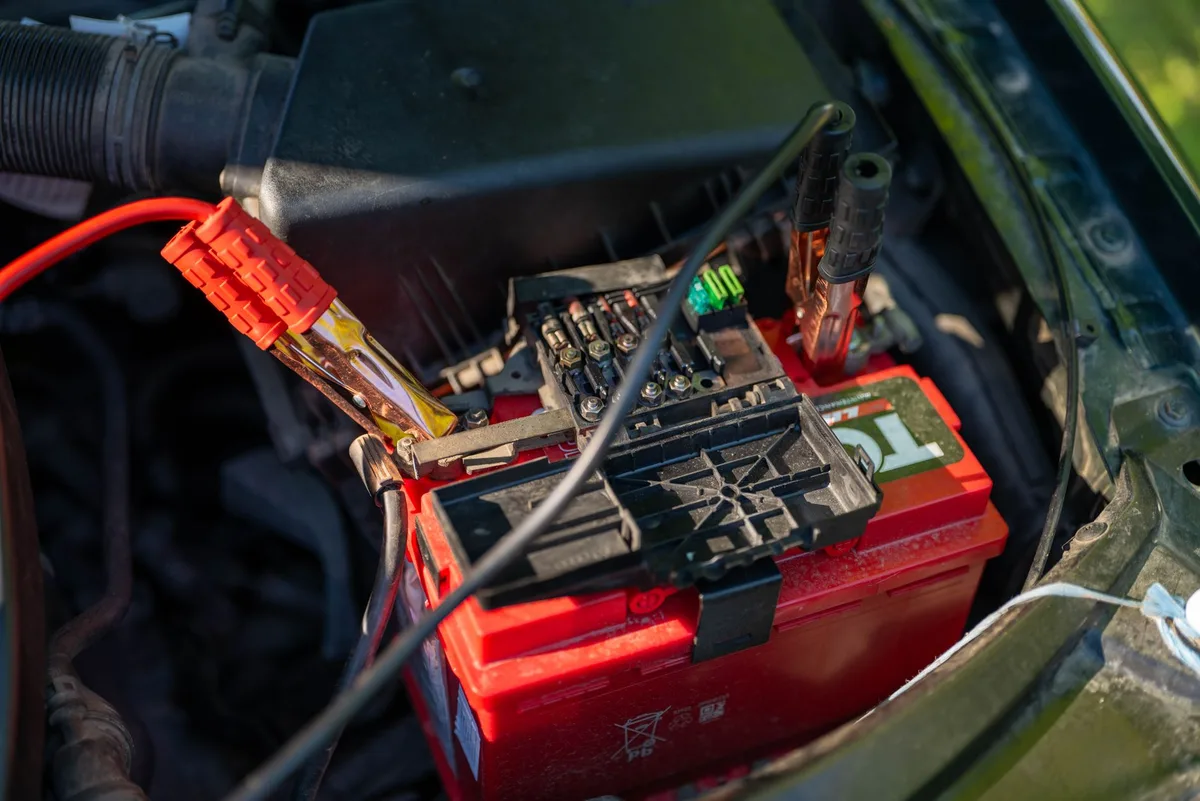
Wondering is it safe to test a car battery with a multimeter before you go poking around under the hood? Good instinct. The short version is yes, it's safe for almost anyone, as long as you respect a few rules around sparks, acid, and probe placement.
A healthy 12V car battery sits at roughly 12.6 volts at rest, and a standard digital multimeter reads that in seconds without drawing any load. Per OSHA guidance on battery handling, the real hazards are hydrogen gas and sulfuric acid, not the tiny measuring current. Get those two things right and this is a low-risk job.
Quick Answer
Yes, testing a car battery with a multimeter is safe. A multimeter only measures voltage. It sends almost no current into the battery.
The main risks are sparks near hydrogen gas and contact with battery acid. Wear gloves and eye protection. Set the meter to DC volts.
Never let the two probes touch across the terminals.
Why Getting This Right Actually Matters
A car battery looks harmless. It isn't. Inside that plastic case sits sulfuric acid and six cells that vent hydrogen gas, especially right after charging or a long drive.
Hydrogen is flammable. A single spark near the vents can be enough to cause trouble. That's why the "how" matters as much as the "yes."
The good news is that a multimeter is one of the gentlest tools you can use on a battery. It reads voltage passively. Compared to jump-starting or load testing, the risk is small.
Still, sloppy technique can short a terminal or damage your car's electronics, so we'll walk through the safe way as of 2026.
What a Multimeter Really Measures on a Car Battery
A multimeter measures the resting voltage of your battery, and that's it. Voltage tells you the state of charge, meaning how full the battery is right now.
Here's the catch. Voltage does not tell you the full health of the battery. A battery can read a healthy 12.6 volts and still fail to crank the engine, because it can't deliver enough amps under load.
That gap trips people up constantly. If your battery reads fine but the car still won't turn over, the voltage number is only half the story. We cover that exact case in our breakdown of a battery that shows a good number yet still cranks slow.
So think of a multimeter as a fuel gauge, not a health report. It's great for a quick charge check. It's not a load tester.
For a fuller look at what the tool can and can't do, our guide on checking a battery with a meter lays it out.
The Real Risks Before You Touch a Single Terminal
Most battery testing goes fine. The risks that do exist are predictable, which means they're easy to avoid once you know them.
Hydrogen Gas and Spark Ignition
Batteries vent hydrogen, and hydrogen ignites easily. The danger spikes right after the battery has been charging or the car just shut off.
Don't create sparks near the top of the battery. That means no letting your probes touch each other, no dropping a wrench across the posts, and no smoking nearby. Test in a ventilated space, and let a freshly driven car sit a few minutes first.
Sulfuric Acid and Corroded Terminals
The electrolyte inside is sulfuric acid. If the case is cracked or the terminals are crusted white, acid or corrosive residue may be present.
Wear nitrile gloves and safety glasses. If you see leaking fluid or heavy corrosion, clean up carefully and keep it off bare skin. Acid burns are no joke.
Shorting the Terminals and Frying Electronics
This is the mistake that actually damages things. If your two probes bridge the positive and negative posts through metal, or the leads slip, you can create a short.
Keep one probe per terminal. Hold them steady. Don't let a ring, watch, or bracelet dangle across the posts.
Remove metal jewelry before you start.
When You Should NOT Use a Multimeter at All
Sometimes the safe answer is to step back. If the battery is physically damaged, testing it isn't worth the risk.
Bulging, Leaking, or Cracked Batteries
A swollen or misshapen case is a red flag. It usually means overcharging, heat damage, or internal gas buildup, and the battery can leak or fail.
Don't test a battery in that shape. Handle it as little as possible and plan to replace it. Our guides on a battery that's ballooned at the sides and what to do with a bulging case walk through the safe next steps.
Frozen or Recently Charged Batteries
A frozen battery can crack internally, and testing it may be unsafe. Let it thaw fully first.
A battery that just came off a charger holds a "surface charge" that inflates the reading. Let it rest at least an hour, ideally overnight, so you get an honest number.
How to Safely Test Your Car Battery Step by Step
Here's the safe, simple routine. It takes about two minutes once the car has rested.

Setting the Meter to DC Volts (Not AC)
Turn the dial to DC voltage, shown as V with a straight line or "DCV." A car battery is direct current.
If your meter isn't auto-ranging, pick the 20V range. Setting the meter to AC by accident gives you a useless reading, so check the dial first.
Connecting the Red and Black Probes Correctly
Turn off the ignition, headlights, and everything else. Then connect the probes.
- Red probe to the positive terminal (marked + or POS).
- Black probe to the negative terminal (marked, or NEG).
- Hold each probe firmly on clean metal.
If you accidentally reverse them, a digital multimeter just shows a minus sign. No harm done. Correct polarity keeps the reading clear.
Reading a Resting Voltage the Right Way
Read the number after it settles. For an accurate resting voltage, the car should have sat at least an hour with nothing running.
Note the figure. That single number is your state of charge, which we translate in the chart below. If you want extra detail on probe technique for tight spaces, our notes on using back-probe pins help.
Car Battery Voltage Chart: What Your Numbers Mean
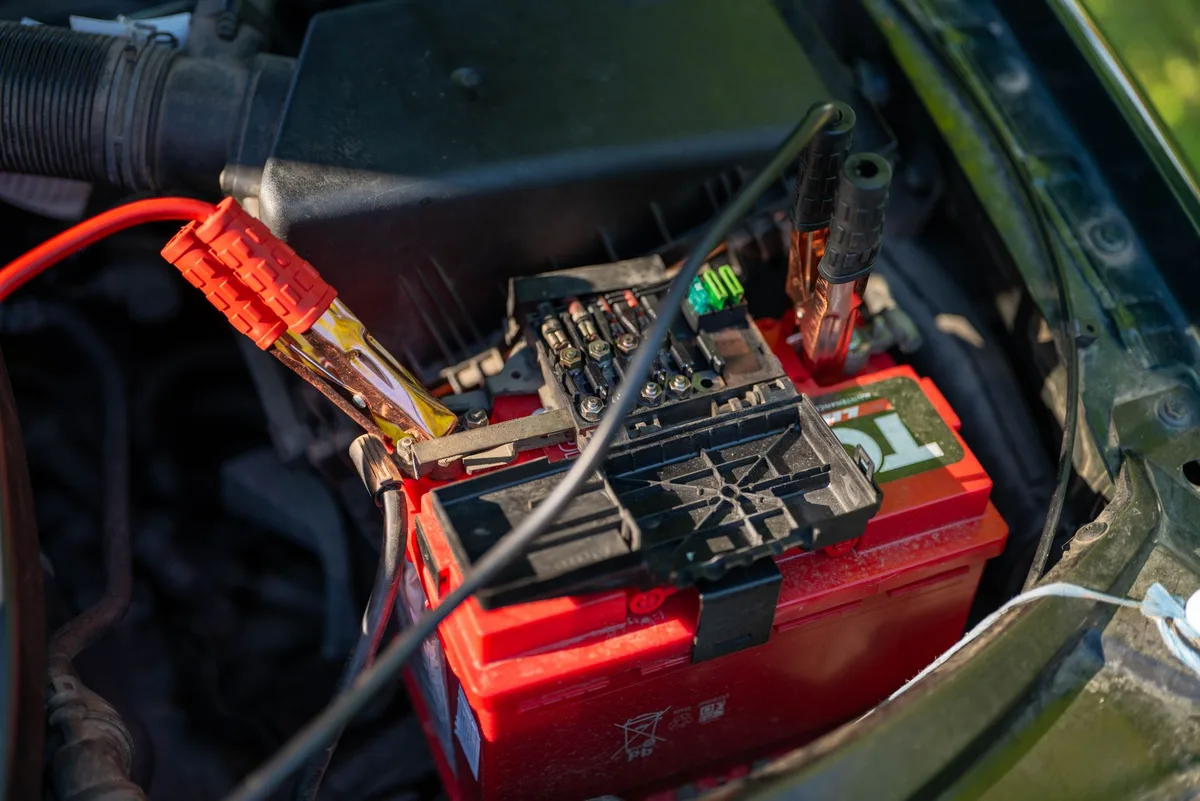
Your reading maps directly to how charged the battery is. Here's the standard 12V lead-acid scale at rest.
| Resting Voltage | State of Charge | What It Means |
|---|---|---|
| 12.6V or higher | ~100% | Fully charged, healthy |
| 12.4V | ~75% | Good, mild top-up helps |
| 12.2V | ~50% | Low, needs charging |
| 12.0V | ~25% | Deeply discharged |
| Below 11.9V | Near empty | Charge now, may be failing |
A reading of 12.4 volts sits in the healthy band, while 12.2 volts is getting low and wants a charge. For the full breakdown of normal numbers, our voltage reference chart has every range.
Testing the Charging System With the Engine Running
Want to check the alternator too? Start the engine and read again. You should see roughly 13.7 to 14.7 volts at idle.
If it stays down near 12.5V with the engine running, the alternator may not be charging. Our guide on telling the battery apart from the alternator shows the full test.
Safety Gear and Best Practices Techs Actually Follow
None of this gear is expensive, and it turns a small risk into almost none. Here's what pros keep on hand.
- Safety glasses or goggles.
- Nitrile or acid-resistant gloves.
- No metal jewelry on hands or wrists.
- A ventilated area, not a sealed corner.
- A multimeter with intact leads and a good fuse.
Follow the basics from OSHA's battery safety guidance: avoid sparks, keep electrolyte off your skin, and keep flames away. Simple habits, big payoff.
Common Mistakes That Give You a False Reading
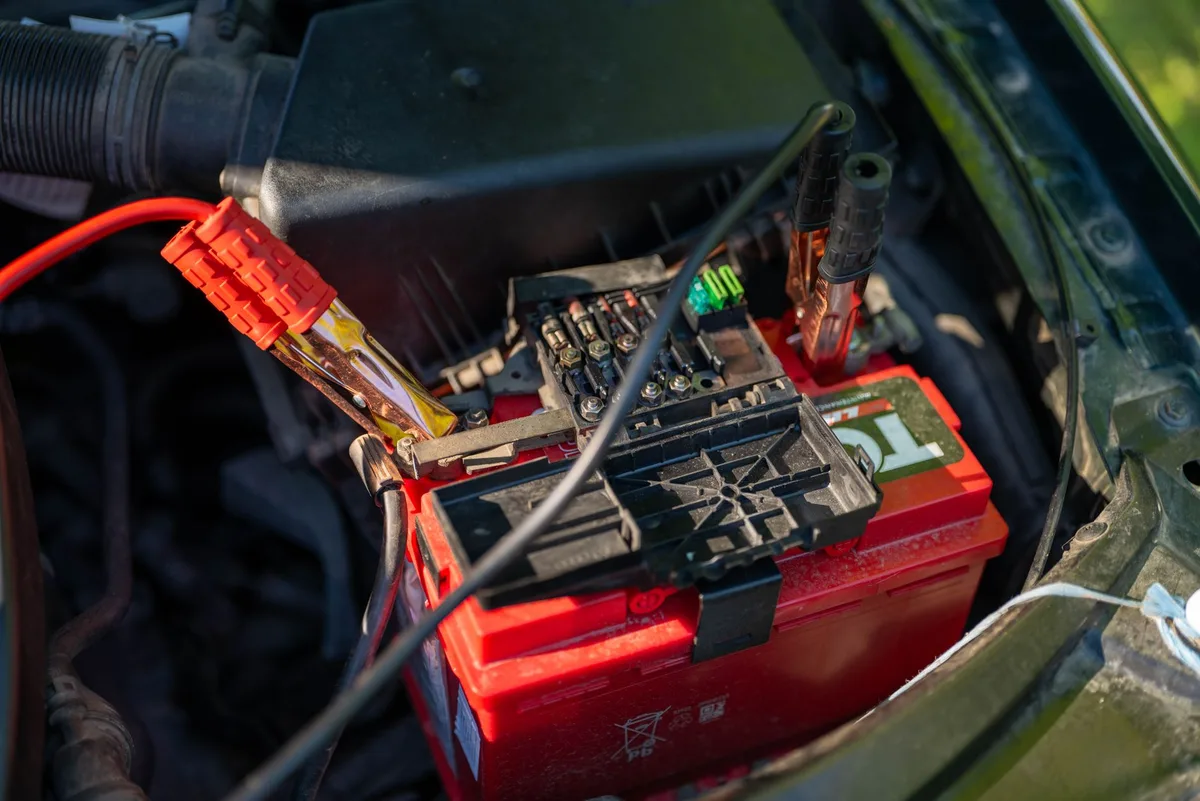
A wrong number sends you chasing the wrong problem. These are the errors we see most often.
- Testing right after driving or charging. Surface charge fakes a high reading.
- Corroded terminals. That white crust adds resistance and drags the number down.
- Loose probe contact. Touch clean metal, not the paint or the clamp bolt.
- Meter set to AC. You'll get nonsense.
- Ignoring temperature. Cold weather lowers readings a bit.
If your battery reads healthy but the car still won't start, the issue may be elsewhere. That's often a starter, a ground, or a parasitic drain pulling too many amps overnight. We dig into that puzzle in our piece on a good reading with a no-start.
Multimeter vs Load Tester vs Electronic Battery Tester
A multimeter is one tool among several. Each answers a different question, so here's how they stack up.
| Tool | What It Checks | Best For |
|---|---|---|
| Multimeter | Resting voltage, charge state | Quick DIY charge check |
| Load tester | Voltage under a heavy draw | True cranking health |
| Electronic (conductance) tester | Estimated CCA and health | Fast shop-style diagnosis |
The takeaway is simple. A multimeter tells you if the battery is charged. A load tester or electronic tester tells you if it can actually do its job.
Who Should Just Get a Free Battery Test Instead
Not everyone needs to test at home. If any of these describe you, a free test is the smarter move.
- You see a swollen, leaking, or cracked case.
- You don't own a multimeter and don't want one.
- Your voltage looks fine but the car keeps dying.
- You want a true health check, not just charge state.
Many auto parts stores test batteries for free using a proper load or conductance tester. If your battery keeps going flat despite good numbers, that deeper test is worth the trip.
Pro Tips for Accurate, Repeatable Readings
Small habits make your numbers trustworthy. Here's what separates a guess from a real reading.
- Let the car sit overnight before a resting test.
- Clean corrosion off the terminals first.
- Test at a consistent temperature when you can.
- Retest a day later to confirm a low or fading trend.
- Log the numbers so you can spot voltage slipping overnight.
A battery that steadily loses charge between tests is telling you something. Trust the trend, not one lucky reading.
Frequently Asked Questions
Can a multimeter damage my car battery?
No, a multimeter won't damage a healthy battery. It measures voltage passively and draws almost no current. The only real risk is user error, like bridging both terminals with the probes or metal tools, which can spark or short.
Keep the probes one per terminal.
Do I need to disconnect the battery to test it?
No. You test a car battery in place, with the ignition and all accessories off. Leaving it connected is the normal way to read resting voltage.
Only disconnect if a specific procedure, like a parasitic draw test, calls for opening the circuit at a terminal.
Is it safe to test the battery while the engine is running?
Yes, and it's how you check the charging system. With the engine on, expect about 13.7 to 14.7 volts. Keep your hands, leads, and clothing clear of moving belts and the fan.
Touch only the battery terminals, then step back before revving.
What voltage means my car battery is bad?
Charge and health differ. A resting reading below 12.2V means low charge, and staying under 12V after charging suggests a failing battery. But a battery reading 12.6V can still be bad if it can't hold up under load.
A load test confirms true health.
Why does my battery read 12.6V but still won't start the car?
Because voltage shows charge, not cranking power. A tired battery can hold 12.6V at rest yet collapse under the starter's heavy draw. Corroded terminals, a weak starter, or a bad ground can also block a start.
A load test reveals whether the battery is the culprit.
The Bottom Line: Safe When You Do It Right
Testing a car battery with a multimeter is safe, cheap, and genuinely useful. The tool barely interacts with the battery, so the risk sits in careless handling, not the measurement itself.
Wear glasses and gloves. Set the meter to DC volts. Keep one probe per terminal, avoid sparks, and skip the test entirely if the case is swollen or leaking.
Do that, and you'll get a clean, honest reading every time.

Similar Posts