Bulging Car Battery? Here’s What to Do Right Now
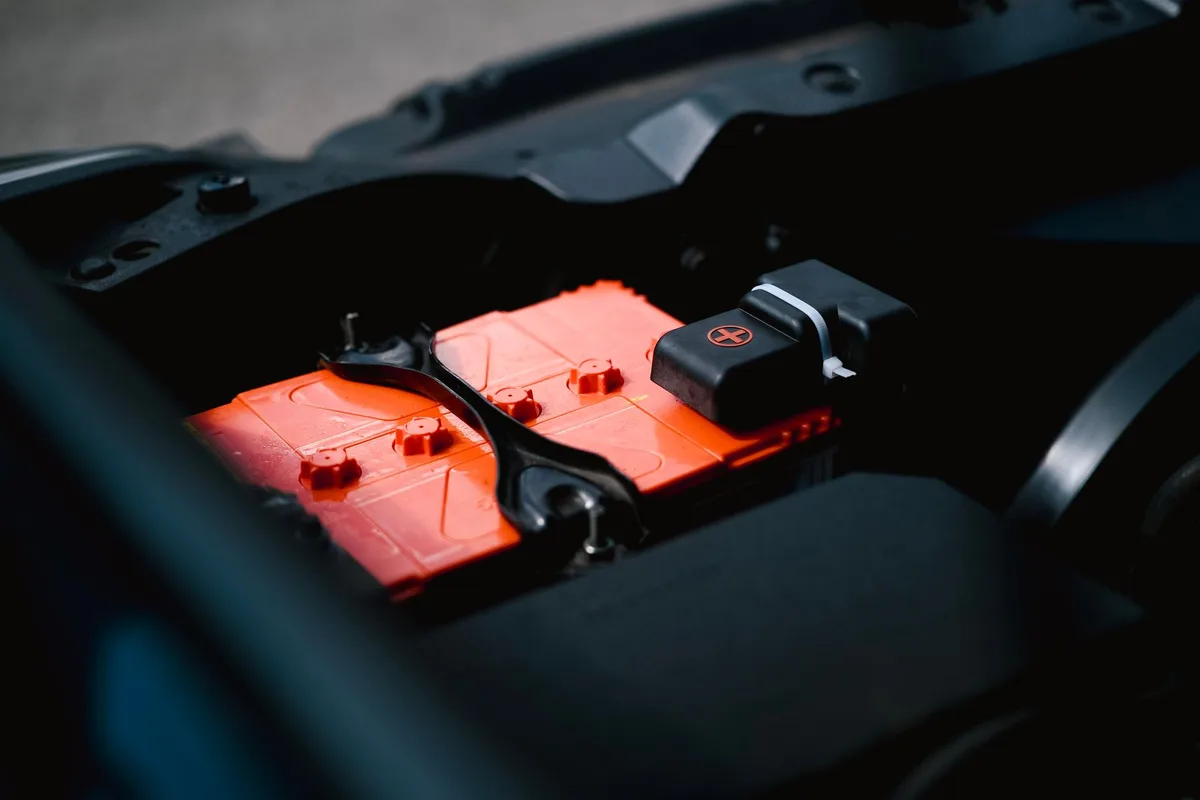
A bulging car battery is a warning you really don't want to ignore, and knowing car battery bulging what to do can save you from a nasty acid burn or a stranded morning. If the case looks puffed, warped, or swollen on the sides, the battery has already been pushed past its limit. That change in shape is physical damage, not a cosmetic quirk.
A healthy 12-volt lead-acid battery rests around 12.6 volts and charges near 14.4 volts. Once the charging voltage climbs and stays above roughly 14.8 volts, the battery overheats and gas builds up inside the sealed case. That trapped pressure is what pushes the plastic walls outward.
Here's what the swelling actually means, and exactly what to do next.
Quick Answer
If your car battery is bulging, stop using it immediately. Don't charge it, and don't try to jump-start it. A swollen battery is unsafe and must be replaced, not revived.
Let it cool, put on gloves and eye protection, then disconnect the negative terminal first. Take the old battery to a proper recycling drop-off.
Why a Bulging Car Battery Isn't Something You Can Ignore
A swollen case means the battery has been through heat and internal pressure it was never built to handle. The damage is done. You can't massage the bulge back or let it settle overnight.
Here's the part people miss. A bulging battery can leak sulfuric acid, and it can still hold enough charge to spark. That combination is exactly why it needs careful handling.
There's also a hidden cost to waiting. The same fault that swelled the battery, usually overcharging, can keep stressing your car's electrical system. Left alone, it can shorten the life of a brand-new battery too.
Catching it early protects more than just the part in your hand.
What a Swollen Battery Is Actually Telling You
The bulge is a pressure gauge. Inside a lead-acid battery, lead plates sit in an electrolyte of sulfuric acid and water. When the battery charges normally, tiny amounts of hydrogen and oxygen form and vent off safely.
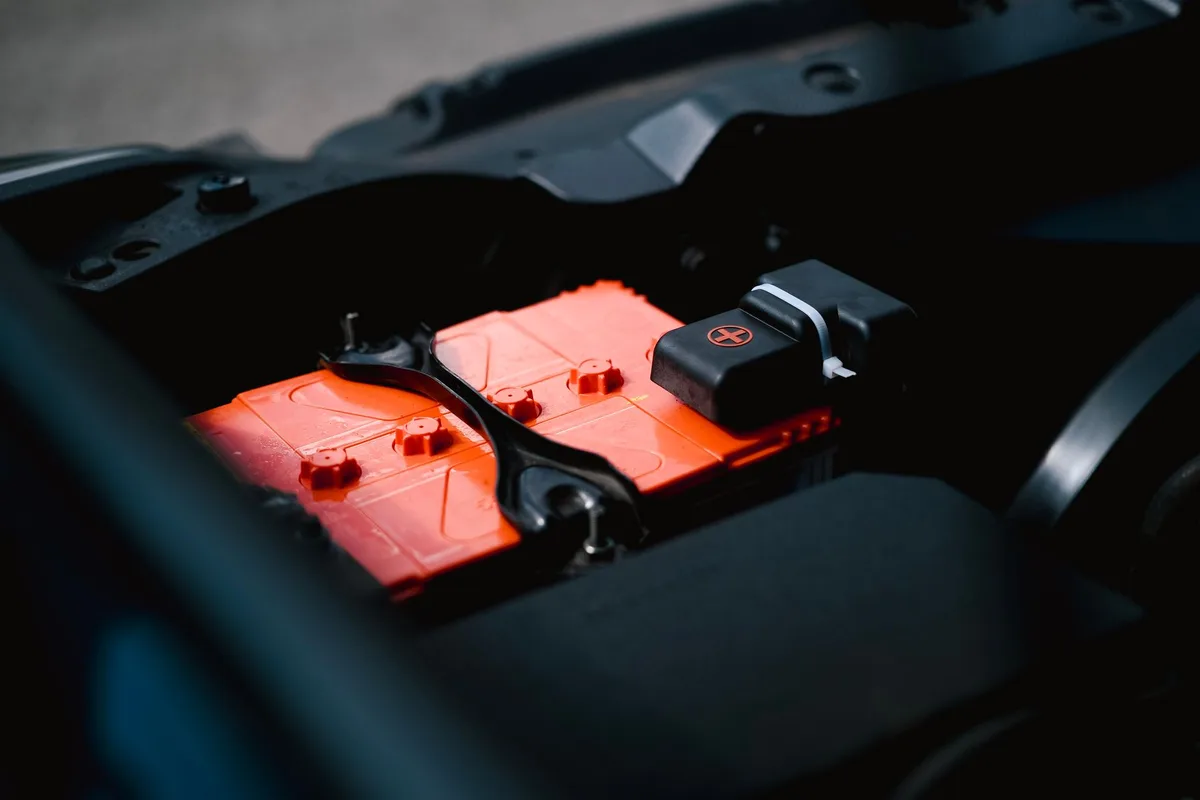
When something goes wrong, gas forms faster than it can escape. Pressure climbs, heat rises, and the softened plastic case starts to balloon. That's the swelling you see.
In plain terms, a bulge points to one of two things: the battery got too hot, or it got overcharged. Sometimes both at once. Either way, the internal chemistry is compromised, and the reading on a meter can look deceptively normal even after the damage.
If your battery has been acting up in other ways too, like a sudden dip when you turn the key, that's another sign the cells are struggling under load.
The Fast Answer: Stop, Don't Charge, Don't Jump-Start
Treat a bulging battery as hazardous, full stop. Do not connect a charger to it. Do not clamp jumper cables onto it.
Both of those actions push current into a damaged battery. That means more heat, more gas, and a real risk of the case cracking or venting acid. A spark near a battery that's off-gassing hydrogen is a genuine ignition hazard.
Hydrogen can ignite at concentrations as low as about 4 percent in air, which is why federal workplace-safety guidance from OSHA treats battery charging areas as flammable-gas zones.
So the safe sequence is simple:
- Turn the engine off and let everything cool.
- Don't drive any further than you absolutely must.
- Don't charge, test-load, or jump the swollen battery.
- Plan to remove and replace it, then recycle the old one.
If the car still runs, get it somewhere safe first. But understand that a bulging battery can fail without warning, so shorter trips are smarter than long ones.
What Makes a Car Battery Swell Up in the First Place
Three causes account for most swollen batteries. Knowing which one hit you matters, because if you only swap the battery and ignore the cause, the new one can swell too.
Overcharging From a Faulty Alternator or Voltage Regulator
This is the big one. If the alternator or its voltage regulator fails, it can pump too many volts into the battery. Instead of a steady charge, the battery gets cooked.
A healthy charging system holds output in a fairly tight window. You can check what the normal charging range looks like with a basic multimeter. When the running voltage sits well above that, up around 15 volts, a persistently high output is a red flag for the regulator.
Not sure whether the battery or the charging system is to blame? A quick multimeter test can pin down the culprit before you spend money on the wrong part.
Extreme Heat and Thermal Runaway
Heat is the second culprit. Batteries hate high temperatures. In hot climates or a sweltering engine bay, the electrolyte can boil off and the plates degrade faster.
Push a hot battery hard enough and it can enter thermal runaway. That's a loop where heat drives more gassing, which drives more heat. The case swells, and sometimes the top vents entirely.
As of 2026, most parts stores still rate a typical car battery for only 3 to 5 years, and brutal summer heat shortens that.
Deep Discharge, Old Age, and Internal Faults
The third path is age and abuse. A battery that's been fully drained several times, then charged hard to recover, builds internal stress. Old plates flake and sulfate.
Cells can short internally.
Once a cell shorts, the charging system keeps dumping energy in with nowhere useful for it to go. That energy turns into heat and gas. The result is the same familiar bulge.
How to Spot the Warning Signs Before It Gets Worse
You don't need fancy gear to catch a failing battery early. Your eyes, your nose, and a cheap multimeter cover most of it.
Visual Cues: Bulge, Cracks, and Leaks
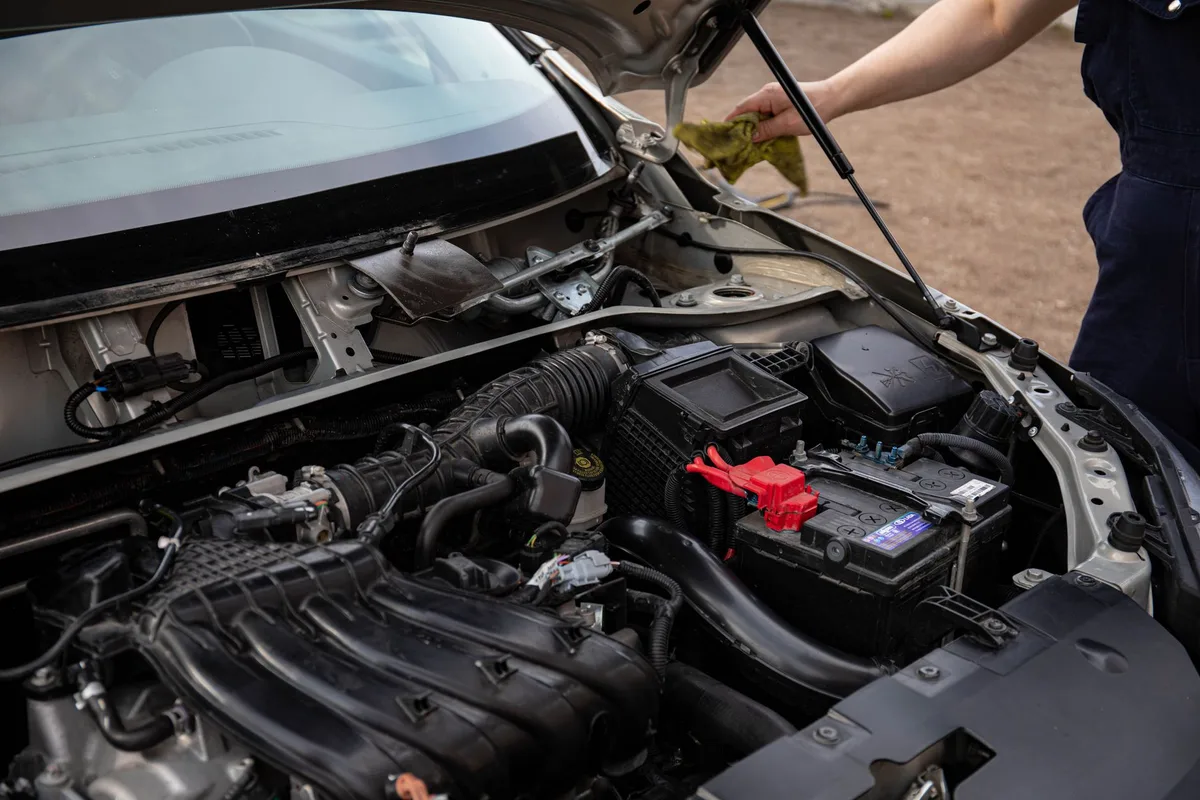
Pop the hood and look at the battery case from a few angles. A healthy battery has flat, square sides. Trouble looks like this:
- Sides that bow or balloon outward
- A lid that no longer sits flat
- Fine cracks in the plastic
- Whitish or bluish crust around the terminals
- Damp or oily residue pooling in the tray
Terminal corrosion on its own doesn't mean the battery is swollen. But heavy crust plus a bulge tells you the case has been venting.
Smell and Sound: The Rotten-Egg Warning
Trust your nose here. A sharp, rotten-egg or sulfur smell near the battery means it's off-gassing hydrogen sulfide. That's the sulfuric acid boiling.
You might also hear a faint hissing or bubbling from a battery that's overcharging. Both the smell and the sound are cues to stop, kill the engine, and keep flames and sparks away.
Voltage Readings That Point to Trouble
A multimeter fills in the picture. Set it to 20V DC and probe the terminals with the engine off. Here's a quick reference for a resting 12-volt battery.
| Resting voltage | What it usually means |
|---|---|
| 12.6V or higher | Fully charged, healthy |
| 12.4V | Roughly 75 percent charged |
| 12.2V | About half charged, weak |
| 12.0V or lower | Deeply discharged, likely failing |
A reading near 12.4 volts still counts as a reasonably healthy resting figure, while anything drifting toward the numbers that flag a dead cell points to a battery on its way out. Remember, a swollen battery can still show a normal number, so never let a decent reading talk you into charging or reusing it. The bulge always overrides the meter.
The Real Risks: Acid Leaks, Hydrogen Gas, and Rupture
Three hazards make a swollen battery worth respecting. First is the acid. A cracked or vented case can weep sulfuric acid, which burns skin, eyes, and clothing on contact.
Second is the gas. A battery under pressure releases hydrogen, and hydrogen is explosive in a confined engine bay. One spark from a loose clamp or a careless jump-start can be enough.
Third is rupture. If pressure keeps climbing, the case can split or the top can blow off. That sprays acid and debris.
None of this is common with careful handling, but every one of these risks disappears the moment you stop charging the battery and get it out of the car safely.
What to Do Right Now, Step by Step
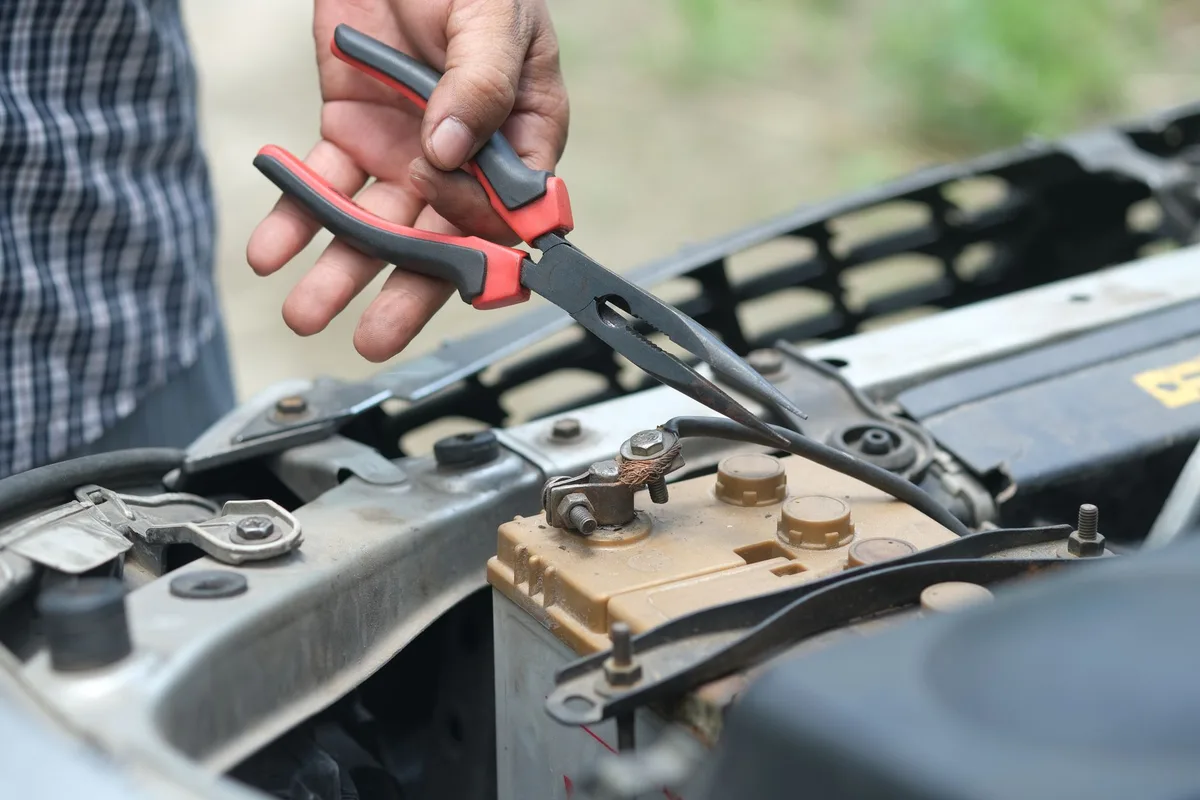
Work slowly and protect yourself. The goal is to remove the battery without cracking it or touching acid. Gather gloves, safety glasses, and a wrench before you start.
Cooling Down and Gearing Up With PPE
Let the battery cool completely before you touch it. A hot battery is more likely to vent while you work. Put on chemical-resistant gloves and wraparound eye protection.
Skip any rings or metal jewelry that could bridge the terminals.
Safely Disconnecting and Removing the Battery
Order matters here. Always disconnect the negative terminal first, then the positive. This lowers the odds of a short-circuit spark.
- Loosen the negative (black, minus) clamp and lift it clear.
- Loosen the positive (red, plus) clamp next.
- Remove the hold-down bracket or clamp.
- Lift the battery straight up, keeping it level so nothing spills.
Keep the battery upright the whole time. Set it on cardboard or a plastic tray, never on your car's paint or a bare garage floor.
Cleaning Up an Acid Spill the Right Way
If you spot leaked acid, neutralize it before wiping. Sprinkle baking soda over the spill until the fizzing stops. That reaction turns the acid harmless.
Then wipe the area with a damp cloth and rinse your gloves. Toss any rags that soaked up acid. If acid hits your skin, flush with cool water for several minutes.
Why You Should Replace It, Not Recharge It
A bulging battery is finished, and no charger brings it back. The swelling means the internal plates and separators are already deformed. Even if a charge takes, the capacity and safety are gone.
Trying to recharge it just repeats the cycle that ruined it. More heat, more gas, more pressure. You'd be babysitting a hazard for a battery that still won't hold a reliable charge.
Compare the two paths honestly:
| Option | Realistic outcome |
|---|---|
| Recharge the swollen battery | Unsafe, unreliable, may vent or rupture |
| Replace with a new battery | Safe, restores full cranking power |
The math isn't close. Replacement is the only sensible move.
Getting to the Root Cause: Testing Your Charging System
Swapping the battery without checking the charging system is a gamble. If a faulty alternator caused the bulge, it can swell your new battery too. So test before you trust it.
With a fresh battery installed, start the engine and probe the terminals. A healthy system reads roughly 13.7 to 14.7 volts at idle. Much higher, and the regulator is overcharging.
You can run this check yourself with a basic meter. Our walkthrough on reading the terminals with a multimeter covers the exact steps. If the running voltage looks off, or the battery keeps draining for no clear reason, get the alternator and regulator inspected before you drive on it.
Hot climates deserve extra attention. Repeated heat plus a slightly high charge is the classic recipe for a swollen case.
Choosing the Right Replacement Battery
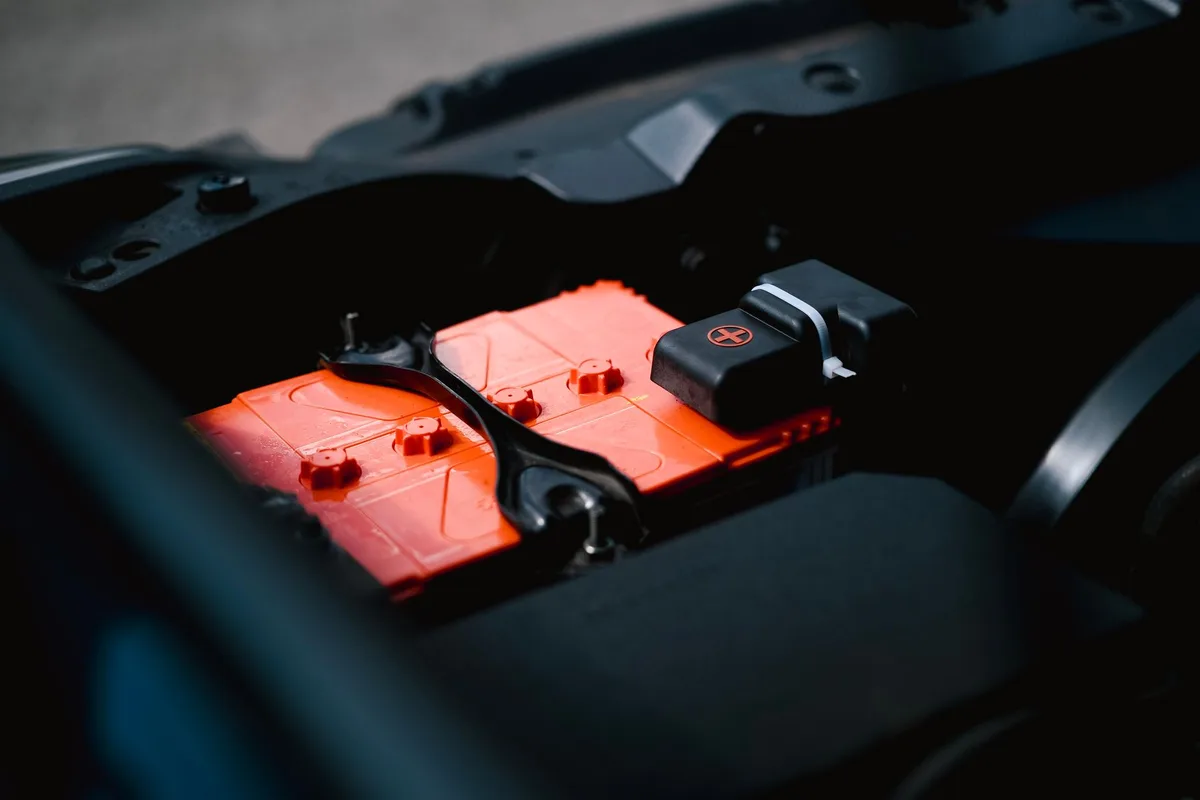
Match the replacement to your car, not just to the price tag. The three numbers that matter are group size, cold cranking amps (CCA), and terminal layout. Get these from your old battery label or your owner's manual.
Flooded Lead-Acid vs. AGM in Hot Climates
AGM (Absorbed Glass Mat) batteries handle heat and vibration better than standard flooded ones. They're sealed, spill-resistant, and slower to gas off. If you live somewhere brutally hot, or your car came with AGM from the factory, stick with AGM.
Standard flooded batteries cost less and work fine for many drivers in milder climates. Here's the short version:
- Flooded lead-acid: cheaper, proven, best for moderate temperatures.
- AGM: pricier, tougher in heat, best for hot regions and start-stop cars.
Matching Group Size, CCA, and Fit
Group size is the physical size and terminal position, and it has to fit your tray. The wrong group won't clamp down properly. CCA measures cold-start muscle, so meet or beat the original rating, especially in cold country.
Don't overthink brand. A battery that fits, meets the CCA spec, and comes with a solid warranty covers the essentials.
What a Replacement Really Costs
Budget for the battery plus a possible charging-system repair. As of 2026, a standard flooded car battery typically runs about $100 to $200. AGM batteries usually land in the $180 to $300 range, depending on group size and CCA.
Doing the swap yourself costs nothing extra beyond a wrench. A shop install adds roughly $20 to $50 in labor. If a faulty alternator caused the bulge, factor in that repair too, or you'll be buying batteries twice.
Most retailers also charge a small core deposit. You get it back when you hand over the old battery, which brings us to disposal.
Safe Disposal, Recycling, and Core Credits
Never toss a lead-acid battery in the trash. It's classified as hazardous waste, and the lead and acid are both recyclable. Auto parts stores take old batteries for free and usually refund your core deposit on the spot.
Keep the battery upright during transport and set it in a leak-proof tray. If it's cracked, tell the counter staff so they handle it safely. For local drop-off rules, the EPA's guidance on used batteries is a reliable starting point.
Lead-acid batteries are among the most recycled products around, so this step is easy and cheap.
Mistakes That Turn a Bad Battery Into a Dangerous One
Most injuries come from a few avoidable moves. Steer clear of these:
- Charging or jump-starting the swollen battery.
- Working without gloves or eye protection.
- Disconnecting the positive terminal first.
- Tipping the battery and spilling acid.
- Smoking or sparking near a gassing battery.
- Reusing the old battery just to get by.
Skip these and you've handled most of the risk.
Simple Habits That Keep Your Next Battery From Swelling
A little upkeep stops the cycle from repeating. The goal is steady charging and a battery that stays cool.
- Check charging voltage a few times a year with a multimeter.
- Keep terminals clean and clamps snug.
- Park in shade or a garage during heat waves.
- Fix parasitic drains that overwork the battery.
- Replace batteries proactively at the 4 to 5 year mark.
Cold matters too. If starts feel sluggish, our notes on performance in freezing weather explain what's normal and what's not.
Frequently Asked Questions
Can a bulging car battery still be used?
No. A swollen battery has internal damage and can leak acid or vent hydrogen gas. Even if it still starts the car, it's unsafe and unreliable.
Replace it, and don't charge or jump-start it in the meantime.
Will a swollen battery explode?
It can, though it's not common with careful handling. Trapped hydrogen plus a spark is the real danger, which is why charging or jump-starting a bulging battery is risky. Keep flames and sparks away and remove it safely.
Why did my new battery swell so fast?
Usually a faulty alternator or voltage regulator overcharging it. A charging system stuck above roughly 14.8 volts cooks the battery. Test the running voltage before assuming the battery itself was defective.
Is a bulging battery covered under warranty?
Often yes, if the swelling came from a manufacturing defect. Keep your receipt and the core, then ask the retailer. Damage from a known bad alternator may not qualify, so diagnose the cause first.
Your Safe Next Step: A Quick Decision Guide
Keep it simple. If the battery is bulging, stop, don't charge it, and remove it safely with the negative terminal first.
Then replace it with the correct group size and CCA, test your charging system, and recycle the old one for your core refund. Do those four things and you've fixed both the battery and the fault that ruined it.

Similar Posts