Car Won’t Start, No Click, No Lights? Here’s the Fix
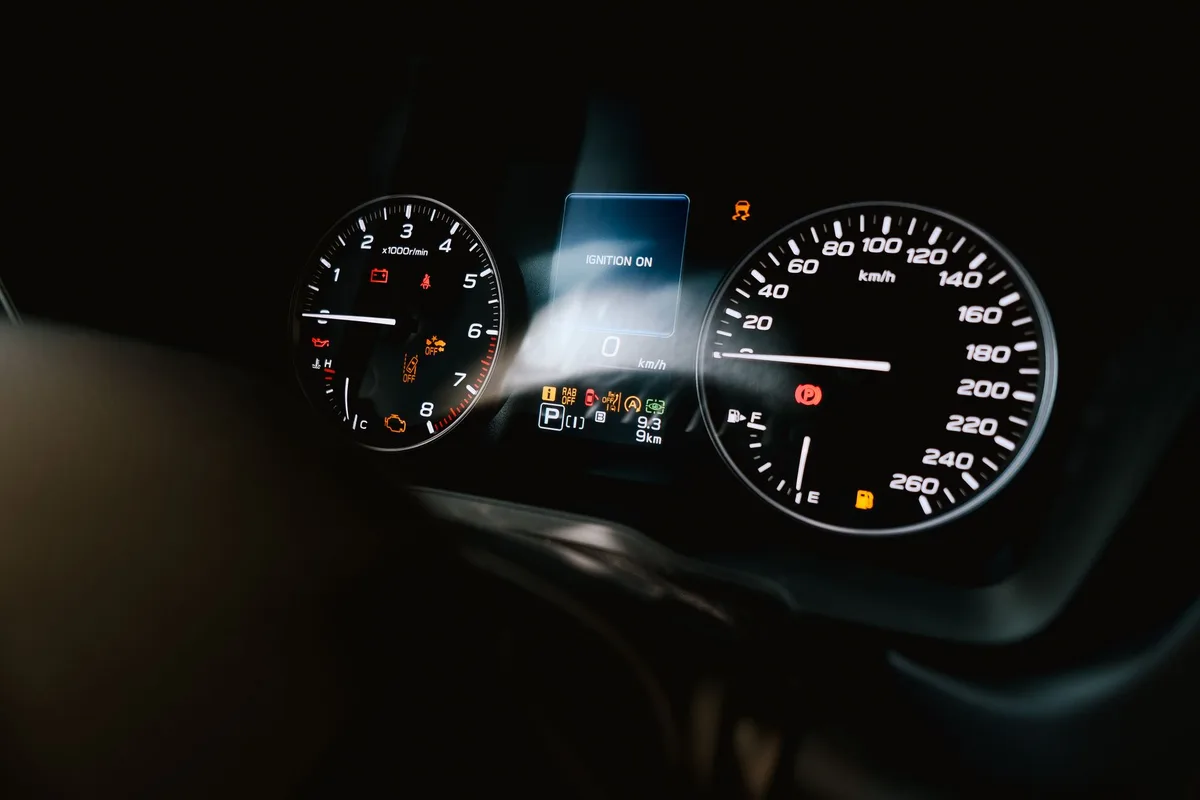
A car won't start with no click and no lights almost never means what people assume. When everything goes dark, no dash glow, no dome light, no click from under the hood, you're not looking at a tired starter. You're looking at a break in the power path itself.
That's actually good news, because the fix is often cheap and sitting right on top of the battery.
Here's the key number to hold onto. A healthy 12-volt battery reads about 12.6 volts at rest, and anything under 12.0 volts usually won't crank an engine. But a total blackout points somewhere more specific than a low reading.
As of 2026, the most common driveway culprits are a loose or corroded terminal, a broken ground, or a blown main fusible link. Let's start by ruling out the simplest one.
Quick Answer
A car with no click and no lights usually has a total loss of battery power. The most common causes are a dead battery, loose or corroded battery terminals, or a broken main ground connection. Check your headlights and dome light first.
If they're dead too, you have a power-delivery problem, not a starter problem. Clean the terminals and test the battery voltage.
Why "No Click, No Lights" Points Away From a Simple Dead Battery
A dead battery and a no-power fault look similar, but they behave differently. A weak battery still usually lights the dash faintly. It might give you a single click or a rapid machine-gun clicking as the starter tries and fails.
That clicking means power is reaching the starter solenoid.
No click and no lights is a different animal. Nothing is getting power at all. That points to a connection problem between the battery and the rest of the car, or a battery that's gone completely open inside.
Think of it as a simple split:
- Some lights, clicking, dim dash: likely a discharged battery or weak connection under load.
- Zero lights, zero click, totally dead: likely a full break in the power path or a stone-dead battery.
If your battery recently read something like 12.2 or 12.4 volts, that alone shouldn't cause a full blackout. A reading in that range is low but not dead, so a complete no-power situation usually means the problem is a connection, not just charge level.
The 30-Second Test That Splits the Problem in Two
Before you touch a single tool, run one test. Try the headlights, the dome light, and the horn. This tells you which half of the problem you're dealing with.
If nothing works, no lights, no horn, no dash:
You have a total power loss. The battery, its terminals, or the main ground is the suspect. This is where most no-click-no-light cases live.
If lights and horn work but the engine won't crank:
Power is present. Now the fault is downstream, in the starter, ignition switch, or a safety switch. That's a different branch entirely.
This single check saves you from throwing parts at the wrong problem. Plenty of people replace a perfectly good starter when the real issue was a corroded terminal they could've cleaned in five minutes. If your lights do work but the engine still won't turn over, your diagnosis takes a very different path than a total blackout.
What's Actually Happening in Your Car's Starting Circuit
Your starting system is a chain, and a chain only works if every link holds. Power leaves the battery's positive terminal, runs through the main cable, and reaches the starter. The circuit completes through the ground path: the negative cable to the chassis and engine block.
Here's the order power travels when you turn the key:
- Battery sends 12 volts through the positive cable.
- The ignition switch signals the starter solenoid.
- The solenoid closes and feeds the starter motor.
- The motor spins the engine through the ground return.
Break any link and the whole thing goes quiet. A loose negative clamp or a corroded ground strap kills the circuit just as completely as a dead battery. So does a blown fusible link, a heavy-duty fuse that protects the main power feed.
The starter itself pulls serious current, often 150 amps or more at the moment of cranking. Standards bodies like SAE International set the cranking and cold-cranking amp tests that battery makers publish. When a connection is corroded or loose, it can't pass that kind of current, and the system reads as dead even if the battery is fine.
Condition Check: What Do Your Lights, Dash, and Horn Tell You?
Your lights are the cheapest diagnostic tool you own. What they do (or don't do) narrows the fault fast. Use this table to place your symptom.
| What you see | What it usually means | Where to look next |
|---|---|---|
| No lights, no dash, no click | Total power loss | Battery, terminals, main ground |
| Dim lights, rapid clicking | Weak or discharged battery | Charge, test, or replace battery |
| Bright lights, single click | Power good, starter or solenoid fault | Starter circuit |
| Bright lights, no crank at all | Ignition switch or safety switch | Switch and immobilizer |
Total Blackout (No Dash, No Dome, No Headlights)
This is the classic no-click-no-lights case. If the dome light won't even glow when you open the door, you've lost the battery feed entirely. Start at the battery and work outward.
Nine times out of ten the answer is a bad connection or a flat battery.
A battery that reads 0 volts on a multimeter often has an internal open circuit or a totally severed connection, which matches a full blackout perfectly. Check the terminals before you condemn the battery, though. A clamp that looks tight can still be making poor contact.
Lights Work but Zero Crank and No Click
If your lights are bright and steady, your battery and its main connections are doing their job. The power is there. Now the problem sits in the starter control side: the ignition switch, the neutral safety switch on an automatic, or the clutch switch on a manual.
On push-button cars, a dead key fob battery can also block starting even with a healthy main battery. Try holding the fob directly against the start button, since many models have a backup coil for exactly this.
The Diagnostic Decision Tree, Step by Step
Work these steps in order. Don't skip ahead. Each step either fixes the problem or hands you a clean clue for the next one.
Step 1: Confirm Total vs Partial Power Loss
Turn on the headlights and press the horn. If both are dead, you've confirmed a total power loss and stay on this tree. If they work, jump to the starter and ignition checks instead.
This one test decides everything that follows.
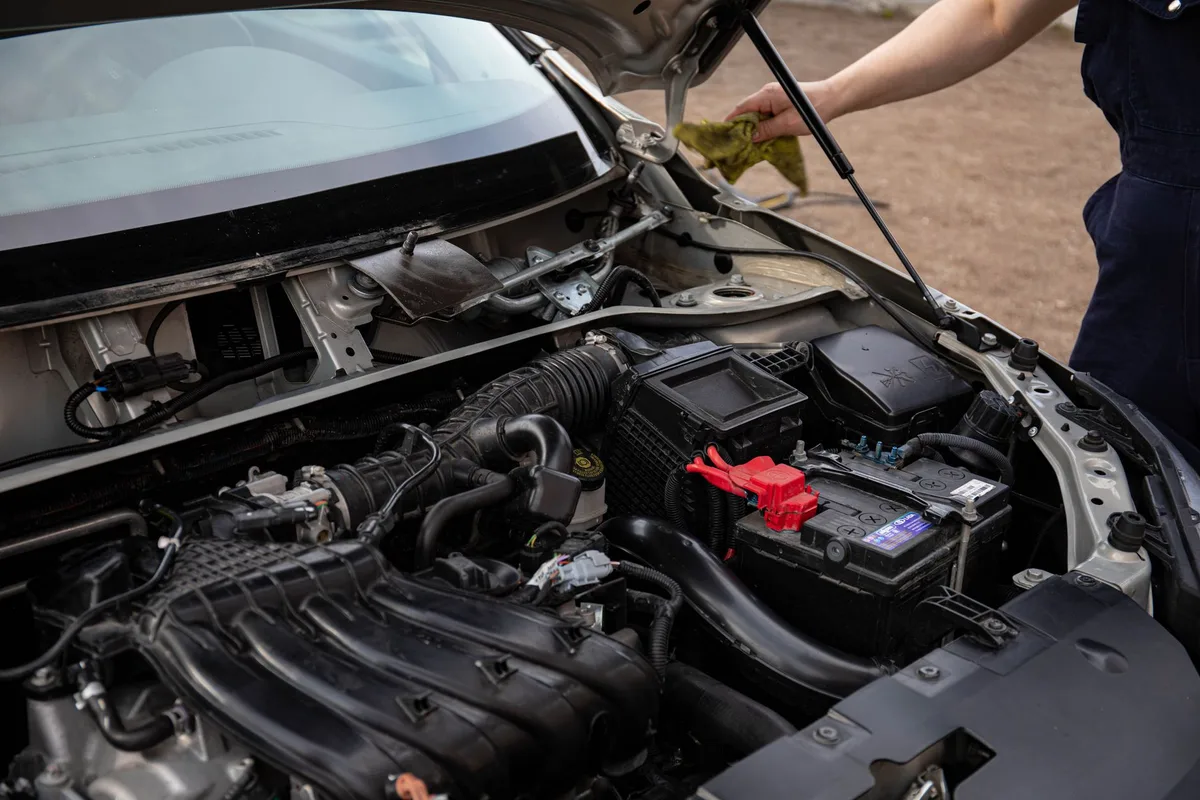
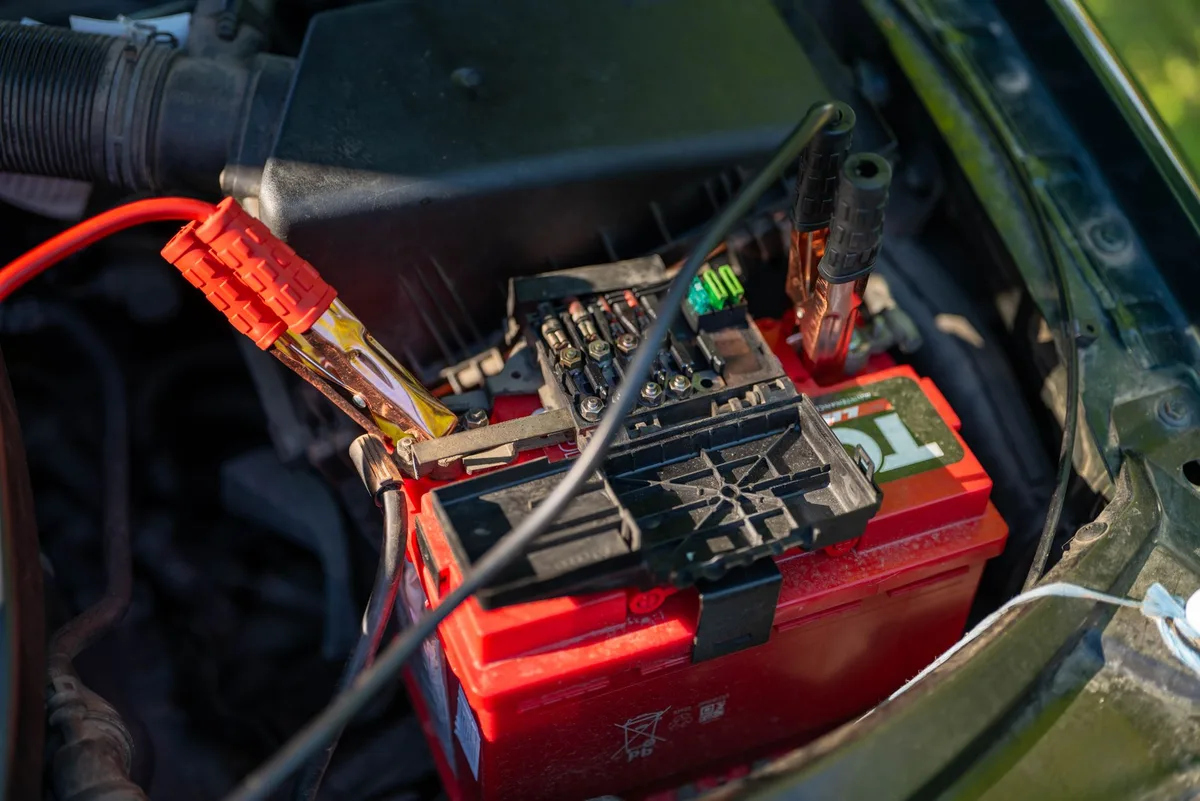
Step 2: Wiggle and Inspect the Battery Terminals
Grab each battery terminal by hand and try to twist it. A terminal should not move. If it wiggles, it's loose, and that alone can cause a complete no-start.
Look for corrosion too, the white, green, or bluish crust around the posts. That buildup acts like an insulator and blocks current. Here's what to do:
- Tighten any loose clamp with a wrench.
- Scrub corrosion off with a wire brush and a baking soda and water paste.
- Reconnect and try to start.
Loose and corroded terminals are the single most common cause behind this symptom. Fix this first, because it costs nothing.
Step 3: Measure Battery Voltage With a Multimeter
Set your meter to DC volts and touch the red probe to the positive post, black to negative. A resting battery should read around 12.6 volts. If you're not sure how to dial it in, setting the meter to the 20V DC range covers a car battery cleanly.
- 12.6V or higher: battery charge is fine, move to grounds and fuses.
- 12.0 to 12.4V: partially discharged, charge and retest.
- Under 12.0V or near 0V: likely dead or internally broken.
If the number reads zero or bounces oddly, the battery may have failed internally, and a bad cell shows up clearly on the meter.
Step 4: Voltage-Drop Test the Grounds and Main Cable
A battery can read a perfect 12.6 volts and still fail to start the car if the ground path is bad. Voltage drop finds hidden resistance a static reading misses. With the meter on DC volts, probe across each connection while a helper tries to crank.
Anything over about 0.2 volts across a single connection means excess resistance. Trace it to a corroded ground strap or a cable that's rotted inside its insulation. This is why a healthy battery sometimes still leaves you stranded, and why voltage sags under load matter more than a resting number.
Step 5: Check the Fusible Link and Main Fuse Box
Open the under-hood fuse box and find the main fusible link or mega fuse. This heavy fuse protects the primary power feed, and when it blows, the whole car goes dark. Inspect it for a melted or broken element.
Replace a blown link with the exact same rating. Never bypass it or fit a larger one, since it's protecting the entire wiring harness from a fire.
Step 6: Rule Out the Ignition Switch, Immobilizer, and Key Fob
If power reaches the battery and grounds are clean but you still have nothing, look at the ignition switch. A failed switch won't pass power to the starter circuit. On keyless cars, a weak fob battery or a confused immobilizer can lock everything down.
Swap the fob battery, try the backup start method, and check for a security light on the dash. If that light is flashing, the anti-theft system may be blocking the start rather than any wiring fault.
Reading the Numbers: Voltage Thresholds That Actually Mean Something
Voltage tells a clear story once you know the cutoffs. A resting reading isn't a pass-fail switch, it's a scale. Here's how the common numbers break down.
| Resting voltage | State of charge | What to do |
|---|---|---|
| 12.6V and up | Full charge | Look past the battery |
| 12.4V | About 75% | Charge, then retest |
| 12.2V | About 50% | Likely too low to crank |
| 12.0V | About 25% | Near dead |
| Under 11.9V | Effectively dead | Charge or replace |
A reading of 12.2 volts sits at roughly half charge, which often won't spin a cold engine. Drop to 12.0 volts and you're near the floor for any reliable start.
One caveat: rest the battery for a few hours before trusting a reading. A surface charge from a recent drive can mask a weak battery. And remember, cranking voltage should stay above about 9.6 volts under load, which a static test won't show you.
Dead Battery vs Bad Ground vs Blown Fusible Link: Telling Them Apart
These three faults all cause a dark, silent car, but each leaves its own fingerprint. Knowing the tell saves you hours.
- Dead battery: Voltage reads low or zero. A jump-start brings the car to life instantly. Best clue: the car runs once jumped.
- Bad ground: Battery reads a healthy 12.6V, but the car still won't crank. Voltage-drop test shows high resistance on the negative side. Best clue: good battery, no start.
- Blown fusible link: Total blackout with a healthy battery and clean grounds. The main link looks melted. Best clue: everything dead despite good battery.
If a jump-start fixes it, you had a charge problem. If a jump does nothing and the battery reads fine, you're chasing a connection or the fusible link. That single branch splits the diagnosis cleanly.
Fixes You Can Do in the Driveway Right Now
Most no-click-no-light cases end in the driveway, not the shop. Work through these before calling anyone.
- Clean the terminals. Remove the clamps, brush off corrosion, and reconnect them snug.
- Tighten the grounds. Trace the negative cable to the chassis and engine. Snug both bolts.
- Charge the battery. A slow charge overnight beats a jump for battery health.
- Replace a blown fusible link. Match the exact amp rating.
- Swap the key fob battery. On push-start cars, this is a two-minute fix.
If cleaning and charging bring the car back, watch how it behaves over the next week. A battery that keeps draining after you park may have a parasitic draw pulling it flat overnight. A normal draw sits under about 50 milliamps.
Battery Safety Before You Touch a Single Terminal
Car batteries store enough energy to burn you and vent explosive hydrogen gas, so a few rules matter. Handle them with respect and you'll be fine.
- Remove metal jewelry. Rings and watches can short a terminal and heat up fast.
- Wear eye protection. Battery acid and gas are no joke.
- Disconnect negative first, reconnect it last. This avoids sparks against the chassis.
- No flames or sparks nearby. Hydrogen gas is flammable.
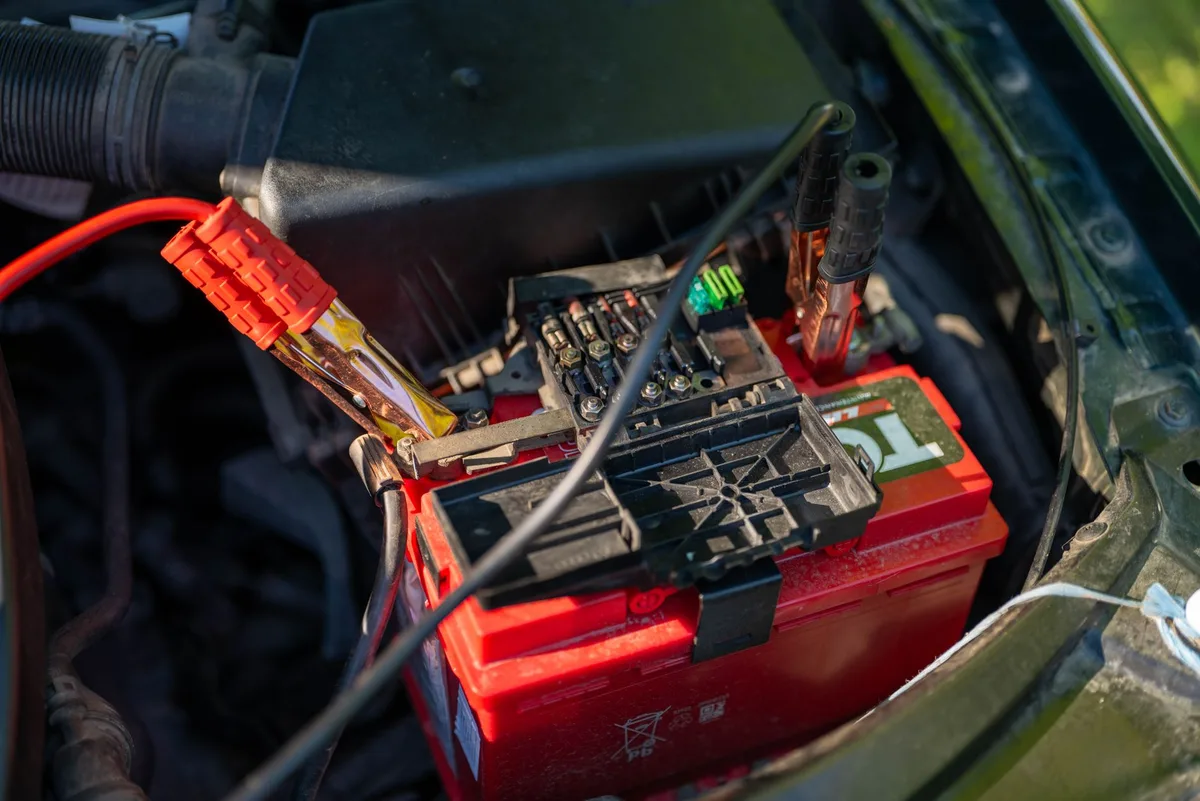
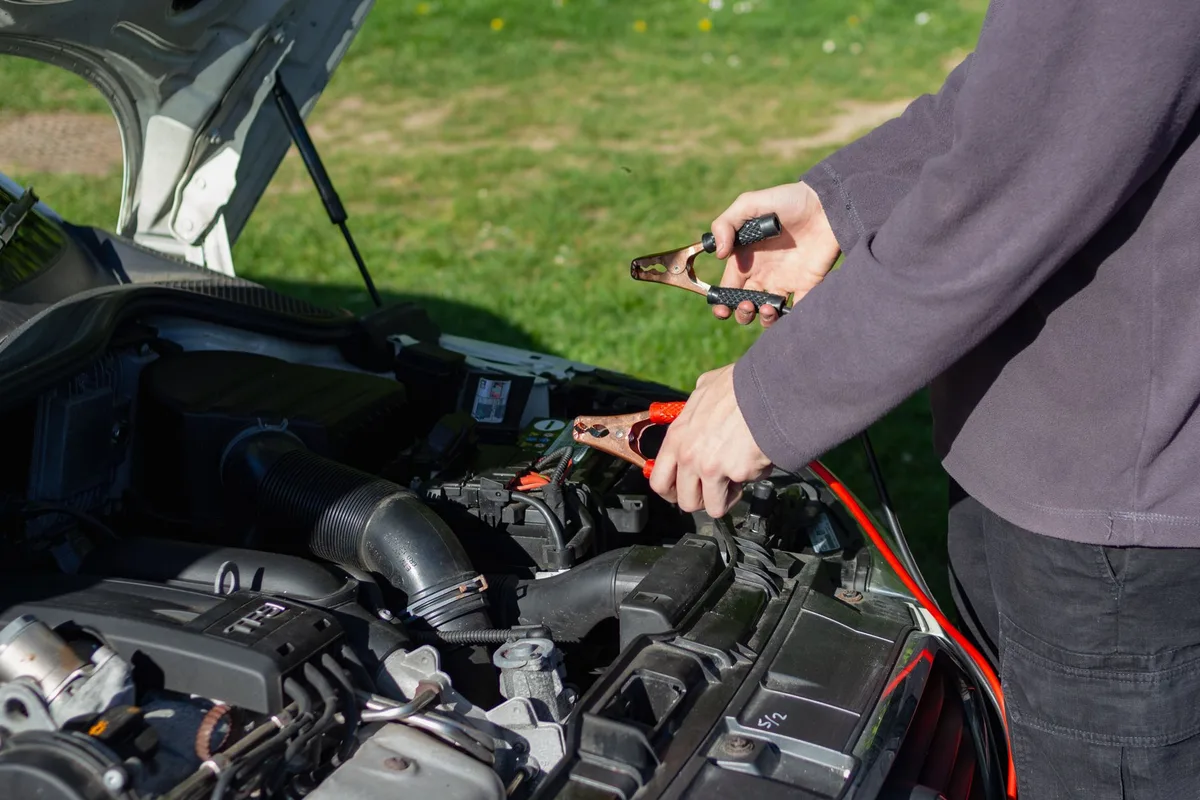
When jump-starting, connect in the right order. Positive to the dead battery, positive to the good one, negative to the good one, then the final ground to a bare metal point on the dead car's engine block, not its negative post. That last connection can spark, so keep it away from the battery.
Mistakes That Send People to the Shop for No Reason
The costliest mistake is replacing the starter first. On a total blackout, the starter is almost never the problem, since no power is even reaching it. People spend hundreds before checking a loose clamp.
Here are the traps we see most in aggregate owner reports:
- Ignoring the ground path. A clean-looking battery hides a corroded ground strap.
- Trusting a resting voltage alone. A surface reading can look fine while the battery fails under load.
- Over-fusing the fusible link. Fitting a bigger link risks a wiring fire.
- Forgetting the fob. Push-start owners often overlook a dead fob battery.
Slow down and follow the chain from battery to ground to fuse. The cheap fixes almost always come first.
When Cold, Heat, and Corrosion Are the Real Culprits
Weather quietly sets up a lot of no-start mornings. Cold thickens engine oil and saps battery capacity, so a battery that was borderline in October finally quits in January. A battery loses cranking power in the cold, which is why failures spike after the first hard freeze.
Heat is sneakier. High temperatures speed up internal corrosion and shorten battery life, so summer often kills the cell that winter finally exposes. Most batteries last only three to five years.
Corrosion ties it together. Road salt and coastal humidity eat away at terminals and ground straps year-round. If you live somewhere wet or salty, check your connections twice a year.
When to Stop and Call a Mechanic or Tow
Call for help once you've cleaned the terminals, confirmed a good battery, and still have nothing. If voltage-drop testing points to a buried ground fault or a bad main cable inside its insulation, that's shop territory. Those repairs need a lift and proper tools.
Also call it in if the dash security light keeps flashing after a fob swap. A locked immobilizer often needs a dealer scan tool to reset. And if you smell rotten eggs near the battery, stop.
That's venting acid, and the battery needs replacing, not charging.
Frequently Asked Questions
Can a completely dead battery cause no lights and no click?
Yes. A battery that's fully discharged or has an internal open circuit gives you nothing: no dash, no dome light, no click. Test it with a multimeter.
A reading near zero or under 11.9 volts confirms a dead or failed battery that needs charging or replacing.
Why does my battery read 12.6 volts but the car still won't start?
A healthy resting voltage with no crank usually means a bad connection, not a bad battery. The most likely causes are a corroded ground, a loose terminal, or a blown fusible link. Run a voltage-drop test to find the hidden resistance blocking the current.
Will a jump-start fix a no-click, no-lights car?
Sometimes. If the fault is a flat battery, a jump brings the car straight back to life. If a jump does nothing and the battery already reads fine, the problem is a broken connection or a blown main link, and jumping won't help.
How do I know if it's the starter or the battery?
Check your lights first. If they're dead too, it's a power or battery problem, not the starter. Bright lights with a single click point to the starter or solenoid.
A multimeter test sorts the two quickly.
Your Quick Decision Guide From Blackout to Fix
Keep this simple flow in mind next time the car goes silent.
- Lights dead too? Yes, power problem. No, check the starter side.
- Terminals loose or corroded? Clean and tighten first.
- Battery under 12 volts? Charge or replace it.
- Battery fine but no crank? Voltage-drop test the grounds.
- Everything dead with a good battery? Inspect the fusible link.
- Push-start car? Swap the fob battery and try the backup start.
Work top to bottom and you'll catch the cheap fixes before they cost you a tow. Most silent, dark no-starts trace back to a connection you can clean in ten minutes with a wrench and a wire brush.

Similar Posts