Does Driving Charge Your Car Battery? How It Works
You jump-start the car, drive around for twenty minutes, and cross your fingers that the battery bounces back. So does driving charge a car battery, or are you just kidding yourself? The short version is yes, but only under the right conditions.
Your alternator pushes out roughly 13.8 to 14.7 volts while the engine runs, and that's what refills the battery. A healthy battery at rest sits near 12.6 volts. The catch is that a short trip rarely delivers a full charge.
Let's break down when driving works and when it doesn't.
Quick Answer
Yes, driving charges your car battery. The alternator powers the electrical system and refills the battery while the engine runs. But it mainly tops off a battery that's already healthy.
A deeply drained or dead battery won't fully recover from a short drive. For that, you need a proper battery charger.
How the Alternator Charges the Battery While You Drive
Your battery isn't the thing that keeps your car running. The alternator is. Once the engine starts, the alternator takes over.
It powers your lights, radio, and ignition, and sends leftover current back to the battery.

Here's the simple chain of events:
- The engine spins a belt.
- The belt turns the alternator's pulley.
- The alternator generates AC power, then converts it to DC.
- A voltage regulator holds output steady, usually 13.8 to 14.7 volts.
- That extra voltage pushes charge into the battery.
The battery's real job is short and specific. It cranks the starter motor and gives the engine that first turn. After that, it mostly sits there while the alternator does the heavy lifting.
As of 2026, that basic design hasn't changed much, even in modern start-stop cars.
Want to confirm your charging system is doing its job? You can measure that output yourself with a basic multimeter. A reading in the 13.8 to 14.7 range at idle means the alternator is charging as it should.
When Driving Charges Your Battery, and When It Won't
This is where the honest answer lives. Driving helps in some situations and does almost nothing in others. Match your situation to the branches below.
Healthy battery, mild discharge
If your battery is in good shape and just a little low, driving works fine. A 20 to 30 minute drive tops it back up. This is the everyday case for most drivers, and it's why people say "just drive it."
Deeply discharged or dead battery
If the battery was flat, drained to near zero, driving won't fully fix it. The alternator isn't built to bulk-charge a dead battery. It can bring it up partway, but a short trip leaves it undercharged.
Repeated deep drains also cause sulfation, which permanently cuts capacity.
After a jump-start
A jump-start gets the engine running, but the battery is still low. If you shut the car off too soon, it may not restart. After a jump, either drive at least 30 minutes on the highway or, better, put it on a charger.
If it dies again right away, something else is draining it.
Short trips vs. highway driving
RPM matters. At higher engine speeds, the alternator spins faster and produces more current. Highway driving charges better than crawling through town.
A five-minute run to the shop barely moves the needle, especially with the heater and lights on.
Idling in the driveway
Idling is the weakest option. At idle, the alternator produces its lowest output. Your accessories eat up most of that power, leaving little for the battery.
The U.S. Department of Energy also notes that idling wastes fuel and adds engine wear, so it's a poor way to charge. You can read more on their official efficiency resources.
If you need charge, drive or plug in a charger instead.
| Your situation | Does driving help? | Better option |
|---|---|---|
| Healthy, slightly low | Yes, 20 to 30 min | Just drive |
| Deeply discharged | Partly, not fully | Smart charger |
| Just jump-started | Yes, if long enough | Charger after |
| Short city trips | Barely | Longer highway run |
| Idling parked | Almost none | Drive or charge |
How Long You'd Need to Drive to Recover the Charge
There's no single magic number, but here are realistic ballparks. A battery that's slightly low from a cold morning usually recovers in about 30 minutes of steady driving. A battery that ran the lights all night needs much more.
Use these rough guides:
- Mild discharge: 20 to 30 minutes of highway driving.
- Moderate discharge: 45 to 60 minutes, ideally without heavy accessories running.
- Deep discharge or post jump-start: several hours of driving, or a few hours on a charger.
Keep your habits in mind too. If every trip is five minutes, the battery slowly loses ground. Each cold start pulls a big chunk of power, and a short drive can't put it all back.
Over weeks, that's how a "good" battery ends up chronically undercharged.
Turning off the heated seats, rear defrost, and high-beam fog lights helps. Less accessory load means more current goes back into the battery. It won't work miracles, but it speeds recovery.
Reading Your Battery's Voltage: The Numbers That Tell the Real Story
Guessing gets you nowhere. A cheap multimeter tells you exactly where your battery stands. Let the car sit for a few hours first, then measure across the terminals with the engine off.
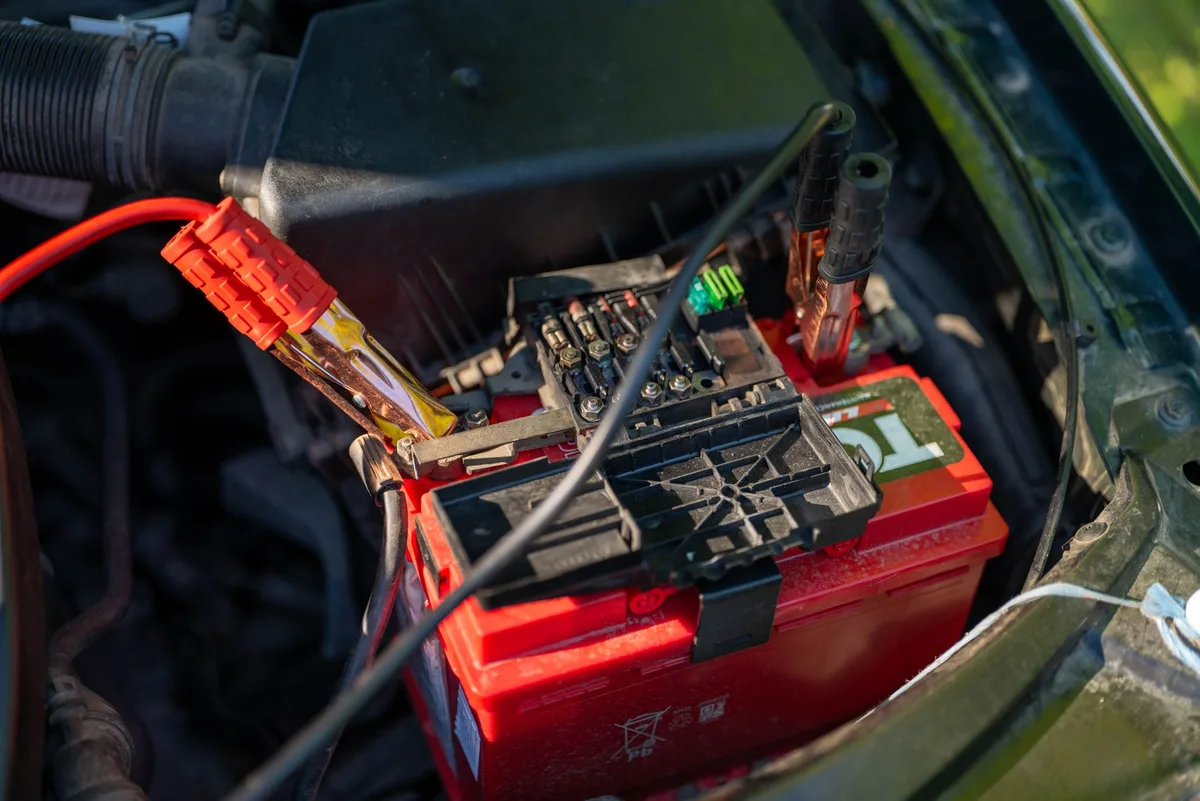
Here's how to read what you get:
| Resting voltage | State of charge | What it means |
|---|---|---|
| 12.6 V or higher | ~100% | Fully charged |
| 12.4 V | ~75% | Slightly low |
| 12.2 V | ~50% | Charge it soon |
| 12.0 V | ~25% | Deeply discharged |
| Below 12.0 V | Near empty | Driving won't fix it |
A quick tip on accuracy. Right after driving or charging, the battery holds a "surface charge" that reads high and fools you. Let it rest, or bleed off that false reading before you test.
Otherwise a tired battery looks healthier than it is.
If you're new to this, testing a battery is safe when done right, and it's worth knowing what a healthy reading looks like across the range. Connect red to positive, black to negative, and read the DC volts. You won't hurt a decent meter on a 12-volt battery, though it's fair to wonder whether a meter can be damaged on higher-voltage work.
Now start the engine and watch the number climb. If it jumps to 13.8 to 14.7 volts, the alternator is charging. If it barely moves or sits under 13 volts, driving isn't putting charge back, and that points to a charging fault rather than the battery itself.
Why Your Battery Keeps Dying Even Though You Drive Every Day
If you drive daily and the battery still dies, driving isn't the problem. Something is either draining the battery or failing to charge it. There are three usual suspects.
Parasitic drain
A parasitic draw is power leaking out while the car is off. A stuck relay, a glovebox light, or a faulty module can quietly bleed the battery overnight. Driving refills it, then it drains again by morning.
You can track down that hidden leak with a meter and your fuse box. Anything much above 50 milliamps is worth investigating.
A weak or sulfated battery
Old batteries lose the ability to hold charge. Sulfation builds up on the plates and cuts capacity. The alternator fills it, but the battery can't keep it.
If yours is over three to five years old, age alone could be the cause. Watch for the telltale signs of a dying battery like slow cranking and dim lights.
A failing alternator or worn belt
Sometimes the charging side is at fault. A worn belt slips. A failing alternator or bad diode puts out too little voltage.
The battery slowly drains because nothing refills it while you drive. If your voltage barely rises with the engine running, this is likely why. It's the classic case where the alternator seems fine but the battery still dies.
Driving vs. Using a Battery Charger: Which One You Actually Need
Both put charge back, but they work differently. Driving is convenient and free. A charger is slower to set up but far more thorough.
Here's how they stack up.
| Factor | Driving | Battery charger |
|---|---|---|
| Best for | Mild top-ups | Deep discharge |
| Speed to full | Slow, partial | Full, controlled |
| Deep-discharge recovery | Poor | Excellent |
| Battery health | Can undercharge | Restores properly |
| Effort | Just drive | Connect and wait |
The rule of thumb is simple. If the battery is only slightly low, drive it. If it was flat, dead, or just jump-started, use a smart charger.
A modern multistage charger fills the battery fully, then holds it there without overcharging. That's something the alternator on a short commute just can't match.
The Step-by-Step Way to Recharge a Flat Battery Safely
A smart charger is the safest way to recover a deeply drained battery. It does the work while you leave it alone. Follow these steps.
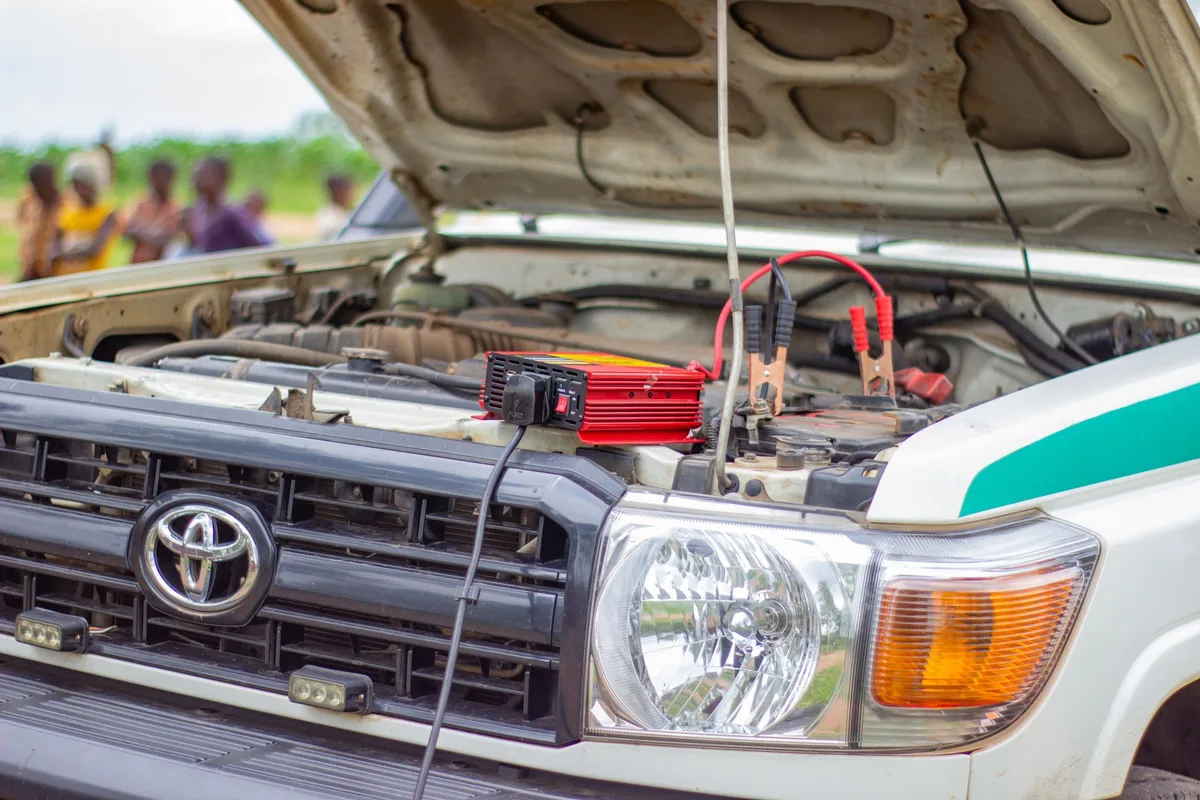
- Park in a ventilated spot and turn everything off.
- Match the charger to your battery type, flooded or AGM.
- Connect red clamp to positive, black clamp to negative.
- Set the correct voltage, usually 12V, and a modest amp rate.
- Let it run. A slow charge is gentler than a fast one.
- Wait for the charger to show a full or float status.
- Disconnect, let the battery rest, then test the voltage.
Once it's charged, confirm the result before you trust it. Let the car sit, then check the reading after charging to make sure it holds near 12.6 volts. If it drops fast, the battery is likely done.
Mistakes That Quietly Kill Your Battery
Most battery deaths are slow and self-inflicted. Small habits add up. Avoid these common ones.
- Relying only on five-minute trips, which never fully charge.
- Idling to "charge" the battery, which barely does anything.
- Ignoring a slow crank until the car won't start at all.
- Leaving accessories or interior lights on overnight.
- Skipping a proper charge after a jump-start.
- Blaming the battery when the alternator or a draw is the real issue.
One more trap is testing at the wrong time. A battery reads high right after driving. Give it time to settle so you get an honest number.
Knowing how long a car should rest first keeps you from misreading a tired battery as a healthy one.
Safety Rules Before You Jump-Start or Charge
Batteries hold serious energy and vent flammable gas. A few rules keep you safe.
- Work in a ventilated area. Charging releases hydrogen gas.
- No sparks, flames, or cigarettes near the battery.
- Wear eye protection. Battery acid burns skin and eyes.
- Connect and disconnect clamps in the correct order.
- Never let the positive and negative clamps touch.
- Don't disconnect a running battery to "test" the alternator.
If you're jump-starting, cable order matters. Doing it wrong risks arcing or a damaged module. The safe sequence for hooking up jumper cables is positive to positive, then negative to a ground point on the dead car, never straight to its battery's negative terminal.
How Cold Weather and Short-Trip Season Wreck Your Charge
Winter is brutal on batteries, and it's a double hit. Cold thickens the oil and makes the engine harder to crank, so the battery works harder. At the same time, cold cuts the battery's available capacity.
Then come the short trips. You warm the car, run the heater, defroster, and lights, then park after ten minutes. The alternator never catches up.
Over a cold month, the battery drifts into chronic undercharge, and one frosty morning it simply won't crank. If that sounds familiar, here's why cold mornings kill a weak battery faster than any other season.
The fix is easy. On cold, short-trip weeks, top the battery with a charger now and then. It offsets everything the short drives can't replace.
Simple Habits to Keep Your Battery Fully Charged
A little upkeep saves you from roadside surprises. None of this takes long.
- Take a longer drive once a week to fully top up.
- Use a smart charger or maintainer if the car sits for days.
- Kill accessories before shutting off, then restart clean.
- Keep terminals clean and tight for good current flow.
- Test resting voltage monthly with a multimeter.
- Replace a battery past four or five years before it strands you.
Do these and driving will keep your battery healthy the way it's supposed to. Skip them, and no amount of driving will save a battery that's already on its way out.
Frequently Asked Questions
How long should I drive to charge my car battery?
For a slightly low battery, 20 to 30 minutes of highway driving usually tops it up. A deeply drained or jump-started battery needs several hours of driving, or better yet, a few hours on a smart charger. Short city trips rarely charge it fully.
Does idling charge a car battery?
Barely. At idle, the alternator runs at its lowest output, and your accessories eat most of that power. Very little charge reaches the battery.
Idling also wastes fuel and adds engine wear. To actually charge, drive the car or plug in a proper battery charger instead.
Will driving recharge a completely dead battery?
Not fully. The alternator isn't designed to bulk-charge a flat battery. It can bring a jump-started battery up partway, but a short drive leaves it undercharged.
Repeated deep discharges also cause sulfation and permanent capacity loss. Use a smart charger to recover a dead battery properly.
Why does my battery die overnight even though I drive daily?
Something is draining it or failing to charge it. A parasitic draw pulls power while the car is off. A worn-out battery can't hold charge.
A failing alternator never refills it. Test resting voltage and check for a parasitic draw to find the real culprit.
Does revving the engine charge the battery faster?
Somewhat. Higher RPM spins the alternator faster and boosts output, so revving charges quicker than idling. But it's still no substitute for a proper charge on a deeply drained battery.
If you need real recovery, drive at highway speed or use a charger rather than sitting and revving.
Your Quick Decision Guide: Drive It or Charge It
Here's the whole thing in one glance. Use it next time your battery acts up.
- Battery slightly low? Drive 20 to 30 minutes. Done.
- Just jump-started? Drive 30-plus minutes, then charge if you can.
- Battery was flat or dead? Skip driving, use a smart charger.
- Dies again after charging? Check for a parasitic draw or a bad alternator.
- Battery over four or five years old? Test it, then plan to replace.
Driving charges your battery, but only when the battery is healthy and the trip is long enough. For everything else, a charger and a quick voltage test will tell you the truth and keep you off the shoulder of the road.

Similar Posts