Why Dashboard Lights Dim When Starting Your Car

Dashboard lights that dim when starting are one of the most common things drivers notice, and most of the time they point straight at your electrical system. That quick dip in brightness the moment you turn the key usually means voltage is being pulled down hard by the starter. Sometimes it's completely normal.
Other times it's an early warning that your battery, grounds, or alternator need attention.
The trick is knowing which one you're dealing with. A healthy battery rests at about 12.6 volts, and per SAE cranking guidelines the voltage should stay above roughly 9.6 volts at 70°F while the engine turns over. As of 2026, most no-start complaints still trace back to weak batteries and bad connections, not expensive parts.
Let's break down what your dimming lights are actually telling you.
Why Your Dashboard Lights Dim the Moment You Start the Car
Your dash lights dim at startup because the starter motor is the hungriest thing in your car. When you crank, it can pull 150 to 300 amps in a split second. That massive draw yanks system voltage down for a moment, and every light on the dash dips with it.
Think of it like water pressure in a house. Flush the toilet and the shower loses pressure for a second. The starter does the same thing to your electrical system.
A brief, slight dim that snaps back the instant the engine fires is usually nothing to worry about. The concern starts when the dimming is deep, slow to recover, or happens at times it shouldn't. That's when the startup voltage dip is telling you something is wearing out or loosening up.
Here's the short version of what pulls the lights down:
- The starter demands a huge burst of current.
- Battery voltage sags under that load.
- Weak batteries, loose terminals, or bad grounds make the sag worse.
- The dash lights simply mirror whatever the battery is doing.
Quick Answer: When Dimming Is Normal and When It's a Warning Sign
Dashboard lights dim when starting because the starter motor draws a huge burst of current. A slight, brief dim during cranking is normal. Deep dimming with a slow crank points to a weak battery or loose connections.
Dimming or flickering at idle points to the alternator or a bad ground. Test your battery voltage to know for sure.
How Your Starting and Charging System Actually Works
Three parts run the show: the battery, the starter, and the alternator. Understanding how they hand off power makes the dimming make sense.
The battery stores energy and delivers the big jolt needed to crank the engine. The starter uses that jolt to spin the engine until it fires. Once the engine runs, the alternator takes over.
It powers everything and recharges the battery at the same time.
A healthy charging system usually reads between 13.8 and 14.7 volts while the engine runs. Anything much lower and the battery slowly drains. Much higher and you risk cooking the battery.
You can dig into the normal charging range if your voltmeter looks off.
Here's the simple flow at every start:
| Stage | What's happening | Voltage you'd expect |
|---|---|---|
| Key on, engine off | Battery at rest | ~12.6V healthy |
| Cranking | Starter pulls heavy load | Stays above ~9.6V |
| Running | Alternator charging | 13.8 to 14.7V |
If any link in that chain is weak, the dimming gets worse. A tired battery can't hold voltage under load. A loose ground adds resistance.
A failing alternator can't refill the tank.
The Key Question: When Do the Lights Dim?
The single most useful clue is timing. When the lights dim tells you far more than the fact that they dim at all. Pay attention to the exact moment, and you'll narrow the cause fast.
During Cranking (Key to Start)
If the lights dim only while you're cranking, and they pop back to full the second the engine catches, that's usually normal. The starter is doing its job. As long as the engine starts quickly, you're fine.
The exception is a deep dim paired with slow, lazy cranking. That combo suggests a weak battery or poor connections. It's worth checking how far it should fall against your own reading.
At Idle After It Fires Up
Dimming or flickering after the engine is running is a bigger red flag. At idle, the alternator should hold voltage steady. If the lights pulse, sag, or the battery warning light glows, suspect the alternator or a bad ground.
When You Add Accessories or Lights
Turn on the headlights, the blower, or the rear defroster and watch the dash. If it dims noticeably every time a load kicks in, the alternator may be struggling to keep up. A worn belt or high-resistance ground can cause the same thing.
Only in Cold Weather
Cold mornings make batteries weaker. A battery loses a big chunk of its cranking power near freezing. If the dimming only shows up on cold days and clears once it warms, your battery may be near the end of its life.
Decision Tree: Match Your Symptom to the Real Cause
Match what your car is doing to one of the branches below, then follow the suggested check.
Dim Lights + Slow Crank + Clicking
This is the classic weak-battery signature. The lights drop hard, the engine turns slowly, and you might hear rapid clicking. Start with battery voltage.
- Resting voltage below 12.4V means a low state of charge.
- A single click often means the battery can't feed the starter.
- Clean, tight terminals can sometimes fix a borderline case.
A 12.4-volt reading means the battery is only about 75 percent charged, so it's already on the back foot.
Dim or Flickering at Idle With the Battery Light On
If the engine runs but the lights pulse and the battery warning light is on, look at the alternator. It isn't holding the charging voltage where it should. A voltmeter makes this easy to confirm, and it helps you sort battery from alternator in a couple of minutes.
- Charging voltage under ~13.5V at idle is suspect.
- A slipping serpentine belt can mimic a failing alternator.
- Check the belt tension before condemning the alternator.
Dead Overnight but Fine After a Jump
If the car starts fine after a jump but dies again overnight, you likely have a parasitic drain or a battery that won't hold charge. Something is pulling current with the key off, or the battery is simply worn out.
Normal key-off draw sits around 20 to 50 milliamps. Anything much higher points to a stuck relay, a module that won't sleep, or an aftermarket accessory. Groups like Battery Council International note that most car batteries last only three to five years, so age matters too.
The Usual Suspects Behind Startup Dimming
Most dimming traces back to five parts. Work through them in order, cheapest and easiest first.
Weak or Aging Battery
A tired battery is the number one cause. Once it drops below about 12.4 volts at rest, it struggles to feed the starter without a big sag. If your battery is over three years old and the crank sounds slow, it's the prime suspect.
A quick voltmeter check settles it fast.
Loose or Corroded Terminals
Corrosion and loose clamps add resistance right where you need clean flow. That white or green crust on the posts chokes current and forces the voltage down. It's a five-minute fix and one of the most overlooked causes.
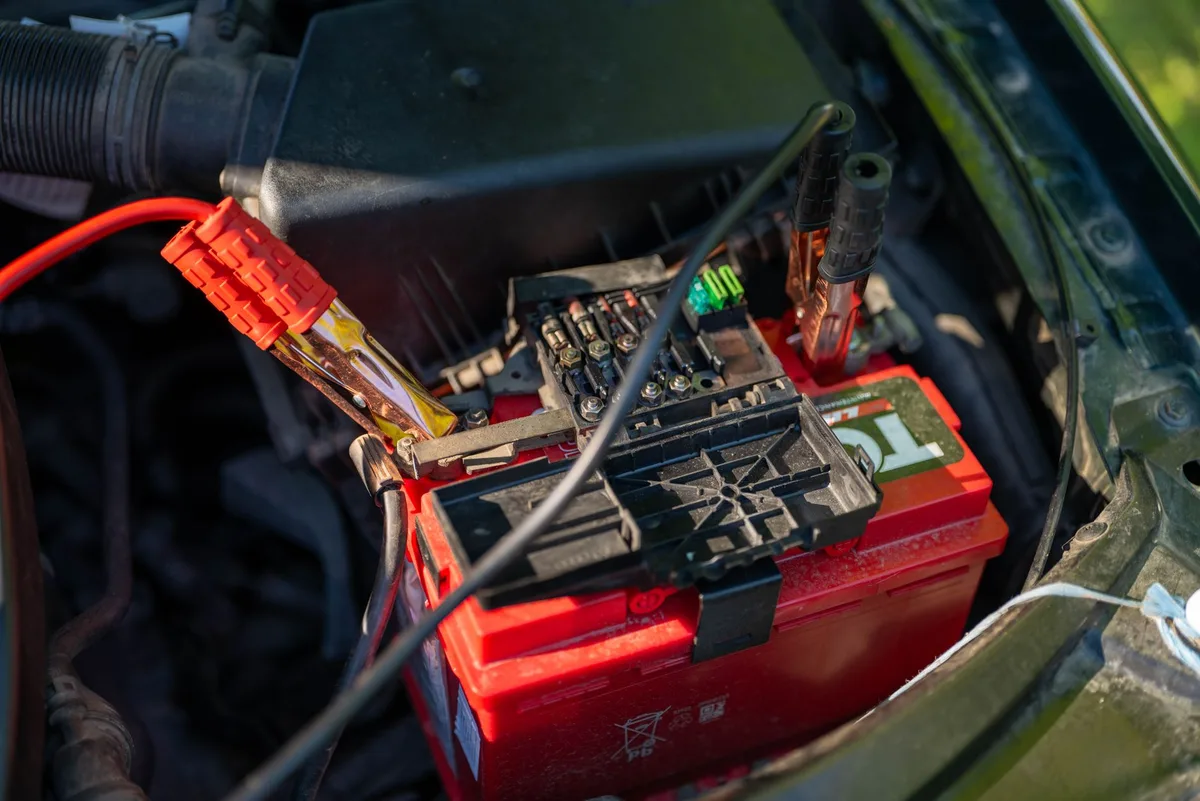
- Look for powdery buildup on the posts and clamps.
- Wiggle each clamp. It should not move at all.
- Clean with a wire brush and a baking soda paste.
Bad Engine and Chassis Grounds
Bad grounds cause dimming that makes no sense at first. Current needs a clean path back to the battery. If the engine-to-chassis or battery-to-body ground strap is corroded or loose, resistance climbs and lights dip.
These straps are cheap and easy to inspect.
Failing Alternator or Voltage Regulator
If the lights dim or flicker while the engine runs, the alternator is the likely culprit. A worn brush, a bad diode, or a failing voltage regulator can all drop output. When charging voltage falls below the normal band, the battery slowly drains and the whole system sags.

Slipping Serpentine Belt
A glazed or loose serpentine belt lets the alternator pulley slip. The alternator then can't spin fast enough to hold voltage, especially when loads switch on. Look for a shiny, cracked belt or listen for a squeal at startup.
How to Test It Yourself With a Multimeter
A cheap multimeter answers most of these questions in ten minutes. Set it to DC volts on the 20V range and touch red to positive, black to negative. If you're unsure of the dial, our guide to picking the right dial setting walks through it.

Resting Voltage Check
With the engine off, read the battery voltage. A healthy battery sits near 12.6 volts. If you see a 12.2-volt result, the battery is only about half charged and needs a top-up or replacement.
Cranking Voltage Check
Have a helper crank while you watch the meter. The voltage will dip, and that dip is the key number. It should stay above roughly 9.6 volts at normal temperatures.
Compare your reading to typical cranking figures to see if the battery is holding up.
Charging Voltage Check
Start the engine and read again. You want 13.8 to 14.7 volts at idle. Below 13.5 suggests a weak alternator or belt.
Above 15 points to an overcharging regulator.
Voltage-Drop Test on Grounds and Cables
This test catches hidden resistance the other checks miss. Put the meter across each cable and ground while cranking. You want under 0.2 volts on a cable and under 0.1 volts on a ground.
Anything higher means a bad connection is stealing power.
What the Voltage Numbers Actually Mean
Voltage is your battery's fuel gauge. Small differences tell a big story about state of charge and health. Here's the quick reference.
| Resting voltage | State of charge | What it means |
|---|---|---|
| 12.6V or higher | 100% | Healthy and ready |
| 12.4V | ~75% | Slightly low, watch it |
| 12.2V | ~50% | Charge it soon |
| 12.0V | ~25% | Nearly flat |
| 11.9V or lower | Discharged | Charge and test |
A battery reading in the 12-volt range can still fail under load. If yours shows 12 volts but won't turn over, the surface charge is masking a dead cell. Load testing confirms real capacity, not just resting voltage.
Common Mistakes That Send People Down the Wrong Path
The wrong first guess costs money and time. These are the traps we see most often.
- Replacing a good alternator when the real issue is a loose ground.
- Buying a new battery without cleaning the terminals first.
- Judging a battery by resting voltage alone, skipping a load test.
- Ignoring the belt when it squeals and slips under load.
- Fitting a replacement battery with lower cold cranking amps than the car needs.
Another common miss is chasing a phantom drain. A battery that dies overnight isn't always faulty. It can be a parasitic draw, and knowing what a safe key-off draw looks like keeps you from swapping parts blindly.
The biggest mistake of all is panicking over normal cranking dim. If the engine starts fast and the lights snap back, you probably have nothing to fix.
Quick Fixes vs. Repairs That Need a Shop
Some fixes take minutes in the driveway. Others need proper tools or a technician. Here's how to tell them apart.
| Do it yourself | Leave it to a shop |
|---|---|
| Clean and tighten terminals | Alternator replacement |
| Charge a low battery | Diagnosing a hidden parasitic drain |
| Swap a worn ground strap | Starter motor replacement |
| Replace the battery | Wiring harness or fusible link faults |
| Inspect belt condition | Voltage regulator internal faults |
If your fix is a loose clamp or a crusty terminal, handle it yourself and save the labor. If the charging voltage is off after clean connections, that's shop territory. When a job involves the starter, deep wiring, or repeated drains you can't trace, a proper diagnostic saves guesswork.
Safety Steps Before You Touch the Battery
Car batteries deal with acid and flammable hydrogen gas, so a few basics keep you safe. Wear eye protection and skip the loose jewelry near the terminals.
- Always disconnect the negative terminal first, and reconnect it last.
- Keep sparks, cigarettes, and flames away from the battery.
- Don't lay metal tools across both terminals. That's a dead short.
- Wash off any acid contact with plenty of water right away.
If a battery looks swollen, cracked, or is leaking, stop and replace it. Recycle the old one at an auto parts store, since batteries are hazardous waste and shouldn't go in the trash.
How Cold Weather and Short Trips Make It Worse
Cold and short trips are a brutal combo for batteries. Near freezing, a battery can lose around a third of its cranking power. That's why dimming often shows up on the first frosty morning.
Short trips make it worse. A five-minute drive doesn't give the alternator time to replace what the start pulled out. Do that for weeks and the battery slowly falls behind.
If you mostly drive short hops, an occasional longer run or a smart charger keeps it topped up. Cold-weather voltage behavior is worth a look if your numbers drop on cold mornings.
Keeping Your Charging System Healthy Long-Term
A little upkeep prevents most dimming problems. The goal is clean connections and a battery that never sits deeply discharged.
- Check terminals twice a year for corrosion and tightness.
- Test resting and charging voltage every oil change.
- Replace the battery around the three-to-five-year mark.
- Keep the serpentine belt in good shape and properly tensioned.
A battery maintainer helps a lot if the car sits for days at a time. It holds charge without overcooking the cells. Matching a replacement battery to your car's factory cold cranking amps also matters, so check how much cranking power your car needs before buying.
Frequently Asked Questions
Is it normal for dashboard lights to dim when starting?
Yes, a brief dim during cranking is normal. The starter pulls a huge current burst, so voltage sags for a second. As long as the lights snap back when the engine fires and the car starts quickly, there's nothing to worry about.
Do dimming dash lights mean my battery is dying?
Not always. Deep dimming with slow cranking often means a weak battery. But loose terminals, bad grounds, or a failing alternator cause the same symptom.
Test the resting and cranking voltage before you replace anything.
Why do my lights dim while the engine is already running?
Dimming at idle usually points to the alternator or a bad ground, not the battery. The alternator should hold steady voltage once the engine runs. If the battery warning light is on too, get the charging output tested.
Can a bad ground cause dashboard lights to dim?
Yes. A corroded or loose ground strap adds resistance to the electrical path. That extra resistance drops voltage and makes the lights dim, especially under load.
Cleaning and tightening the engine and chassis grounds often fixes it.
How do I know if it's the battery or the alternator?
Test with a multimeter. A resting battery should read about 12.6 volts. With the engine running, you should see 13.8 to 14.7 volts.
Low resting voltage points to the battery, while low running voltage points to the alternator.
Your Next Step Based on What You're Seeing
Start with the timing of the dim. If it only happens during a quick crank and the car starts fast, you're likely fine. Keep an eye on it and check the terminals when convenient.
If the crank is slow or the lights sag deeply, test the battery first. Clean the terminals, check resting voltage, and load test if you can. Most of the time the fix is cheap.
If the lights flicker at idle or the battery light is on, move to the alternator and grounds. That's where a multimeter earns its keep. Match your readings to the numbers above, and you'll know whether it's a five-minute driveway fix or a job for the shop.

Similar Posts