Can You Charge a Battery While It’s Connected to the Car?
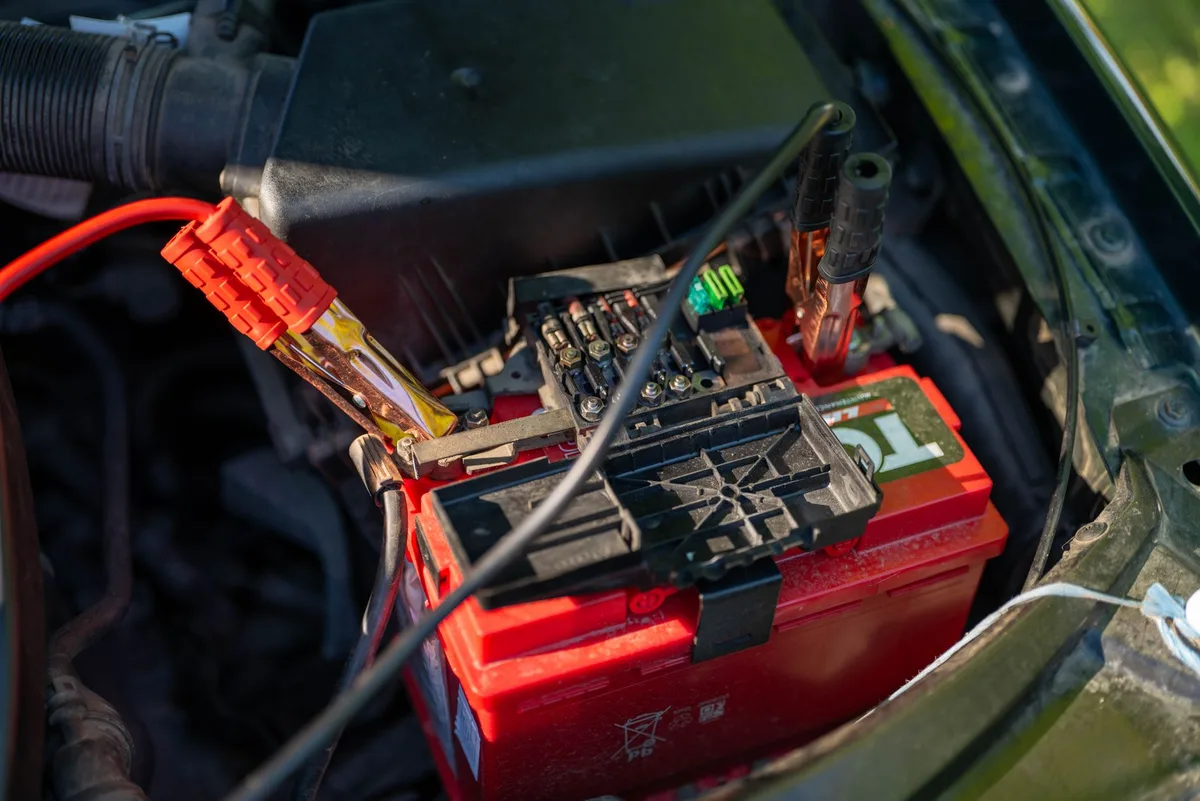
Charging a flat battery is annoying enough without wondering if you're about to fry your car's electronics. So, can you charge a battery while it's connected to the car? In most cases, yes, and it's the way most people do it at home.
Leaving it hooked up saves you tools, time, and the hassle of pulling a heavy battery out.
That said, the "yes" comes with conditions. Modern vehicles run sensitive control modules that don't like voltage spikes, and lead-acid batteries vent hydrogen gas while charging. A quality smart charger keeps output in the safe 13.8V to 14.7V window, so it plays nicely with onboard electronics.
Here's exactly when it's safe, when it isn't, and how to do it right.
Quick Answer
Yes, you can charge a car battery while it's still connected. Use a modern smart charger, not a cheap unregulated one. Turn off the ignition and all accessories first.
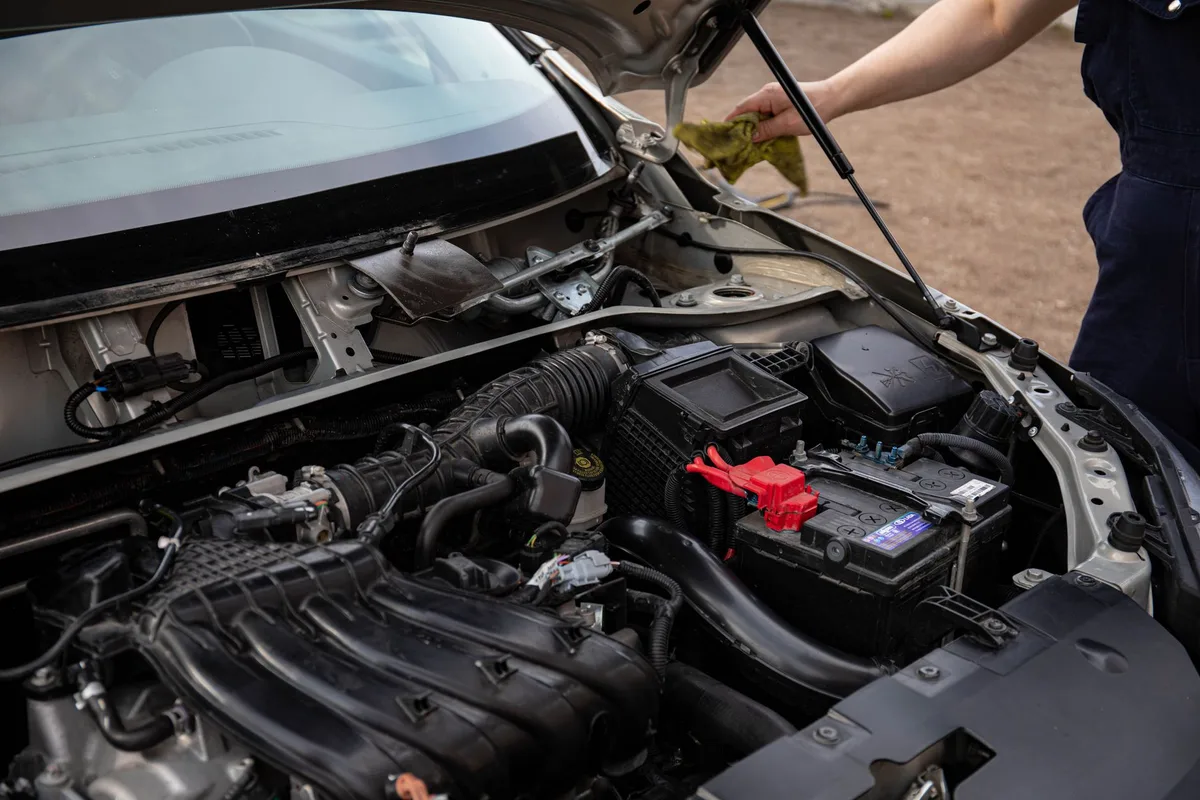
Connect the positive clamp to the battery, then the ground clamp to bare engine metal. This keeps sparks away from the battery gases.
Can You Charge a Car Battery While It's Still Connected? The Short Answer
Yes. For the vast majority of cars on the road today, you can safely charge the battery without disconnecting a thing. The key is using a modern smart charger and following the right connect-and-disconnect order.
Millions of drivers do exactly this every winter. Leaving both terminals attached means your radio codes, clock, and seat memory all stay intact. It also spares you from wrestling a 40-pound battery out of a tight engine bay.
The catch is charger quality and voltage control. A regulated charger holds a steady, safe output and won't send spikes into your electronics. A cheap, unregulated one can.
If you've got any doubt about your setup, our research shows the safest default is a smart charger plus correct clamp placement, which we'll walk through below.
What Actually Happens When You Charge a Battery On the Vehicle
When you plug in a charger, it pushes current backward through the battery to reverse the chemical discharge. A healthy 12V lead-acid battery reads around 12.6V at rest when full. A charger raises that to roughly 13.8V to 14.7V to force energy back in.
Your car's electrical system stays wired to that battery the whole time. So the charging voltage reaches the fuse box and any modules that draw a small standby current. This is normal.
It's also why voltage control matters so much.
A smart charger manages this in stages:
- Bulk stage: high current does the heavy lifting.
- Absorption stage: voltage holds steady while current tapers.
- Float stage: a gentle maintenance charge, around 13.2V to 13.6V, tops it off without cooking anything.
The alternator does something similar while you drive, feeding the battery roughly 13.5V to 14.8V. If you want to understand how those numbers should look, our guide on what a healthy resting reading means breaks it down. When a charge finishes, a quick check confirms the battery actually held it, which is where confirming the charge stuck comes in handy.
Charging With the Battery Connected vs. Disconnecting It First
Both methods work. The right one depends on your charger, your vehicle, and how cautious you want to be. Here's the honest side-by-side.
| Factor | Battery Connected | Battery Disconnected |
|---|---|---|
| Convenience | High, no tools needed | Lower, wrenches required |
| Radio codes / memory | Kept intact | Can be lost |
| Risk to electronics | Low with smart charger | Lowest, fully isolated |
| Best charger type | Smart / regulated only | Any charger |
| Time involved | Minimal setup | Extra removal time |
If then logic makes this simple:
- If you have a modern smart charger, then charging connected is fine.
- If you only have an old unregulated charger, then disconnect the negative terminal first.
- If your owner's manual specifically warns against on-vehicle charging, then follow it.
Disconnecting the negative terminal fully isolates the battery from the car. That's the safest route for sensitive vehicles or when using a basic charger. The downside is memory loss, though a plug-in memory saver solves that.
Some batteries also carry a false surface charge that can skew readings, so let things settle before testing either way.
When It's Safe to Leave the Battery Connected (and When It Isn't)
Most of the time it's safe. The exceptions come down to your charger and how much delicate electronics your car packs. As of 2026, nearly every consumer charger sold is a regulated smart unit, which stacks the odds in your favor.
Modern Cars With Sensitive ECUs and Electronics
Newer vehicles run dozens of control modules. These don't like sudden voltage spikes. A smart charger avoids the problem because it never exceeds a safe ceiling and ramps current gently.
Never use "engine start" or "boost" mode on a charger while everything is connected. That mode dumps high current and can spike voltage into the ECU. If your car struggles to start even after charging, the fault may lie elsewhere, and our notes on a good reading yet no crank can point you in the right direction.
Older Vehicles and Simpler Electrical Systems
Older cars are far more forgiving. Basic wiring and few electronic modules mean voltage spikes have little to damage. You can charge these connected with almost any charger.
Even so, we'd still reach for a smart charger. It protects the battery from overcharging and gassing. Cold mornings are hard on any battery, and if yours keeps failing to turn over, the reasons behind weak starts in freezing weather are worth a look.
AGM, EFB, and Lithium Batteries
Battery chemistry changes the rules. AGM and EFB batteries need a charger set to the correct mode, or they can be overcharged. Lithium (LiFePO4) batteries require a lithium-specific profile.
The wrong voltage curve shortens their life fast.
Match the mode to the battery every time. Most smart chargers have a dedicated AGM setting. If a new battery keeps letting you down despite correct charging, the culprit is often a drain, not the battery, and tracing why a fresh battery goes flat can save you a warranty trip.
The Real Risks: Voltage Spikes, Sparks, and Hydrogen Gas
The three real hazards are voltage spikes, sparks, and hydrogen gas. All three are avoidable with the right gear and order. Ignore them, and you risk fried electronics, burns, or in rare cases an explosion.
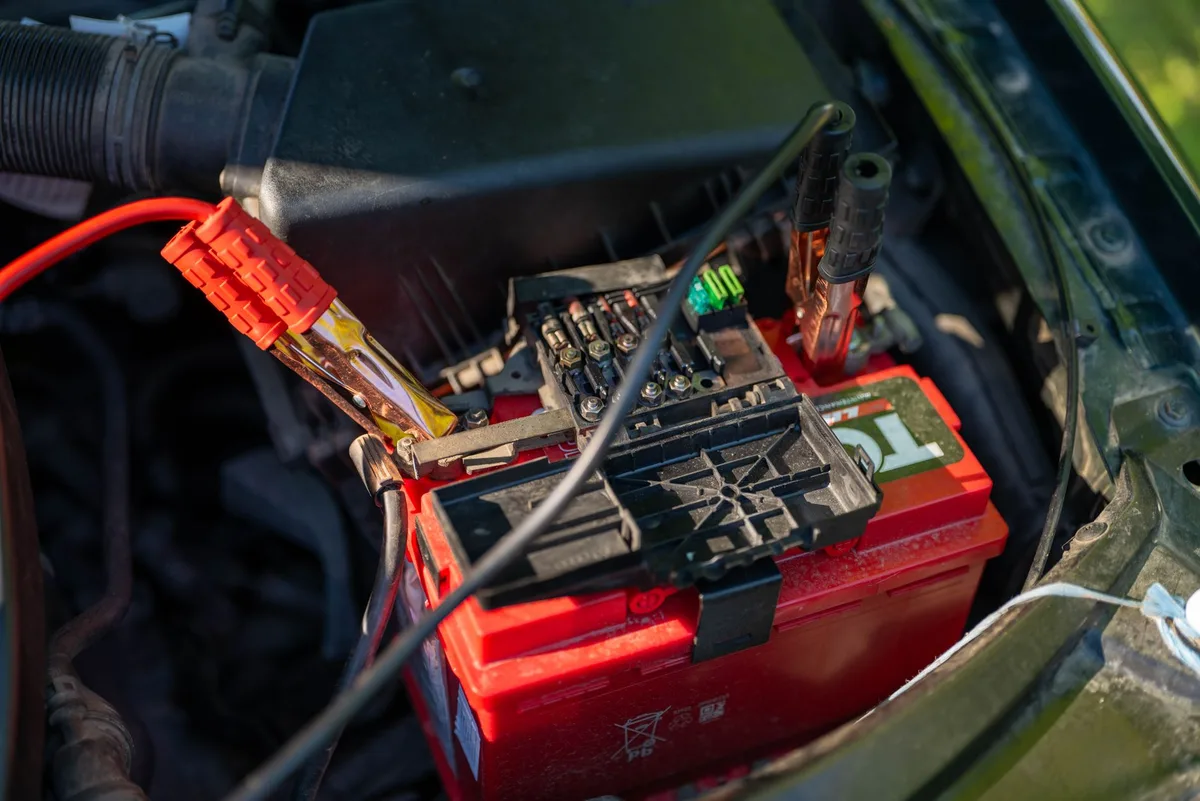
Lead-acid batteries vent hydrogen while charging, especially near the top of a charge. Hydrogen is flammable and collects in still air. A single spark at the terminal can ignite it.
That's why you clamp the ground lead to bare engine metal, away from the battery, so any spark happens at a safe distance. Federal safety guidance from OSHA on battery-charging hazards stresses ventilation and spark control for exactly this reason.
Watch for these red flags before and during charging:
- A rotten-egg smell, which signals overcharging or a failing cell. Our page on that sulfur odor explains what it means.
- A swollen or bulging case, a clear sign to stop. See the warning signs of a bloated battery case.
- Any leaking fluid or cracks, covered in our guide to acid seepage and what causes it.
Voltage spikes are the electronics killer. They come from unregulated chargers, boost mode, or yanking a clamp off mid-charge. Always stop the charger before disconnecting.
Never charge a frozen or visibly damaged battery, and keep the area ventilated with no open flames nearby.
Smart Chargers vs. Old Unregulated Chargers
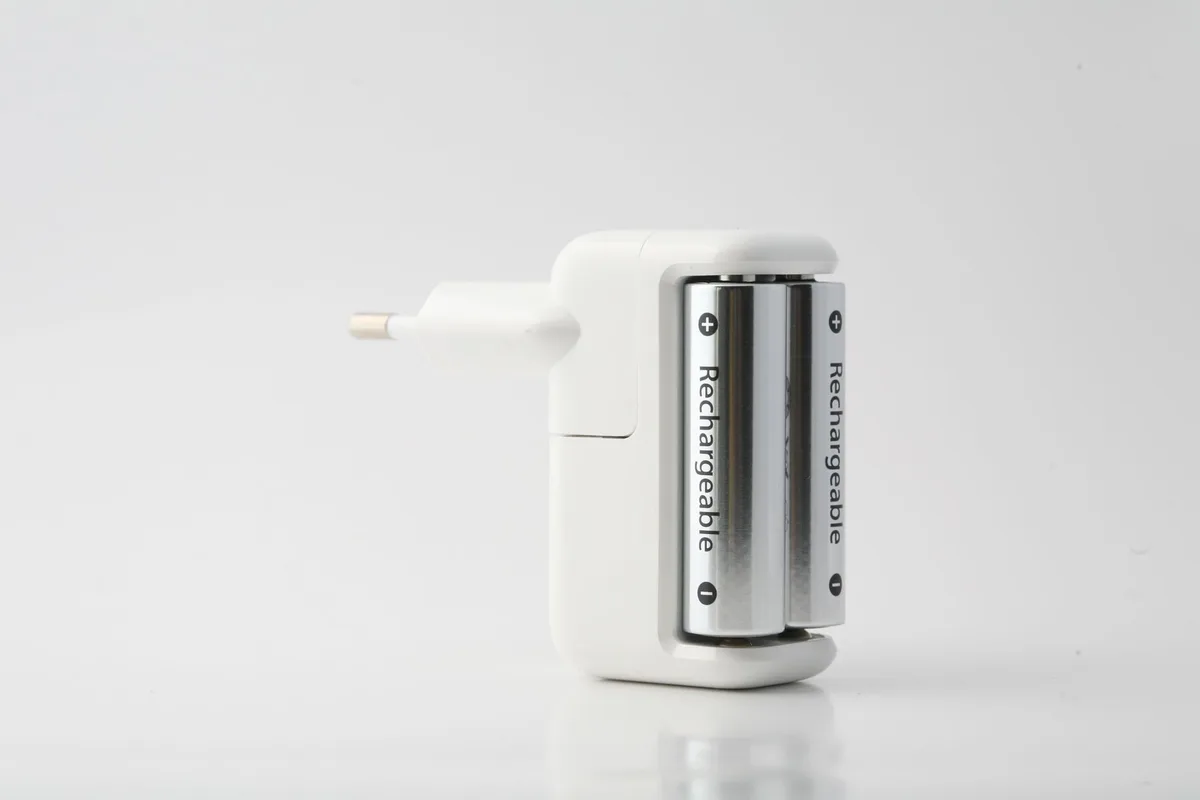
The charger you own matters more than any other single factor. A smart charger is safe to leave connected for hours or even days. An old unregulated charger is not, because it keeps pushing voltage with no ceiling.
Why Charger Type Decides Everything Here
A smart charger reads the battery and adjusts output automatically. It drops to a float charge once full, so it can't overcharge or gas the battery. That gentle behavior is what keeps your ECU safe with everything connected.
An unregulated charger just pumps out a fixed voltage. Left too long, it boils the electrolyte and can spike the electrical system. Here's the quick comparison.
| Feature | Smart Charger | Unregulated Charger |
|---|---|---|
| Voltage control | Automatic, capped | Fixed, no cutoff |
| Safe when connected | Yes | Risky |
| Overcharge protection | Built in | None |
| Battery-type modes | AGM, lithium, cold | Usually none |
| Leave overnight | Fine | No |
If you only own the old kind, disconnect the negative terminal and watch the charge closely. Better yet, upgrade. A basic smart charger costs little and pays for itself the first time it saves a battery.
Step-by-Step: How to Charge a Car Battery Without Removing It
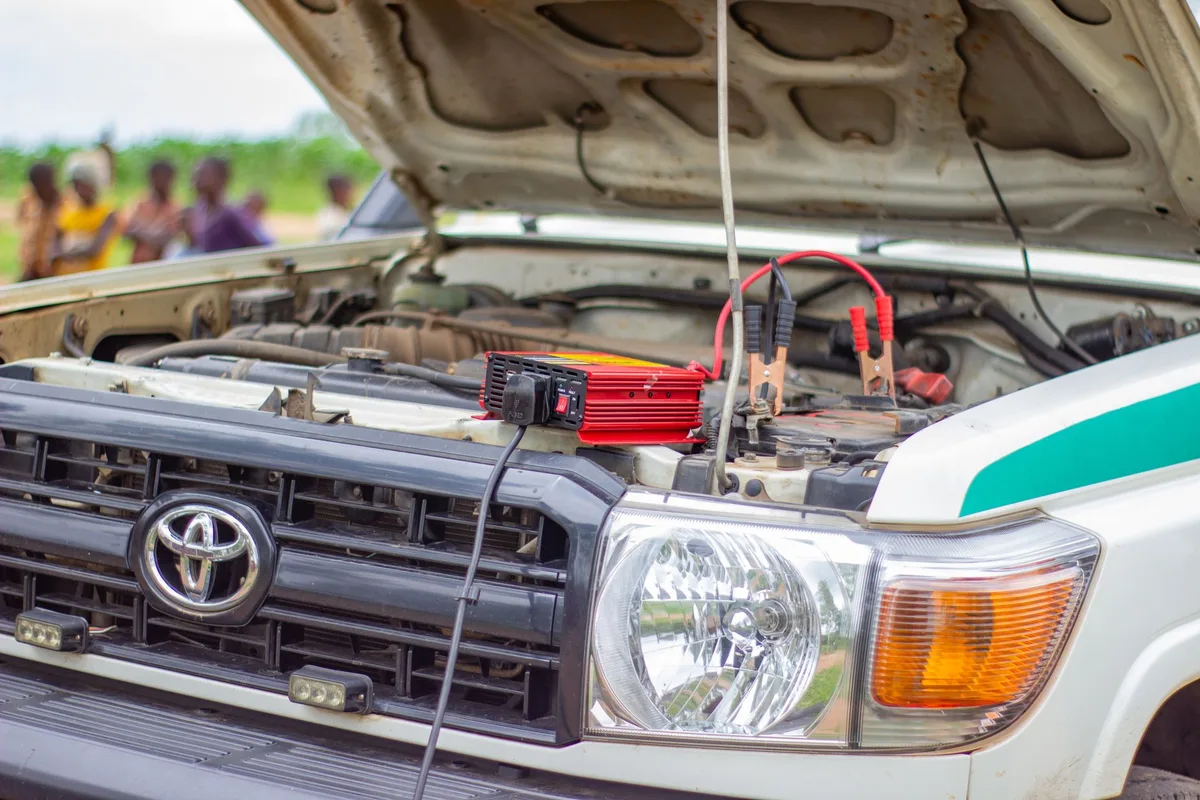
Here's the safe sequence from start to finish. Follow the order exactly, because the order is what keeps sparks away from the battery gases.
Connecting the Clamps in the Right Order
Turn off the ignition, lights, and every accessory first. Make sure the charger is unplugged from the wall at this stage.
- Clip the red positive clamp to the battery's positive post.
- Clip the black ground clamp to bare, unpainted engine metal or a solid chassis point.
- Keep that ground clamp well away from the battery top.
- Only now plug the charger into the mains.
Grounding to the engine block, not the negative post, means any tiny spark happens far from the vented hydrogen. Clean off corroded terminals first, since a poor connection slows the charge and heats the clamp.
Choosing the Correct Mode and Amperage
Match the mode to your battery chemistry. Standard flooded, AGM, EFB, and lithium each want a different profile. Pick the wrong one and you shorten battery life.
Amperage sets the speed. A 2A setting is a slow trickle for maintenance. A 4A to 10A rate suits a normal recharge.
Higher amps charge faster but run hotter, so go gentle on an older battery.
Disconnecting Safely When It's Done
Reverse the order to shut down. Unplug the charger from the wall first. Then remove the ground clamp, and finally the positive clamp.
Never pull a clamp while the charger is still powered. That's a classic way to create an arc right at the battery. Once done, a resting check confirms the battery held its charge.
Mistakes That Damage Batteries and Electronics
Most damage comes from a handful of avoidable errors. Get the basics right and on-vehicle charging is genuinely low risk. Here are the ones that cost people money.
- Using boost or engine-start mode with electronics connected.
- Swapping the clamps and reversing polarity.
- Leaving an unregulated charger on overnight.
- Charging a frozen, swollen, or leaking battery.
- Pulling clamps off before switching the charger off.
Reverse Polarity and Boost/Start Mode Traps
Reverse polarity is the fastest way to blow a fuse or a module. Positive goes to positive, always. Most smart chargers have reverse-polarity protection and simply won't charge if you cross them, but never rely on that as a safety net.
Boost mode is the other trap. It delivers a high-current jolt meant for jump-starting, not gentle charging. If your battery is truly dead and you need a jolt, follow a proper procedure like our guide to using jumper cables the safe way instead of boosting on a charger with modules live.
Voltage and Charge-Time Numbers Worth Knowing
Knowing the target numbers tells you whether charging is working. A full 12V battery rests at 12.6V to 12.8V. Anything at or below 12.0V is deeply flat and needs a full recharge.
Here are the figures worth memorizing.
| Reading | What It Means |
|---|---|
| 12.6V to 12.8V | Fully charged, at rest |
| 12.4V | Roughly 75 percent charged |
| 12.2V | About 50 percent, recharge soon |
| 12.0V or less | Flat, charge fully |
| 13.8V to 14.7V | Normal while charging |
| 13.2V to 13.6V | Float / maintenance level |
Charge time depends on amps and how flat the battery is. A 4A charger might take 8 to 12 hours on a low battery. A 10A unit cuts that down but runs warmer.
If a battery charges fine yet keeps dying, the fault is often a hidden drain, and learning to track down a parasitic drain usually finds it.
Keeping Radio Codes and Memory Settings Alive
The main reason people charge connected is to protect stored settings. Disconnect the battery and you can lose radio codes, the clock, seat and mirror presets, and stored trip data. Charging with both terminals attached avoids all of that.
Some cars also need to relearn idle and throttle behavior after a full disconnect. That relearn can cause a rough idle for a few miles. Leaving the battery connected sidesteps the whole process.
If you ever do need to disconnect, a plug-in memory saver keeps a trickle of power to the electronics. It plugs into the 12V socket or OBD port. When a battery drains overnight despite good charging, the issue usually points back to a draw rather than lost settings, and our notes on overnight battery loss walk through the usual suspects.
Safety Rules, PPE, and Ventilation You Shouldn't Skip
Charging looks simple, but a few habits keep it safe. The gases and current are real hazards, so treat them with respect.
- Wear safety glasses and gloves. Battery acid burns skin and eyes.
- Charge in a ventilated space, never a sealed garage.
- Keep sparks, cigarettes, and open flames well away.
- No metal tools or jewelry resting across the terminals.
- Never charge a frozen, cracked, or bulging battery.
If you smell rotten eggs or spot heat and hissing during charging, stop right away. That's the battery telling you something is wrong.
Expert Tips for On-Vehicle Charging and Long-Term Battery Health
A little maintenance charging goes a long way. These habits keep a battery healthy for years.
- Top up a parked car every few weeks with a maintainer.
- Clean corrosion off the posts before every charge.
- Use the AGM or lithium mode when your battery calls for it.
- Don't let a battery sit flat, since sulfation sets in fast.
- After charging, let it rest an hour before testing voltage.
Cold weather drains capacity, so winter storage is where a float charger earns its keep. If your battery keeps going flat despite a good alternator, the drain is elsewhere, and our notes on an alternator that checks out fine help narrow it down.
When to Stop and Call a Mechanic
Some problems aren't a charging fix. Call a professional if the battery won't hold a charge, gets hot, or reads under 10V after a full cycle.
Watch for these signals:
- The battery keeps dying even after a full charge.
- You see swelling, leaks, or a persistent sulfur smell.
- The car cranks slowly right after charging.
- Voltage drops fast the moment the charger comes off.
A battery that reads fine but still won't crank often points to a starter or ground fault, not the battery itself. When a brand-new unit won't stay charged, it's worth a shop diagnosis before you spend again.
Frequently Asked Questions
Can you charge a car battery without disconnecting it?
Yes, in most cases. A modern smart charger holds a safe voltage and won't harm your electronics. Turn off the ignition, connect positive first, then ground to bare metal.
Only use an unregulated charger with the negative terminal disconnected.
Will charging the battery damage the ECU?
Not with a proper smart charger, which caps voltage in the safe 13.8V to 14.7V range. Damage happens from voltage spikes, usually caused by boost mode, an unregulated charger, or pulling a clamp off while the charger is still running.
Should I disconnect the negative terminal when charging?
Only if you're using an old unregulated charger or your manual says so. Disconnecting fully isolates sensitive modules but wipes radio codes and presets. With a smart charger, leaving both terminals connected is safe and far more convenient.
How long does it take to charge a connected car battery?
It depends on amperage and how flat the battery is. A 4A charger takes roughly 8 to 12 hours on a low battery. A 10A charger is faster but runs warmer.
A float charge can safely stay connected indefinitely.
Is it safe to leave a smart charger connected overnight?
Yes. A smart charger drops to a gentle float mode once the battery is full, so it can't overcharge. That's exactly what maintainers are built for.
An unregulated charger, though, should never be left on unattended.
The Verdict: Should You Charge It Connected or Not?
For nearly everyone, charging the battery while it's connected is the right call. A quality smart charger makes it safe, keeps your settings intact, and saves you real hassle. Just mind the connect-and-disconnect order and match the mode to your battery.
Reach for full disconnection only when you're stuck with an old unregulated charger or your manual demands it. Skip boost mode with electronics live, keep the area ventilated, and stop at the first sign of heat, swelling, or odor. Do that, and on-vehicle charging is both safe and simple.

Similar Posts