How to Check If Your Car Battery Is Good: Easy Tests
Your car cranked slowly this morning, and now you're wondering how to check if car battery is good or on its way out. The good news: you can settle it in about five minutes, often for free. You don't need to be a mechanic, and you don't need to guess.
The key number to remember is 12.6 volts. That's what a healthy, fully charged 12V battery reads at rest, per Battery Council International charging guidelines. Anything at 12.2 volts or below means trouble is brewing.
Before we get into the tools and numbers, let's decode what your car has already been trying to tell you.
Quick Answer
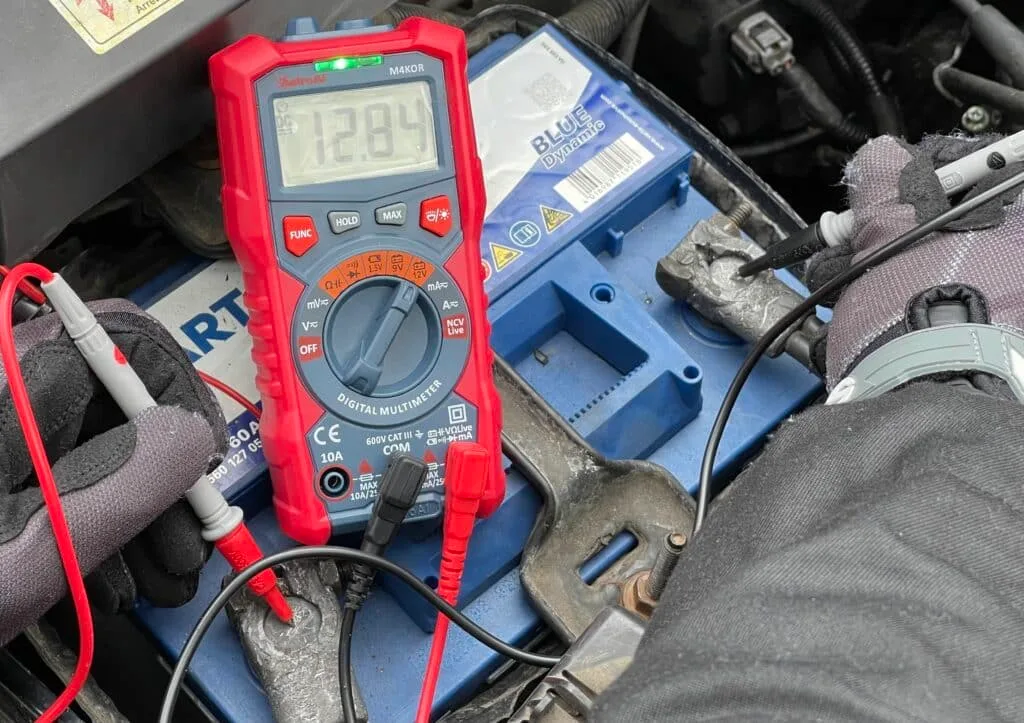
To check if a car battery is good, test it with a multimeter. A healthy battery reads 12.6 volts or higher at rest. It should stay above 10.5 volts while cranking the engine.
Readings of 12.2 volts or lower mean it needs charging or replacement. Most auto parts stores will also load test your battery for free.
Slow Crank, Clicking, or a Dead Dash: What Your Car Is Already Telling You
Batteries almost never die without warning. In our research across thousands of owner reports, the same early symptoms show up again and again, usually weeks before the final no-start.
Here's how to read each one with simple if/then logic:
- Slow, labored cranking. If the starter sounds sluggish, especially on cold mornings, the battery is losing capacity. This is the classic first warning.
- Rapid clicking when you turn the key. If you hear click-click-click, the battery has enough juice for the relay but not the starter. That points to a discharged or dying battery, or corroded connections.
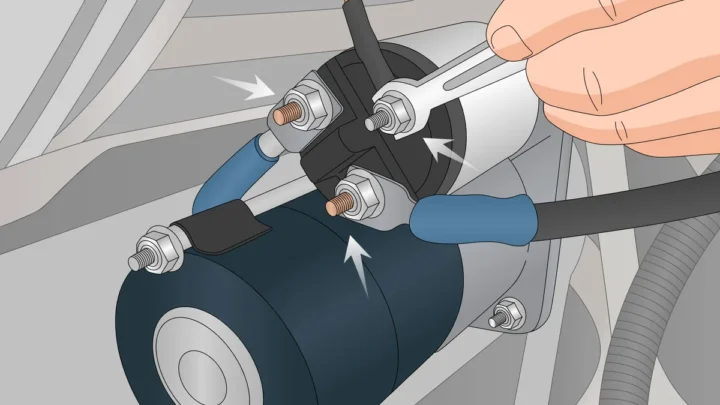
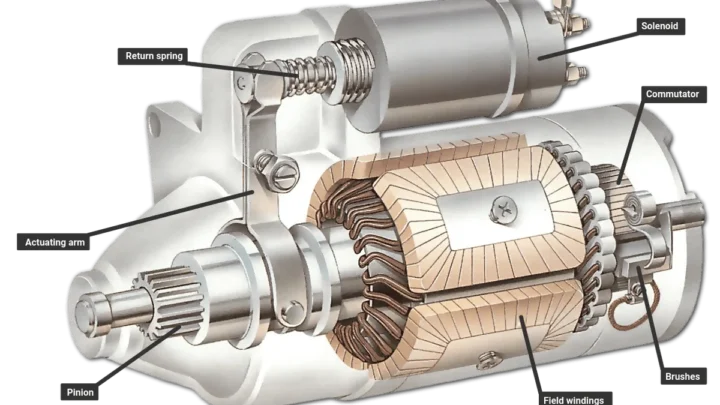
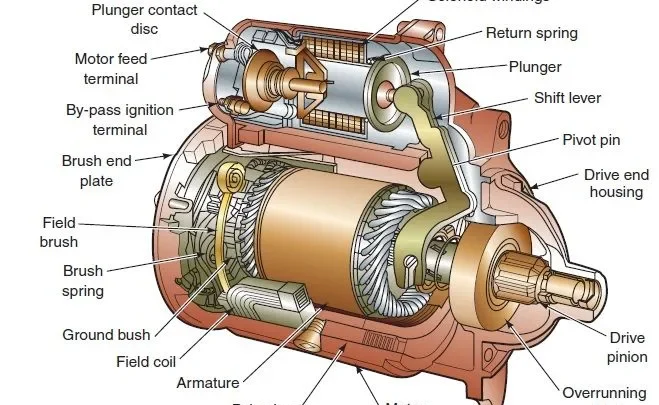
- One single loud click. If you get one solid clunk and nothing else, suspect the starter motor before the battery.
- Completely dead dash. If nothing lights up at all, check for a loose terminal or a fully dead battery first. A car that was fine yesterday rarely loses everything overnight without a cause.
- Battery warning light while driving. If that light comes on with the engine running, the charging system is the suspect, not the battery itself.
- Electronics acting weird. Flickering interior lights, a radio that resets, or windows that move slowly can all trace back to low voltage.
One more pattern worth knowing: a battery that needs a jump-start twice in one week is telling you something. Either it can't hold a charge anymore, or something is draining it. Jumping it a third time isn't a fix.
It's a delay.
Age matters too. Most batteries last three to five years, and heat shortens that window more than cold does. The typical failure pattern is summer damage showing up on the first cold morning of fall.
If yours is past the three-year mark, the expected service life is already working against you, and testing should become a habit rather than an emergency response.
First, Figure Out Your Starting Point: Symptoms, Tools, and Battery Type
The right test depends on your situation. Answer three quick questions before you touch anything, and you'll skip half the guesswork.
What symptoms are you seeing?
Your symptoms pick your path. If the car starts but feels weak, a resting voltage test will tell you plenty. If the car won't start at all, you'll need the visual check and a voltage reading before deciding whether to jump it.
If the car starts fine but died twice last month, you're hunting a parasitic drain or a charging problem, and a single voltage reading won't be enough.
What tools do you have on hand?
Here's the honest breakdown of your options:
| Tool | Cost (as of 2026) | What It Tells You |
|---|---|---|
| Your eyes and headlights | Free | Rough health clues only |
| Digital multimeter | $10 to $25 | State of charge, cranking health, alternator output |
| Load tester | $25 to $80 | True capacity under load |
| Parts store conductance test | Free | Internal health, CCA estimate |
No tools at all? You still have options, and the free parts-store test is genuinely good. But a cheap multimeter is the single best $15 you can spend on car ownership.
If you've never held one, our walkthrough on using one for the first time covers everything in plain terms.
Flooded, AGM, or EFB: why it changes the numbers
Not all 12V batteries read the same. A conventional flooded battery is fully charged at about 12.6 volts. An absorbed glass mat design runs slightly higher, closer to 12.8 to 13.0 volts when full.
Enhanced flooded batteries sit in between.
Why care? Because 12.6 volts on an AGM battery isn't "perfect." It's about 90 percent charged. If your car has stop-start, it almost certainly runs an AGM or an enhanced flooded type, so shift your expectations up a couple of tenths.
Check the battery label before you judge the number.
The No-Tools Check: Visual Inspection and the Headlight Test
No multimeter? Start here. A surprising number of "dead battery" cases are actually connection problems you can spot in thirty seconds.
What corrosion, swelling, and leaks tell you
Pop the hood and look at the battery itself. You're checking four things:
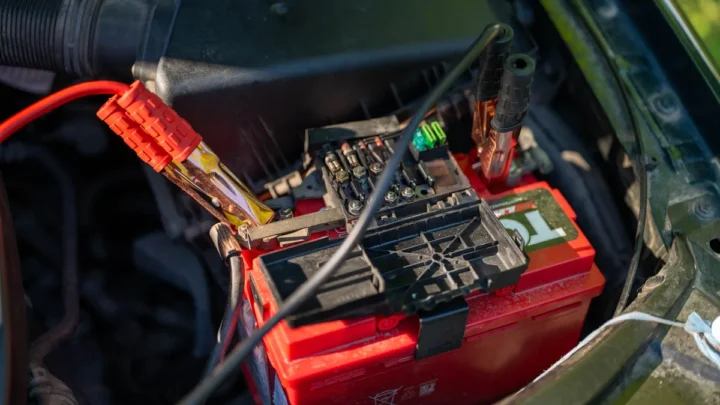
- Terminal corrosion. White, green, or blue crusty buildup on the posts blocks current flow. A corroded connection can mimic a dead battery perfectly. Clean it with a baking soda and water paste and a wire brush, then retest your symptoms.
- Loose clamps. Grab each terminal clamp (engine off) and try to wiggle it. Any movement at all can cause intermittent no-starts. Tighten it.
- A swollen or bulging case. This means heat damage or overcharging has warped the internals. If the sides look puffed out, the battery is done. Replace it.
- Cracks, leaks, or a rotten-egg smell. Any electrolyte leak or sulfur smell means replace it now. That smell is hydrogen sulfide, and it signals an internal failure.

Also glance at the date sticker on top or on the side. A code like "4/23" or "D23" tells you when it was made. If it's past five years old and acting up, testing is almost a formality.
How to run the headlight test in 60 seconds
This old-school check gives you a rough read on both the battery and the charging system:
- With the engine off, turn on the headlights for two minutes. Bright and steady is a good sign. Dim or fading fast suggests a weak battery.
- Now start the engine and watch the lights. If they noticeably brighten with the engine running, the alternator is charging.
- Rev the engine gently. If the lights surge brighter with revs, the alternator may be overcompensating for a weak battery or struggling at idle.
If the lights were dim before starting and the engine cranked slowly, you've got a solid case for a weak battery. Treat this as a screening test, though. It tells you something is off, but only a meter puts a number on it.
Testing With a Multimeter: The 5-Minute Method That Settles It
This is the definitive DIY method, and it's genuinely easy. A multimeter measures the battery's voltage directly, and voltage maps neatly to state of charge. If you're unsure what the dial settings mean, our guide to that DC voltage setting clears it up in two minutes.
Step 1: Kill the surface charge before you trust any reading
Here's the mistake that ruins most home battery tests. Right after driving, a battery holds a "surface charge" that reads artificially high, sometimes 12.8 volts or more on a battery that's actually failing.
Fix it one of two ways. Let the car sit for at least four hours (overnight is best). Or turn the headlights on for two minutes, switch them off, wait a minute, then test.
Skip this step and your numbers lie to you.
Step 2: Resting voltage, and what your number means
Follow these steps exactly:
- Set the multimeter to DC voltage, 20V range if it isn't auto-ranging.
- Touch the red probe to the positive (+) terminal.
- Touch the black probe to the negative (-) terminal.
- Read the display.
A healthy, fully charged flooded battery shows 12.6 volts or higher. At 12.4 volts you're at roughly 75 percent. At 12.2 volts you're at half, and the battery needs a charge today.
At 12.0 volts or below, the battery is deeply discharged, and there's a real chance it's sulfated and won't fully recover. We break down the full range of normal voltage readings if you want more context on what the electrical system expects.
Step 3: Cranking voltage, the test most people skip
Resting voltage tells you the state of charge. Cranking voltage tells you the state of health, and that's the question you actually care about.
Have a helper crank the engine while you watch the meter (keep probes on the terminals, hands clear of belts and fans). A good battery stays above 10.5 volts during cranking, per SAE-aligned testing practice. If the voltage plunges to 9 volts or below, the battery can't deliver current under load.
That's a failing battery even if it read 12.5 volts at rest.
Step 4: Running voltage, checking the alternator while you're there
With the engine running, test the terminals again. You should see 13.7 to 14.7 volts. That's the alternator charging the battery.
If you read under 13.5 volts running, the alternator isn't charging properly, and it may be the real villain behind your "bad battery." Over 15 volts means overcharging, which cooks batteries. Either way, that's a charging system repair, not a battery purchase. Understanding how the whole system works together makes it much easier to see why a healthy battery still dies when the alternator slacks off.
Write your three numbers down: resting, cranking, running. Those three readings, taken together, diagnose 90 percent of starting problems.
Car Battery Voltage Chart: Every Reading Decoded
Keep this chart handy. It converts any resting voltage reading into a state of charge and a clear next step.
| Resting Voltage | State of Charge | What to Do |
|---|---|---|
| 12.6V or higher | 100% | Healthy. No action needed. |
| 12.4V | ~75% | Fine, but worth a full charge soon. |
| 12.2V | ~50% | Charge it today. Investigate why it's low. |
| 12.0V | ~25% | Deeply discharged. Charge and retest. |
| 11.9V or below | Effectively dead | Charge fully. If it won't hold 12.4V+, replace. |
Remember the AGM adjustment from earlier. Add roughly 0.2 volts to each row for AGM designs, so full charge reads closer to 12.8 to 13.0 volts.
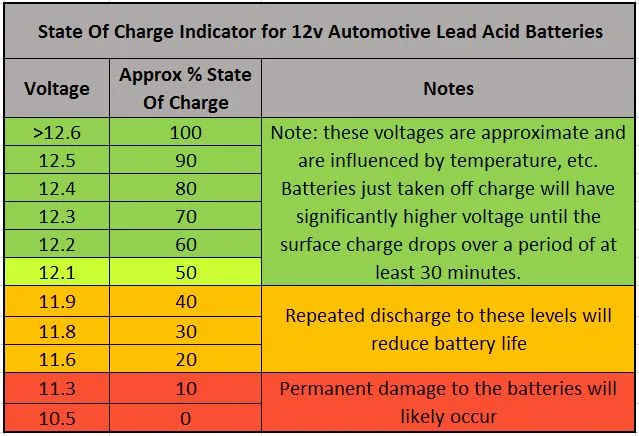
Two readings deserve extra attention. First, 12.4 volts sounds close to full, but a battery living at 75 percent charge sulfates faster and loses capacity month by month. Second, anything below 12.0 volts at rest has crossed into damage territory.
Lead-acid chemistry hates deep discharge, and each one below 11.9 volts permanently steals capacity.
Here's the cranking and running cheat sheet in one place:
| Test Condition | Good Range | Failing Sign |
|---|---|---|
| Resting (engine off 4+ hours) | 12.4 to 12.9V | Below 12.2V |
| Cranking | Above 10.5V | Dips to 9.0V or lower |
| Engine running | 13.7 to 14.7V | Below 13.5V or above 15V |
If you're second-guessing what the display is showing you, our primer on making sense of the readout walks through decimal points, ranges, and negative readings.
Why a "Good" Voltage Reading Can Still Mean a Bad Battery
A battery can read a perfect 12.6 volts and still leave you stranded tomorrow. This is the single most misunderstood fact in DIY battery testing.
Voltage measures state of charge, not state of health. Think of it like a fuel gauge on a tank that's been shrinking. The gauge says full, but "full" might now be a third of what the tank held when new.
The usual culprit is a weak or dying cell. A 12V battery contains six cells at roughly 2.1 volts each. One failing cell can still let the battery show a decent surface number at rest.
Then you ask it for 200 amps to spin the starter, and the voltage collapses.
Sulfation causes the same illusion. Hard lead-sulfate crystals build up on the plates in chronically undercharged batteries. The battery accepts a charge and shows good voltage, but the active plate area has shrunk.
Its cold cranking amps, the current it can deliver at 0°F, may have fallen far below the label rating. If that spec is fuzzy for you, here's what that cranking rating means in practice.
So here's the rule: if resting voltage looks fine but your symptoms scream weak battery, believe the symptoms. Move to a load test. Voltage screens, load tests diagnose.

Similar Posts