Porsche Mission S: The Electric Concept Explained
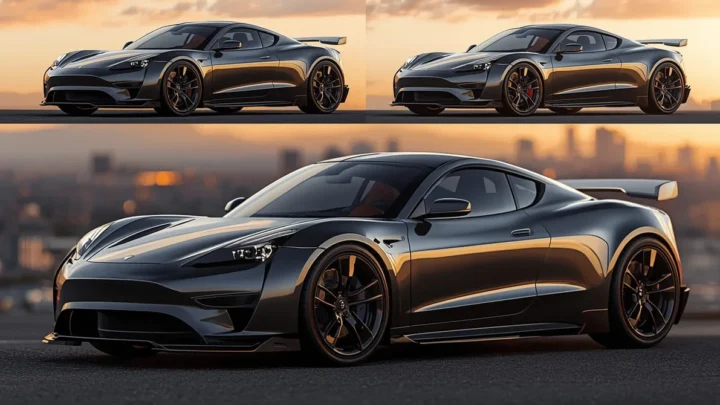
If you've searched for a porsche mission s, you've probably run into glossy renders and confident spec sheets that don't trace back to anything official. That's because there isn't one. As of 2026, Porsche has never announced a concept or production car under the Mission S name.
Porsche's actual Mission family runs E, E Cross Turismo, R, and X. The 2015 Mission E concept led straight to the Taycan, complete with its 800-volt architecture and roughly 350 kW DC charging claim. Once you can separate the real names from the invented ones, everything else falls into place quickly.
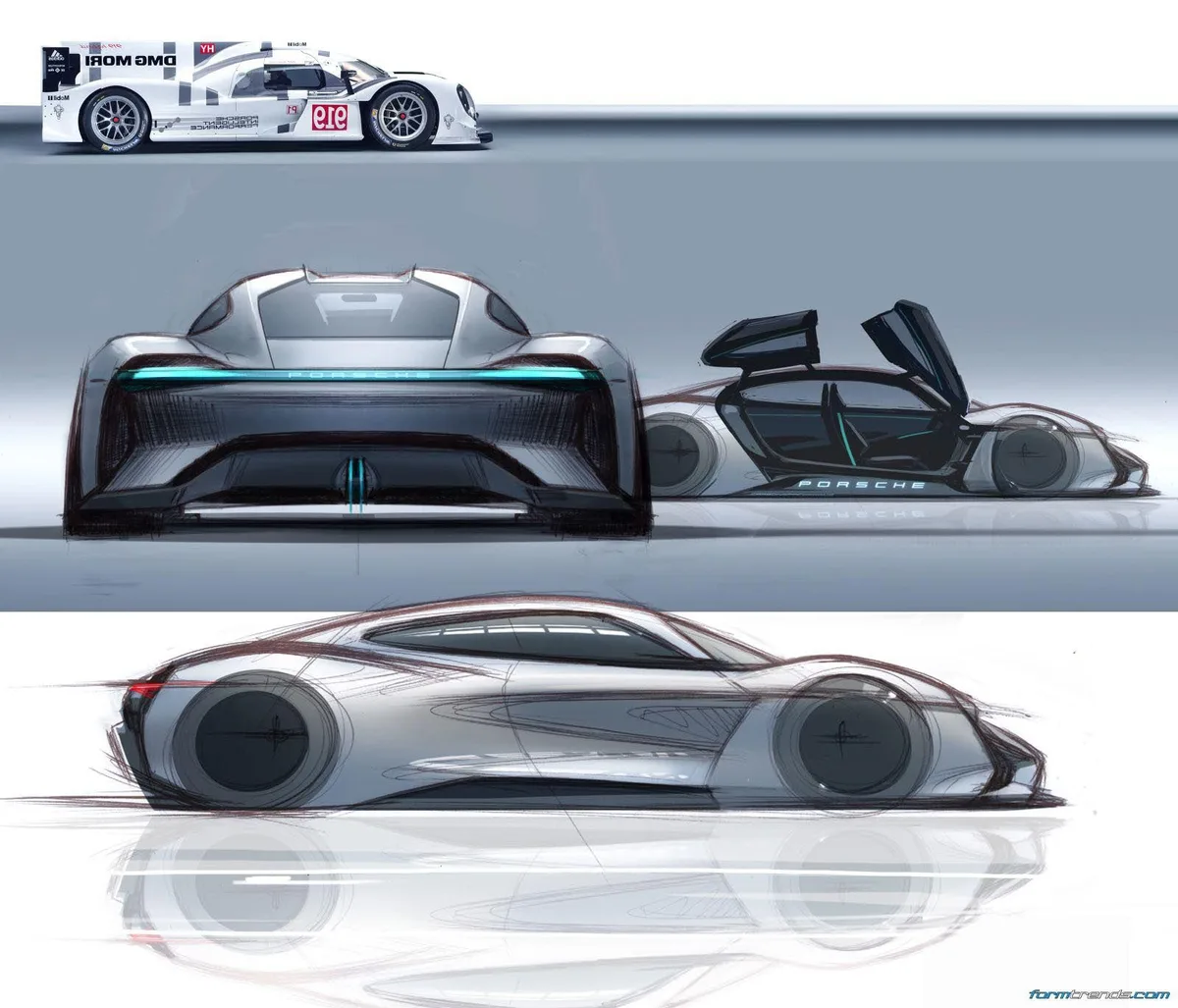
Image source: Web (Bing) / cl.pinterest.com (Web image (fair-use with source credit))
Quick Answer: Does the Porsche Mission S Actually Exist?
The Porsche Mission S is not a real Porsche model. Porsche has never confirmed any concept or production car with that name. The confusion usually comes from two places.
Mission E is the 2015 electric concept that became the Taycan. The trailing S is just a trim badge, as in Taycan Turbo S. Treat any Mission S spec sheet as unverified.
What Porsche Has Officially Confirmed
Porsche's confirmed Mission concepts are E (2015), E Cross Turismo (2018), R (2021), and X (2023). Only Mission E and its Cross Turismo sibling reached production, both as Taycan variants. Mission R stayed a racing study.
Mission X is a design concept Porsche has floated as a possible production hypercar, but nothing has been signed off. There's no Mission S release anywhere in Porsche's official newsroom.
Where Mission S Comes From, and Why It Spreads
The name is a mashup. Take Mission E, add the S trim that sits above base across almost every Porsche line, and you get something that sounds completely real. AI summaries and render accounts then fill in horsepower, price, and a launch year.
Those numbers get copied around, and the fiction hardens into something that looks thoroughly researched.
The Real Mission Family: E, R, and X Explained
Porsche reserves the Mission label for design and technology studies. Some graduate into showrooms years later. Most never do.
Here's what each confirmed concept actually was.
Mission E (2015): The One That Became the Taycan
The Mission E broke cover at the 2015 Frankfurt motor show as a four-door electric sedan. Porsche quoted roughly 600 hp (440 kW) from two permanent-magnet motors and about 500 km on the old NEDC cycle. The 800-volt system was the real headline.
Higher voltage means less current for the same power, so cables stay thinner and heat is easier to control. Porsche claimed a 15-minute charge to 80%. Production arrived in 2019 as the Taycan, and the core technology survived the trip.
That durability-first mindset shapes modern drivetrain longevity, whichever fuel source you use.
Mission E Cross Turismo (2018): The Crossover Branch
This one is easy to forget. Porsche showed a lifted, shooting-brake take on Mission E at Geneva in 2018, with more ride height, all-wheel drive, and off-road drive modes. Production became the Taycan Cross Turismo and Sport Turismo.
Same 800-volt bones, taller body, more rear headroom.
Mission R (2021): Porsche's Electric Race Lab
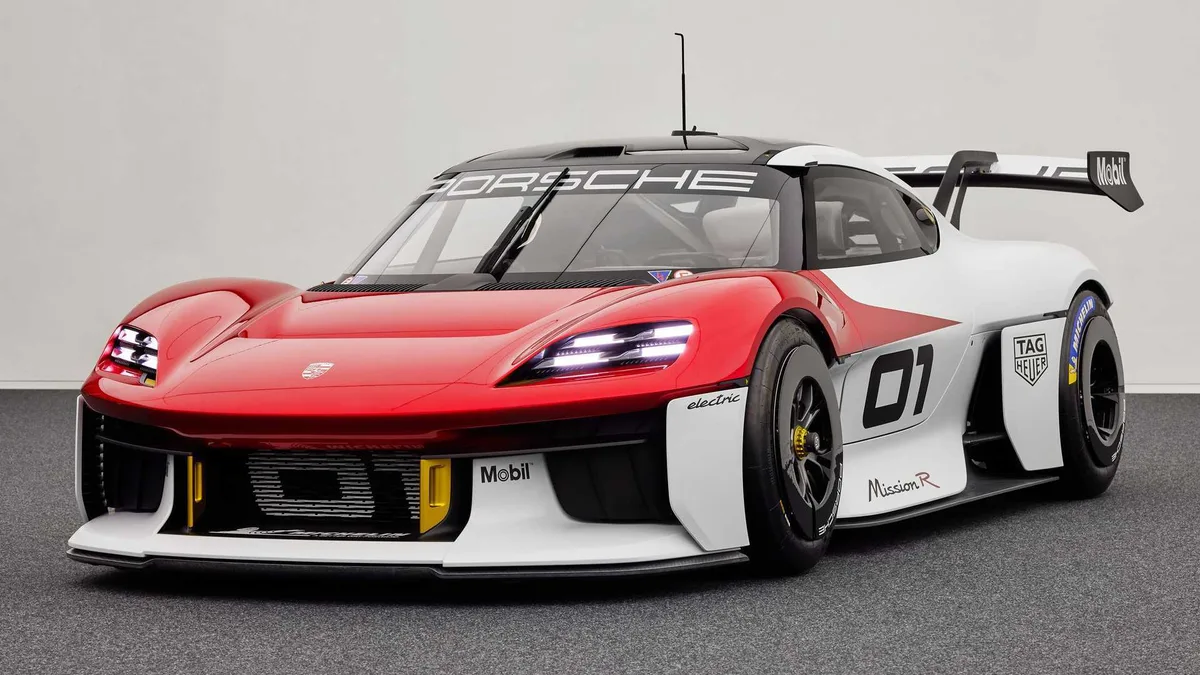
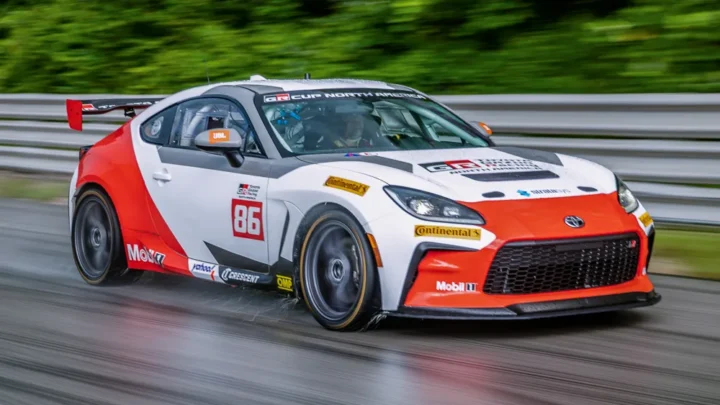
Image source: Web (Bing) / uk.motor1.com (Web image (fair-use with source credit))
The Mission R is a pure racing study, not a road car. Porsche quoted up to 1,073 hp in qualifying mode from a roughly 80 kWh battery running at 900 volts. Sprint runs lasted 30 to 45 minutes.
The whole point was testing thermal management under sustained load, which is exactly where most fast EVs fall apart. Much of that learning is feeding the upcoming electric 718.
Mission X (2023): The Hypercar Maybe
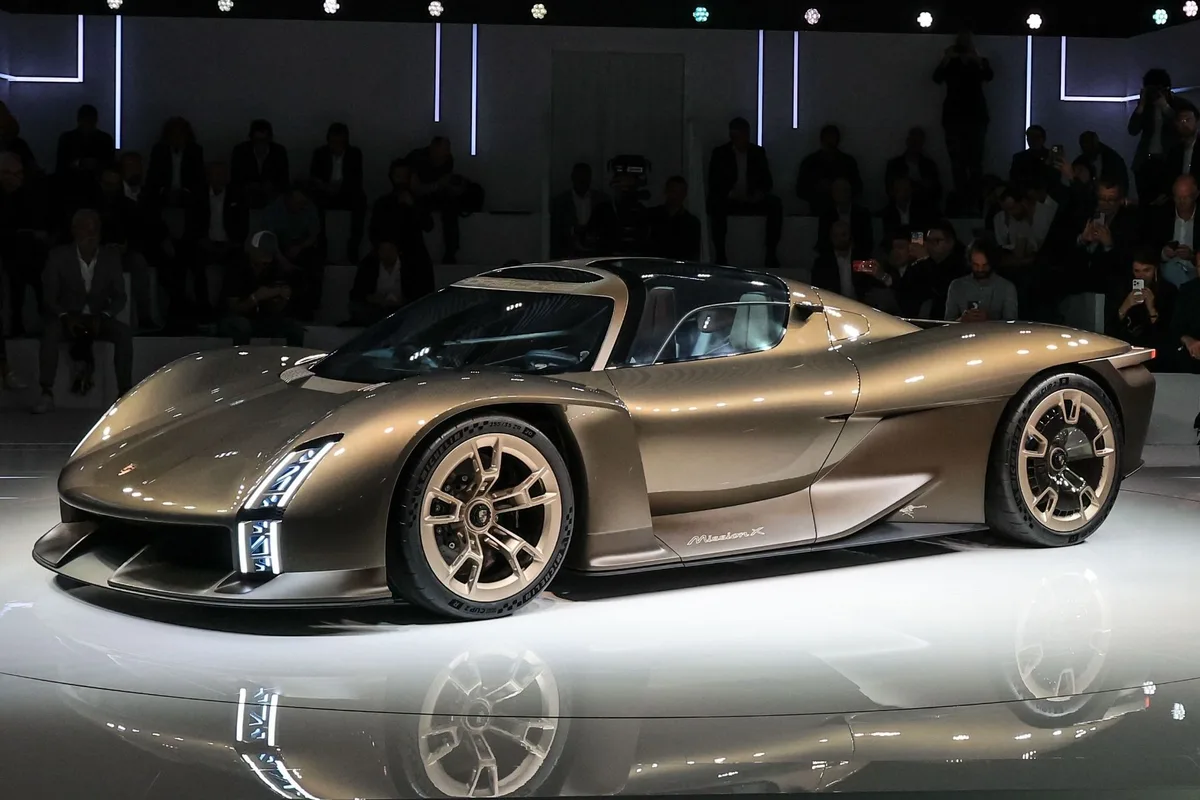
Image source: Bing (Web (fair-use with source credit))
Mission X is the one people still ask about. Porsche revealed it at Monterey Car Week in 2023 as a mid-engine electric hypercar study. Targets included roughly one PS per kilogram and downforce beyond a 911 GT3 RS.
Porsche has called it a possible successor to the 918 Spyder, but no production date exists.
The S Badge Is a Trim, Not a Model
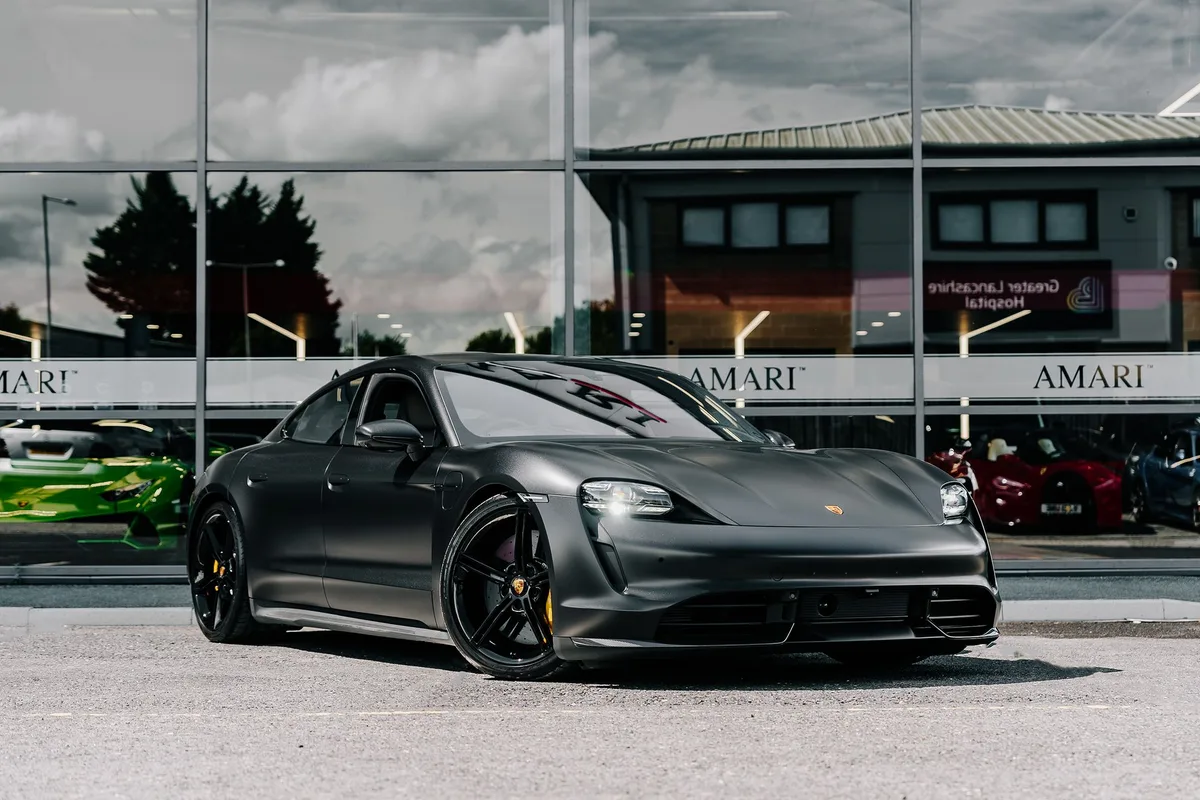
Image source: Web (Bing) / amarisupercars.com (Web image (fair-use with source credit))
Porsche has used S as a performance trim for decades. It sits above the base car and below GTS, Turbo, and GT variants. On the Taycan, the ladder runs base, 4S, Turbo, Turbo S, and Turbo GT.
That's why Mission S reads as plausible. It borrows Mission from the concepts and S from the badge.
Mission Concepts vs Production Porsches: Side-by-Side
Concepts sell ideas. Production cars sell in dealerships. That gap is where nearly all Mission S confusion lives.
| Concept | Revealed | Status | Production Result |
|---|---|---|---|
| Mission E | 2015 | Built | Taycan (2019) |
| Mission E Cross Turismo | 2018 | Built | Taycan Cross Turismo, Sport Turismo |
| Mission R | 2021 | Study only | None; tech feeds 718 Electric |
| Mission X | 2023 | Concept | Not confirmed |
| Mission S | Never announced | Does not exist | None |
Concept Numbers vs Real Numbers
Manufacturer figures for concepts come from ideal conditions. The Mission E's 500 km NEDC range would land closer to 320 to 350 km under modern WLTP testing, and less again on a cold motorway run. That's not Porsche being dishonest.
NEDC was simply a looser test than what replaced it.
Why the Gap Matters to Buyers
If you're shopping for a real car, judge it on production specs and independent testing. Concepts preview design language and technology. They aren't purchase decisions.
Anyone comparing a concept render against a used listing is comparing two different things, and the same caution applies when you're weighing higher-mileage examples of any performance car.
Which One Actually Matters to You?
Different readers want different things here. Here's the short version for each situation.
If You Want to Buy a Car This Year
Look at the Taycan, not the concepts. You can order one, finance one, and take delivery. Mission X won't be sitting in a showroom you can visit any time soon.
And if you keep a combustion Porsche alongside it, the first 1,500 km still matter, so follow a sensible break-in routine on anything new or rebuilt.
If You're Tracking What's Coming Next
Watch the 718 Electric and any official word on Mission X. Porsche's annual and quarterly reports are the best early signal for production plans. Concept reveals cluster around Monterey Car Week and IAA Munich, and search interest spikes right after those events.
If You Just Want the Facts Straight
Run three checks before you believe anything. Visit the Porsche newsroom. Search the official configurator for the model name.
Then look for a VIN or a genuine listing. If a Mission S story fails all three, it's speculation dressed up as reporting. Owners running older cars should also keep an eye on lubrication choices and short-hop driving habits, since both decide how long an engine really lasts.
Specs, Prices, and Timelines Worth Trusting
Here's what we can stand behind, separated from what circulates online.
Concept Targets vs Production Reality
| Item | Concept Claim | Production Reality |
|---|---|---|
| Mission E power | ~600 hp | Taycan launched at 402 to 751 hp |
| Mission E range | 500 km NEDC | Roughly 333 to 450 km WLTP |
| Mission E charging | 15 min to 80% | About 22.5 min at 270 kW peak |
| Mission X ratio | ~1 PS per kg | Not confirmed |
| Mission S | Not applicable | Does not exist |
Charging: 800V vs 900V in Practice
The 800-volt Taycan charges at up to 320 kW on the current facelifted car. That only helps if you find a 350 kW stall and precondition the battery first. Mission R and Mission X run 900 volts.
Porsche says Mission X charges roughly twice as fast as a Taycan, though that remains a target rather than a measured figure.
Pricing and Timelines
As of 2026, Taycan pricing starts well into six figures in most markets and climbs steeply with trim. Mission X pricing hasn't been announced. Any Mission S price you see is invented.
For real efficiency numbers, check EPA fuel economy data rather than concept press materials, since the test procedures simply aren't the same.
Mistakes to Avoid When Researching Any Porsche Mission Model
The biggest mistake is treating a polished render as evidence. Anyone can mock up a badge and a body kit onto an existing Porsche shape. AI tools will then happily wrap a spec sheet around it.
Believing Numbers With No Traceable Source
If a power figure or a price doesn't come back to Porsche itself, it's a guess. Our research kept finding the same invented Mission S specs copied across dozens of pages, none citing a press release. Verify at the source, then cross-check against a second one.
Assuming Every Concept Becomes a Car
Most design studies never reach production. Mission E and its Cross Turismo sibling made it. Mission R didn't, and its tech went into racing instead.
Mission X still hangs in the balance. That's a rough two-in-four hit rate, which is normal for the industry.
Confusing Trim Badges With Model Names
S, 4S, GTS, and Turbo S are trims. They attach to a model, they don't replace it. So "Mission S" would describe a Mission-based car in S tune.
No such car exists in any Porsche catalogue.
Using Concept Range Claims as Benchmarks
A 500 km NEDC figure from 2015 tells you nothing about a car you'd buy in 2026. Test cycles changed. So did battery chemistry and thermal management.
Compare new against new, and weigh a used car on its odometer reading rather than a decade-old press kit. Concept numbers are useful for tracking direction over time, which is also how you'd sensibly judge how far a drivetrain will go.
Treating Fan Tables as Official Comparisons
A tidy table comparing concept output to a production figure looks authoritative. It usually isn't. Most have no methodology behind them at all.
If a comparison doesn't name its source and test standard, file it as entertainment.

Similar Posts