Tesla Roadster: The Electric Supercar Revolution
If you go looking for a Tesla Roadster today, you'll hit the same wall most buyers do. Two completely different cars wear that badge, and plenty of spec sheets online blend them into one. One is a lightweight Lotus-based two-seater you can actually buy used.
The other is a tri-motor hypercar Tesla has been promising since 2017.
The numbers make the split obvious. Tesla claims the second-generation car will reach 60 mph in 1.9 seconds with a 200 kWh pack and 620 miles of range. The original squeezed 244 EPA-rated miles from a 53 kWh battery and weighed about 2,723 pounds.
Knowing which car you're actually reading about changes everything, so let's start there.
Quick Answer
The Tesla Roadster is two very different cars sharing one name. The original ran from 2008 to 2012. About 2,450 were built.
The second generation was revealed in 2017. Tesla has not delivered one to a customer yet. Claimed specs include 1.9-second acceleration and 620 miles of range.
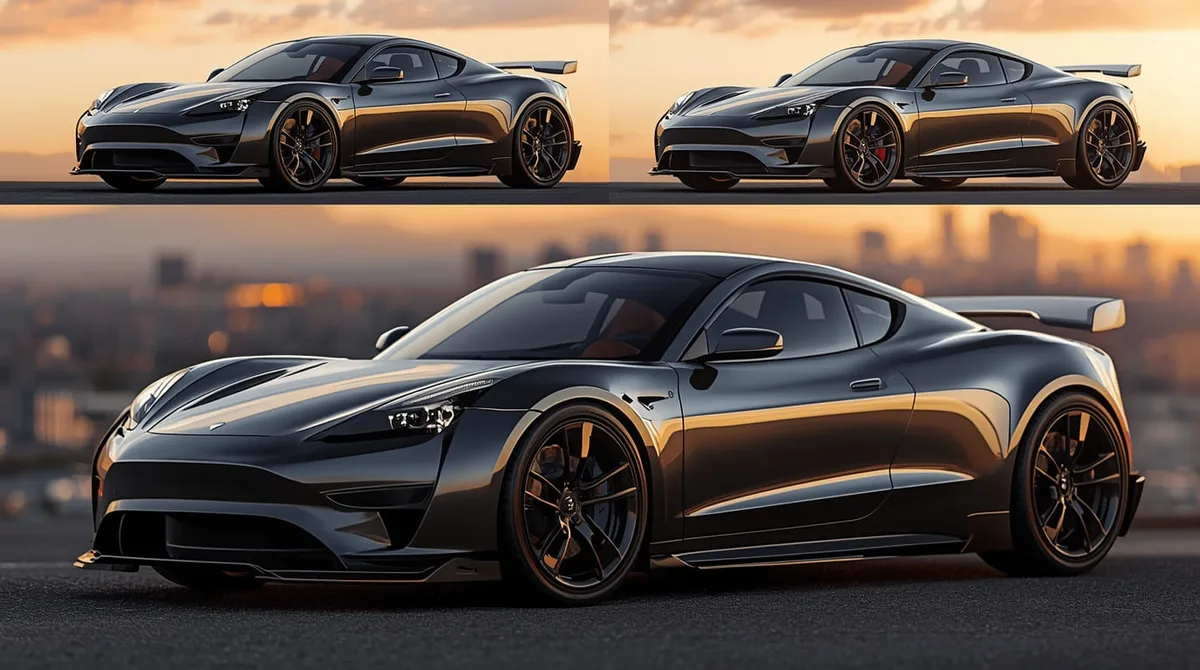
Image source: Web (Bing) / primaryignition.com (Web image (fair-use with source credit))
Tesla Roadster Generations: What the 2008 Original and the Second-Gen Hypercar Actually Are
Tesla has used the Roadster name twice on cars that share almost nothing. Same badge, same two-door shape, different decade, different engineering, and a very different buyer.
The original car: Lotus bones and a real production run
The first Roadster arrived in 2008 and ran through 2012. Tesla built it on a Lotus Elise chassis, with rolling shells assembled by Lotus in Hethel, England, and final assembly in Menlo Park, California. Around 2,450 cars were sold worldwide.
Power came from an AC induction motor driving the rear wheels through a single-speed gearbox. The base car produced 185 kW. The Roadster Sport raised that to 215 kW, roughly 288 horsepower.
The later 2.5 trim cleaned up the cabin and bodywork.
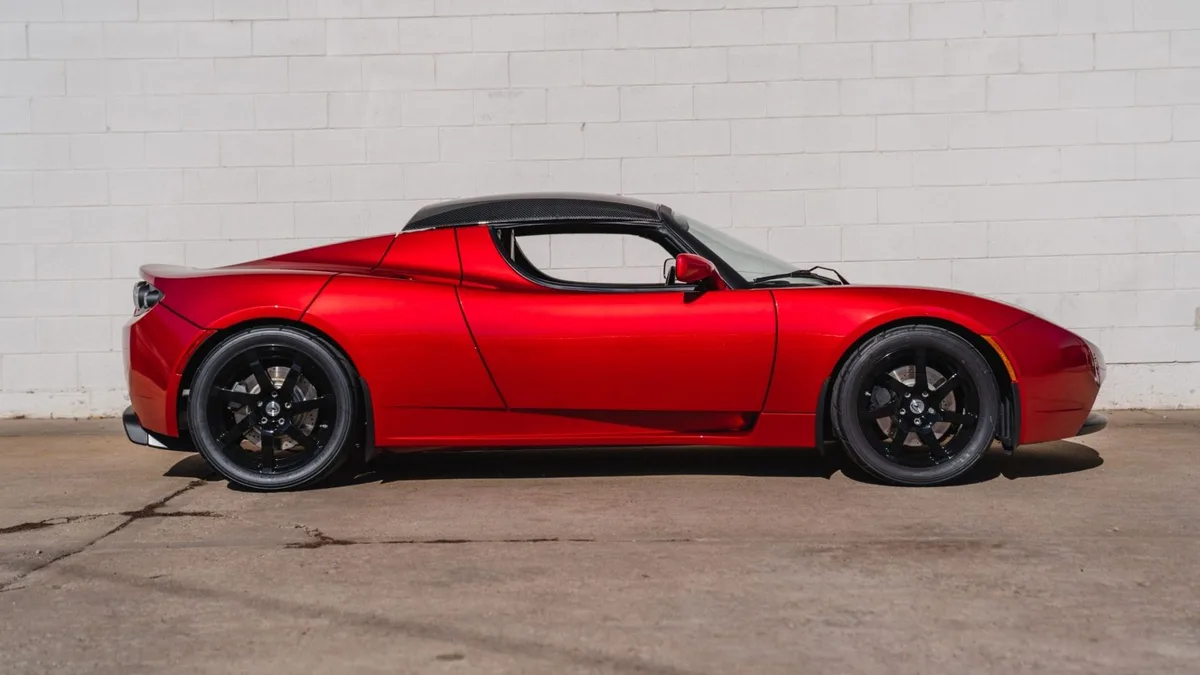
Image source: Web (Bing) / topspeed.com (Web image (fair-use with source credit))
It was a strict two-seater with a trunk barely big enough for a weekend bag. Tesla later offered a 3.0 battery upgrade that pushed real-world range toward 340 miles. Owners report it changed the car completely, though Tesla no longer sells the kit new.
The second-generation car: shown in 2017, still undelivered
Tesla unveiled the second-generation Roadster in November 2017. The pitch was a 200 kWh pack, three motors, all-wheel drive, and a 2+2 layout. Base price was announced at $200,000, with a $250,000 Founders Series above it.
Reservations opened at $50,000 for the base car. Every production target since, from 2020 through 2025, has slipped. As of 2026, no customer has taken delivery.
Side-by-Side: Tesla Roadster Specs, Pricing, and Reservation Terms
Putting both cars in one table is the fastest way to see how little they overlap.
| Item | Original (2008 to 2012) | Second generation |
|---|---|---|
| Layout | Two seats, rear-wheel drive | 2+2, tri-motor all-wheel drive |
| Battery | 53 kWh (about 70 kWh with 3.0 upgrade) | 200 kWh claimed |
| Range | 244 EPA miles | 620 miles claimed |
| 0 to 60 mph | 3.7 to 3.9 seconds | 1.9 seconds claimed |
| Top speed | 125 mph | 250+ mph claimed |
| Price when new | Around $109,000 | $200,000 base |
| Availability | Used market only | Not delivered as of 2026 |
Claimed numbers versus verified ones
This is where most write-ups go wrong. The 620-mile range and 1.9-second sprint are Tesla claims, not independently certified figures. No second-generation Roadster has been through EPA testing, so there's no official rating to check against.
By contrast, the original car's 244-mile figure came from a 2008 EPA test cycle. That older cycle was more generous than today's, so early Roadsters rarely matched it in daily driving. You can compare real-world numbers yourself using the official EPA fuel economy data.
What your $50,000 deposit actually does
Reserving a second-generation Roadster means placing a $50,000 deposit. Tesla frames it as a reservation rather than a purchase, and the Founders Series asked for the full $250,000 upfront. Refund terms have shifted over the years, so read the current agreement before you pay.
If you're buying used instead, decoding a VIN is the quickest way to confirm which trim you're actually looking at.
Head-to-Head: Tesla Roadster vs Model S Plaid, Rimac Nevera, Lucid Air Sapphire, and Other Fast EVs
Comparisons only get useful once you know what you're comparing. A promised $200,000 hypercar and a used original Roadster live in completely different conversations.
Electric rivals worth cross-shopping
- Tesla Model S Plaid: around 1,020 hp, sub-2-second runs in independent testing, four doors, available now.
- Lucid Air Sapphire: over 1,200 hp, 400-plus miles of range, genuine luxury sedan packaging.
- Rimac Nevera: roughly 1,900 hp, 1.85-second 0 to 60, seven-figure price, tiny production run.
- Pininfarina Battista and Lotus Evija: similar hypercar territory and similar money.
- Porsche Taycan Turbo S: repeatable launch performance instead of one heroic run.
- Polestar 6 and MG Cyberster: cheaper electric roadsters arriving sooner.
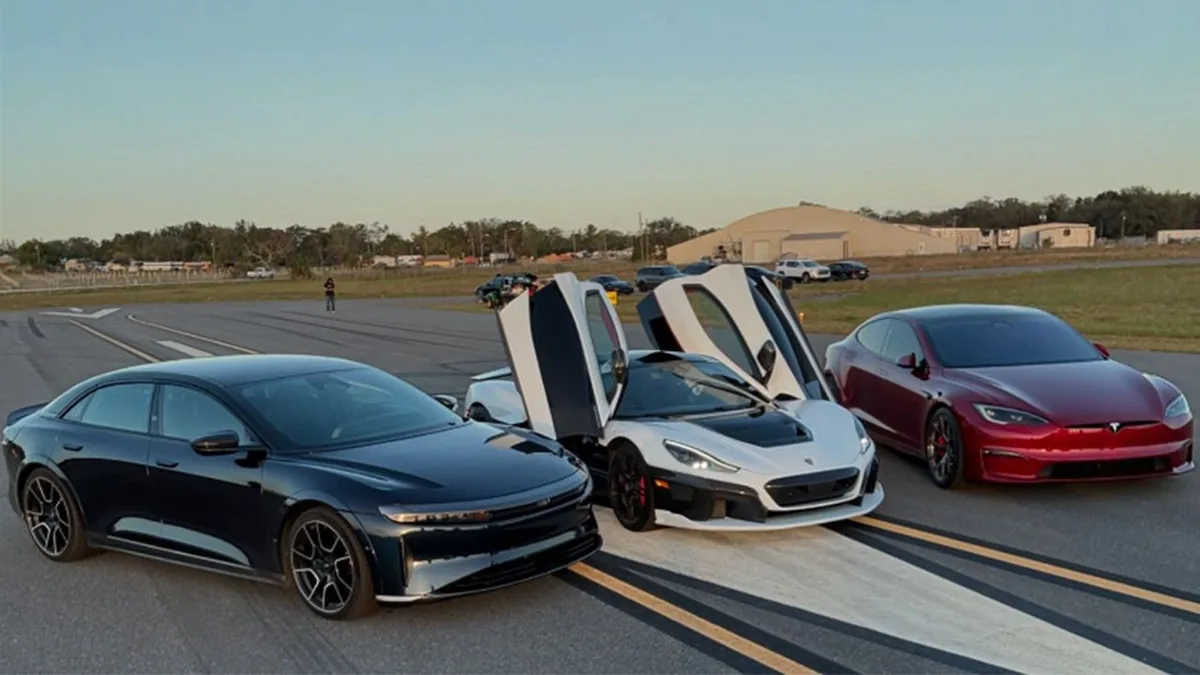
Image source: Bing (Web (fair-use with source credit))
Gas and hybrid alternatives
- Porsche 911 Turbo S: proven reliability and a real dealer network at similar real-world pace.
- Chevrolet Corvette E-Ray: hybrid all-wheel drive for a fraction of the money.
- Ferrari SF90 and Lamborghini Revuelto: hybrid hypercars with sound and factory support.
Where the Roadster actually wins
The original wins on one thing nothing else matches. It's the car that started the modern EV era, and that history carries real collector weight.
The second-generation car currently wins on paper only. If Tesla delivers even 80 percent of the claimed numbers, it undercuts every hypercar on price per unit of performance.
The longest-lived designs in motoring tend to be the ones with proven service networks behind them. That's the piece Tesla still has to prove.
Owning an Original Roadster: Battery Degradation, PEM Failures, and Real Service Costs
Owning an early Roadster isn't like owning a modern Tesla. There's no bumper-to-bumper warranty, no mobile service van, and the factory parts supply has thinned out. Independent specialists now carry much of the load.
The failure points that bite
- Battery pack degradation: capacity falls steadily with age, and replacement packs are expensive.
- Power Electronics Module (PEM): water ingress and component fatigue are recurring complaints.
- HVAC and cabin blower failures.
- Suspension bushings and alignment drift.
- The 2022 shutdown of 3G networks, which killed app connectivity on most early cars.
- Parts scarcity, especially trim and body panels tied to the Lotus Elise.
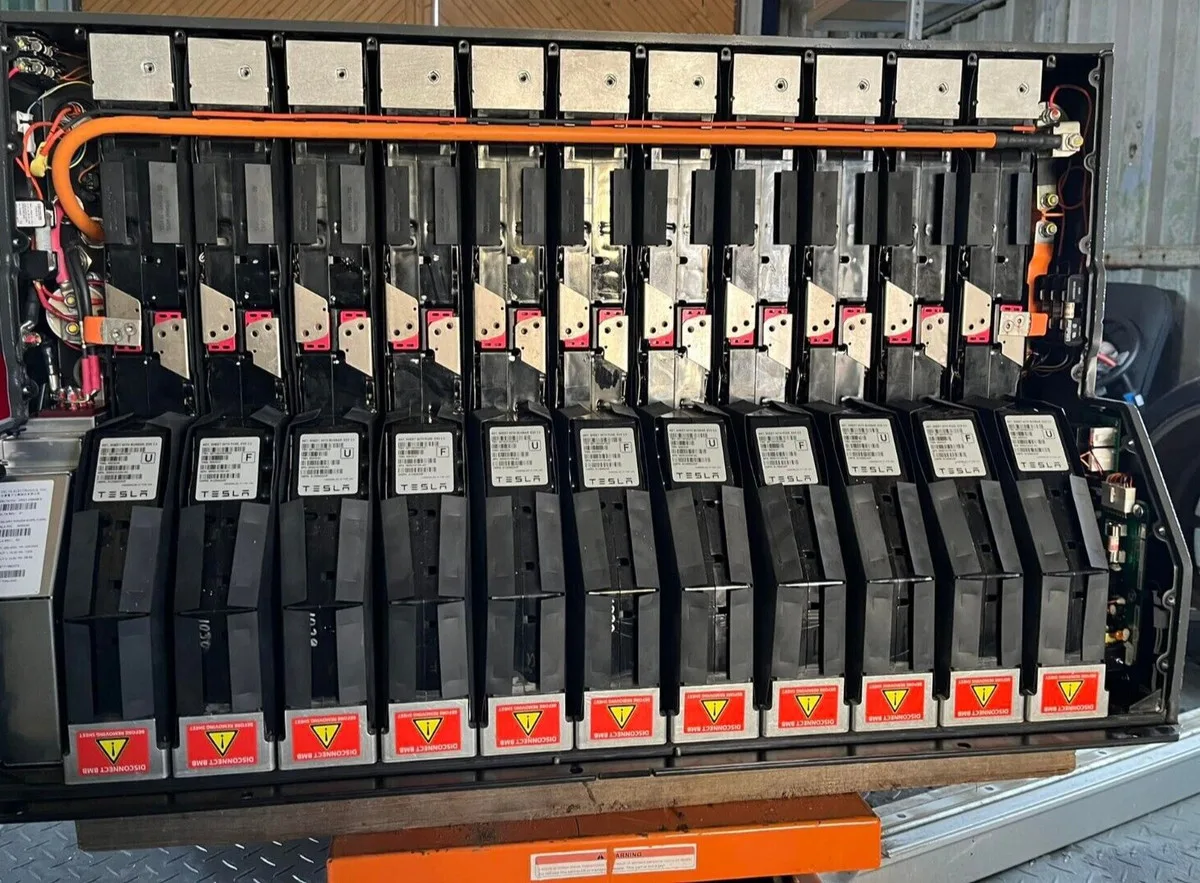
Image source: Web (Bing) / ar.inspiredpencil.com (Web image (fair-use with source credit))
Charging reality check
The original Roadster cannot use the Tesla Supercharger network. It charges through a 240-volt connector or a Roadster High Power Connector, which fills the pack in hours rather than minutes. That single limitation surprises nearly every first-time buyer.
Running costs and long-term value
Battery replacement is the big-ticket item. Owners report quotes in the $30,000 range for a fresh pack, which is close to what some early cars sell for outright. Checking NHTSA recall records before you buy takes ten minutes and can save you thousands.
Tires, brakes, and suspension work cost more than you'd expect, because the car is light, fast, and parts are scarce. Routine servicing, though, is minimal next to a combustion sports car.
If you're weighing any high-mileage car, it helps to know how long a drivetrain holds up. And a tired high-miler can still be a smart buy, provided the big systems check out.
Who Each Roadster Is Right For and the Final Verdict
Simple if/then logic settles this one. The right car depends almost entirely on what you actually want from it.
Buy the original if
- You want a genuine piece of EV history with collector upside.
- You're comfortable with specialist maintenance and scarce parts.
- You want something light, analog, and under 3,000 pounds.
- You don't need fast charging.
Reserve the second generation if
- You're fine with a large deposit sitting idle for years.
- You want maximum straight-line performance and can wait.
- You accept that specs, price, and timing may still change.
Skip both if
- You want a fast EV you can buy this month. A Model S Plaid or Lucid Air Sapphire delivers today.
- You need four seats, a warranty, and a nationwide service network.
The verdict
For most readers, the second-generation Roadster is a bet, not a purchase. The original is a real car you can inspect, drive, and take home this weekend.
That's why knowing when trouble usually starts matters on a used EV just as much as on a combustion car. Stretching out its working life comes down to the same basics: careful charging, timely service, and an honest pre-purchase inspection.
Mistakes to Avoid Before You Reserve or Buy
Most Roadster regrets come from a short list of assumptions. Fix those and the decision gets far simpler.
Treating announced specs as certified numbers
Tesla's 1.9-second sprint and 620-mile range are targets, not measured results. No independent body has verified either figure, and the EPA has never rated the car. Budget for real numbers landing lower than the headline claims.
Assuming your deposit is refundable forever
Reservation terms have changed several times since 2017. Read the current agreement before you send $50,000. That money earns nothing while faster EVs keep getting cheaper.
Expecting Supercharger access on an original car
The 2008 to 2012 Roadster can't use Tesla's fast-charging network. It charges from a 240-volt supply or the Roadster High Power Connector. Think overnight charging, not road-trip top-ups.
Skipping the dull checks on a used example
Pull the recall history first. Ask for battery health data in writing. Service records tell you more about a drivetrain's realistic lifespan than the dash display ever will.
Hard use shortens mechanical life, and that applies to packs and motors as much as pistons. Don't dismiss a well-used example just because the odometer reads high. Battery care follows the same logic as keeping a car alive longer: skip deep discharges, avoid storing it empty, and charge gently.
Run these checks before you sign anything:
- Verify pack state of health, not the range estimate.
- Confirm the trim, since Sport and 2.5 cars hold more value.
- Check whether the connectivity module still works.
- Ask which body and trim parts Tesla still stocks.
- Get an insurance quote before you commit.
Tesla Roadster FAQs
When will the second-generation Tesla Roadster go on sale?
Tesla hasn't confirmed a firm date. Production targets have slipped repeatedly since the 2017 reveal, and as of 2026 no customer car has been delivered. Treat any specific launch year you see online as speculation until Tesla says otherwise.
Is the SpaceX package street legal?
Nobody knows yet. Cold gas thrusters aren't covered by existing US safety standards, and no production car has passed federal testing with them fitted. Expect track-only use or heavy restrictions, and check local rules before you count on them.
How much does a used original Roadster cost?
Prices vary widely. Rough, high-mileage cars start near $70,000, while clean Sport and 2.5 examples with a fresh pack climb past $150,000. Battery condition drives the spread more than mileage does.
Checking a car's VIN confirms the trim before you negotiate, and it's worth asking when trouble typically starts on the pack.
Can the original Roadster use Superchargers?
No. The original Roadster isn't compatible with Tesla's Supercharger network. It charges from a 240-volt outlet, a J1772 adapter, or the Roadster High Power Connector.
A full charge takes hours, so plan around home charging instead of long-distance road trips.
Will the Roadster hold its value?
The original already has. Low production, genuine history, and rising collector interest have pushed clean cars up at auction. The second generation is an unknown, since none have sold yet.
Buy either car for enjoyment first and investment second.

Similar Posts