What Is an AGM Battery? How It Works & Benefits
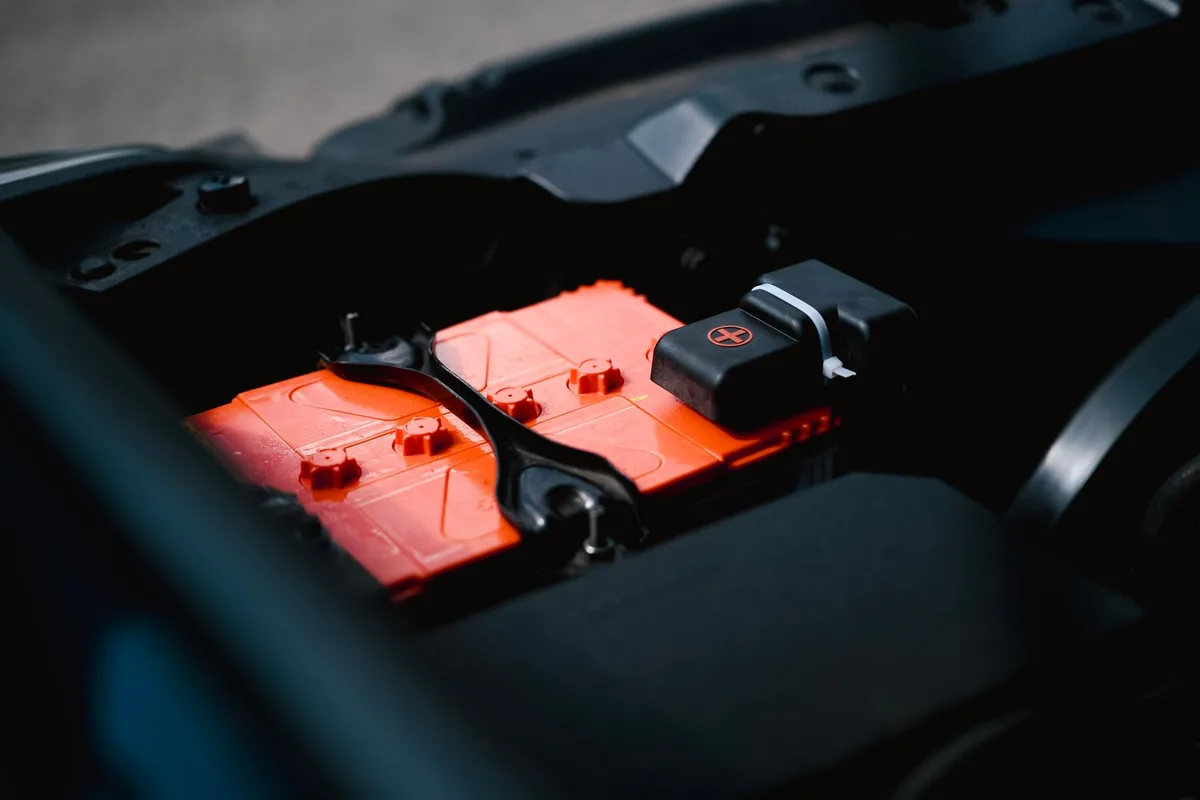
If you've popped the hood and spotted a battery stamped "AGM," you're probably wondering why it costs more than the plain one next to it. So what is an AGM battery? It's a sealed, maintenance-free lead-acid battery that soaks its acid into fiberglass mats instead of letting it slosh around as liquid.
That single design change affects how it charges, where you can mount it, and how much you'll pay.
AGM stands for Absorbed Glass Mat, and it's one branch of the Valve-Regulated Lead-Acid (VRLA) family. Manufacturer specs show most automotive AGM units last 4 to 7 years and run roughly $150 to $350 as of 2026. Whether that premium earns its keep depends almost entirely on your vehicle.
Let's start with what the name actually means.
Quick Answer
An AGM battery is a sealed lead-acid battery that stores its acid in glass mats. AGM stands for Absorbed Glass Mat. The mats hold the electrolyte against the plates, so nothing spills.
This makes it spill-proof, maintenance-free, and safe to mount at angles. AGM handles deep cycling and vibration better than a standard flooded battery.
What an AGM Battery Actually Is (and What "Absorbed Glass Mat" Means)
An AGM battery is still a lead-acid battery at heart. It uses the same lead plates and sulfuric acid chemistry that's powered cars for over a century. The difference is where the acid lives.
In a normal battery, the acid is a free liquid. In an AGM, thin fiberglass mats sit between the plates and soak up every drop. Think of a sponge holding water instead of an open cup.
The acid stays put even if you tip the battery on its side.
That absorbed acid is the whole trick. It sits in direct contact with the lead plates, which lowers internal resistance and lets the battery push out current fast. It also means the case can be sealed tight.
No caps, no topping up with distilled water, no acid fumes venting into your trunk.
You'll also see AGM sold under a few other labels. Manufacturers call them sealed lead-acid (SLA), VRLA, or maintenance-free batteries. They're all describing the same sealed, valve-regulated design.
Why the AGM vs. Everything-Else Question Even Matters
Here's the thing. Most people don't search for AGM because they're curious about glass mats. They're trying to decide whether to buy one.
Get it wrong in either direction and it costs you. Put a cheap flooded battery in a start-stop car and it'll wear out in a year or two. Put a pricey AGM in a basic commuter that doesn't need one and you've spent double for no real benefit.
The stakes get higher because AGM is fussier about charging. Feed it the wrong voltage and you can cook it early. That's a very different personality from the old battery you could half-ignore.
If you've ever watched your dashboard voltage sag at ignition, you already know how sensitive starting systems can be to a weak or mismatched battery.
So this isn't trivia. It's a real fork in the road, and the right answer changes based on what you drive and how you use it.
How an AGM Battery Works Under the Hood
An AGM battery works by trapping its acid in glass mats and recycling the gases it makes while charging. That combo is what makes it sealed and maintenance-free. Let's break the two halves apart.
The Glass Mat, the Sealed Design, and the Recombination Cycle
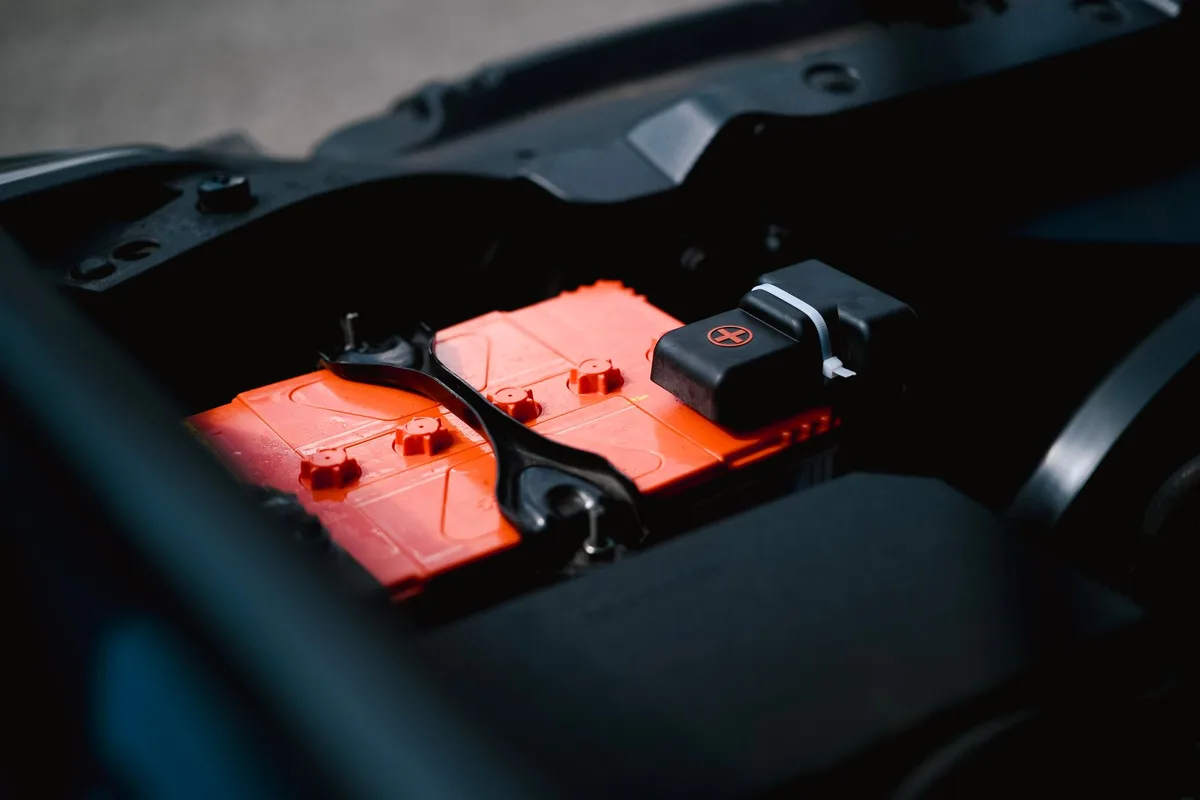
Inside the case, layers stack up in order: lead plate, glass mat, lead plate, glass mat. The mats are packed with acid and pressed firmly against the plates. This tight contact is why AGM delivers strong bursts of current on demand.
When any lead-acid battery charges, it produces oxygen and hydrogen gas. A flooded battery just vents that gas and loses water over time. An AGM does something smarter.
The oxygen travels through the mat and recombines with hydrogen at the negative plate, turning back into water. That's the recombination cycle. It's why the battery never needs a refill.
A one-way pressure valve sits on top as a safety backstop. If pressure ever climbs too high, it releases a little gas, then reseals.
Why It's Called Maintenance-Free and Non-Spillable
Because the acid is locked in the mats, there's nothing to spill and nothing to top off. You can bolt an AGM upright, on its side, or in a sealed box inside the cabin. Flooded batteries can't do that safely.
Non-spillable also carries a legal meaning. AGM units meet transport rules that let them ship by air and ground with far fewer restrictions than liquid-filled batteries.
AGM vs. Flooded, Gel, EFB, and Lithium: The Side-by-Side
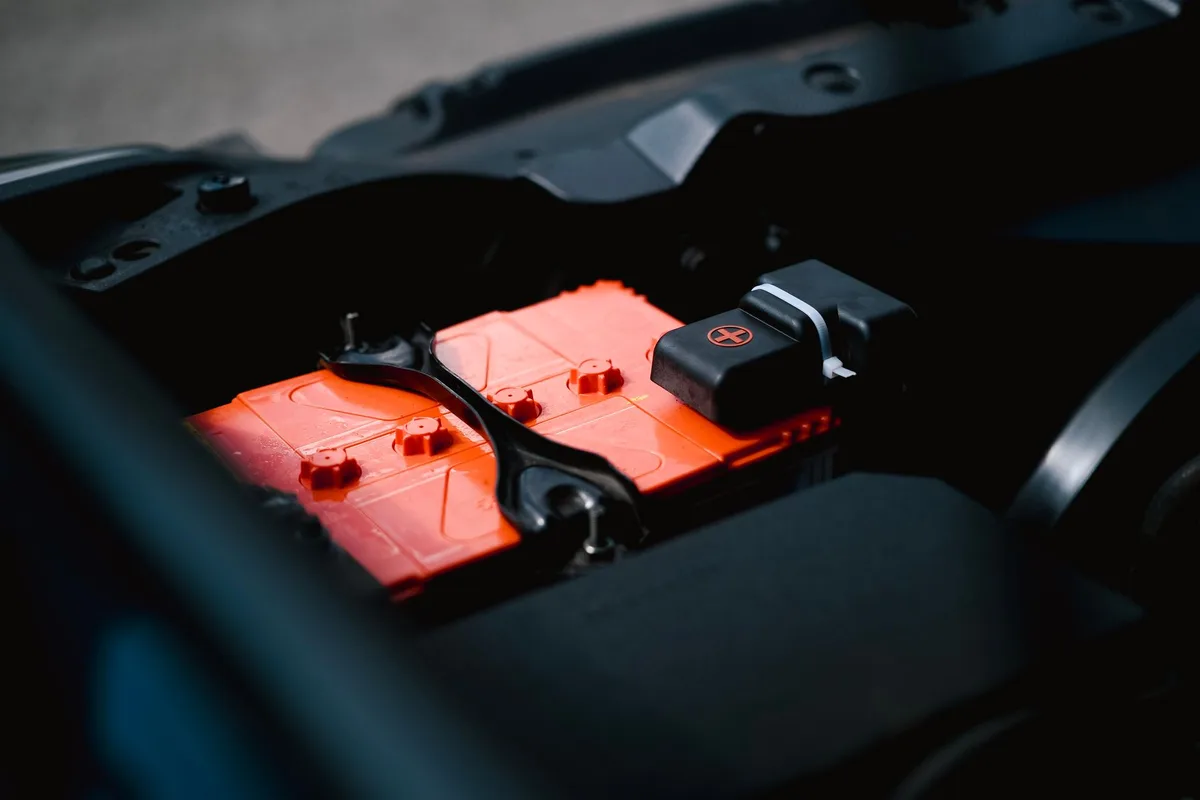
Picking a battery type comes down to matching the technology to your driving. Each option below wins for a different kind of owner. Here's the quick scorecard, then the details.
| Battery type | Upfront cost | Lifespan | Best for |
|---|---|---|---|
| Flooded (wet cell) | Lowest | 3 to 5 years | Basic cars, older vehicles |
| EFB | Low to mid | 4 to 6 years | Entry-level start-stop cars |
| AGM | Mid to high | 4 to 7 years | Start-stop, heavy accessories, deep cycling |
| Gel | High | 5 to 8 years | Slow deep-discharge, some solar |
| Lithium (LiFePO4) | Highest | 8 to 15 years | Weight-critical, heavy cycling |
AGM vs. Flooded (Wet Cell) Lead-Acid
Flooded is the classic battery with liquid acid inside. It's cheap, proven, and fine for a plain car that just cranks the engine and runs the lights. Its downsides are water loss, weaker deep-cycle stamina, and the risk of spills.
AGM costs more but charges faster, resists vibration, and survives repeated deep discharges. If your car has start-stop or a stack of electronics, AGM is usually the OEM-specified choice. For a basic runabout, flooded still makes sense.
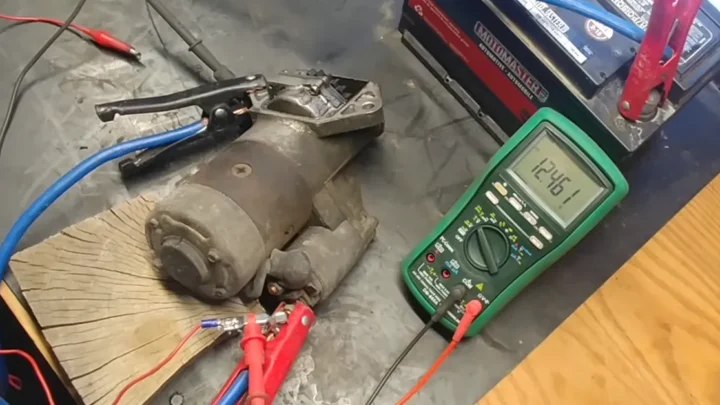
Either way, checking whether a reading near 12.4 volts is healthy works the same for both.
AGM vs. Gel and EFB
Gel batteries also seal their acid, but as a thick gel instead of a mat. Gel handles slow, deep discharges well, yet it charges slower and hates high current. That makes it niche for certain solar and mobility uses, not a great fit for cranking a cold engine.
EFB, or Enhanced Flooded Battery, sits between plain flooded and AGM. It's a beefed-up wet battery built for light start-stop duty. Cheaper than AGM, but with less cycling muscle.
AGM vs. Lithium (LiFePO4)
Lithium is the premium leap. A LiFePO4 pack is far lighter, lasts two to three times longer, and shrugs off deep cycling that would ruin any lead-acid battery. The catch is price, which can run several times higher.
Lithium also needs its own charger and often a battery management system. For weight-obsessed builds and heavy off-grid cycling, it wins. For a straight car battery swap on a budget, AGM still hits the sweet spot in 2026.
The Real Pros and Cons of Going AGM
AGM isn't magic. It's a set of tradeoffs. Here's the honest ledger.
Pros:
- Spill-proof, so you can mount it at angles or inside the cabin
- Truly maintenance-free, with no water top-ups
- Charges faster than a comparable flooded battery
- Strong vibration and shock resistance
- Handles deep discharges far better than standard flooded
- Low self-discharge, around 1 to 3 percent per month in storage
- Vents very little gas, which is safer in enclosed spaces
Cons:
- Costs noticeably more upfront
- Very sensitive to overcharging, which can dry it out fast
- Needs an AGM-compatible charger and alternator setup
- Loses life quickly in high heat, like a hot engine bay
- Can't be refilled once it's sulfated, so a killed battery is done
- Heavier than a lithium equivalent
The pattern is clear. AGM rewards owners who cycle their battery hard or need safe, flexible mounting. It punishes anyone who charges it carelessly.
Watching your alternator's output stay in range matters more with AGM than with an old flooded unit, because the charging voltage window is tighter. Cold snaps deserve attention too, since batteries lose cranking power as temperatures fall.
Who Actually Needs an AGM Battery (and Who's Wasting Money)
The honest answer is that AGM shines in specific situations and adds nothing in others. Here's how to tell which camp you're in.
Start-Stop Cars and Heavy-Accessory Vehicles
If your car shuts the engine off at red lights, it almost certainly needs AGM or EFB. Start-stop systems hammer the battery with constant restarts, and a regular flooded unit can't take it. Most of these cars ship with AGM from the factory for that reason.
The same goes for vehicles loaded with extras. Think big audio systems, winches, snow plows, or a pile of aftermarket electronics. AGM's low internal resistance feeds those loads without sagging.
A car that keeps draining overnight for no clear reason often has a parasitic drain that punishes weaker batteries first.
RVs, Boats, Solar, and Deep-Cycle Duty
AGM is a favorite for house banks in RVs, campers, and boats. These uses drain the battery deep and often, which flooded starting batteries hate. Deep-cycle AGM handles that punishment and stays sealed on rough water or bumpy trails.
Off-grid solar and backup power lean on AGM too. It charges efficiently, vents little gas indoors, and mounts in tight enclosures. For heavy daily cycling, some owners jump to lithium, but AGM remains the budget-friendly middle ground.
When a Standard Flooded Battery Is the Smarter Buy
If you drive a basic car with no start-stop and few electronics, save your money. A quality flooded battery cranks the engine and runs the lights just fine. Paying double for AGM buys you almost nothing here.
The one exception is climate and mounting. If you park in brutal cold or need to tuck the battery somewhere odd, AGM's toughness may still be worth it.
The Charging Trap That Kills AGM Batteries Early
AGM batteries die young mostly from bad charging, not old age. The chemistry is picky about voltage, and the wrong charger cooks it from the inside. This is the single biggest mistake we see in aggregate owner reports.

Voltage Targets, AGM-Mode Chargers, and Temperature Compensation
AGM wants a tight charging window. Most manufacturers spec a bulk and absorption voltage around 14.4 to 14.7 volts, then a float near 13.5 to 13.8 volts. Push past that and the battery vents gas it can't replace, drying out the mats for good.
Use a smart charger with a dedicated AGM mode. These chargers hold the right voltage and back off automatically. Temperature compensation helps too, since cold batteries want a touch more voltage and hot ones want less.
If you're unsure your charging system behaves, confirm the running voltage sits in a normal band with a multimeter.
Registering the Battery on Start-Stop Vehicles
On many start-stop cars, swapping the battery isn't just bolt-and-go. The car's battery management system tracks the old battery's age and health. Install a fresh AGM without telling the computer, and it may undercharge the new one.
You'll need a scan tool to register or reset the battery. Some shops do it in minutes. Skip this step and even a perfect AGM can underperform.

Similar Posts